Custom Walk in Florence, Italy by tiffeny_scott_7295af created on 2026-03-31
Guide Location: Italy » Florence
Guide Type: Custom Walk
# of Sights: 8
Tour Duration: 2 Hour(s)
Travel Distance: 3.1 Km or 1.9 Miles
Share Key: 2467D
Guide Type: Custom Walk
# of Sights: 8
Tour Duration: 2 Hour(s)
Travel Distance: 3.1 Km or 1.9 Miles
Share Key: 2467D
How It Works
Please retrieve this walk in the GPSmyCity app. Once done, the app will guide you from one tour stop to the next as if you had a personal tour guide. If you created the walk on this website or come to the page via a link, please follow the instructions below to retrieve the walk in the app.
Retrieve This Walk in App
Step 1. Download the app "GPSmyCity: Walks in 1K+ Cities" on Apple App Store or Google Play Store.



Step 2. In the GPSmyCity app, download(or launch) the guide "Florence Map and Walking Tours".
Step 3. Tap the menu button located at upper right corner of the "Walks" screen and select "Retrieve custom walk". Enter the share key: 2467D
1) Casa Buonarroti (Michelangelo Buonarroti House-Museum)
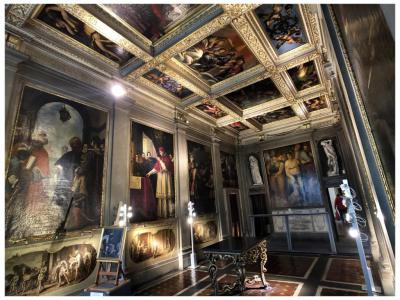
Just a short stroll from Santa Croce Square, but away from the crowds, the Buonarroti House offers a quiet, intimate space to reflect on the legacy of Michelangelo. Originally owned by the artist himself and passed down through his nephew Leonardo, it was his great-nephew-Michelangelo Buonarroti the Younger-who transformed the property into a loving tribute to one of the Renaissance era’s greatest minds.
While photography is not allowed, visitors are welcome to linger near two of Michelangelo’s earliest surviving sculptures. You’ll also see his wooden architectural model for what was meant to be the grand marble façade of the Basilica of Saint Lawrence-an ambitious project he was later denied, a loss he reportedly never got over.
The two early sculptural works to see here are “Madonna of the Stairs”, believed to be carved at age 15 and clearly influenced by Donatello, and “Battle of the Centaurs”, completed around age 17, where Michelangelo broke away from classical form and dove into his own expressive style. He valued this second piece so much that he kept it for the rest of his life.
Beyond the sculptures, the museum holds more than 200 restored drawings, letters, sketches, and personal objects-among them a sword, walking sticks, a pair of well-worn shoes, and even a possible self-portrait. Later generations added to the collection, including paintings that narrate key moments from Michelangelo’s life and career.
Tip: If you're planning to visit the Santa Croce complex, consider getting the combined ticket-it’s a great way to connect the dots between Florence’s artistic giants.
While photography is not allowed, visitors are welcome to linger near two of Michelangelo’s earliest surviving sculptures. You’ll also see his wooden architectural model for what was meant to be the grand marble façade of the Basilica of Saint Lawrence-an ambitious project he was later denied, a loss he reportedly never got over.
The two early sculptural works to see here are “Madonna of the Stairs”, believed to be carved at age 15 and clearly influenced by Donatello, and “Battle of the Centaurs”, completed around age 17, where Michelangelo broke away from classical form and dove into his own expressive style. He valued this second piece so much that he kept it for the rest of his life.
Beyond the sculptures, the museum holds more than 200 restored drawings, letters, sketches, and personal objects-among them a sword, walking sticks, a pair of well-worn shoes, and even a possible self-portrait. Later generations added to the collection, including paintings that narrate key moments from Michelangelo’s life and career.
Tip: If you're planning to visit the Santa Croce complex, consider getting the combined ticket-it’s a great way to connect the dots between Florence’s artistic giants.
2) Basilica di Santa Croce (Basilica of the Holy Cross) (must see)
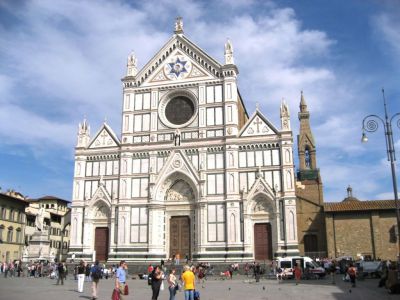
Santa Croce is one of the most celebrated Franciscan churches in the world and a jewel of Gothic architecture in Florence. Built over the 13th and 14th centuries, it’s often called the “Temple of Italian Glories”-and for good reason. This is where some of Italy’s greatest minds and artists are buried-among them Michelangelo, Galileo, Machiavelli, the poet Foscolo, and the composer Rossini.
Michelangelo’s journey back to Florence after death is itself the stuff of legend. Though he died in Rome, Cosimo de’ Medici made sure his remains returned home. The Medici ruler, unable to properly honor the artist in life, vowed to do so in death-and, to this end, commissioned an elaborate tomb. Designed by Giorgio Vasari, the tomb took 14 years to complete and features symbols tied to Michelangelo’s creative legacy. Three laurel wreaths represent his mastery of painting, sculpture, and architecture, each mourned by a figure carved in deep sorrow below his bust.
Galileo’s story follows a similarly complicated path. Though he died in 1642, his tomb wasn’t built until nearly a century later, in 1737, now facing Michelangelo’s across the nave. It’s adorned with allegorical figures representing Astronomy and Geometry, and quietly also includes the tomb of his daughter, Maria Celeste-though her presence often goes unnoticed.
Dante, however, remains absent. While Florence tried for years to reclaim his remains, the poet still lies in Ravenna, the city that welcomed him after exile. Here in Santa Croce, an empty sarcophagus stands in his honor, and a grand statue was erected outside the church in 1865 for his 600th birth anniversary.
The interior is filled with masterpieces by Giotto, Donatello, Vasari, Canova, and others too numerous to list in one breath. Outside, the tranquil cloisters and green courtyard offer a quiet space to pause or sketch, while the square hosts everything from live concerts to raucous games of Florentine “rugby.”
Tip: Be sure to stop by the Leather School just behind the church. You can watch apprentices at work and maybe find a unique handmade piece to take home. Just remember: modest attire is required-no bare shoulders or short shorts, especially for women, as the dress code is firmly enforced.
Michelangelo’s journey back to Florence after death is itself the stuff of legend. Though he died in Rome, Cosimo de’ Medici made sure his remains returned home. The Medici ruler, unable to properly honor the artist in life, vowed to do so in death-and, to this end, commissioned an elaborate tomb. Designed by Giorgio Vasari, the tomb took 14 years to complete and features symbols tied to Michelangelo’s creative legacy. Three laurel wreaths represent his mastery of painting, sculpture, and architecture, each mourned by a figure carved in deep sorrow below his bust.
Galileo’s story follows a similarly complicated path. Though he died in 1642, his tomb wasn’t built until nearly a century later, in 1737, now facing Michelangelo’s across the nave. It’s adorned with allegorical figures representing Astronomy and Geometry, and quietly also includes the tomb of his daughter, Maria Celeste-though her presence often goes unnoticed.
Dante, however, remains absent. While Florence tried for years to reclaim his remains, the poet still lies in Ravenna, the city that welcomed him after exile. Here in Santa Croce, an empty sarcophagus stands in his honor, and a grand statue was erected outside the church in 1865 for his 600th birth anniversary.
The interior is filled with masterpieces by Giotto, Donatello, Vasari, Canova, and others too numerous to list in one breath. Outside, the tranquil cloisters and green courtyard offer a quiet space to pause or sketch, while the square hosts everything from live concerts to raucous games of Florentine “rugby.”
Tip: Be sure to stop by the Leather School just behind the church. You can watch apprentices at work and maybe find a unique handmade piece to take home. Just remember: modest attire is required-no bare shoulders or short shorts, especially for women, as the dress code is firmly enforced.
3) Ponte Vecchio (Old Bridge) (must see)
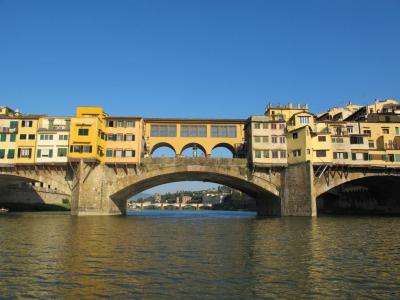
Ponte Vecchio, or The Old Bridge, first appeared in written records all the way back in 996. Of the six bridges that span the Arno River in Florence, it’s the only one that survived World War II intact-spared by retreating German forces. Today, this medieval stone arch structure stands as a powerful reminder of how a ruler’s vision can shape a city’s legacy.
As in the Middle Ages, the bridge is still lined with shops-but what’s sold here has changed quite a bit over time. Originally, it was occupied by butchers, who were know for tossing animal waste directly into the river-hardly ideal for anyone strolling by. That all changed in the 16th century, when Grand Duke Ferdinando de’ Medici had the meat merchants removed and replaced with goldsmiths. Not only did this improve the smell, but it also turned the bridge into one of the most glittering, upscale corners of Florence.
Take a look from a distance, and you might spot something unusual-a raised corridor running above the shops. This hidden passage is part of the Vasari Corridor, a nearly kilometer-long tunnel that connects the Pitti Palace with the Old Palace. It was built so that the Grand Duke could move between his residence and government offices without mingling with the crowds. Although closed since 2016 for safety reasons, there are plans to reopen it for visitors.
There’s even a bit of financial folklore tied to this spot, which is said to be the birthplace of the term “bankruptcy.” When a moneylender couldn’t pay his debts, soldiers smashed his trading bench-called a banco-to pieces, a symbolic act that left him unable to operate. Hence the term “bancorotto”, or “broken bench”, was born.
These days, the Old Bridge is a lovely place for a walk-especially at sunset, when the light casts a golden glow over the Arno. Early mornings are just as magical, with soft reflections on the water and, if you’re lucky, the bridge nearly all to yourself.
As in the Middle Ages, the bridge is still lined with shops-but what’s sold here has changed quite a bit over time. Originally, it was occupied by butchers, who were know for tossing animal waste directly into the river-hardly ideal for anyone strolling by. That all changed in the 16th century, when Grand Duke Ferdinando de’ Medici had the meat merchants removed and replaced with goldsmiths. Not only did this improve the smell, but it also turned the bridge into one of the most glittering, upscale corners of Florence.
Take a look from a distance, and you might spot something unusual-a raised corridor running above the shops. This hidden passage is part of the Vasari Corridor, a nearly kilometer-long tunnel that connects the Pitti Palace with the Old Palace. It was built so that the Grand Duke could move between his residence and government offices without mingling with the crowds. Although closed since 2016 for safety reasons, there are plans to reopen it for visitors.
There’s even a bit of financial folklore tied to this spot, which is said to be the birthplace of the term “bankruptcy.” When a moneylender couldn’t pay his debts, soldiers smashed his trading bench-called a banco-to pieces, a symbolic act that left him unable to operate. Hence the term “bancorotto”, or “broken bench”, was born.
These days, the Old Bridge is a lovely place for a walk-especially at sunset, when the light casts a golden glow over the Arno. Early mornings are just as magical, with soft reflections on the water and, if you’re lucky, the bridge nearly all to yourself.
4) Palazzo Pitti (Pitti Palace) (must see)
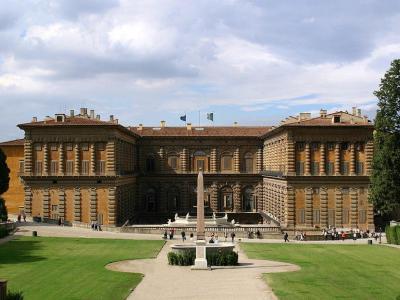
The Pitti Palace is one of Florence’s grandest landmarks-missing it would be like skipping a chapter in the city’s history. This massive 15th-century residence is a celebration of Renaissance architecture, and its vast gardens, full of winding paths and hidden corners, offer a new surprise with every turn.
Originally built for the powerful Medici family, the palace served as their official residence from the 16th to the 18th century. After the Medici dynasty ended, the property passed to the House of Lorraine, and later, Napoleon Bonaparte used it as a stronghold during his rule over Italy. Today, the palace houses a remarkable collection of museums- yet, it still holds what may be the richest concentration of Medici art and history. Alongside priceless paintings are beautifully preserved furnishings and interior details that once belonged to the family.
Every part of the palace reflects elegance and power-from the Palatine Gallery, with over 500 Renaissance paintings, to the opulent Royal Apartments, the glittering Medici Treasury, and the Gallery of Costume and Fashion. You’ll also find specialized museums showcasing porcelain and royal carriages, offering a different glimpse into court life.
In short, although it’s been state property since 1919, the palace still carries the atmosphere of a private royal home. And with over 5 million visitors each year, it remains one of Florence’s most admired cultural spots.
Tip: A combo ticket gives you access to both the museums and the gardens for two full days-plenty of time to explore at a relaxed pace. If you plan to spend a few hours in the gardens, don’t forget a hat and water, especially in warmer months. To avoid waiting in long lines at the entrance, booking a guided tour is a smart move. Yes, there's an added cost, but you'll skip the queue and get deeper insights into this piece of Florentine history.
Originally built for the powerful Medici family, the palace served as their official residence from the 16th to the 18th century. After the Medici dynasty ended, the property passed to the House of Lorraine, and later, Napoleon Bonaparte used it as a stronghold during his rule over Italy. Today, the palace houses a remarkable collection of museums- yet, it still holds what may be the richest concentration of Medici art and history. Alongside priceless paintings are beautifully preserved furnishings and interior details that once belonged to the family.
Every part of the palace reflects elegance and power-from the Palatine Gallery, with over 500 Renaissance paintings, to the opulent Royal Apartments, the glittering Medici Treasury, and the Gallery of Costume and Fashion. You’ll also find specialized museums showcasing porcelain and royal carriages, offering a different glimpse into court life.
In short, although it’s been state property since 1919, the palace still carries the atmosphere of a private royal home. And with over 5 million visitors each year, it remains one of Florence’s most admired cultural spots.
Tip: A combo ticket gives you access to both the museums and the gardens for two full days-plenty of time to explore at a relaxed pace. If you plan to spend a few hours in the gardens, don’t forget a hat and water, especially in warmer months. To avoid waiting in long lines at the entrance, booking a guided tour is a smart move. Yes, there's an added cost, but you'll skip the queue and get deeper insights into this piece of Florentine history.
5) Galleria degli Uffizi (Uffizi Gallery) (must see)
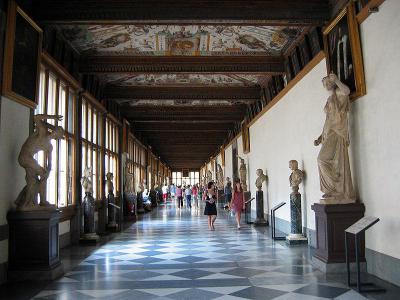
If you could only visit one Renaissance landmark in Florence-or even the entire world-the Uffizi Gallery would be the top contender. Originally designed as government offices for the magistrates of Florence, this grand building was commissioned in the 16th century by Cosimo de’ Medici and brought to life by Giorgio Vasari. Though built for administrative purposes, the palace quickly evolved into the perfect setting for the Medici family’s extraordinary art collection. By 1765, the gallery opened its doors to the public and has since become one of Florence’s most visited museums.
Here, you’ll come face-to-face with some of the most iconic works in art history. Highlights include Sandro Botticelli’s “Birth of Venus” and “Adoration of the Magi”, as well as masterpieces by Leonardo da Vinci, Michelangelo, and Caravaggio. One of Michelangelo’s works displayed is “Doni Tondo”-a circular painting nearly four feet across that depicts the Holy Family. Created in 1504, it gives us an early glimpse of the vibrant palette the artist would later use in his frescoes on the Sistine Chapel ceiling.
While paintings and sculptures are the main attraction, don’t overlook the gallery’s interior design. The ceilings are intricately decorated, and each room carries its own sense of grandeur. With more than 50 opulent rooms to wander through, it’s easy to feel overwhelmed. That’s why a break at the rooftop café is a smart move. Grab a coffee, rest your feet, and soak in the stunning views of Florence that you won’t find anywhere else.
Because of its global fame, the Uffizi is rarely quiet. Expect long lines, especially during high season. Booking your ticket in advance through the official website is highly recommended-it will save you time, and you might even catch a discount. And one last note before you go: no liquids are allowed inside, so plan accordingly.
Here, you’ll come face-to-face with some of the most iconic works in art history. Highlights include Sandro Botticelli’s “Birth of Venus” and “Adoration of the Magi”, as well as masterpieces by Leonardo da Vinci, Michelangelo, and Caravaggio. One of Michelangelo’s works displayed is “Doni Tondo”-a circular painting nearly four feet across that depicts the Holy Family. Created in 1504, it gives us an early glimpse of the vibrant palette the artist would later use in his frescoes on the Sistine Chapel ceiling.
While paintings and sculptures are the main attraction, don’t overlook the gallery’s interior design. The ceilings are intricately decorated, and each room carries its own sense of grandeur. With more than 50 opulent rooms to wander through, it’s easy to feel overwhelmed. That’s why a break at the rooftop café is a smart move. Grab a coffee, rest your feet, and soak in the stunning views of Florence that you won’t find anywhere else.
Because of its global fame, the Uffizi is rarely quiet. Expect long lines, especially during high season. Booking your ticket in advance through the official website is highly recommended-it will save you time, and you might even catch a discount. And one last note before you go: no liquids are allowed inside, so plan accordingly.
6) Palazzo Vecchio (Old Palace) (must see)
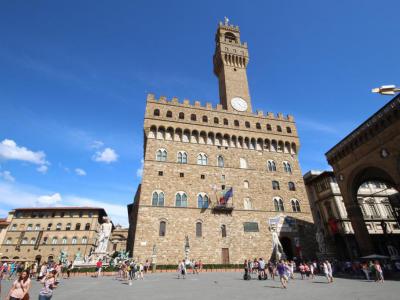
Just like the Cathedral complex and Florence’s world-class galleries, the Old Palace is essential for anyone wanting to grasp the city's history and cultural identity. This massive Romanesque fortress is one of the most striking town halls in all of Tuscany. Since 1872, it has served as the office of Florence’s mayor, but its legacy stretches much further back. Built in 1299, the edifice was the political heart of the Florentine Republic for centuries. When Cosimo de’ Medici moved in with his family in 1540 as Grand Duke, he had it expanded and transformed, blending its medieval bones with elegant Renaissance flair.
The rugged stone façade, lined with shields chronicling Florence’s political past, is also home to an impressive lineup of statues. These include Florence’s heraldic symbol- the Marzocco lion, along with Donatello’s powerful “Judith and Holofernes”, and “Hercules and Cacus”. The nearby Tower of Arnolfo, rising above the palace, offers a climbable vantage point-though access requires a separate ticket.
Meanwhile, inside, every room tells a chapter of the city’s history. You’ll walk through the spectacular Hall of the Five Hundred, designed to glorify Medici rule, and into the more private quarters where the family lived. Decorated under the artistic direction of Giorgio Vasari, these spaces are rich in symbolism and political narrative. Give yourself time to move slowly through the rooms-it’s an immersive dive into Florentine grandeur. And be warned: you may leave with a crick in your neck from gazing.
One standout work here is Michelangelo’s “Genius of Victory”. Originally meant for the tomb of Pope Julius II, the sculpture depicts a young, triumphant figure standing over a defeated older man. The contrast between the two is striking-the victor is smooth and polished, the vanquished figure unfinished and rough, still bearing the weight of the stone.
You’ll also come across something rather haunting-a death mask of Dante Alighieri, displayed between the Apartments of Eleanor and the Halls of the Priors. Though the poet was buried in Ravenna, this plaster cast has become a powerful reminder of his influence on Florence, both politically and culturally. Fans of Dan Brown’s “Inferno” will surely recognize it from the novel.
Tip: If you’re planning a guided visit, it’s best to book directly with the museum by email-include your preferred date and time, and wait for confirmation. Payment is made on the day of your tour, and afterward, you’re free to continue exploring on your own. Just keep in mind: because this is still a working municipal building, access may occasionally be restricted. It’s a good idea to check the official website before you go.
The rugged stone façade, lined with shields chronicling Florence’s political past, is also home to an impressive lineup of statues. These include Florence’s heraldic symbol- the Marzocco lion, along with Donatello’s powerful “Judith and Holofernes”, and “Hercules and Cacus”. The nearby Tower of Arnolfo, rising above the palace, offers a climbable vantage point-though access requires a separate ticket.
Meanwhile, inside, every room tells a chapter of the city’s history. You’ll walk through the spectacular Hall of the Five Hundred, designed to glorify Medici rule, and into the more private quarters where the family lived. Decorated under the artistic direction of Giorgio Vasari, these spaces are rich in symbolism and political narrative. Give yourself time to move slowly through the rooms-it’s an immersive dive into Florentine grandeur. And be warned: you may leave with a crick in your neck from gazing.
One standout work here is Michelangelo’s “Genius of Victory”. Originally meant for the tomb of Pope Julius II, the sculpture depicts a young, triumphant figure standing over a defeated older man. The contrast between the two is striking-the victor is smooth and polished, the vanquished figure unfinished and rough, still bearing the weight of the stone.
You’ll also come across something rather haunting-a death mask of Dante Alighieri, displayed between the Apartments of Eleanor and the Halls of the Priors. Though the poet was buried in Ravenna, this plaster cast has become a powerful reminder of his influence on Florence, both politically and culturally. Fans of Dan Brown’s “Inferno” will surely recognize it from the novel.
Tip: If you’re planning a guided visit, it’s best to book directly with the museum by email-include your preferred date and time, and wait for confirmation. Payment is made on the day of your tour, and afterward, you’re free to continue exploring on your own. Just keep in mind: because this is still a working municipal building, access may occasionally be restricted. It’s a good idea to check the official website before you go.
7) Piazza della Signoria (Signoria Square) (must see)
Alongside the Cathedral Square-the religious heart of Florence-you’ll find Signoria Square, the city’s historic civic center and a living museum under the open sky. Framed by elegant buildings and top-tier museums, this spot holds a special place in the hearts of locals. It was here that the Florentine Republic took shape, and to this day, the area remains a cherished gathering place. Michelangelo’s original “David” once stood proudly in the square, and while that statue now resides in a museum, a faithful replica now stands in its place, keeping the legacy alive.
Long before the Renaissance, back in Roman times, this was the town center of Florentia, surrounded by a theater, public baths, and a textile workshop. Centuries later, a church, a loggia, and a vast 5th-century basilica rose here, traces of which came to light during excavations in the 1980s.
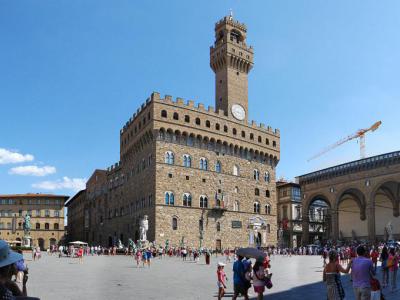
What makes the square truly captivating is its irregular shape and the wealth of artwork-both monumental and subtle-that surrounds you. It’s a dream for photographers, with striking visuals from every angle. But even without a camera, just standing at the center and slowly turning to take it all in is a moment worth savoring.
Presiding over everything is the medieval Old Palace, still the seat of city government. Nearby, you’ll find the Lanterns’ Lodge-an open-air sculpture gallery that’s free to enter and always open. Here you’ll see dramatic masterpieces like “The Rape of the Sabine Women”, “Hercules and the Centaur”, and “Perseus with the Head of Medusa”, which seems locked in a timeless stare with Michelangelo’s “David”.
There are a few shaded benches for a break, but if you're visiting in summer, take it slow and stay hydrated. The crowds can be thick, so when crossing the square, don’t aim straight-zigzag gently, like a sailboat tacking through the wind. A few graceful steps to the right, a few to the left, and before you know it, you’re there. Simple, smooth, and very Florentine.
Long before the Renaissance, back in Roman times, this was the town center of Florentia, surrounded by a theater, public baths, and a textile workshop. Centuries later, a church, a loggia, and a vast 5th-century basilica rose here, traces of which came to light during excavations in the 1980s.
What makes the square truly captivating is its irregular shape and the wealth of artwork-both monumental and subtle-that surrounds you. It’s a dream for photographers, with striking visuals from every angle. But even without a camera, just standing at the center and slowly turning to take it all in is a moment worth savoring.
Presiding over everything is the medieval Old Palace, still the seat of city government. Nearby, you’ll find the Lanterns’ Lodge-an open-air sculpture gallery that’s free to enter and always open. Here you’ll see dramatic masterpieces like “The Rape of the Sabine Women”, “Hercules and the Centaur”, and “Perseus with the Head of Medusa”, which seems locked in a timeless stare with Michelangelo’s “David”.
There are a few shaded benches for a break, but if you're visiting in summer, take it slow and stay hydrated. The crowds can be thick, so when crossing the square, don’t aim straight-zigzag gently, like a sailboat tacking through the wind. A few graceful steps to the right, a few to the left, and before you know it, you’re there. Simple, smooth, and very Florentine.
8) Palazzo del Bargello (Bargello National Museum) (must see)
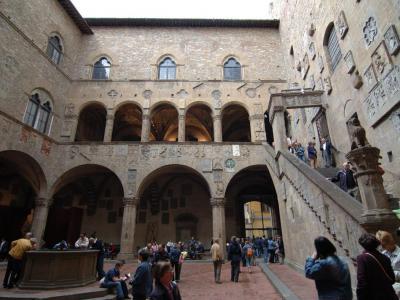
Florence is a haven for architecture enthusiasts and art lovers, and the Bargello Museum elevates this experience even further. Set within the walls of a medieval fortress, the museum houses some of Italy’s most prized sculptures and artworks.
Also known as the People’s Palace, the Bargello dates back to 1255, making it one of Florence’s oldest surviving structures. Over the centuries, it’s served many roles-starting in the 16th century, when it housed Florence’s chief of police, also called the “bargello.” Later, it functioned as a prison before finally being transformed into a museum in the mid-19th century. Since then, it’s become the ultimate destination for Gothic and Renaissance sculpture.
Inside, you’ll encounter masterpieces by iconic artists like Michelangelo, Donatello, Verrocchio, and Brunelleschi, to name just a few. One of the museum’s most celebrated pieces is Donatello’s “David”, a landmark work that became the first male nude sculpture publicly displayed since ancient times-marking a turning point in European art. Michelangelo’s contributions include “Bacchus”, “Pitti Tondo” (also known as “Madonna and Child”), “Brutus”, and “David-Apollo”. “Bacchus”, which Michelangelo carved at just 22 years old, is particularly striking. The figure’s rolling eyes and teetering posture give it an almost lifelike instability, reflecting a daringly androgynous quality that marked a bold step in the artist’s early career.
Beyond the Renaissance sculptures, the museum offers treasures from the Byzantine, Roman, and Medieval periods. You’ll also find exquisite jewelry-some pieces from the European Renaissance, others with Islamic origins. English descriptions accompany all exhibits, making the experience both accessible and informative.
Tip: Check the museum’s website ahead of time for opening hours. On certain days, the Bargello stays open late, giving visitors the chance to explore the medieval setting in a peaceful, near-empty atmosphere. It’s an unforgettable way to experience these works of art.
Also known as the People’s Palace, the Bargello dates back to 1255, making it one of Florence’s oldest surviving structures. Over the centuries, it’s served many roles-starting in the 16th century, when it housed Florence’s chief of police, also called the “bargello.” Later, it functioned as a prison before finally being transformed into a museum in the mid-19th century. Since then, it’s become the ultimate destination for Gothic and Renaissance sculpture.
Inside, you’ll encounter masterpieces by iconic artists like Michelangelo, Donatello, Verrocchio, and Brunelleschi, to name just a few. One of the museum’s most celebrated pieces is Donatello’s “David”, a landmark work that became the first male nude sculpture publicly displayed since ancient times-marking a turning point in European art. Michelangelo’s contributions include “Bacchus”, “Pitti Tondo” (also known as “Madonna and Child”), “Brutus”, and “David-Apollo”. “Bacchus”, which Michelangelo carved at just 22 years old, is particularly striking. The figure’s rolling eyes and teetering posture give it an almost lifelike instability, reflecting a daringly androgynous quality that marked a bold step in the artist’s early career.
Beyond the Renaissance sculptures, the museum offers treasures from the Byzantine, Roman, and Medieval periods. You’ll also find exquisite jewelry-some pieces from the European Renaissance, others with Islamic origins. English descriptions accompany all exhibits, making the experience both accessible and informative.
Tip: Check the museum’s website ahead of time for opening hours. On certain days, the Bargello stays open late, giving visitors the chance to explore the medieval setting in a peaceful, near-empty atmosphere. It’s an unforgettable way to experience these works of art.
