Custom Walk in Bath, England by qldted_572ca created on 2026-04-01
Guide Location: England » Bath
Guide Type: Custom Walk
# of Sights: 10
Tour Duration: 3 Hour(s)
Travel Distance: 6 Km or 3.7 Miles
Share Key: 4QXEW
Guide Type: Custom Walk
# of Sights: 10
Tour Duration: 3 Hour(s)
Travel Distance: 6 Km or 3.7 Miles
Share Key: 4QXEW
How It Works
Please retrieve this walk in the GPSmyCity app. Once done, the app will guide you from one tour stop to the next as if you had a personal tour guide. If you created the walk on this website or come to the page via a link, please follow the instructions below to retrieve the walk in the app.
Retrieve This Walk in App
Step 1. Download the app "GPSmyCity: Walks in 1K+ Cities" on Apple App Store or Google Play Store.



Step 2. In the GPSmyCity app, download(or launch) the guide "Bath Map and Walking Tours".
Step 3. Tap the menu button located at upper right corner of the "Walks" screen and select "Retrieve custom walk". Enter the share key: 4QXEW
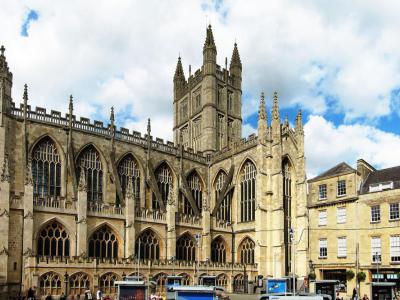
1) Bath Abbey (must see)
The Abbey Church of Saint Peter and Saint Paul, commonly referred to as Bath Abbey, is a parish church of the Church of England and used to be a Benedictine monastery in Bath. It was established in the 7th century, underwent reorganization in the 10th century, and was reconstructed in the 12th and 16th centuries. A significant restoration project led by Sir George Gilbert Scott took place in the 1860s.
This church is a notable example of Perpendicular Gothic architecture in the West Country. In the past, it also served as a cathedral for a period but later, after disputes between church officials in Bath and Wells, the Diocese of Bath and Wells was centered at Wells Cathedral. The Benedictine community that resided here was disbanded in 1539 during the Dissolution of the Monasteries.
The church has a cruciform design and can accommodate up to 1,200 worshippers. In addition to being an active place of worship, it hosts various civic events, concerts, and lectures. There's a museum showcasing its heritage in the basement.
Bath Abbey is recognized as a Grade I listed building, with a notable feature being its impressive fan vaulting. Inside, you can find war memorials dedicated to the local population and monuments honoring several significant individuals, including wall and floor plaques and commemorative stained glass windows. The church houses two organs and a set of ten bells. On its west front, you can see sculptures depicting angels ascending to heaven on two stone ladders, symbolizing Jacob's Ladder.
Why You Should Visit:
The Abbey is a gorgeous historic building that is worth seeing in its own right. The church is 225 feet long and 80 feet wide.
About 80 percent of the Abbey's wall space is dedicated to windows; the stained glass is spectacular! Specifically, look out for the King Edgar Window, which shows the crowning of King Edgar the Peaceful, and The Great East Window, which shows the story of Jesus in 53 scenes.
Tips:
Keep an eye out for the 635 various memorials on the walls throughout the Abbey.
You can spend a few minutes or an hour and more exploring the Abbey. If you only have 15 minutes, you can take a quick walk, admire the windows and carved angels, and see the fan vaulted ceilings. If you have time for a more extended tour, you can spend more time reading the memorials or reflect or pray in the chapels.
Keep an ear open for the impressive Klais Organ that is played every Sunday and for regular recitals. Organs have been played in the Abbey since 1634, though the current model is newer. The organ was entirely rebuilt by Klais in 1997, using many parts from historical instruments in the building.
Look for the sculpture on the west side of Jacob's Ladder, complete with angels climbing to heaven.
This church is a notable example of Perpendicular Gothic architecture in the West Country. In the past, it also served as a cathedral for a period but later, after disputes between church officials in Bath and Wells, the Diocese of Bath and Wells was centered at Wells Cathedral. The Benedictine community that resided here was disbanded in 1539 during the Dissolution of the Monasteries.
The church has a cruciform design and can accommodate up to 1,200 worshippers. In addition to being an active place of worship, it hosts various civic events, concerts, and lectures. There's a museum showcasing its heritage in the basement.
Bath Abbey is recognized as a Grade I listed building, with a notable feature being its impressive fan vaulting. Inside, you can find war memorials dedicated to the local population and monuments honoring several significant individuals, including wall and floor plaques and commemorative stained glass windows. The church houses two organs and a set of ten bells. On its west front, you can see sculptures depicting angels ascending to heaven on two stone ladders, symbolizing Jacob's Ladder.
Why You Should Visit:
The Abbey is a gorgeous historic building that is worth seeing in its own right. The church is 225 feet long and 80 feet wide.
About 80 percent of the Abbey's wall space is dedicated to windows; the stained glass is spectacular! Specifically, look out for the King Edgar Window, which shows the crowning of King Edgar the Peaceful, and The Great East Window, which shows the story of Jesus in 53 scenes.
Tips:
Keep an eye out for the 635 various memorials on the walls throughout the Abbey.
You can spend a few minutes or an hour and more exploring the Abbey. If you only have 15 minutes, you can take a quick walk, admire the windows and carved angels, and see the fan vaulted ceilings. If you have time for a more extended tour, you can spend more time reading the memorials or reflect or pray in the chapels.
Keep an ear open for the impressive Klais Organ that is played every Sunday and for regular recitals. Organs have been played in the Abbey since 1634, though the current model is newer. The organ was entirely rebuilt by Klais in 1997, using many parts from historical instruments in the building.
Look for the sculpture on the west side of Jacob's Ladder, complete with angels climbing to heaven.
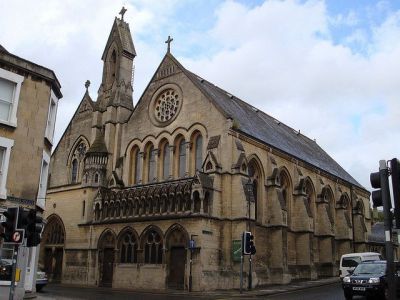
2) Holy Trinity Church
Holy Trinity Church is one of many examples of Bath’s strong ecclesiastical heritage. Centrally located on Chapel Row, just off Queen Square to the west of the city centre, the Holy Trinity Church can be viewed as part of a short walking tour of the city’s finest churches. Founded in 1822, the Holy Trinity Church has been a cornerstone of the local community for almost two centuries. Sadly, the church was forced to close its doors in March 2011 as it was unable to sustain the running costs of such a large building.
The building currently stands empty, but in a city with a proud tradition of restoring and revitalizing its finest buildings, there is hope that it can be put to use soon and not fall into disrepair. One of three Anglo-Catholic churches in a city where religion has often played a major role, the Holy Trinity’s closure has caused much local consternation. For now, the congregation has moved to Saint Michael’s, a fellow Anglo-Catholic church on Broad Street. As the building is currently closed, tours and viewings are not possible, but the striking architecture of the exterior can still be appreciated as you walk to and from Queen Square.
The building currently stands empty, but in a city with a proud tradition of restoring and revitalizing its finest buildings, there is hope that it can be put to use soon and not fall into disrepair. One of three Anglo-Catholic churches in a city where religion has often played a major role, the Holy Trinity’s closure has caused much local consternation. For now, the congregation has moved to Saint Michael’s, a fellow Anglo-Catholic church on Broad Street. As the building is currently closed, tours and viewings are not possible, but the striking architecture of the exterior can still be appreciated as you walk to and from Queen Square.
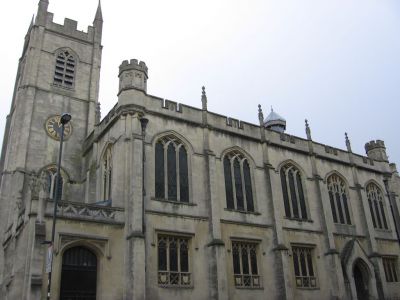
3) Christ Church
Christ Church, situated on Julian Road in Bath, was established by socially aware clergy and laypeople. The church notably diverged from the prevailing system of pew rents, becoming likely the first at the time to offer seating free of charge. While Christ Church is not designated as a parish church, it mirrors one in many ways, maintaining a regular pattern of services and activities.
Architecturally, Christ Church is a creation of John Palmer, a leading figure in Georgian Bath's architectural scene. Constructed in 1798, the church exhibits a neo-Gothic style with Classical proportions, featuring north and south aisles and a gallery on three sides. An apse, added in 1865-66 by John Elkington Gill, complements the original design.
The church's interior is adorned with significant stained glass works. A. O. Hemming contributed pieces depicting Jesus as the Good Shepherd and the Parable of the Good Samaritan on the south side of the gallery. The west end features windows by James Powell and Sons, illustrating Christ in Majesty and the raising of Jairus's daughter. The apse contains nine lancet windows by Clayton and Bell, while the main body of the church showcases windows with individual saints, angels, and biblical characters.
The church also houses an unusual wooden altarpiece and, as of 2020, a new central altar with matching furniture, including choir seating and readers' stands, located on an extended platform in the chancel.
The church tower was enhanced in 2015 with a recast peal of bells, adding to the auditory experience of the historic space. Christ Church, with its architectural beauty and commitment to inclusivity and community engagement, remains a notable landmark in Bath.
Architecturally, Christ Church is a creation of John Palmer, a leading figure in Georgian Bath's architectural scene. Constructed in 1798, the church exhibits a neo-Gothic style with Classical proportions, featuring north and south aisles and a gallery on three sides. An apse, added in 1865-66 by John Elkington Gill, complements the original design.
The church's interior is adorned with significant stained glass works. A. O. Hemming contributed pieces depicting Jesus as the Good Shepherd and the Parable of the Good Samaritan on the south side of the gallery. The west end features windows by James Powell and Sons, illustrating Christ in Majesty and the raising of Jairus's daughter. The apse contains nine lancet windows by Clayton and Bell, while the main body of the church showcases windows with individual saints, angels, and biblical characters.
The church also houses an unusual wooden altarpiece and, as of 2020, a new central altar with matching furniture, including choir seating and readers' stands, located on an extended platform in the chancel.
The church tower was enhanced in 2015 with a recast peal of bells, adding to the auditory experience of the historic space. Christ Church, with its architectural beauty and commitment to inclusivity and community engagement, remains a notable landmark in Bath.
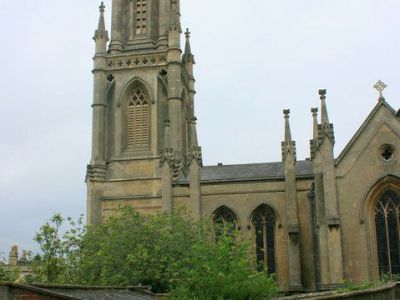
4) Saint Stephen's Church
Saint Stephen's Church, located in Bath, is a notable Church of England parish church with a rich history and distinctive architectural features. Designed by James Wilson, the church was constructed between 1840 and 1845 using Bath Stone, a type of limestone extracted from the Limpley Stoke mine in the Limpley Stoke Valley. The church is situated on Lansdown Road in Walcot and remained unconsecrated until 1881.
Significant additions and modifications have been made to the church over the years. In 1866, an aisle was added to the northeast side to serve the Royal School, believed to be a design of the Wilson & Willcox firm. Later, in 1882-1883, W. J. Willcox constructed a wide apsidal chancel along with a vestry and organ chamber. Willcox also designed the church's painted ceiling in 1886, which was executed by H. & F. Davis.
One of the church's notable features is the Lady Chapel's east stained glass window, completed in 1983 by local artist Mark Angus. This window, titled 'Centenary', commemorates the hundredth anniversary of the parish's formation and artistically represents Saint Stephen's transition from life to martyrdom. The church also boasts a Gothicised marble font and font cover from 1843, and notable works by Sir T. G. Jackson, including the circa 1900 transept ceiling and reredos.
In the 1990s, the church's crypt was transformed into a community center by Slade, Smith, and Winrow. In 2007, the tower stonework was restored, and the church bells were replaced. Additionally, modern exterior floodlighting was installed, enhancing the church's presence in the community. The church, a member of Inclusive Church since 2003, embraces diversity and promotes inclusivity for all, regardless of ethnicity, gender, or sexual orientation.
Significant additions and modifications have been made to the church over the years. In 1866, an aisle was added to the northeast side to serve the Royal School, believed to be a design of the Wilson & Willcox firm. Later, in 1882-1883, W. J. Willcox constructed a wide apsidal chancel along with a vestry and organ chamber. Willcox also designed the church's painted ceiling in 1886, which was executed by H. & F. Davis.
One of the church's notable features is the Lady Chapel's east stained glass window, completed in 1983 by local artist Mark Angus. This window, titled 'Centenary', commemorates the hundredth anniversary of the parish's formation and artistically represents Saint Stephen's transition from life to martyrdom. The church also boasts a Gothicised marble font and font cover from 1843, and notable works by Sir T. G. Jackson, including the circa 1900 transept ceiling and reredos.
In the 1990s, the church's crypt was transformed into a community center by Slade, Smith, and Winrow. In 2007, the tower stonework was restored, and the church bells were replaced. Additionally, modern exterior floodlighting was installed, enhancing the church's presence in the community. The church, a member of Inclusive Church since 2003, embraces diversity and promotes inclusivity for all, regardless of ethnicity, gender, or sexual orientation.
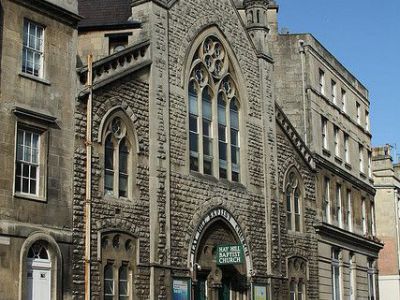
5) Hay Hill Baptist Church
Hay Hill Baptist Church, located in the heart of Bath, is a small yet vibrant community known for its inclusive and family-oriented atmosphere. The church caters to a diverse age range, creating a welcoming environment for all stages of life.
The church gathers every Sunday morning at 10:30 AM, offering a parallel program of activities for children and young people, ensuring an engaging experience for all ages. The style of the church is friendly and family-oriented, focusing on worship, reflection, and encouraging each other to follow the teachings of Jesus.
Hay Hill Baptist Church is not just a place of worship but also a hub of various activities. For the under 18s, there's a dynamic program for children and young people, including the 'Little Me' group for under-fives and their carers. Additionally, the church hosts numerous small groups that meet in homes around the city, offering a chance for deeper connection and support.
Architecturally, Hay Hill Baptist Church is notable for its unique design, shaped by its constrained urban location on the gentle curve of Bath’s Paragon Buildings. Built in 1869 on the site of Saint Werburgh’s chapel, the church features an unusual east-to-west congregational arrangement, with tall clerestory windows illuminating the nave. The church capitalizes on the steeply sloping site by including a schoolroom beneath the nave, effectively creating a three-storey structure. A significant reordering project in 1986 further enhanced the church's space for various functions.
The church gathers every Sunday morning at 10:30 AM, offering a parallel program of activities for children and young people, ensuring an engaging experience for all ages. The style of the church is friendly and family-oriented, focusing on worship, reflection, and encouraging each other to follow the teachings of Jesus.
Hay Hill Baptist Church is not just a place of worship but also a hub of various activities. For the under 18s, there's a dynamic program for children and young people, including the 'Little Me' group for under-fives and their carers. Additionally, the church hosts numerous small groups that meet in homes around the city, offering a chance for deeper connection and support.
Architecturally, Hay Hill Baptist Church is notable for its unique design, shaped by its constrained urban location on the gentle curve of Bath’s Paragon Buildings. Built in 1869 on the site of Saint Werburgh’s chapel, the church features an unusual east-to-west congregational arrangement, with tall clerestory windows illuminating the nave. The church capitalizes on the steeply sloping site by including a schoolroom beneath the nave, effectively creating a three-storey structure. A significant reordering project in 1986 further enhanced the church's space for various functions.
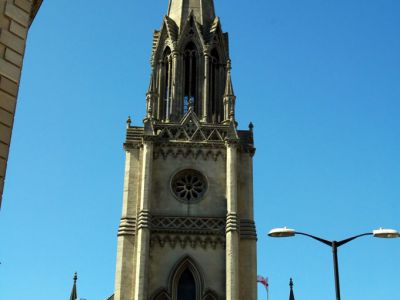
6) Saint Michael's Church
Saint Michael’s Church is located at the junction of Broad Street and Walcot Street, in the bustling eastern end of the city centre. Approaching along Northgate Street, which once marked the northern gate into the walled medieval city, the church dominates the view ahead. One of a few pre-Georgian buildings still standing outside the old city walls, the church once gave its name to this new area of development north of the city centre. A perfectly quirky design for the more bohemian end of town, the high, narrow bell tower fits with the steep side streets and mazy flea markets of the surrounding streets.
First constructed in medieval times, the church was rebuilt in the Georgian era, and was completed to its present design in Victorian times. Designed by local architect George Phillips Manners, the church broke with convention in order to fit into this narrow strip of land. The altar, usually to the east of the bell tower, is tucked directly behind it, and faces north – making this church a unique find for architectural enthusiasts. Saint Michael’s is an Anglo-Catholic church and runs Sunday services. Arrive early to secure a seat – this small city church serves two local congregations, following the closure of sister church, the Holy Trinity on Chapel Row.
First constructed in medieval times, the church was rebuilt in the Georgian era, and was completed to its present design in Victorian times. Designed by local architect George Phillips Manners, the church broke with convention in order to fit into this narrow strip of land. The altar, usually to the east of the bell tower, is tucked directly behind it, and faces north – making this church a unique find for architectural enthusiasts. Saint Michael’s is an Anglo-Catholic church and runs Sunday services. Arrive early to secure a seat – this small city church serves two local congregations, following the closure of sister church, the Holy Trinity on Chapel Row.
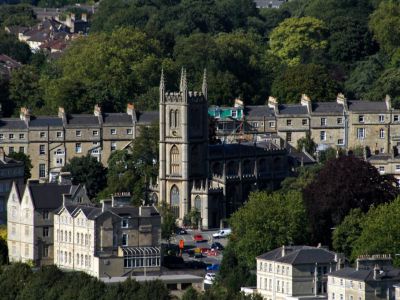
7) Saint Mary the Virgin Church
The Church of Saint Mary the Blessed Virgin, to give the church its full name, is located at the foot of Bathwick Hill, east of the River Avon. The Church dates to the Georgian era, and was designed by architect John Pinch, who also landscaped the nearby Sydney Pleasure Gardens. A Gothic church typical of 19th century ecclesiastical designs, the church continues to house a strong Catholic congregation. One of the more active churches in the city, Saint Mary the Virgin Church holds Eucharist mass on Sunday at 10.30am, with morning and evening mass held on each weekday.
The church is known nationally for its adult choir, which has featured on television and radio, and has performed around the UK and across Europe. The church has a strong musical tradition, with a successful boys’ choir in residence until the 1980s, and still has a functioning church organ, installed by Father Henry Willis. This tradition was brought into the modern age five years ago, when West Country rock band Muse used the church organ for songs on their second album. The church is wheelchair accessible, offers Fairtrade drinks and snacks after services, and runs a twice weekly baby and toddler group.
The church is known nationally for its adult choir, which has featured on television and radio, and has performed around the UK and across Europe. The church has a strong musical tradition, with a successful boys’ choir in residence until the 1980s, and still has a functioning church organ, installed by Father Henry Willis. This tradition was brought into the modern age five years ago, when West Country rock band Muse used the church organ for songs on their second album. The church is wheelchair accessible, offers Fairtrade drinks and snacks after services, and runs a twice weekly baby and toddler group.
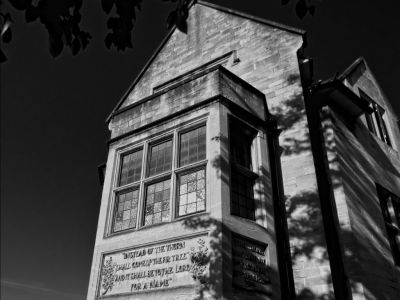
8) Widcombe Baptist Church
Widcombe Baptist Church in Bath stands as a dynamic and popular place of worship, particularly renowned among the youth of Bath. Established around 1820 originally by the Independents, known then as Congregationalists, the church has a rich history. Its foundation coincides with a period of significant population growth in Widcombe, partly due to the development of houses in the nearby Dolemeads area.
The church places a strong emphasis on worship and sermons, which are central to its activities. It is characterized by its vibrant and friendly atmosphere, marked by energetic singing. This welcoming environment has made it a favored spot for young people in the city to engage in regular prayer and worship.
In recent times, Widcombe Baptist Church has undergone significant renovations to expand its worship hall and social spaces. This expansion is a response to the growing size of its congregation and reflects the church's continuous effort to serve its local community effectively. The renovated building and improved facilities demonstrate the church's commitment to providing a welcoming space for worship and community events.
The church places a strong emphasis on worship and sermons, which are central to its activities. It is characterized by its vibrant and friendly atmosphere, marked by energetic singing. This welcoming environment has made it a favored spot for young people in the city to engage in regular prayer and worship.
In recent times, Widcombe Baptist Church has undergone significant renovations to expand its worship hall and social spaces. This expansion is a response to the growing size of its congregation and reflects the church's continuous effort to serve its local community effectively. The renovated building and improved facilities demonstrate the church's commitment to providing a welcoming space for worship and community events.
9) Manvers Street Baptist Church
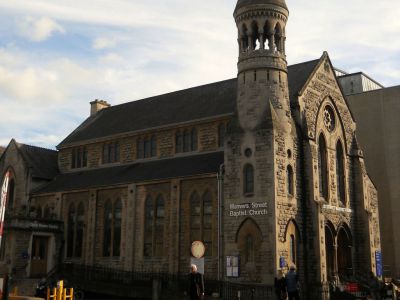
Manvers Street Baptist Church can be found just off Pierrepont Street, amongst the shops, bars and hotels of the modern, southern end of town. An imposing building with a high, steeply sloping roof and an ornate bell tower, the church has been a hub within the local community for centuries. Close to local car parking facilities and Bath Spa train station, this welcoming church makes an ideal start or finish to a walking tour of the city, or can be enjoyed as part of a tour of Bath’s many stunning places of worship.
There has been a Baptist congregation in Bath since the 16th century. Manvers Street Baptist church was completed in 1872, and like many other churches in the UK, grew extensively during the Victorian era. After significant restoration and expansion work at the start of the 21st century, the church opened the Open House Centre, a popular community space which hosts over fifty different community groups, including a student social gathering, mother and baby evenings and volunteer events. The church holds services at 10.30am and 6.30pm each Sunday. All services are free to attend. The church, coffee ship and Open House Centre are all accessible to wheelchair users.
There has been a Baptist congregation in Bath since the 16th century. Manvers Street Baptist church was completed in 1872, and like many other churches in the UK, grew extensively during the Victorian era. After significant restoration and expansion work at the start of the 21st century, the church opened the Open House Centre, a popular community space which hosts over fifty different community groups, including a student social gathering, mother and baby evenings and volunteer events. The church holds services at 10.30am and 6.30pm each Sunday. All services are free to attend. The church, coffee ship and Open House Centre are all accessible to wheelchair users.
10) Saint John the Evangelist Catholic Church
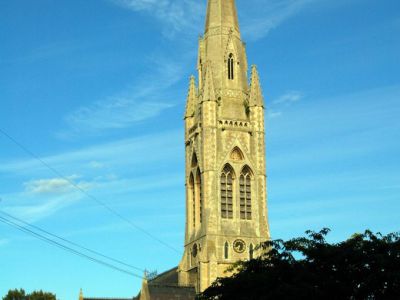
Saint John the Evangelist Roman Catholic Church in Bath is situated on South Parade in the southeastern part of the city's centre, specifically in the Old Ham District. This church is distinguished by its striking Gothic-style spire, which rises prominently in the city's skyline. Despite its architectural significance, the spire has been a subject of controversy, with the renowned architectural critic Nikolaus Pevsner expressing disdain for its dominance in the cityscape. Pevsner notably criticized the church as exemplifying the Gothic revivalists' distaste for the Georgian style prevalent in Bath.
The church was designed and constructed between 1861 and 1863 by Charles Francis Hansom, a figure of historical importance in architecture. Charles was the brother of J. A. Hansom, famously known for inventing the Hansom cab. Both brothers were also involved in designing the Woodchester Mansion in Nympsfield, Gloucestershire, taking over the project after A. W. N. Pugin's resignation. This involvement has led to their recognition as prominent Roman Catholic architects of their era, particularly noted for succeeding in commissions initially passed over by Pugin.
A significant feature of the Saint John the Evangelist Church is its spire, which measures 222 feet (approximately 68 meters) in height. This spire was added to the structure in 1867 by Hansom, further enhancing the church's architectural prominence in Bath. The church, with its Gothic flair and historical associations, stands as a testament to the architectural shifts and religious landscapes of 19th-century England.
The church was designed and constructed between 1861 and 1863 by Charles Francis Hansom, a figure of historical importance in architecture. Charles was the brother of J. A. Hansom, famously known for inventing the Hansom cab. Both brothers were also involved in designing the Woodchester Mansion in Nympsfield, Gloucestershire, taking over the project after A. W. N. Pugin's resignation. This involvement has led to their recognition as prominent Roman Catholic architects of their era, particularly noted for succeeding in commissions initially passed over by Pugin.
A significant feature of the Saint John the Evangelist Church is its spire, which measures 222 feet (approximately 68 meters) in height. This spire was added to the structure in 1867 by Hansom, further enhancing the church's architectural prominence in Bath. The church, with its Gothic flair and historical associations, stands as a testament to the architectural shifts and religious landscapes of 19th-century England.
