Custom Walk in Amsterdam, Netherlands by ahachborn_5d3bc created on 2026-04-05
Guide Location: Netherlands » Amsterdam
Guide Type: Custom Walk
# of Sights: 11
Tour Duration: 4 Hour(s)
Travel Distance: 7.9 Km or 4.9 Miles
Share Key: LFZMP
Guide Type: Custom Walk
# of Sights: 11
Tour Duration: 4 Hour(s)
Travel Distance: 7.9 Km or 4.9 Miles
Share Key: LFZMP
How It Works
Please retrieve this walk in the GPSmyCity app. Once done, the app will guide you from one tour stop to the next as if you had a personal tour guide. If you created the walk on this website or come to the page via a link, please follow the instructions below to retrieve the walk in the app.
Retrieve This Walk in App
Step 1. Download the app "GPSmyCity: Walks in 1K+ Cities" on Apple App Store or Google Play Store.



Step 2. In the GPSmyCity app, download(or launch) the guide "Amsterdam Map and Walking Tours".
Step 3. Tap the menu button located at upper right corner of the "Walks" screen and select "Retrieve custom walk". Enter the share key: LFZMP
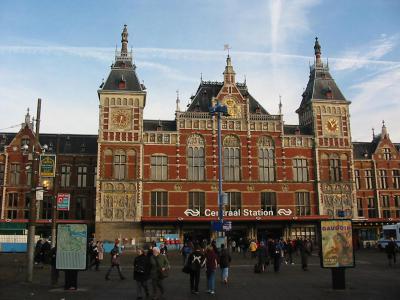
1) Centraal Station (must see)
When in Amsterdam, a visit to the Central Station is practically inevitable. Nearly every traveler to the city encounters it at least once.
Amsterdam Centraal is the largest railway station in the city and has the second longest railway platform in the country, with a length of 695 meters, and a cast-iron platform roof spanning approximately 40 meters. A major international railway hub, it is used daily by almost 200,000 passengers, making it the Netherlands' most visited national heritage object.
Amsterdam Centraal was designed by Dutch architect Pierre Cuypers, featuring a blend of Gothic and Renaissance Revival elements.
The station was constructed on three artificial islands, between 1882 and 1889. Controversially located at the city's waterfront, it took a precise total of 8,687 wooden piles to anchor such a monumental structure on the marshy ground. The station spurred significant urban redevelopment and shifted Amsterdam’s focus from a waterfront to an inland city, influencing both transportation and city planning.
Its design celebrates Dutch economic and colonial prowess through various decorative elements. Initially, the entire project seemed like a huge blunder and was swiftly criticized by numerous experts. However, the architects persevered and ultimately vindicated themselves, defying skeptics.
Through the decades, Amsterdam Centraal has undergone multiple renovations and expansions to meet modern demands. Significant developments included the creation of a pedestrian tunnel in the 1950s, expansion of metro facilities in the late 1970s, and a major overhaul in the 1980s and 1990s that introduced new signaling systems, expanded tracks, and additional roofing. Recent upgrades focus on enhancing capacity and accessibility, including extended platforms for international trains, a new bus station, and upgraded retail spaces, marking it as a central hub in Amsterdam’s urban landscape.
Tip:
Take advantage of the several free ferry trips navigating the canals, departing every 5 to 15 minutes from this location; they offer a rewarding experience. You can even cruise back to the station via boat if you wish, rounding out your visit with a picturesque waterborne journey.
Amsterdam Centraal is the largest railway station in the city and has the second longest railway platform in the country, with a length of 695 meters, and a cast-iron platform roof spanning approximately 40 meters. A major international railway hub, it is used daily by almost 200,000 passengers, making it the Netherlands' most visited national heritage object.
Amsterdam Centraal was designed by Dutch architect Pierre Cuypers, featuring a blend of Gothic and Renaissance Revival elements.
The station was constructed on three artificial islands, between 1882 and 1889. Controversially located at the city's waterfront, it took a precise total of 8,687 wooden piles to anchor such a monumental structure on the marshy ground. The station spurred significant urban redevelopment and shifted Amsterdam’s focus from a waterfront to an inland city, influencing both transportation and city planning.
Its design celebrates Dutch economic and colonial prowess through various decorative elements. Initially, the entire project seemed like a huge blunder and was swiftly criticized by numerous experts. However, the architects persevered and ultimately vindicated themselves, defying skeptics.
Through the decades, Amsterdam Centraal has undergone multiple renovations and expansions to meet modern demands. Significant developments included the creation of a pedestrian tunnel in the 1950s, expansion of metro facilities in the late 1970s, and a major overhaul in the 1980s and 1990s that introduced new signaling systems, expanded tracks, and additional roofing. Recent upgrades focus on enhancing capacity and accessibility, including extended platforms for international trains, a new bus station, and upgraded retail spaces, marking it as a central hub in Amsterdam’s urban landscape.
Tip:
Take advantage of the several free ferry trips navigating the canals, departing every 5 to 15 minutes from this location; they offer a rewarding experience. You can even cruise back to the station via boat if you wish, rounding out your visit with a picturesque waterborne journey.
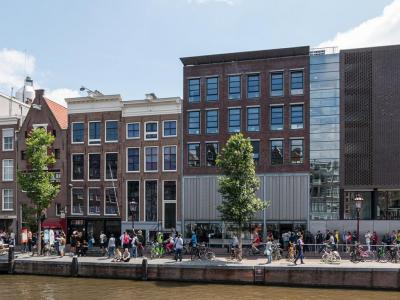
2) Anne Frank House (must see)
Anne Frank once found comfort in the gentle chimes of the Western Church’s bells-a reassuring hint of life outside her secret refuge-until those very bells were melted down for the German war effort. The church’s 85-meter-tall tower still stands as Amsterdam’s most dazzling spire. Rising gracefully above the city, it offers balconies with stunning panoramic views of the center and a carillon that strikes every quarter-hour, plus occasional full musical interludes. At its tip, you’ll find Emperor Maximilian’s crown, a proud emblem of Amsterdam and a glittering highlight of this Protestant landmark. Built by Hendrick de Keyser and completed in 1631, a decade after his passing, the church was a vital piece of the city’s early expansion.
Outwardly, the Western Church projects an air of restrained elegance; inside, however, it embraces Calvinist simplicity. Apart from the ample plain-glass windows that flood the space with natural light, the main attractions are the grand Baroque organ and the ornate wooden pulpit, topped by an oversized sounding board that once lent authority to lengthy sermons. While the Protestant elite shunned opulent decorations, they did indulge in a little exclusivity: boxed-in benches at the base of the nave’s stone columns, rented out by the well-to-do to signal their status.
Feeling adventurous? From April to October, you can climb the tower for a firsthand look at the bells and unbeatable views from a platform near the top. The stairs are steep enough to be interesting, but not so tough as to keep you from reaching one of the best vantage points in Amsterdam.
Outwardly, the Western Church projects an air of restrained elegance; inside, however, it embraces Calvinist simplicity. Apart from the ample plain-glass windows that flood the space with natural light, the main attractions are the grand Baroque organ and the ornate wooden pulpit, topped by an oversized sounding board that once lent authority to lengthy sermons. While the Protestant elite shunned opulent decorations, they did indulge in a little exclusivity: boxed-in benches at the base of the nave’s stone columns, rented out by the well-to-do to signal their status.
Feeling adventurous? From April to October, you can climb the tower for a firsthand look at the bells and unbeatable views from a platform near the top. The stairs are steep enough to be interesting, but not so tough as to keep you from reaching one of the best vantage points in Amsterdam.
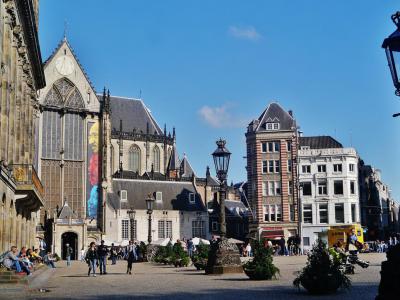
3) Dam Square (must see)
Dam Square, or the Dam, is a central town square in Amsterdam, known for its significant buildings and frequent events. Positioned in the historical heart of Amsterdam, it sits on the site of the original dam on the Amstel River. The square extends some 200 meters from west to east and 100 meters from north to south, connecting Damrak and Rokin streets that trace the Amstel's original course.
The square is also the termination point for other notable streets like New Dike, Calf Street, and Dam Street, with the main red-light district, De Wallen, just beyond its northeast corner. Prominent features on Dam Square include the neoclassical Royal Palace, the 15th-century Gothic New Church, the Madame Tussauds Wax Museum, and the National Monument which honors World War II victims, all of which collectively turn the Dam into a major tourist hub.
The name "Amsterdam" originates from a dam built on the Amstel River around 1270. This dam, integral to the city's development, included a discharge sluice and later locks to facilitate navigation and control water levels. By 1275, the settlement was significant enough to be recorded in connection with a road toll granted by the count of Holland, Floris V. Over time, the dam expanded to accommodate a town square, now known as Dam Square. Eventually, the area became a hub for commercial and governmental activities, featuring a large fish market and a town hall.
Significant changes occurred over the centuries, including the demolition of a weigh house in 1808 to clear the view for Louis Bonaparte’s Royal Palace and the infilling of Damrak Avenue in the 19th century. The square also hosted the Beurs van Zocher stock exchange until 1903. Today, the De Bijenkorf department store has been in its place since 1914. Dam Square has also been a site for national events – such as the National Memorial Day commemorations at the National Monument unveiled in 1956, and public demonstrations, – maintaining its status as a national and cultural gathering spot for the Dutch.
Tip:
For those in need of a restroom, free and well-maintained toilets are available at the De Bijenkorf shop on the 5th floor.
The square is also the termination point for other notable streets like New Dike, Calf Street, and Dam Street, with the main red-light district, De Wallen, just beyond its northeast corner. Prominent features on Dam Square include the neoclassical Royal Palace, the 15th-century Gothic New Church, the Madame Tussauds Wax Museum, and the National Monument which honors World War II victims, all of which collectively turn the Dam into a major tourist hub.
The name "Amsterdam" originates from a dam built on the Amstel River around 1270. This dam, integral to the city's development, included a discharge sluice and later locks to facilitate navigation and control water levels. By 1275, the settlement was significant enough to be recorded in connection with a road toll granted by the count of Holland, Floris V. Over time, the dam expanded to accommodate a town square, now known as Dam Square. Eventually, the area became a hub for commercial and governmental activities, featuring a large fish market and a town hall.
Significant changes occurred over the centuries, including the demolition of a weigh house in 1808 to clear the view for Louis Bonaparte’s Royal Palace and the infilling of Damrak Avenue in the 19th century. The square also hosted the Beurs van Zocher stock exchange until 1903. Today, the De Bijenkorf department store has been in its place since 1914. Dam Square has also been a site for national events – such as the National Memorial Day commemorations at the National Monument unveiled in 1956, and public demonstrations, – maintaining its status as a national and cultural gathering spot for the Dutch.
Tip:
For those in need of a restroom, free and well-maintained toilets are available at the De Bijenkorf shop on the 5th floor.
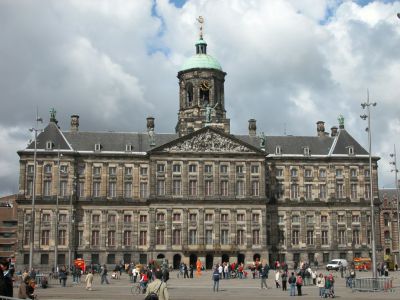
4) Koninklijk Paleis (Royal Palace of Amsterdam) (must see)
The Royal Palace of Amsterdam is a historic monument on Dam Square and is one of the four palaces in the Netherlands still left at the disposal of the Dutch Royal Family.
Its inception dates back to 1655. Back then, the city had recently thwarted William of Orange's attempts to subdue it and the city council sought a residence that would symbolize Amsterdam's municipal authority and pride. This led to a remarkably forward-thinking design-the Dutch interpretation of the classical principles revived during the Italian Renaissance. The architectural project led by Jacob van Campen implied over 13,500 wooden piles to support the building.
Initially designed as the town hall overlooking the bustling Damrak wharves, it was converted into a royal palace by King Louis I of Holland, brother of Napoleon Bonaparte, in 1806.
In 1936, the building was designated a property of the Kingdom of the Netherlands. Today, it serves a ceremonial role for the monarchy, hosting state visits, official functions, and award ceremonies. The palace also played a pivotal role during the investiture of Queen Beatrix in 1980.
The building's distinctive sandstone façade has darkened over time. Astride the rear of it is a 6-meter statue of Atlas carrying the globe.
The interior is equally opulent, notably in the Citizens' Hall, featuring an arcaded marble chamber where the enthroned figure of Amsterdam presides over the earthly and celestial realms. Three circular, inlaid marble maps, depicting the eastern and western hemispheres, as well as the northern sky, lie at her feet. Other allegorical figures include Wisdom and Strength, flanking "Amsterdam" on her left and right, while the reliefs on either side of the central group portray the principles of good governance. On the left, the god Amphion plays his lyre, persuading stones to form a wall; and on the right, Mercury seeks to lull Argos to sleep, thus emphasizing the importance of vigilance.
Tip:
Before your visit, be sure to check online for opening hours, as the palace may occasionally be closed due to royal events.
Free entry for those under 18 and discounts for seniors and students are available.
Its inception dates back to 1655. Back then, the city had recently thwarted William of Orange's attempts to subdue it and the city council sought a residence that would symbolize Amsterdam's municipal authority and pride. This led to a remarkably forward-thinking design-the Dutch interpretation of the classical principles revived during the Italian Renaissance. The architectural project led by Jacob van Campen implied over 13,500 wooden piles to support the building.
Initially designed as the town hall overlooking the bustling Damrak wharves, it was converted into a royal palace by King Louis I of Holland, brother of Napoleon Bonaparte, in 1806.
In 1936, the building was designated a property of the Kingdom of the Netherlands. Today, it serves a ceremonial role for the monarchy, hosting state visits, official functions, and award ceremonies. The palace also played a pivotal role during the investiture of Queen Beatrix in 1980.
The building's distinctive sandstone façade has darkened over time. Astride the rear of it is a 6-meter statue of Atlas carrying the globe.
The interior is equally opulent, notably in the Citizens' Hall, featuring an arcaded marble chamber where the enthroned figure of Amsterdam presides over the earthly and celestial realms. Three circular, inlaid marble maps, depicting the eastern and western hemispheres, as well as the northern sky, lie at her feet. Other allegorical figures include Wisdom and Strength, flanking "Amsterdam" on her left and right, while the reliefs on either side of the central group portray the principles of good governance. On the left, the god Amphion plays his lyre, persuading stones to form a wall; and on the right, Mercury seeks to lull Argos to sleep, thus emphasizing the importance of vigilance.
Tip:
Before your visit, be sure to check online for opening hours, as the palace may occasionally be closed due to royal events.
Free entry for those under 18 and discounts for seniors and students are available.
5) Begijnhof Chapel
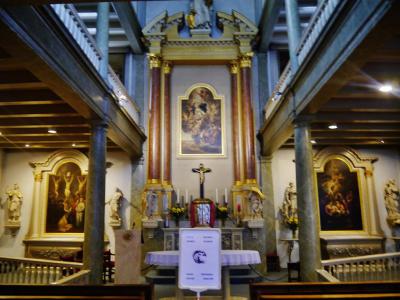
In Amsterdam, the beguines, devout Catholic women who remained unmarried, may have lost their original church to the rise of Calvinism, which led to the establishment of the current English Reformed Church in the city. However, in accordance with the terms of the 'Alteratie', which was then part of the larger conflict between Protestantism and Catholicism in Europe, they were granted the opportunity to discreetly conduct Mass in the secret Catholic Begijnhof Chapel, which was set up in a house situated directly across from their former church. Initially consecrated to Saint John the Baptist, it was subsequently rededicated to Saint Ursula, the patron saint of the beguines. This quaint little chapel is still in use today, adorned with rather sentimental religious paintings, a splendid altar featuring a depiction of the Last Supper, and an array of other religious artworks and relics.
The adjacent peaceful courtyard, which dates back to 1346, served as the residence for beguines who led a semi-monastic life in service to the community (the last beguine passed away in 1970). Nowadays, the little gabled houses in Begijnhof, constructed between the 14th and 17th centuries, provide homes for elderly retired women, so it's advisable to be respectful of their privacy. During springtime, the Begijnhof lawn is adorned with a colorful carpet of daffodils and crocuses, enhancing the tranquil and spiritual ambiance of the place.
Tip:
For those interested, you can find Het Houten Huys ("The Wooden House") just across the courtyard's lawn. This remarkable structure, dating back to 1425, is the oldest house in Amsterdam and one of only two surviving wooden residences in the city.
The adjacent peaceful courtyard, which dates back to 1346, served as the residence for beguines who led a semi-monastic life in service to the community (the last beguine passed away in 1970). Nowadays, the little gabled houses in Begijnhof, constructed between the 14th and 17th centuries, provide homes for elderly retired women, so it's advisable to be respectful of their privacy. During springtime, the Begijnhof lawn is adorned with a colorful carpet of daffodils and crocuses, enhancing the tranquil and spiritual ambiance of the place.
Tip:
For those interested, you can find Het Houten Huys ("The Wooden House") just across the courtyard's lawn. This remarkable structure, dating back to 1425, is the oldest house in Amsterdam and one of only two surviving wooden residences in the city.
6) Rijksmuseum (must see)
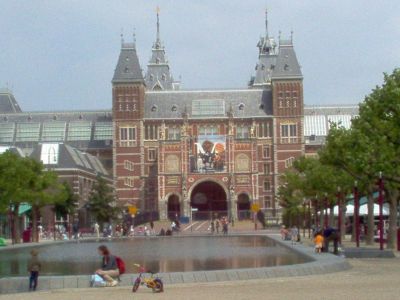
The Netherlands' magnificent national museum is the most frequently visited museum in Amsterdam, boasting an astounding collection of nearly one million Dutch works of art, though only a fraction of this vast treasure is on public display. Its origins trace back to 1808 when King Louis Napoleon established it within the Royal Palace on the Dam, later relocating to its current site near the Vondelpark in 1885.
Architect Pierre Cuypers contributed to the museum's distinctive blend of Gothic and Renaissance architecture, resulting in a structure that not only exudes architectural grandeur but also offers an extensive interior space. This expansion was undertaken with the sole purpose of accommodating the entire collection transported from The Hague.
In recent years, the Rijksmuseum has undergone extensive renovations, featuring a remarkable new entrance area. However, the heightened structure has altered the original floor plan, making navigation between sections somewhat challenging. The ground floor, designated as Floor 0, houses a diverse range of exhibits, including early Flemish paintings (1100–1600) on one side and collections encompassing items like delftware, armaments, and ship models on the other. Floor 1 showcases Dutch art from the 18th and 19th centuries, with notable works by artists such as Van Gogh and representatives of the Hague School of landscape artists. Moving upward, Floor 3 provides an overview of 20th-century art and applied art, featuring Dutch luminaries like Karel Appel and Gerrit Rietveld. In the midst of these levels, Floor 2 houses the heart of the collection: the Golden Age paintings, which understandably draw the most attention from visitors, with key works prominently displayed in the expansive Gallery of Honour. Temporary exhibitions are hosted in a separate wing.
When visiting, be sure to pick up a complimentary map at the reception desk. Keep in mind that the Rijksmuseum is exceptionally popular, so it's advisable to arrive early in the day, especially during major temporary exhibitions. Additionally, you can significantly reduce wait times by possessing an I amsterdam card, a Museumkaart, or by booking your visit online.
Why You Should Pay a Visit:
It's the place where the art you've encountered in your art classes and books comes to life.
Tip:
Browse until you've had your fill, then take a break from the art and artifacts at the excellent atrium café before exploring another section.
Architect Pierre Cuypers contributed to the museum's distinctive blend of Gothic and Renaissance architecture, resulting in a structure that not only exudes architectural grandeur but also offers an extensive interior space. This expansion was undertaken with the sole purpose of accommodating the entire collection transported from The Hague.
In recent years, the Rijksmuseum has undergone extensive renovations, featuring a remarkable new entrance area. However, the heightened structure has altered the original floor plan, making navigation between sections somewhat challenging. The ground floor, designated as Floor 0, houses a diverse range of exhibits, including early Flemish paintings (1100–1600) on one side and collections encompassing items like delftware, armaments, and ship models on the other. Floor 1 showcases Dutch art from the 18th and 19th centuries, with notable works by artists such as Van Gogh and representatives of the Hague School of landscape artists. Moving upward, Floor 3 provides an overview of 20th-century art and applied art, featuring Dutch luminaries like Karel Appel and Gerrit Rietveld. In the midst of these levels, Floor 2 houses the heart of the collection: the Golden Age paintings, which understandably draw the most attention from visitors, with key works prominently displayed in the expansive Gallery of Honour. Temporary exhibitions are hosted in a separate wing.
When visiting, be sure to pick up a complimentary map at the reception desk. Keep in mind that the Rijksmuseum is exceptionally popular, so it's advisable to arrive early in the day, especially during major temporary exhibitions. Additionally, you can significantly reduce wait times by possessing an I amsterdam card, a Museumkaart, or by booking your visit online.
Why You Should Pay a Visit:
It's the place where the art you've encountered in your art classes and books comes to life.
Tip:
Browse until you've had your fill, then take a break from the art and artifacts at the excellent atrium café before exploring another section.
7) Bloemenmarkt (Floating Flower Market)
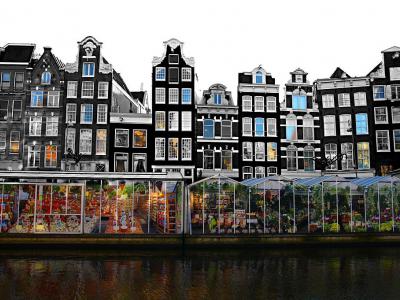
When you visit Amsterdam, especially during the springtime, you won't want to miss out on seeing some beautiful tulips. Even if they haven't fully bloomed or are past their prime, fear not – Bloemenmarkt has got you covered. This place has been around since the 1860s and is arguably the best, and still the most atmospheric, spot to discover (and buy) fresh flowers and bulbs.
As soon as you enter this little botanical wonderland situated along the canal, you'll be surrounded by all things floral (and sometimes more) – there's a dazzling array of souvenirs, and surprisingly, they're priced pretty much the same across various vendors. You can find a wide variety of bulbs for sale, including daffodils, amaryllis, crocus, narcissus, tulips, peony roots, and more. They even have some cacti and potted plants and herbs available for purchase.
Tip:
It you decide to buy tulip bulbs to take back home, be sure to get a "customs-cleared" stamp to avoid any issues with customs when upon arrival in your home country.
As soon as you enter this little botanical wonderland situated along the canal, you'll be surrounded by all things floral (and sometimes more) – there's a dazzling array of souvenirs, and surprisingly, they're priced pretty much the same across various vendors. You can find a wide variety of bulbs for sale, including daffodils, amaryllis, crocus, narcissus, tulips, peony roots, and more. They even have some cacti and potted plants and herbs available for purchase.
Tip:
It you decide to buy tulip bulbs to take back home, be sure to get a "customs-cleared" stamp to avoid any issues with customs when upon arrival in your home country.
8) De Waag (Weigh House)
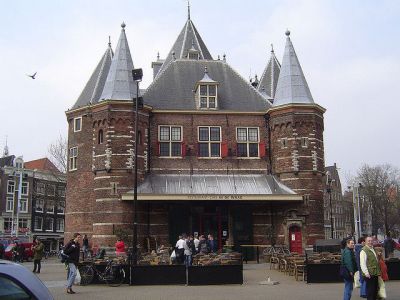
The Weigh House, a medieval trading hub dating back to 1488, began as a customs house, where goldsmiths and silversmiths worked their magic on the upper floors. Today, it’s home to a lively bar and restaurant, but inside you can still marvel at the hefty timber beams and what’s left of the old weighing scales.
Originally, this building was taller, but the 16th-century city planners had other ideas. When Amsterdam’s defensive walls came down, the gatehouse lost its fortification and its height. The surrounding moat was filled in, creating a bustling market square, and the ground level was raised, leaving the Weigh House looking quite different than it did in its heyday.
Even so, the building remained at the heart of Amsterdam’s cultural life. It was here that Rembrandt van Rijn painted “The Anatomy Lesson of Dr. Nicolas Tulp,” the work that launched his legendary career. Over the centuries, the Weighing House served many roles, hosting museums, city institutions, and even a fire brigade. In 1996, it found new purpose under the care of the Waag (“Weigh House”) Society, ensuring its historic charm endures for generations to come.
Originally, this building was taller, but the 16th-century city planners had other ideas. When Amsterdam’s defensive walls came down, the gatehouse lost its fortification and its height. The surrounding moat was filled in, creating a bustling market square, and the ground level was raised, leaving the Weigh House looking quite different than it did in its heyday.
Even so, the building remained at the heart of Amsterdam’s cultural life. It was here that Rembrandt van Rijn painted “The Anatomy Lesson of Dr. Nicolas Tulp,” the work that launched his legendary career. Over the centuries, the Weighing House served many roles, hosting museums, city institutions, and even a fire brigade. In 1996, it found new purpose under the care of the Waag (“Weigh House”) Society, ensuring its historic charm endures for generations to come.
9) Museum Het Rembrandthuis (Rembrandt House Museum) (must see)
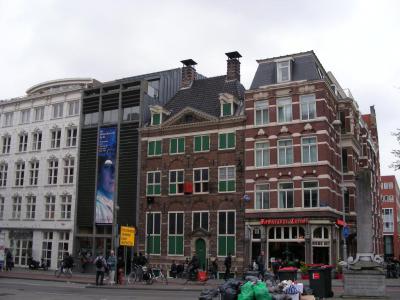
This old house in Amsterdam's Jews Broadway, with an ornate facade adorned with intricate wooden shutters and an elaborate pediment, was once the home and studio of the Dutch painter Rembrandt van Rijn. Commonly known as Rembrandt, he was a prominent 17th-century figure, rightfully acclaimed as one of the foremost artists of the Dutch Golden Age-a period when the Dutch Empire enjoyed the zenith of its power and renown.
Originally built in 1606, the property served as the artist's residence during the pinnacle of his fame, a place where he resided for nearly two decades, from 1639 to 1658, and created some of his most iconic masterpieces, such as "The Night Watch."
However, the lavish expenditure on furnishings ultimately contributed to Rembrandt's financial downfall. After his bankruptcy, the house changed hands and underwent various renovations before it was purchased by Amsterdam's municipality, in 1907, and then restored and converted into a museum by 1911. The building was redesigned in the 20th century based on the inventory drawn up during Rembrandt's bankruptcy.
The museum shows Rembrandt's living and working quarters, giving the visitor an idea of the artist's daily life. Stepping inside here feels akin to entering one of Rembrandt's own paintings, with quintessential Dutch interiors featuring black-and-white tiled floors and traditional box beds. Two particularly captivating highlights include a nearly complete collection of Rembrandt's etchings, exhibited in its modern wing and etching cabinet. In Rembrandt's old house, there are also works of art by his teacher, Pieter Lastman, and his pupils, Ferdinand Bol and Govert Flinck. The museum also hosts temporary exhibitions throughout the year of the works by Rembrandt's contemporaries and (contemporary) followers.
In 2019, research confirmed that two pots found in Rembrandt’s old cesspool were used by him for mixing quartz soil, a unique canvas preparation method. These pots are now on display here.
Tip:
Reserve some time to browse the museum's quaint shop, offering a selection of delightful, high-quality souvenirs at reasonable prices. It is highly likely that you will want to get something as a keepsake for yourself too.
Originally built in 1606, the property served as the artist's residence during the pinnacle of his fame, a place where he resided for nearly two decades, from 1639 to 1658, and created some of his most iconic masterpieces, such as "The Night Watch."
However, the lavish expenditure on furnishings ultimately contributed to Rembrandt's financial downfall. After his bankruptcy, the house changed hands and underwent various renovations before it was purchased by Amsterdam's municipality, in 1907, and then restored and converted into a museum by 1911. The building was redesigned in the 20th century based on the inventory drawn up during Rembrandt's bankruptcy.
The museum shows Rembrandt's living and working quarters, giving the visitor an idea of the artist's daily life. Stepping inside here feels akin to entering one of Rembrandt's own paintings, with quintessential Dutch interiors featuring black-and-white tiled floors and traditional box beds. Two particularly captivating highlights include a nearly complete collection of Rembrandt's etchings, exhibited in its modern wing and etching cabinet. In Rembrandt's old house, there are also works of art by his teacher, Pieter Lastman, and his pupils, Ferdinand Bol and Govert Flinck. The museum also hosts temporary exhibitions throughout the year of the works by Rembrandt's contemporaries and (contemporary) followers.
In 2019, research confirmed that two pots found in Rembrandt’s old cesspool were used by him for mixing quartz soil, a unique canvas preparation method. These pots are now on display here.
Tip:
Reserve some time to browse the museum's quaint shop, offering a selection of delightful, high-quality souvenirs at reasonable prices. It is highly likely that you will want to get something as a keepsake for yourself too.
10) De Dokwerker (Dockworker Monument)
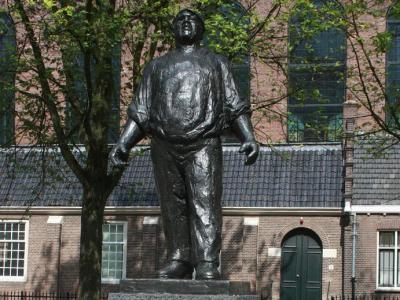
Standing resolutely in a small square outside the Portuguese Synagogue, the Dockworker statue, sculpted by Mari Andriessen, honors the working class of Amsterdam, not limited to dockworkers alone. It commemorates the February 1941 strike, when the city’s laborers-dockworkers, tram drivers, and others-rose in protest against the Nazis’ brutal treatment of the Jewish community.
This historic strike was triggered by a violent Nazi crackdown in Amsterdam’s old Jewish quarter. The Germans had launched retaliatory arrests and pogroms following a street skirmish that left several Dutch police officers injured. The city’s workers, led by the outlawed Communist Party, organized the first public protest against Nazi oppression in all of occupied Europe.
On February 26, 1941, over 300,000 citizens took to the streets. The strike lasted two days before being crushed by the German authorities. Still, its legacy endures. Each year, on February 25, people gather at the Dockworker statue for a memorial ceremony. Wreaths are laid, and a procession passes by to honor the courage of those who dared to defy tyranny. Politicians, public transportation officials, and Holocaust survivor groups come together, ensuring that this powerful story of resistance is never forgotten.
This historic strike was triggered by a violent Nazi crackdown in Amsterdam’s old Jewish quarter. The Germans had launched retaliatory arrests and pogroms following a street skirmish that left several Dutch police officers injured. The city’s workers, led by the outlawed Communist Party, organized the first public protest against Nazi oppression in all of occupied Europe.
On February 26, 1941, over 300,000 citizens took to the streets. The strike lasted two days before being crushed by the German authorities. Still, its legacy endures. Each year, on February 25, people gather at the Dockworker statue for a memorial ceremony. Wreaths are laid, and a procession passes by to honor the courage of those who dared to defy tyranny. Politicians, public transportation officials, and Holocaust survivor groups come together, ensuring that this powerful story of resistance is never forgotten.
11) Het Scheepvaartmuseum (National Maritime Museum) (must see)
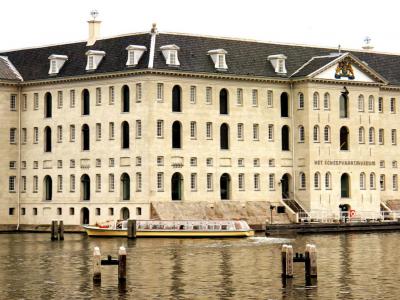
Holding the largest collection of model ships in the world, and crammed with fascinating objects, the former naval storehouse became a museum in 1973 when the Dutch Navy vacated the building. Where sails, ropes and guns were once stored is now an Aladdin’s Cave of nautical treasures. All ages are catered for, with virtual adventures at sea and interactive shows for kids and adults alike.
The courtyard, enclosed with a roof made of glass and an intricate naval compass, is stunning in itself but once inside, the collection offers rich displays of art, scale models, interactive activities and interesting artifacts. The space is nicely broken into three easily accessible sections, each with something to interest everyone.
The replica ship "The Amsterdam" is well worth a visit, especially the interactive activity where visitors put on 3D-glasses and are guided back in time to see what the harbor would have been like in the 1700s.
The restaurant and courtyard are open to everyone, not just those visiting the museum. There is a well-stocked gift shop as well.
Tip:
Be sure not to overlook the free virtual reality show about the East India ship, but remember to pre-book tickets for it online.
The courtyard, enclosed with a roof made of glass and an intricate naval compass, is stunning in itself but once inside, the collection offers rich displays of art, scale models, interactive activities and interesting artifacts. The space is nicely broken into three easily accessible sections, each with something to interest everyone.
The replica ship "The Amsterdam" is well worth a visit, especially the interactive activity where visitors put on 3D-glasses and are guided back in time to see what the harbor would have been like in the 1700s.
The restaurant and courtyard are open to everyone, not just those visiting the museum. There is a well-stocked gift shop as well.
Tip:
Be sure not to overlook the free virtual reality show about the East India ship, but remember to pre-book tickets for it online.
