Custom Walk in Annapolis, Maryland by jialiu_ad2b5 created on 2026-04-13
Guide Location: USA » Annapolis
Guide Type: Custom Walk
# of Sights: 9
Tour Duration: 2 Hour(s)
Travel Distance: 2.9 Km or 1.8 Miles
Share Key: L5MDQ
Guide Type: Custom Walk
# of Sights: 9
Tour Duration: 2 Hour(s)
Travel Distance: 2.9 Km or 1.8 Miles
Share Key: L5MDQ
How It Works
Please retrieve this walk in the GPSmyCity app. Once done, the app will guide you from one tour stop to the next as if you had a personal tour guide. If you created the walk on this website or come to the page via a link, please follow the instructions below to retrieve the walk in the app.
Retrieve This Walk in App
Step 1. Download the app "GPSmyCity: Walks in 1K+ Cities" on Apple App Store or Google Play Store.



Step 2. In the GPSmyCity app, download(or launch) the guide "Annapolis Map and Walking Tours".
Step 3. Tap the menu button located at upper right corner of the "Walks" screen and select "Retrieve custom walk". Enter the share key: L5MDQ
1) Ego Alley (must see)
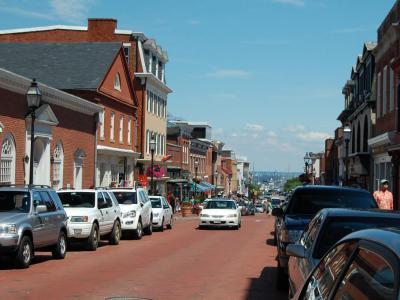
Ego Alley is a narrow channel where boats slowly pass through the harbor while people watch from nearby docks and waterfront paths. The name comes from a tradition where boat owners cruise back and forth so others can see their vessels. Sailboats, yachts, and small motorboats move at a slow pace, and people often wave to friends or admire the boats passing by.
The channel developed as part of the harbor in the eighteenth century, when the port grew as a center for trade and shipping. There is no exact record of when the nickname “Ego Alley” first appeared, but it became widely used in the twentieth century as recreational boating increased across the Chesapeake Bay. As more sailors began visiting, the narrow passage became a place where boats gathered and slowly passed through the harbor.
Sailors traveling through the bay often stop here while exploring the region. Some vessels pass through the channel briefly before continuing their trip, while others dock nearby for a longer stay. Because the waterway is narrow, boats move carefully and slowly. This slower pace allows people on the docks and on board the boats to greet each other, talk across the water, or simply observe the wide range of vessels moving through the harbor.
Activity is highest from spring to early autumn, especially on weekends. Sailboats returning from races often pass through the channel, and visiting cruisers arrive after spending the day on the bay. Summer evenings are usually the busiest, when people gather along the waterfront to watch the steady line of boats moving through the harbor.
The channel developed as part of the harbor in the eighteenth century, when the port grew as a center for trade and shipping. There is no exact record of when the nickname “Ego Alley” first appeared, but it became widely used in the twentieth century as recreational boating increased across the Chesapeake Bay. As more sailors began visiting, the narrow passage became a place where boats gathered and slowly passed through the harbor.
Sailors traveling through the bay often stop here while exploring the region. Some vessels pass through the channel briefly before continuing their trip, while others dock nearby for a longer stay. Because the waterway is narrow, boats move carefully and slowly. This slower pace allows people on the docks and on board the boats to greet each other, talk across the water, or simply observe the wide range of vessels moving through the harbor.
Activity is highest from spring to early autumn, especially on weekends. Sailboats returning from races often pass through the channel, and visiting cruisers arrive after spending the day on the bay. Summer evenings are usually the busiest, when people gather along the waterfront to watch the steady line of boats moving through the harbor.
2) William Paca House and Garden (must see)
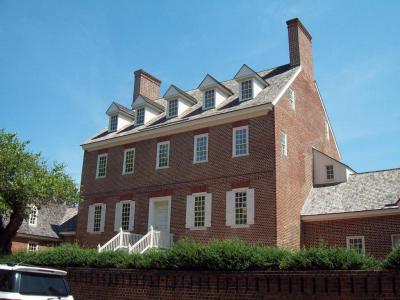
William Paca House and Garden is a historic home built in the early 1760s for William Paca, a lawyer and political leader who later signed the Declaration of Independence. He was active in the colonial government of Maryland and served as governor from 1782 to 1785. In the twentieth century the house and garden were restored so visitors could see how a wealthy colonial household once lived.
The mansion is built of brick in the Georgian style, which was popular in the eighteenth century. Its design is balanced, with a central section connected to smaller wings by curved passageways. Inside, the rooms were arranged for both daily life and formal gatherings. Today visitors can walk through several restored rooms with period furniture, fireplaces, wood paneling, and decorative plaster ceilings that show how an upper-class household lived before the American Revolution.
Behind the house is a two-acre garden designed in a formal, symmetrical layout. By the mid-twentieth century the original garden had disappeared, but archaeologists studied the site in the 1960s and helped recreate its historic design. Brick paths divide the garden into terraces, with flower beds, small lawns, and shaded areas. A long reflecting pond runs through the center and leads the eye toward a small summerhouse at the far end.
The garden was not only decorative but also practical. Fruit trees, herbs, and vegetables were grown here for the household kitchen. The layout reflected popular garden design of the eighteenth century. From the upper terraces, visitors can look back at the house and see how the building and garden were planned as one space.
The mansion is built of brick in the Georgian style, which was popular in the eighteenth century. Its design is balanced, with a central section connected to smaller wings by curved passageways. Inside, the rooms were arranged for both daily life and formal gatherings. Today visitors can walk through several restored rooms with period furniture, fireplaces, wood paneling, and decorative plaster ceilings that show how an upper-class household lived before the American Revolution.
Behind the house is a two-acre garden designed in a formal, symmetrical layout. By the mid-twentieth century the original garden had disappeared, but archaeologists studied the site in the 1960s and helped recreate its historic design. Brick paths divide the garden into terraces, with flower beds, small lawns, and shaded areas. A long reflecting pond runs through the center and leads the eye toward a small summerhouse at the far end.
The garden was not only decorative but also practical. Fruit trees, herbs, and vegetables were grown here for the household kitchen. The layout reflected popular garden design of the eighteenth century. From the upper terraces, visitors can look back at the house and see how the building and garden were planned as one space.
3) Naval Academy Chapel (must see)
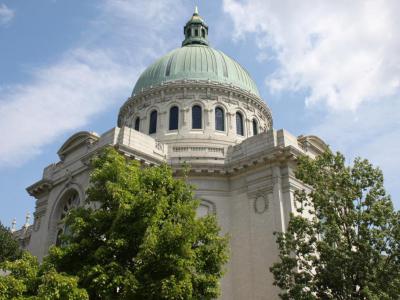
Naval Academy Chapel is the main place of worship at the United States Naval Academy. Completed in 1908 and designed by architect Ernest Flagg, it replaced an earlier mid-nineteenth-century chapel that had become too small for the growing number of midshipmen. Since then, the building has been used for religious services, ceremonies, weddings, and memorial events connected with naval life.
The chapel follows the Beaux-Arts style used for many academy buildings of that time. Its most visible feature is the large dome above the campus. The dome was first covered with decorated terra cotta, but this was removed in 1928 after pieces began falling, and a copper covering was completed in 1929. The original 1908 building seated about 1,200–1,600 people, and an expansion by architect Paul Philippe Cret between 1938 and 1940 increased the capacity to about 2,500.
Beneath the chapel is the crypt of John Paul Jones, a naval officer of the American Revolutionary War often called the “father of the American Navy.” His remains were discovered in Paris in 1905 and placed in the crypt on January 26, 1913. The black-and-white marble tomb, designed by architect Whitney Warren, was inspired by Napoleon’s tomb at Les Invalides in Paris.
Inside the chapel visitors can see stained-glass windows, memorial plaques, and historic naval flags connected with naval service. Among the notable artworks is a stained-glass window created by Tiffany Studios. Protestant and Catholic services are regularly held here for midshipmen and academy staff. The building also continues to host ceremonies, concerts, and guided visits that allow guests to explore both the main hall and the crypt.
The chapel follows the Beaux-Arts style used for many academy buildings of that time. Its most visible feature is the large dome above the campus. The dome was first covered with decorated terra cotta, but this was removed in 1928 after pieces began falling, and a copper covering was completed in 1929. The original 1908 building seated about 1,200–1,600 people, and an expansion by architect Paul Philippe Cret between 1938 and 1940 increased the capacity to about 2,500.
Beneath the chapel is the crypt of John Paul Jones, a naval officer of the American Revolutionary War often called the “father of the American Navy.” His remains were discovered in Paris in 1905 and placed in the crypt on January 26, 1913. The black-and-white marble tomb, designed by architect Whitney Warren, was inspired by Napoleon’s tomb at Les Invalides in Paris.
Inside the chapel visitors can see stained-glass windows, memorial plaques, and historic naval flags connected with naval service. Among the notable artworks is a stained-glass window created by Tiffany Studios. Protestant and Catholic services are regularly held here for midshipmen and academy staff. The building also continues to host ceremonies, concerts, and guided visits that allow guests to explore both the main hall and the crypt.
4) Naval Academy Museum (must see)
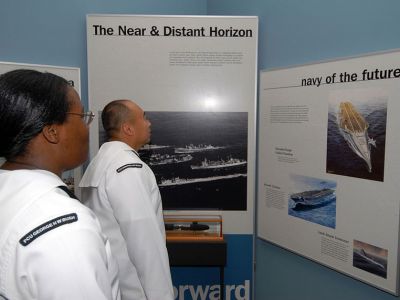
The Naval Academy Museum is located inside Preble Hall at the United States Naval Academy. It was founded in 1845 to help educate midshipmen by collecting objects related to naval history and life at sea. Over time the collection grew and became one of the most important naval history museums in the United States. Today it is open to visitors who want to learn more about ships, naval exploration, and the development of the U.S. Navy.
One of the main highlights is the large collection of ship models. Some models date from the seventeenth and eighteenth centuries and were once used by European navies to study ship design. A well-known part of the museum is the Rogers Collection, which includes about 108 detailed ship models. These models show how ships changed over time, from wooden sailing vessels to modern naval ships.
The museum also has exhibits about important moments in naval history. Displays explain events such as early ocean exploration, the American Revolution, the War of 1812, and the world wars. Visitors can see uniforms, navigation tools, weapons, paintings, and objects connected with sailors and naval missions. Another section focuses on the history of the Naval Academy and how officers have been trained there.
The museum also displays the Beverley R. Robinson Collection of naval prints and paintings, one of the largest collections of its kind. Many artworks show sea battles, voyages, and everyday life on ships. Together with the ship models and historical objects, these exhibits help visitors understand how naval technology and life at sea have changed over the centuries.
One of the main highlights is the large collection of ship models. Some models date from the seventeenth and eighteenth centuries and were once used by European navies to study ship design. A well-known part of the museum is the Rogers Collection, which includes about 108 detailed ship models. These models show how ships changed over time, from wooden sailing vessels to modern naval ships.
The museum also has exhibits about important moments in naval history. Displays explain events such as early ocean exploration, the American Revolution, the War of 1812, and the world wars. Visitors can see uniforms, navigation tools, weapons, paintings, and objects connected with sailors and naval missions. Another section focuses on the history of the Naval Academy and how officers have been trained there.
The museum also displays the Beverley R. Robinson Collection of naval prints and paintings, one of the largest collections of its kind. Many artworks show sea battles, voyages, and everyday life on ships. Together with the ship models and historical objects, these exhibits help visitors understand how naval technology and life at sea have changed over the centuries.
5) Maryland State House (must see)
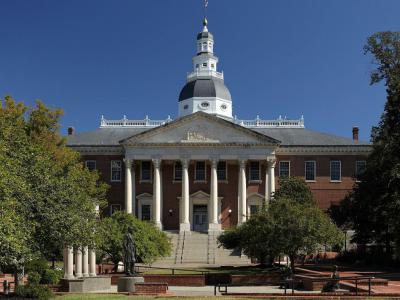
The Maryland State House is the oldest state capitol building in the United States that has been in continuous legislative use. Construction began in 1772, when Maryland leaders decided to build a permanent government center to replace earlier meeting places. The building soon became closely connected with the events of the American Revolution. Between November 1783 and August 1784 the Continental Congress met here, making the city the temporary capital of the United States during that period.
Several important national events took place inside the building. On December 23, 1783, General George Washington resigned his commission as commander-in-chief of the Continental Army in the Old Senate Chamber, returning military authority to civilian government. The Treaty of Paris, which ended the Revolutionary War between the United States and Great Britain, was ratified here in January 1784.
The building is known for its large wooden dome, completed in 1794 and built without nails. It is the largest wooden dome of its kind in the United States. The architecture reflects late colonial and early American design, with brick walls and balanced proportions. Later wings were added in the nineteenth and twentieth centuries to provide more space for offices and meeting rooms.
Visitors can enter several historic rooms that preserve the atmosphere of the late eighteenth century. The Old Senate Chamber, where Washington resigned his command, has been carefully restored with period furnishings and decorations. Nearby rooms display portraits, historical documents, and information about the building’s role in the development of American government. Guided tours help explain how the legislature still meets here today, connecting the historic structure with its continuing role in public life.
Several important national events took place inside the building. On December 23, 1783, General George Washington resigned his commission as commander-in-chief of the Continental Army in the Old Senate Chamber, returning military authority to civilian government. The Treaty of Paris, which ended the Revolutionary War between the United States and Great Britain, was ratified here in January 1784.
The building is known for its large wooden dome, completed in 1794 and built without nails. It is the largest wooden dome of its kind in the United States. The architecture reflects late colonial and early American design, with brick walls and balanced proportions. Later wings were added in the nineteenth and twentieth centuries to provide more space for offices and meeting rooms.
Visitors can enter several historic rooms that preserve the atmosphere of the late eighteenth century. The Old Senate Chamber, where Washington resigned his command, has been carefully restored with period furnishings and decorations. Nearby rooms display portraits, historical documents, and information about the building’s role in the development of American government. Guided tours help explain how the legislature still meets here today, connecting the historic structure with its continuing role in public life.
6) St. Anne's Church (must see)
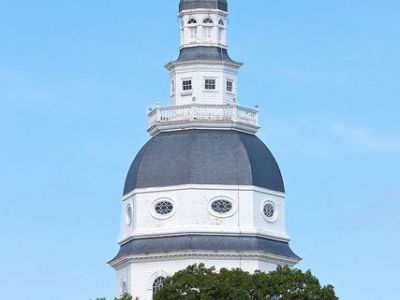
St. Anne’s Church is an Episcopal parish founded in 1692 during the colonial period of Maryland. At that time the Church of England was the official church of the colony, and the parish served both religious and community needs. Early church buildings stood near the center of the colonial town and were used by residents, government officials, and merchants. Over time the church became an important gathering place for both daily life and public events.
The building seen today was completed in 1859 after a fire on Valentine’s Day in 1858 destroyed the earlier church. It was designed by architect C. Harrison Condit of Newark, New Jersey, in the Romanesque Revival style, which was popular for churches in the mid-nineteenth century. The red brick structure features rounded arches, tall windows, and a high steeple above the entrance.
Inside the church are several historic artworks and memorials connected with the parish’s long past. One of the best-known features is a stained-glass window created by Tiffany Studios of New York in the late nineteenth century. The window shows St. Anne teaching the young Virgin Mary. When sunlight passes through the colored glass, it fills the interior with changing patterns of light. Visitors can also see carved wooden furnishings, plaques, and memorial tablets honoring people connected with the church community.
The churchyard contains graves from the colonial period and later years. Among those buried there are Sir Robert Eden, the last colonial governor of Maryland, and Nicholas Greenberry, an earlier provincial governor. Today the church continues to hold regular services, concerts, and community events, and visitors often stop to explore the historic building and its churchyard.
The building seen today was completed in 1859 after a fire on Valentine’s Day in 1858 destroyed the earlier church. It was designed by architect C. Harrison Condit of Newark, New Jersey, in the Romanesque Revival style, which was popular for churches in the mid-nineteenth century. The red brick structure features rounded arches, tall windows, and a high steeple above the entrance.
Inside the church are several historic artworks and memorials connected with the parish’s long past. One of the best-known features is a stained-glass window created by Tiffany Studios of New York in the late nineteenth century. The window shows St. Anne teaching the young Virgin Mary. When sunlight passes through the colored glass, it fills the interior with changing patterns of light. Visitors can also see carved wooden furnishings, plaques, and memorial tablets honoring people connected with the church community.
The churchyard contains graves from the colonial period and later years. Among those buried there are Sir Robert Eden, the last colonial governor of Maryland, and Nicholas Greenberry, an earlier provincial governor. Today the church continues to hold regular services, concerts, and community events, and visitors often stop to explore the historic building and its churchyard.
7) Colonial Annapolis Historic District (must see)
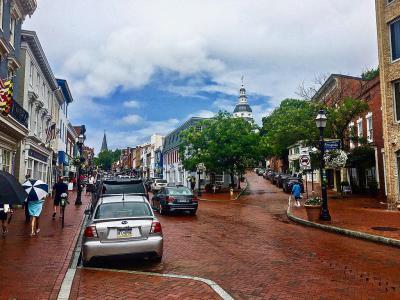
Colonial Annapolis Historic District preserves one of the largest groups of eighteenth-century buildings in the United States. The area grew during the colonial period, when the nearby harbor was an active center for trade. Many buildings from the early and mid-1700s still remain, showing what the town looked like when Maryland was a British colony.
The street layout is unusual compared with most colonial towns. Instead of a grid, the roads spread outward from two circular plazas, a design influenced by Baroque planning used in eighteenth-century Europe. The plan was created in the 1690s by royal governor Francis Nicholson. One circle was intended for government buildings and the other for churches, and this design still shapes the streets today.
One of the most important buildings in the district is the Maryland State House, completed in 1779 and the oldest state capitol still used for legislative work in the United States. In 1783 and 1784 the Continental Congress met here, and in December 1783 George Washington resigned as commander of the Continental Army inside the building. All four Maryland signers of the Declaration of Independence also lived in this community.
The district also includes St. John’s College, founded in 1696 as King William’s School and recognized as the third-oldest college in the United States. A tulip poplar known as the Liberty Tree once stood on the campus where residents discussed ideas about independence. The original tree was damaged by Hurricane Floyd in 1999 and later removed, but descendants have been planted in Maryland and other places.
The street layout is unusual compared with most colonial towns. Instead of a grid, the roads spread outward from two circular plazas, a design influenced by Baroque planning used in eighteenth-century Europe. The plan was created in the 1690s by royal governor Francis Nicholson. One circle was intended for government buildings and the other for churches, and this design still shapes the streets today.
One of the most important buildings in the district is the Maryland State House, completed in 1779 and the oldest state capitol still used for legislative work in the United States. In 1783 and 1784 the Continental Congress met here, and in December 1783 George Washington resigned as commander of the Continental Army inside the building. All four Maryland signers of the Declaration of Independence also lived in this community.
The district also includes St. John’s College, founded in 1696 as King William’s School and recognized as the third-oldest college in the United States. A tulip poplar known as the Liberty Tree once stood on the campus where residents discussed ideas about independence. The original tree was damaged by Hurricane Floyd in 1999 and later removed, but descendants have been planted in Maryland and other places.
8) Main Street (must see)
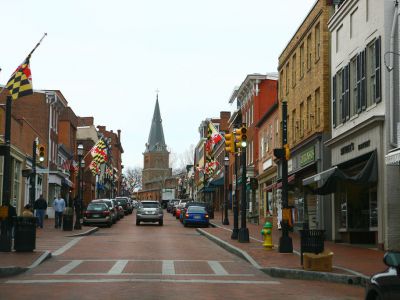
Main Street developed during the eighteenth century as the port town expanded and trade increased along the Chesapeake Bay. Originally known as Church Street, it grew into a busy commercial route linking the waterfront at City Dock with Church Circle, a central area connected to nearby government buildings, including the Maryland State House.
Because it stood between the harbor and the civic center, the street became an important place for business. Merchants, craftsmen, and ship-related trades operated from buildings along the route, serving sailors, travelers, and residents.
Many buildings along the street date from the eighteenth and nineteenth centuries. Most are narrow brick structures, two or three stories tall, with shops on the ground floor and living space above. Many still keep historic details such as original brickwork, wooden window frames, and traditional storefronts, reflecting Georgian, Federal, Victorian, Greek Revival, and Italianate styles.
Today the street functions as a busy shopping and dining area. Independent stores sell clothing, books, souvenirs, and handmade crafts, while restaurants and cafés offer seafood, American dishes, and international food. Small galleries and specialty shops reflect the strong connection between tourism and local culture. Because the street slopes gently toward the harbor, visitors walking downhill often see boat masts rising from the docks at City Dock.
The area becomes especially active during weekends, festivals, and public events connected with nearby civic spaces and the waterfront. Outdoor dining, seasonal decorations, and occasional street performers add to the atmosphere. Walking along the street shows how historic commercial buildings continue to serve modern businesses while preserving architectural features from earlier centuries.
Because it stood between the harbor and the civic center, the street became an important place for business. Merchants, craftsmen, and ship-related trades operated from buildings along the route, serving sailors, travelers, and residents.
Many buildings along the street date from the eighteenth and nineteenth centuries. Most are narrow brick structures, two or three stories tall, with shops on the ground floor and living space above. Many still keep historic details such as original brickwork, wooden window frames, and traditional storefronts, reflecting Georgian, Federal, Victorian, Greek Revival, and Italianate styles.
Today the street functions as a busy shopping and dining area. Independent stores sell clothing, books, souvenirs, and handmade crafts, while restaurants and cafés offer seafood, American dishes, and international food. Small galleries and specialty shops reflect the strong connection between tourism and local culture. Because the street slopes gently toward the harbor, visitors walking downhill often see boat masts rising from the docks at City Dock.
The area becomes especially active during weekends, festivals, and public events connected with nearby civic spaces and the waterfront. Outdoor dining, seasonal decorations, and occasional street performers add to the atmosphere. Walking along the street shows how historic commercial buildings continue to serve modern businesses while preserving architectural features from earlier centuries.
9) Kunta Kinte - Alex Haley Memorial (must see)
The Kunta Kinte – Alex Haley Memorial honors African heritage and the story shared in Roots by Alex Haley. It marks the harbor where the slave ship Lord Ligonier arrived on September 29, 1767, carrying captives from the Gambia River region, including Kunta Kinte. The memorial, developed in stages beginning with a plaque in 1981, identifies the arrival place of an enslaved African by name.
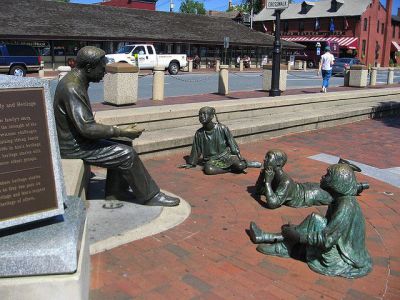
The central sculpture group was dedicated in 1999. It shows Alex Haley seated and reading from a book to three children of different backgrounds. The scene represents the passing of history through storytelling and memory. Around the plaza stands a curved “Story Wall” made of ten bronze plaques. These panels present quotations from Roots and describe the journey from West Africa to North America, helping visitors follow the narrative connected with Kunta Kinte’s capture, transport, and later generations.
Across the nearby plaza is a large compass rose about 14 feet (4.3 meters) in diameter, installed during the final phase of the memorial in 2002. The design is aligned with true north and places the harbor at its center. Its directional markers point toward regions across the Atlantic Ocean that were linked by the slave trade, encouraging visitors to face the direction of ancestral homelands.
The memorial was completed on June 12, 2002, when the Story Wall and compass rose were added. While the site honors the legacy of Roots, Alex Haley described the book as a mixture of historical research and family oral tradition. Today the memorial serves as a place where visitors can read the plaques, reflect on the history of the transatlantic slave trade, and consider the stories that connect past generations with the present.
The central sculpture group was dedicated in 1999. It shows Alex Haley seated and reading from a book to three children of different backgrounds. The scene represents the passing of history through storytelling and memory. Around the plaza stands a curved “Story Wall” made of ten bronze plaques. These panels present quotations from Roots and describe the journey from West Africa to North America, helping visitors follow the narrative connected with Kunta Kinte’s capture, transport, and later generations.
Across the nearby plaza is a large compass rose about 14 feet (4.3 meters) in diameter, installed during the final phase of the memorial in 2002. The design is aligned with true north and places the harbor at its center. Its directional markers point toward regions across the Atlantic Ocean that were linked by the slave trade, encouraging visitors to face the direction of ancestral homelands.
The memorial was completed on June 12, 2002, when the Story Wall and compass rose were added. While the site honors the legacy of Roots, Alex Haley described the book as a mixture of historical research and family oral tradition. Today the memorial serves as a place where visitors can read the plaques, reflect on the history of the transatlantic slave trade, and consider the stories that connect past generations with the present.
