Custom Walk in Los Angeles, California by theonidimopoulou02_ecc97d created on 2026-04-24
Guide Location: USA » Los Angeles
Guide Type: Custom Walk
# of Sights: 7
Tour Duration: 2 Hour(s)
Travel Distance: 3.1 Km or 1.9 Miles
Share Key: CB6PR
Guide Type: Custom Walk
# of Sights: 7
Tour Duration: 2 Hour(s)
Travel Distance: 3.1 Km or 1.9 Miles
Share Key: CB6PR
How It Works
Please retrieve this walk in the GPSmyCity app. Once done, the app will guide you from one tour stop to the next as if you had a personal tour guide. If you created the walk on this website or come to the page via a link, please follow the instructions below to retrieve the walk in the app.
Retrieve This Walk in App
Step 1. Download the app "GPSmyCity: Walks in 1K+ Cities" on Apple App Store or Google Play Store.



Step 2. In the GPSmyCity app, download(or launch) the guide "Los Angeles Map and Walking Tours".
Step 3. Tap the menu button located at upper right corner of the "Walks" screen and select "Retrieve custom walk". Enter the share key: CB6PR
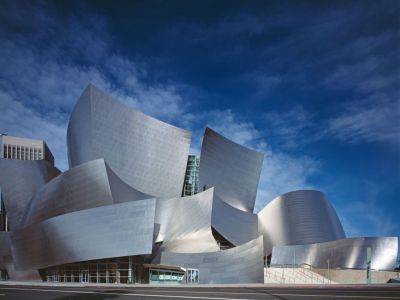
1) Walt Disney Concert Hall (must see)
No classical music lover should pass up a concert at the Walt Disney Concert Hall, which is home to the Los Angeles Philharmonic Orchestra and the Los Angeles Master Chorale. Considered one of the best concert halls in the world, it was built by Frank Gehry and opened in 2003, following an initial $50-million donation by Lillian Disney, Walt Disney's widow. The building is on six levels and its elegant stainless steel curves are formed to resemble a bowl of white roses, as a tribute to its generous benefactress.
Architecture buffs and concert hall buffs, in particular, may find similar vibes between this and the Berlin Philharmonic Hall (Berliner Philharmonie) in both the exterior lines and internal layout, even though the two venues were built 40 years apart and on two different continents. The magnificent acoustics, designed by Yasuhisa Toyota, allow for every orchestral sound – including adagios – to be point sharp, even at the furthest point from the stage. In turn, seating is well designed and extremely comfortable, providing unobstructed views of the performance throughout the entire hall, no matter where you sit.
The LA Philharmonic concerts (indeed, the best in town) would easily set you back $100-300 a ticket, but a little research and planning in advance may get you in for ten times less! One way is to look for the $20 tickets that they offer every now and then – only a few concerts per season; but if you can find them, it's a great deal. Another way to enjoy a decent concert is to look for California Philharmonic events. This smaller orchestra also performs here regularly and their tickets are quite affordable.
Tip:
The free self-guided tour is well worth taking if you have time to spare during the day.
Just leave an ID for the audio guide and you can spend around an hour taking the tours and enjoying the lovely little 3rd-floor park with its huge marble lotus flower.
Architecture buffs and concert hall buffs, in particular, may find similar vibes between this and the Berlin Philharmonic Hall (Berliner Philharmonie) in both the exterior lines and internal layout, even though the two venues were built 40 years apart and on two different continents. The magnificent acoustics, designed by Yasuhisa Toyota, allow for every orchestral sound – including adagios – to be point sharp, even at the furthest point from the stage. In turn, seating is well designed and extremely comfortable, providing unobstructed views of the performance throughout the entire hall, no matter where you sit.
The LA Philharmonic concerts (indeed, the best in town) would easily set you back $100-300 a ticket, but a little research and planning in advance may get you in for ten times less! One way is to look for the $20 tickets that they offer every now and then – only a few concerts per season; but if you can find them, it's a great deal. Another way to enjoy a decent concert is to look for California Philharmonic events. This smaller orchestra also performs here regularly and their tickets are quite affordable.
Tip:
The free self-guided tour is well worth taking if you have time to spare during the day.
Just leave an ID for the audio guide and you can spend around an hour taking the tours and enjoying the lovely little 3rd-floor park with its huge marble lotus flower.
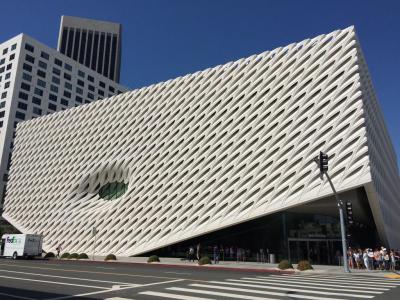
2) The Broad (must see)
LA's newest contemporary art museum, The Broad, was founded by philanthropists Eli and Edythe Broad and opened to the public in September 2015. Housed in a striking, honeycomb-like building designed by the architectural firm Diller Scofidio + Renfro, the museum itself is very much an attraction in its own right. Its distinctive metallic exterior is made up of 2,500 fiberglass-reinforced concrete panels, which allow natural light to filter into the galleries while also providing shade and insulation.
"The Broad" is an apt name for this museum as it presents a wide array of modern art pieces. The collection consists of over 2,000 works of art, spanning many decades, from the postwar to contemporary periods, and various disciplines, with something to see for everyone – of almost any age. The famous standard names here include the likes of Andy Warhol, Jeff Koons, Ed Ruscha, Roy Lichtenstein, and Cindy Sherman, but do check out the multi-media advance offerings and the special exhibits that change on a constant basis. Look out, also, for some of the coolest elevator and escalator rides in the Downtown area.
Inside, the museum exhibition space is organized on two floors, with works arranged thematically rather than chronologically. Visitors can expect to see a wide range of art, from massive sculptures and installations to paintings, photographs, and video works. The museum also has a robust program of temporary exhibitions, which showcase works by emerging and established artists from around the world.
One of the most popular pieces in the museum's permanent collection is Yayoi Kusama's Infinity Mirrored Room - The Souls of Millions of Light Years Away, which is a darkened room filled with reflective orbs that seem to go on forever. To see it, it is recommended that you arrive early – especially on peak-time summer weekends and holidays – and walk quickly to the right side upon entering to put your name on the wait list at the kiosk. Although the time inside the room is limited to a maximum of 45 seconds, you will be left with the quite exquisite feeling of being alone with millions of stars.
Although some special exhibitions may require a fee, the major – and perhaps unique to Downtown – aspect of the Broad is its free general admissions policy for the permanent collection. This has resulted in a far younger, and far more racially/culturally diverse audience than any other art museum in Los Angeles!
The Broad is definitely worth a visit for an hour or two – just make sure to pre-book tickets online and avoid waiting in the standby ticket line!
"The Broad" is an apt name for this museum as it presents a wide array of modern art pieces. The collection consists of over 2,000 works of art, spanning many decades, from the postwar to contemporary periods, and various disciplines, with something to see for everyone – of almost any age. The famous standard names here include the likes of Andy Warhol, Jeff Koons, Ed Ruscha, Roy Lichtenstein, and Cindy Sherman, but do check out the multi-media advance offerings and the special exhibits that change on a constant basis. Look out, also, for some of the coolest elevator and escalator rides in the Downtown area.
Inside, the museum exhibition space is organized on two floors, with works arranged thematically rather than chronologically. Visitors can expect to see a wide range of art, from massive sculptures and installations to paintings, photographs, and video works. The museum also has a robust program of temporary exhibitions, which showcase works by emerging and established artists from around the world.
One of the most popular pieces in the museum's permanent collection is Yayoi Kusama's Infinity Mirrored Room - The Souls of Millions of Light Years Away, which is a darkened room filled with reflective orbs that seem to go on forever. To see it, it is recommended that you arrive early – especially on peak-time summer weekends and holidays – and walk quickly to the right side upon entering to put your name on the wait list at the kiosk. Although the time inside the room is limited to a maximum of 45 seconds, you will be left with the quite exquisite feeling of being alone with millions of stars.
Although some special exhibitions may require a fee, the major – and perhaps unique to Downtown – aspect of the Broad is its free general admissions policy for the permanent collection. This has resulted in a far younger, and far more racially/culturally diverse audience than any other art museum in Los Angeles!
The Broad is definitely worth a visit for an hour or two – just make sure to pre-book tickets online and avoid waiting in the standby ticket line!
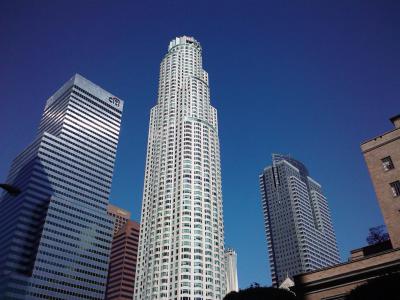
3) US Bank Tower
The US Bank Tower isn’t open to public tours, but you should go and see this wonderful building anyway, which is one of the city’s icons and is the 47th tallest building in the world.
The building, also known as the Library Tower, stands on West 5th Street in Los Angeles’ business area. It is 310 meters high, with 73 storeys and two underground parking levels. Built of glass and steel with a white granite curtain wall, it was designed to resist an earthquake of up to 8 on the Richter scale. Its architecture of overlapping spirals and cubes make the building both circular and square. It was built in 1989 by the architects Pei Cobb Freed and Partners.
On top of the building, in accordance with building laws, there is a heliport – the highest in the world. The glass crown on top of the tower is illuminated at night; the colours vary depending on the day, the season and even on which of Los Angeles baseball or basketball teams is playing in the city.
You will probably recognize the tower, as it has been used as the backdrop of various films – it has the distinction of being the first building destroyed by the aliens in Independence Day!
The building, also known as the Library Tower, stands on West 5th Street in Los Angeles’ business area. It is 310 meters high, with 73 storeys and two underground parking levels. Built of glass and steel with a white granite curtain wall, it was designed to resist an earthquake of up to 8 on the Richter scale. Its architecture of overlapping spirals and cubes make the building both circular and square. It was built in 1989 by the architects Pei Cobb Freed and Partners.
On top of the building, in accordance with building laws, there is a heliport – the highest in the world. The glass crown on top of the tower is illuminated at night; the colours vary depending on the day, the season and even on which of Los Angeles baseball or basketball teams is playing in the city.
You will probably recognize the tower, as it has been used as the backdrop of various films – it has the distinction of being the first building destroyed by the aliens in Independence Day!
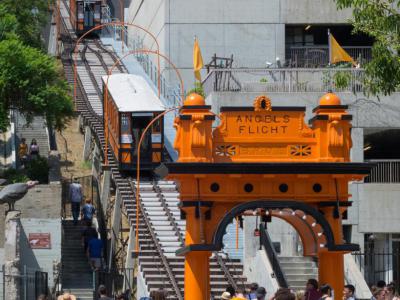
4) Angels Flight Railway
Just a short distance from the famous Grand Central Market is one of LA's most enduring (and beloved) landmarks, the Angels Flight Railway. This whimsically-named funicular bills itself as "the world's shortest railway". Indeed, it can take you up and down a steep incline between Hill Street and Olive Street, nice and easy, in just a minute or so, which is still enough to put a silly smile on your face, being much fun, albeit, admittedly, of a shorter duration.
The narrow gauge cable railway has only two carriages, endearingly named Sinai and Olivet – roughly from the same era as San Francisco's cable cars – which travel on an almost continuous loop.
The railway first opened on New Year's Eve in 1901 and quickly became a popular mode of transportation. It was originally designed to serve the Bunker Hill district. With its stately Victorian mansions, Bunker Hill was one of LA's very upmarket neighborhoods, and the area's elite residents apparently rode down on Angels Flight to shop for their groceries in Grand Central Market's open-air arcade.
In those days, the well-heeled Bunker Hill residents paid only a penny a ride. Today, the ride costs $1 each way – payable upon alighting at the terminus, which is still a true bargain for a nice piece of history.
In 1912, the"Angels Flight" name (which was originally displayed at the Hill Street entrance archway) became official, and by the 1950s the railway had carried over 100 million passengers already! The count of them to date has been lost...
The railway was closed and dismantled in 1969 due to large-scale development in the area, but was later restored and reopened in 1996. However, tragedy struck in 2001 when a derailment occurred, causing one of the cars to plummet down the track and kill a passenger. After an investigation, the railway was shut down again and remained closed for several years.
In 2010, the historic railway was once again restored and reopened, and today remains in operation.
The narrow gauge cable railway has only two carriages, endearingly named Sinai and Olivet – roughly from the same era as San Francisco's cable cars – which travel on an almost continuous loop.
The railway first opened on New Year's Eve in 1901 and quickly became a popular mode of transportation. It was originally designed to serve the Bunker Hill district. With its stately Victorian mansions, Bunker Hill was one of LA's very upmarket neighborhoods, and the area's elite residents apparently rode down on Angels Flight to shop for their groceries in Grand Central Market's open-air arcade.
In those days, the well-heeled Bunker Hill residents paid only a penny a ride. Today, the ride costs $1 each way – payable upon alighting at the terminus, which is still a true bargain for a nice piece of history.
In 1912, the"Angels Flight" name (which was originally displayed at the Hill Street entrance archway) became official, and by the 1950s the railway had carried over 100 million passengers already! The count of them to date has been lost...
The railway was closed and dismantled in 1969 due to large-scale development in the area, but was later restored and reopened in 1996. However, tragedy struck in 2001 when a derailment occurred, causing one of the cars to plummet down the track and kill a passenger. After an investigation, the railway was shut down again and remained closed for several years.
In 2010, the historic railway was once again restored and reopened, and today remains in operation.
5) Los Angeles City Hall
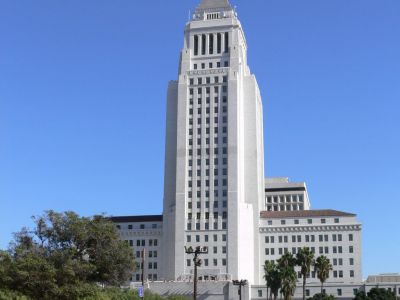
A lot of tourists visit the Los Angeles City Hall, not to see the mayor, but to visit the observation point on the 27th floor, which will give you a wonderful view out over the city – and even Catalina Island on a clear day.
The building, which stands on North Spring Street, was built in 1928 to designs by Parkinson, Austin and Martin. Its Art Deco/Art Modern façade is 138m high and has 32 storeys. Apart from the mayor’s office, it also houses the Los Angeles City Council Chambers and offices.
The tower is built of concrete symbolically made from sand taken from each of California’s 58 counties and mixed with water from the state’s 21 Spanish missions, which spread the Christian faith among the Native Americans between 1769 and 1823. The topmost part of the tower was inspired by the description of the Mausoleum of Mausolus in Halicarnassus.
In 1994, after the Northridge earthquake, the curtain wall terracotta and granite façade was restored. Between 1998 and 2001, the building was given a seismic retrofit and 526 base isolators were fitted, making it the tallest base isolated structure in the world, capable of withstanding an earthquake of up to 8 on the Richter scale.
The building, which stands on North Spring Street, was built in 1928 to designs by Parkinson, Austin and Martin. Its Art Deco/Art Modern façade is 138m high and has 32 storeys. Apart from the mayor’s office, it also houses the Los Angeles City Council Chambers and offices.
The tower is built of concrete symbolically made from sand taken from each of California’s 58 counties and mixed with water from the state’s 21 Spanish missions, which spread the Christian faith among the Native Americans between 1769 and 1823. The topmost part of the tower was inspired by the description of the Mausoleum of Mausolus in Halicarnassus.
In 1994, after the Northridge earthquake, the curtain wall terracotta and granite façade was restored. Between 1998 and 2001, the building was given a seismic retrofit and 526 base isolators were fitted, making it the tallest base isolated structure in the world, capable of withstanding an earthquake of up to 8 on the Richter scale.
6) Los Angeles Plaza
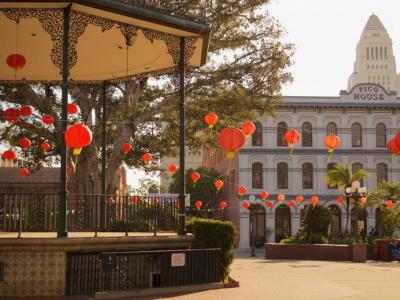
Los Angeles Plaza is the central point of the Los Angeles Plaza Historic District and the birthplace of the city. Felipe de Neve, the Spanish Governor of the Californias who selected the site and laid out the town of Pueblo de Los Ángeles, wanted the plaza to be the geographical center for his newly founded town.
De Neve's plaza, as was originally known, was rectangular in form - 75 yard wide by 100 in length. Built in the 1820s, the plaza was the city's commercial and social center. It remains the site of many festivals and celebrations. The plaza has large statues of three important figures in the city's history: King Carlos III of Spain, the monarch who ordered the founding of the Pueblo de Los Ángeles in 1780; Felipe de Neve, the Spanish Governor of the Californias who selected the site of the Pueblo and laid out the town; and Junípero Serra, founder and first head of the Alta California missions.
In addition to this, the plaza is dedicated to commemorating the original forty-four settlers (Los Pobladores), and the four soldiers who accompanied them. A large plaque listing their names was erected in the plaza, and later plaques dedicated to the eleven individual families were placed in the ground encircling the gazebo in the center of the plaza.
The plaza has a family friendly atmosphere with a perpetual buzz about it. There’s color, culture, entertainment, and food. There’s always something happening here – to watch, to listen, to savour.
De Neve's plaza, as was originally known, was rectangular in form - 75 yard wide by 100 in length. Built in the 1820s, the plaza was the city's commercial and social center. It remains the site of many festivals and celebrations. The plaza has large statues of three important figures in the city's history: King Carlos III of Spain, the monarch who ordered the founding of the Pueblo de Los Ángeles in 1780; Felipe de Neve, the Spanish Governor of the Californias who selected the site of the Pueblo and laid out the town; and Junípero Serra, founder and first head of the Alta California missions.
In addition to this, the plaza is dedicated to commemorating the original forty-four settlers (Los Pobladores), and the four soldiers who accompanied them. A large plaque listing their names was erected in the plaza, and later plaques dedicated to the eleven individual families were placed in the ground encircling the gazebo in the center of the plaza.
The plaza has a family friendly atmosphere with a perpetual buzz about it. There’s color, culture, entertainment, and food. There’s always something happening here – to watch, to listen, to savour.
7) Olvera Street (must see)
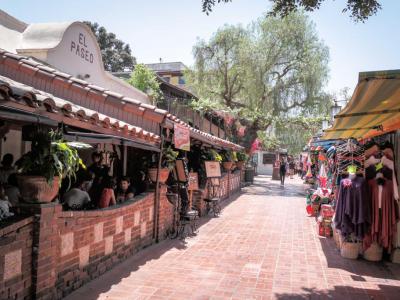
Olvera Street is a historic pedestrian street situated in El Pueblo de Los Ángeles, which is the historical center of Los Angeles. This street is located adjacent to the Plaza de Los Ángeles, which happens to be the oldest plaza in California. This plaza played a central role in the life of the city during the Spanish and Mexican periods, and even into the early American era, following the Conquest of California.
Olvera Street, also referred to as Calle Olvera or Placita Olvera, is a designated historic district in downtown Los Angeles and is a part of the El Pueblo de Los Angeles Historic Monument. Los Angeles was officially founded in 1781, and Olvera Street acquired its current name in 1877. Many of the historic buildings in the Plaza District can be found on Olvera Street, including some of the oldest monuments in Los Angeles, such as the Avila Adobe, which was constructed in 1818, the Pelanconi House from 1857, and the Sepulveda House built in 1887.
Olvera Street has even earned recognition as one of the "Top Five" streets in the "Great Streets of America" journal. The street is lined with restaurants, vendors, and public establishments, attracting nearly two million visitors each year. Additionally, there is a Visitors Center where tourists can watch a complimentary film depicting early life in Los Angeles.
Why You Should Visit:
If you want a taste of Mexico, this is the place to be.
Could be the closest thing to real Mexico one can experience!
Olvera Street, also referred to as Calle Olvera or Placita Olvera, is a designated historic district in downtown Los Angeles and is a part of the El Pueblo de Los Angeles Historic Monument. Los Angeles was officially founded in 1781, and Olvera Street acquired its current name in 1877. Many of the historic buildings in the Plaza District can be found on Olvera Street, including some of the oldest monuments in Los Angeles, such as the Avila Adobe, which was constructed in 1818, the Pelanconi House from 1857, and the Sepulveda House built in 1887.
Olvera Street has even earned recognition as one of the "Top Five" streets in the "Great Streets of America" journal. The street is lined with restaurants, vendors, and public establishments, attracting nearly two million visitors each year. Additionally, there is a Visitors Center where tourists can watch a complimentary film depicting early life in Los Angeles.
Why You Should Visit:
If you want a taste of Mexico, this is the place to be.
Could be the closest thing to real Mexico one can experience!
