Custom Walk in Venice, Italy by markjreese_a7434 created on 2026-05-05
Guide Location: Italy » Venice
Guide Type: Custom Walk
# of Sights: 10
Tour Duration: 2 Hour(s)
Travel Distance: 3.3 Km or 2.1 Miles
Share Key: 9HJTB
Guide Type: Custom Walk
# of Sights: 10
Tour Duration: 2 Hour(s)
Travel Distance: 3.3 Km or 2.1 Miles
Share Key: 9HJTB
How It Works
Please retrieve this walk in the GPSmyCity app. Once done, the app will guide you from one tour stop to the next as if you had a personal tour guide. If you created the walk on this website or come to the page via a link, please follow the instructions below to retrieve the walk in the app.
Retrieve This Walk in App
Step 1. Download the app "GPSmyCity: Walks in 1K+ Cities" on Apple App Store or Google Play Store.



Step 2. In the GPSmyCity app, download(or launch) the guide "Venice Map and Walking Tours".
Step 3. Tap the menu button located at upper right corner of the "Walks" screen and select "Retrieve custom walk". Enter the share key: 9HJTB
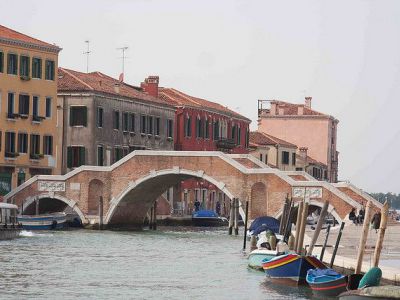
1) Ponte dei Tre Archi (Three Arches' Bridge)
The 17th-century Three Arches' Bridge ("Ponte dei Tre Archi") stands out as the sole three-arched bridge left in Venice, and largest of the city's bridges outside of the Grand Canal. Even regular motorboats pass gracefully beneath its three impressive arches. Located at the end of the Cannaregio Canal, which historically served as the main entrance to Venice before the introduction of rail and road connections, this area remains relatively untouched by tourist crowds. The bridge's commanding presence, visible from afar, adds to its Baroque-style allure and prominence.
In close proximity to the bridge, you will discover the Parco Savorgnan, one of the rare green spaces accessible to the public in Venice. On the other hand, if you venture further along the embankment, you will encounter the municipal slaughterhouse ("Macello Pubblico"). Originally constructed in 1843 by the hygiene-conscious Austrians, it bears ornate decorations featuring ox skulls. Today, following extensive deliberations, the space has been repurposed for use by the university.
In close proximity to the bridge, you will discover the Parco Savorgnan, one of the rare green spaces accessible to the public in Venice. On the other hand, if you venture further along the embankment, you will encounter the municipal slaughterhouse ("Macello Pubblico"). Originally constructed in 1843 by the hygiene-conscious Austrians, it bears ornate decorations featuring ox skulls. Today, following extensive deliberations, the space has been repurposed for use by the university.
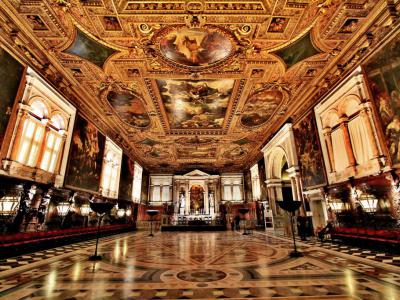
2) Scuola Grande di San Rocco (Great School of St. Roch) (must see)
The religious fraternity of Saint Roch was founded in Venice in 1478, at a time when faith and fear often went hand in hand. Seven years later, the saint’s relics arrived from Germany, and donations began pouring in with impressive enthusiasm. By 1489, the group had grown wealthy enough to be promoted to a “Great School” status, the top tier of Venetian confraternities. Then came the plague of 1527. As panic spread throughout the city, so did contributions, with Venetians hoping Saint Roch might offer some protection against the disease. The result was a financial windfall that eventually paid for the impressive building you see today-along with its extraordinary painted interiors...
What sets the Great School of San Roch apart is its decoration. No other Venetian confraternity went quite this far. The entire interior was entrusted to one artist: Tintoretto. Born Jacopo Robusti, he earned his nickname-Tintoretto (which means “Little Dyer”)-from his father’s trade, and then another nickname, Il Furioso (or “The Furious”), from the sheer intensity of his work style. Indeed, his brushwork shocked some contemporaries, thrilled others, and moved at a speed that seemed almost reckless. Even so, this was no quick job. Tintoretto began the project at age 46 and was still painting here three decades later, working almost until his death in 1594.
Over those thirty years, he produced more than fifty monumental canvases, covering walls and ceilings with scenes that feel dramatic, restless, and alive. Critics later called the building one of the most precious in Italy, largely because of this overwhelming cycle. Although the story begins downstairs with the Annunciation, the best place to start is upstairs, in the smaller Sala dell’Albergo. Here, the vast Crucifixion unfolds like a visual storm, offering a clear sense of Tintoretto at full power.
The main upper hall continues with New Testament scenes that ignore polite rules of perspective and lighting. Figures lean, twist, and surge through space, painted by the artist already in his late sixties and still pushing boundaries. Many consider these works among the finest of his career.
One last thing before you go in: this place is often quieter than Venice’s headline attractions, which only adds to its impact. Bring an audio guide-there are no wall texts to help you-and dress warmly, as the rooms can be chilly. Mirrors in the chapter room let you study the ceiling without turning your neck into a work of modern sculpture. And yes, bring your camera, too. Just don’t expect photos to capture the real experience...
What sets the Great School of San Roch apart is its decoration. No other Venetian confraternity went quite this far. The entire interior was entrusted to one artist: Tintoretto. Born Jacopo Robusti, he earned his nickname-Tintoretto (which means “Little Dyer”)-from his father’s trade, and then another nickname, Il Furioso (or “The Furious”), from the sheer intensity of his work style. Indeed, his brushwork shocked some contemporaries, thrilled others, and moved at a speed that seemed almost reckless. Even so, this was no quick job. Tintoretto began the project at age 46 and was still painting here three decades later, working almost until his death in 1594.
Over those thirty years, he produced more than fifty monumental canvases, covering walls and ceilings with scenes that feel dramatic, restless, and alive. Critics later called the building one of the most precious in Italy, largely because of this overwhelming cycle. Although the story begins downstairs with the Annunciation, the best place to start is upstairs, in the smaller Sala dell’Albergo. Here, the vast Crucifixion unfolds like a visual storm, offering a clear sense of Tintoretto at full power.
The main upper hall continues with New Testament scenes that ignore polite rules of perspective and lighting. Figures lean, twist, and surge through space, painted by the artist already in his late sixties and still pushing boundaries. Many consider these works among the finest of his career.
One last thing before you go in: this place is often quieter than Venice’s headline attractions, which only adds to its impact. Bring an audio guide-there are no wall texts to help you-and dress warmly, as the rooms can be chilly. Mirrors in the chapter room let you study the ceiling without turning your neck into a work of modern sculpture. And yes, bring your camera, too. Just don’t expect photos to capture the real experience...
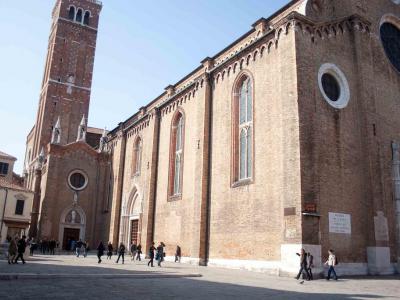
3) Basilica di Santa Maria Gloriosa dei Frari (Basilica of Glorious St. Mary of the Friars) (must see)
The Friars' Basilica, usually shortened by locals to just the “Frari,” sits a little away from the main tourist flow-and that already tells you something about Venice. The city’s second most important church, after St. Mark’s Basilica, is not on the main stage, but quietly holding its ground in a lived-in neighborhood. It doesn’t shout for attention, and it’s rarely swarmed. That restraint is misleading, because once inside, the Frari delivers one of the strongest artistic punches in the city.
The church was founded by the Franciscans in the late 13th century, and size was clearly not a concern. This is one of the largest churches in Venice, crowned by a brick bell tower that rises higher than all but St. Mark’s. Architecturally, it remains one of the few Venetian churches to keep a Gothic look-simple, sober, and almost blunt on the outside. A kind of vast brick container... What’s inside, however, is anything but restrained.
Indeed, the Frari is one of the best places in Venice to understand why Titian mattered. His Assumption of the Virgin dominates the high altar, and it still feels radical: dramatic movement, bold color, and a vertical energy that pulls your eyes upward. Nearby hangs the Madonna di Ca’ Pesaro, another break from tradition, with the Virgin shifted off center, and the composition tilted in a way that once caused raised eyebrows. Add works by Bellini and Vivarini, and you start to see how Venetian painting evolved within these walls.
And art here is not limited to just paintings, either. Donatello’s wooden Saint John the Baptist stands with unsettling intensity. A finely carved 15th-century choir fills the space with quiet craftsmanship. Then there are the tombs-many of them extravagant, some deliberately unsettling. On one side of the nave lies Titian himself, who died of plague in 1576 and was granted a church burial when others were not. Opposite, the marble pyramid mausoleum of sculptor Antonio Canova contrasts sharply with the theatrical monument to Doge Giovanni Pesaro, held up by massive sculpted figures and filled with symbols of decay and power.
If you want to catch the details, a small guide or leaflet helps. And yes-make sure to cover your shoulders here, because even masterpieces have dress codes...
The church was founded by the Franciscans in the late 13th century, and size was clearly not a concern. This is one of the largest churches in Venice, crowned by a brick bell tower that rises higher than all but St. Mark’s. Architecturally, it remains one of the few Venetian churches to keep a Gothic look-simple, sober, and almost blunt on the outside. A kind of vast brick container... What’s inside, however, is anything but restrained.
Indeed, the Frari is one of the best places in Venice to understand why Titian mattered. His Assumption of the Virgin dominates the high altar, and it still feels radical: dramatic movement, bold color, and a vertical energy that pulls your eyes upward. Nearby hangs the Madonna di Ca’ Pesaro, another break from tradition, with the Virgin shifted off center, and the composition tilted in a way that once caused raised eyebrows. Add works by Bellini and Vivarini, and you start to see how Venetian painting evolved within these walls.
And art here is not limited to just paintings, either. Donatello’s wooden Saint John the Baptist stands with unsettling intensity. A finely carved 15th-century choir fills the space with quiet craftsmanship. Then there are the tombs-many of them extravagant, some deliberately unsettling. On one side of the nave lies Titian himself, who died of plague in 1576 and was granted a church burial when others were not. Opposite, the marble pyramid mausoleum of sculptor Antonio Canova contrasts sharply with the theatrical monument to Doge Giovanni Pesaro, held up by massive sculpted figures and filled with symbols of decay and power.
If you want to catch the details, a small guide or leaflet helps. And yes-make sure to cover your shoulders here, because even masterpieces have dress codes...
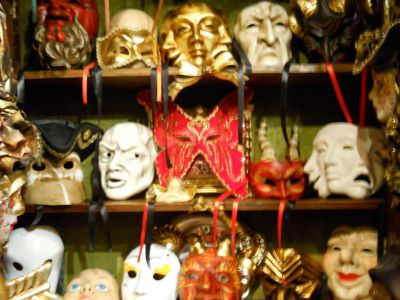
4) Tragicomica
The connection between Venice and masks has been deeply intertwined throughout history. Beyond the renowned "Carnevale", Venetians once donned masks for various occasions, including dinners, visits to the casino, and theater outings. Even those who had fallen from wealth and resorted to begging would conceal their faces behind masks, allowing them to hide both their identities and their shame. Many of the iconic and distinctive masks trace their origins to the Venetian theater tradition, particularly the famous "Commedia dell'arte", portraying characters such as lawyers, doctors, servants, butchers, and hunters.
While wandering the streets of Venice, it becomes evident that masks are abundantly available, with vendors on nearly every corner. However, caution is advised! Resist the temptation to purchase the ubiquitous cheap designs found throughout the city. A significant portion of them are not authentically Venetian, as they are mass-produced in countries like China or Taiwan.
If you seek an authentic Venetian mask, venture to this marvelous shop located near the Rialto Bridge. Although prices may be higher, it guarantees the acquisition of a genuine Venetian mask; furthermore, you can opt for a smaller version of your desired design. For those with ample time, there is even an opportunity to learn the intricate art of mask-making, allowing you to create your own stunning Venetian masks. Additionally, the shop offers a splendid selection of handcrafted Venetian costumes.
While wandering the streets of Venice, it becomes evident that masks are abundantly available, with vendors on nearly every corner. However, caution is advised! Resist the temptation to purchase the ubiquitous cheap designs found throughout the city. A significant portion of them are not authentically Venetian, as they are mass-produced in countries like China or Taiwan.
If you seek an authentic Venetian mask, venture to this marvelous shop located near the Rialto Bridge. Although prices may be higher, it guarantees the acquisition of a genuine Venetian mask; furthermore, you can opt for a smaller version of your desired design. For those with ample time, there is even an opportunity to learn the intricate art of mask-making, allowing you to create your own stunning Venetian masks. Additionally, the shop offers a splendid selection of handcrafted Venetian costumes.
5) Ponte delle Tette (Bridge of the Tits)
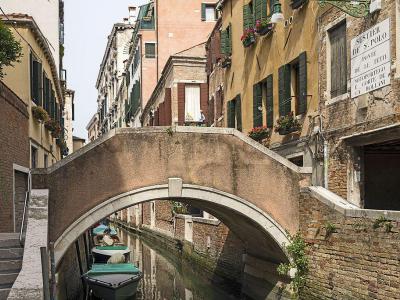
The name of this modest little crossing, the Bridge of the Tits, is entirely literal. You’re standing in what was once Venice’s officially sanctioned red-light district of San Cassiano, where public morality and public display were managed with the same bureaucratic enthusiasm as trade or taxes. The bridge earned its reputation because prostitutes were encouraged-quite openly-to bare their chests here, using visual persuasion to attract clients and, more pointedly, to redirect men suspected of preferring other men.
The Venetian Republic, never shy about regulation, took this policy seriously. Prostitutes were permitted to use lanterns after dark to illuminate their breasts, turning the bridge into a kind of state-approved advertising platform. At times, authorities even paid women to line up across the bridge, topless, ensuring there was no ambiguity about who was on offer-and conveniently excluding transvestite sex workers in the process. It was social engineering, Venetian-style: pragmatic, intrusive, and oddly methodical...
Prostitution itself had been legalized and confined to specific districts by the early sixteenth century, making Venice one of the first European cities to regulate sex work at a civic level. Within that system, the Bridge of the Tits became both a boundary and a stage, where desire, control, and spectacle intersected in full view.
And yes-Casanova knew this bridge well. For him, it was not just a shortcut but a hunting ground, part of a city where seduction unfolded in plain sight and temptation was woven into daily life. Here, Venice drops all pretense: pleasure was managed, morality negotiated, and even vice had office hours...
The Venetian Republic, never shy about regulation, took this policy seriously. Prostitutes were permitted to use lanterns after dark to illuminate their breasts, turning the bridge into a kind of state-approved advertising platform. At times, authorities even paid women to line up across the bridge, topless, ensuring there was no ambiguity about who was on offer-and conveniently excluding transvestite sex workers in the process. It was social engineering, Venetian-style: pragmatic, intrusive, and oddly methodical...
Prostitution itself had been legalized and confined to specific districts by the early sixteenth century, making Venice one of the first European cities to regulate sex work at a civic level. Within that system, the Bridge of the Tits became both a boundary and a stage, where desire, control, and spectacle intersected in full view.
And yes-Casanova knew this bridge well. For him, it was not just a shortcut but a hunting ground, part of a city where seduction unfolded in plain sight and temptation was woven into daily life. Here, Venice drops all pretense: pleasure was managed, morality negotiated, and even vice had office hours...
6) Mercato di Rialto (Rialto Food Market) (must see)
If Venice had a daily heartbeat, you’d hear it loud and clear at the Rialto Market. This is where the city does its shopping, chatting, and a fair bit of arguing over fish, too. It may look theatrical at first glance, but make no mistake-this is not a show put on for visitors. It’s a working market, busy, loud, and unapologetically real, which is exactly why it feels so alive.
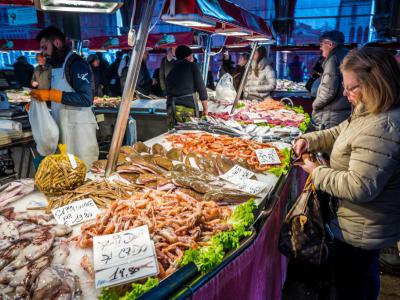
The setting does most of the heavy lifting. The market opens directly onto the Grand Canal, a position it has held since the 11th century, back when boats mattered more than pavements. Vendors unload their goods as they have for hundreds of years, surrounded by handwritten signs that are small works of art in their own right. These aren’t just price tags. They explain where the produce comes from, what it tastes like, and occasionally how you might cook it later. A kind of grocery list meeting gallery wall, with a strong Venetian accent...
What you’ll find here is both practical and visually irresistible. Flowers spill from buckets, spices perfume the air, and stalls overflow with seasonal fruit and vegetables. Fresh meat and seafood dominate the scene, with surprisingly reasonable prices for such a famous location. Some fish will look familiar, but much of it won’t. Cuttlefish, for example, are a local staple, prized for the ink that turns Venetian pasta a dramatic black. Shellfish of every shape and size pile up on beds of ice, glistening under the morning light. Even if you buy nothing, merely watching the rhythm of buying, selling, and bargaining is a full sensory experience-and yes, your camera will get a workout...
One small note on manners. This is a place where locals shop, not a museum with velvet ropes. Try to stay out of the way, keep moving when space is tight, and always ask before touching anything on display. Do that, and the Rialto Market will reward you with one of the most honest glimpses of everyday Venice you’re likely to find.
The setting does most of the heavy lifting. The market opens directly onto the Grand Canal, a position it has held since the 11th century, back when boats mattered more than pavements. Vendors unload their goods as they have for hundreds of years, surrounded by handwritten signs that are small works of art in their own right. These aren’t just price tags. They explain where the produce comes from, what it tastes like, and occasionally how you might cook it later. A kind of grocery list meeting gallery wall, with a strong Venetian accent...
What you’ll find here is both practical and visually irresistible. Flowers spill from buckets, spices perfume the air, and stalls overflow with seasonal fruit and vegetables. Fresh meat and seafood dominate the scene, with surprisingly reasonable prices for such a famous location. Some fish will look familiar, but much of it won’t. Cuttlefish, for example, are a local staple, prized for the ink that turns Venetian pasta a dramatic black. Shellfish of every shape and size pile up on beds of ice, glistening under the morning light. Even if you buy nothing, merely watching the rhythm of buying, selling, and bargaining is a full sensory experience-and yes, your camera will get a workout...
One small note on manners. This is a place where locals shop, not a museum with velvet ropes. Try to stay out of the way, keep moving when space is tight, and always ask before touching anything on display. Do that, and the Rialto Market will reward you with one of the most honest glimpses of everyday Venice you’re likely to find.
7) Fondaco dei Tedeschi (German Warehouse) (must see)
Just beside the Rialto Bridge, there’s a massive, square-shouldered building that once ran the business side of Venice’s global trade scene: the German Warehouse. Back in the Middle Ages, this was the headquarters for German merchants, who happened to be Venice’s most powerful foreign trading group. From as early as the 13th century, traders from cities like Nuremberg, Augsburg, and Judenburg lived, stored goods, negotiated deals, and generally made money right here-under this very roof.
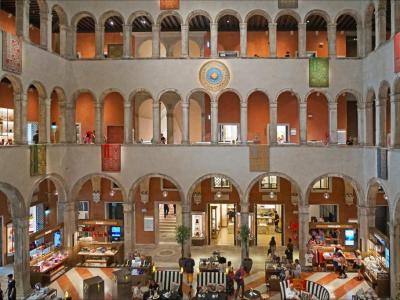
After a major fire, the building was reconstructed in the 16th century into the form you see now: a solid four-storey Renaissance structure arranged around a large inner courtyard. Architecturally, it looks fully Italian, but its concept tells a wider story. The word “fondaco” comes from Arabic, and the idea behind it was practical and controlled: part palace, part warehouse, part dormitory, with merchants living on-site and access carefully regulated. Venice knew how to welcome foreigners-on its own terms...
Jump ahead a few centuries, and the role has changed, though the location hasn’t. Today, the German Warehouse is one of Venice’s grandest shopping spaces, focused firmly on luxury brands. Yes, prices here reflect the address, and yes, it’s usually busy. Still, even if shopping isn’t on your agenda, this building alone has a trick worth your time.
Head up to the rooftop terrace. From the fourth-floor Event Pavilion-one that is used for exhibitions and cultural events-you get free access to one of the best viewpoints in the city. Below, you'll see the Grand Canal bend and glide past the Rialto. Nearby, the bridge forms an angle that few people ever notice. In the distance, on a clear day, you can even spot the domes of St. Mark’s Basilica, sitting quietly about a kilometer away.
A quick practical note for timing: access to the terrace requires a free ticket issued for a specific time slot, just to keep numbers manageable. Pick one up on the top floor or reserve online in advance. If you happen to be up here at sunset, you’ll understand exactly why merchants once fought for a place at this address...
After a major fire, the building was reconstructed in the 16th century into the form you see now: a solid four-storey Renaissance structure arranged around a large inner courtyard. Architecturally, it looks fully Italian, but its concept tells a wider story. The word “fondaco” comes from Arabic, and the idea behind it was practical and controlled: part palace, part warehouse, part dormitory, with merchants living on-site and access carefully regulated. Venice knew how to welcome foreigners-on its own terms...
Jump ahead a few centuries, and the role has changed, though the location hasn’t. Today, the German Warehouse is one of Venice’s grandest shopping spaces, focused firmly on luxury brands. Yes, prices here reflect the address, and yes, it’s usually busy. Still, even if shopping isn’t on your agenda, this building alone has a trick worth your time.
Head up to the rooftop terrace. From the fourth-floor Event Pavilion-one that is used for exhibitions and cultural events-you get free access to one of the best viewpoints in the city. Below, you'll see the Grand Canal bend and glide past the Rialto. Nearby, the bridge forms an angle that few people ever notice. In the distance, on a clear day, you can even spot the domes of St. Mark’s Basilica, sitting quietly about a kilometer away.
A quick practical note for timing: access to the terrace requires a free ticket issued for a specific time slot, just to keep numbers manageable. Pick one up on the top floor or reserve online in advance. If you happen to be up here at sunset, you’ll understand exactly why merchants once fought for a place at this address...
8) Ponte di Rialto (Rialto Bridge) (must see)
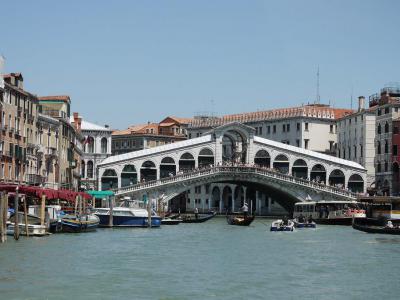
There are only four bridges that cross Venice’s Grand Canal, so sooner or later, your feet will lead you onto one of them. Odds are, it will be the Rialto Bridge-the oldest, busiest, and most talked-about of the lot. This single stone arch links the districts of San Marco and San Polo, effectively stitching together the eastern and western parts of the city.
The first bridge here went up in the 12th century and was made of wood, which, given Venice’s relationship with water, was always going to be a temporary arrangement. In the late 1500s, it was replaced by the stone bridge you see now. At the time, critics were convinced it would collapse under its own ambition. Architects shook their heads, predictions were made, and history politely ignored them all. The bridge not only survived but thrived-remaining the only pedestrian crossing over the Grand Canal until the Accademia Bridge arrived in 1854.
Crossing the Rialto today is a sensory workout. The flow of people never really stops, but if you manage to claim a patch of railing, the payoff is worth it. The Grand Canal stretches open in both directions, lined with palaces that look like they’re posing for a portrait. Just beyond the souvenir stands, the mood shifts. The Rialto markets take over, continuing a trade tradition that goes back centuries. Stalls pile up with fruit and vegetables grown on the lagoon islands, while fish fresh from the Adriatic glints on ice. Look closely, and you might spot boats unloading the day’s catch, straight from Burano or Pellestrina.
Around the bridge, shops and restaurants cluster tightly, many of them on the expensive side, but discreetly blended into the historic fabric. And then there are the gondoliers-casually leaning, coincidentally available, and very certain that this moment is perfect for a ride.
One final note: come back in the evening. The crowds thin, the light softens, and the Rialto Bridge finally has room to breathe-and so do you...
The first bridge here went up in the 12th century and was made of wood, which, given Venice’s relationship with water, was always going to be a temporary arrangement. In the late 1500s, it was replaced by the stone bridge you see now. At the time, critics were convinced it would collapse under its own ambition. Architects shook their heads, predictions were made, and history politely ignored them all. The bridge not only survived but thrived-remaining the only pedestrian crossing over the Grand Canal until the Accademia Bridge arrived in 1854.
Crossing the Rialto today is a sensory workout. The flow of people never really stops, but if you manage to claim a patch of railing, the payoff is worth it. The Grand Canal stretches open in both directions, lined with palaces that look like they’re posing for a portrait. Just beyond the souvenir stands, the mood shifts. The Rialto markets take over, continuing a trade tradition that goes back centuries. Stalls pile up with fruit and vegetables grown on the lagoon islands, while fish fresh from the Adriatic glints on ice. Look closely, and you might spot boats unloading the day’s catch, straight from Burano or Pellestrina.
Around the bridge, shops and restaurants cluster tightly, many of them on the expensive side, but discreetly blended into the historic fabric. And then there are the gondoliers-casually leaning, coincidentally available, and very certain that this moment is perfect for a ride.
One final note: come back in the evening. The crowds thin, the light softens, and the Rialto Bridge finally has room to breathe-and so do you...
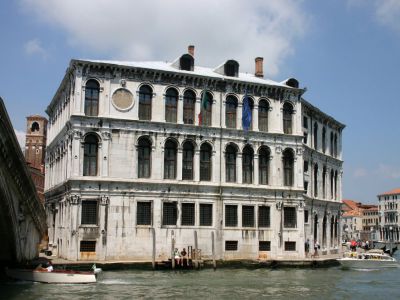
9) Palazzo dei Camerlenghi (Camerlenghi Palace)
Standing right at the foot of the Rialto Bridge, the Camerlenghi Palace looks elegant enough-until you learn what went on inside. Completed in 1488 and expanded in the 1520s, this was Venice’s financial nerve center, home to the Camerlenghi, the Consuls of the Traders, and other officials tasked with keeping the republic’s money in line. Think spreadsheets before spreadsheets, backed by serious authority...
Now for the persuasive part of Venetian accounting. The palace’s ground floor doubled as a debtors’ prison. Miss your payments, and you could find yourself locked up right beside one of the busiest crossings in the city. The location was no accident. Placing debtors in full view of Rialto’s constant traffic served as a public warning-pay your bills, or enjoy the view from behind bars. The nearby canalside even picked up the name “the Foundations of Prisons,” a reminder that Venice believed in financial responsibility, with visual aids...
Inside the upper floors, things took a more cultured turn. Venetian custom dictated that departing magistrates leave behind religious paintings or portraits in their former offices. Over time, this turned the palace into an accidental art gallery, filled with images promoting civic duty, moral order, and social ideals. That collection didn’t survive intact. During the French occupation, many works were removed; some later made their way back to Venice, settling not here, but in the Gallery of the Academy.
Today, the palace has traded Renaissance accountants for modern ones, housing regional offices of Italy’s state auditing authority. Architecturally, it still follows the curve of the Grand Canal with quiet confidence. Tall windows, decorative friezes, and faux columns give it rhythm and restraint, even if the original colored marbles are long gone. It’s a building that proves Venice didn’t just master trade-it mastered how to make money behave...
Now for the persuasive part of Venetian accounting. The palace’s ground floor doubled as a debtors’ prison. Miss your payments, and you could find yourself locked up right beside one of the busiest crossings in the city. The location was no accident. Placing debtors in full view of Rialto’s constant traffic served as a public warning-pay your bills, or enjoy the view from behind bars. The nearby canalside even picked up the name “the Foundations of Prisons,” a reminder that Venice believed in financial responsibility, with visual aids...
Inside the upper floors, things took a more cultured turn. Venetian custom dictated that departing magistrates leave behind religious paintings or portraits in their former offices. Over time, this turned the palace into an accidental art gallery, filled with images promoting civic duty, moral order, and social ideals. That collection didn’t survive intact. During the French occupation, many works were removed; some later made their way back to Venice, settling not here, but in the Gallery of the Academy.
Today, the palace has traded Renaissance accountants for modern ones, housing regional offices of Italy’s state auditing authority. Architecturally, it still follows the curve of the Grand Canal with quiet confidence. Tall windows, decorative friezes, and faux columns give it rhythm and restraint, even if the original colored marbles are long gone. It’s a building that proves Venice didn’t just master trade-it mastered how to make money behave...
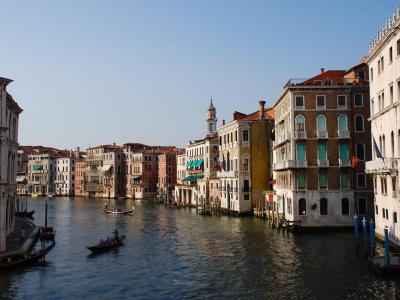
10) Canal Grande (Grand Canal) (must see)
Paris may have its Champs-Elysées, New York City its 5th Avenue, Rome its Via del Corso – but Venice, for uniqueness, tops them all with its Grand Canal ("Canal Grande"). This winding waterway, resembling an inverted S shape, traverses the city and is spanned by four bridges. Along its banks stand nearly 200 palaces, many of which were constructed between the 13th and 18th centuries. The grand aquatic thoroughfare is a bustling passage for motorboats, vaporetti (water buses), and the iconic gondolas.
Some of the most impressive buildings along the Grand Canal have been transformed into galleries and museums. Reflecting the Venetian Gothic architectural style, these structures were intended to showcase the opulence and artistic achievements of the Republic of Venice, with noble Venetian families having spared no expense in displaying their wealth. As most of these palaces stand directly on the water without walkways, the only way to appreciate their facades is from a boat, allowing for a journey free of potholes, traffic congestion, and traffic lights-quite literally the best mode to travel anyway!....
Stretching nearly four kilometers (or 2.5 miles) in length, the Grand Canal varies in width between 30 and 70 meters; it is, however, surprisingly shallow, with depths rarely exceeding 5 meters (16.5 feet).
The best way to explore the canal is by boarding vaporetto no. 1; though you'll have to be prepared to navigate the crowd and secure a seat anywhere on the exterior. The most coveted spots are at the bow, offering unobstructed views of the shimmering water.
If you'd rather rent a gondola for added romance, a word to the wise would be to schedule your ride during high tide so as to avoid encountering unsightly debris along the canal's edges, which low tide often exposes in detail. The gondoliers may even steer you into the quieter, narrower canals, where tranquility reigns and the only sounds you'll hear are the gentle lapping of water. In this serene atmosphere, you can fully appreciate the unique perspective offered by the gondola. In other words, if you're going to splurge on a tourist attraction, this is the one to choose.
It is also easy to get glimpses of the Grand Canal as you wander through the city's maze-like alleyways, granting you enchanting vistas of historic buildings, picturesque bridges, and the everyday rhythm of Venetian life.
Tip:
Investing in unlimited passes for 1 to 3 or 7 days for vaporettos is one of the wisest choices during your stay in Venice.
Some of the most impressive buildings along the Grand Canal have been transformed into galleries and museums. Reflecting the Venetian Gothic architectural style, these structures were intended to showcase the opulence and artistic achievements of the Republic of Venice, with noble Venetian families having spared no expense in displaying their wealth. As most of these palaces stand directly on the water without walkways, the only way to appreciate their facades is from a boat, allowing for a journey free of potholes, traffic congestion, and traffic lights-quite literally the best mode to travel anyway!....
Stretching nearly four kilometers (or 2.5 miles) in length, the Grand Canal varies in width between 30 and 70 meters; it is, however, surprisingly shallow, with depths rarely exceeding 5 meters (16.5 feet).
The best way to explore the canal is by boarding vaporetto no. 1; though you'll have to be prepared to navigate the crowd and secure a seat anywhere on the exterior. The most coveted spots are at the bow, offering unobstructed views of the shimmering water.
If you'd rather rent a gondola for added romance, a word to the wise would be to schedule your ride during high tide so as to avoid encountering unsightly debris along the canal's edges, which low tide often exposes in detail. The gondoliers may even steer you into the quieter, narrower canals, where tranquility reigns and the only sounds you'll hear are the gentle lapping of water. In this serene atmosphere, you can fully appreciate the unique perspective offered by the gondola. In other words, if you're going to splurge on a tourist attraction, this is the one to choose.
It is also easy to get glimpses of the Grand Canal as you wander through the city's maze-like alleyways, granting you enchanting vistas of historic buildings, picturesque bridges, and the everyday rhythm of Venetian life.
Tip:
Investing in unlimited passes for 1 to 3 or 7 days for vaporettos is one of the wisest choices during your stay in Venice.
