Custom Walk in Venice, Italy by karenrberryman_cf2e2a created on 2026-05-16
Guide Location: Italy » Venice
Guide Type: Custom Walk
# of Sights: 11
Tour Duration: 2 Hour(s)
Travel Distance: 4 Km or 2.5 Miles
Share Key: UT65Z
Guide Type: Custom Walk
# of Sights: 11
Tour Duration: 2 Hour(s)
Travel Distance: 4 Km or 2.5 Miles
Share Key: UT65Z
How It Works
Please retrieve this walk in the GPSmyCity app. Once done, the app will guide you from one tour stop to the next as if you had a personal tour guide. If you created the walk on this website or come to the page via a link, please follow the instructions below to retrieve the walk in the app.
Retrieve This Walk in App
Step 1. Download the app "GPSmyCity: Walks in 1K+ Cities" on Apple App Store or Google Play Store.



Step 2. In the GPSmyCity app, download(or launch) the guide "Venice Map and Walking Tours".
Step 3. Tap the menu button located at upper right corner of the "Walks" screen and select "Retrieve custom walk". Enter the share key: UT65Z
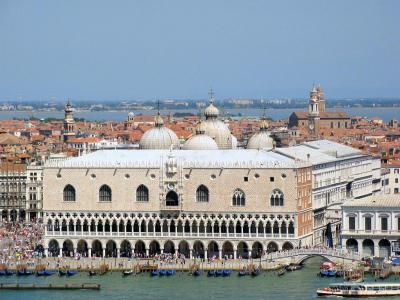
1) Palazzo Ducale (Doge's Palace) (must see)
Built on the remains of a 9th-century fortress, this palace didn’t just host power-it defined it. For its time, it was arguably the finest secular building in Europe, serving as the Doge's residence, headquarters of the Venetian government, court of law, civil administration, and, when things went badly, a prison, too. Indeed, back in the day, in Venice, politics, justice, and daily life all shared the same address...
The first version of the palace took shape in the 14th century. Sadly, two centuries later, its major sections went up in flames, taking with them countless artworks. To this, Venice responded the only way it knew how-by calling in the best. Tintoretto, Veronese, Titian, Bellini, and Tiepolo all contributed to rebuilding the palace’s visual identity, covering it once again with gilded stucco, sculpture, frescoes, and monumental paintings. What you see today is not a simple restoration, but a carefully staged comeback.
From the outside, the palace blends Byzantine elegance with Gothic rhythm. Inside, the mood shifts toward classical order and theatrical scale. Art critic John Ruskin once famously called it “the central building of the world,” and being inside, it’s easy to see why. The Grand Council Chamber stops most visitors mid-sentence, dominated by Tintoretto’s Paradise, generally accepted as the largest oil painting ever made. Nearby, the Voting Hall wraps Venice’s political ambitions in paintings celebrating its victories and naval dominance.
Then comes the contrast. Cross to the other side of the canal, and the tone darkens quickly. The prison cells tell a harsher story of justice in medieval Venice. They are linked to the palace by the Bridge of Sighs, named for the sounds the prisoners reportedly made as they caught their last glimpse of freedom before facing interrogation, torture, or worse...
If you want the full picture, the infrared audio guide at the entrance is worth your time. It adds context, political drama, and human detail to a building that governed a maritime empire for over a thousand years.
And finally, a footnote that reads like fiction-but is not. In 1755, Giacomo Casanova himself was imprisoned here, accused of offending religion and public morals. Locked beneath the lead roof, enduring crushing heat and relentless fleas, he spent 15 long months plotting his escape. Eventually, he succeeded-lowering himself through a hole in the ceiling and vanishing into the night. Casanova thus remains the only person ever to escape this prison.
One last tip: book ahead for the “Secret Itinerary” tour. It opens doors that are normally closed-private chambers, interrogation rooms, hidden corridors, and the very cells once occupied by Casanova...
The first version of the palace took shape in the 14th century. Sadly, two centuries later, its major sections went up in flames, taking with them countless artworks. To this, Venice responded the only way it knew how-by calling in the best. Tintoretto, Veronese, Titian, Bellini, and Tiepolo all contributed to rebuilding the palace’s visual identity, covering it once again with gilded stucco, sculpture, frescoes, and monumental paintings. What you see today is not a simple restoration, but a carefully staged comeback.
From the outside, the palace blends Byzantine elegance with Gothic rhythm. Inside, the mood shifts toward classical order and theatrical scale. Art critic John Ruskin once famously called it “the central building of the world,” and being inside, it’s easy to see why. The Grand Council Chamber stops most visitors mid-sentence, dominated by Tintoretto’s Paradise, generally accepted as the largest oil painting ever made. Nearby, the Voting Hall wraps Venice’s political ambitions in paintings celebrating its victories and naval dominance.
Then comes the contrast. Cross to the other side of the canal, and the tone darkens quickly. The prison cells tell a harsher story of justice in medieval Venice. They are linked to the palace by the Bridge of Sighs, named for the sounds the prisoners reportedly made as they caught their last glimpse of freedom before facing interrogation, torture, or worse...
If you want the full picture, the infrared audio guide at the entrance is worth your time. It adds context, political drama, and human detail to a building that governed a maritime empire for over a thousand years.
And finally, a footnote that reads like fiction-but is not. In 1755, Giacomo Casanova himself was imprisoned here, accused of offending religion and public morals. Locked beneath the lead roof, enduring crushing heat and relentless fleas, he spent 15 long months plotting his escape. Eventually, he succeeded-lowering himself through a hole in the ceiling and vanishing into the night. Casanova thus remains the only person ever to escape this prison.
One last tip: book ahead for the “Secret Itinerary” tour. It opens doors that are normally closed-private chambers, interrogation rooms, hidden corridors, and the very cells once occupied by Casanova...
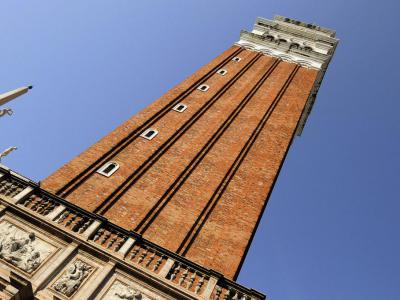
2) Campanile di San Marco (St. Mark's Bell Tower)
Venice’s tallest bell tower has been keeping an eye on the city since the 12th century, back when it worked double duty as both belfry and lighthouse. Over the centuries, it was tweaked, adjusted, and improved until the 16th century crowned it with its golden angel, calmly rotating with the wind. In its working days, this tower ran on a strict sound schedule: the biggest bell marked the start and end of the workday, another bell chimed at noon, while two others called senators and council members to meetings, and the smallest one delivered the most unwelcome message of all-news of an upcoming execution...
It was also a place for scientific show-and-tell. In 1609, Galileo Galilei climbed up here to demonstrate his telescope to the Venetian Doge, offering a glimpse not just of distant objects, but of a future shaped by observation and discovery. A plaque near the observation deck quietly marks that moment.
Then came the tower’s most dramatic scene: on July 14, 1902, after letting out a final bell sound, the Campanile collapsed. Café patrons in the square below dropped their coffee cups and ran for their lives, while Venice lost its tallest landmark in a cloud of dust...
The city’s response was simple and very Venetian: rebuild it exactly “where it was and how it was.” Today’s Campanile looks quite similar to its predecessor but is far more visitor-friendly. Instead of tight spiral stairs, there’s an elevator that lifts you smoothly to the top-no medieval endurance test involved...
At 99 meters high, it’s still Venice’s tallest structure, offering wide views over St. Mark’s Basilica, the rooftops, and the lagoon stretching outward. On clear evenings, the horizon seems to keep going. And if heights aren’t your thing, standing below and looking up still delivers a proper sense of scale-plus a reminder that Venice has always liked to think big...
It was also a place for scientific show-and-tell. In 1609, Galileo Galilei climbed up here to demonstrate his telescope to the Venetian Doge, offering a glimpse not just of distant objects, but of a future shaped by observation and discovery. A plaque near the observation deck quietly marks that moment.
Then came the tower’s most dramatic scene: on July 14, 1902, after letting out a final bell sound, the Campanile collapsed. Café patrons in the square below dropped their coffee cups and ran for their lives, while Venice lost its tallest landmark in a cloud of dust...
The city’s response was simple and very Venetian: rebuild it exactly “where it was and how it was.” Today’s Campanile looks quite similar to its predecessor but is far more visitor-friendly. Instead of tight spiral stairs, there’s an elevator that lifts you smoothly to the top-no medieval endurance test involved...
At 99 meters high, it’s still Venice’s tallest structure, offering wide views over St. Mark’s Basilica, the rooftops, and the lagoon stretching outward. On clear evenings, the horizon seems to keep going. And if heights aren’t your thing, standing below and looking up still delivers a proper sense of scale-plus a reminder that Venice has always liked to think big...
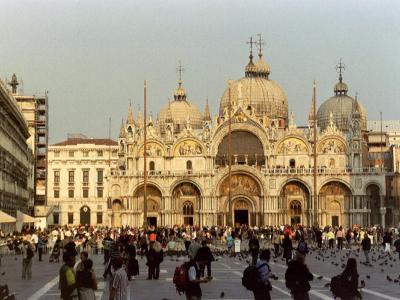
3) Basilica di San Marco (St. Mark's Basilica) (must see)
When it comes to star attractions in Venice, Saint Mark’s Basilica leads the pack. This is the city’s most famous landmark, whose story started in the year 832, when the building was created to house the remains of Saint Mark, Venice’s holy patron. According to legend, Venetian merchants smuggled the saint's body out of Alexandria, Egypt, hidden in barrels of pork-an inspired move, given that Muslim guards were unlikely to check. When the relics reached the lagoon, an angel was said to have appeared, declaring that Saint Mark would rest here. That tale alone fueled centuries of imagery, symbolism, and quiet civic pride...
Some 200 years later, Venice decided that the saint deserved something grander. His earlier church was replaced by a new basilica, modeled on the Church of the Apostles in Constantinople. This was no modest upgrade. Marble arrived from across the Mediterranean, and walls and domes were covered in glowing mosaics illustrating scenes from the Old and New Testaments, along with episodes from the lives of Christ, Virgin Mary, and Saint Mark himself. The result was a building that felt more like a vision than a structure...
Time, fashion, and wear inevitably left their mark. Damaged mosaics were repaired, styles changed, and new designs replaced older ones. What you see today is not from a single period but an extraordinary visual archive spanning roughly eight centuries. Some mosaics follow strict Byzantine traditions, while others were designed using drawings by leading Renaissance artists, such as Veronese, Tintoretto, Titian, Paolo Uccello, and Andrea del Castagno.
The latter, who worked here in the mid-15th century, brought along a strong sense of perspective, especially in the Mascoli Chapel’s “Dormition of the Virgin.” Tintoretto later designed the dramatic “Presentation of Jesus at the Temple” in the central nave, while Titian created the Old Testament prophets that decorate the Sacristy vault in the early 1500s. It is less a single artistic statement than a long conversation across time...
Beyond the main space, the basilica hides several optional areas: the Golden Altar, the Treasury, the Museum, and the Crypt. Access to the upper level is especially worthwhile, offering views over the interior mosaics and out across St. Mark’s Square. Entry to the basilica itself is free, though reserving a time slot lets you skip the line.
Come around midday, when the lights briefly switch on and the mosaics glow at full strength. Here, for one short hour, Venice quite literally shines...
Some 200 years later, Venice decided that the saint deserved something grander. His earlier church was replaced by a new basilica, modeled on the Church of the Apostles in Constantinople. This was no modest upgrade. Marble arrived from across the Mediterranean, and walls and domes were covered in glowing mosaics illustrating scenes from the Old and New Testaments, along with episodes from the lives of Christ, Virgin Mary, and Saint Mark himself. The result was a building that felt more like a vision than a structure...
Time, fashion, and wear inevitably left their mark. Damaged mosaics were repaired, styles changed, and new designs replaced older ones. What you see today is not from a single period but an extraordinary visual archive spanning roughly eight centuries. Some mosaics follow strict Byzantine traditions, while others were designed using drawings by leading Renaissance artists, such as Veronese, Tintoretto, Titian, Paolo Uccello, and Andrea del Castagno.
The latter, who worked here in the mid-15th century, brought along a strong sense of perspective, especially in the Mascoli Chapel’s “Dormition of the Virgin.” Tintoretto later designed the dramatic “Presentation of Jesus at the Temple” in the central nave, while Titian created the Old Testament prophets that decorate the Sacristy vault in the early 1500s. It is less a single artistic statement than a long conversation across time...
Beyond the main space, the basilica hides several optional areas: the Golden Altar, the Treasury, the Museum, and the Crypt. Access to the upper level is especially worthwhile, offering views over the interior mosaics and out across St. Mark’s Square. Entry to the basilica itself is free, though reserving a time slot lets you skip the line.
Come around midday, when the lights briefly switch on and the mosaics glow at full strength. Here, for one short hour, Venice quite literally shines...
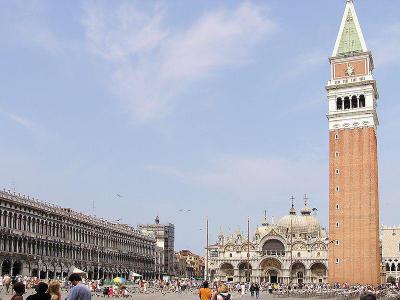
4) Piazza San Marco (St. Mark's Square) (must see)
No visit to Venice-be it first time or fifth-really counts unless you end up in Saint Mark’s Square. This has always been the city’s main stage. Long before cameras and café menus appeared, this was the place where power, faith, and trade crossed paths. The city’s founders chose this spot for the Doge’s Palace (the seat of government), and placed Saint Mark’s Basilica beside it, storing both authority and devotion in the same frame. Over time, the space became so important that Venice quietly made a rule: this alone would be called a piazza, while every other open space in the city had to settle for the name “campo” or “campiello.” No hard feelings-just hierarchy...
Centuries later, Saint Mark’s Square still runs the show. It is lined with grand hotels, polished cafés, seafood menus that read like luxury catalogs, and shops that encourage decisive spending. As evening falls, the square shifts tone. Lights soften the architecture, live orchestras strike up familiar melodies, and the whole place leans confidently into its reputation. Yes, a coffee here can cost around fifteen euros, and a cocktail even more. So, think of it less as a drink and more as a temporary rental of a front-row seat to history...
And if that price tag makes you wince, no problem. Slip into the nearby streets of the San Marco quarter, where the mood loosens, prices calm down, and everyday Venice takes over. Small bars, bakeries, and shops offer just as much character without asking for a special occasion budget.
Otherwise, stay put for a moment. Stand still. Breathe. Let the sound of footsteps, music, and bells wash over you. This square has seen emperors, merchants, diplomats, and dreamers pass through. You’re simply the latest chapter...
A small timing note: late afternoon into early evening is a smart window. The light improves, the crowds thin slightly, and the atmosphere becomes warmer and more theatrical. During the day, you may also notice souvenir stalls offering everything, from postcards to not-quite-authentic designer bags-some at surprisingly modest prices.
One last gondola thought: skip the boats parked right by the square. Walk a little farther and choose one on a quieter canal. The views are better, the photos look calmer, and the experience feels far more Venetian...
Centuries later, Saint Mark’s Square still runs the show. It is lined with grand hotels, polished cafés, seafood menus that read like luxury catalogs, and shops that encourage decisive spending. As evening falls, the square shifts tone. Lights soften the architecture, live orchestras strike up familiar melodies, and the whole place leans confidently into its reputation. Yes, a coffee here can cost around fifteen euros, and a cocktail even more. So, think of it less as a drink and more as a temporary rental of a front-row seat to history...
And if that price tag makes you wince, no problem. Slip into the nearby streets of the San Marco quarter, where the mood loosens, prices calm down, and everyday Venice takes over. Small bars, bakeries, and shops offer just as much character without asking for a special occasion budget.
Otherwise, stay put for a moment. Stand still. Breathe. Let the sound of footsteps, music, and bells wash over you. This square has seen emperors, merchants, diplomats, and dreamers pass through. You’re simply the latest chapter...
A small timing note: late afternoon into early evening is a smart window. The light improves, the crowds thin slightly, and the atmosphere becomes warmer and more theatrical. During the day, you may also notice souvenir stalls offering everything, from postcards to not-quite-authentic designer bags-some at surprisingly modest prices.
One last gondola thought: skip the boats parked right by the square. Walk a little farther and choose one on a quieter canal. The views are better, the photos look calmer, and the experience feels far more Venetian...
5) Torre dell'Orologio (Clock Tower) (must see)
In a square crowded with Venice’s greatest hits, this Clock Tower still manages to stand out. Its base has long doubled as a meeting spot, not by accident but geography: this is where the Merceria begins, the ancient commercial artery that has been funneling people toward and away from St. Mark’s Square for centuries. Today, the flow continues-only now it passes luxury shop windows and souvenir stalls instead of spice merchants and silk traders...
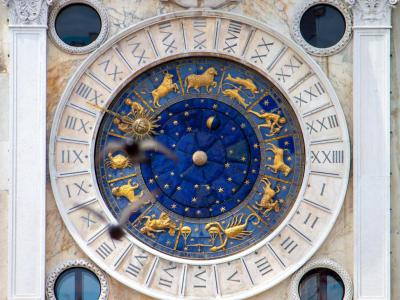
The clock above has been keeping official Venetian time since 1858, and it does more than just count the hours. This is a clock with cosmic ambitions. Alongside the time, it tracks the movement of the sun through the zodiac, neatly folding astronomy and astrology into daily life-because in Venice, even punctuality comes with symbolism...
Look closer at the decoration, and the city’s identity unfolds. Set against a deep blue field scattered with golden stars, the winged lion of Saint Mark spreads its wings above the dial, a reminder of Venice’s patron saint and former republic. Just below, the Virgin Mary and the infant Jesus look down toward the square, adding a quiet note of devotion to a space once dominated by state ceremony and public spectacle.
Then, there are two more figures perched at the very top, striking the bell with impressive dedication. Cast in bronze and originally imagined as shepherds, time has darkened their surface so completely that Venetians eventually gave them a new name: the “Moors.” They have been hammering out the hours up there for hundreds of years, unfazed by crowds, pigeons, or changing fashions below...
For those tempted to go inside, the tower can be visited by reservation. Small guided groups move through the inner workings of the mechanism, past hidden passages and unexpected details, before reaching the upper levels. From there, the reward is a direct view down onto St. Mark’s Square-a reminder that in Venice, even time itself was designed to put on a show...
The clock above has been keeping official Venetian time since 1858, and it does more than just count the hours. This is a clock with cosmic ambitions. Alongside the time, it tracks the movement of the sun through the zodiac, neatly folding astronomy and astrology into daily life-because in Venice, even punctuality comes with symbolism...
Look closer at the decoration, and the city’s identity unfolds. Set against a deep blue field scattered with golden stars, the winged lion of Saint Mark spreads its wings above the dial, a reminder of Venice’s patron saint and former republic. Just below, the Virgin Mary and the infant Jesus look down toward the square, adding a quiet note of devotion to a space once dominated by state ceremony and public spectacle.
Then, there are two more figures perched at the very top, striking the bell with impressive dedication. Cast in bronze and originally imagined as shepherds, time has darkened their surface so completely that Venetians eventually gave them a new name: the “Moors.” They have been hammering out the hours up there for hundreds of years, unfazed by crowds, pigeons, or changing fashions below...
For those tempted to go inside, the tower can be visited by reservation. Small guided groups move through the inner workings of the mechanism, past hidden passages and unexpected details, before reaching the upper levels. From there, the reward is a direct view down onto St. Mark’s Square-a reminder that in Venice, even time itself was designed to put on a show...
6) Fondaco dei Tedeschi (German Warehouse) (must see)
Just beside the Rialto Bridge, there’s a massive, square-shouldered building that once ran the business side of Venice’s global trade scene: the German Warehouse. Back in the Middle Ages, this was the headquarters for German merchants, who happened to be Venice’s most powerful foreign trading group. From as early as the 13th century, traders from cities like Nuremberg, Augsburg, and Judenburg lived, stored goods, negotiated deals, and generally made money right here-under this very roof.
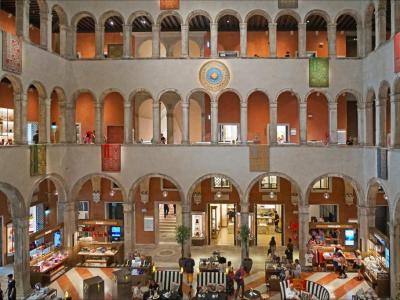
After a major fire, the building was reconstructed in the 16th century into the form you see now: a solid four-storey Renaissance structure arranged around a large inner courtyard. Architecturally, it looks fully Italian, but its concept tells a wider story. The word “fondaco” comes from Arabic, and the idea behind it was practical and controlled: part palace, part warehouse, part dormitory, with merchants living on-site and access carefully regulated. Venice knew how to welcome foreigners-on its own terms...
Jump ahead a few centuries, and the role has changed, though the location hasn’t. Today, the German Warehouse is one of Venice’s grandest shopping spaces, focused firmly on luxury brands. Yes, prices here reflect the address, and yes, it’s usually busy. Still, even if shopping isn’t on your agenda, this building alone has a trick worth your time.
Head up to the rooftop terrace. From the fourth-floor Event Pavilion-one that is used for exhibitions and cultural events-you get free access to one of the best viewpoints in the city. Below, you'll see the Grand Canal bend and glide past the Rialto. Nearby, the bridge forms an angle that few people ever notice. In the distance, on a clear day, you can even spot the domes of St. Mark’s Basilica, sitting quietly about a kilometer away.
A quick practical note for timing: access to the terrace requires a free ticket issued for a specific time slot, just to keep numbers manageable. Pick one up on the top floor or reserve online in advance. If you happen to be up here at sunset, you’ll understand exactly why merchants once fought for a place at this address...
After a major fire, the building was reconstructed in the 16th century into the form you see now: a solid four-storey Renaissance structure arranged around a large inner courtyard. Architecturally, it looks fully Italian, but its concept tells a wider story. The word “fondaco” comes from Arabic, and the idea behind it was practical and controlled: part palace, part warehouse, part dormitory, with merchants living on-site and access carefully regulated. Venice knew how to welcome foreigners-on its own terms...
Jump ahead a few centuries, and the role has changed, though the location hasn’t. Today, the German Warehouse is one of Venice’s grandest shopping spaces, focused firmly on luxury brands. Yes, prices here reflect the address, and yes, it’s usually busy. Still, even if shopping isn’t on your agenda, this building alone has a trick worth your time.
Head up to the rooftop terrace. From the fourth-floor Event Pavilion-one that is used for exhibitions and cultural events-you get free access to one of the best viewpoints in the city. Below, you'll see the Grand Canal bend and glide past the Rialto. Nearby, the bridge forms an angle that few people ever notice. In the distance, on a clear day, you can even spot the domes of St. Mark’s Basilica, sitting quietly about a kilometer away.
A quick practical note for timing: access to the terrace requires a free ticket issued for a specific time slot, just to keep numbers manageable. Pick one up on the top floor or reserve online in advance. If you happen to be up here at sunset, you’ll understand exactly why merchants once fought for a place at this address...
7) Ponte di Rialto (Rialto Bridge) (must see)
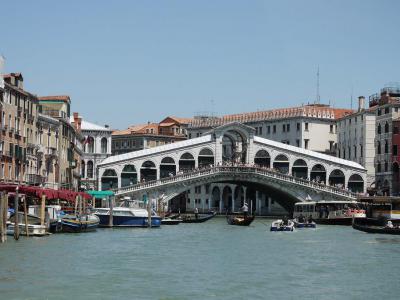
There are only four bridges that cross Venice’s Grand Canal, so sooner or later, your feet will lead you onto one of them. Odds are, it will be the Rialto Bridge-the oldest, busiest, and most talked-about of the lot. This single stone arch links the districts of San Marco and San Polo, effectively stitching together the eastern and western parts of the city.
The first bridge here went up in the 12th century and was made of wood, which, given Venice’s relationship with water, was always going to be a temporary arrangement. In the late 1500s, it was replaced by the stone bridge you see now. At the time, critics were convinced it would collapse under its own ambition. Architects shook their heads, predictions were made, and history politely ignored them all. The bridge not only survived but thrived-remaining the only pedestrian crossing over the Grand Canal until the Accademia Bridge arrived in 1854.
Crossing the Rialto today is a sensory workout. The flow of people never really stops, but if you manage to claim a patch of railing, the payoff is worth it. The Grand Canal stretches open in both directions, lined with palaces that look like they’re posing for a portrait. Just beyond the souvenir stands, the mood shifts. The Rialto markets take over, continuing a trade tradition that goes back centuries. Stalls pile up with fruit and vegetables grown on the lagoon islands, while fish fresh from the Adriatic glints on ice. Look closely, and you might spot boats unloading the day’s catch, straight from Burano or Pellestrina.
Around the bridge, shops and restaurants cluster tightly, many of them on the expensive side, but discreetly blended into the historic fabric. And then there are the gondoliers-casually leaning, coincidentally available, and very certain that this moment is perfect for a ride.
One final note: come back in the evening. The crowds thin, the light softens, and the Rialto Bridge finally has room to breathe-and so do you...
The first bridge here went up in the 12th century and was made of wood, which, given Venice’s relationship with water, was always going to be a temporary arrangement. In the late 1500s, it was replaced by the stone bridge you see now. At the time, critics were convinced it would collapse under its own ambition. Architects shook their heads, predictions were made, and history politely ignored them all. The bridge not only survived but thrived-remaining the only pedestrian crossing over the Grand Canal until the Accademia Bridge arrived in 1854.
Crossing the Rialto today is a sensory workout. The flow of people never really stops, but if you manage to claim a patch of railing, the payoff is worth it. The Grand Canal stretches open in both directions, lined with palaces that look like they’re posing for a portrait. Just beyond the souvenir stands, the mood shifts. The Rialto markets take over, continuing a trade tradition that goes back centuries. Stalls pile up with fruit and vegetables grown on the lagoon islands, while fish fresh from the Adriatic glints on ice. Look closely, and you might spot boats unloading the day’s catch, straight from Burano or Pellestrina.
Around the bridge, shops and restaurants cluster tightly, many of them on the expensive side, but discreetly blended into the historic fabric. And then there are the gondoliers-casually leaning, coincidentally available, and very certain that this moment is perfect for a ride.
One final note: come back in the evening. The crowds thin, the light softens, and the Rialto Bridge finally has room to breathe-and so do you...
8) Mercato di Rialto (Rialto Food Market) (must see)
If Venice had a daily heartbeat, you’d hear it loud and clear at the Rialto Market. This is where the city does its shopping, chatting, and a fair bit of arguing over fish, too. It may look theatrical at first glance, but make no mistake-this is not a show put on for visitors. It’s a working market, busy, loud, and unapologetically real, which is exactly why it feels so alive.
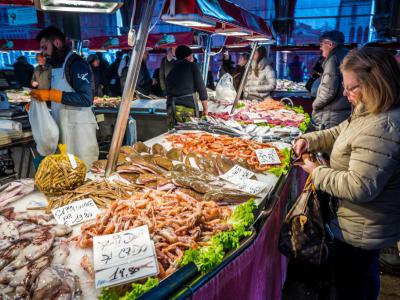
The setting does most of the heavy lifting. The market opens directly onto the Grand Canal, a position it has held since the 11th century, back when boats mattered more than pavements. Vendors unload their goods as they have for hundreds of years, surrounded by handwritten signs that are small works of art in their own right. These aren’t just price tags. They explain where the produce comes from, what it tastes like, and occasionally how you might cook it later. A kind of grocery list meeting gallery wall, with a strong Venetian accent...
What you’ll find here is both practical and visually irresistible. Flowers spill from buckets, spices perfume the air, and stalls overflow with seasonal fruit and vegetables. Fresh meat and seafood dominate the scene, with surprisingly reasonable prices for such a famous location. Some fish will look familiar, but much of it won’t. Cuttlefish, for example, are a local staple, prized for the ink that turns Venetian pasta a dramatic black. Shellfish of every shape and size pile up on beds of ice, glistening under the morning light. Even if you buy nothing, merely watching the rhythm of buying, selling, and bargaining is a full sensory experience-and yes, your camera will get a workout...
One small note on manners. This is a place where locals shop, not a museum with velvet ropes. Try to stay out of the way, keep moving when space is tight, and always ask before touching anything on display. Do that, and the Rialto Market will reward you with one of the most honest glimpses of everyday Venice you’re likely to find.
The setting does most of the heavy lifting. The market opens directly onto the Grand Canal, a position it has held since the 11th century, back when boats mattered more than pavements. Vendors unload their goods as they have for hundreds of years, surrounded by handwritten signs that are small works of art in their own right. These aren’t just price tags. They explain where the produce comes from, what it tastes like, and occasionally how you might cook it later. A kind of grocery list meeting gallery wall, with a strong Venetian accent...
What you’ll find here is both practical and visually irresistible. Flowers spill from buckets, spices perfume the air, and stalls overflow with seasonal fruit and vegetables. Fresh meat and seafood dominate the scene, with surprisingly reasonable prices for such a famous location. Some fish will look familiar, but much of it won’t. Cuttlefish, for example, are a local staple, prized for the ink that turns Venetian pasta a dramatic black. Shellfish of every shape and size pile up on beds of ice, glistening under the morning light. Even if you buy nothing, merely watching the rhythm of buying, selling, and bargaining is a full sensory experience-and yes, your camera will get a workout...
One small note on manners. This is a place where locals shop, not a museum with velvet ropes. Try to stay out of the way, keep moving when space is tight, and always ask before touching anything on display. Do that, and the Rialto Market will reward you with one of the most honest glimpses of everyday Venice you’re likely to find.
9) Scuola Grande di San Rocco (Great School of St. Roch) (must see)
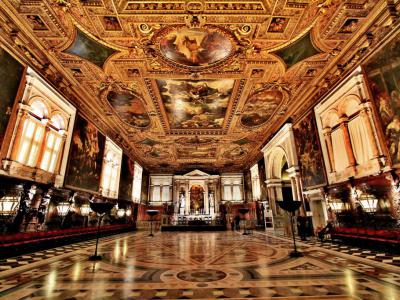
The religious fraternity of Saint Roch was founded in Venice in 1478, at a time when faith and fear often went hand in hand. Seven years later, the saint’s relics arrived from Germany, and donations began pouring in with impressive enthusiasm. By 1489, the group had grown wealthy enough to be promoted to a “Great School” status, the top tier of Venetian confraternities. Then came the plague of 1527. As panic spread throughout the city, so did contributions, with Venetians hoping Saint Roch might offer some protection against the disease. The result was a financial windfall that eventually paid for the impressive building you see today-along with its extraordinary painted interiors...
What sets the Great School of San Roch apart is its decoration. No other Venetian confraternity went quite this far. The entire interior was entrusted to one artist: Tintoretto. Born Jacopo Robusti, he earned his nickname-Tintoretto (which means “Little Dyer”)-from his father’s trade, and then another nickname, Il Furioso (or “The Furious”), from the sheer intensity of his work style. Indeed, his brushwork shocked some contemporaries, thrilled others, and moved at a speed that seemed almost reckless. Even so, this was no quick job. Tintoretto began the project at age 46 and was still painting here three decades later, working almost until his death in 1594.
Over those thirty years, he produced more than fifty monumental canvases, covering walls and ceilings with scenes that feel dramatic, restless, and alive. Critics later called the building one of the most precious in Italy, largely because of this overwhelming cycle. Although the story begins downstairs with the Annunciation, the best place to start is upstairs, in the smaller Sala dell’Albergo. Here, the vast Crucifixion unfolds like a visual storm, offering a clear sense of Tintoretto at full power.
The main upper hall continues with New Testament scenes that ignore polite rules of perspective and lighting. Figures lean, twist, and surge through space, painted by the artist already in his late sixties and still pushing boundaries. Many consider these works among the finest of his career.
One last thing before you go in: this place is often quieter than Venice’s headline attractions, which only adds to its impact. Bring an audio guide-there are no wall texts to help you-and dress warmly, as the rooms can be chilly. Mirrors in the chapter room let you study the ceiling without turning your neck into a work of modern sculpture. And yes, bring your camera, too. Just don’t expect photos to capture the real experience...
What sets the Great School of San Roch apart is its decoration. No other Venetian confraternity went quite this far. The entire interior was entrusted to one artist: Tintoretto. Born Jacopo Robusti, he earned his nickname-Tintoretto (which means “Little Dyer”)-from his father’s trade, and then another nickname, Il Furioso (or “The Furious”), from the sheer intensity of his work style. Indeed, his brushwork shocked some contemporaries, thrilled others, and moved at a speed that seemed almost reckless. Even so, this was no quick job. Tintoretto began the project at age 46 and was still painting here three decades later, working almost until his death in 1594.
Over those thirty years, he produced more than fifty monumental canvases, covering walls and ceilings with scenes that feel dramatic, restless, and alive. Critics later called the building one of the most precious in Italy, largely because of this overwhelming cycle. Although the story begins downstairs with the Annunciation, the best place to start is upstairs, in the smaller Sala dell’Albergo. Here, the vast Crucifixion unfolds like a visual storm, offering a clear sense of Tintoretto at full power.
The main upper hall continues with New Testament scenes that ignore polite rules of perspective and lighting. Figures lean, twist, and surge through space, painted by the artist already in his late sixties and still pushing boundaries. Many consider these works among the finest of his career.
One last thing before you go in: this place is often quieter than Venice’s headline attractions, which only adds to its impact. Bring an audio guide-there are no wall texts to help you-and dress warmly, as the rooms can be chilly. Mirrors in the chapter room let you study the ceiling without turning your neck into a work of modern sculpture. And yes, bring your camera, too. Just don’t expect photos to capture the real experience...
10) Basilica di Santa Maria Gloriosa dei Frari (Basilica of Glorious St. Mary of the Friars) (must see)
The Friars' Basilica, usually shortened by locals to just the “Frari,” sits a little away from the main tourist flow-and that already tells you something about Venice. The city’s second most important church, after St. Mark’s Basilica, is not on the main stage, but quietly holding its ground in a lived-in neighborhood. It doesn’t shout for attention, and it’s rarely swarmed. That restraint is misleading, because once inside, the Frari delivers one of the strongest artistic punches in the city.
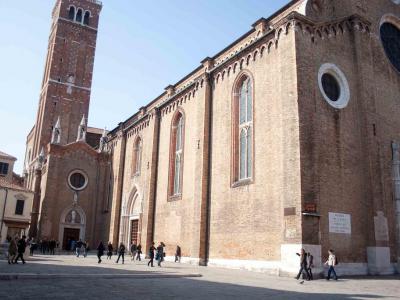
The church was founded by the Franciscans in the late 13th century, and size was clearly not a concern. This is one of the largest churches in Venice, crowned by a brick bell tower that rises higher than all but St. Mark’s. Architecturally, it remains one of the few Venetian churches to keep a Gothic look-simple, sober, and almost blunt on the outside. A kind of vast brick container... What’s inside, however, is anything but restrained.
Indeed, the Frari is one of the best places in Venice to understand why Titian mattered. His Assumption of the Virgin dominates the high altar, and it still feels radical: dramatic movement, bold color, and a vertical energy that pulls your eyes upward. Nearby hangs the Madonna di Ca’ Pesaro, another break from tradition, with the Virgin shifted off center, and the composition tilted in a way that once caused raised eyebrows. Add works by Bellini and Vivarini, and you start to see how Venetian painting evolved within these walls.
And art here is not limited to just paintings, either. Donatello’s wooden Saint John the Baptist stands with unsettling intensity. A finely carved 15th-century choir fills the space with quiet craftsmanship. Then there are the tombs-many of them extravagant, some deliberately unsettling. On one side of the nave lies Titian himself, who died of plague in 1576 and was granted a church burial when others were not. Opposite, the marble pyramid mausoleum of sculptor Antonio Canova contrasts sharply with the theatrical monument to Doge Giovanni Pesaro, held up by massive sculpted figures and filled with symbols of decay and power.
If you want to catch the details, a small guide or leaflet helps. And yes-make sure to cover your shoulders here, because even masterpieces have dress codes...
The church was founded by the Franciscans in the late 13th century, and size was clearly not a concern. This is one of the largest churches in Venice, crowned by a brick bell tower that rises higher than all but St. Mark’s. Architecturally, it remains one of the few Venetian churches to keep a Gothic look-simple, sober, and almost blunt on the outside. A kind of vast brick container... What’s inside, however, is anything but restrained.
Indeed, the Frari is one of the best places in Venice to understand why Titian mattered. His Assumption of the Virgin dominates the high altar, and it still feels radical: dramatic movement, bold color, and a vertical energy that pulls your eyes upward. Nearby hangs the Madonna di Ca’ Pesaro, another break from tradition, with the Virgin shifted off center, and the composition tilted in a way that once caused raised eyebrows. Add works by Bellini and Vivarini, and you start to see how Venetian painting evolved within these walls.
And art here is not limited to just paintings, either. Donatello’s wooden Saint John the Baptist stands with unsettling intensity. A finely carved 15th-century choir fills the space with quiet craftsmanship. Then there are the tombs-many of them extravagant, some deliberately unsettling. On one side of the nave lies Titian himself, who died of plague in 1576 and was granted a church burial when others were not. Opposite, the marble pyramid mausoleum of sculptor Antonio Canova contrasts sharply with the theatrical monument to Doge Giovanni Pesaro, held up by massive sculpted figures and filled with symbols of decay and power.
If you want to catch the details, a small guide or leaflet helps. And yes-make sure to cover your shoulders here, because even masterpieces have dress codes...
11) Basilica di Santa Maria della Salute (Basilica of Our Lady of Good Health) (must see)
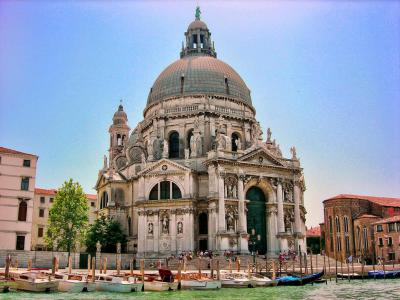
San Marco may dominate postcards by reputation, but when it comes to Venice’s most recognizable outline, the real scene-stealer is the Basilica of Our Lady of Good Health. Known locally as La Salute, this sweeping white church commands the entrance to the Grand Canal with a dome that feels less like a roof and more like a statement. It stands as the clearest expression of Venetian Baroque ambition-bold, theatrical, and impossible to ignore...
Its origins are tied to crisis rather than confidence. In the early 1630s, a devastating plague swept through Venice, killing nearly a third of the city’s population. In response, the Venetian Republic made a vow: if deliverance came, a church would rise in honor of Our Lady of Good Health. The promise held, and construction followed.
Designed by Baldassare Longhena, then just in his early thirties, the project would define his career. Built on more than 100,000 wooden piles driven into the lagoon floor, La Salute took around fifty years to complete. Longhena devoted most of his life to it and lived just long enough to see the final result in 1681.
Once finished, the basilica's dome quickly became part of Venice’s visual identity. Painters took note. Canaletto and Francesco Guardi returned to it again and again, while artists visiting from abroad-Turner, Monet, and John Singer Sargent among them-used it as a focal point for light, reflection, and atmosphere. The silhouette you see today is not just architecture; it is centuries of artistic attention layered onto stone.
Inside, the basilica continues to surprise. The sacristy doubles as a compact art gallery, featuring works by Titian and Tintoretto. Ceiling paintings such as David and Goliath, Cain and Abel, and Abraham and Isaac unfold overhead, while The Marriage Feast of Cana anchors the space with dramatic intensity. At the high altar, a sculptural group by Josse de Corte delivers pure Baroque theater: the Virgin and Child banish the plague itself, imagined as a defeated old woman retreating from Venice.
Entry to the church is free during opening hours, though the sacristy requires a ticket. From the balcony, views spill back onto the square, and on certain days, a short organ recital follows the service-an unexpected reward for those who linger. Check the schedule in advance, and plan ahead.
Cafés are scarce nearby, so bringing a drink isn’t a bad idea. La Salute rewards patience, timing, and a willingness to look up...
Its origins are tied to crisis rather than confidence. In the early 1630s, a devastating plague swept through Venice, killing nearly a third of the city’s population. In response, the Venetian Republic made a vow: if deliverance came, a church would rise in honor of Our Lady of Good Health. The promise held, and construction followed.
Designed by Baldassare Longhena, then just in his early thirties, the project would define his career. Built on more than 100,000 wooden piles driven into the lagoon floor, La Salute took around fifty years to complete. Longhena devoted most of his life to it and lived just long enough to see the final result in 1681.
Once finished, the basilica's dome quickly became part of Venice’s visual identity. Painters took note. Canaletto and Francesco Guardi returned to it again and again, while artists visiting from abroad-Turner, Monet, and John Singer Sargent among them-used it as a focal point for light, reflection, and atmosphere. The silhouette you see today is not just architecture; it is centuries of artistic attention layered onto stone.
Inside, the basilica continues to surprise. The sacristy doubles as a compact art gallery, featuring works by Titian and Tintoretto. Ceiling paintings such as David and Goliath, Cain and Abel, and Abraham and Isaac unfold overhead, while The Marriage Feast of Cana anchors the space with dramatic intensity. At the high altar, a sculptural group by Josse de Corte delivers pure Baroque theater: the Virgin and Child banish the plague itself, imagined as a defeated old woman retreating from Venice.
Entry to the church is free during opening hours, though the sacristy requires a ticket. From the balcony, views spill back onto the square, and on certain days, a short organ recital follows the service-an unexpected reward for those who linger. Check the schedule in advance, and plan ahead.
Cafés are scarce nearby, so bringing a drink isn’t a bad idea. La Salute rewards patience, timing, and a willingness to look up...
