Custom Walk in Charleston, South Carolina by ginafitzmayer_4497a4 created on 2026-05-21
Guide Location: USA » Charleston
Guide Type: Custom Walk
# of Sights: 16
Tour Duration: 3 Hour(s)
Travel Distance: 4.4 Km or 2.7 Miles
Share Key: 3MPDE
Guide Type: Custom Walk
# of Sights: 16
Tour Duration: 3 Hour(s)
Travel Distance: 4.4 Km or 2.7 Miles
Share Key: 3MPDE
How It Works
Please retrieve this walk in the GPSmyCity app. Once done, the app will guide you from one tour stop to the next as if you had a personal tour guide. If you created the walk on this website or come to the page via a link, please follow the instructions below to retrieve the walk in the app.
Retrieve This Walk in App
Step 1. Download the app "GPSmyCity: Walks in 1K+ Cities" on Apple App Store or Google Play Store.



Step 2. In the GPSmyCity app, download(or launch) the guide "Charleston Map and Walking Tours".
Step 3. Tap the menu button located at upper right corner of the "Walks" screen and select "Retrieve custom walk". Enter the share key: 3MPDE
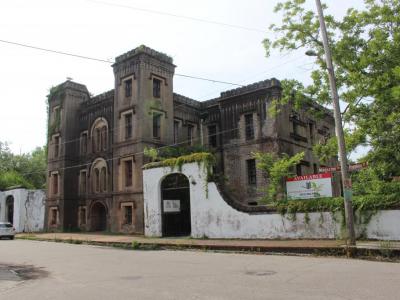
1) Old Charleston Jail
The Old County Jail, in operation from 1802 to 1939, served as the confinement facility for some of Charleston's most notorious criminals, 19th-century pirates, and Civil War prisoners. Situated on Magazine Street in downtown Charleston, this historic building has recently undergone renovation, preserving the original design of the first floor while adding air conditioning for visitors' comfort. Guided tours are available for those interested in delving into the jail's intriguing history. During these tours, participants explore the cells, hallways, and areas where Charleston's earliest wrongdoers resided, gaining insight into the primitive forms of torture and harsh living conditions.
One of the captivating stories told during these tours is that of Lavinia Fisher, the jail's most famous inmate and the first female serial killer in the United States. Over the years, the jail has gained popularity as a tourist attraction, thanks in part to its appearances on various television shows such as Travel Channel, Food Network, Ghost Hunters, Ghost Adventures, and Ghost Brothers.
One of the captivating stories told during these tours is that of Lavinia Fisher, the jail's most famous inmate and the first female serial killer in the United States. Over the years, the jail has gained popularity as a tourist attraction, thanks in part to its appearances on various television shows such as Travel Channel, Food Network, Ghost Hunters, Ghost Adventures, and Ghost Brothers.
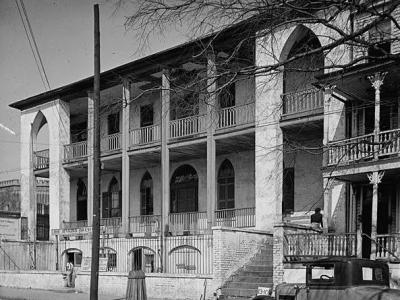
2) Old Marine Hospital
Designated as a National Historic Landmark, the Old Marine Hospital stands as a testament to the architectural prowess of Robert Mills, a Charleston native often hailed as the first professionally trained American architect. Known for his work on iconic structures like the Washington Monument and numerous public buildings across the nation, Mills also played a role in the development of a standardized design pattern for marine hospitals, using the one in Charleston as a model. Remarkably, out of approximately 30 marine hospitals constructed before the Civil War, only eight have survived to this day.
During its construction, the Old Marine Hospital became a focal point of controversy in Charleston's antebellum era. It was perceived by proponents of states' rights as a symbol of the Federal government's overreach, as funding for the hospital was deducted from sailors' wages and supplemented by taxes imposed on the shipping industry. This intervention sparked resentment among many Charlestonians, who were already frustrated with the heavy-handed involvement of the Feds. The appointment of Mills and other professionals from Washington D.C. to oversee the project, along with increased costs, further fueled resentment among supporters of states' rights. By the time the structure was completed in 1834, it was largely rejected by the local community as an unworthy civic achievement.
Despite the controversy, Mills created a building of exquisite charm and refinement. The building's subtle Gothic elements, such as pointed arches, windows, and clustered columns, evoke the aesthetics of medieval religious architecture; even the delicate porch railings were designed to mimic the tracery found around Gothic stained glass windows. The use of piazzas, a common feature in Charleston's domestic architecture, served both practical and climatic purposes, offering protection from the elements.
Following the Civil War, the building was repurposed as a free school for black children by the Episcopal Church. From 1895 to 1939, it served as the Jenkins Orphanage, known for its renowned band that embarked on fundraising tours across the United States and Europe. In 1939, the Housing Authority of Charleston acquired the building for administrative offices, a role it continues to fulfill to this day.
During its construction, the Old Marine Hospital became a focal point of controversy in Charleston's antebellum era. It was perceived by proponents of states' rights as a symbol of the Federal government's overreach, as funding for the hospital was deducted from sailors' wages and supplemented by taxes imposed on the shipping industry. This intervention sparked resentment among many Charlestonians, who were already frustrated with the heavy-handed involvement of the Feds. The appointment of Mills and other professionals from Washington D.C. to oversee the project, along with increased costs, further fueled resentment among supporters of states' rights. By the time the structure was completed in 1834, it was largely rejected by the local community as an unworthy civic achievement.
Despite the controversy, Mills created a building of exquisite charm and refinement. The building's subtle Gothic elements, such as pointed arches, windows, and clustered columns, evoke the aesthetics of medieval religious architecture; even the delicate porch railings were designed to mimic the tracery found around Gothic stained glass windows. The use of piazzas, a common feature in Charleston's domestic architecture, served both practical and climatic purposes, offering protection from the elements.
Following the Civil War, the building was repurposed as a free school for black children by the Episcopal Church. From 1895 to 1939, it served as the Jenkins Orphanage, known for its renowned band that embarked on fundraising tours across the United States and Europe. In 1939, the Housing Authority of Charleston acquired the building for administrative offices, a role it continues to fulfill to this day.
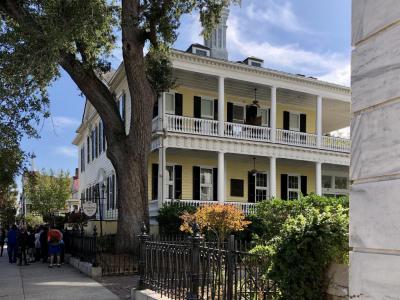
3) Edward Rutledge House (Governor's House Inn)
Built in 1760 by John Laurens, this house now claims the distinction of being Charleston’s oldest home. Still welcoming guests as a bed-and-breakfast, it wears its title with quiet confidence.
Later, the property became the residence of Edward Rutledge, the youngest signer of the Declaration of Independence and, not long after, governor of South Carolina, from 1798 to 1800. Before politics, Rutledge trained as a lawyer in England and returned to Charleston to build his career, eventually stepping onto the larger stage of the First and Second Continental Congresses. His story even includes a dramatic turn during the American Revolutionary War, when he was captured and held prisoner following the 1780 Siege of Charleston—because apparently, even founding fathers couldn’t avoid a plot twist...
These days, the house trades political intrigue for polished comfort. Recognized as a National Historic Landmark, it offers 11 thoughtfully designed guest rooms that balance period charm with modern ease. The Laurens Room looks out over the surrounding historic streetscape, while the Jefferson Suite adds a bit of indulgence with its own living room, private porch, wet bar, and an original 1760 fireplace still holding court.
Mornings begin with a Southern-style gourmet breakfast, followed by afternoon tea and, later, a glass of sherry—because history is best enjoyed at a relaxed pace. Set along the edge of the original Grand Modell and the elegant Below Broad neighborhood, this property also places you within an easy stroll of King Street’s shops and antique treasures.
Later, the property became the residence of Edward Rutledge, the youngest signer of the Declaration of Independence and, not long after, governor of South Carolina, from 1798 to 1800. Before politics, Rutledge trained as a lawyer in England and returned to Charleston to build his career, eventually stepping onto the larger stage of the First and Second Continental Congresses. His story even includes a dramatic turn during the American Revolutionary War, when he was captured and held prisoner following the 1780 Siege of Charleston—because apparently, even founding fathers couldn’t avoid a plot twist...
These days, the house trades political intrigue for polished comfort. Recognized as a National Historic Landmark, it offers 11 thoughtfully designed guest rooms that balance period charm with modern ease. The Laurens Room looks out over the surrounding historic streetscape, while the Jefferson Suite adds a bit of indulgence with its own living room, private porch, wet bar, and an original 1760 fireplace still holding court.
Mornings begin with a Southern-style gourmet breakfast, followed by afternoon tea and, later, a glass of sherry—because history is best enjoyed at a relaxed pace. Set along the edge of the original Grand Modell and the elegant Below Broad neighborhood, this property also places you within an easy stroll of King Street’s shops and antique treasures.
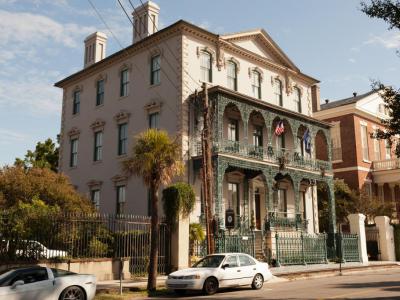
4) John Rutledge House Inn
Set right on the north side of Broad Street in Charleston’s historic center, the John Rutledge House Inn feels less like a neighbor to South of Broad and more like an extension of it. Often called “America’s most historic inn,” this place comes with serious credentials.
It was built in the 1760s for John Rutledge, a signer of the U.S. Constitution, and is one of only fifteen surviving homes linked to the original signatories. And yes—George Washington once stopped in for breakfast here, too, casually adding his name to the guestbook alongside a lineup of patriots, statesmen, and future trivia answers.
These days, the three-story house has traded powdered wigs for plush comfort, but it hasn’t lost its sense of occasion. Now a highly regarded bed-and-breakfast with an AAA Four-Diamond rating, it blends modern convenience with old-school elegance.
There are 19 guest rooms spread across the main house and two carriage houses out back, ranging from cozy to generously sized. Inside, the details do most of the talking—Italian marble fireplaces, original plaster moldings, and finely crafted ironwork. Even the ballroom gets in on the act, opening its doors for breakfast and afternoon tea, in case you’d like to dine where history clearly never checked out...
It was built in the 1760s for John Rutledge, a signer of the U.S. Constitution, and is one of only fifteen surviving homes linked to the original signatories. And yes—George Washington once stopped in for breakfast here, too, casually adding his name to the guestbook alongside a lineup of patriots, statesmen, and future trivia answers.
These days, the three-story house has traded powdered wigs for plush comfort, but it hasn’t lost its sense of occasion. Now a highly regarded bed-and-breakfast with an AAA Four-Diamond rating, it blends modern convenience with old-school elegance.
There are 19 guest rooms spread across the main house and two carriage houses out back, ranging from cozy to generously sized. Inside, the details do most of the talking—Italian marble fireplaces, original plaster moldings, and finely crafted ironwork. Even the ballroom gets in on the act, opening its doors for breakfast and afternoon tea, in case you’d like to dine where history clearly never checked out...
5) Miles Brewton House
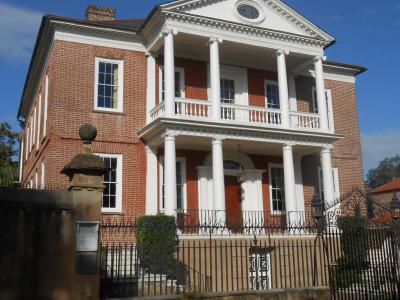
An architectural heavyweight from the 1760s, this property is a “double house” and is called so because each floor therein boasts four grand rooms neatly split by a central staircase. The house was built for Miles Brewton, a prosperous planter, who made his fortune in the slave trade (the kind history doesn’t brag about these days). Today, however, it’s often praised as one of the finest Georgian-Palladian designs anywhere in the world—subtle flex, 18th-century edition...
That spiky, medieval-looking wrought-iron fence out front (known fancily as “chevaux-de-frise”) is not original, though. It was added in the 1820s, when whispers of a possible slave uprising had the town collectively sleeping with one eye open.
Over the years, this stately home has played host to some rather uninvited guests—first serving as headquarters for British General Henry Clinton during the Revolution, and later housing federal troops after the Civil War. A rather surprising footprint for a “private residence”...
Set on a generous two acres, the property is practically a time capsule, with one of the most complete collections of Georgian outbuildings in the country. Head around to the north side, and you’ll find what’s known as a “plantation lane”—a lineup of working structures including slave quarters, a kitchen, and a pavilion, all linked by a covered walkway.
And just beyond the house, the garden still follows its original 18th-century design—proof that while history here may have been complicated, the landscaping has always been impeccably on point.
That spiky, medieval-looking wrought-iron fence out front (known fancily as “chevaux-de-frise”) is not original, though. It was added in the 1820s, when whispers of a possible slave uprising had the town collectively sleeping with one eye open.
Over the years, this stately home has played host to some rather uninvited guests—first serving as headquarters for British General Henry Clinton during the Revolution, and later housing federal troops after the Civil War. A rather surprising footprint for a “private residence”...
Set on a generous two acres, the property is practically a time capsule, with one of the most complete collections of Georgian outbuildings in the country. Head around to the north side, and you’ll find what’s known as a “plantation lane”—a lineup of working structures including slave quarters, a kitchen, and a pavilion, all linked by a covered walkway.
And just beyond the house, the garden still follows its original 18th-century design—proof that while history here may have been complicated, the landscaping has always been impeccably on point.
6) The Battery (must see)
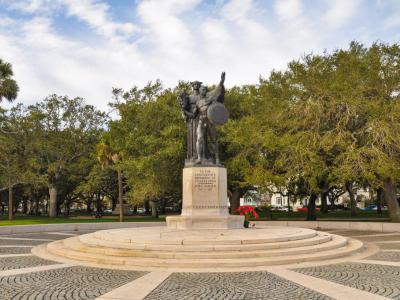
Charleston has no shortage of headline attractions—churches, mansions, and museums that politely remind you they’ve been around longer than certain countries. And then there’s White Point Garden, better known as the Battery, which, although it quietly ignores the label of “official attraction,” still ends up on everyone’s must-see list. Call it a tradition, a habit, or just curiosity with good timing—but sooner or later, nearly every first-time visitor to Charleston finds themselves walking here. It’s one of those places where the city’s long story doesn’t just sit behind glass—it spreads out around you.
At the eastern edge of East Bay Street, the setting feels calm enough to convince anyone it has always been this way: a shaded park dotted with statues, old cannons, and sprawling live oaks that seem to have opinions about everything. But roll things back a few centuries, and the mood is quite different. This place was once Oyster Point, named so for its shell-covered shoreline, serving as a handy marker for ships navigating the harbor.
Then the tone darkened dramatically, when pirate Stede Bonnet and his crew met their end here in the 1720s—a public finale that helped clear the Carolina coast of its more entrepreneurial seafarers. By the time the War of 1812 erupted, the area had taken on a more official defensive role, earning the moniker “the Battery”.
Move along to 1837, when the city reshaped the area into White Point Garden, and the story shifts again—from military edge to public space. But history wasn’t quite finished yet. From this very spot, on April 12, 1861, residents witnessed the opening shots of the Civil War, as Fort Sumter came under fire across the water. During the conflict, the park itself turned back into a defensive position, layered with earthwork batteries. When the war ended, the cannons stayed behind—less as weapons, more as reminders—joined by monuments that quietly mark later conflicts and the people tied to them.
And then, just when you think the place has said it all, you look up and notice the houses. Lining the nearby streets, these grand antebellum homes form a kind of architectural encore—elegant, measured, and very aware of their own good angles. It’s a fitting finish: a spot where Charleston’s history doesn’t follow a straight line, but lingers, overlaps, and occasionally pauses under the shade of a live oak.
At the eastern edge of East Bay Street, the setting feels calm enough to convince anyone it has always been this way: a shaded park dotted with statues, old cannons, and sprawling live oaks that seem to have opinions about everything. But roll things back a few centuries, and the mood is quite different. This place was once Oyster Point, named so for its shell-covered shoreline, serving as a handy marker for ships navigating the harbor.
Then the tone darkened dramatically, when pirate Stede Bonnet and his crew met their end here in the 1720s—a public finale that helped clear the Carolina coast of its more entrepreneurial seafarers. By the time the War of 1812 erupted, the area had taken on a more official defensive role, earning the moniker “the Battery”.
Move along to 1837, when the city reshaped the area into White Point Garden, and the story shifts again—from military edge to public space. But history wasn’t quite finished yet. From this very spot, on April 12, 1861, residents witnessed the opening shots of the Civil War, as Fort Sumter came under fire across the water. During the conflict, the park itself turned back into a defensive position, layered with earthwork batteries. When the war ended, the cannons stayed behind—less as weapons, more as reminders—joined by monuments that quietly mark later conflicts and the people tied to them.
And then, just when you think the place has said it all, you look up and notice the houses. Lining the nearby streets, these grand antebellum homes form a kind of architectural encore—elegant, measured, and very aware of their own good angles. It’s a fitting finish: a spot where Charleston’s history doesn’t follow a straight line, but lingers, overlaps, and occasionally pauses under the shade of a live oak.
7) Williams Mansion (aka Calhoun Mansion) (must see)
Back in the late 1800s, when Charleston was still recovering from the Civil War, keeping things modest, this house showed up, casually ignoring the mood...
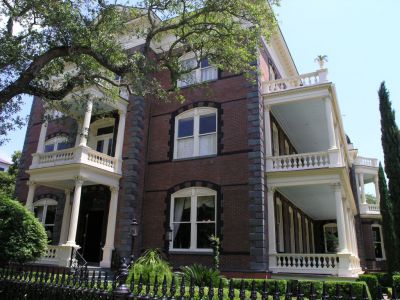
Indeed, this is one of the city’s rare Victorian showpieces, built in the Italianate style, when Charleston wasn’t exactly in a mansion-building phase. Most people were tightening their belts. But George Walton Williams was doing just fine, thanks to having wisely invested in England and the North before the war. In 1876, he went ahead and built what newspapers confidently called the finest home in the South… maybe even the entire country.
And the house still backs up that claim. We’re talking 35 rooms, 24,000 square feet, 23 fireplaces—because one or two simply wouldn’t do—a three-tiered piazza, Italian-style water gardens with fountains, and a cupola soaring 90 feet above the harbor. Not so much a home as a statement...
The name “Calhoun” enters the story later, when Williams’s son-in-law, Patrick Calhoun—grandson of John C. Calhoun—lived here until the 1929 stock market crash took both his fortune and house with it. After that, the mansion drifted through uncertain years, gradually falling into disrepair, until it was actually condemned in the 1970s. Not exactly the ending you’d expect for a place once called the finest in the country...
Luckily, then came the turnaround. A local attorney stepped in, took on the challenge, and spent 25 years—and a small fortune—bringing the house back to life. Today, it feels less like a restoration and more like a carefully staged time capsule.
Inside, you’ll find an extensive collection of English and American furniture from the 18th and 19th centuries, with a strong Southern accent in the decorative arts. Add impressionist paintings, Chinese ceramics, and a mix of carefully chosen objects, and the whole place leans into its original purpose: to impress.
And it still does. The mansion has appeared in magazines, played a role in the miniseries “North and South,” and continues to draw visitors curious enough to step inside.
Mind you, photography is not allowed on the premises, so you’ll have to rely on your memory. Tours run about 35 minutes, and once you step back outside, the gardens—with their statues and fountains—offer a quieter moment to process what you’ve just seen. Because this house is, in essence, Charleston deciding, at least once, to go all in...
Indeed, this is one of the city’s rare Victorian showpieces, built in the Italianate style, when Charleston wasn’t exactly in a mansion-building phase. Most people were tightening their belts. But George Walton Williams was doing just fine, thanks to having wisely invested in England and the North before the war. In 1876, he went ahead and built what newspapers confidently called the finest home in the South… maybe even the entire country.
And the house still backs up that claim. We’re talking 35 rooms, 24,000 square feet, 23 fireplaces—because one or two simply wouldn’t do—a three-tiered piazza, Italian-style water gardens with fountains, and a cupola soaring 90 feet above the harbor. Not so much a home as a statement...
The name “Calhoun” enters the story later, when Williams’s son-in-law, Patrick Calhoun—grandson of John C. Calhoun—lived here until the 1929 stock market crash took both his fortune and house with it. After that, the mansion drifted through uncertain years, gradually falling into disrepair, until it was actually condemned in the 1970s. Not exactly the ending you’d expect for a place once called the finest in the country...
Luckily, then came the turnaround. A local attorney stepped in, took on the challenge, and spent 25 years—and a small fortune—bringing the house back to life. Today, it feels less like a restoration and more like a carefully staged time capsule.
Inside, you’ll find an extensive collection of English and American furniture from the 18th and 19th centuries, with a strong Southern accent in the decorative arts. Add impressionist paintings, Chinese ceramics, and a mix of carefully chosen objects, and the whole place leans into its original purpose: to impress.
And it still does. The mansion has appeared in magazines, played a role in the miniseries “North and South,” and continues to draw visitors curious enough to step inside.
Mind you, photography is not allowed on the premises, so you’ll have to rely on your memory. Tours run about 35 minutes, and once you step back outside, the gardens—with their statues and fountains—offer a quieter moment to process what you’ve just seen. Because this house is, in essence, Charleston deciding, at least once, to go all in...
8) Nathaniel Russell House (must see)
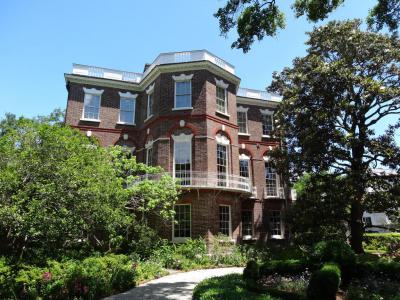
Had Charleston had a real estate leaderboard in the early 1800s, Nathaniel Russell would have comfortably ranked near the top. A successful shipping merchant, he placed his grand “mansionhouse” on Meeting Street, within the sight of the wharves that built his fortune. By 1808, at age 71, he saw the residence completed—at a reported cost of $80,000, a staggering sum for that time. The design followed the refined style of Robert Adam, drawing on classical ideas inspired by the rediscovered cities of Pompeii and Herculaneum, thus giving the house a polished, cosmopolitan edge.
Inside, the first impression is hard to miss. An elliptical staircase rises through three floors, appearing to float without support, as if it has forgotten to obey gravity, all set against warm golden walls. Around it, finely detailed Adamesque ornamentation decorates mantels and cornices with quiet precision—subtle, but clearly meant to impress...
The rooms continue the theme with a sense of balance and restraint, furnished with a mix of Charleston, English, and French pieces—china, silver, and paintings included. Upstairs, the oval drawing room stands out. Once used as a post-dinner retreat for women, it is finished in soft apricot tones, with ornate plasterwork highlighted in 24-karat gold leaf.
Unlike many historic houses that come with a chapter of neglect, this one never slipped into decline. Over time, it has shifted roles, serving as a private home, a governor’s residence, a girls’ school, and even a convent—yet always remained consistently maintained. Today, it is preserved by the Historic Charleston Foundation as one of the city’s key architectural landmarks.
Outside, the mood softens. A formal English garden stretches to the south, with gravel paths and neatly clipped boxwood hedges arranged in tidy patterns. At the rear, the two-story slave quarters, where 18 enslaved individuals once lived and worked, remain an essential part of the site’s history.
If you’re planning a visit, arriving early is wise—as tours run on a first-come, first-served basis. And while here, you might also explore the nearby old graveyard, or continue uptown to the Aiken-Rhett House for a broader view of Charleston’s past—for a small extra fee and a bit more walking...
Inside, the first impression is hard to miss. An elliptical staircase rises through three floors, appearing to float without support, as if it has forgotten to obey gravity, all set against warm golden walls. Around it, finely detailed Adamesque ornamentation decorates mantels and cornices with quiet precision—subtle, but clearly meant to impress...
The rooms continue the theme with a sense of balance and restraint, furnished with a mix of Charleston, English, and French pieces—china, silver, and paintings included. Upstairs, the oval drawing room stands out. Once used as a post-dinner retreat for women, it is finished in soft apricot tones, with ornate plasterwork highlighted in 24-karat gold leaf.
Unlike many historic houses that come with a chapter of neglect, this one never slipped into decline. Over time, it has shifted roles, serving as a private home, a governor’s residence, a girls’ school, and even a convent—yet always remained consistently maintained. Today, it is preserved by the Historic Charleston Foundation as one of the city’s key architectural landmarks.
Outside, the mood softens. A formal English garden stretches to the south, with gravel paths and neatly clipped boxwood hedges arranged in tidy patterns. At the rear, the two-story slave quarters, where 18 enslaved individuals once lived and worked, remain an essential part of the site’s history.
If you’re planning a visit, arriving early is wise—as tours run on a first-come, first-served basis. And while here, you might also explore the nearby old graveyard, or continue uptown to the Aiken-Rhett House for a broader view of Charleston’s past—for a small extra fee and a bit more walking...
9) Heyward-Washington House (must see)
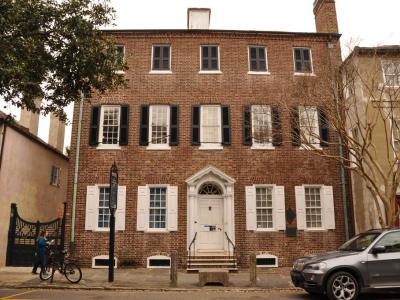
This early Charleston “dwelling house” goes by two names—because, apparently, one wasn’t enough. The first part of it comes from Daniel Heyward, a wealthy rice planter, who built it in 1772. The other comes from a rather overqualified houseguest: President George Washington. Heyward’s son, Thomas Heyward Jr.—yes, one of the signers of the Declaration of Independence—lived here until 1794, which already gives the place a strong historical résumé.
Now, picture this: it’s 1791, and Washington is on his grand tour of the brand-new United States, doing a sort of presidential road trip before road trips were a thing. Charleston wants to impress, so the city rents Heyward’s house for him—politely relocating Heyward himself to the countryside. Washington, ever the gentleman reviewer, noted in his diary that the lodgings were “very good,” essentially giving it an 18th-century five-star rating.
Today, the house leans fully into its past, filled with period antiques that look like they’ve never heard of modern furniture. One standout is the 1770 Chippendale-style Holmes bookcase—praised as one of the finest pieces of American-made furniture. It even carries scars from a British mortar strike, which is about as close as furniture gets to having a war story.
What also sets this place apart is what’s still standing outside. It’s the only 18th-century house museum in Charleston with its original outbuildings intact—think carriage shed and a kitchen building dating back to the 1740s. Inside the garden, you’ll find a neat arrangement of plants typical of the Lowcountry in the late 1700s—less decorative flourish, more practical elegance.
And if you’re planning to explore more of Charleston’s historic homes, here’s a useful move: the Charleston Heritage Passport. It bundles access to several houses, museums, and plantations into one tidy ticket, available at the Visitors Center on John Street.
Now, picture this: it’s 1791, and Washington is on his grand tour of the brand-new United States, doing a sort of presidential road trip before road trips were a thing. Charleston wants to impress, so the city rents Heyward’s house for him—politely relocating Heyward himself to the countryside. Washington, ever the gentleman reviewer, noted in his diary that the lodgings were “very good,” essentially giving it an 18th-century five-star rating.
Today, the house leans fully into its past, filled with period antiques that look like they’ve never heard of modern furniture. One standout is the 1770 Chippendale-style Holmes bookcase—praised as one of the finest pieces of American-made furniture. It even carries scars from a British mortar strike, which is about as close as furniture gets to having a war story.
What also sets this place apart is what’s still standing outside. It’s the only 18th-century house museum in Charleston with its original outbuildings intact—think carriage shed and a kitchen building dating back to the 1740s. Inside the garden, you’ll find a neat arrangement of plants typical of the Lowcountry in the late 1700s—less decorative flourish, more practical elegance.
And if you’re planning to explore more of Charleston’s historic homes, here’s a useful move: the Charleston Heritage Passport. It bundles access to several houses, museums, and plantations into one tidy ticket, available at the Visitors Center on John Street.
10) Rainbow Row (must see)
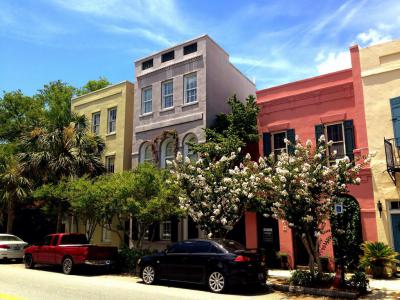
Rainbow Row lines up like a box of carefully arranged pastels—13 historic houses facing the Cooper River, each one competing quietly for your attention. Those soft pinks, blues, greens, and yellows aren’t random choices. They echo Charleston’s Caribbean connections, brought here by early settlers from Barbados, who left behind more than just footprints—they left a color palette.
What makes these houses even more impressive is that they’re still standing at all. Built between about 1730 and 1750, they once sat right on the waterfront, working as busy commercial storefronts along the wharf. The ground you’re standing on now didn’t even exist back then—it was created later through landfill, pushing the shoreline outward and turning trade space into a residential street.
As for the colors, explanations range from practical to playful. One story suggests that slightly intoxicated sailors couldn't find their lodgings other than by remembering the shade of their façade. Another points to function—bright colors helped people who couldn’t read identify different shops. Whether either of these stories is true or not, they’ve stuck around almost as stubbornly as the buildings themselves.
Look a little closer, and you’ll notice that time hasn’t passed without leaving its mark. Metal earthquake rods, stretching across some of the façades, quietly remind us of Charleston’s seismic past, while subtle repairs and reinforcements hint at centuries of use, damage, and care. Fires, hurricanes, even war—these houses have seen it all and stayed put.
Their survival isn’t just luck; it’s also where historic preservation in the United States found its footing. In the early 20th century, when these buildings had started to fall into disrepair, restoration efforts here helped spark the creation of the Preservation Society of Charleston—the first organization of its kind in the U.S. So, ultimately, what you’re looking at is more than just a picturesque street—it’s a turning point in how America decided to protect its past.
What makes these houses even more impressive is that they’re still standing at all. Built between about 1730 and 1750, they once sat right on the waterfront, working as busy commercial storefronts along the wharf. The ground you’re standing on now didn’t even exist back then—it was created later through landfill, pushing the shoreline outward and turning trade space into a residential street.
As for the colors, explanations range from practical to playful. One story suggests that slightly intoxicated sailors couldn't find their lodgings other than by remembering the shade of their façade. Another points to function—bright colors helped people who couldn’t read identify different shops. Whether either of these stories is true or not, they’ve stuck around almost as stubbornly as the buildings themselves.
Look a little closer, and you’ll notice that time hasn’t passed without leaving its mark. Metal earthquake rods, stretching across some of the façades, quietly remind us of Charleston’s seismic past, while subtle repairs and reinforcements hint at centuries of use, damage, and care. Fires, hurricanes, even war—these houses have seen it all and stayed put.
Their survival isn’t just luck; it’s also where historic preservation in the United States found its footing. In the early 20th century, when these buildings had started to fall into disrepair, restoration efforts here helped spark the creation of the Preservation Society of Charleston—the first organization of its kind in the U.S. So, ultimately, what you’re looking at is more than just a picturesque street—it’s a turning point in how America decided to protect its past.

11) Old Exchange and Provost Dungeon (must see)
This site at the corner of East Bay and Broad Streets has been pulling its weight since 1680—precisely when Charles Towne decided to relocate from its original settlement. The first structure on this spot was a practical one: downstairs, a guardhouse for locking up pirates and Native Americans, and upstairs, the upper hall for town meetings. Justice below, debate above—efficient, if not exactly comforting…
Then, the British stepped in with a firm intention “to make it look impressive.” The result was the Exchange building, completed in 1771 in full Palladian style—symmetry, columns, and just enough grandeur to remind everyone who was in charge. It quickly became the city’s main stage for everything that mattered: trade, politics, and public life. And in March 1776, standing right here on its steps, South Carolina declared itself an independent colony—so, yes, history didn’t just pass by, it made announcements.
The Revolutionary War brought a darker chapter. The building was turned into a British prison, holding, among others, even the signers of the Declaration of Independence. A decade later, in 1788, it hosted the convention to ratify the U.S. Constitution, and not long after, George Washington stopped by and was treated like the celebrity he was. For much of the 19th century, the building served as Charleston’s post office—first Federal, then Confederate—quietly handling letters while history kept unfolding around it.
Fast-forward to 1965, when excavations uncovered part of the original seawall from as early back as 1698—because, of course, this place still had more stories buried underneath. Today, it stands as a National Historic Landmark, open as a museum, with grand halls upstairs and something far more atmospheric below.
And yes, you can visit the Provost Dungeon, too, with costumed guides leading you through dim, echoing spaces where tales of pirates, prisoners, and colonial intrigue feel just close enough to be real. It is equal parts history lesson and theatrical experience—so, if stepping into an actual dungeon has ever crossed your mind, this is your moment.
One last thing: beyond the exhibits, there are occasional reenactments—complete with declarations and period flair—that bring the 1700s back to life. Not every day do you get to watch history rehearse itself on the very spot where it first happened...
Then, the British stepped in with a firm intention “to make it look impressive.” The result was the Exchange building, completed in 1771 in full Palladian style—symmetry, columns, and just enough grandeur to remind everyone who was in charge. It quickly became the city’s main stage for everything that mattered: trade, politics, and public life. And in March 1776, standing right here on its steps, South Carolina declared itself an independent colony—so, yes, history didn’t just pass by, it made announcements.
The Revolutionary War brought a darker chapter. The building was turned into a British prison, holding, among others, even the signers of the Declaration of Independence. A decade later, in 1788, it hosted the convention to ratify the U.S. Constitution, and not long after, George Washington stopped by and was treated like the celebrity he was. For much of the 19th century, the building served as Charleston’s post office—first Federal, then Confederate—quietly handling letters while history kept unfolding around it.
Fast-forward to 1965, when excavations uncovered part of the original seawall from as early back as 1698—because, of course, this place still had more stories buried underneath. Today, it stands as a National Historic Landmark, open as a museum, with grand halls upstairs and something far more atmospheric below.
And yes, you can visit the Provost Dungeon, too, with costumed guides leading you through dim, echoing spaces where tales of pirates, prisoners, and colonial intrigue feel just close enough to be real. It is equal parts history lesson and theatrical experience—so, if stepping into an actual dungeon has ever crossed your mind, this is your moment.
One last thing: beyond the exhibits, there are occasional reenactments—complete with declarations and period flair—that bring the 1700s back to life. Not every day do you get to watch history rehearse itself on the very spot where it first happened...

12) Washington Square Park
Washington Square Park—the crossroads of old Charleston, framed by Meeting, Broad, Chalmers, and Church Streets—is essentially a full city block of calm. Here, towering live oaks spread their branches like natural umbrellas, while elegant wrought-iron fencing gives the whole place the quiet dignity of a garden that has seen a lot, but isn’t in a hurry to talk about it.
The square dates back to 1790 and was later named for George Washington—because in the young United States, naming something after Washington was about as safe a choice as you could possibly make. Since then, the park has served as Charleston’s civic living room, hosting everything from public ceremonies to everyday moments of rest for locals and visitors alike.
At the center stands the Washington Light Infantry Monument, erected in 1856. Made of Carolina gray granite and rising 42 feet high, it’s essentially Charleston’s own smaller cousin to the Washington Monument in D.C., complete with inscriptions commemorating major U.S. military battles. Nearby, a statue of George Washington himself—added in 1999—keeps watch over the square, standing with the steady composure you’d expect from the “Father of the Nation.”
The park’s location also makes it a natural stop while exploring the neighborhood, with Charleston City Hall and St. Michael’s Church just steps away.
For all its modest size, Washington Square Park manages to capture Charleston in miniature: history layered upon history, civic memory mingling with daily life, and centuries-old trees calmly observing it all.
The place is particularly attractive in spring, when the trees burst into bloom and the square feels especially alive.
The square dates back to 1790 and was later named for George Washington—because in the young United States, naming something after Washington was about as safe a choice as you could possibly make. Since then, the park has served as Charleston’s civic living room, hosting everything from public ceremonies to everyday moments of rest for locals and visitors alike.
At the center stands the Washington Light Infantry Monument, erected in 1856. Made of Carolina gray granite and rising 42 feet high, it’s essentially Charleston’s own smaller cousin to the Washington Monument in D.C., complete with inscriptions commemorating major U.S. military battles. Nearby, a statue of George Washington himself—added in 1999—keeps watch over the square, standing with the steady composure you’d expect from the “Father of the Nation.”
The park’s location also makes it a natural stop while exploring the neighborhood, with Charleston City Hall and St. Michael’s Church just steps away.
For all its modest size, Washington Square Park manages to capture Charleston in miniature: history layered upon history, civic memory mingling with daily life, and centuries-old trees calmly observing it all.
The place is particularly attractive in spring, when the trees burst into bloom and the square feels especially alive.
13) Hibernian Hall
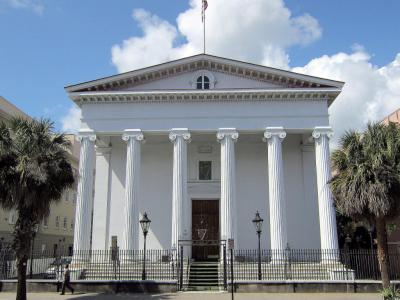
Throughout centuries, Charleston has taken its fair share of hits—war, fires, and that particularly rude 1886 earthquake—but somehow, a good number of its historic buildings are still standing, looking mildly unimpressed by the whole ordeal. One of them is Hibernian Hall, a striking example of Greek Revival style, all crisp white columns and quiet confidence. Built for the Irish Hibernian Society—the same group responsible for organizing the first Saint Patrick’s Day parades in the United States—it has always had a flair for both ceremony and spectacle.
And while the architecture does its best to steal the spotlight, the hall’s real claim to fame comes from politics rather than parties. In 1860, the building hosted the Charleston Convention, where the Democratic Party managed to split so thoroughly over the issue of slavery that they couldn’t even agree on a presidential nominee. The result was a clear path to victory for Abraham Lincoln. A rather weighty legacy for a venue designed for light-footed social evenings...
As for dances, it has those, too. Over the years, Hibernian Hall became synonymous with debutante balls—formal affairs where society gathered, traditions were upheld, and the staircases saw more dramatic entrances than a theater stage.
These days, the setting hasn’t lost its flair either, even if the guest list has changed. Weddings now take center stage, with couples making their grand descent down the twin staircases of the three-story rotunda, often to the unmistakable sound of bagpipes. Some traditions, it seems, are simply too good to retire...
And while the architecture does its best to steal the spotlight, the hall’s real claim to fame comes from politics rather than parties. In 1860, the building hosted the Charleston Convention, where the Democratic Party managed to split so thoroughly over the issue of slavery that they couldn’t even agree on a presidential nominee. The result was a clear path to victory for Abraham Lincoln. A rather weighty legacy for a venue designed for light-footed social evenings...
As for dances, it has those, too. Over the years, Hibernian Hall became synonymous with debutante balls—formal affairs where society gathered, traditions were upheld, and the staircases saw more dramatic entrances than a theater stage.
These days, the setting hasn’t lost its flair either, even if the guest list has changed. Weddings now take center stage, with couples making their grand descent down the twin staircases of the three-story rotunda, often to the unmistakable sound of bagpipes. Some traditions, it seems, are simply too good to retire...
14) Dock Street Theatre
Charleston likes to claim a few firsts, and here’s a theatrical one worth remembering. Back in January 1735, long before New York's Broadway had anything to brag about, a traveling troupe staged The Orphan right inside the city courtroom. Yes—courtroom by day, drama by night. The audience loved it, the applause stuck, and just like that, the idea of a proper theater took hold, eventually leading to the creation of the Dock Street Theatre.
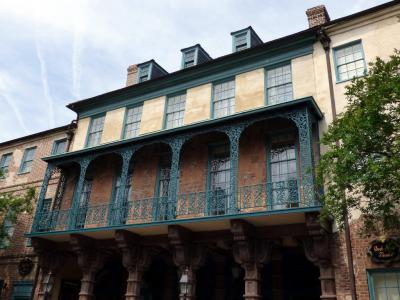
Jump ahead a couple of centuries—and a few plot twists—and the theater you see today is the result of a careful, and not exactly modest, revival. After a three-year, $19-million restoration, it reopened in 2010 for the third time in its long life. Set just across from the French Huguenot Church and within sight of St. Philip's Episcopal Church, the building carries a slightly European air, with subtle French touches that give it a quiet, artsy confidence.
Today, the theater keeps busy with a full annual season by its resident company and has hosted a steady stream of events, including performances tied to the Spoleto Festival USA. Even if you’re not planning to sit through a show, it’s worth stepping inside. The restored interior is part stage, part time capsule—so, feel free to wander into the lobby, ask nicely, and take a look around.
Jump ahead a couple of centuries—and a few plot twists—and the theater you see today is the result of a careful, and not exactly modest, revival. After a three-year, $19-million restoration, it reopened in 2010 for the third time in its long life. Set just across from the French Huguenot Church and within sight of St. Philip's Episcopal Church, the building carries a slightly European air, with subtle French touches that give it a quiet, artsy confidence.
Today, the theater keeps busy with a full annual season by its resident company and has hosted a steady stream of events, including performances tied to the Spoleto Festival USA. Even if you’re not planning to sit through a show, it’s worth stepping inside. The restored interior is part stage, part time capsule—so, feel free to wander into the lobby, ask nicely, and take a look around.
15) Powder Magazine
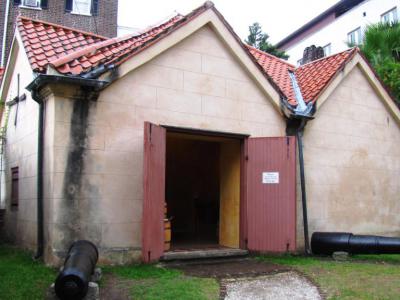
Just a few blocks from Charleston’s busy market streets, where sweetgrass baskets and chatter compete for attention, this building once dealt in something far less decorative—gunpowder. Despite being the oldest public building in both Carolinas, the Powder Magazine tends to fly under the radar, quietly holding its ground while flashier landmarks steal the spotlight. But long before Charleston became known for pastel façades and polished charm, this was a place focused on survival—plain, practical, and built with a purpose.
Roll back to the early 1700s, when Charles Towne was still a vulnerable outpost rather than a postcard-perfect destination. The threats were real and varied: Spanish forces to the south, uneasy relations with Native tribes, the occasional pirate looking for trouble, and even French ambitions in the region. In response, the colonial governor requested more cannons and a secure place to store gunpowder—something to make the settlement, in his words, “impregnable.” The British Crown agreed, and in 1703, this compact, thick-walled structure was built, designed not just to store explosives but to contain them, should things ever go spectacularly wrong.
Inside, a specially appointed official—the “powder receiver”—kept watch over the colony’s explosive assets, collecting a gunpowder tax from ships entering the harbor. It was part storage facility, part checkpoint, and entirely essential. Over time, as Charleston grew safer and more established, the building’s original role faded. It passed into private hands, and for a while, history nearly overlooked it altogether.
That changed in the early 20th century, when preservation-minded locals stepped in to save it from obscurity. Restoration efforts eventually brought the property back to life, and by 1997, it reopened as a small museum, offering a glimpse into Charleston’s more precarious beginnings. Next door, Trott’s Cottage—Charleston’s first brick house, constructed in 1709—adds another layer to the story, like a quiet footnote that’s worth reading.
And just when it feels like it’s all history and thick walls, a lighter note appears—the gift shop.
It fully embraces the pirate theme—so, if you’ve ever felt the urge to leave with a tricorn hat or a treasure-themed souvenir, this might be your moment...
Roll back to the early 1700s, when Charles Towne was still a vulnerable outpost rather than a postcard-perfect destination. The threats were real and varied: Spanish forces to the south, uneasy relations with Native tribes, the occasional pirate looking for trouble, and even French ambitions in the region. In response, the colonial governor requested more cannons and a secure place to store gunpowder—something to make the settlement, in his words, “impregnable.” The British Crown agreed, and in 1703, this compact, thick-walled structure was built, designed not just to store explosives but to contain them, should things ever go spectacularly wrong.
Inside, a specially appointed official—the “powder receiver”—kept watch over the colony’s explosive assets, collecting a gunpowder tax from ships entering the harbor. It was part storage facility, part checkpoint, and entirely essential. Over time, as Charleston grew safer and more established, the building’s original role faded. It passed into private hands, and for a while, history nearly overlooked it altogether.
That changed in the early 20th century, when preservation-minded locals stepped in to save it from obscurity. Restoration efforts eventually brought the property back to life, and by 1997, it reopened as a small museum, offering a glimpse into Charleston’s more precarious beginnings. Next door, Trott’s Cottage—Charleston’s first brick house, constructed in 1709—adds another layer to the story, like a quiet footnote that’s worth reading.
And just when it feels like it’s all history and thick walls, a lighter note appears—the gift shop.
It fully embraces the pirate theme—so, if you’ve ever felt the urge to leave with a tricorn hat or a treasure-themed souvenir, this might be your moment...
16) Trott's Cottage
Located within the walled city of Colonial Charles Towne, Trott's Cottage holds the distinction of being the first brick dwelling in Charleston and one of the few remaining pre-Revolutionary structures. The property was once owned by Judge Nicholas Trott (1663-1740), an Englishman who arrived in America in 1699 and was appointed as Attorney General for the Southern Portion of the Province of South Carolina by the Lords Proprietors.
Judge Trott played a significant role in the colony's legal and judicial history. In 1718, while serving on the Vice-Admiralty Bench, he presided over the trial of the infamous "Gentleman Pirate", Stede Bonnet, ultimately sentencing him to death by hanging. Trott is also known for compiling the colony's laws, resulting in "Trott's Law", one of the most comprehensive collections of laws in the New World.
During its early years, the building may have served as Judge Trott's clerk's court office and the quarters for the powder receiver. Its enduring survival is attributed to the thick brick walls, which were coated with tabby stucco-a mixture of lime, mud, and oyster shells.
Judge Trott played a significant role in the colony's legal and judicial history. In 1718, while serving on the Vice-Admiralty Bench, he presided over the trial of the infamous "Gentleman Pirate", Stede Bonnet, ultimately sentencing him to death by hanging. Trott is also known for compiling the colony's laws, resulting in "Trott's Law", one of the most comprehensive collections of laws in the New World.
During its early years, the building may have served as Judge Trott's clerk's court office and the quarters for the powder receiver. Its enduring survival is attributed to the thick brick walls, which were coated with tabby stucco-a mixture of lime, mud, and oyster shells.
