Custom Walk in Munich, Germany by rwroberts_557b23 created on 2026-05-26
Guide Location: Germany » Munich
Guide Type: Custom Walk
# of Sights: 11
Tour Duration: 2 Hour(s)
Travel Distance: 2.5 Km or 1.6 Miles
Share Key: UWTX5
Guide Type: Custom Walk
# of Sights: 11
Tour Duration: 2 Hour(s)
Travel Distance: 2.5 Km or 1.6 Miles
Share Key: UWTX5
How It Works
Please retrieve this walk in the GPSmyCity app. Once done, the app will guide you from one tour stop to the next as if you had a personal tour guide. If you created the walk on this website or come to the page via a link, please follow the instructions below to retrieve the walk in the app.
Retrieve This Walk in App
Step 1. Download the app "GPSmyCity: Walks in 1K+ Cities" on Apple App Store or Google Play Store.



Step 2. In the GPSmyCity app, download(or launch) the guide "Munich Map and Walking Tours".
Step 3. Tap the menu button located at upper right corner of the "Walks" screen and select "Retrieve custom walk". Enter the share key: UWTX5
1) Marienplatz (Mary's Square) (must see)
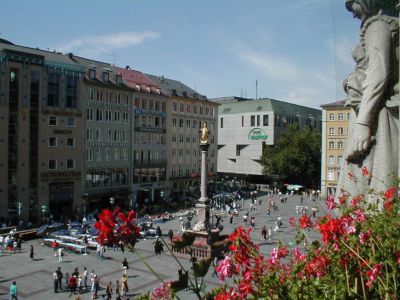
Right in the center of Munich lies Mary’s Square, the city’s lively, historic core. Established back in 1158, it started out as a busy marketplace and a stage for medieval tournaments and public events. These days, it’s still the place where everything seems to converge-a perfect starting point for anyone exploring the city. Grand buildings rise on all sides, cafés spill onto the streets, and the square hums with energy from morning until night.
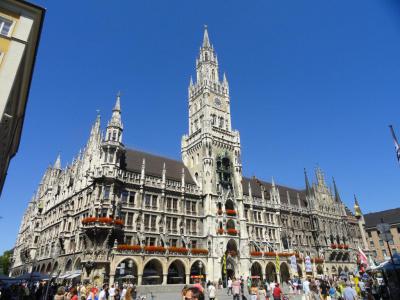
The star attraction is the New Town Hall, an elaborate neo-Gothic masterpiece brimming with stone figures, ornate carvings, and the famous Glockenspiel. At 11 a.m., noon, and again at 5 p.m. during the warmer months, the Glockenspiel puts on its quirky performance. Thirty-two mechanical figures spin into action, reenacting Bavarian legends to a soundtrack of bells and music. It’s theatrical, a little over-the-top, and completely delightful.
Across the square, you’ll also find the Old Town Hall, with its storybook tower and a toy museum tucked inside-great if you’re traveling with kids or just enjoy a touch of childhood nostalgia. Meanwhile in the center stands the Column of Saint Mary, raised in 1638 to mark the end of Swedish occupation during the Thirty Years' War. A gilded statue of the Virgin crowns the column-a quiet symbol in a bustling space, and the inspiration for the square’s name.
Street musicians, traditional restaurants, souvenir stalls-there’s always something happening around you. Want to shop? Stroll down Kaufinger Street, one of Munich’s busiest pedestrian avenues. If you’re more in the mood for architecture, the city’s Cathedral, with its distinctive twin domes, is just around the corner.
In short, Mary’s Square offers the perfect snapshot of Munich. Don’t rush through it-it’s a place to linger, look up, and let the city reveal itself one detail at a time.
The star attraction is the New Town Hall, an elaborate neo-Gothic masterpiece brimming with stone figures, ornate carvings, and the famous Glockenspiel. At 11 a.m., noon, and again at 5 p.m. during the warmer months, the Glockenspiel puts on its quirky performance. Thirty-two mechanical figures spin into action, reenacting Bavarian legends to a soundtrack of bells and music. It’s theatrical, a little over-the-top, and completely delightful.
Across the square, you’ll also find the Old Town Hall, with its storybook tower and a toy museum tucked inside-great if you’re traveling with kids or just enjoy a touch of childhood nostalgia. Meanwhile in the center stands the Column of Saint Mary, raised in 1638 to mark the end of Swedish occupation during the Thirty Years' War. A gilded statue of the Virgin crowns the column-a quiet symbol in a bustling space, and the inspiration for the square’s name.
Street musicians, traditional restaurants, souvenir stalls-there’s always something happening around you. Want to shop? Stroll down Kaufinger Street, one of Munich’s busiest pedestrian avenues. If you’re more in the mood for architecture, the city’s Cathedral, with its distinctive twin domes, is just around the corner.
In short, Mary’s Square offers the perfect snapshot of Munich. Don’t rush through it-it’s a place to linger, look up, and let the city reveal itself one detail at a time.
2) Neues Rathaus (New Town Hall) (must see)
In the second half of the 19th century, as Munich was growing rapidly and riding a wave of prosperity, city leaders decided they needed a new home for local government. The Old Town Hall had simply outgrown its purpose. They chose a prominent spot on the south side of Mary’s Square, cleared out around two dozen houses, and set the stage for something grand. Construction began in 1867 and continued all the way to 1909. Overseeing the project was a remarkably young architect-Georg Hauberrisser-just 24 when he started.
What emerged is a prime example of German pseudo-historical architecture-mock-Netherlands Gothic, to be exact. The building features six courtyards and a small garden at the back. Its façade is covered in intricate sculptures that reference Bavarian legends, local saints, and allegorical figures. At the top of the steeple stands a bronze statue of the “Munich Child,” the city’s traditional symbol. The tower also houses the fourth-largest chiming clock in Europe.
Every day, 43 bells ring out as copper figures dance in two scenes: a knightly tournament honoring the wedding of Duke Wilhelm V and Renata of Lorraine, and the legendary “Dance of the Coopers.” That dance, by the way, is still performed in the streets every seven years during Carnival to commemorate the passing of a plague epidemic in the early 1500s. Legend has it that coopers, loyal to the Duke, danced through the streets to inspire courage during tough times. The official dance moves were defined as far back as 1871.
The full carillon performance plays at 11 a.m., noon, and 5 p.m. in the summer, lasting up to 15 minutes depending on the day’s tune. As a whimsical finale, a tiny golden rooster perched above the clock lets out three soft chirps. And when evening falls, figures of a night watchman and the Angel of Peace appear in the upper windows, quietly blessing the “Munich Child” and the city below.
Visitors can ride the elevator to the viewing platform for sweeping views of the city. And beneath the building, the historic Ratskeller restaurant offers not just a good meal, but a truly atmospheric dining experience.
What emerged is a prime example of German pseudo-historical architecture-mock-Netherlands Gothic, to be exact. The building features six courtyards and a small garden at the back. Its façade is covered in intricate sculptures that reference Bavarian legends, local saints, and allegorical figures. At the top of the steeple stands a bronze statue of the “Munich Child,” the city’s traditional symbol. The tower also houses the fourth-largest chiming clock in Europe.
Every day, 43 bells ring out as copper figures dance in two scenes: a knightly tournament honoring the wedding of Duke Wilhelm V and Renata of Lorraine, and the legendary “Dance of the Coopers.” That dance, by the way, is still performed in the streets every seven years during Carnival to commemorate the passing of a plague epidemic in the early 1500s. Legend has it that coopers, loyal to the Duke, danced through the streets to inspire courage during tough times. The official dance moves were defined as far back as 1871.
The full carillon performance plays at 11 a.m., noon, and 5 p.m. in the summer, lasting up to 15 minutes depending on the day’s tune. As a whimsical finale, a tiny golden rooster perched above the clock lets out three soft chirps. And when evening falls, figures of a night watchman and the Angel of Peace appear in the upper windows, quietly blessing the “Munich Child” and the city below.
Visitors can ride the elevator to the viewing platform for sweeping views of the city. And beneath the building, the historic Ratskeller restaurant offers not just a good meal, but a truly atmospheric dining experience.
3) Peterskirche (St. Peter's Church) (must see)
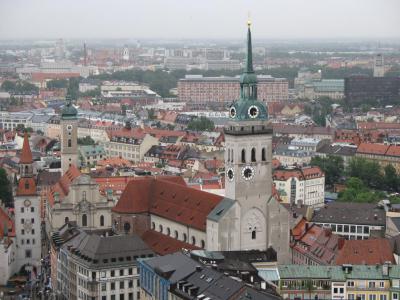
Saint Peter’s Church rises from the highest point of Munich’s Old Town and holds the title of the city’s oldest public building. It played a key role in the city’s early development, with roots reaching back to the 12th century. In fact, the church was once part of the original monastery that gave the city its name-“ménchen” meaning “monks.” After the first structure was lost to fire, a new Gothic-style design took its place in the 13th century. Over time, the church evolved even further, getting a Baroque facelift in the 17th century and then a Rococo reimagining in the 18th. After World War II, major restoration work was carried out to return it to its former glory.
Step inside today, and you're met with an unexpectedly lavish interior. The high altar features a commanding statue of Saint Peter, surrounded by the Church Fathers, while the choir displays five intricately carved scenes from Peter’s life. Look closely and you may even spot the jeweled remains of Saint Mundita-an ornate, if somewhat haunting, presence.
The church’s tower, known as “Old Peter,” is another highlight. Equipped with eight clocks, seven bells, and a viewing gallery, it offers panoramic views over the city-and on clear days, even as far as the Alps. A set of color-coded markers on the lower platform helps gauge visibility; if you spot a white circle, it means you’re in luck. Climbing to the top is well worth the price, but be warned: it’s a steep ascent and not ideal for anyone with a fear of heights. For those who make it, two binocular viewers let you take in the rooftops, church spires, and skyline in vivid detail. And if you arrive before noon, you’ll get an unbeatable vantage point for watching the carillon perform over at Mary’s Square.
Step inside today, and you're met with an unexpectedly lavish interior. The high altar features a commanding statue of Saint Peter, surrounded by the Church Fathers, while the choir displays five intricately carved scenes from Peter’s life. Look closely and you may even spot the jeweled remains of Saint Mundita-an ornate, if somewhat haunting, presence.
The church’s tower, known as “Old Peter,” is another highlight. Equipped with eight clocks, seven bells, and a viewing gallery, it offers panoramic views over the city-and on clear days, even as far as the Alps. A set of color-coded markers on the lower platform helps gauge visibility; if you spot a white circle, it means you’re in luck. Climbing to the top is well worth the price, but be warned: it’s a steep ascent and not ideal for anyone with a fear of heights. For those who make it, two binocular viewers let you take in the rooftops, church spires, and skyline in vivid detail. And if you arrive before noon, you’ll get an unbeatable vantage point for watching the carillon perform over at Mary’s Square.
4) Altes Rathaus (Old Town Hall)
Before the New Town Hall took over in 1874, the Old Town Hall was where Munich’s city government did its business. Unlike many buildings that were torn down to make way for the new structure, this one remained-preserved as a testament to the city’s commitment to restoration over replacement.
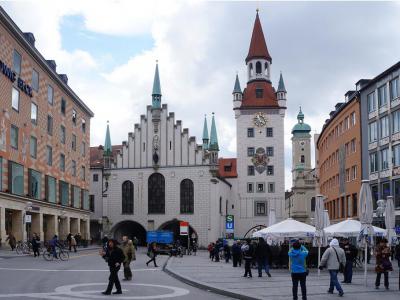
With its dove-grey façade, amber-tiled steeple, and delicate Gothic spires, the Hall captures the essence of its 15th-century origins-though what stands today isn’t an exact replica. Over time, additions like a baroque onion dome and later, an overly enthusiastic attempt at “regothification,” took the structure further from its medieval roots than what the current version reflects. Ironically, the faithful postwar reconstruction you see today may be closer to the spirit of the original than what existed before the Allied bombing.
The oldest surviving element is the 12th-century tower, once part of the city’s medieval fortifications. Today, it houses the Toy Museum, where you’ll find a charming collection of vintage toys-from antique train sets to miniature zoos-spread across four narrow floors connected by a spiral staircase. There's also a gift shop with hand-picked items that make for great souvenirs.
The ceremonial hall still retains its Gothic grandeur, with broad wooden barrel vaults and a frieze of 96 coats of arms lining one wall. Meanwhile, on the building’s side, there's a whimsical surprise: a bronze statue of Shakespeare’s Juliet, a gift from the city of Verona in the 1970s.
But the building also carries a darker legacy. In 1938, Nazi propaganda minister Joseph Goebbels delivered a speech here that triggered the “Night of Broken Glass.” That night of terror saw synagogues burned, Jewish businesses destroyed, and thousands arrested. It’s widely seen as the moment when Nazi anti-Semitic violence escalated into what became the Holocaust.
With its dove-grey façade, amber-tiled steeple, and delicate Gothic spires, the Hall captures the essence of its 15th-century origins-though what stands today isn’t an exact replica. Over time, additions like a baroque onion dome and later, an overly enthusiastic attempt at “regothification,” took the structure further from its medieval roots than what the current version reflects. Ironically, the faithful postwar reconstruction you see today may be closer to the spirit of the original than what existed before the Allied bombing.
The oldest surviving element is the 12th-century tower, once part of the city’s medieval fortifications. Today, it houses the Toy Museum, where you’ll find a charming collection of vintage toys-from antique train sets to miniature zoos-spread across four narrow floors connected by a spiral staircase. There's also a gift shop with hand-picked items that make for great souvenirs.
The ceremonial hall still retains its Gothic grandeur, with broad wooden barrel vaults and a frieze of 96 coats of arms lining one wall. Meanwhile, on the building’s side, there's a whimsical surprise: a bronze statue of Shakespeare’s Juliet, a gift from the city of Verona in the 1970s.
But the building also carries a darker legacy. In 1938, Nazi propaganda minister Joseph Goebbels delivered a speech here that triggered the “Night of Broken Glass.” That night of terror saw synagogues burned, Jewish businesses destroyed, and thousands arrested. It’s widely seen as the moment when Nazi anti-Semitic violence escalated into what became the Holocaust.
5) Viktualienmarkt (Farmer's Market) (must see)
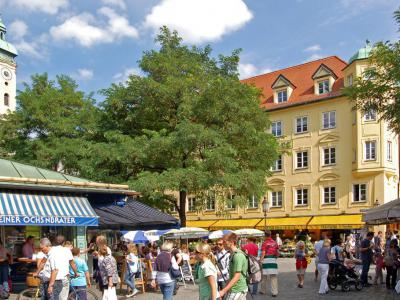
Welcome to Munich’s oldest and most charming market. Since the early 1800s, it’s been the go-to spot for just about anything edible-fresh produce, dairy, meats, fine French wines, seafood, and rare delicacies from around the globe. Prices tend to be on the higher side, but the variety and quality are hard to beat. Of course, you’ll also find classic Bavarian favorites like pretzels, sausages, and local cheeses, all offering a true taste of the region.
People from all walks of life gather here-locals picking up ingredients for dinner, tourists exploring with wide eyes, and regulars who’ve made it part of their daily routine. Local customs involve eating white sausage, sipping hot soup, and enjoying a cold beer in one of the city’s most beloved beer gardens, set around a decorated maypole. Under the shade of chestnut trees, folks gather to sip cold brews and enjoy a break from the buzz.
But this market is more than a place to shop, drink or snack-it’s actually woven into Munich’s cultural identity. Throughout the year, it plays host to everything from folk dances and live music to seasonal festivals, and an especially lively Mardi Gras parade. The fountain erected to commemorate German cabaret artists emphasizes the spirit that has always animated this place.
In every sense, it’s a feast-for the senses, for the culture, and most definitely for the appetite.
People from all walks of life gather here-locals picking up ingredients for dinner, tourists exploring with wide eyes, and regulars who’ve made it part of their daily routine. Local customs involve eating white sausage, sipping hot soup, and enjoying a cold beer in one of the city’s most beloved beer gardens, set around a decorated maypole. Under the shade of chestnut trees, folks gather to sip cold brews and enjoy a break from the buzz.
But this market is more than a place to shop, drink or snack-it’s actually woven into Munich’s cultural identity. Throughout the year, it plays host to everything from folk dances and live music to seasonal festivals, and an especially lively Mardi Gras parade. The fountain erected to commemorate German cabaret artists emphasizes the spirit that has always animated this place.
In every sense, it’s a feast-for the senses, for the culture, and most definitely for the appetite.
6) Asamkirche (Asam Church) (must see)
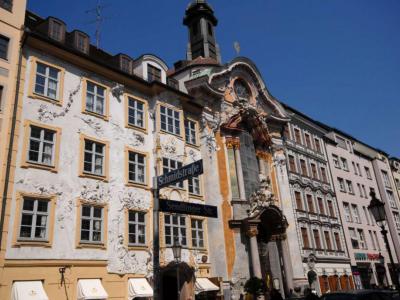
Although modest in size, this church is famed for having the most lavish interior of any religious site in Munich. What it lacks in square footage, it more than makes up for in sheer decorative intensity-frescoes, marble, stucco, and layer upon layer of gold leaf all compete for the eye’s attention. The style might not be to everyone’s taste, but it’s difficult not to be captivated. It’s gaudy, yes-and unmistakably Baroque-but in a very special way that you don't get to see very often.
Built in the 1730s and 1740s by the talented Asam brothers, the church was originally intended as their private chapel. It was later opened to the public and consecrated in honor of Saint Johann Nepomuk, a Bohemian monk and martyr. According to legend, he was executed by drowning in the Danube after refusing to reveal the Queen’s confessions-an act ordered by King Wenceslaus.
Inside, you’ll find a visual feast. The ceiling bursts with frescoes, including a dramatic scene depicting Saint Nepomuk’s final moments in the river. The high altar is flanked by four elaborately twisted columns and features a glass shrine holding a wax figure of the saint. Look upward, and you'll spot a striking sculpture of God the Father leaning over the crucified Christ, perched above the cornice. Much of what you see today is the result of a detailed restoration carried out between 1975 and 1982.
Here’s a tip: try to visit early in the morning, before the crowds arrive-or outside of mass hours if possible. And if the sun’s shining, even better. The light catches the gilded surfaces beautifully, making the whole interior shimmer like a golden dream.
Built in the 1730s and 1740s by the talented Asam brothers, the church was originally intended as their private chapel. It was later opened to the public and consecrated in honor of Saint Johann Nepomuk, a Bohemian monk and martyr. According to legend, he was executed by drowning in the Danube after refusing to reveal the Queen’s confessions-an act ordered by King Wenceslaus.
Inside, you’ll find a visual feast. The ceiling bursts with frescoes, including a dramatic scene depicting Saint Nepomuk’s final moments in the river. The high altar is flanked by four elaborately twisted columns and features a glass shrine holding a wax figure of the saint. Look upward, and you'll spot a striking sculpture of God the Father leaning over the crucified Christ, perched above the cornice. Much of what you see today is the result of a detailed restoration carried out between 1975 and 1982.
Here’s a tip: try to visit early in the morning, before the crowds arrive-or outside of mass hours if possible. And if the sun’s shining, even better. The light catches the gilded surfaces beautifully, making the whole interior shimmer like a golden dream.
7) Burgersaal
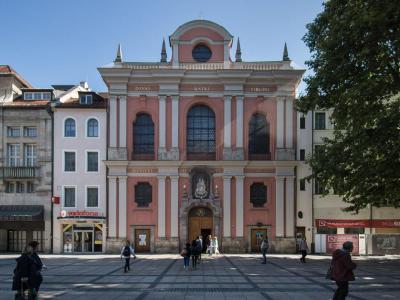
The Bürgersaal, also known as the Citizen's Hall, is a quaint two-story building designed in the Baroque style. It is situated on Neuhauser Strasse, north of Marienplatz. This structure was constructed between 1709 and 1710 under the guidance of Giovanni Antonio Viscardi. Originally, it served as a meeting place for a group known as the Marian Congregation of Men, associated with the Jesuit order. However, since 1778, it has been repurposed as a church.
In contemporary times, the Bürgersaal draws visitors who wish to pay tribute to the anti-Nazi Jesuit priest, Rupert Mayer, who was later canonized by Pope John Paul II. Within the church, there is a prominent shrine dedicated to Father Rupert Mayer, which has become a renowned pilgrimage site. During World War II, the building suffered significant damage, leaving only a few of the original frescoes intact.
The lower section of the church features a low-vaulted hall adorned with statues placed within alcoves, along with a small chapel. The upper floor of the building is the highlight, showcasing exquisite religious artworks. Notable among these is the altar relief titled "Mariae Verkündigung," considered a masterpiece of the Baroque era, crafted by sculptor Andreas Faistenberger. Another precious artwork within is the sculpture of a guardian angel created by Ignaz Günther. Additionally, the upper floor is adorned with thirteen oil landscape paintings by Franz Joachim Beich, depicting various pilgrimage sites in Bavaria.
In contemporary times, the Bürgersaal draws visitors who wish to pay tribute to the anti-Nazi Jesuit priest, Rupert Mayer, who was later canonized by Pope John Paul II. Within the church, there is a prominent shrine dedicated to Father Rupert Mayer, which has become a renowned pilgrimage site. During World War II, the building suffered significant damage, leaving only a few of the original frescoes intact.
The lower section of the church features a low-vaulted hall adorned with statues placed within alcoves, along with a small chapel. The upper floor of the building is the highlight, showcasing exquisite religious artworks. Notable among these is the altar relief titled "Mariae Verkündigung," considered a masterpiece of the Baroque era, crafted by sculptor Andreas Faistenberger. Another precious artwork within is the sculpture of a guardian angel created by Ignaz Günther. Additionally, the upper floor is adorned with thirteen oil landscape paintings by Franz Joachim Beich, depicting various pilgrimage sites in Bavaria.
8) Richard Strauss Fountain
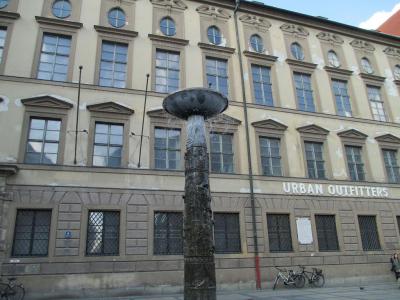
The Richard Strauss Fountain, located near Saint Michael’s Church on Neuhauser Strasse, is a memorial to Richard Strauss, a renowned composer and one of Munich’s most celebrated sons.
It was created by Hans Wimmer in 1962. Richard Strauss was born in Munich in 1864. His father, Franz Strauss, was the main horn player at the court opera. The yonger Strauss is known for having revived the art of opera and for famous musical works, such as Death and Transfiguration, Till Eulenspiegel's Merry Pranks and Also Sprach Zarathustra. In particular, the fountain pays tribute to his most celebrated work, the opera ‘Salome’.
The Richard Strauss fountain consists of a bowl placed on a six-meter high bronze column. Water falls from the bowl in different directions, according to the direction of the wind. The reliefs, carved around the pillar, are divided into six sections. Each section depicts scenes from Salome and unravels the plot of the story. The falling water looks like a wet veil portraying the final dance in the opera, called the Dance of the Seven Veils, which is widely considered Strauss’s masterpiece. The fountain is frequented by music lovers from around the world who come to pay their tribute to the great composer.
It was created by Hans Wimmer in 1962. Richard Strauss was born in Munich in 1864. His father, Franz Strauss, was the main horn player at the court opera. The yonger Strauss is known for having revived the art of opera and for famous musical works, such as Death and Transfiguration, Till Eulenspiegel's Merry Pranks and Also Sprach Zarathustra. In particular, the fountain pays tribute to his most celebrated work, the opera ‘Salome’.
The Richard Strauss fountain consists of a bowl placed on a six-meter high bronze column. Water falls from the bowl in different directions, according to the direction of the wind. The reliefs, carved around the pillar, are divided into six sections. Each section depicts scenes from Salome and unravels the plot of the story. The falling water looks like a wet veil portraying the final dance in the opera, called the Dance of the Seven Veils, which is widely considered Strauss’s masterpiece. The fountain is frequented by music lovers from around the world who come to pay their tribute to the great composer.
9) St. Michael's Church
The Saint Michael Church in Munich stands as the largest religious building in the Renaissance style located north of the Alps. It is under the management of the Jesuit order and was constructed during the reign of Duke William IV of Bavaria, serving as a focal point for the Counter Reformation movement, a response to Martin Luther's Protestant reforms within the Christian faith.
The church's initial construction took place between 1583 and 1588, with its design attributed to an anonymous architect. Initially, it featured an extensive barrel-vaulted roof and a tower. However, in 1590, the tower collapsed, causing damage to the newly completed choir section. Subsequently, a grand choir and transept were added to the original structure, and the church was consecrated in 1597.
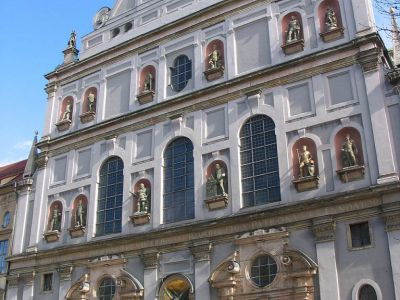
The Saint Michael Church showcases exemplary architectural design. Its façade is characterized by three horizontal cornices, adorned with sculptures depicting the principles of the Counter Reformation. On the ground floor niche, you can find the sculpture of Archangel Michael, crafted by sculptor Hubert Gerhard. The other niches are occupied by stone figures representing Dukes and Kings of Bavaria. Inside, the church features a nave without aisles, creating a spacious and well-lit ambiance. A remarkable Triumphal Arch stands before the choir, with a three-story high altar at its center, adorned with Christoph Schwarz's sculpture of Saint Michael battling the devil.
Additionally, the crypt beneath the church serves as the final resting place for members of the Wittelsbach Royal family who once ruled Bavaria, as well as notable figures like the sculptor Giovanni da Bologna and Eugène de Beauharnais, the son of Napoleon's wife, Josephine.
The church's initial construction took place between 1583 and 1588, with its design attributed to an anonymous architect. Initially, it featured an extensive barrel-vaulted roof and a tower. However, in 1590, the tower collapsed, causing damage to the newly completed choir section. Subsequently, a grand choir and transept were added to the original structure, and the church was consecrated in 1597.
The Saint Michael Church showcases exemplary architectural design. Its façade is characterized by three horizontal cornices, adorned with sculptures depicting the principles of the Counter Reformation. On the ground floor niche, you can find the sculpture of Archangel Michael, crafted by sculptor Hubert Gerhard. The other niches are occupied by stone figures representing Dukes and Kings of Bavaria. Inside, the church features a nave without aisles, creating a spacious and well-lit ambiance. A remarkable Triumphal Arch stands before the choir, with a three-story high altar at its center, adorned with Christoph Schwarz's sculpture of Saint Michael battling the devil.
Additionally, the crypt beneath the church serves as the final resting place for members of the Wittelsbach Royal family who once ruled Bavaria, as well as notable figures like the sculptor Giovanni da Bologna and Eugène de Beauharnais, the son of Napoleon's wife, Josephine.
10) Kaufinger Street & Neuhauser Street (must see)
Just west of Mary’s Square lies one of Munich’s oldest streets-Kaufinger. In fact, it holds the title for the city's oldest recorded street name, first mentioned in a document dated May 28, 1239. While it suffered heavy damage during World War II, the decades that followed brought a fresh architectural wave. By the 1990s, many of the utilitarian post-war buildings had been replaced with sleek, postmodern designs. Today, Kaufinger remains a key artery in Munich’s Old Town, forming part of the main west-to-east route through the historic center.
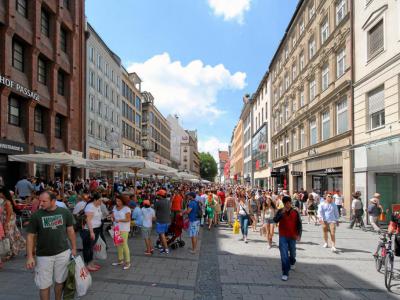
As you continue along, Kaufinger flows directly into Neuhauser, forming a broad thoroughfare. Once a busy traffic route with tram tracks, Neuhauser was transformed into a pedestrian zone in 1972, just ahead of the Munich Summer Olympics. The goal was to accommodate the anticipated crowds-and the result is now the most profitable shopping street in all of Germany.
Naturally, both streets are lined with a rich mix of shops and restaurants. Global brands rub shoulders with local vendors selling everything from fresh flowers and fruit to roasted nuts and souvenirs. Outdoor cafés spill onto the pavement, offering shoppers a place to rest, sip a coffee, enjoy a meal, and take in the architecture, along with the energy of the crowd.
Tip: If you're looking to escape the mainstream retail chains while staying in the city center, make your way to Sendlinger Street. It’s just nearby and offers a more laid-back, boutique shopping experience.
As you continue along, Kaufinger flows directly into Neuhauser, forming a broad thoroughfare. Once a busy traffic route with tram tracks, Neuhauser was transformed into a pedestrian zone in 1972, just ahead of the Munich Summer Olympics. The goal was to accommodate the anticipated crowds-and the result is now the most profitable shopping street in all of Germany.
Naturally, both streets are lined with a rich mix of shops and restaurants. Global brands rub shoulders with local vendors selling everything from fresh flowers and fruit to roasted nuts and souvenirs. Outdoor cafés spill onto the pavement, offering shoppers a place to rest, sip a coffee, enjoy a meal, and take in the architecture, along with the energy of the crowd.
Tip: If you're looking to escape the mainstream retail chains while staying in the city center, make your way to Sendlinger Street. It’s just nearby and offers a more laid-back, boutique shopping experience.
11) Frauenkirche (Cathedral of Our Lady) (must see)
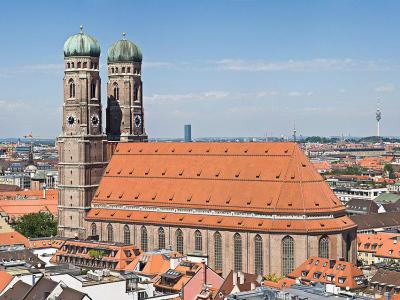
The largest Gothic structure in southern Germany, this church was built at an astonishing pace. Construction began in 1468 and wrapped up just 20 years later, a remarkable feat for the time. With its twin towers capped by distinctive onion-shaped domes rising 99 meters high, it remains the city’s most iconic landmark.
Entry is free, though there’s a small charge if you’d rather take the elevator up the South Tower instead of making the climb yourself. The panoramic view from the top is well worth the effort-an unforgettable way to view the city from above.
Inside, the atmosphere is stark and reverent. What you may see today was rebuilt from the ruins left by World War II bombings. Having been safely stored away during the war, the Gothic windows offer a glimpse of the church’s former glory. In the choir, you’ll find sculptures of the Apostles and Prophets, created in 1502 and miraculously preserved. The north chapel holds a striking altarpiece of Christ’s baptism, alongside Jan Polack’s panels depicting scenes from the Passion. Also look out for his painting “The Protecting Cloak”, as well as an elaborate cenotaph of Holy Roman Emperor Louis IV.
And then, of course, there’s the legend-the infamous Devil’s Footprint. As the story goes, architect Jörg von Halsbach made a deal with the devil: the funds to finish the church, in exchange for a design with no visible windows. From one specific spot near the entrance, the illusion holds-no windows in sight. When the devil realized he’d been tricked, he stomped his foot in rage, leaving a footprint behind. Both the footprint and the trick of perspective can still be seen today.
Since this is Munich’s mother church, photography is discouraged out of respect for those who come here to pray. So take a quiet moment, soak in the stillness, and let the space speak for itself.
Entry is free, though there’s a small charge if you’d rather take the elevator up the South Tower instead of making the climb yourself. The panoramic view from the top is well worth the effort-an unforgettable way to view the city from above.
Inside, the atmosphere is stark and reverent. What you may see today was rebuilt from the ruins left by World War II bombings. Having been safely stored away during the war, the Gothic windows offer a glimpse of the church’s former glory. In the choir, you’ll find sculptures of the Apostles and Prophets, created in 1502 and miraculously preserved. The north chapel holds a striking altarpiece of Christ’s baptism, alongside Jan Polack’s panels depicting scenes from the Passion. Also look out for his painting “The Protecting Cloak”, as well as an elaborate cenotaph of Holy Roman Emperor Louis IV.
And then, of course, there’s the legend-the infamous Devil’s Footprint. As the story goes, architect Jörg von Halsbach made a deal with the devil: the funds to finish the church, in exchange for a design with no visible windows. From one specific spot near the entrance, the illusion holds-no windows in sight. When the devil realized he’d been tricked, he stomped his foot in rage, leaving a footprint behind. Both the footprint and the trick of perspective can still be seen today.
Since this is Munich’s mother church, photography is discouraged out of respect for those who come here to pray. So take a quiet moment, soak in the stillness, and let the space speak for itself.
