Custom Walk in Puebla, Mexico by almaperez_55fbba created on 2026-05-27
Guide Location: Mexico » Puebla
Guide Type: Custom Walk
# of Sights: 7
Tour Duration: 1 Hour(s)
Travel Distance: 2.3 Km or 1.4 Miles
Share Key: 6UHMB
Guide Type: Custom Walk
# of Sights: 7
Tour Duration: 1 Hour(s)
Travel Distance: 2.3 Km or 1.4 Miles
Share Key: 6UHMB
How It Works
Please retrieve this walk in the GPSmyCity app. Once done, the app will guide you from one tour stop to the next as if you had a personal tour guide. If you created the walk on this website or come to the page via a link, please follow the instructions below to retrieve the walk in the app.
Retrieve This Walk in App
Step 1. Download the app "GPSmyCity: Walks in 1K+ Cities" on Apple App Store or Google Play Store.



Step 2. In the GPSmyCity app, download(or launch) the guide "Puebla Map and Walking Tours".
Step 3. Tap the menu button located at upper right corner of the "Walks" screen and select "Retrieve custom walk". Enter the share key: 6UHMB
1) Zocalo Plaza and San Miguel Fountain (must see)
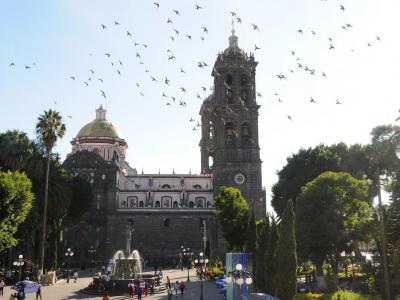
Zócalo Plaza and the San Miguel Fountain form the civic heart of the historic centre, a place where planning, religion, trade, and daily life have overlapped since the colonial period. Laid out in the 16th century as the centre of the surrounding grid, the square was reportedly adjusted from an early rectangular plan into its present balanced form. The valley’s older Nahuatl name, Cuetlaxcuapan, meaning “the place where snakes change their skin,” adds a pre-Hispanic layer to its identity.
Although commonly called the Zócalo today, the square was historically known as the Plaza Mayor. The word “Zócalo,” meaning plinth or pedestal, became common here only in the early 20th century. Before the square became a place for strolling and ceremonies, it also served as an open-air market for food, clothing, and daily goods.
At the centre stands the San Miguel Fountain, created in the 18th century and focused on the figure of Saint Michael the Archangel. Today it serves as a sculptural landmark, though its original role was practical: supplying potable water during the colonial period. Removed in the 19th century for a decorative kiosk, it returned in the 1960s to restore the square’s older layout.
The plaza has also served as a stage for public entertainment, regulation, and civic ritual. Bullfights were held here from the late 16th to the early 18th century, when the square could be turned into an arena. The plaza also concentrated daily trade, including bread sales, while today its shaded paths, arcades, façades, and sculptural details preserve a strong sense of civic life.
Although commonly called the Zócalo today, the square was historically known as the Plaza Mayor. The word “Zócalo,” meaning plinth or pedestal, became common here only in the early 20th century. Before the square became a place for strolling and ceremonies, it also served as an open-air market for food, clothing, and daily goods.
At the centre stands the San Miguel Fountain, created in the 18th century and focused on the figure of Saint Michael the Archangel. Today it serves as a sculptural landmark, though its original role was practical: supplying potable water during the colonial period. Removed in the 19th century for a decorative kiosk, it returned in the 1960s to restore the square’s older layout.
The plaza has also served as a stage for public entertainment, regulation, and civic ritual. Bullfights were held here from the late 16th to the early 18th century, when the square could be turned into an arena. The plaza also concentrated daily trade, including bread sales, while today its shaded paths, arcades, façades, and sculptural details preserve a strong sense of civic life.
2) Catedral de Puebla (Puebla Cathedral) (must see)
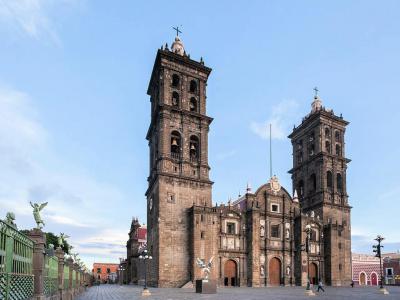
Puebla Cathedral (Catedral de Puebla) is the episcopal see of the Archdiocese of Puebla. The Cathedral was founded by King Philip II of Spain, and its construction began in 1575. It was consecrated in 1649 though it remained unfinished. The cathedral is also known as the Basilica Cathedral of Puebla or the Cathedral of Our Lady of the Immaculate Conception.
The Cathedral also functions as a museum. It holds multiple works of art, including paintings, sculptures, carpentry, and jewelry. Items on display include sacred vessels and crosses made with gold and encrusted with precious gems. Its historical archive has documents dating back to the founding of the city.
The first architect of Puebla Cathedral was Francisco Becerra. The indigenous Cholula and Tlaxcala participated in the construction of the Cathedral. In the mid-17th century, the architect Juan Gomez de Trasmonte took over the plans. Gómez de Trasmonte, who had served as Major Master of the Mexico City Metropolitan Cathedral, adapted the project, giving it a more classical appearance and a basilica plan.
Bishop Juan de Palafox y Mendoza joined the Cathedral around 1640 and ordered construction work to be finished. He used his own wealth and conducted fundraising in the form of tithes. The facade of the edifice was completed in 1664.
The north tower, also called Old Tower, was added in 1678. It is the only bell tower with ten bells in total. The most famous is the Bell Maria (Campana María,) weighing more than nine tons. The south tower was added in 1731. Both towers are about 230 feet high, being at the time, the highest in the American colonies.
Five daily masses are celebrated Monday through Saturday. The Cathedral celebrates 10 masses on Sundays. All guests are welcome.
Puebla Cathedral is declared a World Heritage Site by UNESCO.
The Cathedral also functions as a museum. It holds multiple works of art, including paintings, sculptures, carpentry, and jewelry. Items on display include sacred vessels and crosses made with gold and encrusted with precious gems. Its historical archive has documents dating back to the founding of the city.
The first architect of Puebla Cathedral was Francisco Becerra. The indigenous Cholula and Tlaxcala participated in the construction of the Cathedral. In the mid-17th century, the architect Juan Gomez de Trasmonte took over the plans. Gómez de Trasmonte, who had served as Major Master of the Mexico City Metropolitan Cathedral, adapted the project, giving it a more classical appearance and a basilica plan.
Bishop Juan de Palafox y Mendoza joined the Cathedral around 1640 and ordered construction work to be finished. He used his own wealth and conducted fundraising in the form of tithes. The facade of the edifice was completed in 1664.
The north tower, also called Old Tower, was added in 1678. It is the only bell tower with ten bells in total. The most famous is the Bell Maria (Campana María,) weighing more than nine tons. The south tower was added in 1731. Both towers are about 230 feet high, being at the time, the highest in the American colonies.
Five daily masses are celebrated Monday through Saturday. The Cathedral celebrates 10 masses on Sundays. All guests are welcome.
Puebla Cathedral is declared a World Heritage Site by UNESCO.
3) Biblioteca Palafoxiana (Palafoxiana Library) (must see)
Biblioteca Palafoxiana is a rare colonial-era library whose collection remains close to its original setting. Its origins date to 1646, when Bishop Juan de Palafox y Mendoza donated thousands of books to the seminary, making them available to clergy and educated lay readers. Later, the collection expanded with volumes taken from Jesuit colleges after the order’s expulsion from the Spanish Empire in 1767.
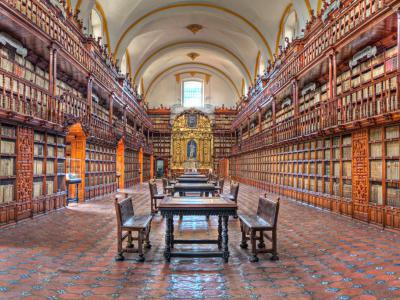
The 18th-century hall preserves the atmosphere of a learned institution shaped by religion, humanism, and early science. Its three-tiered shelves, carved from cedar, white pine, and ayacahuite, combine strength with natural protection, as cedar helps repel insects. The collection ranges from theology, law, medicine, and astronomy to rare Indigenous-language grammars and dictionaries used for missionary translation.
The interior is carefully arranged and visually balanced. Dark wood bookcases, a vaulted ceiling, reading tables, and a large altarpiece-like composition at the far end give the room a solemn but accessible character. One of its unusual pieces is an old rotating book wheel, a wooden device that allowed scholars to consult several open volumes at once without constantly lifting and closing them. The library also held prohibited works in a restricted section known as “El Infierno,” or “Hell,” accessible only with special permission.
Visitors usually view the library from protected areas, but the room still conveys its scale, craftsmanship, and long scholarly life. After the 1999 earthquakes, restoration work helped stabilise the hall and safeguard its shelves and books. Its UNESCO Memory of the World recognition reflects its value as a record of how knowledge was collected, organised, restricted, and shared in colonial society.
The 18th-century hall preserves the atmosphere of a learned institution shaped by religion, humanism, and early science. Its three-tiered shelves, carved from cedar, white pine, and ayacahuite, combine strength with natural protection, as cedar helps repel insects. The collection ranges from theology, law, medicine, and astronomy to rare Indigenous-language grammars and dictionaries used for missionary translation.
The interior is carefully arranged and visually balanced. Dark wood bookcases, a vaulted ceiling, reading tables, and a large altarpiece-like composition at the far end give the room a solemn but accessible character. One of its unusual pieces is an old rotating book wheel, a wooden device that allowed scholars to consult several open volumes at once without constantly lifting and closing them. The library also held prohibited works in a restricted section known as “El Infierno,” or “Hell,” accessible only with special permission.
Visitors usually view the library from protected areas, but the room still conveys its scale, craftsmanship, and long scholarly life. After the 1999 earthquakes, restoration work helped stabilise the hall and safeguard its shelves and books. Its UNESCO Memory of the World recognition reflects its value as a record of how knowledge was collected, organised, restricted, and shared in colonial society.
4) Amparo Museum (must see)
The Amparo Museum is one of Mexico’s major art institutions, opened in 1991 through the Amparo Foundation and named in memory of Amparo Rugarcía de Espinosa Yglesias. From the start, it stood out for both its collections and its early use of interactive technology, introducing multilingual multimedia stations and CD-i systems for self-guided visits through the permanent galleries.
The visit begins with a clear timeline. Near the entrance, the “Códice del Tiempo” places Mesoamerican cultures beside events from Egypt, Asia, and Europe, helping visitors see local history in a wider context. The pre-Hispanic collection includes ceramics, stone carvings, ritual objects, figurines, and unusual pieces linked to writing, animals, and ancient beliefs about death and the afterlife.
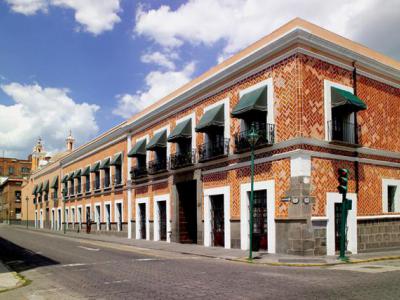
The museum also preserves a strong domestic and historical layer. Part of the viceregal exhibition occupies the former Espinosa family residence, where 11 rooms recreate the atmosphere of a 19th-century elite household. Furniture, religious portraits, sculpture, textiles, and decorative arts show how status, devotion, and daily life shaped a traditional casa poblana. Rather than presenting these objects as isolated works, the rooms place them in a lived setting, where visitors can imagine how private interiors reflected family identity, religious practice, and social position.
Architecturally, the museum combines historic buildings with modern interventions. Its 1991 adaptation was led by Pedro Ramírez Vázquez, while Enrique Norten and TEN Arquitectos later added glass vestibules, clearer routes, galleries, terraces, and open-air spaces. The rooftop, finished with local marble and Talavera, offers views over domes, towers, and tiled roofs, while exhibitions, programmes, and free-access policies keep the museum active as a public cultural space.
The visit begins with a clear timeline. Near the entrance, the “Códice del Tiempo” places Mesoamerican cultures beside events from Egypt, Asia, and Europe, helping visitors see local history in a wider context. The pre-Hispanic collection includes ceramics, stone carvings, ritual objects, figurines, and unusual pieces linked to writing, animals, and ancient beliefs about death and the afterlife.
The museum also preserves a strong domestic and historical layer. Part of the viceregal exhibition occupies the former Espinosa family residence, where 11 rooms recreate the atmosphere of a 19th-century elite household. Furniture, religious portraits, sculpture, textiles, and decorative arts show how status, devotion, and daily life shaped a traditional casa poblana. Rather than presenting these objects as isolated works, the rooms place them in a lived setting, where visitors can imagine how private interiors reflected family identity, religious practice, and social position.
Architecturally, the museum combines historic buildings with modern interventions. Its 1991 adaptation was led by Pedro Ramírez Vázquez, while Enrique Norten and TEN Arquitectos later added glass vestibules, clearer routes, galleries, terraces, and open-air spaces. The rooftop, finished with local marble and Talavera, offers views over domes, towers, and tiled roofs, while exhibitions, programmes, and free-access policies keep the museum active as a public cultural space.
5) Callejón de los Sapos (Alley of the Frogs) (must see)
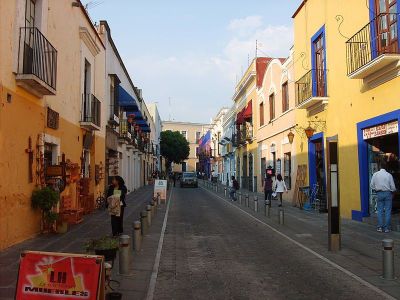
Callejón de los Sapos, or Alley of the Frogs, is a colourful pedestrian lane with colonial façades, small shops, galleries, cafés, and weekend stalls. Its name comes from flooding by the nearby San Francisco River, which once left pools of water that attracted frogs and toads. The river was later channelled underground, turning the old waterside setting into part of the modern urban landscape.
Before becoming a place for browsing and photography, the area had a more practical and noisy life. During periods of heavy water flow, mills operated near the old river course, using the current for work rather than display. In the 19th century, the central square of Los Sapos also held a local bullring, built in 1849 and demolished in 1867. These details help explain why the alley feels layered: behind its present-day cafés and antique shops is a history of water, trade, entertainment, and neighbourhood life.
Today, the place is best known for its visual character. Brightly painted houses, balconies, carved doors, Talavera details, and cobblestones create a compact setting closely tied to the historic centre. Some accounts also connect the lane’s older tilework with frog and toad motifs, a playful reference to the story behind its name. In the main plaza, a stone fountain with a sculpted toad keeps that memory visible, turning local folklore into a small public landmark.
Its strongest attraction is the antiques and flea-market atmosphere. On weekends, vendors sell antiques, books, records, furniture, crafts, and assorted curiosities. After dark, especially on Friday and Saturday nights, lights, music, restaurants, and cantinas give the alley a livelier mood.
Before becoming a place for browsing and photography, the area had a more practical and noisy life. During periods of heavy water flow, mills operated near the old river course, using the current for work rather than display. In the 19th century, the central square of Los Sapos also held a local bullring, built in 1849 and demolished in 1867. These details help explain why the alley feels layered: behind its present-day cafés and antique shops is a history of water, trade, entertainment, and neighbourhood life.
Today, the place is best known for its visual character. Brightly painted houses, balconies, carved doors, Talavera details, and cobblestones create a compact setting closely tied to the historic centre. Some accounts also connect the lane’s older tilework with frog and toad motifs, a playful reference to the story behind its name. In the main plaza, a stone fountain with a sculpted toad keeps that memory visible, turning local folklore into a small public landmark.
Its strongest attraction is the antiques and flea-market atmosphere. On weekends, vendors sell antiques, books, records, furniture, crafts, and assorted curiosities. After dark, especially on Friday and Saturday nights, lights, music, restaurants, and cantinas give the alley a livelier mood.
6) Mercado de Artesanias "El Parián" (Parian Crafts Market)
Mercado de Artesanías “El Parián” grew from colonial trade and the older idea of the parián, a word often defined as “market” and linked to Tagalog and trans-Pacific commerce between New Spain and the Philippines. Before becoming a crafts centre in 1961, it was known as Plaza del Baratillo, a flea market for inexpensive and secondhand goods.
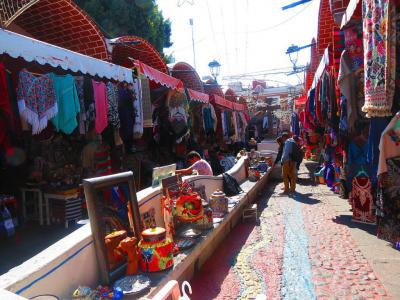
The market is arranged into 112 fixed stalls, giving it a more structured layout than a temporary street market while keeping the feel of a busy craft bazaar. Brick façades, Talavera tile details, stone paving, and concrete semicircular ceilings shape its distinctive passages, which can feel almost tunnel-like in places. Visitors may also notice painted figures on the floors, adding a playful note to the historic setting and reflecting the popular humour often found in local public spaces.
Today, the stalls offer Talavera ceramics, textiles, leather goods, jewellery, woodwork, onyx pieces, traditional clothing, sweets, and souvenirs from different craft traditions. Visitors may also find rompope, an eggnog-like drink linked to convent kitchens, and amate bark paper from Pahuatlán. During Day of the Dead, vendors set up altars as part of the city’s “corridor of offerings,” blending devotion, colour, and commerce.
The market is arranged into 112 fixed stalls, giving it a more structured layout than a temporary street market while keeping the feel of a busy craft bazaar. Brick façades, Talavera tile details, stone paving, and concrete semicircular ceilings shape its distinctive passages, which can feel almost tunnel-like in places. Visitors may also notice painted figures on the floors, adding a playful note to the historic setting and reflecting the popular humour often found in local public spaces.
Today, the stalls offer Talavera ceramics, textiles, leather goods, jewellery, woodwork, onyx pieces, traditional clothing, sweets, and souvenirs from different craft traditions. Visitors may also find rompope, an eggnog-like drink linked to convent kitchens, and amate bark paper from Pahuatlán. During Day of the Dead, vendors set up altars as part of the city’s “corridor of offerings,” blending devotion, colour, and commerce.
7) Convento de Santo Domingo (St. Domingo Convent and Rosario Chapel) (must see)
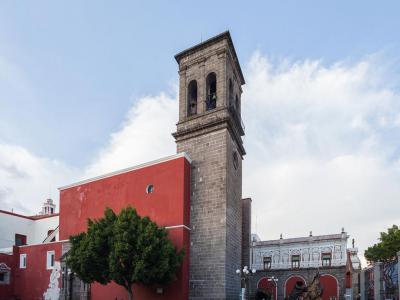
Convento de Santo Domingo is a major Dominican religious complex whose history reaches back to the early colonial period. The Dominicans were among the first religious orders active in New Spain, and work on the church began in the 16th century, with the main temple completed in the early 17th century. Its exterior is relatively sober, with a stone façade, strong proportions, and restrained decoration that prepares visitors for a very different experience inside.
The complex is best known for the Chapel of the Rosary, added between 1650 and 1690. Dedicated to Our Lady of the Rosary, a devotion closely linked with the Dominican Order, the chapel served as both a worship space and a visual lesson in Catholic belief. Its walls, dome, altars, and figures present the mysteries of the rosary through gold, symbolism, and Baroque imagery.
Nearly every surface in the chapel is covered with gilded stucco, carved ornament, painted figures, and religious emblems. Local accounts link the gold leaf’s long survival to an organic plaster mixture said to include flour, egg whites, honey, and water. Along the lower walls, blue-and-white Talavera tiles form a regional accent, with cherub heads and Dominican shields creating the impression of a large rosary around the chapel.
The chapel’s design also carries a symbolic reading of the cosmos. The chapel’s geometry is often read symbolically: the square base suggests the earthly world, the octagonal section rebirth, and the circular dome heaven. Above, angel figures appear to sing and play instruments around the dome, while the central ciprés is supported by twelve Tecali marble columns, traditionally linked with the Apostles.
The complex is best known for the Chapel of the Rosary, added between 1650 and 1690. Dedicated to Our Lady of the Rosary, a devotion closely linked with the Dominican Order, the chapel served as both a worship space and a visual lesson in Catholic belief. Its walls, dome, altars, and figures present the mysteries of the rosary through gold, symbolism, and Baroque imagery.
Nearly every surface in the chapel is covered with gilded stucco, carved ornament, painted figures, and religious emblems. Local accounts link the gold leaf’s long survival to an organic plaster mixture said to include flour, egg whites, honey, and water. Along the lower walls, blue-and-white Talavera tiles form a regional accent, with cherub heads and Dominican shields creating the impression of a large rosary around the chapel.
The chapel’s design also carries a symbolic reading of the cosmos. The chapel’s geometry is often read symbolically: the square base suggests the earthly world, the octagonal section rebirth, and the circular dome heaven. Above, angel figures appear to sing and play instruments around the dome, while the central ciprés is supported by twelve Tecali marble columns, traditionally linked with the Apostles.
