Custom Walk in New York, New York by cjthompson2_2f7ec2 created on 2026-06-03
Guide Location: USA » New York
Guide Type: Custom Walk
# of Sights: 7
Tour Duration: 3 Hour(s)
Travel Distance: 7.3 Km or 4.5 Miles
Share Key: V4PRE
Guide Type: Custom Walk
# of Sights: 7
Tour Duration: 3 Hour(s)
Travel Distance: 7.3 Km or 4.5 Miles
Share Key: V4PRE
How It Works
Please retrieve this walk in the GPSmyCity app. Once done, the app will guide you from one tour stop to the next as if you had a personal tour guide. If you created the walk on this website or come to the page via a link, please follow the instructions below to retrieve the walk in the app.
Retrieve This Walk in App
Step 1. Download the app "GPSmyCity: Walks in 1K+ Cities" on Apple App Store or Google Play Store.



Step 2. In the GPSmyCity app, download(or launch) the guide "New York Map and Walking Tours".
Step 3. Tap the menu button located at upper right corner of the "Walks" screen and select "Retrieve custom walk". Enter the share key: V4PRE
1) Washington Square Park
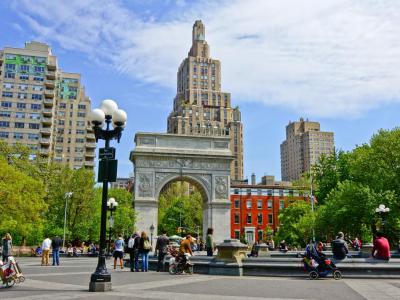
If you’ve ever walked into Washington Square Park and felt like you’d stepped into a living postcard-with guitar strummers on one side, chess hustlers on the other, and NYU students cutting classes everywhere in between-you’re only catching the latest chapter of a very long story. Washington Square Park has spent decades adapting to the moods and needs of the city before becoming a go-to meeting point for just about anyone looking for a slice of New York at a human scale.
Hard to believe, but this lively hangout began as a marshy river delta, the kind of soggy patch colonial New Yorkers happily ignored. By the late 1700s, it took on a far grimmer role as a potter’s field, the final resting place for the city’s poor, unnamed, and unlucky victims of yellow fever. Not exactly the picnic-friendly image it has today...
As New York crept north in the early 19th century, the cemetery closed, and the land was re-imagined as a military parade ground-flat, open, and surprisingly forward-thinking for a space that once swallowed rainwater like a sponge. Then, in 1833, the city decided to celebrate the 50th anniversary of George Washington’s inauguration by giving the area a makeover and the name Washington Square. Neat paths, tidy lawns, and new plantings drew well-to-do residents, who lined the northern edge with elegant Greek Revival townhouses. Instantly, the place gained its reputation as a cultured corner of the growing city.
Toward the late 1800s, the Village’s bohemian spirit took over. Artists, writers, and performers treated the square as an outdoor salon, and the unveiling of Stanford White’s triumphal arch in 1892 sealed its status as a civic icon.
The mid-20th century delivered a bit of drama when planners tried to ram Fifth Avenue straight through the park. Luckily, that idea didn't materialize thanks to the fierce community pushback, which saved the space and reshaped urban activism in the process.
Today, Washington Square Park is a compact but electric patch of green-fountain, lawns, and shade-packed with locals walking their dogs, and a rotating cast of social-media hopefuls striking poses like it’s a paid gig. It’s the Village’s open-air living room, surrounded by historic streets and endless spots to grab a coffee, a snack, or just catch that “authentic Village moment,” while sitting and watching the world swirl by...
Hard to believe, but this lively hangout began as a marshy river delta, the kind of soggy patch colonial New Yorkers happily ignored. By the late 1700s, it took on a far grimmer role as a potter’s field, the final resting place for the city’s poor, unnamed, and unlucky victims of yellow fever. Not exactly the picnic-friendly image it has today...
As New York crept north in the early 19th century, the cemetery closed, and the land was re-imagined as a military parade ground-flat, open, and surprisingly forward-thinking for a space that once swallowed rainwater like a sponge. Then, in 1833, the city decided to celebrate the 50th anniversary of George Washington’s inauguration by giving the area a makeover and the name Washington Square. Neat paths, tidy lawns, and new plantings drew well-to-do residents, who lined the northern edge with elegant Greek Revival townhouses. Instantly, the place gained its reputation as a cultured corner of the growing city.
Toward the late 1800s, the Village’s bohemian spirit took over. Artists, writers, and performers treated the square as an outdoor salon, and the unveiling of Stanford White’s triumphal arch in 1892 sealed its status as a civic icon.
The mid-20th century delivered a bit of drama when planners tried to ram Fifth Avenue straight through the park. Luckily, that idea didn't materialize thanks to the fierce community pushback, which saved the space and reshaped urban activism in the process.
Today, Washington Square Park is a compact but electric patch of green-fountain, lawns, and shade-packed with locals walking their dogs, and a rotating cast of social-media hopefuls striking poses like it’s a paid gig. It’s the Village’s open-air living room, surrounded by historic streets and endless spots to grab a coffee, a snack, or just catch that “authentic Village moment,” while sitting and watching the world swirl by...
2) Chelsea Market (must see)
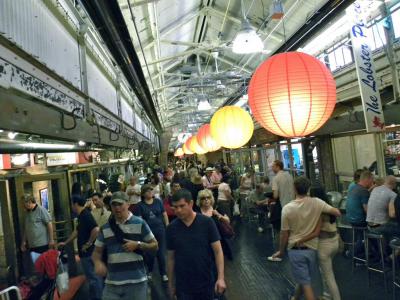
The Chelsea Market stands as a remarkable testament to both redevelopment and preservation, as it has revitalized a former Nabisco factory (where the iconic Oreo cookie was originally crafted), into a bustling shopping destination, appealing to both culinary enthusiasts and fashion aficionados. With over two dozen food vendors to choose from, foodies can revel in a myriad of delectable options. Experience the fusion of Korean flavors with ramen at MOKBAR, savor delectable crepes at BAR SUZETTE, relish in Cambodian sandwiches at NUM PANG, or indulge in piping hot mini-doughnuts at DOUGHNUTTERY. For a more indulgent treat, savor the impeccable seafood and raw bar at CULL & PISTOL, or enjoy upscale American comfort food at Friedman's Lunch.
Those seeking non-food delights may peruse the curated collection of Moroccan art and design at IMPORTS FROM MARRAKESH, explore the latest literary gems at POSMAN BOOKS, find a fashionable outfit at ANTHROPOLOGIE, or browse the expertly-staffed CHELSEA WINE VAULT for a bottle of fine wine. At the Tenth Ave entrance, you'll discover ARTISTS AND FLEAS, a permanent market showcasing the creations of local designers and craftspeople. This vibrant marketplace is the perfect spot to uncover a unique wallet, trendy sunglasses, or a striking statement piece of jewelry.
Those seeking non-food delights may peruse the curated collection of Moroccan art and design at IMPORTS FROM MARRAKESH, explore the latest literary gems at POSMAN BOOKS, find a fashionable outfit at ANTHROPOLOGIE, or browse the expertly-staffed CHELSEA WINE VAULT for a bottle of fine wine. At the Tenth Ave entrance, you'll discover ARTISTS AND FLEAS, a permanent market showcasing the creations of local designers and craftspeople. This vibrant marketplace is the perfect spot to uncover a unique wallet, trendy sunglasses, or a striking statement piece of jewelry.
3) High Line (must see)
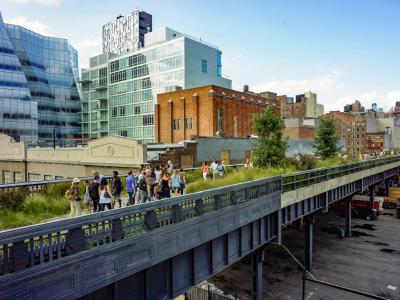
Constructed on a repurposed section of elevated freight train tracks, The High Line offers a dual experience as both an urban sanctuary, providing respite from the bustling city streets, and a tribute to Manhattan's West Side, particularly its remarkable architecture. The initial segment, spanning from Gansevoort Street to West 20th Street, opened in 2009 and became an instant hit, demonstrating that open spaces could be trendy and fashionable. This sudden success also caught the attention of the city tax assessor, who saw the surrounding properties in a new light. The park's second section opened in June 2011, doubling its length to 30th Street. The third section, completed in 2014, extends along the elevated tracks until 34th Street.
The High Line incorporates various environmentally friendly features, starting with the plant life that reflects the native ecology of the region, with half of the plants being indigenous to North America and 30% native to the Northeast. This design attracts birds and butterflies, creating a natural habitat. Additionally, the park employs rainwater absorption systems, preventing water from simply flowing into gutters. While the park aims for a low environmental impact, it has undeniably made a significant impact on the surrounding neighborhood. Not only does it offer an aesthetically pleasing pathway to the heart of Chelsea's art galleries, but it has also acted as a catalyst for both architectural and cultural developments, including the relocation of The Whitney Museum to the Meatpacking District.
By glancing upwards, visitors can appreciate the surrounding architecture. The High Line is flanked by notable structures such as The Standard, located just south of 14th Street, which features an upscale restaurant and a beer garden beneath the park. Other architectural gems visible from the High Line include Frank Gehry's first commercial office building in New York, the IAC Building owned by Barry Diller, and Jean Nouvel's 100 Eleventh Avenue condo building across the street. The IAC Building captivates with its radiant appearance, while Nouvel's facade, composed of variously sized glass panes, has become an instant classic.
The architectural brilliance of the High Line itself is simply awe-inspiring. Visitors particularly enjoy the 10th Avenue Square area, featuring amphitheater-style seating and a view of the northbound traffic on Tenth Avenue, making it a favorite spot for picnics (adjacent to the nearby Chelsea Market food vendors).
While the High Line can get crowded on weekends during the summer, taking an early morning or evening stroll is highly recommended. The nighttime cityscape views are breathtaking, while early mornings offer a tranquil and refreshing experience until the sun rises above the skyscrapers to the east of the park. In truth, any time of day is perfect for a visit to the High Line as the views are always splendid.
Tip:
Food enthusiasts will find a plethora of excellent dining options nearby. Hip establishments like Cookshop and cozy Italian eatery Bottino are great choices. For more affordable meals, try the classic diner Hector's or wait for the arrival of gourmet food trucks around the corner from the Gansevoort stairs. Alternatively, you can explore the culinary delights of Chelsea Market.
The High Line incorporates various environmentally friendly features, starting with the plant life that reflects the native ecology of the region, with half of the plants being indigenous to North America and 30% native to the Northeast. This design attracts birds and butterflies, creating a natural habitat. Additionally, the park employs rainwater absorption systems, preventing water from simply flowing into gutters. While the park aims for a low environmental impact, it has undeniably made a significant impact on the surrounding neighborhood. Not only does it offer an aesthetically pleasing pathway to the heart of Chelsea's art galleries, but it has also acted as a catalyst for both architectural and cultural developments, including the relocation of The Whitney Museum to the Meatpacking District.
By glancing upwards, visitors can appreciate the surrounding architecture. The High Line is flanked by notable structures such as The Standard, located just south of 14th Street, which features an upscale restaurant and a beer garden beneath the park. Other architectural gems visible from the High Line include Frank Gehry's first commercial office building in New York, the IAC Building owned by Barry Diller, and Jean Nouvel's 100 Eleventh Avenue condo building across the street. The IAC Building captivates with its radiant appearance, while Nouvel's facade, composed of variously sized glass panes, has become an instant classic.
The architectural brilliance of the High Line itself is simply awe-inspiring. Visitors particularly enjoy the 10th Avenue Square area, featuring amphitheater-style seating and a view of the northbound traffic on Tenth Avenue, making it a favorite spot for picnics (adjacent to the nearby Chelsea Market food vendors).
While the High Line can get crowded on weekends during the summer, taking an early morning or evening stroll is highly recommended. The nighttime cityscape views are breathtaking, while early mornings offer a tranquil and refreshing experience until the sun rises above the skyscrapers to the east of the park. In truth, any time of day is perfect for a visit to the High Line as the views are always splendid.
Tip:
Food enthusiasts will find a plethora of excellent dining options nearby. Hip establishments like Cookshop and cozy Italian eatery Bottino are great choices. For more affordable meals, try the classic diner Hector's or wait for the arrival of gourmet food trucks around the corner from the Gansevoort stairs. Alternatively, you can explore the culinary delights of Chelsea Market.
4) Madison Square Garden
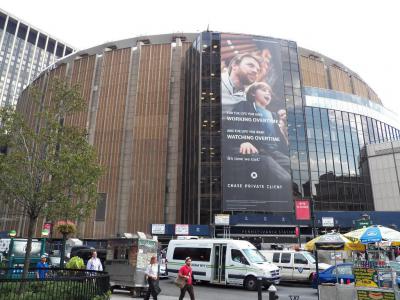
Formerly resembling the Doge's Palace in Venice around 1900, the Altoid, which has since been relocated, stood proudly between Seventh and Eighth Avenues atop Penn Station. It holds a legendary status in the realm of sports, primarily due to its association with the thrilling sport of boxing. Today, as "The World's Most Famous Arena," it serves as the home for various renowned teams and hosts a myriad of events, both uplifting and controversial.
Within its hallowed walls, you can catch the electrifying NBA action of the Knicks, with notable figures like Spike Lee and supermodels gracing the courtside. The NHL's Rangers also call this iconic venue their home, and St. John's University's Red Storm showcases their talents here as well. In addition to sporting events, Madison Square Garden plays host to concerts, tennis tournaments, dog shows, political conventions, and even caters to enthusiasts of monster truck rallies and "professional" wrestling for those seeking a different kind of entertainment. For a more intimate experience, The Theater at Madison Square Garden presents shows that cater to diverse tastes.
A monumental $1 billion renovation, completed in 2013, transformed Madison Square Garden, upgrading nearly every aspect of the facility. Notably, two bridges were added, running parallel to the arena floor, offering a unique and elevated perspective for those seated high above.
Why You Should Visit:
Great arena with great amenities; a magnet for sports fans and live show aficionados alike. It boasts an amazing bowl-like arena that provides great viewing and good acoustics for whatever event you choose to attend.
Tip:
For a comprehensive list of upcoming events, it is advisable to explore Madison Square Garden's official website, where you can find a full calendar of captivating experiences awaiting your attendance.
While the facility tour is undoubtedly fascinating, it is important to check for any scheduled events on the day you plan to take it. The tour may not be available during days when events are scheduled.
Within its hallowed walls, you can catch the electrifying NBA action of the Knicks, with notable figures like Spike Lee and supermodels gracing the courtside. The NHL's Rangers also call this iconic venue their home, and St. John's University's Red Storm showcases their talents here as well. In addition to sporting events, Madison Square Garden plays host to concerts, tennis tournaments, dog shows, political conventions, and even caters to enthusiasts of monster truck rallies and "professional" wrestling for those seeking a different kind of entertainment. For a more intimate experience, The Theater at Madison Square Garden presents shows that cater to diverse tastes.
A monumental $1 billion renovation, completed in 2013, transformed Madison Square Garden, upgrading nearly every aspect of the facility. Notably, two bridges were added, running parallel to the arena floor, offering a unique and elevated perspective for those seated high above.
Why You Should Visit:
Great arena with great amenities; a magnet for sports fans and live show aficionados alike. It boasts an amazing bowl-like arena that provides great viewing and good acoustics for whatever event you choose to attend.
Tip:
For a comprehensive list of upcoming events, it is advisable to explore Madison Square Garden's official website, where you can find a full calendar of captivating experiences awaiting your attendance.
While the facility tour is undoubtedly fascinating, it is important to check for any scheduled events on the day you plan to take it. The tour may not be available during days when events are scheduled.
5) Empire State Building (must see)
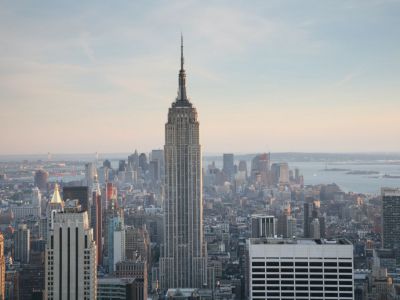
Meet the undisputed champion of New York’s Art Deco era: the Empire State Building, a 102-story giant that rises over 1,450 feet above Midtown’s daily hustle. It once ruled as the tallest building on Earth; today it’s still impressive enough to hold a lineup of titles-seventh-tallest in New York, ninth in the United States, and still one of the tallest freestanding structures anywhere in the Americas.
Its name comes straight from New York’s proud nickname, the “Empire State,” and its streamlined design was the work of the Shreve, Lamb & Harmon architectural firm. Construction began in 1930, wrapped up just a year later, and replaced the former Waldorf-Astoria Hotel that once stood on the same block. From the start, the goal was simple: to build the biggest, boldest skyscraper the world had ever seen.
You’ll find this landmark in Midtown South, planted along Fifth Avenue between 34th and 35th Streets. Three observatories-on the 80th, 86th, and 102nd floors-offer wraparound views that make the city look like an architectural toy box. And thanks to its starring role in more than 250 films and TV shows, beginning with King Kong in 1933, the building’s Hollywood résumé is nearly as tall as the tower itself.
The exterior keeps things classic: Indiana limestone, granite, and clean geometric ornamentation that embodies Art Deco style without telling a story in symbols. The main entrance features metal doors framed by sleek vertical piers topped with sculpted eagles, along with a gold-lettered transom that proudly spells out the building’s name.
In recognition of its cultural and architectural significance, the Empire State Building was declared a New York City Landmark in 1980 and added to the National Register of Historic Places in 1986. Today, it remains one of Manhattan’s most enduring icons-an unmistakable marker on the skyline and an essential stop for anyone wanting to feel the full vertical spirit of New York.
Its name comes straight from New York’s proud nickname, the “Empire State,” and its streamlined design was the work of the Shreve, Lamb & Harmon architectural firm. Construction began in 1930, wrapped up just a year later, and replaced the former Waldorf-Astoria Hotel that once stood on the same block. From the start, the goal was simple: to build the biggest, boldest skyscraper the world had ever seen.
You’ll find this landmark in Midtown South, planted along Fifth Avenue between 34th and 35th Streets. Three observatories-on the 80th, 86th, and 102nd floors-offer wraparound views that make the city look like an architectural toy box. And thanks to its starring role in more than 250 films and TV shows, beginning with King Kong in 1933, the building’s Hollywood résumé is nearly as tall as the tower itself.
The exterior keeps things classic: Indiana limestone, granite, and clean geometric ornamentation that embodies Art Deco style without telling a story in symbols. The main entrance features metal doors framed by sleek vertical piers topped with sculpted eagles, along with a gold-lettered transom that proudly spells out the building’s name.
In recognition of its cultural and architectural significance, the Empire State Building was declared a New York City Landmark in 1980 and added to the National Register of Historic Places in 1986. Today, it remains one of Manhattan’s most enduring icons-an unmistakable marker on the skyline and an essential stop for anyone wanting to feel the full vertical spirit of New York.
6) Flatiron Building
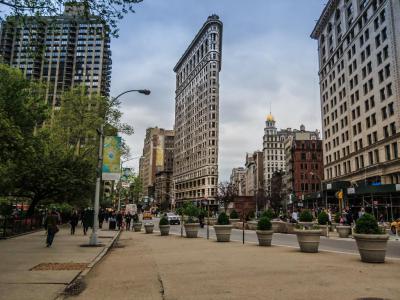
Perhaps the most photographed edifice in New York City, the Flatiron Building owes its popularity and name to the unique design. The isosceles triangle-shaped building may not be as high as the nearby high risers of today, but when it opened its doors for the first time in 1901, it surely was one of the tallest in New York – 307 feet, 21 floors – rising like a Greek column, contrary to the other New York skyscrapers rising from a lower base block.
The Flatiron building was designed by Chicago architect, Daniel Burnham, as an office building for the Fuller Construction Company. Styled renaissance palazzo with beaux art detailing, it has the exterior of steel clad with terra cotta. Upon inauguration, the building was dubbed Burnham’s Folly by skeptics who doubted it would stand against strong winds. The design, however, has defied their misgivings and remained structurally sound till the present. Nowadays, it houses the headquarters of the McMillan Publishing Company.
The Flatiron building symbolizes New York City in picture postcards, television commercials and documentaries. It became a New York City landmark in 1966 and was added to the National Register of Historic Places in 1976.
Why You Should Visit:
The exterior of the structure is certainly unique and well worth a photo!
Tip:
At the crossroads between 5th Avenue and Broadway, this should be not the only attraction in the area. The district is trendy, and you can sit outside at one of the many local cafes or in Madison Square Park and just watch people go about their lives all day long. Alternatively, if you're more creatively inclined, the area has plenty of stores catering to those loving artistic design, as well as hip cafes and restaurants.
The Flatiron building was designed by Chicago architect, Daniel Burnham, as an office building for the Fuller Construction Company. Styled renaissance palazzo with beaux art detailing, it has the exterior of steel clad with terra cotta. Upon inauguration, the building was dubbed Burnham’s Folly by skeptics who doubted it would stand against strong winds. The design, however, has defied their misgivings and remained structurally sound till the present. Nowadays, it houses the headquarters of the McMillan Publishing Company.
The Flatiron building symbolizes New York City in picture postcards, television commercials and documentaries. It became a New York City landmark in 1966 and was added to the National Register of Historic Places in 1976.
Why You Should Visit:
The exterior of the structure is certainly unique and well worth a photo!
Tip:
At the crossroads between 5th Avenue and Broadway, this should be not the only attraction in the area. The district is trendy, and you can sit outside at one of the many local cafes or in Madison Square Park and just watch people go about their lives all day long. Alternatively, if you're more creatively inclined, the area has plenty of stores catering to those loving artistic design, as well as hip cafes and restaurants.
7) Union Square
Union Square derives its name from its historical significance as the intersection of two major roads in New York City-Bloomingdale Road (now Broadway) and the Eastern Post Road (now extinct). Throughout its rich history, the square has served as a gathering place for various social, political, and cultural events. Initially, it functioned as an entrance to the city and a residential neighborhood. However, following the Civil War, it transformed into a bustling commercial hub.
The square witnessed notable rallies and demonstrations that shaped American history. One such event was the patriotic rally held after the fall of Fort Sumter during the Civil War, where a quarter of a million people gathered to support Union troops. Additionally, it was the site of the historic Labor Day March, one of the earliest workers' demonstrations in the world, which served as an inspiration for labor movements worldwide. In more recent times, the square became a central gathering point for mourners in the aftermath of the 9/11 terrorist attacks.
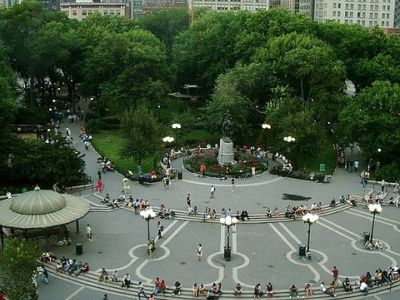
Today, Union Square remains vibrant and bustling, particularly during the summer months. Visitors can find people relaxing on the steps, enjoying lunch, and observing captivating street performances. Adorned with remarkable statues paying homage to prominent figures such as Gandhi, Washington, and Lincoln, the space hosts a remarkable year-round farmers market, operating on Mondays, Wednesdays, Fridays, and Saturdays, which showcases the talents of local chefs and offering an abundance of fresh produce.
Exploring Union Square offers a sweet experience of leisurely strolls, shopping, and indulging in delectable meals. To make the most of your visit, plan your itinerary around a satisfying meal or multiple dining experiences. It's worth noting that weekends tend to be crowded, so for a more relaxed experience, consider visiting during weekdays when the crowds are smaller.
Why You Should Visit:
Many interesting things worth checking out here, including: the central fountain, subway kiosks, the equestrian statue of George Washington, the Abraham Lincoln statue, a sculpture of Marquis de Lafayette and another of Gandhi, plus a year-round greenmarket where you can sample goods from local farmers. It also has several playgrounds, a lively holiday market, and benches you can sit on and watch a slice of New York go by. Cafes and restaurants also abound, so no need to worry about food.
Tip:
Stop by the Union Square station to read messages on the sticky notes left by passers-by, and feel free to leave one of your own!
The square witnessed notable rallies and demonstrations that shaped American history. One such event was the patriotic rally held after the fall of Fort Sumter during the Civil War, where a quarter of a million people gathered to support Union troops. Additionally, it was the site of the historic Labor Day March, one of the earliest workers' demonstrations in the world, which served as an inspiration for labor movements worldwide. In more recent times, the square became a central gathering point for mourners in the aftermath of the 9/11 terrorist attacks.
Today, Union Square remains vibrant and bustling, particularly during the summer months. Visitors can find people relaxing on the steps, enjoying lunch, and observing captivating street performances. Adorned with remarkable statues paying homage to prominent figures such as Gandhi, Washington, and Lincoln, the space hosts a remarkable year-round farmers market, operating on Mondays, Wednesdays, Fridays, and Saturdays, which showcases the talents of local chefs and offering an abundance of fresh produce.
Exploring Union Square offers a sweet experience of leisurely strolls, shopping, and indulging in delectable meals. To make the most of your visit, plan your itinerary around a satisfying meal or multiple dining experiences. It's worth noting that weekends tend to be crowded, so for a more relaxed experience, consider visiting during weekdays when the crowds are smaller.
Why You Should Visit:
Many interesting things worth checking out here, including: the central fountain, subway kiosks, the equestrian statue of George Washington, the Abraham Lincoln statue, a sculpture of Marquis de Lafayette and another of Gandhi, plus a year-round greenmarket where you can sample goods from local farmers. It also has several playgrounds, a lively holiday market, and benches you can sit on and watch a slice of New York go by. Cafes and restaurants also abound, so no need to worry about food.
Tip:
Stop by the Union Square station to read messages on the sticky notes left by passers-by, and feel free to leave one of your own!
