Custom Walk in Avignon, France by jacingorchs_9948a5 created on 2026-06-07
Guide Location: France » Avignon
Guide Type: Custom Walk
# of Sights: 7
Tour Duration: 2 Hour(s)
Travel Distance: 3.3 Km or 2.1 Miles
Share Key: U774R
Guide Type: Custom Walk
# of Sights: 7
Tour Duration: 2 Hour(s)
Travel Distance: 3.3 Km or 2.1 Miles
Share Key: U774R
How It Works
Please retrieve this walk in the GPSmyCity app. Once done, the app will guide you from one tour stop to the next as if you had a personal tour guide. If you created the walk on this website or come to the page via a link, please follow the instructions below to retrieve the walk in the app.
Retrieve This Walk in App
Step 1. Download the app "GPSmyCity: Walks in 1K+ Cities" on Apple App Store or Google Play Store.



Step 2. In the GPSmyCity app, download(or launch) the guide "Avignon Map and Walking Tours".
Step 3. Tap the menu button located at upper right corner of the "Walks" screen and select "Retrieve custom walk". Enter the share key: U774R
1) Les Halles d'Avignon (Avignon Market Halls) (must see)
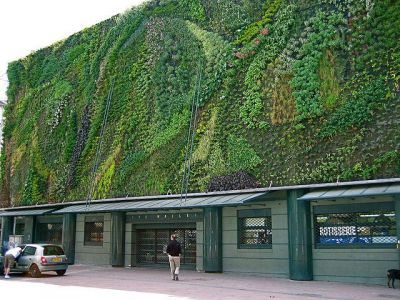
Avignon Market Halls (Les Halles d'Avignon) located on Pie Square (Place Pie) in the heart of Avignon, is a vibrant marketplace that has become synonymous with the city's gastronomic culture. This covered market, also known as Central Halls (Halles Centrales), hosts around fifty traders offering a diverse range of high quality products including bread, cheese, fruits, vegetables, poultry, pastries, delicatessen items, shellfish, flowers, and both organic and exotic goods. Renowned authors like Peter Mayle and Jean Viard have celebrated the market, solidifying its reputation as a culinary hotspot.
A unique feature of Market Halls is the impressive 600 square meters green wall on the north façade, designed by botanist Patrick Blanc, which adds to the market's distinct allure and serves as a significant city attraction.
The origins of Market Halls trace back to the 16th century when the land, once owned by a man executed as a heretic, was designated for a covered market. Though construction was slow, the market hall was eventually completed in 1624, featuring not just shops but also a guardhouse and a chapel. Over the centuries, the market evolved, with major redevelopment projects taking place in the 19th and 20th centuries. Notably, the first iron market hall was installed in 1864, and a major construction project commenced in 1898, resulting in the current halls being inaugurated in 1899.
Throughout its history, Market Halls has undergone numerous changes, including a roof redesign in the 1920s and various structural modernizations in the mid-20th century, adapting to the shifting commercial landscape with the advent of supermarkets and the subsequent need for downtown revitalization.
Today, Avignon Market Halls is not just a market but a lively community hub where, every Saturday since 2006, chefs and artisans from Greater Avignon engage with visitors through live cooking demonstrations using fresh ingredients from the market. This tradition not only highlights the rich culinary heritage of Avignon but also offers a hands-on experience for food enthusiasts looking to learn and share in the artistry of local cuisine.
A unique feature of Market Halls is the impressive 600 square meters green wall on the north façade, designed by botanist Patrick Blanc, which adds to the market's distinct allure and serves as a significant city attraction.
The origins of Market Halls trace back to the 16th century when the land, once owned by a man executed as a heretic, was designated for a covered market. Though construction was slow, the market hall was eventually completed in 1624, featuring not just shops but also a guardhouse and a chapel. Over the centuries, the market evolved, with major redevelopment projects taking place in the 19th and 20th centuries. Notably, the first iron market hall was installed in 1864, and a major construction project commenced in 1898, resulting in the current halls being inaugurated in 1899.
Throughout its history, Market Halls has undergone numerous changes, including a roof redesign in the 1920s and various structural modernizations in the mid-20th century, adapting to the shifting commercial landscape with the advent of supermarkets and the subsequent need for downtown revitalization.
Today, Avignon Market Halls is not just a market but a lively community hub where, every Saturday since 2006, chefs and artisans from Greater Avignon engage with visitors through live cooking demonstrations using fresh ingredients from the market. This tradition not only highlights the rich culinary heritage of Avignon but also offers a hands-on experience for food enthusiasts looking to learn and share in the artistry of local cuisine.
2) La Rue des Teinturiers (Dyers Street) (must see)
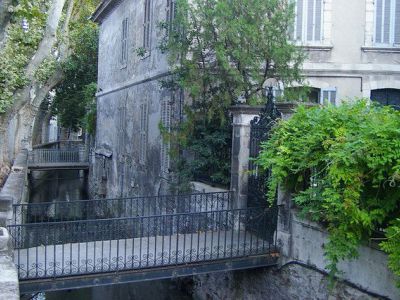
Down by the River Sorgue there is a canal, the Vaucluse channel. The channel leads water from the river through the city walls to the street of the Dyers of Avignon. From the 14th to the 19th century this street was a very busy place. There was intense textile manufacturing activity.
Twenty-three water wheels provided the power to wash, rinse and dye silk and other fabrics. The street gained the sobriquet "Street of the Wheels." Today there are only four wheels left and they are not operating.
On the the eastern end of the street of the Dyers there is the very strange Maison du IV de Chiffre ("House of digit four"). It is one Avignon's oldest remaining buildings made in the Gothic style. Built in 1493, it is noted for its crenelated cornice with two watchtowers and drainpipes in the shape of gargoyles.
The figure "IV" is carved into the facade between the ground floor windows. It has a heart impaled with a dart and the crosses of Saint Andrew and Lorraine. The meaning is a mystery although it is used on seals, playing cards and musical instruments. The building houses local associations and is sometimes used as a theatre.
On the same side of the street is Number 14, the house of Jean-Henri Fabre. Fabre was a naturalist whose work on insects inspired Darwin. At number 8 is the Chapel of the Grey Penitents. On the doorway is a painting of two hooded figures praying. The penitents were sincere. Nothing ominous is meant by the hooded robes.
The Grey Penitents were founded by King Louis VIII, who came to pray after the siege of Avignon. Number 8 is only open for religious services. Inside there is a 17th century paneled ceiling, a chapel in a hexagonal chamber and paintings by Pierre Parrocel and Nicolas Mignard.
Each year in November the members of the Grey order celebrate the parting of the Waters. These are not of the Red Sea, but of the ever rambunctious Rhone. On the 30th of November, 1433, the Rhone burst its banks but the waters parted in the nave of the church so the holy sacrament could stay high and dry.
Where the street crosses the rue des Lices, one comes upon the Convent of the Cordeliers, a 13th century Franciscan convent. Only a bell tower and a chapel are left. Laura de Noves, the unrequited love and muse of the poet Francesco Petrarch is supposed to be buried here.
Why You Should Visit:
One may discover the secret of the house of IV or even the sting place of Laura Noves.
Tips:
Take enough time to follow the entire street, if possible. There's a lot here.
Twenty-three water wheels provided the power to wash, rinse and dye silk and other fabrics. The street gained the sobriquet "Street of the Wheels." Today there are only four wheels left and they are not operating.
On the the eastern end of the street of the Dyers there is the very strange Maison du IV de Chiffre ("House of digit four"). It is one Avignon's oldest remaining buildings made in the Gothic style. Built in 1493, it is noted for its crenelated cornice with two watchtowers and drainpipes in the shape of gargoyles.
The figure "IV" is carved into the facade between the ground floor windows. It has a heart impaled with a dart and the crosses of Saint Andrew and Lorraine. The meaning is a mystery although it is used on seals, playing cards and musical instruments. The building houses local associations and is sometimes used as a theatre.
On the same side of the street is Number 14, the house of Jean-Henri Fabre. Fabre was a naturalist whose work on insects inspired Darwin. At number 8 is the Chapel of the Grey Penitents. On the doorway is a painting of two hooded figures praying. The penitents were sincere. Nothing ominous is meant by the hooded robes.
The Grey Penitents were founded by King Louis VIII, who came to pray after the siege of Avignon. Number 8 is only open for religious services. Inside there is a 17th century paneled ceiling, a chapel in a hexagonal chamber and paintings by Pierre Parrocel and Nicolas Mignard.
Each year in November the members of the Grey order celebrate the parting of the Waters. These are not of the Red Sea, but of the ever rambunctious Rhone. On the 30th of November, 1433, the Rhone burst its banks but the waters parted in the nave of the church so the holy sacrament could stay high and dry.
Where the street crosses the rue des Lices, one comes upon the Convent of the Cordeliers, a 13th century Franciscan convent. Only a bell tower and a chapel are left. Laura de Noves, the unrequited love and muse of the poet Francesco Petrarch is supposed to be buried here.
Why You Should Visit:
One may discover the secret of the house of IV or even the sting place of Laura Noves.
Tips:
Take enough time to follow the entire street, if possible. There's a lot here.
3) Place de l'Horloge (Clock Square) (must see)
Place Pierre-Vauboin is more well known as Clock Square. The buildings around the square form the shape of a half-moon. The half-moon shape was for military defensive reasons. The crescent minimized the chance of ambush.
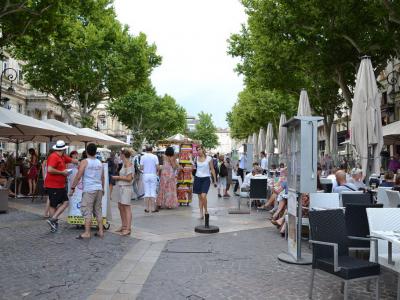
At its center is the monumental clock which gives the square its name. The clock was started by the then mayor of Lyon, Edouard Herriot in April 1908. The square is possibly the busiest in Avignon. Cafes and restaurants are frequently overflowing. Street artists emerge with their easels around the square.
Patisseries and boulangeries crowd against each other. Cobble stone streets and alleys lead off the Place to Gothic churches, synagogues, bistros, galleries and night clubs.
The Roman forum of Avenio was located where the Clock Square is today. During the 12th and 13th centuries it was known as the Square of the Butchers. This was the place where butchers set up shop on market days. It was partially occupied by the convent of Saint-Laurent, the oldest convent in the city.
At various times work was initiated to expand the Square. Finally in the 18th century the square was enlarged on all sides. The renovations favored symmetrical facades. During the Terror of the Revolution, the guillotine was installed for a few months before being moved to the Palace Square.
The memories here are bittersweet. Today it is one more pleasant place to be.
At its center is the monumental clock which gives the square its name. The clock was started by the then mayor of Lyon, Edouard Herriot in April 1908. The square is possibly the busiest in Avignon. Cafes and restaurants are frequently overflowing. Street artists emerge with their easels around the square.
Patisseries and boulangeries crowd against each other. Cobble stone streets and alleys lead off the Place to Gothic churches, synagogues, bistros, galleries and night clubs.
The Roman forum of Avenio was located where the Clock Square is today. During the 12th and 13th centuries it was known as the Square of the Butchers. This was the place where butchers set up shop on market days. It was partially occupied by the convent of Saint-Laurent, the oldest convent in the city.
At various times work was initiated to expand the Square. Finally in the 18th century the square was enlarged on all sides. The renovations favored symmetrical facades. During the Terror of the Revolution, the guillotine was installed for a few months before being moved to the Palace Square.
The memories here are bittersweet. Today it is one more pleasant place to be.
4) Pont Saint-Bénézet (St. Benezet Bridge) (must see)
The song goes... "On the bridge of Avignon
Everyone is dancing
On the bridge of Avignon
Everyone dances in a ring"
But, actually they danced below the bridge, not on it. Over the years, they worked their way up, the handsome men, the lovely women, the soldiers, the babies, the good friends, the musicians...so the song says, around and around. What does it mean?
The song and the bridge are wrapped in mystery. The bridge referred to in the song, Le Pont d'Avignon is actually Pont Saint Benezet. Saint Benezet (1165-1184) was an illiterate shepherd who became the patron saint of bridge builders, and this is how he did it.
In 1177 he told the bishop he had had a vision wherein he was told to build a stone bridge across the Rhone. The bridge was to be at a point where the force of the river was greatest. The bishop, not wanting to defy Heaven, approved the project and work began. Benezet's holy mission was confirmed by no less than 18 miracles of healing.
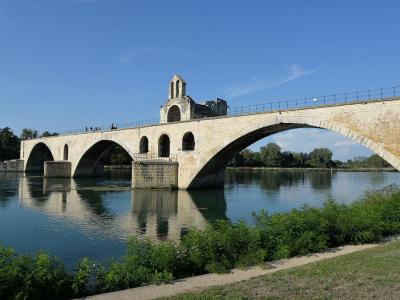
The stone bridge that replaced Benezet's damaged bridge in 1234 had 22 arches and 21 piers and was 980 yards long. The arches were low and were liable to collapse when the river ran too high. Only one chapel, Saint Nicholas Chapel, and four arches remain of the bridge. The bridge was listed as a Historical Monument in 1840.
Everyone is dancing
On the bridge of Avignon
Everyone dances in a ring"
But, actually they danced below the bridge, not on it. Over the years, they worked their way up, the handsome men, the lovely women, the soldiers, the babies, the good friends, the musicians...so the song says, around and around. What does it mean?
The song and the bridge are wrapped in mystery. The bridge referred to in the song, Le Pont d'Avignon is actually Pont Saint Benezet. Saint Benezet (1165-1184) was an illiterate shepherd who became the patron saint of bridge builders, and this is how he did it.
In 1177 he told the bishop he had had a vision wherein he was told to build a stone bridge across the Rhone. The bridge was to be at a point where the force of the river was greatest. The bishop, not wanting to defy Heaven, approved the project and work began. Benezet's holy mission was confirmed by no less than 18 miracles of healing.
The stone bridge that replaced Benezet's damaged bridge in 1234 had 22 arches and 21 piers and was 980 yards long. The arches were low and were liable to collapse when the river ran too high. Only one chapel, Saint Nicholas Chapel, and four arches remain of the bridge. The bridge was listed as a Historical Monument in 1840.
5) Rocher des Doms Gardens (Doms Rock Gardens) (must see)
An oasis above the overheated crowds in the palace of the Popes Square, on the top of Doms Rock, are the shady gardens of Doms Rock Gardens.
There are great views of the Rhone River and all of the Rhone plain. From the overlook platform, one can see the Saint Benezet Bridge and Fort Saint-Andre.
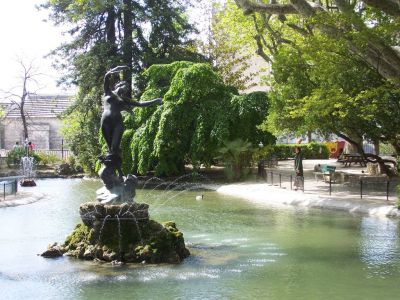
The park is a green space of 95,000 square feet. There is a large carp pond with resident geese. In the center of the pond is a stage of Venus with swans. Venus is nude. She had to be moved from another park in 1894. There is a cafe by the pond. One can have a drink and watch Venus with her swans.
Doms Rock Gardens is an island of limestone standing 100 feet above the Rhone plain. It became a fortified oppidum and a citadel for the Roman settlement. The citadel was eventually replaced by a chateau and in the 14th century, the Palace of the Popes appeared.
Doms Rock Gardens can be reached via stairway from Avignon Cathedral or by way of Saint Anne's steps. However, there is also a small train that will carry one to the garden gates.
There are great views of the Rhone River and all of the Rhone plain. From the overlook platform, one can see the Saint Benezet Bridge and Fort Saint-Andre.
The park is a green space of 95,000 square feet. There is a large carp pond with resident geese. In the center of the pond is a stage of Venus with swans. Venus is nude. She had to be moved from another park in 1894. There is a cafe by the pond. One can have a drink and watch Venus with her swans.
Doms Rock Gardens is an island of limestone standing 100 feet above the Rhone plain. It became a fortified oppidum and a citadel for the Roman settlement. The citadel was eventually replaced by a chateau and in the 14th century, the Palace of the Popes appeared.
Doms Rock Gardens can be reached via stairway from Avignon Cathedral or by way of Saint Anne's steps. However, there is also a small train that will carry one to the garden gates.
6) Musée du Petit Palais (Little Palace Museum) (must see)
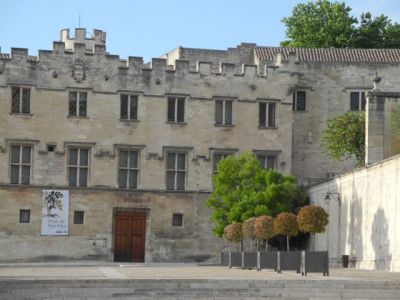
The Little Palace Museum (Musée du Petit Palais), located in Avignon, is a remarkable museum and art gallery that opened its doors in 1976. Housed in a 14th-century building at the north side of the square dominated by the imposing Palace of the Popes (Palais des Papes), the museum showcases an exceptional collection of early Renaissance paintings and "primitives" from Italy, alongside works from the Avignon school. Much of the Italian collection originates from the famed Giampietro Campana collection, previously housed at the Louvre, while the Avignon pieces were deposited by the Calvet Museum. The Little Palace Museum was listed as a UNESCO World Heritage Site.
The Little Palace built between 1318 and 1320 for bishops under Cardinal Berengar Fredol the Elder, has a history linked to the Avignon Papacy. Purchased by Cardinal Arnaud de Via in 1323, it became the episcopal palace under Pope Benedict XII in 1335. In the late 15th century, Bishops Alain de Coëtivy and Giuliano della Rovere (later Pope Julius II) restored the palace, adding Italian Renaissance-style facades.
Over the centuries, the building's role evolved significantly. Initially a fortified citadel during the Western Schism, it fell into disrepair by the early 15th century. Restoration in the late 15th century shaped much of its current form, but it was again affected by nationalization during the French Revolution. In the 19th century, it became a Catholic secondary school, and later a technical school after the 1904 church-state separation. Declared a historic monument in 1910, it underwent major restoration starting in 1961 under architect Jean Sonnier.
Step into the world of Renaissance brilliance at the Little Palace Museum, where you'll encounter masterpieces by Botticelli and Vittore Carpaccio. The museum also boasts an impressive array of sculpted capitals from Avignon’s churches and an assortment of religious artworks, including altar screens. Botticelli's Madonna with Child is the highlight of the collection.
The Little Palace built between 1318 and 1320 for bishops under Cardinal Berengar Fredol the Elder, has a history linked to the Avignon Papacy. Purchased by Cardinal Arnaud de Via in 1323, it became the episcopal palace under Pope Benedict XII in 1335. In the late 15th century, Bishops Alain de Coëtivy and Giuliano della Rovere (later Pope Julius II) restored the palace, adding Italian Renaissance-style facades.
Over the centuries, the building's role evolved significantly. Initially a fortified citadel during the Western Schism, it fell into disrepair by the early 15th century. Restoration in the late 15th century shaped much of its current form, but it was again affected by nationalization during the French Revolution. In the 19th century, it became a Catholic secondary school, and later a technical school after the 1904 church-state separation. Declared a historic monument in 1910, it underwent major restoration starting in 1961 under architect Jean Sonnier.
Step into the world of Renaissance brilliance at the Little Palace Museum, where you'll encounter masterpieces by Botticelli and Vittore Carpaccio. The museum also boasts an impressive array of sculpted capitals from Avignon’s churches and an assortment of religious artworks, including altar screens. Botticelli's Madonna with Child is the highlight of the collection.
7) Palais des Papes (Palace of the Popes) (must see)
The Palace of the Popes has got to be one of the largest, if not the largest, medieval Gothic structures in Europe. It served well as a fortress, palace, and papal residence throughout the 14th century, during the Catholic schism and the "Babylonian Captivity" of the Papacy. Six papal conclaves and seven Popes were maintained in the palace.
The palace is actually two buildings joined together. There is the old palace of Benedict II, firmly ensconced on the rock of the Doms, and the new palace of Clement VI. Clement was known to be the biggest spendthrift of the Popes of Avignon. The palace is probably the best example of International Gothic style.
The designs were made by Pierre Person and Jean de Louvres, two of France's best architects of the time. The ornamentation is beyond lavish and produced by two students from the Siena School, Simone Martini and Matteo Giovanetti. The papal library housed in the palace held over 2,000 volumes. It was a big draw for scholars and humanists.
The palace was huge enough to affect the organization of the church of the time. Services were centralized and the size of the administrative staff exploded. The number of people employed including lay people exceeded 1500 by 1316. In spite of this, the Avignon papacy and administration became irrelevant when operations returned to Rome.
Today the palace is a historical and architectural landmark. It has over 650,000 visitors a year, making it one of the top ten such attractions in France. It houses a convention center and a research center and serves as a library for the archives of the department of Vaucluse.
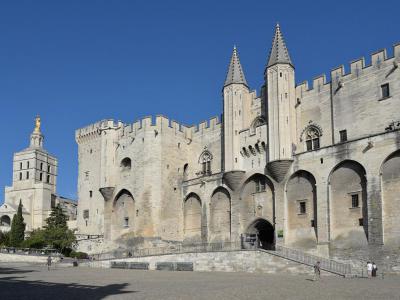
The place has over 160,000 square feet of floor space. It has twelve strong crenelated towers and walls and arches designed to withstand heavy siege bombardment. The study of Clement VI has celebrated frescoes showing deer hunting scenes. It is popularly known as the "Deer Room." Clement was not known for hunting.
The Palace regularly hosts art exhibitions. The works of Matisse, Braque, Picasso, and Mondrian have been shown there and also single exhibitions of Miguel Barcelo and Stefan Szczesny.
Why You Should Visit:
If you miss the palace you miss the heart and history of Avignon.
The palace is actually two buildings joined together. There is the old palace of Benedict II, firmly ensconced on the rock of the Doms, and the new palace of Clement VI. Clement was known to be the biggest spendthrift of the Popes of Avignon. The palace is probably the best example of International Gothic style.
The designs were made by Pierre Person and Jean de Louvres, two of France's best architects of the time. The ornamentation is beyond lavish and produced by two students from the Siena School, Simone Martini and Matteo Giovanetti. The papal library housed in the palace held over 2,000 volumes. It was a big draw for scholars and humanists.
The palace was huge enough to affect the organization of the church of the time. Services were centralized and the size of the administrative staff exploded. The number of people employed including lay people exceeded 1500 by 1316. In spite of this, the Avignon papacy and administration became irrelevant when operations returned to Rome.
Today the palace is a historical and architectural landmark. It has over 650,000 visitors a year, making it one of the top ten such attractions in France. It houses a convention center and a research center and serves as a library for the archives of the department of Vaucluse.
The place has over 160,000 square feet of floor space. It has twelve strong crenelated towers and walls and arches designed to withstand heavy siege bombardment. The study of Clement VI has celebrated frescoes showing deer hunting scenes. It is popularly known as the "Deer Room." Clement was not known for hunting.
The Palace regularly hosts art exhibitions. The works of Matisse, Braque, Picasso, and Mondrian have been shown there and also single exhibitions of Miguel Barcelo and Stefan Szczesny.
Why You Should Visit:
If you miss the palace you miss the heart and history of Avignon.
