Custom Walk in Lyon, France by shaunagrew123_967e33 created on 2026-06-17
Guide Location: France » Lyon
Guide Type: Custom Walk
# of Sights: 14
Tour Duration: 5 Hour(s)
Travel Distance: 11.5 Km or 7.1 Miles
Share Key: SBWGB
Guide Type: Custom Walk
# of Sights: 14
Tour Duration: 5 Hour(s)
Travel Distance: 11.5 Km or 7.1 Miles
Share Key: SBWGB
How It Works
Please retrieve this walk in the GPSmyCity app. Once done, the app will guide you from one tour stop to the next as if you had a personal tour guide. If you created the walk on this website or come to the page via a link, please follow the instructions below to retrieve the walk in the app.
Retrieve This Walk in App
Step 1. Download the app "GPSmyCity: Walks in 1K+ Cities" on Apple App Store or Google Play Store.



Step 2. In the GPSmyCity app, download(or launch) the guide "Lyon Map and Walking Tours".
Step 3. Tap the menu button located at upper right corner of the "Walks" screen and select "Retrieve custom walk". Enter the share key: SBWGB
1) Place des Jacobins (Jacobins' Square)
If you’re standing in the middle of traffic coming from twelve different directions, engines humming, pedestrians weaving past - and somehow, this busy crossroads still manages to be one of Lyon’s most elegant squares. Rest assured - you're in Jacobins' Square.
In the late 13th century, Jacobin monks settled here, building a convent and a church. Over time, the open space nearby turned into a walled market. Then, in 1556, the walls came down, and a triangular public square took shape.
A few years later, in 1562, some surrounding buildings were demolished to create Rue Saint Dominique, opening the area even further. A modest fountain appeared, and the square became the local social network - the place where people gathered to exchange news, rumors, and probably a fair bit of harmless gossip. It was even renamed Comfort Square. Sadly, the fountain wasn’t very comforting; it was too small for the growing population and was eventually removed.
In 1609, things became more ambitious. A pyramidal obelisk was installed, crowned with a cross. Around its base, the name of God was engraved in 24 languages - quite an international statement for its time. But history had other plans.
The French Revolution swept it away, along with many religious symbols. The church was rebuilt in 1689, the convent restored in 1714, only for the church to be demolished again in 1818. The convent survived a little longer, serving as the Préfecture until 1852. Indeed, if buildings could sigh, this block would have done so more than once...
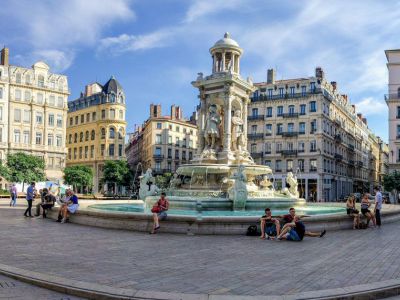
Now shift to the 19th century. The fountain you see today dates from 1878 and was designed by architect Gaspard André. The four statues added in 1885 - representing the engraver Benoît Audran, celebrated sculptor Guillaume Coustou, Renaissance architect Philibert de l’Orme, and 19th-century painter Hippolyte Flandrin - were sculpted by Charles Degeorges, turning the square into an open-air tribute to Lyon’s artistic heritage. And in 2004, a plaque was installed nearby to remind visitors of the square’s layered past.
So yes, traffic may swirl around it. But at its centre, Jacobins' Square stands calmly - a small stage where monks, merchants, revolutionaries, artists, and modern commuters have all played their part.
In the late 13th century, Jacobin monks settled here, building a convent and a church. Over time, the open space nearby turned into a walled market. Then, in 1556, the walls came down, and a triangular public square took shape.
A few years later, in 1562, some surrounding buildings were demolished to create Rue Saint Dominique, opening the area even further. A modest fountain appeared, and the square became the local social network - the place where people gathered to exchange news, rumors, and probably a fair bit of harmless gossip. It was even renamed Comfort Square. Sadly, the fountain wasn’t very comforting; it was too small for the growing population and was eventually removed.
In 1609, things became more ambitious. A pyramidal obelisk was installed, crowned with a cross. Around its base, the name of God was engraved in 24 languages - quite an international statement for its time. But history had other plans.
The French Revolution swept it away, along with many religious symbols. The church was rebuilt in 1689, the convent restored in 1714, only for the church to be demolished again in 1818. The convent survived a little longer, serving as the Préfecture until 1852. Indeed, if buildings could sigh, this block would have done so more than once...
Now shift to the 19th century. The fountain you see today dates from 1878 and was designed by architect Gaspard André. The four statues added in 1885 - representing the engraver Benoît Audran, celebrated sculptor Guillaume Coustou, Renaissance architect Philibert de l’Orme, and 19th-century painter Hippolyte Flandrin - were sculpted by Charles Degeorges, turning the square into an open-air tribute to Lyon’s artistic heritage. And in 2004, a plaque was installed nearby to remind visitors of the square’s layered past.
So yes, traffic may swirl around it. But at its centre, Jacobins' Square stands calmly - a small stage where monks, merchants, revolutionaries, artists, and modern commuters have all played their part.
2) Decorative Arts and Textile Museum
The Decorative Arts and Textile Museum is located within the charming Hôtel de Villeroy, formerly the residence of the Governor of Lyon. Established in 1864, the Textile Museum boasts one of the world's most extensive collections, spanning 4000 years of textile history and featuring over 2 million artifacts dating from the 15th century BC to the present day.
The museum is divided into two main sections: Occident and Orient. The Occident section showcases costumes, embroideries, and religious textiles from France, Italy, and Spain. On the other hand, the Orient section offers a glimpse of Coptic Egyptian tapestries, Sassanid Persian fabrics, Chinese and Japanese silks, along with an impressive assortment of Islamic rugs that showcase the evolution of rug-making.
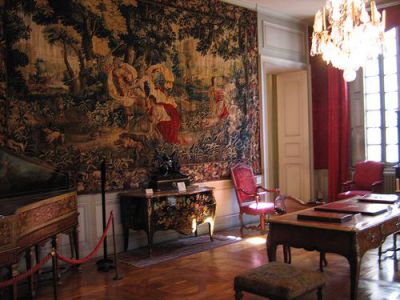
Complementing the Textile Museum is the Decorative Arts Museum, inaugurated in 1925. Designed to resemble an 18th-century private residence, its walls are adorned with 15th and 16th-century tapestries, while Byzantine rugs grace the floors. The furniture within the museum is the handiwork of renowned cabinet-makers from the 16th and 17th centuries.
Visitors can also admire exquisite examples of silversmith craftsmanship, earthenware artifacts, paintings, and an outstanding collection of clocks. For those with a taste for more contemporary artistry, there is a display of silverware ranging from the 1960s to the present day.
The museum is divided into two main sections: Occident and Orient. The Occident section showcases costumes, embroideries, and religious textiles from France, Italy, and Spain. On the other hand, the Orient section offers a glimpse of Coptic Egyptian tapestries, Sassanid Persian fabrics, Chinese and Japanese silks, along with an impressive assortment of Islamic rugs that showcase the evolution of rug-making.
Complementing the Textile Museum is the Decorative Arts Museum, inaugurated in 1925. Designed to resemble an 18th-century private residence, its walls are adorned with 15th and 16th-century tapestries, while Byzantine rugs grace the floors. The furniture within the museum is the handiwork of renowned cabinet-makers from the 16th and 17th centuries.
Visitors can also admire exquisite examples of silversmith craftsmanship, earthenware artifacts, paintings, and an outstanding collection of clocks. For those with a taste for more contemporary artistry, there is a display of silverware ranging from the 1960s to the present day.
3) Ancient Theatre of Fourvière (Amphitheatre Gallo-Romain) (must see)
There are a lot of interesting vestiges of ancient Lyon to behold and one of the best of them, undoubtedly, is the Amphitheatre Gallo-Romain, at the foot of the Croix-Rousse Hill.
This theatre, first built under the reign of Roman Emperor Tiberius, around 19AD, was also known as the Amphitheatre des Trois Gaules. Its main purpose was to serve as the Sanctuary of the Three Gauls – an administrative institution set to federalize and romanize Gallia as an Imperial province.
Other than that, the theatre was used, as were all such places in Roman times, as a place for entertainment. Theatrical plays were put on here along with gladiator fights and other public events. The theatre was also used for public executions.
The original amphitheatre wasn’t very large; it had room for just about 1,800 spectators. The basement was made up of three elliptical walls joined by cross-walls and a channel around the oval central space.
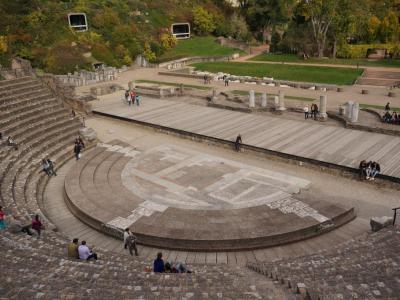
Around 230 AD the theatre was enlarged, added with two new galleries, which brought the seating space up to 20,000. At the end of the Gallo-Roman era the theatre was abandoned and fell into ruin, with parts of it being built on.
Archaeological digs between 1956 and 1976 uncovered the remains of what you can see today in the Jardin des Plantes.
This theatre, first built under the reign of Roman Emperor Tiberius, around 19AD, was also known as the Amphitheatre des Trois Gaules. Its main purpose was to serve as the Sanctuary of the Three Gauls – an administrative institution set to federalize and romanize Gallia as an Imperial province.
Other than that, the theatre was used, as were all such places in Roman times, as a place for entertainment. Theatrical plays were put on here along with gladiator fights and other public events. The theatre was also used for public executions.
The original amphitheatre wasn’t very large; it had room for just about 1,800 spectators. The basement was made up of three elliptical walls joined by cross-walls and a channel around the oval central space.
Around 230 AD the theatre was enlarged, added with two new galleries, which brought the seating space up to 20,000. At the end of the Gallo-Roman era the theatre was abandoned and fell into ruin, with parts of it being built on.
Archaeological digs between 1956 and 1976 uncovered the remains of what you can see today in the Jardin des Plantes.
4) Basilica of Notre-Dame de Fourvière (must see)
"Fourviere" is a corruption of the French version of the Latin name, "forum vetus," meaning "Old Forum." Old Forum in French becomes "Vieux-Forum." Reverse it and say it fast and voila! We have "Fourviere." The Basilica of Notre-Dame de Fourviere of Lyon is sitting on the remains the Roman forum built by Trajan. Nothing more need be said.
The basilica was built in the years 1872 to 1896 using private funds. The church is dedicated to the Virgin Mary. She is credited with saving the city from the Black Plague in 1643. Each December 8th, the Festival of Lights is held in her honor. Lighted candles are placed outside every window, and Light Shows play over building facades.
The Virgin has not been neglectful. It is said she also saved the city from the Cholera epidemic in 1832 and the Prussian invasion of 1871. Like the Sacred Heart of Montmartre (Sacré Coeur de Montmartre), the Basilica of Notre-Dame de Fourviere perches on a high hill, a votive offering and a victory memorial.
The basilica has a Museum of Sacred Art and sees over two million visitors and pilgrims every year. The church was designed by historicist architect Pierre Bossan. He foreswore Gothic influences, embracing Romanesque and Byzantine styles.
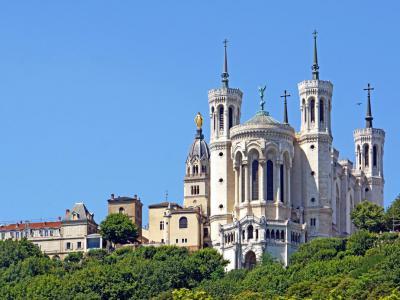
The basilica has four towers and a bell tower with a gilded statue of the Virgin. There is a wealth of mosaics, stained glass and a crypt to Saint Joseph. There are actually two sanctuaries. The upper one is lush and ornate. The lower sanctuary is simple. The building, with its four towers, is said to look like an elephant upside-down.
The basilica is not the first shrine at Fourviere. The earliest chapel on the site dedicated to Mary dates from 1170. The most recent reconstruction was in 1852 when the tower bearing the golden statue by sculptor Joseph Fabisch was installed. The city committed to build the basilica after the Franco-Prussian War of 1871.
The basilica was built in the years 1872 to 1896 using private funds. The church is dedicated to the Virgin Mary. She is credited with saving the city from the Black Plague in 1643. Each December 8th, the Festival of Lights is held in her honor. Lighted candles are placed outside every window, and Light Shows play over building facades.
The Virgin has not been neglectful. It is said she also saved the city from the Cholera epidemic in 1832 and the Prussian invasion of 1871. Like the Sacred Heart of Montmartre (Sacré Coeur de Montmartre), the Basilica of Notre-Dame de Fourviere perches on a high hill, a votive offering and a victory memorial.
The basilica has a Museum of Sacred Art and sees over two million visitors and pilgrims every year. The church was designed by historicist architect Pierre Bossan. He foreswore Gothic influences, embracing Romanesque and Byzantine styles.
The basilica has four towers and a bell tower with a gilded statue of the Virgin. There is a wealth of mosaics, stained glass and a crypt to Saint Joseph. There are actually two sanctuaries. The upper one is lush and ornate. The lower sanctuary is simple. The building, with its four towers, is said to look like an elephant upside-down.
The basilica is not the first shrine at Fourviere. The earliest chapel on the site dedicated to Mary dates from 1170. The most recent reconstruction was in 1852 when the tower bearing the golden statue by sculptor Joseph Fabisch was installed. The city committed to build the basilica after the Franco-Prussian War of 1871.
5) Lyon Cathedral (must see)
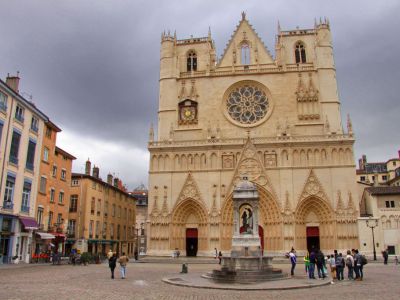
In 450 AD, on or about, Bishop Patiens of Lyon - later sainted, so clearly doing something right - decided the city needed a proper cathedral. He dedicated it to Saint Stephen. A baptistry followed in the 7th century, because what’s a cathedral without a place for dramatic spiritual beginnings? Nearby stood the Church of Saint Croix. All of this activity took place right here in Old Lyon, close to the Saône River - the very ground where Lyon Cathedral would rise 800 years later.
Now, here’s where the story gets ambitious. The new cathedral was built over the ruins of Saint Stephen’s and is traditionally linked to Saints Pothinus and Irenaeus, early Christian figures in Lyon. Construction began in 1180 and, in true medieval fashion, took nearly three centuries to wrap up in 1476.
And yet, somehow, the style holds together beautifully. Romanesque solidity meets Gothic height in a surprisingly calm architectural handshake - no dramatic identity crisis despite the long build...
The numbers are impressive. The cathedral stretches 263 feet in length, with the nave soaring 107 feet high. The façade leans Gothic, with pointed arches and vertical lines drawing your eyes upward. Move toward the apse and choir, and you feel the heavier, rounded strength of Romanesque design. Above you, the ribbed vault of the nave lifts in full Gothic confidence, as if the building is taking a deep, stone-carved breath.
Inside, you’ll see one of the cathedral's greatest stars: a 30-foot-high astronomical clock. Installed in 1383, it didn’t just tell time - it mapped the heavens. Its astrolabe charts the positions of the Sun, Moon, stars, and Earth. Quite advanced for the Middle Ages...
The clock was smashed in 1562, during the Wars of Religion, by François de Beaumont, Baron of Adrets - clearly not a fan of delicate mechanics - and later rebuilt in 1661 by master clockmaker Guillaume Norrisson. Second life, same cosmic ambition...
Each year, in December, candles glow in windows across Lyon to honor the Virgin Mary. It is then that the cathedral façade transforms into a canvas of light during the Festival of Lights, marking the city’s gratitude for the end of the plague in 1643. Stone, history, astronomy, and light are all layered into one remarkable building.
Now, here’s where the story gets ambitious. The new cathedral was built over the ruins of Saint Stephen’s and is traditionally linked to Saints Pothinus and Irenaeus, early Christian figures in Lyon. Construction began in 1180 and, in true medieval fashion, took nearly three centuries to wrap up in 1476.
And yet, somehow, the style holds together beautifully. Romanesque solidity meets Gothic height in a surprisingly calm architectural handshake - no dramatic identity crisis despite the long build...
The numbers are impressive. The cathedral stretches 263 feet in length, with the nave soaring 107 feet high. The façade leans Gothic, with pointed arches and vertical lines drawing your eyes upward. Move toward the apse and choir, and you feel the heavier, rounded strength of Romanesque design. Above you, the ribbed vault of the nave lifts in full Gothic confidence, as if the building is taking a deep, stone-carved breath.
Inside, you’ll see one of the cathedral's greatest stars: a 30-foot-high astronomical clock. Installed in 1383, it didn’t just tell time - it mapped the heavens. Its astrolabe charts the positions of the Sun, Moon, stars, and Earth. Quite advanced for the Middle Ages...
The clock was smashed in 1562, during the Wars of Religion, by François de Beaumont, Baron of Adrets - clearly not a fan of delicate mechanics - and later rebuilt in 1661 by master clockmaker Guillaume Norrisson. Second life, same cosmic ambition...
Each year, in December, candles glow in windows across Lyon to honor the Virgin Mary. It is then that the cathedral façade transforms into a canvas of light during the Festival of Lights, marking the city’s gratitude for the end of the plague in 1643. Stone, history, astronomy, and light are all layered into one remarkable building.

6) La Longue Traboule (The Long Passageway)
The Long Passageway is one of the most iconic hidden passageways in Old Lyon. Stretching from 54 Saint-Jean Street to 27 Bœuf Street, it weaves its way through four historic buildings and five courtyards, making it the longest traboule in the district. Dating back to the Renaissance, the passage features architectural details typical of the era, including stone arches, vaulted corridors, and a striking 16th-century façade visible as you enter from Bœuf Street. The first courtyard even houses a spiral staircase, a reminder of the craftsmanship and elegance that once defined Lyon’s urban design.
For centuries, traboules like this one played a practical role in the city’s daily life. They allowed silk weavers, merchants, and residents to move quickly and discreetly between streets, protected from the weather. The Long Passageway in particular became an essential link between two of Old Lyon’s busiest thoroughfares, a role it continues to play today for locals who use it as a shortcut. Unlike many private traboules, this one remains open to the public, inviting visitors to step off the main street and into a world of hidden courtyards and covered passages.
Walking through the Long Passageway is more than just a shortcut; it is a journey through time. The succession of courtyards, semi-covered galleries, and stone staircases creates a layered atmosphere that reflects the district’s long history. As you pass from one courtyard to the next, you get a glimpse of how Lyon’s architecture was designed not just for beauty, but also for function and community life. It is one of the best places in Old Lyon to understand how the city’s past still shapes its streets today.
For centuries, traboules like this one played a practical role in the city’s daily life. They allowed silk weavers, merchants, and residents to move quickly and discreetly between streets, protected from the weather. The Long Passageway in particular became an essential link between two of Old Lyon’s busiest thoroughfares, a role it continues to play today for locals who use it as a shortcut. Unlike many private traboules, this one remains open to the public, inviting visitors to step off the main street and into a world of hidden courtyards and covered passages.
Walking through the Long Passageway is more than just a shortcut; it is a journey through time. The succession of courtyards, semi-covered galleries, and stone staircases creates a layered atmosphere that reflects the district’s long history. As you pass from one courtyard to the next, you get a glimpse of how Lyon’s architecture was designed not just for beauty, but also for function and community life. It is one of the best places in Old Lyon to understand how the city’s past still shapes its streets today.
7) Rue Saint-Jean - Old Lyon Traboules (must see)
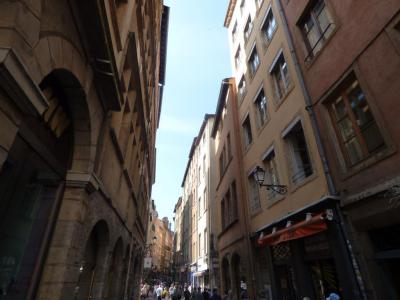
Back in 1954, Lyon’s Old Town made history. It became the first city in France to receive protection under the Malraux Law, long before “heritage preservation” became fashionable dinner conversation. The law shielded three Renaissance neighbourhoods wrapped around Fourvière Hill, namely: Saint Jean, Saint Paul, and Saint Georges.
In the Middle Ages, Saint Jean was the place to be - politically, religiously, and strategically. Power lived here. Right at the heart of it stands Lyon Cathedral, alongside the Romanesque Manecanterie, the former choir school.
But the real local secret isn’t just above ground - it’s hidden in the walls. The first traboule, or foot tunnel, linked Saint-Jean Street to Government Square. Why? Because medieval streets were few, the hill was steep, and everyone needed quicker access to the Saône River for fresh water. When streets failed, ingenuity stepped in...
So, Lyon built passageways - traboules - hidden corridors threading through buildings, across courtyards, quietly connecting one street to another. In the 19th century, more were added. The silk workers - the famous Canuts - used them to carry delicate rolls of silk down to the river without exposing them to rain.
When those same workers rebelled in the 1830s against wealthy silk merchants, the traboules turned into strategic hideouts. Fast forward to World War II, and the tunnels once again proved useful - this time sheltering members of the French Resistance. Indeed, these walls have seen more secrets than a confessional.
Now, if you’re curious, head to 54 Rue Saint-Jean. Look for a modest green door with a small engraved sign reading “The Long Traboule.” It doesn’t shout for attention - it doesn’t need to. This is the longest traboule in Old Lyon. Cross the threshold, and you’ll pass through five courtyards and four different buildings, emerging on Beef Street, if you’re translating literally. It feels less like walking through a corridor and more like slipping through time.
Around 50 traboules are open to the public today. But many more remain hidden, known mostly to residents. And that’s the charm of Lyon - a city where history doesn’t just sit in monuments. It runs behind walls, under your feet, and occasionally behind an unassuming green door...
In the Middle Ages, Saint Jean was the place to be - politically, religiously, and strategically. Power lived here. Right at the heart of it stands Lyon Cathedral, alongside the Romanesque Manecanterie, the former choir school.
But the real local secret isn’t just above ground - it’s hidden in the walls. The first traboule, or foot tunnel, linked Saint-Jean Street to Government Square. Why? Because medieval streets were few, the hill was steep, and everyone needed quicker access to the Saône River for fresh water. When streets failed, ingenuity stepped in...
So, Lyon built passageways - traboules - hidden corridors threading through buildings, across courtyards, quietly connecting one street to another. In the 19th century, more were added. The silk workers - the famous Canuts - used them to carry delicate rolls of silk down to the river without exposing them to rain.
When those same workers rebelled in the 1830s against wealthy silk merchants, the traboules turned into strategic hideouts. Fast forward to World War II, and the tunnels once again proved useful - this time sheltering members of the French Resistance. Indeed, these walls have seen more secrets than a confessional.
Now, if you’re curious, head to 54 Rue Saint-Jean. Look for a modest green door with a small engraved sign reading “The Long Traboule.” It doesn’t shout for attention - it doesn’t need to. This is the longest traboule in Old Lyon. Cross the threshold, and you’ll pass through five courtyards and four different buildings, emerging on Beef Street, if you’re translating literally. It feels less like walking through a corridor and more like slipping through time.
Around 50 traboules are open to the public today. But many more remain hidden, known mostly to residents. And that’s the charm of Lyon - a city where history doesn’t just sit in monuments. It runs behind walls, under your feet, and occasionally behind an unassuming green door...

8) Hôtel de Bullioud Traboule (Bullioud Hotel Passageway)
The Bullioud Hotel Passageway is one of the most striking examples of Renaissance architecture in the city. To enter, step into the first courtyard, where a well topped with a Renaissance canopy and shell immediately catches the eye. Beyond it lies the second courtyard, where the highlight of the site-the famous gallery-awaits. Built in 1536, this masterpiece was the work of Philibert de L’Orme, often considered the greatest architect of the second French Renaissance.
The commission came from Antoine Bullioud, the mansion’s owner, who faced a practical dilemma: he wanted a gallery that would connect two buildings without reducing the courtyard’s size or removing the central well. De L’Orme’s solution was both inventive and elegant. He designed a raised gallery that preserved the courtyard’s openness while adding an architectural jewel that blended function and beauty. The resulting structure became a model of Renaissance ingenuity, integrating new ideas without sacrificing the integrity of the original space.
The gallery itself is decorated in the antique style, showcasing a refined combination of Doric and Ionic elements. Columns on both levels feature alternating fluting, while the volute capitals add a touch of sophistication. Inside, traces of frescoes bring further depth and color, animating the space with a sense of life and artistry. This blend of classical harmony and decorative richness reflects de L’Orme’s genius for balancing tradition with innovation, a quality that defined his career.
Today, the Bullioud Hotel Passageway stands as a testament to Lyon’s Renaissance heritage. With its carefully preserved gallery, distinctive architectural details, and connection to one of France’s most celebrated architects, it offers visitors a vivid glimpse into the artistic and cultural achievements that shaped Old Lyon.
The commission came from Antoine Bullioud, the mansion’s owner, who faced a practical dilemma: he wanted a gallery that would connect two buildings without reducing the courtyard’s size or removing the central well. De L’Orme’s solution was both inventive and elegant. He designed a raised gallery that preserved the courtyard’s openness while adding an architectural jewel that blended function and beauty. The resulting structure became a model of Renaissance ingenuity, integrating new ideas without sacrificing the integrity of the original space.
The gallery itself is decorated in the antique style, showcasing a refined combination of Doric and Ionic elements. Columns on both levels feature alternating fluting, while the volute capitals add a touch of sophistication. Inside, traces of frescoes bring further depth and color, animating the space with a sense of life and artistry. This blend of classical harmony and decorative richness reflects de L’Orme’s genius for balancing tradition with innovation, a quality that defined his career.
Today, the Bullioud Hotel Passageway stands as a testament to Lyon’s Renaissance heritage. With its carefully preserved gallery, distinctive architectural details, and connection to one of France’s most celebrated architects, it offers visitors a vivid glimpse into the artistic and cultural achievements that shaped Old Lyon.
9) Notre-Dame de Saint-Vincent
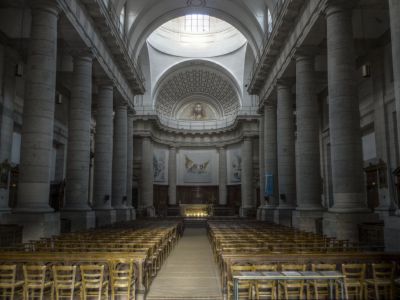
Just like many of the churches in Lyon, Notre Dame de Saint Vincent has a historical connection to a monastery. The interior of this church reflects the humble preferences of the monks who once used it as their place of worship. It was originally constructed for the Augustinian monks who settled in the area back in 1319. However, between 1759 and 1789, the church underwent significant reconstruction to replace their aging chapel, which was deteriorating. This renovation was made possible thanks to the financial contribution of the crown prince, who honored it with the name Saint Louis.
During the French Revolution, the church had a change in purpose. Initially, it served as a storage facility and later as a hospital annex. Meanwhile, the military took control of the rest of the monastery, and in 1831, it was transformed into La Martinière College. In 1863, the church underwent a name change, and in 1862, its nave was expanded, and the facade was constructed by Franchet.
Unfortunately, in 1987, a fire destroyed the church, leading to its reconstruction in a 19th-century architectural style. It finally reopened its doors to the local congregation in 1992. While the interior may appear quite simple, there are some beautiful statues worth admiring. These include a statue of Saint Louis, one of the Virgin by Fabisch, another of Saint Vincent by an unidentified sculptor, and "The Baptism of Christ" by Dufraine. Additionally, the choir's paintings, such as "Light of Emmaus" and "The Annunciation" by Hamelin, were installed in 1996. If you look up at the apse's quarter-circle vault, you'll also find another work by Hamelin called "The Creator."
During the French Revolution, the church had a change in purpose. Initially, it served as a storage facility and later as a hospital annex. Meanwhile, the military took control of the rest of the monastery, and in 1831, it was transformed into La Martinière College. In 1863, the church underwent a name change, and in 1862, its nave was expanded, and the facade was constructed by Franchet.
Unfortunately, in 1987, a fire destroyed the church, leading to its reconstruction in a 19th-century architectural style. It finally reopened its doors to the local congregation in 1992. While the interior may appear quite simple, there are some beautiful statues worth admiring. These include a statue of Saint Louis, one of the Virgin by Fabisch, another of Saint Vincent by an unidentified sculptor, and "The Baptism of Christ" by Dufraine. Additionally, the choir's paintings, such as "Light of Emmaus" and "The Annunciation" by Hamelin, were installed in 1996. If you look up at the apse's quarter-circle vault, you'll also find another work by Hamelin called "The Creator."
10) Bartholdi Fountain
While every town or city in France is proud of its fountains, Lyon justifiably takes pride in its most famous one – Bartholdi Fountain – on Place des Terreaux.
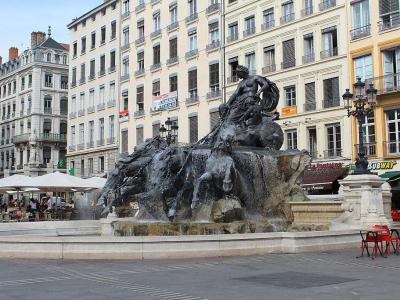
The fountain was designed by Frédéric Auguste Bartholdi in 1889 and manufactured by Gaget and Gautier. It was originally intended for the city of Bordeaux when first exhibited at the Exposition Universelle of 1889. After the show, however, the mayor of Bordeaux perceived it too expensive for his city, and so the fountain was bought by the mayor of Lyon in 1890.
The centerpiece of the fountain is an allegorical sculpture of the River Garonne, called the “Char triumphant de la Garonne”, featuring a woman with a small child in a chariot drawn by four water horses. The statue is made of lead on an iron frame; it weighs 21 tons and is 4.85 meters high.
The woman figure represents the Garonne and the four horses with their bridles of water weeds represent its four main tributaries, namely: the Tarn, Ariège, Lot and Gers. The horses are leaping and plunging, thus symbolizing these tributaries jumping into the sea. However, since placed in Lyon, the woman figure is believed to be representing the River Saône instead.
Architect Bartholdi is best known for his other major works, like the Lion of Belfort created in 1879 and the Statue of Liberty in 1886.
The fountain was designed by Frédéric Auguste Bartholdi in 1889 and manufactured by Gaget and Gautier. It was originally intended for the city of Bordeaux when first exhibited at the Exposition Universelle of 1889. After the show, however, the mayor of Bordeaux perceived it too expensive for his city, and so the fountain was bought by the mayor of Lyon in 1890.
The centerpiece of the fountain is an allegorical sculpture of the River Garonne, called the “Char triumphant de la Garonne”, featuring a woman with a small child in a chariot drawn by four water horses. The statue is made of lead on an iron frame; it weighs 21 tons and is 4.85 meters high.
The woman figure represents the Garonne and the four horses with their bridles of water weeds represent its four main tributaries, namely: the Tarn, Ariège, Lot and Gers. The horses are leaping and plunging, thus symbolizing these tributaries jumping into the sea. However, since placed in Lyon, the woman figure is believed to be representing the River Saône instead.
Architect Bartholdi is best known for his other major works, like the Lion of Belfort created in 1879 and the Statue of Liberty in 1886.
11) Place des Terreaux (Terreaux Square)
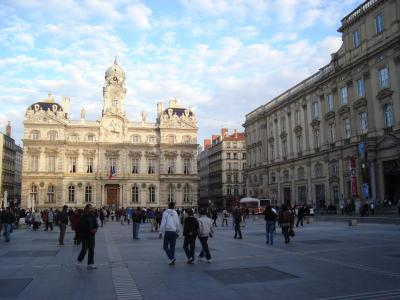
If Lyon had a living room, this would be it. Perfectly rectangular, grand, and confidently grey, Terreaux Square stretches across the Presqu’île between the Rhône and the Saône, right at the foot of Croix-Rousse hill. It sits in the 1st district like a stone stage set - symmetrical, open, and always ready for action. No surprise it’s part of Lyon’s UNESCO-listed historic centre.
By day, the square works as a social magnet. You can claim a café table and let time pass slowly with a drink, settle on the steps of the Museum of Fine Arts, or admire the dramatic fountain at the centre. On the eastern side rises the elegant City Hall of Lyon, built in the mid-17th century, rebuilt after a fire, and still serving its purpose. Across from it stands the former 17th-century nunnery of Saint-Pierre, which has housed the Fine Arts Museum since 1803 - proof that even convent walls can reinvent themselves.
The symmetry of lines may look calm, but they hide a rather dramatic past. Terreaux has seen far more than just casual espresso moments.
In 1642, Henri Coiffier de Ruzé, Marquis of Cinq-Mars, lost his head here after plotting against Cardinal Richelieu. During the French Revolution, the guillotine returned with alarming efficiency. And after the siege of Lyon, dozens more were executed on this very ground. Yes, this peaceful square once echoed with the sharp logic of political justice - 18th-century style.
Now look at the centrepiece. The powerful fountain was created by Frédéric Auguste Bartholdi - the same sculptor who later gave the world the Statue of Liberty. Inaugurated in 1891, the dramatic group shows a woman driving a quadriga, representing the Garonne River and its four tributaries charging toward the sea. Muscles tense, horses rear, water surges - it’s stone theatre at full volume.
Today, Terreaux Square balances beauty and memory. It’s a meeting point, a museum forecourt, a civic address, and a former revolutionary stage all in one. Stand still for a moment. Listen past the café chatter and splashing fountain. History hasn’t left here - it’s just learned to share the space...
By day, the square works as a social magnet. You can claim a café table and let time pass slowly with a drink, settle on the steps of the Museum of Fine Arts, or admire the dramatic fountain at the centre. On the eastern side rises the elegant City Hall of Lyon, built in the mid-17th century, rebuilt after a fire, and still serving its purpose. Across from it stands the former 17th-century nunnery of Saint-Pierre, which has housed the Fine Arts Museum since 1803 - proof that even convent walls can reinvent themselves.
The symmetry of lines may look calm, but they hide a rather dramatic past. Terreaux has seen far more than just casual espresso moments.
In 1642, Henri Coiffier de Ruzé, Marquis of Cinq-Mars, lost his head here after plotting against Cardinal Richelieu. During the French Revolution, the guillotine returned with alarming efficiency. And after the siege of Lyon, dozens more were executed on this very ground. Yes, this peaceful square once echoed with the sharp logic of political justice - 18th-century style.
Now look at the centrepiece. The powerful fountain was created by Frédéric Auguste Bartholdi - the same sculptor who later gave the world the Statue of Liberty. Inaugurated in 1891, the dramatic group shows a woman driving a quadriga, representing the Garonne River and its four tributaries charging toward the sea. Muscles tense, horses rear, water surges - it’s stone theatre at full volume.
Today, Terreaux Square balances beauty and memory. It’s a meeting point, a museum forecourt, a civic address, and a former revolutionary stage all in one. Stand still for a moment. Listen past the café chatter and splashing fountain. History hasn’t left here - it’s just learned to share the space...

12) Traboule des Droits de l'Homme (Human Rights Passageway)
The Human Rights Passageway (Traboule des Droits de l’Homme) is one of the most symbolically charged passageways in Lyon’s network of traboules. Although not originally built with this name, the designation reflects its complex history as both a practical passage and a site tied to the ideals of freedom and resistance. Like other traboules across the Red Cross and Old Lyon districts, this narrow passage-made up of a courtyard and a covered staircase within an 18th-century building-was once used by silk workers to carry delicate bolts of fabric from their workshops down to the river without exposing them to rain or wind.
Its importance, however, grew during the 20th century. During World War II, Lyon’s traboules became crucial escape routes and safe havens for the French Resistance. Fighters and couriers used these hidden paths to slip away from Nazi patrols, deliver messages, and transport weapons. The Human Rights Passageway is remembered today as part of that larger network of clandestine lifelines, embodying the city’s resilience in a dark chapter of history.
The passageway’s more recent history gave it its striking nickname. In October 1999, Chinese dissident Wei Jingshen famously addressed the visiting Chinese president from one of the balconies above the traboule, turning this quiet courtyard into a stage for human rights advocacy. Since then, it has carried the symbolic title “Human Rights Passageway,” blending Lyon’s centuries-old architectural heritage with a modern story of political courage. For visitors, stepping through this passage is both a glimpse into the city’s silk-weaving and wartime past and a reminder of its enduring role as a place of expression and freedom.
Its importance, however, grew during the 20th century. During World War II, Lyon’s traboules became crucial escape routes and safe havens for the French Resistance. Fighters and couriers used these hidden paths to slip away from Nazi patrols, deliver messages, and transport weapons. The Human Rights Passageway is remembered today as part of that larger network of clandestine lifelines, embodying the city’s resilience in a dark chapter of history.
The passageway’s more recent history gave it its striking nickname. In October 1999, Chinese dissident Wei Jingshen famously addressed the visiting Chinese president from one of the balconies above the traboule, turning this quiet courtyard into a stage for human rights advocacy. Since then, it has carried the symbolic title “Human Rights Passageway,” blending Lyon’s centuries-old architectural heritage with a modern story of political courage. For visitors, stepping through this passage is both a glimpse into the city’s silk-weaving and wartime past and a reminder of its enduring role as a place of expression and freedom.
13) Parc de la Tête d'Or (Park of the Golden Head) (must see)
In 1530, the lands of the Park of the Golden Head (Parc de la Tete d'Or) belonged to the wealthy Lambert family. The name "gold head" is believed to come from the legend that a treasure featuring a gold head of Christ might be buried on the Lambert's land. The chances of this were bleak. The land was mostly a swampy flood zone. No place to bury a golden head.
Planning for an urban park began as early as 1812. Under the administration of Mayor Claude-Marius Vaisse the land was bought in 1856. Work began with landscape designers Eugene and Denis Bulher. The park was opened in 1857. A dam was built to hold back flood waters of the Rhone. That helped. No heads were discovered.
The park is a large grassy savannah-like area of gentle hills and hummocks. A dike that parts the land from the Rhone, once a site for fairs and exhibitions, now holds buildings devoted to entertainments and a 3,000 seat amphitheater. A lake of 40 acres has boats, a pier, and two wooded islands.
The Isle of Tamarisks can be reached only by boat. The Isle of Remembrance is accessible through an underwater tunnel. Once known as the Isle of Swans, it holds a memorial honoring fallen soldiers.
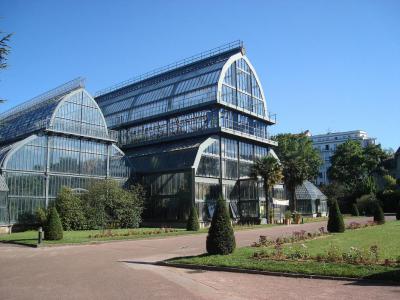
There are four rose gardens, enormous greenhouses, a botanical garden, a zoo and a velodrome for cycling events. The zoo features animal themes like the "African Plain," populated with cranes, flamingos, crocodiles, antelopes, porcupines, sand cats, bat-eared foxes, and turtles. To this day, still no heads.
Planning for an urban park began as early as 1812. Under the administration of Mayor Claude-Marius Vaisse the land was bought in 1856. Work began with landscape designers Eugene and Denis Bulher. The park was opened in 1857. A dam was built to hold back flood waters of the Rhone. That helped. No heads were discovered.
The park is a large grassy savannah-like area of gentle hills and hummocks. A dike that parts the land from the Rhone, once a site for fairs and exhibitions, now holds buildings devoted to entertainments and a 3,000 seat amphitheater. A lake of 40 acres has boats, a pier, and two wooded islands.
The Isle of Tamarisks can be reached only by boat. The Isle of Remembrance is accessible through an underwater tunnel. Once known as the Isle of Swans, it holds a memorial honoring fallen soldiers.
There are four rose gardens, enormous greenhouses, a botanical garden, a zoo and a velodrome for cycling events. The zoo features animal themes like the "African Plain," populated with cranes, flamingos, crocodiles, antelopes, porcupines, sand cats, bat-eared foxes, and turtles. To this day, still no heads.
14) Chapelle de la Trinité (Trinity Chapel)
Many structures are often lauded as "a pearl" or "a gem," and in most instances, such descriptions tend to be exaggerated. However, when it comes to the Trinity Chapel (Chapelle de la Trinité), such praise is entirely justified. This chapel is undeniably exquisite.
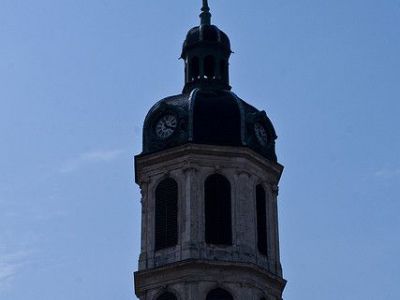
Constructed in 1622 by the architect Martellange in the Baroque style, the Chapelle de la Trinité is situated at the heart of the Grand Collège. This educational institution had been under the ownership of Jesuit priests since 1567, and the chapel was intended for the benefit of its students.
Keeping the educational and spiritual aspects in mind, the chapel's ornamentation was meticulously designed. Adorned in Carrare marble, it features an array of statues and trompe-l'oeil frescoes. Since its inception, students have left their signatures and small drawings atop the balustrade, bearing the names of many illustrious individuals from the city, such as Leymarie and Flacheron.
The chapel's layout is elegantly straightforward, with a central nave that lacks any projecting transept, along with ten interconnected side chapels. Behind the main altar, a small entrance in the semi-circular apse leads to a vaulted corridor that leads to the choir.
Despite its classification as a historical monument in 1939, the chapel fell into neglect and was stripped of its furnishings. For several years, it served as a gymnasium and venue for various demonstrations. In the 1990s, a renovation project was initiated under the guidance of Mortamet and Repellin. The chapel was reopened to the public in 2008 and now hosts concerts of Baroque music and other events.
Constructed in 1622 by the architect Martellange in the Baroque style, the Chapelle de la Trinité is situated at the heart of the Grand Collège. This educational institution had been under the ownership of Jesuit priests since 1567, and the chapel was intended for the benefit of its students.
Keeping the educational and spiritual aspects in mind, the chapel's ornamentation was meticulously designed. Adorned in Carrare marble, it features an array of statues and trompe-l'oeil frescoes. Since its inception, students have left their signatures and small drawings atop the balustrade, bearing the names of many illustrious individuals from the city, such as Leymarie and Flacheron.
The chapel's layout is elegantly straightforward, with a central nave that lacks any projecting transept, along with ten interconnected side chapels. Behind the main altar, a small entrance in the semi-circular apse leads to a vaulted corridor that leads to the choir.
Despite its classification as a historical monument in 1939, the chapel fell into neglect and was stripped of its furnishings. For several years, it served as a gymnasium and venue for various demonstrations. In the 1990s, a renovation project was initiated under the guidance of Mortamet and Repellin. The chapel was reopened to the public in 2008 and now hosts concerts of Baroque music and other events.
