Custom Walk in Beijing, China by gds_tifr_dbbcbd created on 2026-06-21
Guide Location: China » Beijing
Guide Type: Custom Walk
# of Sights: 11
Tour Duration: 8 Hour(s)
Travel Distance: 22.5 Km or 14 Miles
Share Key: BSUHS
Guide Type: Custom Walk
# of Sights: 11
Tour Duration: 8 Hour(s)
Travel Distance: 22.5 Km or 14 Miles
Share Key: BSUHS
How It Works
Please retrieve this walk in the GPSmyCity app. Once done, the app will guide you from one tour stop to the next as if you had a personal tour guide. If you created the walk on this website or come to the page via a link, please follow the instructions below to retrieve the walk in the app.
Retrieve This Walk in App
Step 1. Download the app "GPSmyCity: Walks in 1K+ Cities" on Apple App Store or Google Play Store.



Step 2. In the GPSmyCity app, download(or launch) the guide "Beijing Map and Walking Tours".
Step 3. Tap the menu button located at upper right corner of the "Walks" screen and select "Retrieve custom walk". Enter the share key: BSUHS
1) Forbidden City and Palace Museum (must see)
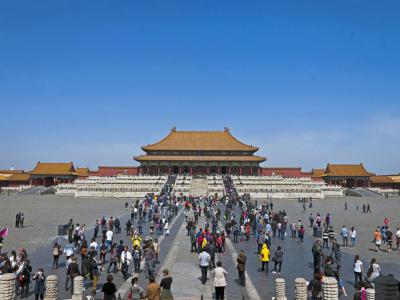
A trip to Beijing is incomplete without a visit to Forbidden City, the huge, majestic and best preserved imperial Chinese palace. This impressive and gorgeous palatial structure exemplifies traditional Chinese palatial architecture and has influenced cultural and architectural developments in East Asia and elsewhere.
This Palace Museum houses precious historical and cultural relics of China. In 1961, it was listed by the Chinese central government as a historical monument to be specially preserved. Forbidden City was declared a World Heritage Site in 1987 and is listed by UNESCO as the largest collection of preserved ancient wooden structures in the world.
This palace is listed as one of the five most important palaces in the world. It was home to 21 Ming and Qing dynasty emperors between 1368 and 1911. In keeping with the traditional beliefs, the palace was constructed to resemble the Purple Palace in heaven, believed to be the residence of God. "Forbidden" referred to the fact that no one could enter or leave the palace without the emperor's permission.
The palace is built over an area of 72 hectares. There are 8704 rooms, 980 buildings and 90 palaces with 150,000 square meters total floor space. Structures including the palace and all the gates of the Forbidden City are arranged around Beijing’s south-north central axis.
A ten-meter high wall encloses the complex of 3,430-meter circumference. The moment you reach this impressive complex, you will be stunned by the magnificence of the four watchtowers at each corner and the moat that acted as the first line of defense.
Why You Should Visit:
Forbidden City should be at the top of any Beijing itinerary. Taking in the scale and majesty of the buildings is a terrific experience.
Tip:
Don't forget your passport – you will need it to buy a ticket and gain entry. Get there as early as you can to avoid the hoards of tourists. When hiring a guide, make sure they speak good English and negotiate on price and time. At the very least, rent the audio guide. Make sure you visit the Imperial Gardens before exiting and go to Jingshan Park (through the underground passage) for a panoramic view of the Forbidden City from above.
This Palace Museum houses precious historical and cultural relics of China. In 1961, it was listed by the Chinese central government as a historical monument to be specially preserved. Forbidden City was declared a World Heritage Site in 1987 and is listed by UNESCO as the largest collection of preserved ancient wooden structures in the world.
This palace is listed as one of the five most important palaces in the world. It was home to 21 Ming and Qing dynasty emperors between 1368 and 1911. In keeping with the traditional beliefs, the palace was constructed to resemble the Purple Palace in heaven, believed to be the residence of God. "Forbidden" referred to the fact that no one could enter or leave the palace without the emperor's permission.
The palace is built over an area of 72 hectares. There are 8704 rooms, 980 buildings and 90 palaces with 150,000 square meters total floor space. Structures including the palace and all the gates of the Forbidden City are arranged around Beijing’s south-north central axis.
A ten-meter high wall encloses the complex of 3,430-meter circumference. The moment you reach this impressive complex, you will be stunned by the magnificence of the four watchtowers at each corner and the moat that acted as the first line of defense.
Why You Should Visit:
Forbidden City should be at the top of any Beijing itinerary. Taking in the scale and majesty of the buildings is a terrific experience.
Tip:
Don't forget your passport – you will need it to buy a ticket and gain entry. Get there as early as you can to avoid the hoards of tourists. When hiring a guide, make sure they speak good English and negotiate on price and time. At the very least, rent the audio guide. Make sure you visit the Imperial Gardens before exiting and go to Jingshan Park (through the underground passage) for a panoramic view of the Forbidden City from above.
2) Imperial Ancestral Temple
Located to the east of Tiananmen Square, the Imperial Ancestral Temple is also known as the Working People’s Cultural Palace. It was here that the Ming and Qing dynasties offered sacrifices to Earth and Heaven. This temple was built in 1420 during the Ming dynasty ruler Yongle’s reign.
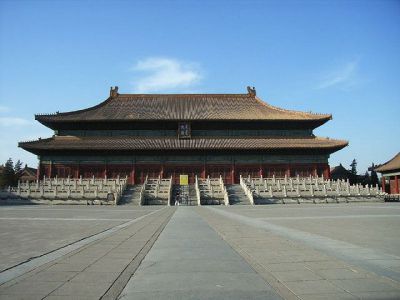
Covering an area of 197,000 square meters, this temple has three red walls surrounding it. As you enter through the Halberd Gate, you will be struck by the solemn and imposing central structures. The roofs of the three halls in this structure are covered with yellow glazed tiles.
The Sacrificial Hall is where grand sacrificial ceremonies used to be held. The sumeru, three-tiered base of this hall is made of white marble. The hall’s interior looks grand with sixty-eight columns made of exquisite and expensive nanmu golden silkwood. The ceiling dazzles with its gilded colored paintings and is complemented by the golden brick paved floor.
On each side of the hall, you will find long, spacious corridors leading to a compound at the southern end. Here you can see exquisite stone bridges over the Golden River. Visit this temple that takes you right back to those ancient times.
Why You Should Visit:
Lots of history, way cheaper than the Forbidden City – like a smaller version that's quieter and also easier on the legs, but with similar architecture and still significant.
Tip:
A great place to get uncrowded photos, to walk around with only a handful of others and to enjoy a pleasant park, right in the heart of Beijing.
Covering an area of 197,000 square meters, this temple has three red walls surrounding it. As you enter through the Halberd Gate, you will be struck by the solemn and imposing central structures. The roofs of the three halls in this structure are covered with yellow glazed tiles.
The Sacrificial Hall is where grand sacrificial ceremonies used to be held. The sumeru, three-tiered base of this hall is made of white marble. The hall’s interior looks grand with sixty-eight columns made of exquisite and expensive nanmu golden silkwood. The ceiling dazzles with its gilded colored paintings and is complemented by the golden brick paved floor.
On each side of the hall, you will find long, spacious corridors leading to a compound at the southern end. Here you can see exquisite stone bridges over the Golden River. Visit this temple that takes you right back to those ancient times.
Why You Should Visit:
Lots of history, way cheaper than the Forbidden City – like a smaller version that's quieter and also easier on the legs, but with similar architecture and still significant.
Tip:
A great place to get uncrowded photos, to walk around with only a handful of others and to enjoy a pleasant park, right in the heart of Beijing.
3) Tiananmen Square (must see)
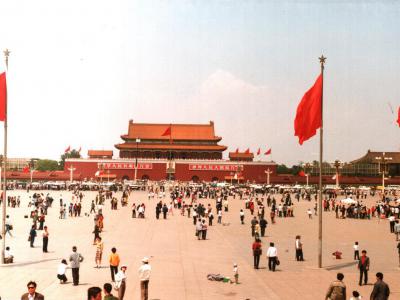
The name Tiananmen Square is the heart of Beijing. Tourists flock from all over China and around the world to this square that features the Tiananmen tower, Mao Zedong Memorial Hall, the Monument to the People’s Heroes and the Great Hall of the People.
Functionally this square was Forbidden City’s front door. Constructed during the Ming Dynasty in 1417, the square was used to inform people whenever a change of ruling power occurred. The tower located to the north of the square was accessible only to aristocrats and the royal family and was not open to the public until 1911 when feudal rule came to an end. The Monument of People’s Heroes, constructed in 1952 is the largest in China. This granite monument is located at the center of the square.
The Great Hall of the People is located to the west of the square. Constructed in 1959, this hall is an impressive site where prominent diplomatic activities and political meetings are held. To the south of the square, you can find the Memorial Hall of Chairman Mao. Chairman Mao’s body is kept here in a crystal coffin and decorated with flowers. The National Museum of China is located to the square’s eastern side. This museum showcases the country’s rich history.
Why You Should Visit:
A must-see place for its historical and political significance, but also a great place to meet and interact with people from China. It is quite a sight in the evening, completely lit up, with lots of people around.
Tip:
To be allowed access to the Tiananmen Square you must go through a series of security checks and you must have your passport. This goes for a visit to the Forbidden City as well since the south entrance is facing the square.
Functionally this square was Forbidden City’s front door. Constructed during the Ming Dynasty in 1417, the square was used to inform people whenever a change of ruling power occurred. The tower located to the north of the square was accessible only to aristocrats and the royal family and was not open to the public until 1911 when feudal rule came to an end. The Monument of People’s Heroes, constructed in 1952 is the largest in China. This granite monument is located at the center of the square.
The Great Hall of the People is located to the west of the square. Constructed in 1959, this hall is an impressive site where prominent diplomatic activities and political meetings are held. To the south of the square, you can find the Memorial Hall of Chairman Mao. Chairman Mao’s body is kept here in a crystal coffin and decorated with flowers. The National Museum of China is located to the square’s eastern side. This museum showcases the country’s rich history.
Why You Should Visit:
A must-see place for its historical and political significance, but also a great place to meet and interact with people from China. It is quite a sight in the evening, completely lit up, with lots of people around.
Tip:
To be allowed access to the Tiananmen Square you must go through a series of security checks and you must have your passport. This goes for a visit to the Forbidden City as well since the south entrance is facing the square.
4) National Museum of China (must see)
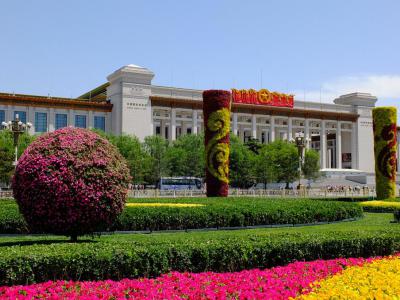
Situated on the eastern flank of Beijing's Tiananmen Square, the National Museum of China serves as an educational institution dedicated to illuminating the rich tapestry of Chinese arts and history. Oversight of the museum falls under the purview of the Ministry of Culture of the People's Republic of China.
Dating back to its establishment in 2003, the museum was the result of a merger between two distinct institutions that had occupied the same architectural space since 1959: the Museum of the Chinese Revolution in the northern wing and the National Museum of Chinese History in the southern wing.
Spanning an expansive timeline from the Yuanmou Man of 1.7 million years ago to the culmination of the Qing Dynasty, the museum boasts an extensive permanent collection comprising 1,050,000 artifacts. Within this collection are numerous invaluable and singular items that are not replicated in any other museum in China or across the globe.
Prominent treasures within the confines of the National Museum of China encompass a diverse array of historical periods. These include the renowned "Simuwu Ding" from the Shang Dynasty (1600 BC - 1064 BC), holding the distinction of being the heaviest extant piece of ancient bronzeware at 833 kg. Additional remarkable pieces feature a square-shaped Shang Dynasty bronze "zun" adorned with intricately crafted sheep heads, an uncommonly inscribed bronze water pan from the Western Zhou Dynasty, a Qin Dynasty bronze tally embellished with gold inlay in the form of a tiger, opulent Han Dynasty jade burial attire adorned with golden thread, and an extensive compilation of Tang Dynasty tri-colored glazed sancai as well as Song Dynasty ceramics. Complementing these treasures is a notable numismatic collection that encompasses 15,000 coins generously contributed by Luo Bozhao.
Why You Should Visit:
The "Ancient China" exhibit on the lower floor could easily keep you busy for 2-3 hours and the quality of the works is at least comparable to the Chinese section at the Met in New York and Guimet in Paris. Additionally, you're able to see many outstanding visiting exhibitions from other parts of the world.
Tip:
Take a look at the several different sections in the information section before jumping in and decide what is most likely to appeal to you if you have only one day or a half day. Entrance is free but do take your passport/ID with you. Security is tight so expect checks both entering and leaving the museum.
Dating back to its establishment in 2003, the museum was the result of a merger between two distinct institutions that had occupied the same architectural space since 1959: the Museum of the Chinese Revolution in the northern wing and the National Museum of Chinese History in the southern wing.
Spanning an expansive timeline from the Yuanmou Man of 1.7 million years ago to the culmination of the Qing Dynasty, the museum boasts an extensive permanent collection comprising 1,050,000 artifacts. Within this collection are numerous invaluable and singular items that are not replicated in any other museum in China or across the globe.
Prominent treasures within the confines of the National Museum of China encompass a diverse array of historical periods. These include the renowned "Simuwu Ding" from the Shang Dynasty (1600 BC - 1064 BC), holding the distinction of being the heaviest extant piece of ancient bronzeware at 833 kg. Additional remarkable pieces feature a square-shaped Shang Dynasty bronze "zun" adorned with intricately crafted sheep heads, an uncommonly inscribed bronze water pan from the Western Zhou Dynasty, a Qin Dynasty bronze tally embellished with gold inlay in the form of a tiger, opulent Han Dynasty jade burial attire adorned with golden thread, and an extensive compilation of Tang Dynasty tri-colored glazed sancai as well as Song Dynasty ceramics. Complementing these treasures is a notable numismatic collection that encompasses 15,000 coins generously contributed by Luo Bozhao.
Why You Should Visit:
The "Ancient China" exhibit on the lower floor could easily keep you busy for 2-3 hours and the quality of the works is at least comparable to the Chinese section at the Met in New York and Guimet in Paris. Additionally, you're able to see many outstanding visiting exhibitions from other parts of the world.
Tip:
Take a look at the several different sections in the information section before jumping in and decide what is most likely to appeal to you if you have only one day or a half day. Entrance is free but do take your passport/ID with you. Security is tight so expect checks both entering and leaving the museum.
5) Qianmen (Zhengyangmen)
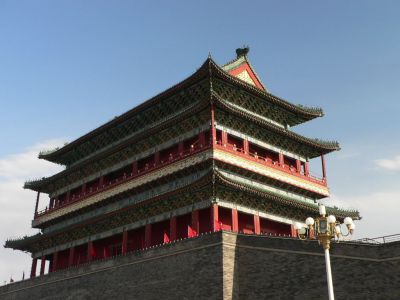
When you visit the historic Beijing city wall, do not miss out the Zhengyangmen, which is one of the wall's gates. Popularly called the Qianmen, this wall was constructed during the Ming Dynasty in 1419. The gate featured a large barbican all with an archery tower, the side walls and the side gates. Direct entry to the imperial city was guarded by this gate.
Qianmen Station, the first railway station in the city was constructed just outside the gate. During the Boxer Rebellion of 1900, the gate suffered extensive damage. In 1914, the gate was completely reconstructed and restored to its original glory.
The People Liberation Army's Beijing garrison occupied the Zhengyangmen gatehouse in 1949 after the victory of Communists. The gate became a major tourist attraction after the military vacated in 1980. This gate stands tall at 42 meters and is the highest gate in the city wall.
Tip:
You can access the interior of the structure that sits atop the former wall, where there are fascinating displays of the history of Beijing, along with art displays on one floor, and (of course) a gift shop. There is a magnificent 360-degree view of the city!
Qianmen Station, the first railway station in the city was constructed just outside the gate. During the Boxer Rebellion of 1900, the gate suffered extensive damage. In 1914, the gate was completely reconstructed and restored to its original glory.
The People Liberation Army's Beijing garrison occupied the Zhengyangmen gatehouse in 1949 after the victory of Communists. The gate became a major tourist attraction after the military vacated in 1980. This gate stands tall at 42 meters and is the highest gate in the city wall.
Tip:
You can access the interior of the structure that sits atop the former wall, where there are fascinating displays of the history of Beijing, along with art displays on one floor, and (of course) a gift shop. There is a magnificent 360-degree view of the city!
6) Baoguo Temple Culture Market
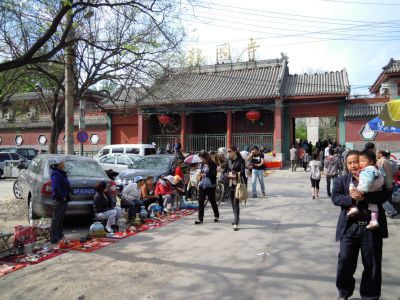
Nestled within the confines of the Baoguo Buddhist Temple's courtyard, situated in the Xicheng district, lies the Baoguo Temple Culture Market. Baoguosi Temple, built during the Liao Dynasty, bears a resemblance more akin to an antique marketplace than a traditional temple, yet it retains its temple-like facade. Comprising three halls, a notable aspect is that two of these halls, alongside the encircling structures of the temple wall, have been repurposed as warehouses or showrooms.
In recent times, the temple grounds have undergone expansion, giving rise to what is now referred to as the Baoguo Collection Market or Baoguo Temple Culture Market. Within its premises, one can explore a diverse array of markets, encompassing antiques, souvenirs, gifts, coins, and stamp collections. Among the myriad offerings, traders present a wide spectrum of items ranging from jade and coins to Buddha statues, ancient books, calligraphic artworks, and paintings, among other treasures.
A roster of over 18 enduring stalls and booths operates daily, with the weekend ushering in additional vendors, including mobile purveyors who are exclusively permitted to display their wares on the grounds during this time.
Monday - Sunday: 8:00am - 5:00 pm.
In recent times, the temple grounds have undergone expansion, giving rise to what is now referred to as the Baoguo Collection Market or Baoguo Temple Culture Market. Within its premises, one can explore a diverse array of markets, encompassing antiques, souvenirs, gifts, coins, and stamp collections. Among the myriad offerings, traders present a wide spectrum of items ranging from jade and coins to Buddha statues, ancient books, calligraphic artworks, and paintings, among other treasures.
A roster of over 18 enduring stalls and booths operates daily, with the weekend ushering in additional vendors, including mobile purveyors who are exclusively permitted to display their wares on the grounds during this time.
Monday - Sunday: 8:00am - 5:00 pm.
7) Beijing Capital Museum
Beijing Capital Museum is located on Chang’an Street western extension from where it commenced operation in the year 2005. This museum is known for its advanced technology, abundant exhibits and magnificent architecture. This large contemporary museum is a major landmark in Beijing frequented by thousands of tourists every year.
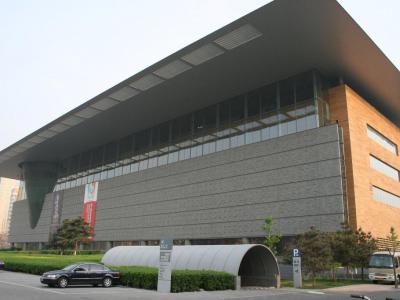
Harmoniously integrating past and present, this museum displays the rich cultural heritage of the country through art. Capital Art Museum is also an example of contemporary and classical architectural integration with its massive roof and national characteristics.
The roof especially is a standing example of overhang design of traditional Chinese architectural style. The ancient China city wall is depicted by the long stone curtain wall and ancient dias construction style is reflected in the gradient of the square. In front of the hall’s north gate, you can find Danbi, a stone carved with images such as Phoenix and Dragon.
You will enter the hall through the decorative archway that reflects the Ming Dynasty style. You will certainly be impressed with the generous usage of timbers, bronze and stone in the interior of the museum.
You can find unearthed historical heritages and past year collections on display. Regular and temporary exhibitions are held here featuring fine contemporary and traditional artistic collections.
Why You Should Visit:
The permanent exhibitions include highlights such as the history of Beijing, old folk customs, Peking opera, bronze and porcelains... but there are also various changing exhibitions. All are fascinating, nicely displayed and not overwhelming. A great option for 2-3 hours.
Tip:
Free entry, but to be safe you do have to make an online reservation and bring your passport to get in.
Don't forget to bring your own food and drinks with you if planning to stay longer (some people eat in the seated corridors).
Harmoniously integrating past and present, this museum displays the rich cultural heritage of the country through art. Capital Art Museum is also an example of contemporary and classical architectural integration with its massive roof and national characteristics.
The roof especially is a standing example of overhang design of traditional Chinese architectural style. The ancient China city wall is depicted by the long stone curtain wall and ancient dias construction style is reflected in the gradient of the square. In front of the hall’s north gate, you can find Danbi, a stone carved with images such as Phoenix and Dragon.
You will enter the hall through the decorative archway that reflects the Ming Dynasty style. You will certainly be impressed with the generous usage of timbers, bronze and stone in the interior of the museum.
You can find unearthed historical heritages and past year collections on display. Regular and temporary exhibitions are held here featuring fine contemporary and traditional artistic collections.
Why You Should Visit:
The permanent exhibitions include highlights such as the history of Beijing, old folk customs, Peking opera, bronze and porcelains... but there are also various changing exhibitions. All are fascinating, nicely displayed and not overwhelming. A great option for 2-3 hours.
Tip:
Free entry, but to be safe you do have to make an online reservation and bring your passport to get in.
Don't forget to bring your own food and drinks with you if planning to stay longer (some people eat in the seated corridors).
8) National Centre for the Performing Arts (must see)
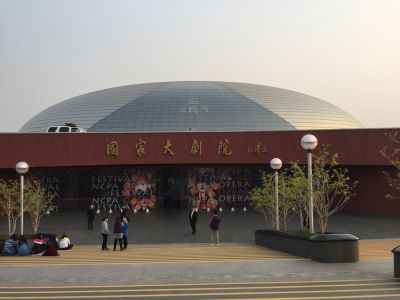
The National Centre for the Performing Arts, colloquially described as The Giant Egg, is an arts centre containing an opera house in Beijing. If you wish to enjoy the quintessence of China, you must not miss the Beijing Opera on your trip to Beijing. Also known as the Oriental Opera, this is the most significant form of Chinese opera in existence for the past 160 years.
Beijing Opera has witnessed an abundance of repertoires, opera troupes, artists and spectators through the ages. Developed from the “Huiban”, a local drama art of the 18th century China, Beijing Opera has grown into a scenic art that integrates literature, performance, music, face-painting and aria.
Ever since it came into existence, Beijing Opera has had different names such as Pingju, Daxi, Jinghuang and Jingxi. Four artistic methods namely dancing, dialogue, singing and martial art are used by the artists in Beijing Opera to present dramatic figures and plays.
Male characters, known as Xiao Sheng and Lao Sheng, are the two groups of male characters in the opera. Xiao Sheng refers to beardless young men and Lao Sheng to bearded middle-aged wise men. Dan or female characters, on the other hand, are subdivided into Laodan – senior women, Huadan – little girls at the bottom rung of society, Zhengdan – middle-aged, strong women, and Wudan – female fighters.
Why You Should Visit:
Incredible building from the outside, but with even more surprising things hidden inside.
Beautiful to discover, comfortable, optimized for music enjoyment and world class shows.
Tip:
Do check for the performance schedule online, as orchestras & musicians from around the world come to perform here on a regular basis.
Go in the day, well before shows start, to get a better choice of seats and prices, or you can just join the visiting tour for walking around inside the hall and viewing the exhibition.
Visiting Hours:
Tue-Sun: 9am-5pm
Beijing Opera has witnessed an abundance of repertoires, opera troupes, artists and spectators through the ages. Developed from the “Huiban”, a local drama art of the 18th century China, Beijing Opera has grown into a scenic art that integrates literature, performance, music, face-painting and aria.
Ever since it came into existence, Beijing Opera has had different names such as Pingju, Daxi, Jinghuang and Jingxi. Four artistic methods namely dancing, dialogue, singing and martial art are used by the artists in Beijing Opera to present dramatic figures and plays.
Male characters, known as Xiao Sheng and Lao Sheng, are the two groups of male characters in the opera. Xiao Sheng refers to beardless young men and Lao Sheng to bearded middle-aged wise men. Dan or female characters, on the other hand, are subdivided into Laodan – senior women, Huadan – little girls at the bottom rung of society, Zhengdan – middle-aged, strong women, and Wudan – female fighters.
Why You Should Visit:
Incredible building from the outside, but with even more surprising things hidden inside.
Beautiful to discover, comfortable, optimized for music enjoyment and world class shows.
Tip:
Do check for the performance schedule online, as orchestras & musicians from around the world come to perform here on a regular basis.
Go in the day, well before shows start, to get a better choice of seats and prices, or you can just join the visiting tour for walking around inside the hall and viewing the exhibition.
Visiting Hours:
Tue-Sun: 9am-5pm
9) Beihai Park (must see)
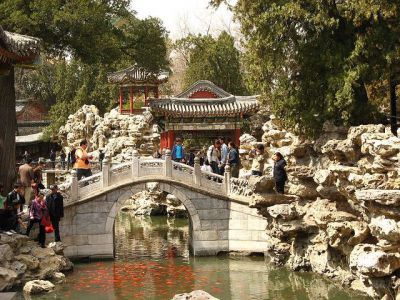
Beihai Park is situated in the center of Beijing and is a popular tourist attraction for various reasons. This park is an imperial garden preserved till today with great care. This largest and oldest park lies to the east of Jingshan Park and Forbidden City.
The 1000-year-old park was created in keeping with a traditional Chinese legend. More than fifty percent of its total 0.71 square kilometer is covered by a lake. The Northern Shore Area, Eastern Shore Area, the Circular City located near the north gate and the Botanical Garden are the four major scenic areas to check out.
You can find the Jade Flowery Islet at the center of the lake. The imposing White Dagoba, focal point of Beihai Park can be found at this islet. White Dagoba Temple is situated right opposite the White Dagoba. As you tour Beihai Park, do not miss any of the beautiful and famous places here such as the Bell and Drum Towers, Zhengjue Hall and the Stone Tablets of Qiongdao Chunyin scattered across the Qionghua Islet slope.
Qionghua Islet stands at the center of the park densely populated with pavilions, rockeries and halls. Do not miss out the exquisite garden at the Circular City located to the Southeast of the park.
Why You Should Visit:
Huge park with a good mix of locals and foreign visitors and lots of small hidden spots to check out.
Tip:
Make sure you climb up the stairs to the white pagoda – very pretty views from up there!
This place is also home to the one and only double-sided Nine-Dragon screen, i.e. the only screen having nine huge dragons on both sides among the most famous three Nine-Dragon screens in China.
The 1000-year-old park was created in keeping with a traditional Chinese legend. More than fifty percent of its total 0.71 square kilometer is covered by a lake. The Northern Shore Area, Eastern Shore Area, the Circular City located near the north gate and the Botanical Garden are the four major scenic areas to check out.
You can find the Jade Flowery Islet at the center of the lake. The imposing White Dagoba, focal point of Beihai Park can be found at this islet. White Dagoba Temple is situated right opposite the White Dagoba. As you tour Beihai Park, do not miss any of the beautiful and famous places here such as the Bell and Drum Towers, Zhengjue Hall and the Stone Tablets of Qiongdao Chunyin scattered across the Qionghua Islet slope.
Qionghua Islet stands at the center of the park densely populated with pavilions, rockeries and halls. Do not miss out the exquisite garden at the Circular City located to the Southeast of the park.
Why You Should Visit:
Huge park with a good mix of locals and foreign visitors and lots of small hidden spots to check out.
Tip:
Make sure you climb up the stairs to the white pagoda – very pretty views from up there!
This place is also home to the one and only double-sided Nine-Dragon screen, i.e. the only screen having nine huge dragons on both sides among the most famous three Nine-Dragon screens in China.
10) Jingshan Park (must see)
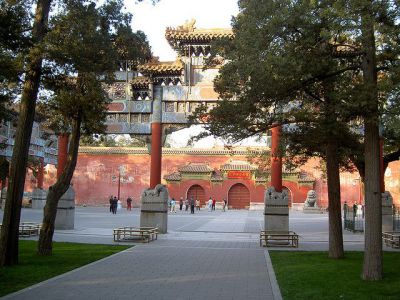
Jingshan Park is a popular tourist attraction in Beijing. This park is situated at the city’s center on Jingshan Hill and is spread over an area of 230,000 square meters. The royal, spectacular garden features a unique and stunning landscape and is located right opposite Forbidden City’s north gate. You can enjoy an amazing view of the Forbidden City from the peak of Jingshan Park.
Jingshan Hill was laid out in a proper manner during the Ming Dynasty rule though it had been serving as the imperial garden during the Yuan, Ming and Qing dynasties between 1271 and 1911.
Jingshan Park was first opened to the public in 1928 and was completely rebuilt with paved paths. Today this park attracts millions of tourists from around the world. The first thing you will see the moment you enter the park’s front gate is the Qiwang Pavilion. Green cypresses embrace this charming pavilion where the memorial tablet of Confucius was worshipped by the emperors. This two-storied, majestic and dignified pavilion features a golden-glazed roof and white marble balustrades.
There are five summits in Jingshan Hill and on each summit, you can find a pavilion. There was a copper Buddha statue on each pavilion representing the five tastes namely bitter, salty, sweet, sour, and pungent. During the 1900 war, all statues were destroyed.
Wanchun Pavilion is the most popular among the five located in the middle of the five summits. This is Beijing’s highest point from where you can enjoy a spectacular view of the city. As you stand on the pavilion, to your north you can see the dignified Bell and Drum Towers, the magnificent and resplendent Forbidden City to the South and the White Dagoba Temple and Beihai Park to the West.
Why You Should Visit:
A really nice upkept garden park, featuring nice outdoor covered areas and old trees. The calm and serenity here is refreshing and the view from the top of the hill is amazing.
Tip:
You can enter via 3 gates: East, West, and South (all have ticket booths), the latter being accessed directly opposite the exit to the Forbidden City’s North gate exit. The city views, as you ascend, get better and better.
Jingshan Hill was laid out in a proper manner during the Ming Dynasty rule though it had been serving as the imperial garden during the Yuan, Ming and Qing dynasties between 1271 and 1911.
Jingshan Park was first opened to the public in 1928 and was completely rebuilt with paved paths. Today this park attracts millions of tourists from around the world. The first thing you will see the moment you enter the park’s front gate is the Qiwang Pavilion. Green cypresses embrace this charming pavilion where the memorial tablet of Confucius was worshipped by the emperors. This two-storied, majestic and dignified pavilion features a golden-glazed roof and white marble balustrades.
There are five summits in Jingshan Hill and on each summit, you can find a pavilion. There was a copper Buddha statue on each pavilion representing the five tastes namely bitter, salty, sweet, sour, and pungent. During the 1900 war, all statues were destroyed.
Wanchun Pavilion is the most popular among the five located in the middle of the five summits. This is Beijing’s highest point from where you can enjoy a spectacular view of the city. As you stand on the pavilion, to your north you can see the dignified Bell and Drum Towers, the magnificent and resplendent Forbidden City to the South and the White Dagoba Temple and Beihai Park to the West.
Why You Should Visit:
A really nice upkept garden park, featuring nice outdoor covered areas and old trees. The calm and serenity here is refreshing and the view from the top of the hill is amazing.
Tip:
You can enter via 3 gates: East, West, and South (all have ticket booths), the latter being accessed directly opposite the exit to the Forbidden City’s North gate exit. The city views, as you ascend, get better and better.
11) 3.3 Clothing Market
Beijing undoubtedly stands out as one of the globe's premier shopping destinations! For those who revel in the thrill of a scavenger hunt, whether it's for authentic items or replicated brands in attire, footwear, gadgets, shades, blooms, rugs, furnishings, and tea sets, Beijing presents an extensive array of options, all housed within contemporary shopping arcades. A shopping escapade in Beijing spans a spectrum from satisfying, electrifying, and exhilarating to boisterous, exasperating, draining, and bustling, contingent upon your perspective.
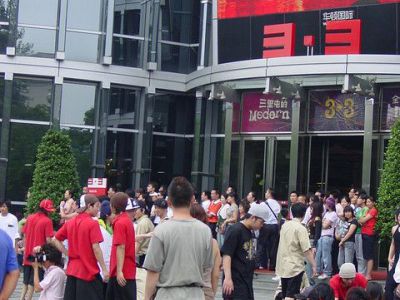
The 3.3 Clothing Market emerges as a beloved local shopping haven. Spanning five floors, this emporium boasts over 500 boutiques. Within its confines, one can find a plethora of offerings, ranging from exquisitely crafted artisanal jewelry on the ground floor to top-notch tailoring services on the fifth. Although prices tend to be a tad elevated, a visit to this market is undeniably justified if you seek modish and voguish attire and accompanying accessories. While the ambiance is tastefully adorned, hygienic, and climate-controlled, the auditory space is somewhat marred by the cacophony of pop melodies and television commercials. This venue caters well to men too – notably, the third floor is a treasure trove for footwear, with sizes extending up to a generous 48!
The 3.3 Clothing Market emerges as a beloved local shopping haven. Spanning five floors, this emporium boasts over 500 boutiques. Within its confines, one can find a plethora of offerings, ranging from exquisitely crafted artisanal jewelry on the ground floor to top-notch tailoring services on the fifth. Although prices tend to be a tad elevated, a visit to this market is undeniably justified if you seek modish and voguish attire and accompanying accessories. While the ambiance is tastefully adorned, hygienic, and climate-controlled, the auditory space is somewhat marred by the cacophony of pop melodies and television commercials. This venue caters well to men too – notably, the third floor is a treasure trove for footwear, with sizes extending up to a generous 48!
