Custom Walk in Geneva, Switzerland by alexnpearlman_de2af5 created on 2026-07-01
Guide Location: Switzerland » Geneva
Guide Type: Custom Walk
# of Sights: 16
Tour Duration: 3 Hour(s)
Travel Distance: 5.5 Km or 3.4 Miles
Share Key: 5WXQE
Guide Type: Custom Walk
# of Sights: 16
Tour Duration: 3 Hour(s)
Travel Distance: 5.5 Km or 3.4 Miles
Share Key: 5WXQE
How It Works
Please retrieve this walk in the GPSmyCity app. Once done, the app will guide you from one tour stop to the next as if you had a personal tour guide. If you created the walk on this website or come to the page via a link, please follow the instructions below to retrieve the walk in the app.
Retrieve This Walk in App
Step 1. Download the app "GPSmyCity: Walks in 1K+ Cities" on Apple App Store or Google Play Store.



Step 2. In the GPSmyCity app, download(or launch) the guide "Geneva Map and Walking Tours".
Step 3. Tap the menu button located at upper right corner of the "Walks" screen and select "Retrieve custom walk". Enter the share key: 5WXQE
1) Jet d'Eau (Water-Jet) (must see)
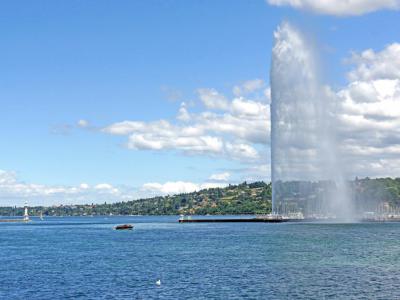
Now, this fountain clearly never learned the meaning of restraint.
What you’re looking at started life in 1886, not as a postcard icon, but as a pressure valve for a hydraulic power network. In other words, this was Geneva’s very practical way of letting off steam—quite literally. And it proved so visually impressive that by 1891, the city decided to give it a promotion, relocating it to the lakefront to celebrate the Swiss Confederation’s 600th anniversary. The version you see today dates to 1951, powered by a discreet pumping station tucked just below the surface.
Now, the numbers. The Water-Jet fires 500 liters of water every second straight up to 140 meters, at speeds reaching 200 kilometers per hour. At any given moment, around 7,000 liters are suspended mid-air, briefly defying gravity before coming back down with a splash and purpose. This is one of the tallest fountains in the world—and yes, pilots can spot it from kilometers away, which tells you this isn’t your average decorative splash.
You can walk right up to it along a stone pier on the lake’s left bank, which sounds peaceful until the wind changes direction. Then suddenly, congratulations—you’re part of the attraction. Consider it Geneva’s way of keeping visitors alert...
Since 2003, the fountain runs daily, weather permitting, and in the warmer months, it stays on into the evening, illuminated by a series of lights that turn this engineered outburst into something almost theatrical. Not bad for what began as an industrial workaround...
What you’re looking at started life in 1886, not as a postcard icon, but as a pressure valve for a hydraulic power network. In other words, this was Geneva’s very practical way of letting off steam—quite literally. And it proved so visually impressive that by 1891, the city decided to give it a promotion, relocating it to the lakefront to celebrate the Swiss Confederation’s 600th anniversary. The version you see today dates to 1951, powered by a discreet pumping station tucked just below the surface.
Now, the numbers. The Water-Jet fires 500 liters of water every second straight up to 140 meters, at speeds reaching 200 kilometers per hour. At any given moment, around 7,000 liters are suspended mid-air, briefly defying gravity before coming back down with a splash and purpose. This is one of the tallest fountains in the world—and yes, pilots can spot it from kilometers away, which tells you this isn’t your average decorative splash.
You can walk right up to it along a stone pier on the lake’s left bank, which sounds peaceful until the wind changes direction. Then suddenly, congratulations—you’re part of the attraction. Consider it Geneva’s way of keeping visitors alert...
Since 2003, the fountain runs daily, weather permitting, and in the warmer months, it stays on into the evening, illuminated by a series of lights that turn this engineered outburst into something almost theatrical. Not bad for what began as an industrial workaround...
2) Chocolaterie Stettler & Castrischer
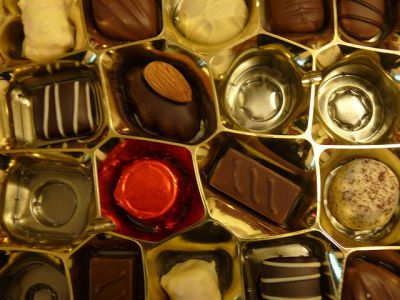
Stettler & Castrischer is a kind of chocolate business that happens when two proud Swiss sweet-makers decide to join forces and raise the bar together. The result is a display window full of temptation and a shelf full of awards, including multiple “Quality Certificate of the Year” titles. In other words, this is a place where cutting corners is simply not on the menu.
One half of the story begins with Paul Stettler, who founded his chocolate factory back in 1947. His creations quickly gained a reputation well beyond Switzerland, earning recognition at the 1954 Culinary Art Exhibition in Bern. Decades later, that same commitment to craftsmanship still defines the brand—especially in their signature Pavé de Genève, a rich, velvety chocolate that has become something of a local legend.
The other half comes from Castrischer, a pastry shop established in 1964 on Boulevard du Pont d’Arve. If Stettler mastered chocolate, Castrischer perfected comfort. Their Black Forest cake, layered, indulgent, and unapologetically generous, has been a Sunday-table regular for generations—equally capable of impressing grandparents and winning over the youngest dessert critics.
Bring the two together, and you get a place where tradition isn’t just preserved—it’s actively passed on, recipe by recipe, bite by bite. At Stettler & Castrischer, the secret ingredient isn’t really a secret at all: it’s time, patience, and a refusal to rush anything that’s meant to be enjoyed slowly...
One half of the story begins with Paul Stettler, who founded his chocolate factory back in 1947. His creations quickly gained a reputation well beyond Switzerland, earning recognition at the 1954 Culinary Art Exhibition in Bern. Decades later, that same commitment to craftsmanship still defines the brand—especially in their signature Pavé de Genève, a rich, velvety chocolate that has become something of a local legend.
The other half comes from Castrischer, a pastry shop established in 1964 on Boulevard du Pont d’Arve. If Stettler mastered chocolate, Castrischer perfected comfort. Their Black Forest cake, layered, indulgent, and unapologetically generous, has been a Sunday-table regular for generations—equally capable of impressing grandparents and winning over the youngest dessert critics.
Bring the two together, and you get a place where tradition isn’t just preserved—it’s actively passed on, recipe by recipe, bite by bite. At Stettler & Castrischer, the secret ingredient isn’t really a secret at all: it’s time, patience, and a refusal to rush anything that’s meant to be enjoyed slowly...
3) Rue du Rhône (Rhone Street)
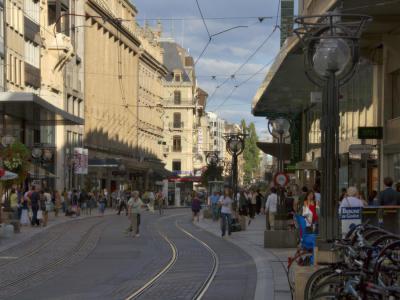
Rhone Street may look like it was designed for luxury from day one—but rewind a few centuries, and you’d be ankle-deep in lake water. Up until the 15th century, this stretch was still part of Lake Geneva’s shoreline. No boutiques, no polished windows—just horses, traders, and warehouses stacked with fodder. It wasn’t until the 18th century that the street began to resemble something urban, with further expansion in the 19th century pushing it into the elegant spine you see today.
Now, fast-forward to the present, and the mood has shifted just a little. This is Geneva in full display mode. Shop windows gleam like they’ve been rehearsing for this moment, and nearly every major luxury brand has claimed its spot along the street. Watches, fashion, jewelry, chocolates—you name it, it’s here, arranged with the kind of precision Geneva is famous for. Even if you’re not planning to buy anything, the visual parade alone is worth the stroll.
Give yourself some time here, not necessarily to shop but to resist shopping. That’s the real challenge. And when the temptation level peaks, take a breather by the Malbuisson Clock, where a small mechanical procession appears each hour, adding a touch of charm to all that polished elegance.
And, yes, even here, seasonal sales (with serious discounts) do happen. So, if luck is on your side, you might just leave with a small piece of Geneva—without entirely emptying your wallet...
Now, fast-forward to the present, and the mood has shifted just a little. This is Geneva in full display mode. Shop windows gleam like they’ve been rehearsing for this moment, and nearly every major luxury brand has claimed its spot along the street. Watches, fashion, jewelry, chocolates—you name it, it’s here, arranged with the kind of precision Geneva is famous for. Even if you’re not planning to buy anything, the visual parade alone is worth the stroll.
Give yourself some time here, not necessarily to shop but to resist shopping. That’s the real challenge. And when the temptation level peaks, take a breather by the Malbuisson Clock, where a small mechanical procession appears each hour, adding a touch of charm to all that polished elegance.
And, yes, even here, seasonal sales (with serious discounts) do happen. So, if luck is on your side, you might just leave with a small piece of Geneva—without entirely emptying your wallet...
4) Auer Chocolatier
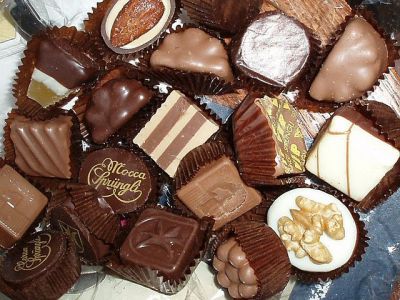
Since 1939, Auer Chocolatier has been quietly perfecting the art of chocolate—no fuss, just five generations of the Auer family doing what they do best: turning cocoa into something worth lingering over.
Once inside, you can’t help feeling that this shop is a meeting point for serious chocolate lovers—the kind who debate cacao percentages like fine wine, and who appreciate a well-balanced alcohol-cream filling as much as a classic praline. That said, if intense isn’t your style, there’s plenty here that leans smooth and mellow, from silky milk chocolates to an entire lineup of gentler sweets.
Now, if there’s one thing the Auers will gladly point you toward, it’s their signature creation: the “Pavé Glacé de Genève.” First crafted by Henri Auer in 1940, it’s less a chocolate and more a small, cocoa-dusted event. It sits among more than fifty house specialties, all made the traditional way, following recipes that have been passed down rather than reinvented. The result is consistency, precision, and the kind of flavour that doesn’t need explaining—it just quietly wins you over, one bite after another...
Once inside, you can’t help feeling that this shop is a meeting point for serious chocolate lovers—the kind who debate cacao percentages like fine wine, and who appreciate a well-balanced alcohol-cream filling as much as a classic praline. That said, if intense isn’t your style, there’s plenty here that leans smooth and mellow, from silky milk chocolates to an entire lineup of gentler sweets.
Now, if there’s one thing the Auers will gladly point you toward, it’s their signature creation: the “Pavé Glacé de Genève.” First crafted by Henri Auer in 1940, it’s less a chocolate and more a small, cocoa-dusted event. It sits among more than fifty house specialties, all made the traditional way, following recipes that have been passed down rather than reinvented. The result is consistency, precision, and the kind of flavour that doesn’t need explaining—it just quietly wins you over, one bite after another...
5) Chocolaterie ARN
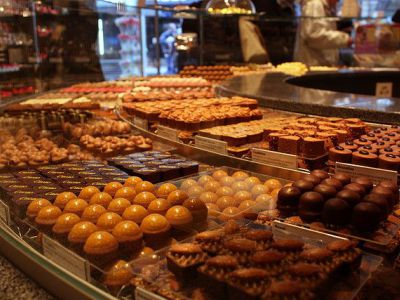
Family-run, three generations deep, and going strong since the 1950s, Chocolaterie ARN sits right on Bourg-de-Four Square—which, conveniently, doubles as a prime people-watching spot and a magnet for anyone who believes chocolate counts as a personality trait.
Inside, everything is homemade. And not in a casual “we tried our best” way, but in a “here’s a praline printed with Geneva views” kind of way. They even make “Geneva pavers,” which—mercifully—are much easier to bite into than the actual streets or the nearby Reformers Wall. The menu keeps going: truffles, pastries, caramels, hot chocolate that feels like a warm hug with ambition, and ice cream cups for when restraint has officially left the building.
You can settle into the tea room or claim a seat on the terrace, where the staff moves at impressive speed, juggling orders between indoors and outdoors like it’s an Olympic event. Friendly, efficient, and clearly well-practiced.
Open on Sundays, this is an easy stop after wandering through places like Maison Tavel—or, honestly, at any point your day starts to feel suspiciously low on chocolate...
Inside, everything is homemade. And not in a casual “we tried our best” way, but in a “here’s a praline printed with Geneva views” kind of way. They even make “Geneva pavers,” which—mercifully—are much easier to bite into than the actual streets or the nearby Reformers Wall. The menu keeps going: truffles, pastries, caramels, hot chocolate that feels like a warm hug with ambition, and ice cream cups for when restraint has officially left the building.
You can settle into the tea room or claim a seat on the terrace, where the staff moves at impressive speed, juggling orders between indoors and outdoors like it’s an Olympic event. Friendly, efficient, and clearly well-practiced.
Open on Sundays, this is an easy stop after wandering through places like Maison Tavel—or, honestly, at any point your day starts to feel suspiciously low on chocolate...
6) Place du Bourg-de-Four (Bourg-de-Four Square) (must see)
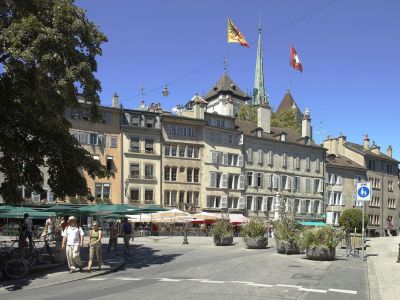
The name of this square—sounding official enough—is the French translation of the Latin term "Forum of the Burgundians.” This, in turn, is a nod to a long-gone royal presence—specifically the Castle of Gomdebaud, the Burgundian king, who died in 516. Back then, this was the place for markets and fairs. Livestock, trade, noise, negotiations... Today, it's still busy as a tourist magnet—with the cattle presently replaced by cappuccinos and camera phones...
Now, here’s where things get visually interesting. Unlike most classic European squares, having a wide-open space, the Burgundians' Forum refuses to play by the rules. It narrows in the middle like an hourglass, as if the city couldn’t quite decide how much space to afford it. On the north side, it is dominated by the rather serious-looking Palace of Justice, before the space splits into two streets—Fountain Street and Verdaine Street—with a Lutheran church quietly tucked in between, like it’s keeping an eye on both directions.
The south side looks more like a city square. The marble fountain at the center and surrounding buildings form a harmonious grouping, bordering a small, tree-lined promenade. Just beyond that, a tiny “placette” square—blink, and you might miss it—marks the start of Town Hall Street, and is part of the charm...
Standing by the fountain and turning east, you’ll spot the Palace of Justice again. Shift your gaze, and there’s Saint Peter’s Cathedral—Geneva’s largest church—watching over the square like it’s seen this whole transformation before. Around you, the edges are lined with gelaterias, cafés, bookshops, galleries, bars, and bistros. Quite a change for a place that once specialized in cattle...
Another point of interest is what's loosely translated as the “Chicken Coop Walkway,” which is already a clue. It’s a narrow staircase—67 steps—leading up toward Saint Peter's Cathedral. Just wide enough, as the saying goes, for two chickens to walk side by side. Humans manage, too, but it’s a close call...
Now, here’s where things get visually interesting. Unlike most classic European squares, having a wide-open space, the Burgundians' Forum refuses to play by the rules. It narrows in the middle like an hourglass, as if the city couldn’t quite decide how much space to afford it. On the north side, it is dominated by the rather serious-looking Palace of Justice, before the space splits into two streets—Fountain Street and Verdaine Street—with a Lutheran church quietly tucked in between, like it’s keeping an eye on both directions.
The south side looks more like a city square. The marble fountain at the center and surrounding buildings form a harmonious grouping, bordering a small, tree-lined promenade. Just beyond that, a tiny “placette” square—blink, and you might miss it—marks the start of Town Hall Street, and is part of the charm...
Standing by the fountain and turning east, you’ll spot the Palace of Justice again. Shift your gaze, and there’s Saint Peter’s Cathedral—Geneva’s largest church—watching over the square like it’s seen this whole transformation before. Around you, the edges are lined with gelaterias, cafés, bookshops, galleries, bars, and bistros. Quite a change for a place that once specialized in cattle...
Another point of interest is what's loosely translated as the “Chicken Coop Walkway,” which is already a clue. It’s a narrow staircase—67 steps—leading up toward Saint Peter's Cathedral. Just wide enough, as the saying goes, for two chickens to walk side by side. Humans manage, too, but it’s a close call...
7) Mur des Réformateurs (Reformation Wall) (must see)
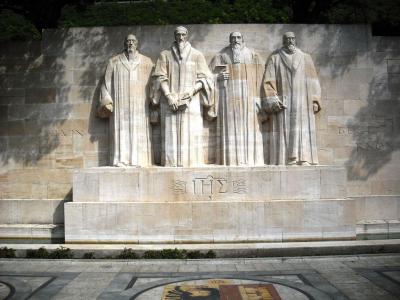
Inaugurated in 1909, the Reformation Wall celebrates the persons and events of the Protestant Reformation. Set within the grounds of the University of Geneva, this monument marks two milestones: 400 years since the birth of John Calvin and 350 years since he founded the university. Geneva clearly likes to celebrate with stone—and on a rather impressive scale...
The wall isn’t just placed here—it’s built straight into the old city fortifications, a subtle reminder that ideas once needed defending just as much as borders. The design came from a global competition—in total, 71 entries were submitted—before four Swiss architects teamed up to bring it to life. In a way, it was a kind of early-20th-century design showdown, only without reality-TV judges and more granite...
Because of its close connection to Protestantism, the individuals featured on the Wall most prominently are Calvinists, although key figures in other theologies are also included. Front and center, you’ll spot four towering figures—each over 16 feet tall— depicting William Farel, John Calvin, Theodore Beza, and John Knox. Robes on, small bibles in hand, expressions firmly set—they are not casual Sunday readers, indeed. Behind their calm poses lies a movement that reshaped half of Europe.
Flanking them on the left are three 10-foot figures, representing Frederick William of Brandenburg, William the Silent, and Gaspard de Coligny. On the one side, you'll find Roger Williams, Oliver Cromwell, and Stephen Bocskai. Different countries, different contexts—same big idea: reform, resistance, and a fair bit of controversy...
And running across the monument is the Latin motto that sums it all up: “After Darkness, Light.” Not exactly subtle, but then again, neither was the Reformation...
The wall isn’t just placed here—it’s built straight into the old city fortifications, a subtle reminder that ideas once needed defending just as much as borders. The design came from a global competition—in total, 71 entries were submitted—before four Swiss architects teamed up to bring it to life. In a way, it was a kind of early-20th-century design showdown, only without reality-TV judges and more granite...
Because of its close connection to Protestantism, the individuals featured on the Wall most prominently are Calvinists, although key figures in other theologies are also included. Front and center, you’ll spot four towering figures—each over 16 feet tall— depicting William Farel, John Calvin, Theodore Beza, and John Knox. Robes on, small bibles in hand, expressions firmly set—they are not casual Sunday readers, indeed. Behind their calm poses lies a movement that reshaped half of Europe.
Flanking them on the left are three 10-foot figures, representing Frederick William of Brandenburg, William the Silent, and Gaspard de Coligny. On the one side, you'll find Roger Williams, Oliver Cromwell, and Stephen Bocskai. Different countries, different contexts—same big idea: reform, resistance, and a fair bit of controversy...
And running across the monument is the Latin motto that sums it all up: “After Darkness, Light.” Not exactly subtle, but then again, neither was the Reformation...
8) Hôtel de Ville (Geneva Town Hall)
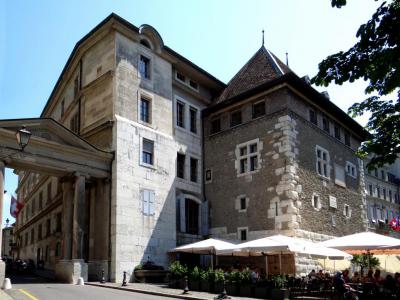
For more than five centuries, Geneva Town Hall has been a place where decisions were made, deals were struck, and, occasionally, history cleared its throat and spoke up. As the seat of government for both the Canton and the Republic of Geneva, this building has quietly hosted moments that reached far beyond the city’s borders.
In 1864, inside what’s known as the Alabama Room, representatives gathered to sign the very first Geneva Convention, which laid the groundwork for the International Committee of the Red Cross. Quite an achievement for one afternoon’s work...
A few years later, in 1872, the same building helped settle a long-standing, tense dispute between the United States and Great Britain through international arbitration. Geneva, it seems, has long had a talent for getting people to sit down and sort things out...
Architecturally, the Town Hall keeps things elegant but practical. The 16th-century structure unfolds over three levels in a restrained neoclassical style, centered around a spacious courtyard. But the real conversation piece is that ramp—an unusually grand, cobbled spiral built between 1555 and 1578, tucked inside a square tower. It was designed so that officials could ride their horses straight up to the upper floors, because apparently, stairs were beneath both high-ranking riders and their horses...
Today, you can follow the same path—only without a horse. Just your own two feet, echoing up the stones, step by step, in what might be the most dignified uphill walk in Geneva.
In 1864, inside what’s known as the Alabama Room, representatives gathered to sign the very first Geneva Convention, which laid the groundwork for the International Committee of the Red Cross. Quite an achievement for one afternoon’s work...
A few years later, in 1872, the same building helped settle a long-standing, tense dispute between the United States and Great Britain through international arbitration. Geneva, it seems, has long had a talent for getting people to sit down and sort things out...
Architecturally, the Town Hall keeps things elegant but practical. The 16th-century structure unfolds over three levels in a restrained neoclassical style, centered around a spacious courtyard. But the real conversation piece is that ramp—an unusually grand, cobbled spiral built between 1555 and 1578, tucked inside a square tower. It was designed so that officials could ride their horses straight up to the upper floors, because apparently, stairs were beneath both high-ranking riders and their horses...
Today, you can follow the same path—only without a horse. Just your own two feet, echoing up the stones, step by step, in what might be the most dignified uphill walk in Geneva.
9) Cathédrale de St. Pierre (Saint Peter Cathedral) (must see)
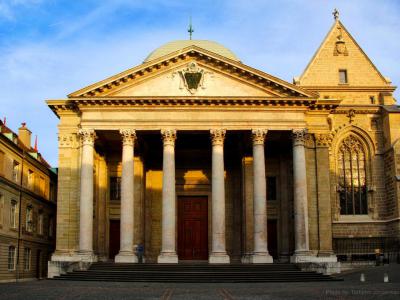
If you’re standing in front of Saint Peter’s Cathedral in Geneva, you’re practically looking at over 1,600 years of “let’s rebuild it one more time.” Indeed, this hilltop has hosted a cathedral and a bishop since the 4th century. The current building emerged in 1160 under Prince-Bishop Arducius de Faucigny, first in full Gothic style and then enduring multiple changes ever since.
As a result, what you see today is a bit of an architectural mash-up: a strict, almost Roman temple-style portico bolted onto a soaring Gothic structure with pointed arches and a tall, elegant window. In 1535, came John Calvin, who, let’s say, wasn’t very much for the décor. The Reformation swept through, and anything that looked remotely decorative was removed. Statues, altars, paintings—all gone. Survived only the pulpit, a few artworks, and Calvin’s famously simple taste...
Once inside, you feel the immediate effect: wide, calm, and refreshingly uncluttered. Chandeliers hang above rows of benches, light spills across pale stone, and along the aisles, you’ll notice tombstones marking the resting places of church figures from the 15th and 16th centuries. It’s less “ornate spectacle” and more “quiet confidence.”
Now, if you’re feeling energetic, the north tower will challenge you with 157 steps. Make it to the top, and Geneva spreads out beneath you in a full panoramic payoff. Back down at ground level, the cathedral doubles as a concert venue, while below your feet, the archaeological site in the crypt reveals traces of a 4th-century basilica. And don’t skip the 14th-century Chapel of the Maccabees either—it’s one of the few places where decoration made a successful comeback...
Look up as you leave, and you’ll spot the grand pipe organ above the entrance, shaped like a red-and-gold crown and very much ready to make itself heard. There’s even a second, smaller organ up front, just in case... Near the pulpit, Calvin’s triangular stool still lingers—minimalist, of course.
Stepping outside to the north, you’ll find the International Museum of the Reformation, open Tuesday through Sunday, from 10 to 5, while a short walk brings you to the Museum of Art and History, housing treasures like the Saint Peter altarpiece. And just when you think the cathedral is done, the tower clock strikes the hour—followed by a cheerful glockenspiel tune, occasionally the Swiss National Anthem, as if to remind you: this place does know how to make an entrance...
As a result, what you see today is a bit of an architectural mash-up: a strict, almost Roman temple-style portico bolted onto a soaring Gothic structure with pointed arches and a tall, elegant window. In 1535, came John Calvin, who, let’s say, wasn’t very much for the décor. The Reformation swept through, and anything that looked remotely decorative was removed. Statues, altars, paintings—all gone. Survived only the pulpit, a few artworks, and Calvin’s famously simple taste...
Once inside, you feel the immediate effect: wide, calm, and refreshingly uncluttered. Chandeliers hang above rows of benches, light spills across pale stone, and along the aisles, you’ll notice tombstones marking the resting places of church figures from the 15th and 16th centuries. It’s less “ornate spectacle” and more “quiet confidence.”
Now, if you’re feeling energetic, the north tower will challenge you with 157 steps. Make it to the top, and Geneva spreads out beneath you in a full panoramic payoff. Back down at ground level, the cathedral doubles as a concert venue, while below your feet, the archaeological site in the crypt reveals traces of a 4th-century basilica. And don’t skip the 14th-century Chapel of the Maccabees either—it’s one of the few places where decoration made a successful comeback...
Look up as you leave, and you’ll spot the grand pipe organ above the entrance, shaped like a red-and-gold crown and very much ready to make itself heard. There’s even a second, smaller organ up front, just in case... Near the pulpit, Calvin’s triangular stool still lingers—minimalist, of course.
Stepping outside to the north, you’ll find the International Museum of the Reformation, open Tuesday through Sunday, from 10 to 5, while a short walk brings you to the Museum of Art and History, housing treasures like the Saint Peter altarpiece. And just when you think the cathedral is done, the tower clock strikes the hour—followed by a cheerful glockenspiel tune, occasionally the Swiss National Anthem, as if to remind you: this place does know how to make an entrance...
10) Chocolats Rohr SA
Maison Rohr’s story begins on March 1, 1936, with a young man named Hans Rohr, who decided that owning a pastry shop sounded like a better life choice than working for someone else. So, he bought a modest little place in Carouge and started serving tea and cakes.
But here’s where things get interesting: at the end of each day, instead of quietly recycling yesterday’s pastries with a fresh smile, Hans packed them up and sent them off to hospitals, asylums, and the Salvation Army. His logic was refreshingly simple—better to feed people than the trash bin. A business model powered by conscience… and very fresh éclairs.
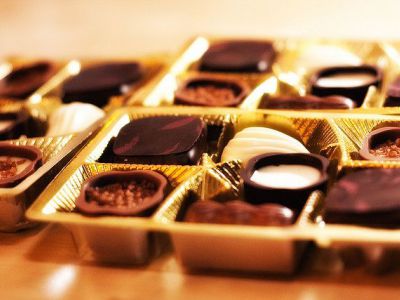
Success followed, as it tends to do when your pastries don’t come with a side of guilt. By 1950, Hans had opened a new shop in Geneva’s Molard Square and began experimenting with chocolate. Two years later, he made a bold decision: less cupcake, more cocoa. Chocolate, after all, was not only more profitable—it had drama, depth, and just a hint of obsession. Slowly but surely, the pastry chef stepped aside, and the chocolatier took centre stage.
In 1968, the baton passed to his son, Henri Rohr, who leaned into darker, more intense flavours. And then came his most famous creation: the “Geneva dustbins.” Not exactly a name that screams luxury, but apparently, irony sells—because they were a hit. Alongside them came Champagne marc truffles, pralines, Florins, and other indulgences that sounded far more elegant on a menu.
Today, the third generation—Roger Rohr and Nicole Rohr—keeps the family tradition alive, guided by a simple motto: make it beautiful, make it good, and make it chocolate. They’ve added artisanal ice cream to the mix, because why stop at one form of happiness? Now producing around 50 tonnes of handmade chocolate each year, Maison Rohr remains a proud member of the Trade and Quality association.
So, if you find yourself here, do the sensible thing: try the “Geneva dustbins.” It’s probably the only time in your life you’ll be encouraged to eat something called a dustbin—and enjoy every bite of it...
But here’s where things get interesting: at the end of each day, instead of quietly recycling yesterday’s pastries with a fresh smile, Hans packed them up and sent them off to hospitals, asylums, and the Salvation Army. His logic was refreshingly simple—better to feed people than the trash bin. A business model powered by conscience… and very fresh éclairs.
Success followed, as it tends to do when your pastries don’t come with a side of guilt. By 1950, Hans had opened a new shop in Geneva’s Molard Square and began experimenting with chocolate. Two years later, he made a bold decision: less cupcake, more cocoa. Chocolate, after all, was not only more profitable—it had drama, depth, and just a hint of obsession. Slowly but surely, the pastry chef stepped aside, and the chocolatier took centre stage.
In 1968, the baton passed to his son, Henri Rohr, who leaned into darker, more intense flavours. And then came his most famous creation: the “Geneva dustbins.” Not exactly a name that screams luxury, but apparently, irony sells—because they were a hit. Alongside them came Champagne marc truffles, pralines, Florins, and other indulgences that sounded far more elegant on a menu.
Today, the third generation—Roger Rohr and Nicole Rohr—keeps the family tradition alive, guided by a simple motto: make it beautiful, make it good, and make it chocolate. They’ve added artisanal ice cream to the mix, because why stop at one form of happiness? Now producing around 50 tonnes of handmade chocolate each year, Maison Rohr remains a proud member of the Trade and Quality association.
So, if you find yourself here, do the sensible thing: try the “Geneva dustbins.” It’s probably the only time in your life you’ll be encouraged to eat something called a dustbin—and enjoy every bite of it...
11) Place du Molard (Molard Square and Tower)
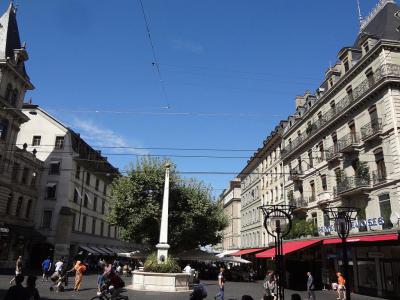
Molard Square—once grandly labelled Geneva’s “economic lung, urban matrix, and political arena”—has clearly never suffered from low self-esteem. And to be fair, it earned the title. This has been one of the city’s busiest commercial corners since at least the 16th century, though its résumé stretches back even further.
The place first appears in records in 1271 as a port, back when the lake came closer, and trade meant boats, not boutiques. The name “Molard” comes from Latin, meaning a raised embankment—essentially a sturdy bit of earth built to keep the water in check. By 1309, a proper market hall was up and running, turning the area into a lively customs and trading hub.
Roll ahead a few centuries, and Molard was the place where Geneva got things done. Warehouses, money changers, printers, notaries, inns—if it involved business, paperwork, or a handshake, it was happening here. Add in a fish and poultry market by 1690, and you’ve got the full sensory experience: commerce, conversation, and probably a strong hint of fresh produce...
Right at the centre stands the Molard Tower, also known as the Clock Tower—a leftover piece of the medieval defenses that once guarded this busy lakeside port. In 1906, it received a decorative upgrade: a painted frieze rescued from a demolished house in Rolle. Look closely, and you’ll spot coats of arms tied to the Reformation, along with a sculpture titled “Geneva, City of Refuge.” Now, here’s where things get curious—some swear the male figure on the sculpture looks suspiciously like Vladimir Lenin. Coincidence? Most likely. But it does give the tower a slightly unexpected cameo.
Today, Molard has traded sacks of grain for shopping bags. Small boutiques sit alongside global brands, with souvenir shops ready to ensure you don’t leave empty-handed. And twice a week, the square briefly returns to its market roots, transforming into an open-air flea market. So, whether you’re here to browse, bargain, or just people-watch, Molard Square continues doing what it has always done best—keeping Geneva in motion.
The place first appears in records in 1271 as a port, back when the lake came closer, and trade meant boats, not boutiques. The name “Molard” comes from Latin, meaning a raised embankment—essentially a sturdy bit of earth built to keep the water in check. By 1309, a proper market hall was up and running, turning the area into a lively customs and trading hub.
Roll ahead a few centuries, and Molard was the place where Geneva got things done. Warehouses, money changers, printers, notaries, inns—if it involved business, paperwork, or a handshake, it was happening here. Add in a fish and poultry market by 1690, and you’ve got the full sensory experience: commerce, conversation, and probably a strong hint of fresh produce...
Right at the centre stands the Molard Tower, also known as the Clock Tower—a leftover piece of the medieval defenses that once guarded this busy lakeside port. In 1906, it received a decorative upgrade: a painted frieze rescued from a demolished house in Rolle. Look closely, and you’ll spot coats of arms tied to the Reformation, along with a sculpture titled “Geneva, City of Refuge.” Now, here’s where things get curious—some swear the male figure on the sculpture looks suspiciously like Vladimir Lenin. Coincidence? Most likely. But it does give the tower a slightly unexpected cameo.
Today, Molard has traded sacks of grain for shopping bags. Small boutiques sit alongside global brands, with souvenir shops ready to ensure you don’t leave empty-handed. And twice a week, the square briefly returns to its market roots, transforming into an open-air flea market. So, whether you’re here to browse, bargain, or just people-watch, Molard Square continues doing what it has always done best—keeping Geneva in motion.
12) Jardin Anglais (English Garden)
If Geneva ever decided to relax its famously precise personality, it would probably do it here—inside the English Garden. Spread across more than 25,000 square meters, this leafy escape has been offering a softer, greener side of the city since 1855.
Its design borrows from the easygoing charm of English landscape gardens—less rigid lines, more gentle curves—though the construction of the nearby Mont Blanc Bridge, in 1863, nudged the park into its current trapezoidal shape. Indeed, even nature, it appears, has to compromise with urban planning...
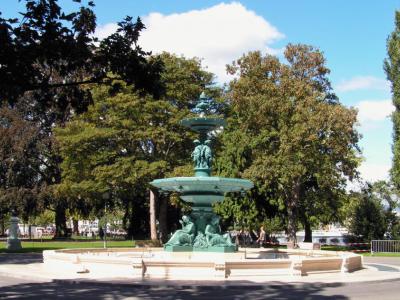
Wander in, and you’ll quickly notice this isn’t just a park but a carefully curated outdoor gallery. Front and center stands the Flower Clock, quietly ticking away with thousands of seasonal blooms, a floral tribute to the city’s watchmaking legacy. Not far off, the National Monument marks Geneva’s ties with the Swiss Confederation, while the Four Seasons Fountain adds a touch of bronze elegance. Scattered pavilions offer places to pause, and if you feel like doing as the locals do, the café known as “The Gossips” is ideal for a coffee, a chat, or a bit of people-watching disguised as deep conversation...
But the garden also carries stories that aren’t quite so light. Near the lakeside, you’ll come across the Genève boat, tied to a dramatic moment in 1898. It was here that Empress Elisabeth of Austria, better known as Sissi, was brought after being fatally attacked by an anarchist. Despite efforts to save her, she died shortly after. Today, the boat has taken on a far more peaceful role, operating as a charitable space offering meals and support—proof that even the darkest chapters can give way to something quietly generous.
Look around a little more, and you’ll spot tributes to Swiss artists, including painters Alexandre Calame and François Diday, as well as sculptor Auguste de Niederhäusern. And above it all, quite literally, stands the garden’s oldest residents: a ginkgo tree from 1863, a purple beech planted in 1895, along with cedar, sequoia, magnolia, and chestnut trees—all thriving under eco-friendly care that skips the chemicals.
So, slow your pace here. Let the paths curve where they want, follow the shade, and take in the details—because in a city known for precision, this is where Geneva allows itself to breathe a little.
Its design borrows from the easygoing charm of English landscape gardens—less rigid lines, more gentle curves—though the construction of the nearby Mont Blanc Bridge, in 1863, nudged the park into its current trapezoidal shape. Indeed, even nature, it appears, has to compromise with urban planning...
Wander in, and you’ll quickly notice this isn’t just a park but a carefully curated outdoor gallery. Front and center stands the Flower Clock, quietly ticking away with thousands of seasonal blooms, a floral tribute to the city’s watchmaking legacy. Not far off, the National Monument marks Geneva’s ties with the Swiss Confederation, while the Four Seasons Fountain adds a touch of bronze elegance. Scattered pavilions offer places to pause, and if you feel like doing as the locals do, the café known as “The Gossips” is ideal for a coffee, a chat, or a bit of people-watching disguised as deep conversation...
But the garden also carries stories that aren’t quite so light. Near the lakeside, you’ll come across the Genève boat, tied to a dramatic moment in 1898. It was here that Empress Elisabeth of Austria, better known as Sissi, was brought after being fatally attacked by an anarchist. Despite efforts to save her, she died shortly after. Today, the boat has taken on a far more peaceful role, operating as a charitable space offering meals and support—proof that even the darkest chapters can give way to something quietly generous.
Look around a little more, and you’ll spot tributes to Swiss artists, including painters Alexandre Calame and François Diday, as well as sculptor Auguste de Niederhäusern. And above it all, quite literally, stands the garden’s oldest residents: a ginkgo tree from 1863, a purple beech planted in 1895, along with cedar, sequoia, magnolia, and chestnut trees—all thriving under eco-friendly care that skips the chemicals.
So, slow your pace here. Let the paths curve where they want, follow the shade, and take in the details—because in a city known for precision, this is where Geneva allows itself to breathe a little.
13) Horloge Fleurie (Flower Clock) (must see)
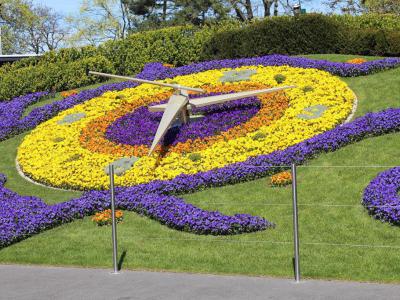
In a city where time isn’t just measured but practically worshiped, Geneva decided to take things one step further—and make time bloom. In 1955, right on the western edge of the English Garden, the now-famous Flower Clock was unveiled—a tribute not only to Swiss watchmaking, but also to a quiet appreciation for nature.
At first glance, it looks like a garden with commitment issues. Look again, and you’ll notice it’s a fully functioning clock—just one with better landscaping... The dial stretches about five meters across, and its second hand alone measures a confident 2.5 meters, sweeping across a face made of roughly 6,500 flowers and shrubs. For years, it proudly held the title of the world’s largest floral clock, until 2005, when a larger, 15-meter version appeared in Tehran and quietly stole the crown. Even so, Geneva’s version remains the original showstopper.
Indeed, this isn’t just a pretty face—it actually works... reliably and continuously so. For over half a century, the mechanism beneath the petals has kept ticking without interruption. No breaks, no days off, no “back in five minutes” sign. Just steady, Swiss-level precision.
And while the timing stays exact, the look never does. The clock is in constant transformation, as different flowers bloom and fade throughout the year. Each season brings a new arrangement, a fresh palette, a subtle redesign. It’s timekeeping, but with wardrobe changes.
And in keeping with Switzerland’s reputation for doing things properly, the entire display is maintained in an environmentally friendly way—no harsh chemicals, just careful cultivation.
So, as you stand here, watching the second hand glide over petals instead of numbers, take a moment. In Geneva, even time finds a way to slow down… just enough for you to notice it.
At first glance, it looks like a garden with commitment issues. Look again, and you’ll notice it’s a fully functioning clock—just one with better landscaping... The dial stretches about five meters across, and its second hand alone measures a confident 2.5 meters, sweeping across a face made of roughly 6,500 flowers and shrubs. For years, it proudly held the title of the world’s largest floral clock, until 2005, when a larger, 15-meter version appeared in Tehran and quietly stole the crown. Even so, Geneva’s version remains the original showstopper.
Indeed, this isn’t just a pretty face—it actually works... reliably and continuously so. For over half a century, the mechanism beneath the petals has kept ticking without interruption. No breaks, no days off, no “back in five minutes” sign. Just steady, Swiss-level precision.
And while the timing stays exact, the look never does. The clock is in constant transformation, as different flowers bloom and fade throughout the year. Each season brings a new arrangement, a fresh palette, a subtle redesign. It’s timekeeping, but with wardrobe changes.
And in keeping with Switzerland’s reputation for doing things properly, the entire display is maintained in an environmentally friendly way—no harsh chemicals, just careful cultivation.
So, as you stand here, watching the second hand glide over petals instead of numbers, take a moment. In Geneva, even time finds a way to slow down… just enough for you to notice it.
14) Pont du Mont Blanc (Mont Blanc Bridge)
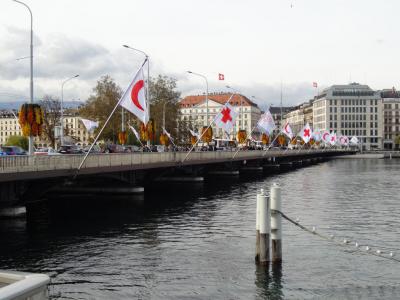
The Mont-Blanc Bridge stands as the farthest upstream bridge along the Rhône River, positioned right at its exit point from Lake Geneva, essentially serving as the endpoint of the lake. This bridge connects two major thoroughfares within the city, namely rue du Mont-Blanc on the right bank and Quai Gustave-Ador on the left bank. It tends to experience heavy traffic congestion, especially during peak hours, but is typically less crowded at other times.
In December 2001, an underground pedestrian crossing was inaugurated beneath the first arch of the bridge on the right bank, allowing pedestrians to travel between quai des Bergues and quai du Mont-Blanc without navigating the road junction. This passage consists primarily of a unique steel floating pontoon.
The Mont Blanc Bridge features fixed flagpoles on both sides throughout its length, and on Swiss National Day, the flags representing the 26 cantons of Switzerland can be seen flying proudly.
This bridge holds special significance as a prime location for witnessing the fireworks displays during the Geneva festivals and serves as a route for the Lake Parade. It offers stunning panoramic vistas of Lake Geneva and the iconic Water Jet.
In December 2001, an underground pedestrian crossing was inaugurated beneath the first arch of the bridge on the right bank, allowing pedestrians to travel between quai des Bergues and quai du Mont-Blanc without navigating the road junction. This passage consists primarily of a unique steel floating pontoon.
The Mont Blanc Bridge features fixed flagpoles on both sides throughout its length, and on Swiss National Day, the flags representing the 26 cantons of Switzerland can be seen flying proudly.
This bridge holds special significance as a prime location for witnessing the fireworks displays during the Geneva festivals and serves as a route for the Lake Parade. It offers stunning panoramic vistas of Lake Geneva and the iconic Water Jet.
15) Brunswick Monument
The Brunswick Monument was constructed in the mid-19th century as a memorial to Charles II, Duke of Brunswick. Charles II was a European nobleman and military leader who, upon his death in 1873, left his fortune to the city of Geneva with the condition that a monument be built in his honor.
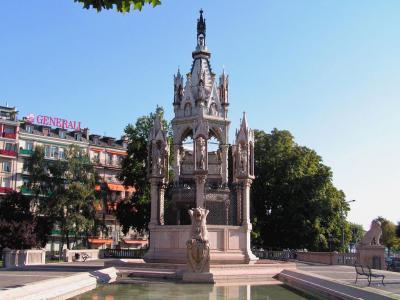
The monument is an impressive neoclassical structure that stands out with its grandeur and architectural beauty. It was designed by architect Antoine-Gaspard Balthazar and constructed between 1874 and 1879.
The Brunswick Monument is situated on the Quai du Mont-Blanc, near the shores of Lake Geneva. Its location offers stunning views of the lake and the surrounding area, making it a popular spot for both tourists and locals.
The monument itself consists of a large, imposing mausoleum containing the tomb of Charles II. The mausoleum is adorned with intricate carvings, sculptures, and decorative elements, all crafted from Carrara marble. At the top of the mausoleum, there is a statue of Charles II, dressed in Roman attire, holding a sword and shield.
The monument is surrounded by a beautiful park with well-maintained gardens, providing a peaceful and picturesque setting for visitors. The park is an excellent place for a leisurely stroll or a relaxing afternoon by the lake.
The monument is an impressive neoclassical structure that stands out with its grandeur and architectural beauty. It was designed by architect Antoine-Gaspard Balthazar and constructed between 1874 and 1879.
The Brunswick Monument is situated on the Quai du Mont-Blanc, near the shores of Lake Geneva. Its location offers stunning views of the lake and the surrounding area, making it a popular spot for both tourists and locals.
The monument itself consists of a large, imposing mausoleum containing the tomb of Charles II. The mausoleum is adorned with intricate carvings, sculptures, and decorative elements, all crafted from Carrara marble. At the top of the mausoleum, there is a statue of Charles II, dressed in Roman attire, holding a sword and shield.
The monument is surrounded by a beautiful park with well-maintained gardens, providing a peaceful and picturesque setting for visitors. The park is an excellent place for a leisurely stroll or a relaxing afternoon by the lake.
16) Broken Chair Sculpture (must see)
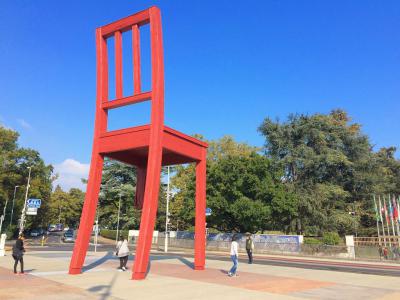
Few monuments or statues are as evocative as the Broken Chair of Geneva. It is a wooden sculpture of a chair with a broken left leg. It is nearly 40 feet high, weighs 11,000 pounds, and stands in the Nations Square (Place des Nations) in Geneva. It is meant as a symbol for peace and a protest against the use of land mines and cluster bombs.
Paul Vermeulen, director of Handicap International, Switzerland, came up with the idea for an anti-land mine art project. The project was intended to get nations to sign the Ottawa Treaty of 1997. The chair was planned as a three-month exhibit. Except for removal to allow renovation of the square in 2005, it has stood in place to this day.
The Broken Chair was designed by Swiss artist Daniel Berset and built by carpenter Louis Geneve. The Ottawa Treaty was ultimately signed by 162 nations. There are 34 hold-outs. Among the hold-outs are the USA, Russia and China.
Paul Vermeulen, director of Handicap International, Switzerland, came up with the idea for an anti-land mine art project. The project was intended to get nations to sign the Ottawa Treaty of 1997. The chair was planned as a three-month exhibit. Except for removal to allow renovation of the square in 2005, it has stood in place to this day.
The Broken Chair was designed by Swiss artist Daniel Berset and built by carpenter Louis Geneve. The Ottawa Treaty was ultimately signed by 162 nations. There are 34 hold-outs. Among the hold-outs are the USA, Russia and China.
