Custom Walk in Copenhagen, Denmark by gem2105_d747ab created on 2026-07-02
Guide Location: Denmark » Copenhagen
Guide Type: Custom Walk
# of Sights: 13
Tour Duration: 3 Hour(s)
Travel Distance: 6.2 Km or 3.9 Miles
Share Key: 5GJXY
Guide Type: Custom Walk
# of Sights: 13
Tour Duration: 3 Hour(s)
Travel Distance: 6.2 Km or 3.9 Miles
Share Key: 5GJXY
How It Works
Please retrieve this walk in the GPSmyCity app. Once done, the app will guide you from one tour stop to the next as if you had a personal tour guide. If you created the walk on this website or come to the page via a link, please follow the instructions below to retrieve the walk in the app.
Retrieve This Walk in App
Step 1. Download the app "GPSmyCity: Walks in 1K+ Cities" on Apple App Store or Google Play Store.



Step 2. In the GPSmyCity app, download(or launch) the guide "Copenhagen Map and Walking Tours".
Step 3. Tap the menu button located at upper right corner of the "Walks" screen and select "Retrieve custom walk". Enter the share key: 5GJXY

1) City Hall (Radhus) (must see)
Copenhagen City Hall, designed by famous architect Martin Nyrop and inspired by Siena's Town Hall in Italy, stands prominently on City Hall Square. The hall was inaugurated in 1905, showcasing the pinnacle of national romanticism in Denmark.
The building is marked by a striking facade decorated in rich ornamental style, featuring among other elements the roof statues of polar bears symbolizing the giant Danish protectorate of Greenland. A golden statue of Bishop Absalon, the city's founder, presides over the central balcony, while the clock tower, reaching 105.6 meters, marks one of Copenhagen's tallest structures. The tower clock, a notable feature, chimes daily at noon and during New Year's Eve at midnight.
The City Hall's architectural complex comprises three aligned buildings connected by longitudinal structures. The hall is linked via tunnels to the nearby buildings, ensuring a blend of historical elegance and modern functionality.
The interior layout includes meeting rooms, a wedding hall, and a banquet hall used by the municipality. At its heart lies the Town Hall Garden, open to the public during summer months and accessible from Hans Christian Andersen Boulevard. The front entrance boasts a glass mosaic depicting Copenhagen's coat of arms, commemorating the city's historical privileges and the City Hall's inauguration.
Inside the building, looking down on the inner grand hall (which is open to the public) are the marble busts of four celebrated locals: fairy-tale writer Hans Christian Andersen, sculptor Bertel Thorvaldsen, physicist Niels Bohr, and the building's architect Martin Nyrop. Downstairs are the national archives dating back to the 1270s.
As you leave, check out the amazing World Clock (opposite the info desk), the supreme mechanical astronomical chronometer in terms of function and precision. Built between 1943 and 1955, its displays include lunar and solar eclipses, positions of the stellar bodies, and a perpetual calendar, in addition to the time across the world's time zones. The clock's fastest gear completes a revolution every ten seconds, while the slowest – every 25,753 years!
Tip:
The main hall is free to enter, whereas to go up the tower you'll have to pay a small fee.
They escort you in groups at 11 am / 12:30 pm and 2 pm on weekdays and noon on Saturdays. You can join a guided English tour at 1 pm (on weekdays) and 10 am (on Saturdays).
As the building is central, the views are great and the viewing platform is square and large.
The building is marked by a striking facade decorated in rich ornamental style, featuring among other elements the roof statues of polar bears symbolizing the giant Danish protectorate of Greenland. A golden statue of Bishop Absalon, the city's founder, presides over the central balcony, while the clock tower, reaching 105.6 meters, marks one of Copenhagen's tallest structures. The tower clock, a notable feature, chimes daily at noon and during New Year's Eve at midnight.
The City Hall's architectural complex comprises three aligned buildings connected by longitudinal structures. The hall is linked via tunnels to the nearby buildings, ensuring a blend of historical elegance and modern functionality.
The interior layout includes meeting rooms, a wedding hall, and a banquet hall used by the municipality. At its heart lies the Town Hall Garden, open to the public during summer months and accessible from Hans Christian Andersen Boulevard. The front entrance boasts a glass mosaic depicting Copenhagen's coat of arms, commemorating the city's historical privileges and the City Hall's inauguration.
Inside the building, looking down on the inner grand hall (which is open to the public) are the marble busts of four celebrated locals: fairy-tale writer Hans Christian Andersen, sculptor Bertel Thorvaldsen, physicist Niels Bohr, and the building's architect Martin Nyrop. Downstairs are the national archives dating back to the 1270s.
As you leave, check out the amazing World Clock (opposite the info desk), the supreme mechanical astronomical chronometer in terms of function and precision. Built between 1943 and 1955, its displays include lunar and solar eclipses, positions of the stellar bodies, and a perpetual calendar, in addition to the time across the world's time zones. The clock's fastest gear completes a revolution every ten seconds, while the slowest – every 25,753 years!
Tip:
The main hall is free to enter, whereas to go up the tower you'll have to pay a small fee.
They escort you in groups at 11 am / 12:30 pm and 2 pm on weekdays and noon on Saturdays. You can join a guided English tour at 1 pm (on weekdays) and 10 am (on Saturdays).
As the building is central, the views are great and the viewing platform is square and large.
2) LEGO
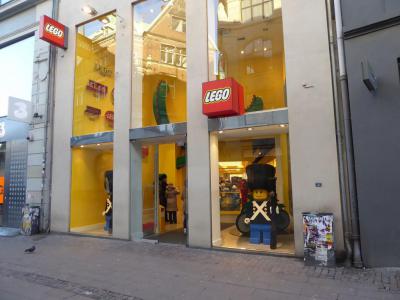
Who has not at some point played with LEGO toy building bricks as a child? The popular Danish plastic toy was introduced in 1947 by founder Ole Kirk Christiansen. The name LEGO comes from the Danish words leg godt, meaning play well.
The original toy building bricks were just the start. Later, in 1969, came Duplo building bricks, a series of simple blocks twice as big as the original and aimed at young children. LEGO also produces plastic figures, merchandise and themed sets often with a macho theme, like Star Wars, Indiana Jones, Toy Story, Batman, Cars, Pirates of the Caribbean, Avatar, Spider Man and so on.
LEGO has a massive following and subculture of movies, games, magazines, clothing line and of course theme parks. The original LEGOLAND is located in the town of Billund in Denmark. LEGO toys come in many variations with a starting price as little as $5. If you are Copenhagen, you should not miss the opportunity to visit the world of LEGO in its brand new flagship store.
The original toy building bricks were just the start. Later, in 1969, came Duplo building bricks, a series of simple blocks twice as big as the original and aimed at young children. LEGO also produces plastic figures, merchandise and themed sets often with a macho theme, like Star Wars, Indiana Jones, Toy Story, Batman, Cars, Pirates of the Caribbean, Avatar, Spider Man and so on.
LEGO has a massive following and subculture of movies, games, magazines, clothing line and of course theme parks. The original LEGOLAND is located in the town of Billund in Denmark. LEGO toys come in many variations with a starting price as little as $5. If you are Copenhagen, you should not miss the opportunity to visit the world of LEGO in its brand new flagship store.
3) Stroget Pedestrian Street (must see)
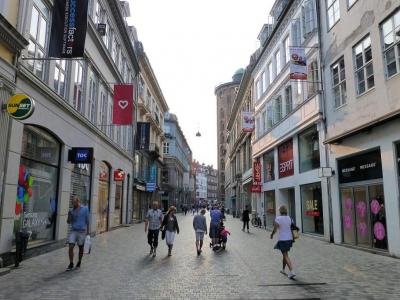
Stroget, a pedestrian thoroughfare in the heart of Copenhagen, is renowned as one of Europe's longest shopping streets, extending over 1.1 kilometers. Initially known as Ruten until the late 19th century, the street has been a fashionable hub in the Danish capital since its layout was established in 1728 following a major fire. The architecture along Stroget mainly dates from the late 19th and early 20th centuries, with the oldest building erected in 1616.
Stroget is renowned for its extensive shopping opportunities. It hosts a wide range of shops, from international brands to local boutiques, offering fashion, design, jewelry, and more. It's a shopper's paradise and attracts both locals and tourists alike.
Throughout the day, especially during weekends and holidays, Stroget comes alive with street performers, musicians, and entertainers. This adds to the lively atmosphere and creates a festive mood.
Numerous cafés, restaurants, and bars line Stroget, offering a variety of cuisines and refreshments. It's a great place to stop for a meal or a coffee break while soaking in the bustling ambiance.
Stroget is renowned for its extensive shopping opportunities. It hosts a wide range of shops, from international brands to local boutiques, offering fashion, design, jewelry, and more. It's a shopper's paradise and attracts both locals and tourists alike.
Throughout the day, especially during weekends and holidays, Stroget comes alive with street performers, musicians, and entertainers. This adds to the lively atmosphere and creates a festive mood.
Numerous cafés, restaurants, and bars line Stroget, offering a variety of cuisines and refreshments. It's a great place to stop for a meal or a coffee break while soaking in the bustling ambiance.
4) Guinness World Records Museum
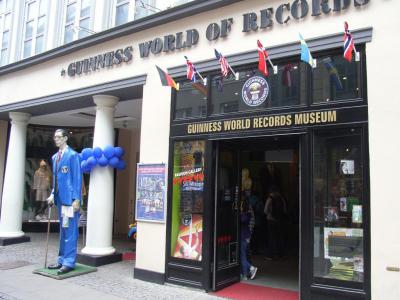
A fascinating array of records in science, nature, music, art and sports is on display at the massive Guinness World Records Museum. This museum is spread over 1000 square meters and has an impressive record of curiosities such as the most fascinating toy world, the fastest car and the tallest man.
Apart from going through records of interesting facts such as the metal eating man, man with the longest moustache and the most outstanding machines and people in the world, you can also test your cycling skills and driving skills here. The museum offers fun test drive for tourists on powerful cycles and fast cars.
Guinness World Records Museum is located at the famous Ostergade in Copenhagen. Do not miss out the exhibits of the smallest woman and tallest man here. You will certainly enjoy a memorable time browsing through the impressive man-made structural record database.
Visit this unique museum to experience the heaviest, loudest, fastest, shortest, tallest and other outlandish accomplishments. Just browse around the exhibits in the field of science, space, sports, entertainment, architecture, eating, technology and human body achievements to learn about record breaking events. This is just a fraction of the categories you will find at this interesting museum.
Apart from going through records of interesting facts such as the metal eating man, man with the longest moustache and the most outstanding machines and people in the world, you can also test your cycling skills and driving skills here. The museum offers fun test drive for tourists on powerful cycles and fast cars.
Guinness World Records Museum is located at the famous Ostergade in Copenhagen. Do not miss out the exhibits of the smallest woman and tallest man here. You will certainly enjoy a memorable time browsing through the impressive man-made structural record database.
Visit this unique museum to experience the heaviest, loudest, fastest, shortest, tallest and other outlandish accomplishments. Just browse around the exhibits in the field of science, space, sports, entertainment, architecture, eating, technology and human body achievements to learn about record breaking events. This is just a fraction of the categories you will find at this interesting museum.
5) New Harbor (Nyhavn) (must see)
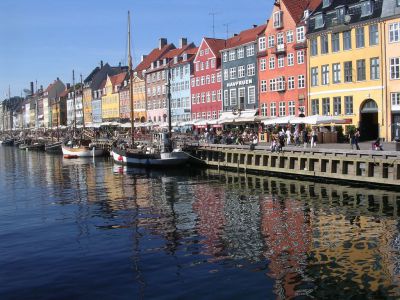
New Harbor-with all its bright colors, wooden ships, and a dash of nautical nostalgia-is by far Copenhagen’s most photogenic waterfront. Here, 17th-century Danish townhouses line up like they’re auditioning for a postcard.
Built between 1670 and 1675 under the direction of King Christian V-using a workforce of Danish soldiers and captured Swedish war prisoners-New Harbor was designed to boost trade with the Dutch. In reality, however, it quickly became Copenhagen’s go-to district for beer, brawls, and brothels. Trade and trouble? Why not both?
In his turn, the famed Danish author Hans Christian Andersen also called New Harbor home for a whopping 18 years. He first moved into Number 20, the red house, in 1834. Then, he shuffled over to Number 18 and eventually spent his longest stretch lounging around Number 67 from 1848 to 1865. Basically, he was living that prime canal-side real estate life before it was cool.
After World War II, the harbor’s hustle slowed to a crawl, and the area nearly faded into obscurity. But the 1960s gave it a second act. In 1977, the Veteran Ship and Museum Harbor dropped anchor, and by 1980, the quay was pedestrianized-aka, turned into the selfie paradise and café haven we know today.
Take a stroll now, and you’ll spot all sorts of restored museum ships moored along the canal-each one with enough maritime drama to fill a Netflix series. At the far end of the harbor sits the Memorial Anchor, quietly honoring Danish sailors lost in World War II.
Wander a bit further south, and things take a modern turn. Jazz clubs, tattoo parlors, trendy cafés, and enough open-faced sandwiches to keep your Instagram busy for hours.
Tip:
If you're on a tight budget or just pretending to be Danish, skip the overpriced bar scene. Grab a beer or coffee from a convenience store, plop yourself down at the quayside, and soak in the view. For something classier, head to the Royal Playhouse at the far end-great drinks, decent prices, and panoramic views that will make your camera weep with joy.
And hey, if your feet are screaming for mercy, you can always hop on a boat tour right at the harbor entrance. One hour of effortless sightseeing and zero walking required.
Built between 1670 and 1675 under the direction of King Christian V-using a workforce of Danish soldiers and captured Swedish war prisoners-New Harbor was designed to boost trade with the Dutch. In reality, however, it quickly became Copenhagen’s go-to district for beer, brawls, and brothels. Trade and trouble? Why not both?
In his turn, the famed Danish author Hans Christian Andersen also called New Harbor home for a whopping 18 years. He first moved into Number 20, the red house, in 1834. Then, he shuffled over to Number 18 and eventually spent his longest stretch lounging around Number 67 from 1848 to 1865. Basically, he was living that prime canal-side real estate life before it was cool.
After World War II, the harbor’s hustle slowed to a crawl, and the area nearly faded into obscurity. But the 1960s gave it a second act. In 1977, the Veteran Ship and Museum Harbor dropped anchor, and by 1980, the quay was pedestrianized-aka, turned into the selfie paradise and café haven we know today.
Take a stroll now, and you’ll spot all sorts of restored museum ships moored along the canal-each one with enough maritime drama to fill a Netflix series. At the far end of the harbor sits the Memorial Anchor, quietly honoring Danish sailors lost in World War II.
Wander a bit further south, and things take a modern turn. Jazz clubs, tattoo parlors, trendy cafés, and enough open-faced sandwiches to keep your Instagram busy for hours.
Tip:
If you're on a tight budget or just pretending to be Danish, skip the overpriced bar scene. Grab a beer or coffee from a convenience store, plop yourself down at the quayside, and soak in the view. For something classier, head to the Royal Playhouse at the far end-great drinks, decent prices, and panoramic views that will make your camera weep with joy.
And hey, if your feet are screaming for mercy, you can always hop on a boat tour right at the harbor entrance. One hour of effortless sightseeing and zero walking required.
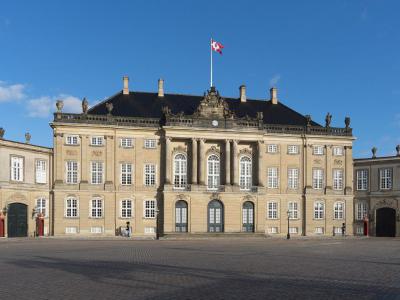
6) Amalienborg Palace and Museum (must see)
Amalienborg Palace is the official residence of the Danish Royal Family. This palace complex features four rococo palaces constructed between 1750 and 1758. All are built around the octagonal square where you will find King Frederik’s equestrian statue. King Frederik ruled Norway and Denmark between 1723 and 1766 and was instrumental in the construction of Frederiksstad of which Amalienborg palace is a part.
Land for the palace was acquired by King Christian IV who ruled Norway and Denmark between 1577 and 1648. Queen Sophie Amalie, King Frederik III’s consort constructed the first palace in this waterfront area between 1669 and 1673. This palace was destroyed by fire in 1689.
King Frederik IV constructed the second royal palace at Amalienborg during his rule between 1671 and 1730. This was a two-storied small summer residence that featured a charming French garden. It was named Sophie Amalienborg.
In the 1980s the palace was restored as residence for the Crown Prince, storage facilities for the Queen’s Reference Library and a museum for the Royal House of Glücksborg. The museum features private royal apartments from 1863 to 1947 including original fittings and furnishings.
King Frederik V, in his effort to create a separate city outside Copenhagen, constructed Frederik’s City or Frederiksstad that featured exclusive homes for the noble families and aristocrats. All buildings were in Baroque style. Later on, additions were made to these buildings in rococo architectural style. Make sure you include Amalienborg Palace in your itinerary when you visit Copenhagen.
Why You Should Visit:
Considered as one of the best examples of the Rococo architecture style, this complex is beautifully preserved and feels more intimate than its European counterparts.
Tip:
Arrive at midday for the changing of the guard, an interesting display that takes around 10 minutes.
Land for the palace was acquired by King Christian IV who ruled Norway and Denmark between 1577 and 1648. Queen Sophie Amalie, King Frederik III’s consort constructed the first palace in this waterfront area between 1669 and 1673. This palace was destroyed by fire in 1689.
King Frederik IV constructed the second royal palace at Amalienborg during his rule between 1671 and 1730. This was a two-storied small summer residence that featured a charming French garden. It was named Sophie Amalienborg.
In the 1980s the palace was restored as residence for the Crown Prince, storage facilities for the Queen’s Reference Library and a museum for the Royal House of Glücksborg. The museum features private royal apartments from 1863 to 1947 including original fittings and furnishings.
King Frederik V, in his effort to create a separate city outside Copenhagen, constructed Frederik’s City or Frederiksstad that featured exclusive homes for the noble families and aristocrats. All buildings were in Baroque style. Later on, additions were made to these buildings in rococo architectural style. Make sure you include Amalienborg Palace in your itinerary when you visit Copenhagen.
Why You Should Visit:
Considered as one of the best examples of the Rococo architecture style, this complex is beautifully preserved and feels more intimate than its European counterparts.
Tip:
Arrive at midday for the changing of the guard, an interesting display that takes around 10 minutes.
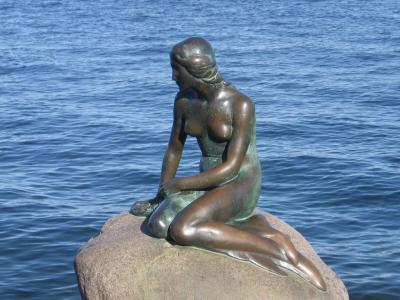
7) Little Mermaid (must see)
On your trip to Copenhagen, take time off to visit the harbor where you will find the Little Mermaid statue. This statue is the icon of Copenhagen and is visited by tourists from across the world. The unimposing statue is based on one of Hans Christian Anderson’s fairy tales.
After enjoying a ballet on this fairy tale at the Royal Theatre, Carlsberg founder’s son Carl Jacobsen commissioned the statue in 1909. It was modeled after none other than Ellen Price, the prima ballerina (well, partly, at least).
The statue is made of bronze and was painstakingly created by expert sculptor, Edvard Eriksen. Unveiled in 1913, the statue has Ellen Price’s head and Eline Eriksen, the sculptor’s wife’s body.
The Little Mermaid statue surprisingly weighs only around 175 kg and is 1.25 meters tall. Its small size is a surprise for first-time visitors who expect to see something grand and huge.
Why You Should Visit:
To watch people fall into the water as they try to get a photo with the statue (this happens more often than you'd think).
Tip:
The perfect spot for taking a picture is from the promenade overlooking the statue to the left. It's a great photo op, not only of the mermaid but the Copenhagen harbour behind.
After enjoying a ballet on this fairy tale at the Royal Theatre, Carlsberg founder’s son Carl Jacobsen commissioned the statue in 1909. It was modeled after none other than Ellen Price, the prima ballerina (well, partly, at least).
The statue is made of bronze and was painstakingly created by expert sculptor, Edvard Eriksen. Unveiled in 1913, the statue has Ellen Price’s head and Eline Eriksen, the sculptor’s wife’s body.
The Little Mermaid statue surprisingly weighs only around 175 kg and is 1.25 meters tall. Its small size is a surprise for first-time visitors who expect to see something grand and huge.
Why You Should Visit:
To watch people fall into the water as they try to get a photo with the statue (this happens more often than you'd think).
Tip:
The perfect spot for taking a picture is from the promenade overlooking the statue to the left. It's a great photo op, not only of the mermaid but the Copenhagen harbour behind.
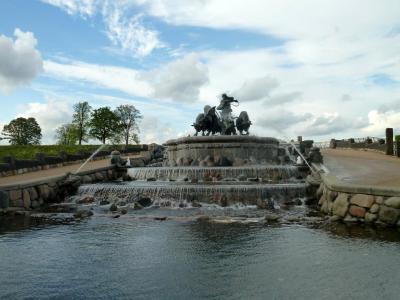
8) Gefion Fountain
The Gefion Fountain, located on the harbourfront in Copenhagen, is a striking and elaborate fountain that celebrates a blend of art and mythology. This monumental fountain features a dynamic sculpture of the Norse goddess Gefjon driving a group of animals. These figures are not just any animals, but her four sons whom she transformed into oxen to perform a tremendous mythological feat.
The mythology behind the fountain is rooted in ancient Norse legends that describe the creation of Zealand, the island on which Copenhagen is situated. This tale is vividly recounted in several old texts, including the Prose Edda and Heimskringla by the 13th-century Icelandic historian Snorri Sturluson, as well as in Ragnarsdrápa, a 9th-century Skaldic poem.
According to the legend, the Swedish king Gylfi promised Gefjon as much land as she could plow in one night. To accomplish this task, Gefjon transformed her four sons into powerful oxen. The land they plowed was then thrown into the Danish sea, forming the island of Zealand. The void left by the removed earth became a lake, known in ancient texts as Lögrinn or Leginum, which is identified by Snorri Sturluson as Lake Mälaren, near Stockholm.
Interestingly, despite Snorri's specific identification of Lake Mälaren, tourist information typically connects the story with Lake Vänern, Sweden's largest lake. This is largely due to perceived similarities in size and shape between Zealand and Vänern, suggesting a different geographical interpretation from Snorri's historical accounts.
The Gefion Fountain not only serves as a key historical landmark but also as a symbol of Copenhagen’s rich cultural heritage intertwined with Norse mythology. Its dramatic sculptures and the powerful story they depict attract numerous visitors and provide insight into the mythological origins of the region.
The mythology behind the fountain is rooted in ancient Norse legends that describe the creation of Zealand, the island on which Copenhagen is situated. This tale is vividly recounted in several old texts, including the Prose Edda and Heimskringla by the 13th-century Icelandic historian Snorri Sturluson, as well as in Ragnarsdrápa, a 9th-century Skaldic poem.
According to the legend, the Swedish king Gylfi promised Gefjon as much land as she could plow in one night. To accomplish this task, Gefjon transformed her four sons into powerful oxen. The land they plowed was then thrown into the Danish sea, forming the island of Zealand. The void left by the removed earth became a lake, known in ancient texts as Lögrinn or Leginum, which is identified by Snorri Sturluson as Lake Mälaren, near Stockholm.
Interestingly, despite Snorri's specific identification of Lake Mälaren, tourist information typically connects the story with Lake Vänern, Sweden's largest lake. This is largely due to perceived similarities in size and shape between Zealand and Vänern, suggesting a different geographical interpretation from Snorri's historical accounts.
The Gefion Fountain not only serves as a key historical landmark but also as a symbol of Copenhagen’s rich cultural heritage intertwined with Norse mythology. Its dramatic sculptures and the powerful story they depict attract numerous visitors and provide insight into the mythological origins of the region.
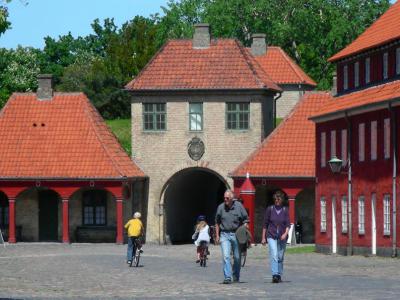
9) Kastellet (must see)
One of the most impressive and well-preserved fortifications in Northern Europe, Kastellet, as it is called, has bastions at the corners and is designed in the form of a pentagram. As you enter its grounds, you will find a number of buildings including a windmill and a church. This historic site which also serves as a public park is frequented by locals and tourists alike.
It was in 1626 that King Christian IV started construction of Kastellet. Economic constraints forced him to drop his grand plans of building a large castle here. King Frederik III, his successor continued with the construction which was later extended by Henrik Ruse, the Dutch engineer after the Swedish siege between 1658 and 1660.
Kastellet was built as an effort by Copenhagen to defend itself against England in the 1807 Battle of Copenhagen. A.P. Moller and Chastine McKinney Mollers General Fund made possible a complete renovation of Kastellet between 1989 and 1999. Currently, it is owned by the Danish Defence Ministry and the area is used by Defence Intelligence, Danish Home Guard, Chief of Staff, Royal Garrison’s Library and the Defence Judge Advocate Corps.
Locals visit Kastellet to enjoy a pleasant walk on a sunny day. Tourists visit this fortification for its rich heritage and children love to play around with the birds and animals here.
Why You Should Visit:
The high walls of the fortress offer a lovely view of the harbor, and the fact that half of it is still a working base means it's kept in tip top shape.
Very pleasant area to take a quiet stroll or run, and with a charming windmill to boot!
Tip:
Can get windy on a cold day so do cover up.
It was in 1626 that King Christian IV started construction of Kastellet. Economic constraints forced him to drop his grand plans of building a large castle here. King Frederik III, his successor continued with the construction which was later extended by Henrik Ruse, the Dutch engineer after the Swedish siege between 1658 and 1660.
Kastellet was built as an effort by Copenhagen to defend itself against England in the 1807 Battle of Copenhagen. A.P. Moller and Chastine McKinney Mollers General Fund made possible a complete renovation of Kastellet between 1989 and 1999. Currently, it is owned by the Danish Defence Ministry and the area is used by Defence Intelligence, Danish Home Guard, Chief of Staff, Royal Garrison’s Library and the Defence Judge Advocate Corps.
Locals visit Kastellet to enjoy a pleasant walk on a sunny day. Tourists visit this fortification for its rich heritage and children love to play around with the birds and animals here.
Why You Should Visit:
The high walls of the fortress offer a lovely view of the harbor, and the fact that half of it is still a working base means it's kept in tip top shape.
Very pleasant area to take a quiet stroll or run, and with a charming windmill to boot!
Tip:
Can get windy on a cold day so do cover up.
10) Frederick's Church (must see)
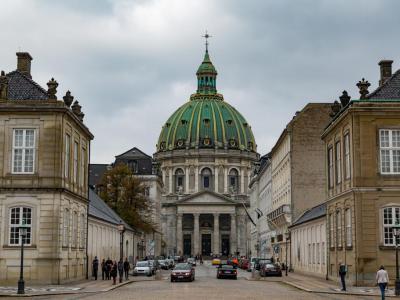
Also known as the Marble Church, Frederick’s Church is one of the most popular tourist attractions in Copenhagen – especially for its dome which is the largest in Scandinavia. This dome spans 31 meters and is supported by 12 columns.
Along with all other structures in Frederiksstaden district, the church was built to commemorate a member of the House of Oldenburg’s 300 years coronation jubilee celebrations. It was designed and erected by architect Nicolai Eigtved in 1740. King Frederick V laid the foundation stone in 1749. Eigtved died in 1754 due to which construction was hit by budget constraints and had to be stalled.
Johann Friedrich Struensee discarded the original plan in 1770 and the church remained incomplete for a while in spite of many efforts. For the next 150 years, the edifice remained in ruins. Carl Frederik Tietgen eventually got prominent architect Ferdinand Meldahl to design the church in its final form and financed its construction. Due to financial restrictions, the original plans for the church to be built almost entirely from marble were discarded, and instead, Meldahl opted for construction to be done with limestone. The church was finally opened to the public on August 19, 1894.
A series of statues of prominent theologians and ecclesiastical figures, including one of the eminent Danish philosopher Kierkegaard (who, incidentally, had become very critical of the established church by the end of his life), encircles the grounds of the building.
Why You Should Visit:
This church really has the wow factor; as beautiful inside as it is out (also, rather unique and unusual as it is circular inside).
Tip:
The dome can be visited – for a small fee – every day at 1pm sharp in summer but only at the weekend (Sat/Sun) in winter. Very impressive view from above!
Along with all other structures in Frederiksstaden district, the church was built to commemorate a member of the House of Oldenburg’s 300 years coronation jubilee celebrations. It was designed and erected by architect Nicolai Eigtved in 1740. King Frederick V laid the foundation stone in 1749. Eigtved died in 1754 due to which construction was hit by budget constraints and had to be stalled.
Johann Friedrich Struensee discarded the original plan in 1770 and the church remained incomplete for a while in spite of many efforts. For the next 150 years, the edifice remained in ruins. Carl Frederik Tietgen eventually got prominent architect Ferdinand Meldahl to design the church in its final form and financed its construction. Due to financial restrictions, the original plans for the church to be built almost entirely from marble were discarded, and instead, Meldahl opted for construction to be done with limestone. The church was finally opened to the public on August 19, 1894.
A series of statues of prominent theologians and ecclesiastical figures, including one of the eminent Danish philosopher Kierkegaard (who, incidentally, had become very critical of the established church by the end of his life), encircles the grounds of the building.
Why You Should Visit:
This church really has the wow factor; as beautiful inside as it is out (also, rather unique and unusual as it is circular inside).
Tip:
The dome can be visited – for a small fee – every day at 1pm sharp in summer but only at the weekend (Sat/Sun) in winter. Very impressive view from above!
11) King's New Square (Kongens Nytorv)
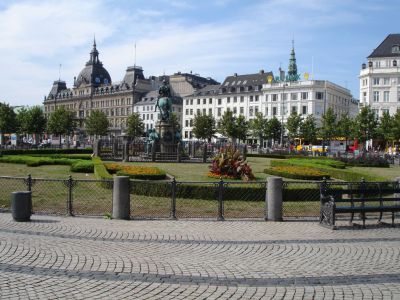
King's New Square is a central hub in Copenhagen, noted for its significant size and historical prominence. Established in 1670 by King Christian V, the square was part of an extensive urban development aimed at expanding and fortifying the city.
Originally a chaotic site with muddy terrain outside the city's fortifications, the area was transformed into a planned, cobblestoned space inspired by royal squares in Paris. It served both military and social functions – first, as a military alarm square and then as a venue for royal ceremonies and public gatherings.
Dominating the square, at its center, is the equestrian statue of King Christian V. The oldest of its kind in Scandinavia, first crafted in 1688 and recast in bronze in 1939, it exudes a historical aura.
Surrounding the square are prominent buildings such as the Royal Danish Theater, Charlottenborg Palace (now housing the Royal Danish Academy of Fine Arts), the Thott Palace (currently the French Embassy), and notable commercial establishments like the Hotel D'Angleterre and the Magasin du Nord department store.
Also, check out an old kiosk and telephone stand from 1913. Built in Baroque Revival style and featuring a copper-clad roof and hand-carved ornamentation, it once hosted Copenhagen's first public telephone service and now serves as a café with outdoor seating.
Today, the square is not only a historical site but also a vibrant public space that hosts outdoor exhibitions and ice skating in winter and is a traditional spot for high school graduation celebrations.
Originally a chaotic site with muddy terrain outside the city's fortifications, the area was transformed into a planned, cobblestoned space inspired by royal squares in Paris. It served both military and social functions – first, as a military alarm square and then as a venue for royal ceremonies and public gatherings.
Dominating the square, at its center, is the equestrian statue of King Christian V. The oldest of its kind in Scandinavia, first crafted in 1688 and recast in bronze in 1939, it exudes a historical aura.
Surrounding the square are prominent buildings such as the Royal Danish Theater, Charlottenborg Palace (now housing the Royal Danish Academy of Fine Arts), the Thott Palace (currently the French Embassy), and notable commercial establishments like the Hotel D'Angleterre and the Magasin du Nord department store.
Also, check out an old kiosk and telephone stand from 1913. Built in Baroque Revival style and featuring a copper-clad roof and hand-carved ornamentation, it once hosted Copenhagen's first public telephone service and now serves as a café with outdoor seating.
Today, the square is not only a historical site but also a vibrant public space that hosts outdoor exhibitions and ice skating in winter and is a traditional spot for high school graduation celebrations.
12) Stork Fountain
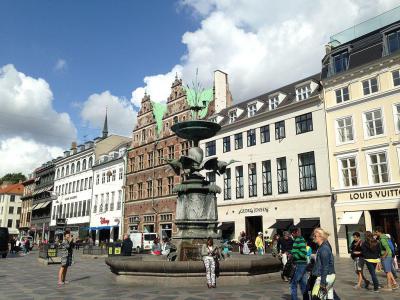
Copenhagen has no shortage of statues, but when it comes to fountains, it isn’t exactly “drowning” in them. This is why the Stork Fountain on Amager Square stands out like a bird in a bathhouse.
This eye-catching splash zone is set in stone-Italian granite, to be exact-surrounded by dignified old buildings, one of which has been standing there quietly since as far back as the year 1600.
Now, the fountain wasn’t just plopped there randomly. It was a silvery little gift to Crown Prince Frederik and Crown Princess Louise for their 25th wedding anniversary. Unveiled in 1894, it is basically the royal equivalent of a really, really fancy anniversary card. With plumbing...
The design features three storks caught mid-flap, as if about to deliver... babies, if you believe Hans Christian Andersen’s iconic tale from 1838. Around their feet: decorative aquatic plants and cheeky bronze frogs perched on dock leaves, doing their best impression of water cannons.
For years, locals whispered that the birds might be, in fact, herons-scandal! But in 2008, the Danish Ornithological Society set the record straight: definitely storks. Case closed.
Another peculiar fact associated with this place is the midwife dance. Yes, that’s the thing. Since 1950, newly-minted Danish midwives have been celebrating their graduation by dancing, wading, and sometimes full-on splashing in the fountain. If you want to see it with your own eyes, show up in mid-summer, claim a table at a nearby café with a good view, and prepare for a delightfully soggy spectacle. Champagne optional.
This eye-catching splash zone is set in stone-Italian granite, to be exact-surrounded by dignified old buildings, one of which has been standing there quietly since as far back as the year 1600.
Now, the fountain wasn’t just plopped there randomly. It was a silvery little gift to Crown Prince Frederik and Crown Princess Louise for their 25th wedding anniversary. Unveiled in 1894, it is basically the royal equivalent of a really, really fancy anniversary card. With plumbing...
The design features three storks caught mid-flap, as if about to deliver... babies, if you believe Hans Christian Andersen’s iconic tale from 1838. Around their feet: decorative aquatic plants and cheeky bronze frogs perched on dock leaves, doing their best impression of water cannons.
For years, locals whispered that the birds might be, in fact, herons-scandal! But in 2008, the Danish Ornithological Society set the record straight: definitely storks. Case closed.
Another peculiar fact associated with this place is the midwife dance. Yes, that’s the thing. Since 1950, newly-minted Danish midwives have been celebrating their graduation by dancing, wading, and sometimes full-on splashing in the fountain. If you want to see it with your own eyes, show up in mid-summer, claim a table at a nearby café with a good view, and prepare for a delightfully soggy spectacle. Champagne optional.
13) Round Tower (Rundetarn) (must see)
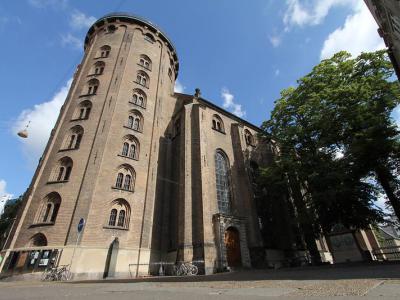
The Round Tower – Copenhagen’s answer to the question: “What if we made a giant architectural cinnamon roll… but for science?” This 17th-century spiral of brick in the heart of the Danish capital was “cooked up” by King Christian IV as part of his grand architectural project, originally intended as an observatory for the astronomer genius Tycho Brahe.
Back in the 1600s, Europe was getting really into astronomy. The Round Tower came with its own academic library, the Trinitatis Church, and a university chapel. The spiral ramp was so strong and wide that one could easily ride a horse or even drive a carriage up and down it. Apparently, some kings did actually, including Russian Tsar Peter the Great. Because stairs are for the common folk...
Now, if you're a fan of Hans Christian Andersen, you're gonna love this. The Round Tower pops up in “The Tinderbox.” That’s the one where a soldier meets a witch, climbs into a hollow tree, and finds three coin-filled vaults guarded by increasingly horrifying dogs. The biggest of which has eyes “the size of the Round Tower.” Subtle product placement, Hans...
Today, tourists from all corners of the Earth climb its 7.5-turn helical corridor just to snap that perfect panoramic selfie of the city. Because it’s not just a tower but a slow-motion ascent into Danish history, science, and surprisingly chic art installations.
As you wind your way up, your first pitstop is a gallery space featuring contemporary art that occasionally makes you question your understanding of gravity. Then it’s on to the bell loft – because what's a tower without a good ol’ bell room? And finally, the key attraction: the observatory itself, complete with a 360-degree view of Copenhagen. There’s even a thick glass platform near the top – for the brave souls who enjoy standing on transparent floors and peering into the abyss.
Back in the 1600s, Europe was getting really into astronomy. The Round Tower came with its own academic library, the Trinitatis Church, and a university chapel. The spiral ramp was so strong and wide that one could easily ride a horse or even drive a carriage up and down it. Apparently, some kings did actually, including Russian Tsar Peter the Great. Because stairs are for the common folk...
Now, if you're a fan of Hans Christian Andersen, you're gonna love this. The Round Tower pops up in “The Tinderbox.” That’s the one where a soldier meets a witch, climbs into a hollow tree, and finds three coin-filled vaults guarded by increasingly horrifying dogs. The biggest of which has eyes “the size of the Round Tower.” Subtle product placement, Hans...
Today, tourists from all corners of the Earth climb its 7.5-turn helical corridor just to snap that perfect panoramic selfie of the city. Because it’s not just a tower but a slow-motion ascent into Danish history, science, and surprisingly chic art installations.
As you wind your way up, your first pitstop is a gallery space featuring contemporary art that occasionally makes you question your understanding of gravity. Then it’s on to the bell loft – because what's a tower without a good ol’ bell room? And finally, the key attraction: the observatory itself, complete with a 360-degree view of Copenhagen. There’s even a thick glass platform near the top – for the brave souls who enjoy standing on transparent floors and peering into the abyss.
