Custom Walk in Basel, Switzerland by weimer_meghan8237 created on 2026-07-12
Guide Location: Switzerland » Basel
Guide Type: Custom Walk
# of Sights: 14
Tour Duration: 2 Hour(s)
Travel Distance: 2.2 Km or 1.4 Miles
Share Key: B7WPH
Guide Type: Custom Walk
# of Sights: 14
Tour Duration: 2 Hour(s)
Travel Distance: 2.2 Km or 1.4 Miles
Share Key: B7WPH
How It Works
Please retrieve this walk in the GPSmyCity app. Once done, the app will guide you from one tour stop to the next as if you had a personal tour guide. If you created the walk on this website or come to the page via a link, please follow the instructions below to retrieve the walk in the app.
Retrieve This Walk in App
Step 1. Download the app "GPSmyCity: Walks in 1K+ Cities" on Apple App Store or Google Play Store.



Step 2. In the GPSmyCity app, download(or launch) the guide "Basel Map and Walking Tours".
Step 3. Tap the menu button located at upper right corner of the "Walks" screen and select "Retrieve custom walk". Enter the share key: B7WPH
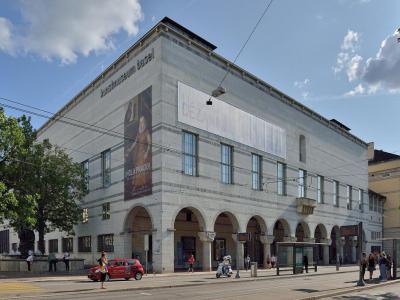
1) Kunstmuseum Basel (Fine Arts Museum) (must see)
Basel's Fine Arts Museum is home to the world's oldest public museum. It began when Basel and the University of Basel purchased a collection of Hans Holbein's works in 1661. The collection has been available to the public since 1671.
The collection features artworks from the 15th century to the present. The Fine Arts Museum features the world's most extensive collection of art by the illustrious Holbein family.
Renaissance works include art by Mathias Grunewald, Martn Schonguer, and Hans Baldung. Notable art from the 17th and 18th centuries includes work by Rembrandt and Peter Paul Rubens. Works from the 19th century include valuable paintings by Edouard Manet, Claude Monet, Paul Cezanne, and Paul Gaugin. The museum also houses works by Vincent van Gogh.
20th-century artists include Pablo Picasso, Paul Klee, and Marc Chagall. More contemporary art on display represents Andy Warhol, Francesco Clemente, and Rosemarie Trockel.
In 1939, the Fine Arts Museum acquired numerous artworks created by German-Jewish artists. The Nazi regime considered these works to be degenerate and had planned to destroy them. These artworks are on display in the museum today.
The collection features artworks from the 15th century to the present. The Fine Arts Museum features the world's most extensive collection of art by the illustrious Holbein family.
Renaissance works include art by Mathias Grunewald, Martn Schonguer, and Hans Baldung. Notable art from the 17th and 18th centuries includes work by Rembrandt and Peter Paul Rubens. Works from the 19th century include valuable paintings by Edouard Manet, Claude Monet, Paul Cezanne, and Paul Gaugin. The museum also houses works by Vincent van Gogh.
20th-century artists include Pablo Picasso, Paul Klee, and Marc Chagall. More contemporary art on display represents Andy Warhol, Francesco Clemente, and Rosemarie Trockel.
In 1939, the Fine Arts Museum acquired numerous artworks created by German-Jewish artists. The Nazi regime considered these works to be degenerate and had planned to destroy them. These artworks are on display in the museum today.
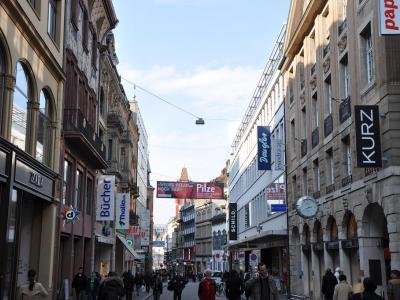
2) Freie Strasse (Freie Street)
Freie Street is Basel's main shopping street. During the Middle Ages, merchants could transport goods on this street duty-free, and the street became known as "Free Street."
Today's shoppers will find fashion boutiques and upscale designers like Louis Vuitton. Luxury jewelry brands such as Cartier entice window shoppers and those looking to splurge. If you want a quality Swiss watch, you'll find it on Free Street. This pedestrian-only street also features a variety of restaurants.
In addition to Swiss brands, Free Street also features international brands. Shoppers will find Apple, Starbucks, The Body Shop, H&M, and Zara along Free Street.
Free Street features attractive cobblestone paving and beautiful architecture. In addition, free Street is festively decorated with an abundance of Christmas lights during the holidays.
Today's shoppers will find fashion boutiques and upscale designers like Louis Vuitton. Luxury jewelry brands such as Cartier entice window shoppers and those looking to splurge. If you want a quality Swiss watch, you'll find it on Free Street. This pedestrian-only street also features a variety of restaurants.
In addition to Swiss brands, Free Street also features international brands. Shoppers will find Apple, Starbucks, The Body Shop, H&M, and Zara along Free Street.
Free Street features attractive cobblestone paving and beautiful architecture. In addition, free Street is festively decorated with an abundance of Christmas lights during the holidays.

3) Bucherer
Located on the prestigious Freie Strasse, Bucherer Basel is a haven for connoisseurs of luxury and precision. Since its founding by Carl-Friedrich Bucherer in 1888, this iconic brand has grown into one of the world’s most respected names in fine watches and jewelry. The boutique beautifully blends timeless craftsmanship with modern elegance, offering an extensive selection of high-quality watches, exquisite jewelry, and certified pre-owned timepieces.
Bucherer Basel presents a curated collection of exclusive brands, including Rolex, IWC Schaffhausen, H. Moser & Cie, Chopard, and the house’s own Carl F. Bucherer. Whether you’re drawn to the enduring charm of a Rolex, the intricate design of a Chopard necklace, or the avant-garde style of H. Moser & Cie, there’s something extraordinary for every taste and occasion. With approximately 50,000 prestigious items in its catalog, Bucherer continues to lead the way in luxury retail.
From selecting a dazzling engagement ring to choosing a historic timepiece, Bucherer Basel caters to the most discerning clients. Their experienced consultants are dedicated to offering personalized guidance, ensuring that every piece reflects your unique personality and style.
As an Official Rolex Retailer, Bucherer Basel guarantees the authenticity and superior craftsmanship of every Rolex watch. Supported by Rolex-trained watchmakers, the boutique provides meticulous servicing to uphold the brand’s uncompromising standards. Whether it’s detailed inspections or precise movement servicing, every step ensures that your Rolex remains a timeless heirloom.
Whether you’re investing in a new piece or maintaining a treasured one, Bucherer Basel delivers a seamless experience of tradition, innovation, and unparalleled expertise. Visit this exceptional boutique to immerse yourself in the pinnacle of luxury and precision craftsmanship.
Bucherer Basel presents a curated collection of exclusive brands, including Rolex, IWC Schaffhausen, H. Moser & Cie, Chopard, and the house’s own Carl F. Bucherer. Whether you’re drawn to the enduring charm of a Rolex, the intricate design of a Chopard necklace, or the avant-garde style of H. Moser & Cie, there’s something extraordinary for every taste and occasion. With approximately 50,000 prestigious items in its catalog, Bucherer continues to lead the way in luxury retail.
From selecting a dazzling engagement ring to choosing a historic timepiece, Bucherer Basel caters to the most discerning clients. Their experienced consultants are dedicated to offering personalized guidance, ensuring that every piece reflects your unique personality and style.
As an Official Rolex Retailer, Bucherer Basel guarantees the authenticity and superior craftsmanship of every Rolex watch. Supported by Rolex-trained watchmakers, the boutique provides meticulous servicing to uphold the brand’s uncompromising standards. Whether it’s detailed inspections or precise movement servicing, every step ensures that your Rolex remains a timeless heirloom.
Whether you’re investing in a new piece or maintaining a treasured one, Bucherer Basel delivers a seamless experience of tradition, innovation, and unparalleled expertise. Visit this exceptional boutique to immerse yourself in the pinnacle of luxury and precision craftsmanship.
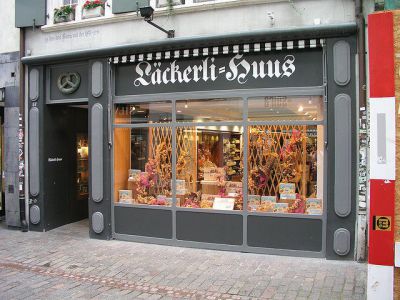
4) Läckerli Huus
Lackerli Huus is a celebrated Swiss confectionery and baked goods manufacturer with over a century of tradition. Famous for its Original Basler Lackerli, this iconic establishment has been delighting locals and visitors alike with Basel’s finest delicacies since its founding in 1903.
The Basler Lackerli, a quintessential Basel specialty, is baked using a closely guarded recipe featuring honey, hazelnuts, almonds, candied orange and lemon peel, and a medley of aromatic spices. Beyond the Lackerli, the Lackerli Huus offers an array of mouthwatering treats, including Rahmtafeli, Gelee Russe, Flutes de Bale, high-quality chocolates, and artisan biscuits, all crafted with care and passion.
Originally established to cater to local cravings, the company began shipping its delights nationwide before opening its first store in 1950. By 1954, Lackerli Huus had gained recognition at the Mustermesse Basel fair. In the 1970s, the company moved into its flagship location on Gerbergasse, becoming a landmark for sweet seekers in Basel. Today, the Frenkendorf facility, designed to reflect the company’s tradition of biscuit tins and golden packaging, houses production, storage, and offices.
For anyone exploring Basel, a visit to the Lackerli Huus is essential. The Gerbergasse store offers the largest selection of their exquisite creations, presented in elegantly designed tins and packages that make perfect gifts. With its blend of tradition, craftsmanship, and innovation, Lackerli Huus is more than a shop-it's a true Basel institution.
The Basler Lackerli, a quintessential Basel specialty, is baked using a closely guarded recipe featuring honey, hazelnuts, almonds, candied orange and lemon peel, and a medley of aromatic spices. Beyond the Lackerli, the Lackerli Huus offers an array of mouthwatering treats, including Rahmtafeli, Gelee Russe, Flutes de Bale, high-quality chocolates, and artisan biscuits, all crafted with care and passion.
Originally established to cater to local cravings, the company began shipping its delights nationwide before opening its first store in 1950. By 1954, Lackerli Huus had gained recognition at the Mustermesse Basel fair. In the 1970s, the company moved into its flagship location on Gerbergasse, becoming a landmark for sweet seekers in Basel. Today, the Frenkendorf facility, designed to reflect the company’s tradition of biscuit tins and golden packaging, houses production, storage, and offices.
For anyone exploring Basel, a visit to the Lackerli Huus is essential. The Gerbergasse store offers the largest selection of their exquisite creations, presented in elegantly designed tins and packages that make perfect gifts. With its blend of tradition, craftsmanship, and innovation, Lackerli Huus is more than a shop-it's a true Basel institution.
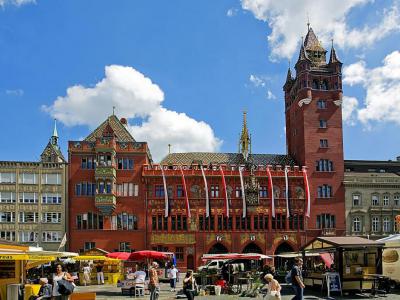
5) Rathaus (Town Hall) (must see)
Town Hall is home to the Basel government and parliament. This dramatic red brick building with its imposing tower is one of Basel's most attractive landmarks.
The current Town Hall was built between 1504 and 1513 to celebrate Basel's joining the Swiss Confederation. It replaced an older, less grand structure. While the building has undergone many renovations over the centuries, the three iconic arched entrances are from the initial construction.
Artist Hans Holbein decorated the Town Hall's Assembly Hall in 1521. Hans Holbein would later rise to fame as King Henry VIII's court painter.
The Gothic-style Front Chambers were added in the 1600s. The tower was added in the 1800s. At the time, its imposing height was controversial, and a public vote was called before construction was approved.
The exterior facade features depictions of historical and legendary figures. On the balcony, an inscription reminds visitors Here begins Swiss land. The crenellations are decorated with Basel's coats of arms.
The interior is richly decorated. The courtyard features a Roman statue representing Julius Caesar's contemporary Lucius Munatuis Plancus. Plancus founded Augusta Raurica, the nearby Roman city.
Many paintings depict a law and order theme. For example, the Roman goddess of Justice, Justitia, is depicted in a scene over the Front Chambers.
The Cantonal Parliament debates twice a month in the assembly hall. The Cantonal Government meets in Town Hall every Tuesday. The Chancellery and the Department of Presidental Affairs are also located in the Town Hall.
Guided tours in English are available every Saturday at 4:30 p.m.
The current Town Hall was built between 1504 and 1513 to celebrate Basel's joining the Swiss Confederation. It replaced an older, less grand structure. While the building has undergone many renovations over the centuries, the three iconic arched entrances are from the initial construction.
Artist Hans Holbein decorated the Town Hall's Assembly Hall in 1521. Hans Holbein would later rise to fame as King Henry VIII's court painter.
The Gothic-style Front Chambers were added in the 1600s. The tower was added in the 1800s. At the time, its imposing height was controversial, and a public vote was called before construction was approved.
The exterior facade features depictions of historical and legendary figures. On the balcony, an inscription reminds visitors Here begins Swiss land. The crenellations are decorated with Basel's coats of arms.
The interior is richly decorated. The courtyard features a Roman statue representing Julius Caesar's contemporary Lucius Munatuis Plancus. Plancus founded Augusta Raurica, the nearby Roman city.
Many paintings depict a law and order theme. For example, the Roman goddess of Justice, Justitia, is depicted in a scene over the Front Chambers.
The Cantonal Parliament debates twice a month in the assembly hall. The Cantonal Government meets in Town Hall every Tuesday. The Chancellery and the Department of Presidental Affairs are also located in the Town Hall.
Guided tours in English are available every Saturday at 4:30 p.m.
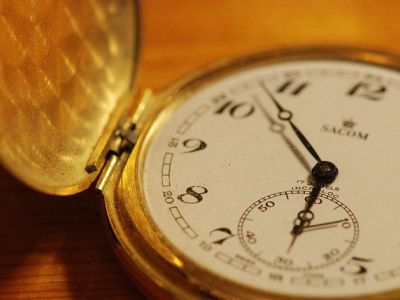
6) Chronometrie Spinnler & Schweizer
Nestled in the heart of Basel's bustling Marktplatz, Chronometrie Spinnler & Schweizer has been a beacon of watchmaking and jewelry expertise since 1920. Now in the capable hands of third-generation family owners, Hans Robert Spinnler and Roger Schweizer, this renowned establishment continues to embody tradition, innovation, and exceptional service.
More than just a shop, Chronometrie Spinnler & Schweizer offers a unique glimpse into the artistry of watchmaking. Visitors can observe local watchmakers in action, showcasing the intricate craftsmanship that defines this timeless trade. As an official Rolex dealer, the store not only sells these iconic timepieces but also provides expert servicing and repair, ensuring your investment stands the test of time.
Whether you’re seeking a classic watch, a stunning piece of jewelry, or expert advice, the highly qualified team at Spinnler & Schweizer is ready to assist. With a curated selection of world-famous brands and a passion for perfection, they are committed to helping you find the ideal item for any occasion.
The shop’s certified watchmaking studio ensures that every repair is carried out in-house with genuine parts supplied by brand partners. This guarantees not just quality but also swift and reliable post-purchase service. And with their online shop complementing the physical store, you can explore their offerings from the comfort of your home before visiting in person.
For over a century, Chronometrie Spinnler & Schweizer has upheld its reputation as Basel's go-to destination for watch and jewelry connoisseurs. Step inside and immerse yourself in the fascinating world of horology and elegance, where tradition meets modernity, and every customer is treated with unparalleled care and expertise.
More than just a shop, Chronometrie Spinnler & Schweizer offers a unique glimpse into the artistry of watchmaking. Visitors can observe local watchmakers in action, showcasing the intricate craftsmanship that defines this timeless trade. As an official Rolex dealer, the store not only sells these iconic timepieces but also provides expert servicing and repair, ensuring your investment stands the test of time.
Whether you’re seeking a classic watch, a stunning piece of jewelry, or expert advice, the highly qualified team at Spinnler & Schweizer is ready to assist. With a curated selection of world-famous brands and a passion for perfection, they are committed to helping you find the ideal item for any occasion.
The shop’s certified watchmaking studio ensures that every repair is carried out in-house with genuine parts supplied by brand partners. This guarantees not just quality but also swift and reliable post-purchase service. And with their online shop complementing the physical store, you can explore their offerings from the comfort of your home before visiting in person.
For over a century, Chronometrie Spinnler & Schweizer has upheld its reputation as Basel's go-to destination for watch and jewelry connoisseurs. Step inside and immerse yourself in the fascinating world of horology and elegance, where tradition meets modernity, and every customer is treated with unparalleled care and expertise.
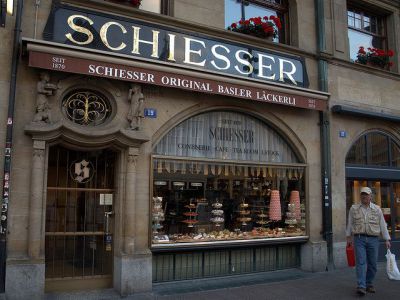
7) Confiserie Schiesser
Step into history at Confiserie Schiesser, Basel’s crown jewel of confectionery and the oldest coffee house in Switzerland. Established in 1870 by Rudolf Schiesser, a visionary and co-founder of the Conditoren Association, this storied institution has been crafting chocolates, cakes, and pastries for over 150 years. Today, the Schiesser family’s 5th generation continues the legacy, blending traditional craftsmanship with a warm, welcoming touch.
Located on the bustling Marktplatz, Confiserie Schiesser offers more than just sweets. Its tea room on the first floor provides a perfect perch to observe the lively market square below, where politicians, citizens, and shoppers mingle amidst colorful stalls. Imagine savoring a cup of their homemade hot chocolate and a buttery croissant while soaking in the vibrant scene or indulging in leisurely conversation with friends.
Inside, the café’s elegant interiors transport visitors to a bygone era, combining historical charm with modern hospitality. Maître Confiseur Stephan Schiesser works his magic in the bakery, crafting exquisite cakes, while Rosalba Schiesser oversees the tea room, terrace, and shop, ensuring every guest feels at home.
Confiserie Schiesser is also a proud member of Switzerland’s cultural heritage, recognized for its dedication to traditional craftsmanship. Whether you’re drawn to the fine chocolates, artisan pastries, or simply the ambiance of Basel’s oldest café, this is a place to pause, savor, and celebrate.
Located on the bustling Marktplatz, Confiserie Schiesser offers more than just sweets. Its tea room on the first floor provides a perfect perch to observe the lively market square below, where politicians, citizens, and shoppers mingle amidst colorful stalls. Imagine savoring a cup of their homemade hot chocolate and a buttery croissant while soaking in the vibrant scene or indulging in leisurely conversation with friends.
Inside, the café’s elegant interiors transport visitors to a bygone era, combining historical charm with modern hospitality. Maître Confiseur Stephan Schiesser works his magic in the bakery, crafting exquisite cakes, while Rosalba Schiesser oversees the tea room, terrace, and shop, ensuring every guest feels at home.
Confiserie Schiesser is also a proud member of Switzerland’s cultural heritage, recognized for its dedication to traditional craftsmanship. Whether you’re drawn to the fine chocolates, artisan pastries, or simply the ambiance of Basel’s oldest café, this is a place to pause, savor, and celebrate.
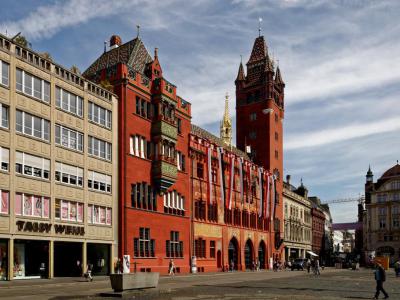
8) Marktplatz (Market Square)
The vibrant red town hall dominates Market Square. Market Square hosts a daily market that features local produce and regional and Swiss specialties. In addition, visitors can stock up on flowers, coffee, honey, crafts, and wine.
The square dates back to at least the year 1091. Back then, the square was bisected by Birsig Creek. There was a grain market where the citizens met and handled business. In 1290, the first town hall was built and that became the center of the town's political life.
In addition to the town hall, the square was home to the court. In front of the courthouse was a flat stone used for executions and public announcements. The accused often were brought here to face the ridicule of the population.
In the early days, the square was surrounded by wooden shops and houses with fold-down shutters. Through the open windows, owners would sell their goods that included meats, sausages, tripe, herring, birds, and gingerbread.
The houses were destroyed in 1891 to expand Market Square. Over the years, large commercial buildings have taken over. The square was further modified in 1908 when it was leveled out. Today, it is one of the most important tram junctions in the city, with seven lines passing through this one spot.
Market Square is delightful over the Christmas holidays. Visitors can do holiday shopping while enjoying hot chocolate and festive holiday lights. But any time of year is a great time to visit, thanks to the many charming cafes, restaurants, shops, and boutiques.
The square dates back to at least the year 1091. Back then, the square was bisected by Birsig Creek. There was a grain market where the citizens met and handled business. In 1290, the first town hall was built and that became the center of the town's political life.
In addition to the town hall, the square was home to the court. In front of the courthouse was a flat stone used for executions and public announcements. The accused often were brought here to face the ridicule of the population.
In the early days, the square was surrounded by wooden shops and houses with fold-down shutters. Through the open windows, owners would sell their goods that included meats, sausages, tripe, herring, birds, and gingerbread.
The houses were destroyed in 1891 to expand Market Square. Over the years, large commercial buildings have taken over. The square was further modified in 1908 when it was leveled out. Today, it is one of the most important tram junctions in the city, with seven lines passing through this one spot.
Market Square is delightful over the Christmas holidays. Visitors can do holiday shopping while enjoying hot chocolate and festive holiday lights. But any time of year is a great time to visit, thanks to the many charming cafes, restaurants, shops, and boutiques.
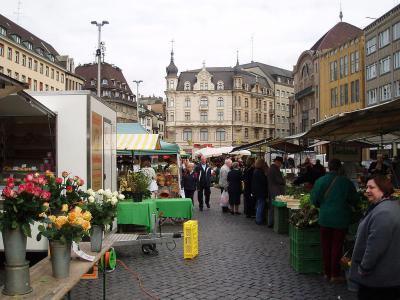
9) Basel Market
Nestled in the heart of Basel, the Basel Market is the city's largest and most traditional fresh produce market. Situated right in front of the historic City Hall (Rathaus), it serves as a bustling hub for locals and tourists alike, offering a vibrant array of fresh fruits, vegetables, flowers, sausages, cheeses, and even sweet treats. Almost 90% of the fruits and vegetables sold here are sourced from the surrounding Basel region, ensuring that goods are not only fresh and seasonal but also sustainably transported over short distances.
For those passionate about healthy and organic living, Basel Market champions these values by promoting organic produce. The market also offers a selection of unique regional delicacies and gourmet items, accompanied by personal advice from friendly marketeers. Shoppers can relax with a cup of coffee or enjoy a delicious meal in cozy seating areas, making it more than just a place to shop-it's an experience.
During the festive season, the Basel Market transforms into the enchanting Basel Christmas Market, a magical winter attraction renowned as one of Switzerland's most beautiful. Rustic wooden chalets, adorned with delightful decorations, line the streets, creating an idyllic scene that perfectly complements the charm of Advent in Basel.
The Christmas market offers an irresistible array of seasonal delights: raclette, Swiss fondue, grilled sausages, mulled wine, and gingerbread, all embodying the flavors of Swiss holiday traditions. Shoppers will find a variety of Christmas-themed gifts, decorations, and unique items, making it an ideal spot to pick up holiday treasures.
Basel Market, with its lively atmosphere and commitment to quality, stands as a testament to the city's rich traditions and dedication to regional craftsmanship-whether you're visiting in the vibrant summer months or during the magical Christmas season.
For those passionate about healthy and organic living, Basel Market champions these values by promoting organic produce. The market also offers a selection of unique regional delicacies and gourmet items, accompanied by personal advice from friendly marketeers. Shoppers can relax with a cup of coffee or enjoy a delicious meal in cozy seating areas, making it more than just a place to shop-it's an experience.
During the festive season, the Basel Market transforms into the enchanting Basel Christmas Market, a magical winter attraction renowned as one of Switzerland's most beautiful. Rustic wooden chalets, adorned with delightful decorations, line the streets, creating an idyllic scene that perfectly complements the charm of Advent in Basel.
The Christmas market offers an irresistible array of seasonal delights: raclette, Swiss fondue, grilled sausages, mulled wine, and gingerbread, all embodying the flavors of Swiss holiday traditions. Shoppers will find a variety of Christmas-themed gifts, decorations, and unique items, making it an ideal spot to pick up holiday treasures.
Basel Market, with its lively atmosphere and commitment to quality, stands as a testament to the city's rich traditions and dedication to regional craftsmanship-whether you're visiting in the vibrant summer months or during the magical Christmas season.
10) Middle Bridge
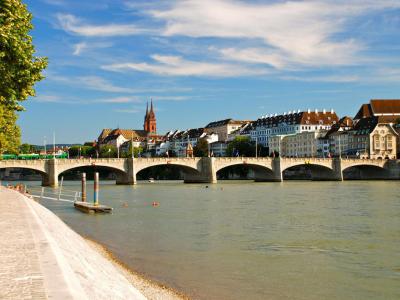
The Middle Bridge was originally built sometime in the 13th century. This bridge played an essential part in Basel's success as it allowed easy access for merchants and locals. Originally, money lenders charged those crossing with mules, horses, and goods a toll of 30 silver marks until the construction was paid off.
The Middle Bridge was rebuilt from stone between 1903 and 1905. The rebuilt bridge is 192 meters (630 feet) long and has seven arches. Six arches stretch over the Rhine River, and one covers the riverside footpath.
Today, private motor vehicles are prohibited in order to keep the city center car-free.
Visitors will find several sculptures on the bridge. Carl Burckhardt's last sculpture, The Amazon, is located on the bridgehead. The bronze sculpture shows an Amazon leading a horse. Burckhardt completed the plaster model but died before the sculpture was cast. Burckhardt's workshop completed the sculpture after his death.
Bettina Eichin's sculpture Hevetia auf der Reise sits on the bridgehead wall. The sculpture depicts a woman looking across the Rhine with her suitcase beside her.
The artist Ludwig Stocker donated the Lagerstätte sculpture to celebrate Basel's 600 year unification celebration in 1992. The sculpture represents the emblems of the three local guilds. This sculpture is partially submerged in the Rhine and is sometimes completely covered by water.
The Middle Bridge was rebuilt from stone between 1903 and 1905. The rebuilt bridge is 192 meters (630 feet) long and has seven arches. Six arches stretch over the Rhine River, and one covers the riverside footpath.
Today, private motor vehicles are prohibited in order to keep the city center car-free.
Visitors will find several sculptures on the bridge. Carl Burckhardt's last sculpture, The Amazon, is located on the bridgehead. The bronze sculpture shows an Amazon leading a horse. Burckhardt completed the plaster model but died before the sculpture was cast. Burckhardt's workshop completed the sculpture after his death.
Bettina Eichin's sculpture Hevetia auf der Reise sits on the bridgehead wall. The sculpture depicts a woman looking across the Rhine with her suitcase beside her.
The artist Ludwig Stocker donated the Lagerstätte sculpture to celebrate Basel's 600 year unification celebration in 1992. The sculpture represents the emblems of the three local guilds. This sculpture is partially submerged in the Rhine and is sometimes completely covered by water.
11) Martinskirche (St. Martin's Church)
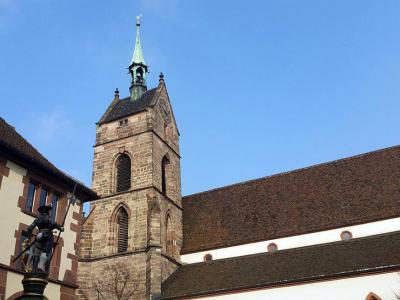
Saint Martin's Church (Martinskirche) is the oldest parish church in Basel, perched on Cathedral Hill (Münsterhügel) in the heart of the Old Town. Its origins trace back to 1101/1103, with parts of its Romanesque predecessor believed to date as far back as the 8th century. Over centuries, it evolved into a masterpiece of late Gothic architecture, blending elements of its Carolingian and medieval heritage.
The church’s lower tower sections and west façade date to 1287, while its choir and side façades showcase the artistic developments of the late 14th century. A mural above the south portal, painted by Hans Rohner in 1922, depicts Saint Martin of Tours, the church’s patron, adding a vibrant historical touch to its exterior.
Saint Martin’s Church holds a pivotal place in the history of the Reformation in Basel. In 1529, reformer Johannes Oecolampadius preached here in German for the first time, marking a significant shift in religious practice. Following extensive renovations in 1851, the church transitioned from a sacred space to a cultural hub. Its outstanding acoustics have since made it a premier concert venue, hosting orchestras and choirs in a space redefined by its history.
The church is also home to numerous epitaphs and an atmospheric interior that invites both reflection and admiration. Its bell plays a unique role in Basel’s cultural calendar, ringing to mark the opening of the Herbstmesse (autumn fair) and the Morgenstreich at Carnival.
Saint Martin’s Church embodies Basel’s deep historical roots and vibrant cultural life. Its location on Cathedral Hill offers visitors an excellent starting point for exploring Basel’s rich architectural and artistic heritage, blending spirituality, history, and culture in one remarkable landmark.
The church’s lower tower sections and west façade date to 1287, while its choir and side façades showcase the artistic developments of the late 14th century. A mural above the south portal, painted by Hans Rohner in 1922, depicts Saint Martin of Tours, the church’s patron, adding a vibrant historical touch to its exterior.
Saint Martin’s Church holds a pivotal place in the history of the Reformation in Basel. In 1529, reformer Johannes Oecolampadius preached here in German for the first time, marking a significant shift in religious practice. Following extensive renovations in 1851, the church transitioned from a sacred space to a cultural hub. Its outstanding acoustics have since made it a premier concert venue, hosting orchestras and choirs in a space redefined by its history.
The church is also home to numerous epitaphs and an atmospheric interior that invites both reflection and admiration. Its bell plays a unique role in Basel’s cultural calendar, ringing to mark the opening of the Herbstmesse (autumn fair) and the Morgenstreich at Carnival.
Saint Martin’s Church embodies Basel’s deep historical roots and vibrant cultural life. Its location on Cathedral Hill offers visitors an excellent starting point for exploring Basel’s rich architectural and artistic heritage, blending spirituality, history, and culture in one remarkable landmark.
12) Museum of Cultures
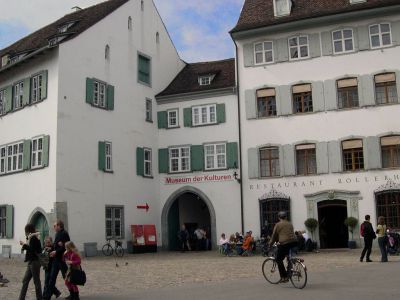
The Museum of Cultures Basel (Museum der Kulturen Basel) is a premier Swiss ethnographic institution located in the heart of Basel, on Münster Hill. Renowned for its extensive and diverse collection of artifacts, it showcases cultural treasures from Europe, the South Pacific, Mesoamerica, Tibet, and Bali. Recognized as a Swiss heritage site of national significance, the museum holds about 300,000 objects and an equally impressive archive of historic photographs, making it the largest of its kind in Switzerland and one of the most prominent in Europe.
The Museum of Cultures in Basel originated in the 1840s as the Museum of Natural History and Ethnography. In 1849, it moved to a Neoclassical building by Melchior Berri, formerly an Augustinian monastery. The ethnographic collection became independent in 1917, sharing the space with the Natural History Museum. After sponsoring global expeditions in the early 20th century, it was renamed the Museum of Ethnology and the Swiss Museum of Folklore in 1944. Reflecting its intercultural focus, it adopted its current name in 1996.
Among its notable collections are the ancient Mexican ceramics and statues acquired in 1844 through Basel collector Lukas Vischer, representing one of Europe's most significant assemblages of ancient American art. Its exhibitions have spotlighted exceptional Asian and Oceanian artifacts, with showcases on Bhutan (1998), Tibet (2001), and Bali (2002). The museum also serves the local Basel-City canton by preserving and documenting regional cultural heritage, including the famed Basel Carnival (Fasnacht).
With its dynamic programming and dedication to cultural exchange, the Museum of Cultures Basel continues to be a pivotal institution for understanding and celebrating human diversity.
The Museum of Cultures in Basel originated in the 1840s as the Museum of Natural History and Ethnography. In 1849, it moved to a Neoclassical building by Melchior Berri, formerly an Augustinian monastery. The ethnographic collection became independent in 1917, sharing the space with the Natural History Museum. After sponsoring global expeditions in the early 20th century, it was renamed the Museum of Ethnology and the Swiss Museum of Folklore in 1944. Reflecting its intercultural focus, it adopted its current name in 1996.
Among its notable collections are the ancient Mexican ceramics and statues acquired in 1844 through Basel collector Lukas Vischer, representing one of Europe's most significant assemblages of ancient American art. Its exhibitions have spotlighted exceptional Asian and Oceanian artifacts, with showcases on Bhutan (1998), Tibet (2001), and Bali (2002). The museum also serves the local Basel-City canton by preserving and documenting regional cultural heritage, including the famed Basel Carnival (Fasnacht).
With its dynamic programming and dedication to cultural exchange, the Museum of Cultures Basel continues to be a pivotal institution for understanding and celebrating human diversity.
13) Müensterplatz (Munster Square)
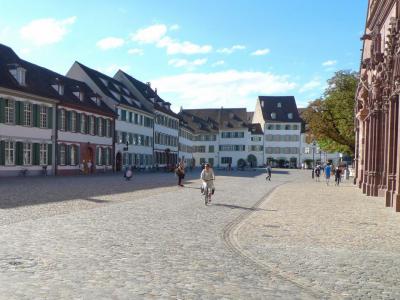
Munster Square is one of Basel's oldest squares and home to the magnificent Basel Minster. In addition to the cathedral, many restored medieval homes line the historic square.
Munster Square's land has been settled for millennia. Rauraci, a Gaelic tribe, lived in the area during the Iron Age. Remnants of their fortifications can still be seen on the corner of Munster Square and Rittergasse.
Munster Square developed over several centuries. The Basel Minster was a vital part of the square's development in the Middle Ages. The square's paving dates to the 14th and 15th centuries. During the 1798 Helvetic Revolution, the French and the citizens of Basel gathered to plant a freedom tree in Munster Square.
Throughout history, the square has played an important part in the city's daily life. Basel has held a unique Carnival celebration since the 14th century. It is the only protestant Carnival in the world, and Carnival lanterns are displayed in Munster Square during the festivities.
Munster Square is also home to the annual Museum Night and Allianz Cinema. In addition, it hosts the Basel Autumn Fair and the Basel City Run.
Architect Paolo Antonion Pisoni created the Pisoni fountain in 1784. This fountain is located in the southwest corner of the square and replaces an ancient fountain that had been in the square since the 14th century.
Munster Square has several townhouses with baroque and classical facades. In addition, the square is home to several medieval half-timbered houses.
Munster Square has several celebrity and historical connections. Celebrated philosopher Friedrich Nietzche taught in the square's high school. The General Reading Center is housed in a historic 1528 building. Musical history fans will enjoy visiting the Paul Sacher Foundation, which features the world's largest private collection of original musical scores.
The square features a popular vantage point with picture-perfect views of the Rhine River.
Munster Square's land has been settled for millennia. Rauraci, a Gaelic tribe, lived in the area during the Iron Age. Remnants of their fortifications can still be seen on the corner of Munster Square and Rittergasse.
Munster Square developed over several centuries. The Basel Minster was a vital part of the square's development in the Middle Ages. The square's paving dates to the 14th and 15th centuries. During the 1798 Helvetic Revolution, the French and the citizens of Basel gathered to plant a freedom tree in Munster Square.
Throughout history, the square has played an important part in the city's daily life. Basel has held a unique Carnival celebration since the 14th century. It is the only protestant Carnival in the world, and Carnival lanterns are displayed in Munster Square during the festivities.
Munster Square is also home to the annual Museum Night and Allianz Cinema. In addition, it hosts the Basel Autumn Fair and the Basel City Run.
Architect Paolo Antonion Pisoni created the Pisoni fountain in 1784. This fountain is located in the southwest corner of the square and replaces an ancient fountain that had been in the square since the 14th century.
Munster Square has several townhouses with baroque and classical facades. In addition, the square is home to several medieval half-timbered houses.
Munster Square has several celebrity and historical connections. Celebrated philosopher Friedrich Nietzche taught in the square's high school. The General Reading Center is housed in a historic 1528 building. Musical history fans will enjoy visiting the Paul Sacher Foundation, which features the world's largest private collection of original musical scores.
The square features a popular vantage point with picture-perfect views of the Rhine River.
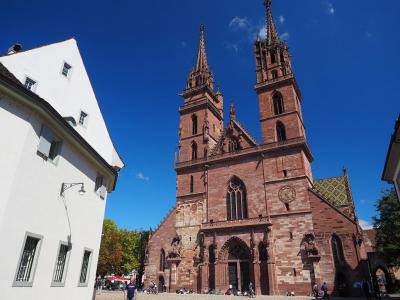
14) Basel Münster (Basel Minster) (must see)
Basel Minster, one of Basel's most prominent landmarks, boasts striking red sandstone walls and vibrant roof tiles that have stood as a testament to the city's architectural heritage since the 11th century. This cathedral, completed and modified over nearly five centuries between 1019 and 1500, remains among the oldest structures in Basel, with roots that stretch back even further. Beneath the current cathedral, excavations have uncovered remnants from the Celtic period, including ancient walls, gates, and streets, revealing the hill’s long-standing significance.
The first cathedral in Basel was built in the ninth century by Bishop Haito, with a more substantial building consecrated in 1019 in the presence of Henry II, the Holy Roman Emperor, lending the church its nickname, the Heinrich Munster. This Romanesque structure, however, did not remain untouched by time or disaster. In the 13th century, the Minster underwent reconstruction, only to suffer extensive damage in the 1356 earthquake. Rebuilt in the Gothic style, the church was re-consecrated in 1363, marking a new chapter in its architectural evolution.
Two impressive towers define the Minster's skyline: the Georgsturm, built in 1429, and the Martinsturm, completed in 1500. These towers, named after the knightly saints George and Martin, feature notable medieval artwork, including a 1372 depiction of Saint George confronting a small dragon. Visitors who ascend the 242 steps of either tower are rewarded with sweeping views of Basel’s historic cityscape.
Basel Minster also played a unique role in history when, in 1440, it hosted the election of Felix V, recognized as an antipope, during a period of religious schism. Later, during the Reformation in the 1500s, Basel saw significant change, as the bishop was expelled, the monastery dissolved, and many religious artworks were destroyed. One such casualty was a statue of the Virgin Mary, which once adorned the central porch, now left empty. However, the scenes of prophets and kings on the main porch remain intact, as do statues of Emperor Henry II and Empress Kunigunde, preserving a glimpse of the Minster’s storied past.
Why You Should Visit:
The Basel Minster is an architecturally stunning cathedral with a long and storied history. The stained glass windows, arched ceiling, and organ are beautiful.
Tips:
Don't miss climbing one of the towers and enjoying dramatic views over Basel.
The first cathedral in Basel was built in the ninth century by Bishop Haito, with a more substantial building consecrated in 1019 in the presence of Henry II, the Holy Roman Emperor, lending the church its nickname, the Heinrich Munster. This Romanesque structure, however, did not remain untouched by time or disaster. In the 13th century, the Minster underwent reconstruction, only to suffer extensive damage in the 1356 earthquake. Rebuilt in the Gothic style, the church was re-consecrated in 1363, marking a new chapter in its architectural evolution.
Two impressive towers define the Minster's skyline: the Georgsturm, built in 1429, and the Martinsturm, completed in 1500. These towers, named after the knightly saints George and Martin, feature notable medieval artwork, including a 1372 depiction of Saint George confronting a small dragon. Visitors who ascend the 242 steps of either tower are rewarded with sweeping views of Basel’s historic cityscape.
Basel Minster also played a unique role in history when, in 1440, it hosted the election of Felix V, recognized as an antipope, during a period of religious schism. Later, during the Reformation in the 1500s, Basel saw significant change, as the bishop was expelled, the monastery dissolved, and many religious artworks were destroyed. One such casualty was a statue of the Virgin Mary, which once adorned the central porch, now left empty. However, the scenes of prophets and kings on the main porch remain intact, as do statues of Emperor Henry II and Empress Kunigunde, preserving a glimpse of the Minster’s storied past.
Why You Should Visit:
The Basel Minster is an architecturally stunning cathedral with a long and storied history. The stained glass windows, arched ceiling, and organ are beautiful.
Tips:
Don't miss climbing one of the towers and enjoying dramatic views over Basel.
