Custom Walk in London, England by jml_lewis_72594f created on 2026-07-16
Guide Location: England » London
Guide Type: Custom Walk
# of Sights: 8
Tour Duration: 2 Hour(s)
Travel Distance: 4.9 Km or 3 Miles
Share Key: GX3D7
Guide Type: Custom Walk
# of Sights: 8
Tour Duration: 2 Hour(s)
Travel Distance: 4.9 Km or 3 Miles
Share Key: GX3D7
How It Works
Please retrieve this walk in the GPSmyCity app. Once done, the app will guide you from one tour stop to the next as if you had a personal tour guide. If you created the walk on this website or come to the page via a link, please follow the instructions below to retrieve the walk in the app.
Retrieve This Walk in App
Step 1. Download the app "GPSmyCity: Walks in 1K+ Cities" on Apple App Store or Google Play Store.



Step 2. In the GPSmyCity app, download(or launch) the guide "London Map and Walking Tours".
Step 3. Tap the menu button located at upper right corner of the "Walks" screen and select "Retrieve custom walk". Enter the share key: GX3D7
1) British Museum (must see)
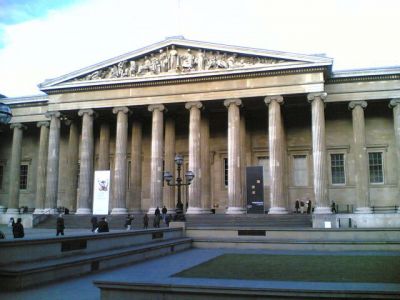
Spanning several miles of galleries and featuring around 80,000 exhibits, the British Museum stands as one of the most comprehensive displays of human culture and history globally. Under its roof, it houses one of the largest collections of antiquities, prints, and drawings, with over 8,000,000 objects and a continuously expanding inventory. Its unparalleled assortment of Roman and Greek art, exceptional Egyptian collection, and captivating treasures from Africa, China, Japan, India, Mesopotamia, Anglo-Saxon, and Roman Britain make it an extraordinary institution.
From a certain perspective, the British Museum represents a repository of artifacts acquired during the peak of the British Empire's influence, often seen as a collection of "plundered goods". The most famous example of this is Lord Elgin's removal of the Elgin Marbles, but numerous other instances of sporadic looting throughout the empire's territories also contributed to the museum's holdings. Additionally, the museum commissioned archaeologists to excavate and acquire classical artifacts.
The museum's origins trace back to the 71,000 curiosities amassed by Hans Sloane, a Chelsea physician. Sloane bequeathed this collection to George II in 1753 for £20,000. When the king couldn't or wouldn't pay, the government reluctantly purchased the collection, establishing the world's first public secular museum, initially housed in a mansion funded by a controversial public lottery. As the collection expanded, a grander space became necessary, resulting in the impressive Greek Revival building that still graces London today. This building, designed by Robert Smirke in the 1820s, features a majestic Ionic colonnade and portico.
Visitors to the British Museum should be prepared for crowds, especially on weekends, as it is a far cry from its modest beginnings. In its early days, the museum was open for just three hours a day, entry required a written application, and tickets were limited to ten per hour for "any person of decent appearance". Today, it can be overwhelming even for the most devoted museum enthusiasts. To make the most of a visit, it is advisable to focus on specific areas of interest, explore the highlights, or participate in one of the museum's excellent free guided tours of individual rooms.
Why You Should Visit:
Home of the Rosetta Stone, ancient Egyptian artifacts, Roman statuary and much, much more.
Tips:
Arriving early is a wise strategy to avoid the crowds.
There are two entrances: the primary entrance at the front, and a secondary one at the rear, which tends to have fewer visitors.
Visiting the exhibits inside the museum requires an admission fee, but entry to the museum itself is free of charge.
From a certain perspective, the British Museum represents a repository of artifacts acquired during the peak of the British Empire's influence, often seen as a collection of "plundered goods". The most famous example of this is Lord Elgin's removal of the Elgin Marbles, but numerous other instances of sporadic looting throughout the empire's territories also contributed to the museum's holdings. Additionally, the museum commissioned archaeologists to excavate and acquire classical artifacts.
The museum's origins trace back to the 71,000 curiosities amassed by Hans Sloane, a Chelsea physician. Sloane bequeathed this collection to George II in 1753 for £20,000. When the king couldn't or wouldn't pay, the government reluctantly purchased the collection, establishing the world's first public secular museum, initially housed in a mansion funded by a controversial public lottery. As the collection expanded, a grander space became necessary, resulting in the impressive Greek Revival building that still graces London today. This building, designed by Robert Smirke in the 1820s, features a majestic Ionic colonnade and portico.
Visitors to the British Museum should be prepared for crowds, especially on weekends, as it is a far cry from its modest beginnings. In its early days, the museum was open for just three hours a day, entry required a written application, and tickets were limited to ten per hour for "any person of decent appearance". Today, it can be overwhelming even for the most devoted museum enthusiasts. To make the most of a visit, it is advisable to focus on specific areas of interest, explore the highlights, or participate in one of the museum's excellent free guided tours of individual rooms.
Why You Should Visit:
Home of the Rosetta Stone, ancient Egyptian artifacts, Roman statuary and much, much more.
Tips:
Arriving early is a wise strategy to avoid the crowds.
There are two entrances: the primary entrance at the front, and a secondary one at the rear, which tends to have fewer visitors.
Visiting the exhibits inside the museum requires an admission fee, but entry to the museum itself is free of charge.
2) Museum Tavern
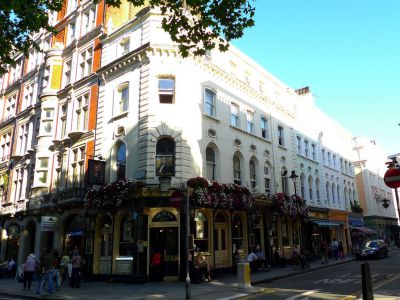
Situated right across from the British Museum in Bloomsbury, this welcoming and attractive Victorian pub serves as the perfect spot to unwind after immersing yourself in cultural pursuits. Karl Marx himself used to relax here following his strenuous days at the British Museum Library. If he were to visit today, he could indulge in the excellent array of craft beers and fine spirits while enjoying the menu of expertly prepared pub dishes.
Before the British Museum came into existence in the 1760s, this establishment went by the name of the Dog & Duck. Much of what you see today is the result of a significant renovation in 1855. Many of the interior Victorian elements have been preserved, including intricately carved wooden fixtures and beautifully etched glass windows.
In addition to Marx, this historic venue has hosted other notable figures of historical significance, such as Sir Arthur Conan Doyle, the mastermind behind "Sherlock Holmes", and novelist J.B. Priestley, recognized as a founding figure of the International Theatre Institute.
Before the British Museum came into existence in the 1760s, this establishment went by the name of the Dog & Duck. Much of what you see today is the result of a significant renovation in 1855. Many of the interior Victorian elements have been preserved, including intricately carved wooden fixtures and beautifully etched glass windows.
In addition to Marx, this historic venue has hosted other notable figures of historical significance, such as Sir Arthur Conan Doyle, the mastermind behind "Sherlock Holmes", and novelist J.B. Priestley, recognized as a founding figure of the International Theatre Institute.
3) Lamb & Flag
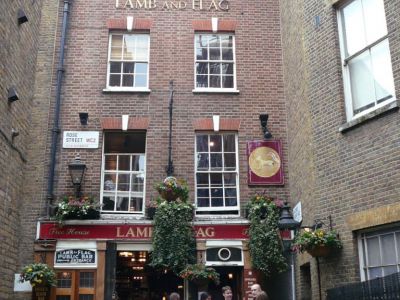
This enduringly popular and welcoming 17th-century tavern, devoid of corporate influence and refreshingly unspoiled by gentrification, was previously called "The Bucket of Blood" due to its utilization of the upstairs area and front yard for winner-takes-all bare-knuckle fights, a form of live entertainment in days gone by. Nowadays, it has transformed into a much more amiable establishment, offering British cuisine and authentic ale. It's not uncommon to see patrons spilling onto the street, creating a lively atmosphere.
Nestled in an alley that connects Garrick and Floral streets, a plaque stands as a reminder of a significant event in history: the 1679 assault on poet John Dryden by King Charles's men at this very location. The building officially became a pub in 1772 and has proudly borne the name "Lamb & Flag" since 1833. The name itself is a quintessential British pub title, with "Lamb" symbolizing the Lamb of God, often depicted carrying a flag adorned with a cross.
Esteemed by the renowned author Charles Dickens, the interior of the pub exudes the quintessential ambiance of a traditional London pub, complete with cozy wooden furnishings, vintage brass fixtures, and an array of nostalgic photographs. You can still relish a superb meal, delightful company, and, naturally, a couple of pints or more.
Nestled in an alley that connects Garrick and Floral streets, a plaque stands as a reminder of a significant event in history: the 1679 assault on poet John Dryden by King Charles's men at this very location. The building officially became a pub in 1772 and has proudly borne the name "Lamb & Flag" since 1833. The name itself is a quintessential British pub title, with "Lamb" symbolizing the Lamb of God, often depicted carrying a flag adorned with a cross.
Esteemed by the renowned author Charles Dickens, the interior of the pub exudes the quintessential ambiance of a traditional London pub, complete with cozy wooden furnishings, vintage brass fixtures, and an array of nostalgic photographs. You can still relish a superb meal, delightful company, and, naturally, a couple of pints or more.
4) Covent Garden Piazza (must see)
The transformation of Covent Garden from a utilitarian fruit and vegetable market in the 1670s into a trendy district was one of the most comprehensive and enduring developments of the 1980s. Unlike its neighbor Soho, Covent Garden is more mainstream and commercially oriented but also significantly more popular. Its appeal is greatly enhanced by the presence of street performers, buskers, and living statues, creating a vibrant atmosphere in the traffic-free Covent Garden Piazza.
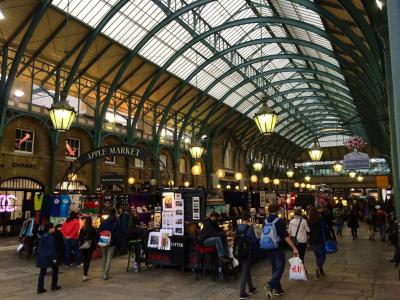
This historically renowned piazza now encompasses three distinct market areas: the Apple Market, the East Colonnade Market, and the Jubilee Market. Within the Apple Market, located in the main covered area originally designed by Inigo Jones, you can find 40 stalls offering handcrafted jewelry, prints, clothing, ceramics, and various crafts from Tuesday to Sunday (Mondays are dedicated to antiques, curiosities, and collectibles). The East Colonnade Market features stalls primarily showcasing handmade specialty items such as soaps and jewelry, as well as housewares, accessories, and magic tricks. The Jubilee Market offers kitschy T-shirts and budget-friendly household goods from Tuesday to Friday, but on Mondays and weekends, you can explore vintage antiques, collectibles, and handcrafted goods.
Traditionally catering to tourists, Covent Garden Market has evolved and now presents a more sophisticated image, accompanied by higher price points. This transformation is evident through the introduction of upscale restaurants and well-known chains in the surrounding arcades. Notable establishments include a sizable Apple Store, beauty boutiques like Chanel and MAC, as well as exclusive boutiques for renowned brands such as N.Peal and Mulberry.
Throughout the day, Covent Garden is teeming with tourists, and in the evening, it becomes a favorite haunt for theater enthusiasts either heading to or returning from the Royal Opera House. If you happen to be touring London during the holiday season, this place is a genuine delight. Every building seems to be adorned with festive decorations and twinkling lights, creating a truly magical atmosphere.
Why You Should Visit:
While some locals may dismiss Covent Garden Market as a tourist hotspot, it remains a worthwhile destination for anyone. Historically, this market was a place where people of all social classes in London gathered with a shared purpose: shopping. Today, that original spirit of the market endures, as Londoners continue to converge here to indulge in a uniquely British shopping experience. It's a bustling, vibrant place that encapsulates the essence of authentic London at its finest.
This historically renowned piazza now encompasses three distinct market areas: the Apple Market, the East Colonnade Market, and the Jubilee Market. Within the Apple Market, located in the main covered area originally designed by Inigo Jones, you can find 40 stalls offering handcrafted jewelry, prints, clothing, ceramics, and various crafts from Tuesday to Sunday (Mondays are dedicated to antiques, curiosities, and collectibles). The East Colonnade Market features stalls primarily showcasing handmade specialty items such as soaps and jewelry, as well as housewares, accessories, and magic tricks. The Jubilee Market offers kitschy T-shirts and budget-friendly household goods from Tuesday to Friday, but on Mondays and weekends, you can explore vintage antiques, collectibles, and handcrafted goods.
Traditionally catering to tourists, Covent Garden Market has evolved and now presents a more sophisticated image, accompanied by higher price points. This transformation is evident through the introduction of upscale restaurants and well-known chains in the surrounding arcades. Notable establishments include a sizable Apple Store, beauty boutiques like Chanel and MAC, as well as exclusive boutiques for renowned brands such as N.Peal and Mulberry.
Throughout the day, Covent Garden is teeming with tourists, and in the evening, it becomes a favorite haunt for theater enthusiasts either heading to or returning from the Royal Opera House. If you happen to be touring London during the holiday season, this place is a genuine delight. Every building seems to be adorned with festive decorations and twinkling lights, creating a truly magical atmosphere.
Why You Should Visit:
While some locals may dismiss Covent Garden Market as a tourist hotspot, it remains a worthwhile destination for anyone. Historically, this market was a place where people of all social classes in London gathered with a shared purpose: shopping. Today, that original spirit of the market endures, as Londoners continue to converge here to indulge in a uniquely British shopping experience. It's a bustling, vibrant place that encapsulates the essence of authentic London at its finest.
5) Ye Olde Chesire Cheese
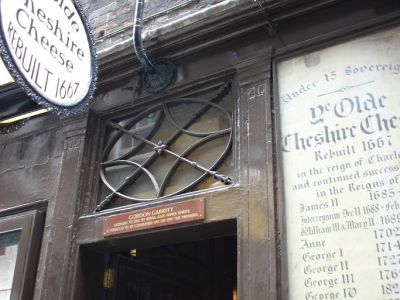
If walls could talk, Ye Olde Cheshire Cheese would have quite the barroom story to tell-and probably a few too many footnotes. Part of the Fleet Street setting, this legendary London pub has been keeping glasses full and conversations flowing since 1538. That’s right-before Shakespeare picked up a quill, this place was pouring pints. Rebuilt after the Great Fire of 1666, it still boasts cellars older than an average European country.
Literary heavyweights flocked here like moths to an ale-soaked flame. Samuel Johnson, Mark Twain, G.K. Chesterton, George Orwell, and Charles Dickens all bellied up to the bar-though not all at once, that would’ve been chaos. The atmosphere? Think cozy wood panels, floors strewn with sawdust, and a mysterious maze of monk-era cellars underneath. It once was a monastery, which explains the labyrinth-and perhaps the lingering sense of guilt after your third pint.
Dickens himself gave it a name-drop in A Tale of Two Cities, when Sydney Carton drags Charles Darnay to a tavern for a restorative meal after a courtroom close call. That tavern-Strong odds it was "the Cheese."
Now owned by Sam Smith’s Old Brewery, this time-traveling pub still serves up proper pints and solid meals with a side of history. So if you're craving a drink in the dim glow of literary ghosts-or just want to sit where Dickens might’ve nursed a hangover-pull up a chair. Just don’t get lost in the cellars.
Literary heavyweights flocked here like moths to an ale-soaked flame. Samuel Johnson, Mark Twain, G.K. Chesterton, George Orwell, and Charles Dickens all bellied up to the bar-though not all at once, that would’ve been chaos. The atmosphere? Think cozy wood panels, floors strewn with sawdust, and a mysterious maze of monk-era cellars underneath. It once was a monastery, which explains the labyrinth-and perhaps the lingering sense of guilt after your third pint.
Dickens himself gave it a name-drop in A Tale of Two Cities, when Sydney Carton drags Charles Darnay to a tavern for a restorative meal after a courtroom close call. That tavern-Strong odds it was "the Cheese."
Now owned by Sam Smith’s Old Brewery, this time-traveling pub still serves up proper pints and solid meals with a side of history. So if you're craving a drink in the dim glow of literary ghosts-or just want to sit where Dickens might’ve nursed a hangover-pull up a chair. Just don’t get lost in the cellars.
6) St. Paul's Cathedral (must see)
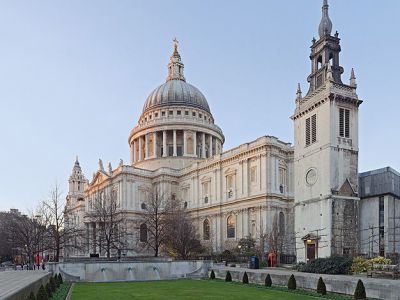
For centuries, Saint Paul's Cathedral has stood tall, quite literally, as London’s ultimate comeback story in stone form. After the Great Fire of 1666 turned the medieval cathedral (originally founded in 1087) into a smoldering memory, Sir Christopher Wren got the challenge of designing the masterpiece we see today.
Construction began in 1675 and took 35 years. Wren’s first design was too modern. The second-too modern again and too Catholic-looking. He eventually struck a deal with the Anglican clergy: throw in a classic English spire, but sneak in a magnificent triple-stacked dome instead. Now it’s the second-largest cathedral dome in the world after St. Peter’s in Rome. Subtle flex.
During WWII and the Blitz, flames again came for the cathedral, and again, it stood its ground. Brave volunteers fought fires on the dome, saving it from complete destruction. Saint Paul’s became a beacon of hope in the rubble. Fittingly, above the south entrance, you’ll spot the Latin word "Resurgam," meaning “I shall rise again.” Very on brand.
Inside, the cathedral is pure English Baroque drama. Climb 257 steps to the Whispering Gallery, where even your gossip echoes in style. Add another 119 steps for the Stone Gallery and 152 more for the Golden Gallery-because apparently, stairs build character. But the panoramic views of London are worth every calf cramp.
Down below in the crypt, you’ll find the final resting places of national legends: the Duke of Wellington, Admiral Nelson, and of course, Wren himself. His epitaph reads: “If you seek his monument, look around you.”
Saint Paul’s was basically Dickens' favorite rooftop. In Master Humphrey’s Clock, he climbs to the top for a bird’s eye view of life’s contradictions, which, come to think of it, London is full of. In David Copperfield, Peggotty enjoys the view too. Dickens knew this neighborhood well and even attended the Duke of Wellington’s funeral here in 1852.
Back in Shakespeare’s day, the area around Saint Paul’s was bustling with booksellers. This was the epicenter of the English publishing world- the Bard’s plays were printed and sold right here. Odds are he browsed the stalls himself, possibly muttering, “To plagiarize, or not to plagiarize...”
And for the modern-day wizarding crowd: yes, that staircase you recognize from Harry Potter and the Prisoner of Azkaban is real. The magical-looking Geometric Staircase-aka the Dean’s Stair-floats elegantly in the cathedral’s South West Bell Tower. You might remember it from Professor Trelawney’s Divination class or The Goblet of Fire. You’ll need a ticket to see it, but for Potterheads, it’s practically a rite of passage.
Tip:
Book online to skip the queue. And maybe spring for the audio tour-unless you’ve got me in your ear, of course.
Construction began in 1675 and took 35 years. Wren’s first design was too modern. The second-too modern again and too Catholic-looking. He eventually struck a deal with the Anglican clergy: throw in a classic English spire, but sneak in a magnificent triple-stacked dome instead. Now it’s the second-largest cathedral dome in the world after St. Peter’s in Rome. Subtle flex.
During WWII and the Blitz, flames again came for the cathedral, and again, it stood its ground. Brave volunteers fought fires on the dome, saving it from complete destruction. Saint Paul’s became a beacon of hope in the rubble. Fittingly, above the south entrance, you’ll spot the Latin word "Resurgam," meaning “I shall rise again.” Very on brand.
Inside, the cathedral is pure English Baroque drama. Climb 257 steps to the Whispering Gallery, where even your gossip echoes in style. Add another 119 steps for the Stone Gallery and 152 more for the Golden Gallery-because apparently, stairs build character. But the panoramic views of London are worth every calf cramp.
Down below in the crypt, you’ll find the final resting places of national legends: the Duke of Wellington, Admiral Nelson, and of course, Wren himself. His epitaph reads: “If you seek his monument, look around you.”
Saint Paul’s was basically Dickens' favorite rooftop. In Master Humphrey’s Clock, he climbs to the top for a bird’s eye view of life’s contradictions, which, come to think of it, London is full of. In David Copperfield, Peggotty enjoys the view too. Dickens knew this neighborhood well and even attended the Duke of Wellington’s funeral here in 1852.
Back in Shakespeare’s day, the area around Saint Paul’s was bustling with booksellers. This was the epicenter of the English publishing world- the Bard’s plays were printed and sold right here. Odds are he browsed the stalls himself, possibly muttering, “To plagiarize, or not to plagiarize...”
And for the modern-day wizarding crowd: yes, that staircase you recognize from Harry Potter and the Prisoner of Azkaban is real. The magical-looking Geometric Staircase-aka the Dean’s Stair-floats elegantly in the cathedral’s South West Bell Tower. You might remember it from Professor Trelawney’s Divination class or The Goblet of Fire. You’ll need a ticket to see it, but for Potterheads, it’s practically a rite of passage.
Tip:
Book online to skip the queue. And maybe spring for the audio tour-unless you’ve got me in your ear, of course.
7) Leadenhall Market
The origins of Leadenhall Market date back to the 14th century. Its name is a nod to the lead roof that once covered the medieval market hall. The location itself marks the former site of an ancient Roman forum and basilica from the days of Londinium, thus making it steeped in over two millennia of history.
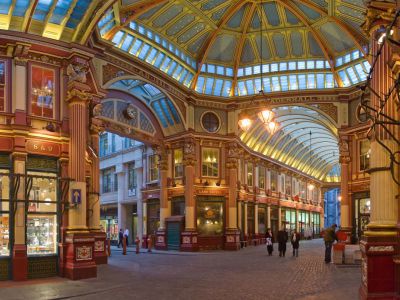
The current building, a stunning example of Victorian architecture, with its distinctive glass canopy, wrought iron details, decorative arches, and intricate detailing, was redesigned in 1881 by Sir Horace Jones, the very same architect who gave us Tower Bridge.
Once the go-to place for meat, poultry, and game, Leadenhall now leans more toward wine bars, boutiques, and bistro bites, though you’ll still spot original iron meat hooks (if you look up) and even a traditional shoeshine station. Stroll its cobbled paths and you’ll find city suits mingling with selfie-takers, all basking in that golden Victorian glow. In this 21st-century era of towering skyscrapers, it survives solely due to government protection.
In recent years, Leadenhall has been a major pop culture draw for its connection to the Harry Potter movies. The surreal contrast between its ancient charm and the surrounding towers of steel is thought to have inspired J.K. Rowling’s vision for Diagon Alley- a romantic slice of London’s past, nestled right under the glassy gaze of corporate high-risers.
In particular, the market served as the filming location for parts of Harry Potter and the Philosopher’s Stone and The Goblet of Fire, specifically as the entrance to Diagon Alley. At 42 Bull's Head Passage, a humble blue doorway is easily recognizable as that leading to the Leaky Cauldron pub (in the movies). Today, the shop is home to Glass House Opticians, so you might even chance upon Mad-Eye Moody here, getting fitted for a contact lens with a bit of luck...
Indeed, whether you’re here for the history, the architecture, a cheeky pint, or just to whisper “Alohomora” at random doors, Leadenhall Market delivers all the same. It's London-layered, lively, and just a little bit enchanted.
The current building, a stunning example of Victorian architecture, with its distinctive glass canopy, wrought iron details, decorative arches, and intricate detailing, was redesigned in 1881 by Sir Horace Jones, the very same architect who gave us Tower Bridge.
Once the go-to place for meat, poultry, and game, Leadenhall now leans more toward wine bars, boutiques, and bistro bites, though you’ll still spot original iron meat hooks (if you look up) and even a traditional shoeshine station. Stroll its cobbled paths and you’ll find city suits mingling with selfie-takers, all basking in that golden Victorian glow. In this 21st-century era of towering skyscrapers, it survives solely due to government protection.
In recent years, Leadenhall has been a major pop culture draw for its connection to the Harry Potter movies. The surreal contrast between its ancient charm and the surrounding towers of steel is thought to have inspired J.K. Rowling’s vision for Diagon Alley- a romantic slice of London’s past, nestled right under the glassy gaze of corporate high-risers.
In particular, the market served as the filming location for parts of Harry Potter and the Philosopher’s Stone and The Goblet of Fire, specifically as the entrance to Diagon Alley. At 42 Bull's Head Passage, a humble blue doorway is easily recognizable as that leading to the Leaky Cauldron pub (in the movies). Today, the shop is home to Glass House Opticians, so you might even chance upon Mad-Eye Moody here, getting fitted for a contact lens with a bit of luck...
Indeed, whether you’re here for the history, the architecture, a cheeky pint, or just to whisper “Alohomora” at random doors, Leadenhall Market delivers all the same. It's London-layered, lively, and just a little bit enchanted.
8) All Hallows-by-the-Tower
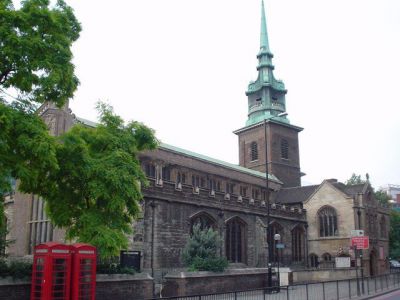
Welcome to All Hallows by the Tower-where history isn't just in the walls… it is the walls. This venerable church dates all the way back to 675 AD, making it the oldest in the City of London. That’s right, it’s been standing since before England had shires, smartphones, or sarcasm. Miraculously, it survived the Great Fire and narrowly dodged destruction during the Blitz, though it did get a bit of a concrete facelift in the post-WWII era, now donning a rather serious neo-Gothic expression.
Step inside, and you're in for a visual treasure hunt: model ships, maritime memorials, fragments of a Flemish triptych from circa 1500, and the showstopper-an exquisitely carved limewood font cover by Grinling Gibbons (the Anglo-Dutch sculptor known for his works in Windsor Castle, the Royal Hospital Chelsea, Hampton Court Palace, St Paul's Cathedral and other London churches), casually waiting in the southwest chapel like it owns the place.
But wait-there’s more ancient wonder just outside the chapel door. Nestled nearby is a 7th-century Anglo-Saxon arch, decorated with recycled Roman tiles-yes, the Romans were here first. This humble arch is the oldest surviving piece of church architecture in the entire city, and it’s just sitting there like it hasn’t aged a day.
Head downstairs to the Crypt Museum, and you’ll find bits of Roman pavement in all their tessellated glory, plus pre-Reformation brasses that have seen more candles than a cathedral gift shop. Entry is free. Knowledge is priceless.
And because location is everything, All Hallows found itself next door to the Tower of London-so naturally, it made a few royal connections. Edward IV turned one chapel into a royal chantry, and the church became the temporary resting place for unfortunate Tower victims. Think of it as the VIP lounge for history’s more tragic characters.
Ultimately, it'd be fair to say that, apart from being a church, All Hallows is a true stone-and-mortar time machine with surprisingly good lighting.
Step inside, and you're in for a visual treasure hunt: model ships, maritime memorials, fragments of a Flemish triptych from circa 1500, and the showstopper-an exquisitely carved limewood font cover by Grinling Gibbons (the Anglo-Dutch sculptor known for his works in Windsor Castle, the Royal Hospital Chelsea, Hampton Court Palace, St Paul's Cathedral and other London churches), casually waiting in the southwest chapel like it owns the place.
But wait-there’s more ancient wonder just outside the chapel door. Nestled nearby is a 7th-century Anglo-Saxon arch, decorated with recycled Roman tiles-yes, the Romans were here first. This humble arch is the oldest surviving piece of church architecture in the entire city, and it’s just sitting there like it hasn’t aged a day.
Head downstairs to the Crypt Museum, and you’ll find bits of Roman pavement in all their tessellated glory, plus pre-Reformation brasses that have seen more candles than a cathedral gift shop. Entry is free. Knowledge is priceless.
And because location is everything, All Hallows found itself next door to the Tower of London-so naturally, it made a few royal connections. Edward IV turned one chapel into a royal chantry, and the church became the temporary resting place for unfortunate Tower victims. Think of it as the VIP lounge for history’s more tragic characters.
Ultimately, it'd be fair to say that, apart from being a church, All Hallows is a true stone-and-mortar time machine with surprisingly good lighting.
