Custom Walk in Philadelphia, Pennsylvania by danibrought_55d5e3 created on 2026-07-23
Guide Location: USA » Philadelphia
Guide Type: Custom Walk
# of Sights: 15
Tour Duration: 5 Hour(s)
Travel Distance: 10.2 Km or 6.3 Miles
Share Key: 5D3YJ
Guide Type: Custom Walk
# of Sights: 15
Tour Duration: 5 Hour(s)
Travel Distance: 10.2 Km or 6.3 Miles
Share Key: 5D3YJ
How It Works
Please retrieve this walk in the GPSmyCity app. Once done, the app will guide you from one tour stop to the next as if you had a personal tour guide. If you created the walk on this website or come to the page via a link, please follow the instructions below to retrieve the walk in the app.
Retrieve This Walk in App
Step 1. Download the app "GPSmyCity: Walks in 1K+ Cities" on Apple App Store or Google Play Store.



Step 2. In the GPSmyCity app, download(or launch) the guide "Philadelphia Map and Walking Tours".
Step 3. Tap the menu button located at upper right corner of the "Walks" screen and select "Retrieve custom walk". Enter the share key: 5D3YJ
1) Cathedral Basilica of Saints Peter and Paul
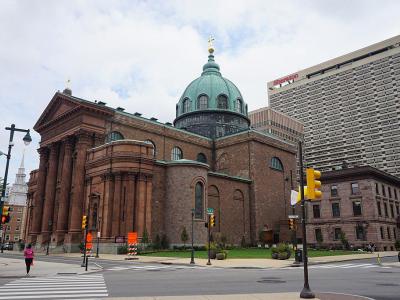
The Cathedral Basilica of Saints Peter and Paul is a key structure in the Roman Catholic Archdiocese of Philadelphia. Its construction spanned from 1846 to 1864 under the architectural guidance of Napoleon LeBrun, who built upon the original designs by Reverend Mariano Muller and Reverend John B. Tornatore. The cathedral's interior owes its elaborate decoration to the artistic prowess of Constantino Brumidi.
Architecturally, the Cathedral Basilica is a majestic sight. It is the largest brownstone building in Philadelphia and distinguishes itself with its remarkable architectural features. The cathedral can accommodate 2,000 worshippers within its vast sanctuary, which includes a vaulted dome, an ornate main altar, and eight side chapels.
The design of the cathedral is heavily influenced by Roman-Corinthian architecture, emulating the Lombard Church of Saint Charles in Rome. Its Palladian façade and aqua oxidized copper dome are inspired by the Italian Renaissance, a theme that continues in the spacious interior. This interior is notable for its oversized apse made of stained glass and red antique marble, proportions reminiscent of Roman churches. A distinctive feature is the Renaissance-style baldachin over the main altar, along with three altars in the side aisles, all influenced by Italian Renaissance design. The "Crypt of the Bishops" in the lower part of the building adds to its historical significance.
The Cathedral Basilica of Saints Peter and Paul was listed on the U.S. National Register of Historic Places in 1971 and hosted two papal Masses: one by Pope John Paul II in 1979 and another by Pope Francis in 2015.
Architecturally, the Cathedral Basilica is a majestic sight. It is the largest brownstone building in Philadelphia and distinguishes itself with its remarkable architectural features. The cathedral can accommodate 2,000 worshippers within its vast sanctuary, which includes a vaulted dome, an ornate main altar, and eight side chapels.
The design of the cathedral is heavily influenced by Roman-Corinthian architecture, emulating the Lombard Church of Saint Charles in Rome. Its Palladian façade and aqua oxidized copper dome are inspired by the Italian Renaissance, a theme that continues in the spacious interior. This interior is notable for its oversized apse made of stained glass and red antique marble, proportions reminiscent of Roman churches. A distinctive feature is the Renaissance-style baldachin over the main altar, along with three altars in the side aisles, all influenced by Italian Renaissance design. The "Crypt of the Bishops" in the lower part of the building adds to its historical significance.
The Cathedral Basilica of Saints Peter and Paul was listed on the U.S. National Register of Historic Places in 1971 and hosted two papal Masses: one by Pope John Paul II in 1979 and another by Pope Francis in 2015.
2) Logan Circle
Logan Circle, also known as Logan Square, is an open-space park located in the northwest quadrant of Center City Philadelphia. It holds a special place in the city's layout as one of the five original squares planned in the city grid. This park is not just a green space but also a historic area, having been part of William Penn's original 1684 plan for Philadelphia. Originally named "Northwest Square," it was renamed in 1825 to honor James Logan, a prominent Philadelphia statesman.
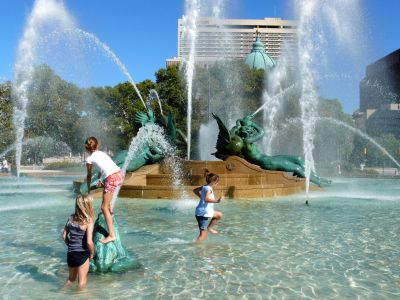
The park's most striking feature is the Logan Circle, a beautifully designed circular area that features a large water fountain. This circle is the centerpiece of the park and is surrounded by a traffic circle that carries 19th Street and the Benjamin Franklin Parkway. These roads provide connections to 18th and 20th Streets on the east and west, and Race and Vine Streets to the south and north. The circle is situated within the original boundaries of the square, which is why the terms Logan Square and Logan Circle are often used interchangeably when referring to the park.
Logan Square is not just a place of beauty and history but also the heart of its namesake neighborhood, playing a central role in the community. In recognition of its historical and cultural significance, Logan Square was added to the National Register of Historic Places in 1981, underlining its importance not only to Philadelphia but also as a part of national heritage.
The park's most striking feature is the Logan Circle, a beautifully designed circular area that features a large water fountain. This circle is the centerpiece of the park and is surrounded by a traffic circle that carries 19th Street and the Benjamin Franklin Parkway. These roads provide connections to 18th and 20th Streets on the east and west, and Race and Vine Streets to the south and north. The circle is situated within the original boundaries of the square, which is why the terms Logan Square and Logan Circle are often used interchangeably when referring to the park.
Logan Square is not just a place of beauty and history but also the heart of its namesake neighborhood, playing a central role in the community. In recognition of its historical and cultural significance, Logan Square was added to the National Register of Historic Places in 1981, underlining its importance not only to Philadelphia but also as a part of national heritage.
3) Philadelphia Museum of Art
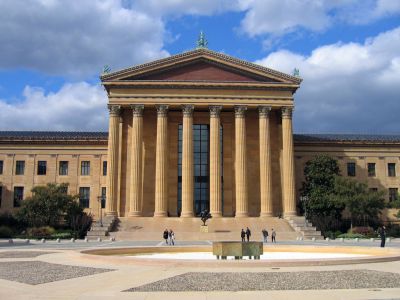
The Philadelphia Museum of Art, with its roots dating back to 1876 as part of the Centennial Exposition in Philadelphia, stands as a significant cultural landmark. The main building, completed in 1928 on Fairmount, crowns the northwest end of the Benjamin Franklin Parkway at Eakins Oval. This prestigious institution is renowned for its expansive collection, which encompasses over 240,000 objects. The collection's diversity is impressive, featuring major works of European, American, and Asian origin across various mediums such as sculpture, paintings, prints, drawings, photographs, armor, and decorative arts.
Beyond its main building, the museum extends its reach through several annexes. Notably, the Rodin Museum, also situated on the Benjamin Franklin Parkway, and the Ruth and Raymond G. Perelman Building, located just north across the street from the main building, expand the museum's offerings. The Perelman Building, opened in 2007, is particularly notable for housing an extensive collection of over 150,000 prints, drawings, and photographs, along with 30,000 costume and textile items, and more than 1,000 modern and contemporary design objects, including furniture, ceramics, and glasswork.
The museum's scope extends to the historic colonial-era houses of Mount Pleasant and Cedar Grove, both nestled within Fairmount Park. These houses add a historical dimension to the museum's diverse portfolio. Owned by the City of Philadelphia, the main museum building and its annexes are managed by a registered nonprofit corporation. The museum is not just a repository of art but also a vibrant center for cultural exchange, hosting several special exhibitions each year. These include touring exhibitions in collaboration with other museums both in the United States and internationally.
Beyond its main building, the museum extends its reach through several annexes. Notably, the Rodin Museum, also situated on the Benjamin Franklin Parkway, and the Ruth and Raymond G. Perelman Building, located just north across the street from the main building, expand the museum's offerings. The Perelman Building, opened in 2007, is particularly notable for housing an extensive collection of over 150,000 prints, drawings, and photographs, along with 30,000 costume and textile items, and more than 1,000 modern and contemporary design objects, including furniture, ceramics, and glasswork.
The museum's scope extends to the historic colonial-era houses of Mount Pleasant and Cedar Grove, both nestled within Fairmount Park. These houses add a historical dimension to the museum's diverse portfolio. Owned by the City of Philadelphia, the main museum building and its annexes are managed by a registered nonprofit corporation. The museum is not just a repository of art but also a vibrant center for cultural exchange, hosting several special exhibitions each year. These include touring exhibitions in collaboration with other museums both in the United States and internationally.
4) Bronze Rocky Statue
Now, here’s something you don’t see every day—a movie prop that refused to stay in the background.
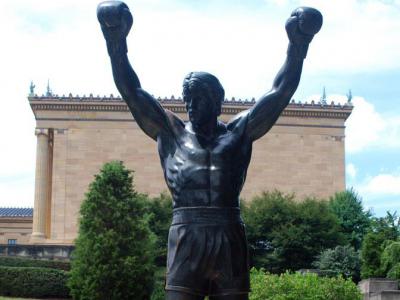
Just off to the side of the steps leading to the Philadelphia Museum of Art, this is one of three Rocky statues in existence, perched on a pedestal in a patch of grass, and the one you’ll definitely want for your photo moment. The other two are privately owned by Sylvester Stallone and displayed over at the Schomberg Studios Gallery—so, unless you’ve got an invite, this is your Rocky...
The statue itself, created by sculptor A. Thomas Schomberg, is no lightweight—literally. It stands about 10 feet tall, weighs around two tons, and first appeared here during the filming of Rocky III, striking that now-iconic victory pose.
But once the cameras stopped rolling, the real drama began. After the film’s release in 1982, the city found itself in an unexpected debate: was this art… or just a very enthusiastic movie prop? Officials reckoned it was the latter, and Rocky was politely—but firmly—moved away to the front of the Philadelphia Spectrum.
Cue a few sequels and a bit of back-and-forth. The statue returned briefly for Rocky V, then got relocated again. At one point, it was even replaced by something far less photogenic: a bronze plaque with sneaker footprints and the name “Rocky.” Not quite the same energy...
Then, in 2006, Rocky finally made his comeback—this time for good. The statue was brought back here, near the steps where it all started, and unveiled with live music, a trailer premiere for Rocky Balboa, and a public screening of the original Rocky.
So, yes, after decades of bouncing around, Rocky finally went the distance—and this time, he stayed put.
Just off to the side of the steps leading to the Philadelphia Museum of Art, this is one of three Rocky statues in existence, perched on a pedestal in a patch of grass, and the one you’ll definitely want for your photo moment. The other two are privately owned by Sylvester Stallone and displayed over at the Schomberg Studios Gallery—so, unless you’ve got an invite, this is your Rocky...
The statue itself, created by sculptor A. Thomas Schomberg, is no lightweight—literally. It stands about 10 feet tall, weighs around two tons, and first appeared here during the filming of Rocky III, striking that now-iconic victory pose.
But once the cameras stopped rolling, the real drama began. After the film’s release in 1982, the city found itself in an unexpected debate: was this art… or just a very enthusiastic movie prop? Officials reckoned it was the latter, and Rocky was politely—but firmly—moved away to the front of the Philadelphia Spectrum.
Cue a few sequels and a bit of back-and-forth. The statue returned briefly for Rocky V, then got relocated again. At one point, it was even replaced by something far less photogenic: a bronze plaque with sneaker footprints and the name “Rocky.” Not quite the same energy...
Then, in 2006, Rocky finally made his comeback—this time for good. The statue was brought back here, near the steps where it all started, and unveiled with live music, a trailer premiere for Rocky Balboa, and a public screening of the original Rocky.
So, yes, after decades of bouncing around, Rocky finally went the distance—and this time, he stayed put.
5) Rittenhouse Square
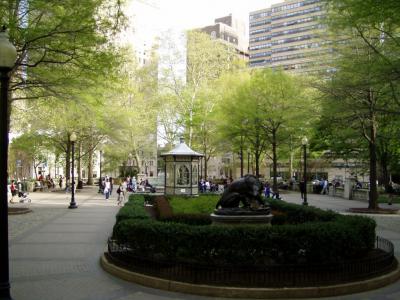
Right in the middle of Philadelphia’s most polished neighborhood—where glass towers loom and fashionably dressed locals pretend not to notice each other—Rittenhouse Square is a slice of greenery that refuses to be outshined. It’s been here since 1825, named after homegrown Revolutionary-era brainiac David Rittenhouse. The layout you see today, with its neat diagonal paths converging toward the center, took shape in 1913, along with many of the bronze statues that quietly observe everything… and judge a little.
But let’s be honest—history aside, a lot of people are here for a different reason: Rocky II. This is where Rocky and Adrian take that soft, slightly awkward stroll along the southeast corner after hearing they’re expecting a baby. It’s one of those rare moments where the Italian Stallion slows down—no punching, just feelings...
From there, they drift south toward 18th and Locust. If you’re feeling cinematic, keep an eye out for the Barclay Condominium—the stone-faced building behind Rocky and Adrian when they stop and face each other. Yes, that’s the one tied to the unforgettable line, “I never use ’em.” Back when the scene was filmed, it had a modest green awning; today, it’s traded that in for a much grander, upscale frontage, self-aware of its status.
And curiously enough, almost too on-the-nose: before the fame, before the running up steps, even before the punches—Sylvester Stallone actually lived right here in the late 1950s, at the Chateau Crillon Apartments. Not only that, in between filming of Rocky II and Rocky III, he stayed at the Barclay Hotel itself. So, yes, when Rocky walks through this square, he’s not just acting—he’s practically coming home...
But let’s be honest—history aside, a lot of people are here for a different reason: Rocky II. This is where Rocky and Adrian take that soft, slightly awkward stroll along the southeast corner after hearing they’re expecting a baby. It’s one of those rare moments where the Italian Stallion slows down—no punching, just feelings...
From there, they drift south toward 18th and Locust. If you’re feeling cinematic, keep an eye out for the Barclay Condominium—the stone-faced building behind Rocky and Adrian when they stop and face each other. Yes, that’s the one tied to the unforgettable line, “I never use ’em.” Back when the scene was filmed, it had a modest green awning; today, it’s traded that in for a much grander, upscale frontage, self-aware of its status.
And curiously enough, almost too on-the-nose: before the fame, before the running up steps, even before the punches—Sylvester Stallone actually lived right here in the late 1950s, at the Chateau Crillon Apartments. Not only that, in between filming of Rocky II and Rocky III, he stayed at the Barclay Hotel itself. So, yes, when Rocky walks through this square, he’s not just acting—he’s practically coming home...
6) Penn Square (Centre Square)
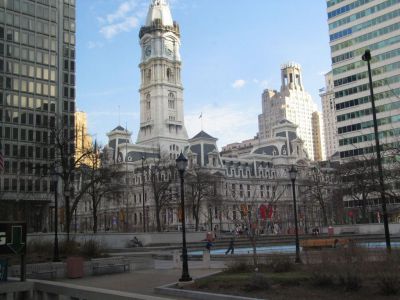
Penn Square, also known as Centre Square, holds a significant place in Philadelphia, for both its historical and contemporary importance. Situated at the strategic intersection of Broad and Market streets, this site is renowned for housing the City Hall of Philadelphia. Its origins trace back to William Penn’s original plans for the city, where it was designated as Center Square, integral to the gridiron of streets he envisioned.
The square is not just a historical landmark but also a bustling hub of modern urban activity. To its west, along John F. Kennedy Boulevard, lies Penn Center. This area is a dynamic blend of office buildings, retail businesses, commercial establishments, hotels, and even underground concourses, reflecting the vibrant commercial life of the city.
Moreover, Penn Square is renowned for being part of the Avenue of the Arts, an aptly named section of Broad Street stretching north and south from the square. This area is a cultural hotspot, boasting numerous attractions that celebrate the arts. Notable institutions like the Academy of Music, various musical, dance, and theatre companies, and esteemed museums and galleries, including the Pennsylvania Academy of the Fine Arts, line this avenue. These establishments collectively contribute to the rich cultural tapestry of Philadelphia, making Penn Square not only a landmark of historical significance but also a contemporary center for arts and commerce.
The square is not just a historical landmark but also a bustling hub of modern urban activity. To its west, along John F. Kennedy Boulevard, lies Penn Center. This area is a dynamic blend of office buildings, retail businesses, commercial establishments, hotels, and even underground concourses, reflecting the vibrant commercial life of the city.
Moreover, Penn Square is renowned for being part of the Avenue of the Arts, an aptly named section of Broad Street stretching north and south from the square. This area is a cultural hotspot, boasting numerous attractions that celebrate the arts. Notable institutions like the Academy of Music, various musical, dance, and theatre companies, and esteemed museums and galleries, including the Pennsylvania Academy of the Fine Arts, line this avenue. These establishments collectively contribute to the rich cultural tapestry of Philadelphia, making Penn Square not only a landmark of historical significance but also a contemporary center for arts and commerce.
7) Congress Hall
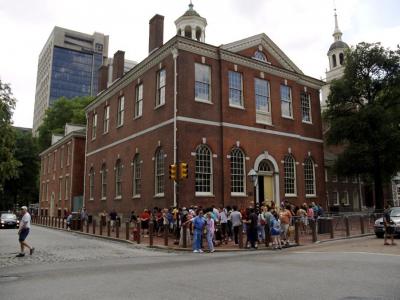
Congress Hall, a significant landmark in Philadelphia, is situated at the intersection of Chestnut and 6th Streets. Notably, it served as the seat of the United States Congress from December 6, 1790, to May 14, 1800. During this decade, Philadelphia was the temporary capital of the United States.
The building's architecture and use reflect the formative years of the U.S. government. The House of Representatives convened on the first floor, while the Senate met upstairs. This period in Congress Hall was marked by pivotal moments in American history, including the inauguration of Presidents George Washington (for his second term) and John Adams.
The first floor, home to the House chamber, features a simple design with mahogany desks and leather chairs. By 1796, it accommodated 106 representatives from 16 states, including the original 13, plus Vermont in 1791, Kentucky in 1792, and Tennessee in 1796. This room has been meticulously restored to its 1796 condition.
In contrast, the Senate chamber on the second floor is more elaborate. It was adorned with heavy red drapes and, by 1796, equipped with 32 secretary desks, 28 of which are original and akin to those in the current Senate chamber at the United States Capitol. The room also displays portraits of Louis XVI and Marie Antoinette, gifts from France post-Revolution. Noteworthy features include a ceiling fresco of an American bald eagle, symbolizing peace, and a plaster medallion depicting a sunburst with 13 stars for the original colonies.
The building's architecture and use reflect the formative years of the U.S. government. The House of Representatives convened on the first floor, while the Senate met upstairs. This period in Congress Hall was marked by pivotal moments in American history, including the inauguration of Presidents George Washington (for his second term) and John Adams.
The first floor, home to the House chamber, features a simple design with mahogany desks and leather chairs. By 1796, it accommodated 106 representatives from 16 states, including the original 13, plus Vermont in 1791, Kentucky in 1792, and Tennessee in 1796. This room has been meticulously restored to its 1796 condition.
In contrast, the Senate chamber on the second floor is more elaborate. It was adorned with heavy red drapes and, by 1796, equipped with 32 secretary desks, 28 of which are original and akin to those in the current Senate chamber at the United States Capitol. The room also displays portraits of Louis XVI and Marie Antoinette, gifts from France post-Revolution. Noteworthy features include a ceiling fresco of an American bald eagle, symbolizing peace, and a plaster medallion depicting a sunburst with 13 stars for the original colonies.
8) Independence Hall (must see)
By the late 1720s, Philadelphia realized it was running a colony with big decisions to make, but was lacking a proper stage to make them—so, naturally, it decided to build one.
Construction began in 1732 on Chestnut Street, guided by architect Edmund Woolley, and by 1753, the Colonial Government of Pennsylvania moved in without hesitation. For nearly half a century, this was where the business of the province—and later the commonwealth—was handled, until the capital duties packed up and moved on in 1799.
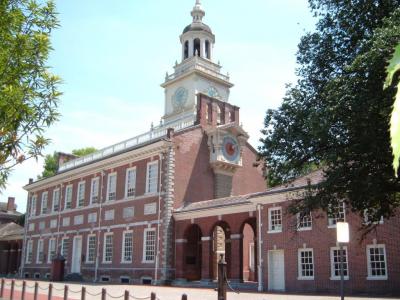
The building itself, now known as Independence Hall, keeps things elegantly symmetrical. Red brick, Georgian style, a central block crowned with a bell tower and a steeple rising 169 feet. Arcaded passageways link the main structure to its side wings, while nearby, Old City Hall, Congress Hall, and Philosophical Hall gather around Independence Square like a well-organized ensemble cast.
Inside, the layout is straightforward but loaded with history. The Assembly Room and Supreme Court Room sit on the ground floor, divided by a vestibule, with the Tower Stair Hall waiting just beyond the entrance. The interiors you see today are the result of careful restorations in the 19th and 20th centuries, all aimed at returning the building to its 18th-century look—because when your past includes founding a nation, you tend to preserve the décor...
And then, of course, came the moments. In June 1775, George Washington was appointed commander-in-chief of the Continental Army right here. A month later, Benjamin Franklin was named the first Postmaster General—arguably launching one of the longest-running institutions in American life. Between 1775 and 1783, this was the meeting place of the Second Continental Congress, where, on July 4, 1776, the Declaration of Independence was approved. Eleven years later, in 1787, the Constitution followed.
Since then, Independence Hall has remained more than just a historic building. It continues to serve as a backdrop for speeches, rallies, and protests—less a frozen monument, more an ongoing conversation about democracy, still very much in progress.
Construction began in 1732 on Chestnut Street, guided by architect Edmund Woolley, and by 1753, the Colonial Government of Pennsylvania moved in without hesitation. For nearly half a century, this was where the business of the province—and later the commonwealth—was handled, until the capital duties packed up and moved on in 1799.
The building itself, now known as Independence Hall, keeps things elegantly symmetrical. Red brick, Georgian style, a central block crowned with a bell tower and a steeple rising 169 feet. Arcaded passageways link the main structure to its side wings, while nearby, Old City Hall, Congress Hall, and Philosophical Hall gather around Independence Square like a well-organized ensemble cast.
Inside, the layout is straightforward but loaded with history. The Assembly Room and Supreme Court Room sit on the ground floor, divided by a vestibule, with the Tower Stair Hall waiting just beyond the entrance. The interiors you see today are the result of careful restorations in the 19th and 20th centuries, all aimed at returning the building to its 18th-century look—because when your past includes founding a nation, you tend to preserve the décor...
And then, of course, came the moments. In June 1775, George Washington was appointed commander-in-chief of the Continental Army right here. A month later, Benjamin Franklin was named the first Postmaster General—arguably launching one of the longest-running institutions in American life. Between 1775 and 1783, this was the meeting place of the Second Continental Congress, where, on July 4, 1776, the Declaration of Independence was approved. Eleven years later, in 1787, the Constitution followed.
Since then, Independence Hall has remained more than just a historic building. It continues to serve as a backdrop for speeches, rallies, and protests—less a frozen monument, more an ongoing conversation about democracy, still very much in progress.
9) Liberty Bell (must see)
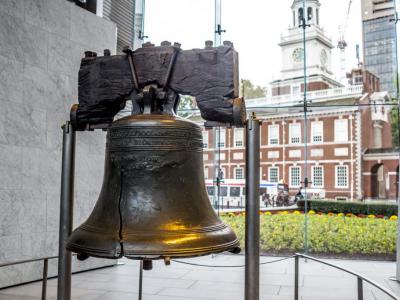
The Liberty Bell, an iconic symbol of American freedom and independence, has a rich and storied history closely tied to Philadelphia, Pennsylvania. Cast in 1752 by the Whitechapel Bell Foundry in London, England, the bell was originally commissioned to mark the 50th anniversary of Pennsylvania's original constitution and to symbolize the ideals of liberty and justice.
Initially hung in the Pennsylvania State House (now known as Independence Hall), the bell gained fame not only for its impressive size and sound but also for its role in important historical events. One popular but apocryphal story links the Liberty Bell to the reading of the Declaration of Independence on July 4, 1776, claiming that it rang out to announce the birth of the new nation. While there is no historical evidence to support this specific event, the bell did gain significance as a symbol of American independence in the ensuing decades.
The bell's inscription, "Proclaim LIBERTY Throughout all the Land unto all the Inhabitants Thereof," from the Bible, became its defining feature and a powerful statement in support of abolitionist movements in the 19th century. Its association with the abolitionist cause led to the bell being dubbed the "Liberty Bell" around the 1830s.
By the mid-19th century, as the bell's structural integrity deteriorated, it was retired from active service. In 1852, it was moved to a pavilion near Independence Hall where it became an object of public veneration. During World War II, the bell's iconic status was further solidified as it was used as a symbol of liberty and freedom, inspiring war bond drives and patriotic sentiment.
Today, the Liberty Bell is housed in the Liberty Bell Center, part of Independence National Historical Park in Philadelphia. It continues to attract millions of visitors each year who come to see and reflect upon its enduring message of liberty, justice, and the ongoing struggle for equality.
Initially hung in the Pennsylvania State House (now known as Independence Hall), the bell gained fame not only for its impressive size and sound but also for its role in important historical events. One popular but apocryphal story links the Liberty Bell to the reading of the Declaration of Independence on July 4, 1776, claiming that it rang out to announce the birth of the new nation. While there is no historical evidence to support this specific event, the bell did gain significance as a symbol of American independence in the ensuing decades.
The bell's inscription, "Proclaim LIBERTY Throughout all the Land unto all the Inhabitants Thereof," from the Bible, became its defining feature and a powerful statement in support of abolitionist movements in the 19th century. Its association with the abolitionist cause led to the bell being dubbed the "Liberty Bell" around the 1830s.
By the mid-19th century, as the bell's structural integrity deteriorated, it was retired from active service. In 1852, it was moved to a pavilion near Independence Hall where it became an object of public veneration. During World War II, the bell's iconic status was further solidified as it was used as a symbol of liberty and freedom, inspiring war bond drives and patriotic sentiment.
Today, the Liberty Bell is housed in the Liberty Bell Center, part of Independence National Historical Park in Philadelphia. It continues to attract millions of visitors each year who come to see and reflect upon its enduring message of liberty, justice, and the ongoing struggle for equality.
10) Christ Church Burial Ground
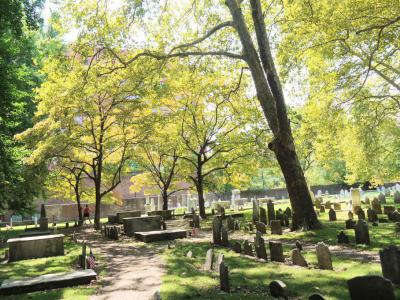
Christ Church Burial Ground in Philadelphia is one of those places where history both happened and decided to stay put. Still an active cemetery, it sits three blocks west of Christ Church itself, despite the name suggesting otherwise. The land was acquired back in 1719, when the original churchyard ran out of room, and this spot—then considered the edge of town—became the logical expansion. Today, it feels anything but remote.
Christ Church, founded in 1695, was the spiritual home of several key figures of the American Revolution, including George Washington. And just nearby, this burial ground gathers an equally impressive cast. Benjamin Franklin rests here with his wife Deborah, joined by four other signers of the Declaration of Independence: Benjamin Rush, Francis Hopkinson, Joseph Hewes, and George Ross. Two more—James Wilson and Robert Morris—are buried at the church itself, keeping things neatly divided.
The Burial Ground is open to visitors for a small fee, but even when the gates are closed, Franklin remains accessible—quite literally. At the corner of 5th and Arch Streets, a section of iron railing was added in 1858, so passersby could peer in. It didn’t take long for a tradition to form: tossing pennies onto Franklin’s grave, a small tribute to the man who famously advised that a penny saved is a penny earned...
Move a little farther from the crowd gathered around Franklin, and the atmosphere shifts. The space becomes quieter, with rows of lesser-known graves—carefully kept, often overlooked, and occasionally just as intriguing as the famous names that draw people in.
Christ Church, founded in 1695, was the spiritual home of several key figures of the American Revolution, including George Washington. And just nearby, this burial ground gathers an equally impressive cast. Benjamin Franklin rests here with his wife Deborah, joined by four other signers of the Declaration of Independence: Benjamin Rush, Francis Hopkinson, Joseph Hewes, and George Ross. Two more—James Wilson and Robert Morris—are buried at the church itself, keeping things neatly divided.
The Burial Ground is open to visitors for a small fee, but even when the gates are closed, Franklin remains accessible—quite literally. At the corner of 5th and Arch Streets, a section of iron railing was added in 1858, so passersby could peer in. It didn’t take long for a tradition to form: tossing pennies onto Franklin’s grave, a small tribute to the man who famously advised that a penny saved is a penny earned...
Move a little farther from the crowd gathered around Franklin, and the atmosphere shifts. The space becomes quieter, with rows of lesser-known graves—carefully kept, often overlooked, and occasionally just as intriguing as the famous names that draw people in.
11) Elfreth's Alley (must see)
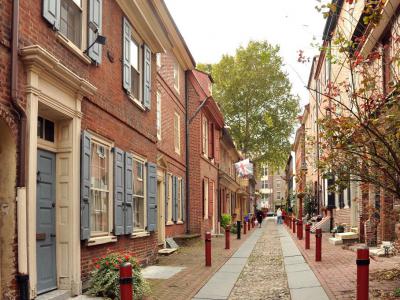
In the 18th century, Philadelphia became a bustling city, overcrowded with artisans, tradesmen, shipwrights, metalsmiths, glassblowers, and furniture makers. As a result, the landowners Arthur Wells and John Gilbert started a cart path from Front Street to Second Street in 1703. The path became Elfreth's Alley, named after Jeremiah Elfreth, an 18th-century blacksmith and a man of property in young Philadelphia.
By the 1770s Georgian and Federal-style houses lined the cobblestone Alley. Many of the structures were uniquely Philadelphian Trinity houses. These were three-story houses, exceptionally narrow, with one room on each floor. The floors were referred to as "Father, Son, and Holy Ghost." And that is how Trinity houses got their name.
In the 19th and 20th centuries, the industry started to close in on the Alley. A stove factory took its place in a row of residential houses. Immigrants, hoping for jobs, came in waves. In 1934 the Elfreth's Alley Association (EAA) was founded by Alley resident Dolly Ottey. Ottey fought to combat the deterioration of the Alley by encroaching industry in the early 20th century.
Elfreth's Alley Museum is located in houses 124 and 126. The museum preserves the home of 18th-century dressmakers. Tour guides discuss other homes and inhabitants of the Alley. On "Fete Day" in early June, which celebrates Alley's diverse ethnic heritage, the residents open their homes. There are historical reenactments with drum and fife bands. The Alley also host events for the 4th of July, Oktoberfestivities, and Halloween.
By the 1770s Georgian and Federal-style houses lined the cobblestone Alley. Many of the structures were uniquely Philadelphian Trinity houses. These were three-story houses, exceptionally narrow, with one room on each floor. The floors were referred to as "Father, Son, and Holy Ghost." And that is how Trinity houses got their name.
In the 19th and 20th centuries, the industry started to close in on the Alley. A stove factory took its place in a row of residential houses. Immigrants, hoping for jobs, came in waves. In 1934 the Elfreth's Alley Association (EAA) was founded by Alley resident Dolly Ottey. Ottey fought to combat the deterioration of the Alley by encroaching industry in the early 20th century.
Elfreth's Alley Museum is located in houses 124 and 126. The museum preserves the home of 18th-century dressmakers. Tour guides discuss other homes and inhabitants of the Alley. On "Fete Day" in early June, which celebrates Alley's diverse ethnic heritage, the residents open their homes. There are historical reenactments with drum and fife bands. The Alley also host events for the 4th of July, Oktoberfestivities, and Halloween.
12) National Constitution Center
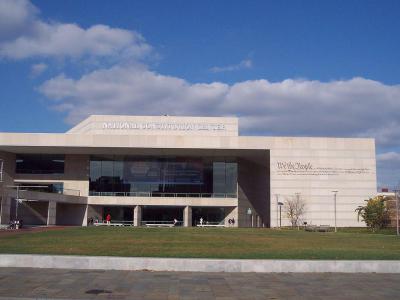
The National Constitution Center, located in Philadelphia, is a unique institution dedicated to the study and understanding of the United States Constitution. Established as the first and only facility of its kind in America, the center was specifically created by Congress with a nonpartisan mission: to disseminate information about the Constitution and to enhance awareness and understanding of this foundational document among the American populace.
Situated on the Independence Mall, the National Constitution Center is strategically placed in what is often referred to as "America's most historic square mile." This area is renowned for its rich historical significance, being near iconic landmarks such as Independence Hall and the Liberty Bell. The center's location enhances its role as a hub of American constitutional history and education.
The center was officially launched with a groundbreaking ceremony on September 17, 2000, a date that marks the 213th anniversary of the Constitution's signing. It opened its doors to the public on July 4, 2003, adding to the historical and cultural fabric of the area. The choice of these dates for its commencement and inauguration underscores the center's deep connection to American history and its constitutional legacy.
As an interactive museum, the National Constitution Center serves not only as a repository of knowledge but also as a dynamic forum for discussion and debate. It functions as a national town hall, bringing together government leaders, journalists, scholars, and celebrities for public discussions and events focusing on the Constitution. This includes hosting significant events such as presidential debates, further emphasizing its role in contemporary civic discourse.
Situated on the Independence Mall, the National Constitution Center is strategically placed in what is often referred to as "America's most historic square mile." This area is renowned for its rich historical significance, being near iconic landmarks such as Independence Hall and the Liberty Bell. The center's location enhances its role as a hub of American constitutional history and education.
The center was officially launched with a groundbreaking ceremony on September 17, 2000, a date that marks the 213th anniversary of the Constitution's signing. It opened its doors to the public on July 4, 2003, adding to the historical and cultural fabric of the area. The choice of these dates for its commencement and inauguration underscores the center's deep connection to American history and its constitutional legacy.
As an interactive museum, the National Constitution Center serves not only as a repository of knowledge but also as a dynamic forum for discussion and debate. It functions as a national town hall, bringing together government leaders, journalists, scholars, and celebrities for public discussions and events focusing on the Constitution. This includes hosting significant events such as presidential debates, further emphasizing its role in contemporary civic discourse.
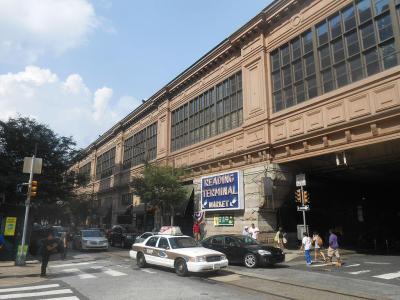
13) Reading Terminal Market (must see)
Open-air markets were popular in early Philadelphia. By the mid-19th century, markets along the Delaware River ran on for a mile or more, and High Street was renamed "Market Street." In 1859, the city dismantled everything under public pressure, which perceived open-air markets as dirty and unhygienic. Two indoor markets, Franklin Market and Farmers' Market opened at 12th and Market Streets. These two would be the foundation of the Reading Terminal Market.
With the coming of the railroads, architect Francis H. Kimball designed the Reading Railroad headhouse terminal in 1891. The train shed platform was built over the newly opened consolidated market. In 1893 an up-to-date refrigerated storage space was available for use in the market basement. Vendors could store perishable goods year-round.
After a period of prosperity, the Market experienced a long period of hardship. The Great Depression and the rise of competing supermarkets took their toll. Reading Railroad went bankrupt. In 1990 the City Council set up the non-profit Reading Terminal Market Corporation. The Market revived, and it is currently open seven days a week.
The Reading Terminal Market features arts, crafts, gifts, bakeries, confectionaries, eateries, flowers, ice creams, meats, seafood, Pennsylvania Dutch products, produce, and specialties. There are also diners, restaurants, and fast-food venues.
With the coming of the railroads, architect Francis H. Kimball designed the Reading Railroad headhouse terminal in 1891. The train shed platform was built over the newly opened consolidated market. In 1893 an up-to-date refrigerated storage space was available for use in the market basement. Vendors could store perishable goods year-round.
After a period of prosperity, the Market experienced a long period of hardship. The Great Depression and the rise of competing supermarkets took their toll. Reading Railroad went bankrupt. In 1990 the City Council set up the non-profit Reading Terminal Market Corporation. The Market revived, and it is currently open seven days a week.
The Reading Terminal Market features arts, crafts, gifts, bakeries, confectionaries, eateries, flowers, ice creams, meats, seafood, Pennsylvania Dutch products, produce, and specialties. There are also diners, restaurants, and fast-food venues.
14) Philadelphia City Hall
King Charles II owed a hefty sum of money to Admiral Sir William Penn, to wit 16,000 pounds. To discharge the debt, on 4 March 1681, the King signed a charter granting what is now Pennsylvania to the Admiral's son, William. William the Younger was a radical Quaker filled with democratic ideals. He set out for America.
Center Square was one of the original five squares marked out by Penn as the center of his city. It was simply a public square until the building of City Hall in 1871. By that time, it had come to be called Penn Square.
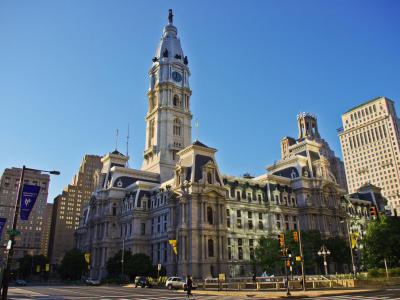
Located at number 1 Penn Square, City Hall was designed by architect John McArthur in the Second Empire style. It was in the process of construction from 1871 until 1901. Upon its completion, the Hall was the world's tallest habitable building.
The City Hall is a masonry building supported by brick and granite walls up to 22 feet thick. The outside walls are mainly limestone, granite, and marble. Sculptor Alexander Milne Calder created over 250 sculptured images of American ideals. With nearly 700 rooms, the Hall is the largest civic building in the country with the tallest clock tower in the world.
The tall clock tower has a clock face on each side. Four bronze eagles are perched above the clocks. A giant bronze statue of William Penn by Calder is at the top of the tower. Beneath the monument is a glass-enclosed observation deck.
Center Square was one of the original five squares marked out by Penn as the center of his city. It was simply a public square until the building of City Hall in 1871. By that time, it had come to be called Penn Square.
Located at number 1 Penn Square, City Hall was designed by architect John McArthur in the Second Empire style. It was in the process of construction from 1871 until 1901. Upon its completion, the Hall was the world's tallest habitable building.
The City Hall is a masonry building supported by brick and granite walls up to 22 feet thick. The outside walls are mainly limestone, granite, and marble. Sculptor Alexander Milne Calder created over 250 sculptured images of American ideals. With nearly 700 rooms, the Hall is the largest civic building in the country with the tallest clock tower in the world.
The tall clock tower has a clock face on each side. Four bronze eagles are perched above the clocks. A giant bronze statue of William Penn by Calder is at the top of the tower. Beneath the monument is a glass-enclosed observation deck.
15) LOVE Park
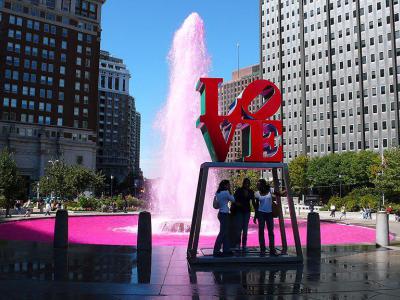
LOVE Park, officially named John F. Kennedy Plaza, is a notable public park in Center City, Philadelphia. It is renowned for its reproduction of Robert Indiana's LOVE sculpture, which has become an iconic feature overlooking the plaza. The park's nickname, "LOVE Park," is derived from this sculpture.
The park's design was the brainchild of former Philadelphia city planner Edmund Bacon and architect Vincent G. Kling. It was established in 1965, covering an underground parking garage. The park's central attraction is a single-spout fountain, added in 1969, which quickly became its main feature.
Located directly across from the Philadelphia City Hall, LOVE Park serves as a visual terminus for the Benjamin Franklin Parkway. It was dedicated in 1967 as John F. Kennedy Plaza, and a plaque within the park commemorates this dedication.
LOVE Park is also significant in the skateboarding community. For many years, it was a popular skateboarding spot, contributing to its cultural significance.
The famous "LOVE" sculpture by Robert Indiana first graced the plaza in 1976 as part of the United States Bicentennial celebration. Initially, the sculpture was temporary and removed in 1978. However, thanks to the efforts of Fitz Eugene Dixon Jr., chairman of the Philadelphia Art Commission, the sculpture was purchased and permanently installed in the park that same year.
From 2016 to 2018, LOVE Park underwent a major makeover, turning the concrete-heavy plaza into a greener and friendlier space. The project added lawns, gardens, stormwater basins with diverse plants, new café areas, and recreational spaces, all while preserving the view of City Hall and the Benjamin Franklin Parkway. This transformation reflects modern urban park design trends, marking a new era for the park.
The park's design was the brainchild of former Philadelphia city planner Edmund Bacon and architect Vincent G. Kling. It was established in 1965, covering an underground parking garage. The park's central attraction is a single-spout fountain, added in 1969, which quickly became its main feature.
Located directly across from the Philadelphia City Hall, LOVE Park serves as a visual terminus for the Benjamin Franklin Parkway. It was dedicated in 1967 as John F. Kennedy Plaza, and a plaque within the park commemorates this dedication.
LOVE Park is also significant in the skateboarding community. For many years, it was a popular skateboarding spot, contributing to its cultural significance.
The famous "LOVE" sculpture by Robert Indiana first graced the plaza in 1976 as part of the United States Bicentennial celebration. Initially, the sculpture was temporary and removed in 1978. However, thanks to the efforts of Fitz Eugene Dixon Jr., chairman of the Philadelphia Art Commission, the sculpture was purchased and permanently installed in the park that same year.
From 2016 to 2018, LOVE Park underwent a major makeover, turning the concrete-heavy plaza into a greener and friendlier space. The project added lawns, gardens, stormwater basins with diverse plants, new café areas, and recreational spaces, all while preserving the view of City Hall and the Benjamin Franklin Parkway. This transformation reflects modern urban park design trends, marking a new era for the park.
