Custom Walk in Milan, Italy by raksta_786_7e454c created on 2026-07-26
Guide Location: Italy » Milan
Guide Type: Custom Walk
# of Sights: 11
Tour Duration: 2 Hour(s)
Travel Distance: 3.4 Km or 2.1 Miles
Share Key: 4FHUM
Guide Type: Custom Walk
# of Sights: 11
Tour Duration: 2 Hour(s)
Travel Distance: 3.4 Km or 2.1 Miles
Share Key: 4FHUM
How It Works
Please retrieve this walk in the GPSmyCity app. Once done, the app will guide you from one tour stop to the next as if you had a personal tour guide. If you created the walk on this website or come to the page via a link, please follow the instructions below to retrieve the walk in the app.
Retrieve This Walk in App
Step 1. Download the app "GPSmyCity: Walks in 1K+ Cities" on Apple App Store or Google Play Store.



Step 2. In the GPSmyCity app, download(or launch) the guide "Milan Map and Walking Tours".
Step 3. Tap the menu button located at upper right corner of the "Walks" screen and select "Retrieve custom walk". Enter the share key: 4FHUM
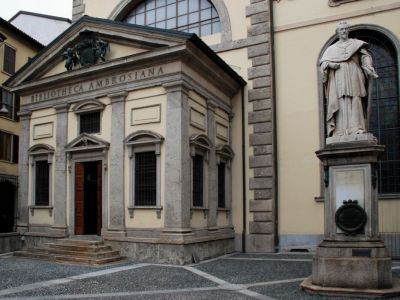
1) Biblioteca Ambrosiana (Ambrosian Library & Art Gallery) (must see)
In the middle of Milan’s traffic, fashion crowds, and espresso-fueled conversations, there’s a place that lowers the volume - the Ambrosian Library & Art Gallery. It was founded in 1603 by Cardinal Federico Borromeo, who returned from Rome inspired and decided Milan needed a serious home for books, art, and big ideas. The cardinal named it after Saint Ambrose, the city’s patron. Subtle branding, Renaissance style...
What he created was no modest reading room. We’re talking more than 36,000 manuscripts and over 750,000 prints. Shelves upon shelves of theology, science, poetry, philosophy - the kind of place where curiosity stretches its legs. It’s a Renaissance time capsule, where religion, scholarship, and aesthetics sit at the same table and get along rather well...
And then there’s Leonardo. The library houses the Codex Atlanticus, twelve hefty volumes of drawings and notes by Leonardo da Vinci, created between 1478 and 1519. Open those pages, and you find yourself inside a mind that refused to stay in one lane. Mechanics. Astronomy. Botany. Architecture. Mathematics. Even fables. It’s less a notebook and more a portable universe.
Walk into the Pinacoteca, the gallery section, and the names keep coming. Leonardo’s Portrait of a Musician hangs here. So does Basket of Fruit by Caravaggio - proof that even a simple bowl of produce can look dramatic under the right lighting. You’ll also find Raphael’s full-scale preparatory drawing for The School of Athens - yes, the same masterpiece whose final version lives in the Vatican.
The collection doesn’t stop with Italian stars. Islamic manuscripts, an 11th-century diwan of poets, the oldest copy of the Kitab Sibawayh, the Ambrosian Iliad - it’s an intellectual world tour without leaving the building.
In essence, this place is where Milan exhales. You can stand inches away from genius, watch restorers quietly bringing centuries-old works back to life, and feel that rare museum calm that makes you slow down.
Pro tip: Come on a weekday. The map is clear, the highlights are easy to spot, and sometimes it feels like the whole Renaissance is waiting just for you.
What he created was no modest reading room. We’re talking more than 36,000 manuscripts and over 750,000 prints. Shelves upon shelves of theology, science, poetry, philosophy - the kind of place where curiosity stretches its legs. It’s a Renaissance time capsule, where religion, scholarship, and aesthetics sit at the same table and get along rather well...
And then there’s Leonardo. The library houses the Codex Atlanticus, twelve hefty volumes of drawings and notes by Leonardo da Vinci, created between 1478 and 1519. Open those pages, and you find yourself inside a mind that refused to stay in one lane. Mechanics. Astronomy. Botany. Architecture. Mathematics. Even fables. It’s less a notebook and more a portable universe.
Walk into the Pinacoteca, the gallery section, and the names keep coming. Leonardo’s Portrait of a Musician hangs here. So does Basket of Fruit by Caravaggio - proof that even a simple bowl of produce can look dramatic under the right lighting. You’ll also find Raphael’s full-scale preparatory drawing for The School of Athens - yes, the same masterpiece whose final version lives in the Vatican.
The collection doesn’t stop with Italian stars. Islamic manuscripts, an 11th-century diwan of poets, the oldest copy of the Kitab Sibawayh, the Ambrosian Iliad - it’s an intellectual world tour without leaving the building.
In essence, this place is where Milan exhales. You can stand inches away from genius, watch restorers quietly bringing centuries-old works back to life, and feel that rare museum calm that makes you slow down.
Pro tip: Come on a weekday. The map is clear, the highlights are easy to spot, and sometimes it feels like the whole Renaissance is waiting just for you.
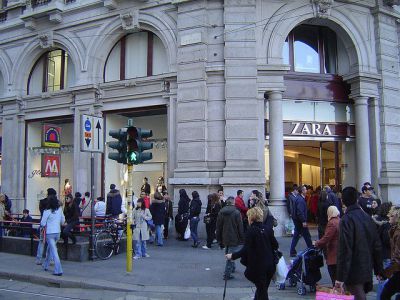
2) Via Torino (Torino Street)
If Milan had a catwalk you could actually walk on, it would be Via Torino. This long, energetic street runs straight from Piazza Duomo to the Columns of San Lorenzo, like a retail runway with a Roman afterparty at the end. Start under the shadow of the cathedral, finish among ancient columns, and reward your shopping stamina with an aperitivo as the Milanese nightlife warms up around you. Not a bad itinerary for a single street...
If you love shoes, especially sneakers, this is your natural habitat. Via Torino is packed with stores selling footwear, clothing, skateboards, technical gear, backpacks, and sportswear for football and basketball. The surrounding streets join the chorus, with shop windows glowing in bright colors and distinctly American-style displays.
But Via Torino was not always about sneakers and sportswear. In earlier centuries, it was home to important artisanal workshops and laboratories. Goldsmiths, spice traders, and craftsmen worked nearby, and you can still feel that legacy in the side streets-Via Orefici, Via Spadari, Via Speronari-where the names themselves sound like a list of old professions: Goldsmiths, Sword Makers, Spur Makers. Torino street received its current name only in 1859, and since then, it has been reshaped more than once, adapting to the needs of a growing, modern city.
And yet, Milan likes contrast. Between two fashion chains, you might suddenly find yourself stepping into the Renaissance Basilica of Santa Maria presso San Satiro. Small, elegant, and hiding a famous optical illusion in its architecture, it feels like a quiet reminder that history is never far away here.
So, stroll, browse, try on, compare prices-and every now and then, look up from the shop windows. Via Torino is undoubtedly a place to buy things, but it's also a place where centuries of Milanese life continue to pass by, one step at a time...
If you love shoes, especially sneakers, this is your natural habitat. Via Torino is packed with stores selling footwear, clothing, skateboards, technical gear, backpacks, and sportswear for football and basketball. The surrounding streets join the chorus, with shop windows glowing in bright colors and distinctly American-style displays.
But Via Torino was not always about sneakers and sportswear. In earlier centuries, it was home to important artisanal workshops and laboratories. Goldsmiths, spice traders, and craftsmen worked nearby, and you can still feel that legacy in the side streets-Via Orefici, Via Spadari, Via Speronari-where the names themselves sound like a list of old professions: Goldsmiths, Sword Makers, Spur Makers. Torino street received its current name only in 1859, and since then, it has been reshaped more than once, adapting to the needs of a growing, modern city.
And yet, Milan likes contrast. Between two fashion chains, you might suddenly find yourself stepping into the Renaissance Basilica of Santa Maria presso San Satiro. Small, elegant, and hiding a famous optical illusion in its architecture, it feels like a quiet reminder that history is never far away here.
So, stroll, browse, try on, compare prices-and every now and then, look up from the shop windows. Via Torino is undoubtedly a place to buy things, but it's also a place where centuries of Milanese life continue to pass by, one step at a time...
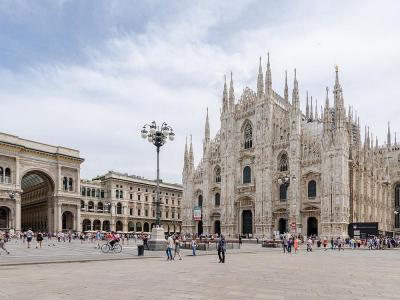
3) Piazza del Duomo (Cathedral Square) (must see)
Milan's central square-vast, echoing, alive with camera clicks, quick footsteps, and pigeons who clearly believe they own the place. It feels grand, almost theatrical. On the one side stands the Museum of the Twentieth Century, cool and modern against the Gothic drama of the Duomo.
Strangely, no café terraces spread across the square itself. The space is left open, almost ceremonial. But slip under the porticoes, and you’ll find Camparino, founded in 1867 by the Campari family.
Right here, at the entrance to the Vittorio Emanuele II Gallery, Giuseppe Verdi used to stop for a drink after his concerts. In 1877, Milanese aristocrats gathered at this very spot to witness one of the city’s first experiments with electric lighting. Imagine the excitement-people staring upward as bulbs flickered to life...
Today, inside its Art Nouveau interior, the ritual continues. Suits loosen ties. Conversations soften. Coffee arrives. Campari glows red in the glass, usually accompanied by olives large enough to demand attention.
Now turn to the south side of the Duomo and meet the Royal Palace. Beneath its neoclassical façade lies a complicated past. This was once the Broletto (or Milan’s medieval town hall), destroyed by Frederick Barbarossa in 1162. Rebuilt in 1171, it later became the Ducal Palace of the Visconti and Sforza dynasties. When Galeazzo Visconti married Beatrice d’Este, the couple celebrated their entrance into Milan with eight full days of festivities here. Eight days! No short reception, indeed...
In 1336, the Visconti added their private chapel, San Gottardo in Corte. Its elegant colonnaded bell tower still rises behind the palace, even though the church itself disappeared during later renovations. In 1412, drama returned when Giovanni Maria Visconti was murdered on the church steps. After that, the family wisely moved to the more secure Sforzesco Castle. Under the Sforzas, a theater operated inside the palace, and in 1595, a 14-year-old Mozart performed here.
Also standing proudly in the piazza is an 1896 equestrian statue of Vittorio Emanuele II, the first king of unified Italy, who entered Milan triumphantly in 1859. Horse rearing up. King upright. History cast in bronze. In this square, Milan does not whisper. It performs!
Strangely, no café terraces spread across the square itself. The space is left open, almost ceremonial. But slip under the porticoes, and you’ll find Camparino, founded in 1867 by the Campari family.
Right here, at the entrance to the Vittorio Emanuele II Gallery, Giuseppe Verdi used to stop for a drink after his concerts. In 1877, Milanese aristocrats gathered at this very spot to witness one of the city’s first experiments with electric lighting. Imagine the excitement-people staring upward as bulbs flickered to life...
Today, inside its Art Nouveau interior, the ritual continues. Suits loosen ties. Conversations soften. Coffee arrives. Campari glows red in the glass, usually accompanied by olives large enough to demand attention.
Now turn to the south side of the Duomo and meet the Royal Palace. Beneath its neoclassical façade lies a complicated past. This was once the Broletto (or Milan’s medieval town hall), destroyed by Frederick Barbarossa in 1162. Rebuilt in 1171, it later became the Ducal Palace of the Visconti and Sforza dynasties. When Galeazzo Visconti married Beatrice d’Este, the couple celebrated their entrance into Milan with eight full days of festivities here. Eight days! No short reception, indeed...
In 1336, the Visconti added their private chapel, San Gottardo in Corte. Its elegant colonnaded bell tower still rises behind the palace, even though the church itself disappeared during later renovations. In 1412, drama returned when Giovanni Maria Visconti was murdered on the church steps. After that, the family wisely moved to the more secure Sforzesco Castle. Under the Sforzas, a theater operated inside the palace, and in 1595, a 14-year-old Mozart performed here.
Also standing proudly in the piazza is an 1896 equestrian statue of Vittorio Emanuele II, the first king of unified Italy, who entered Milan triumphantly in 1859. Horse rearing up. King upright. History cast in bronze. In this square, Milan does not whisper. It performs!
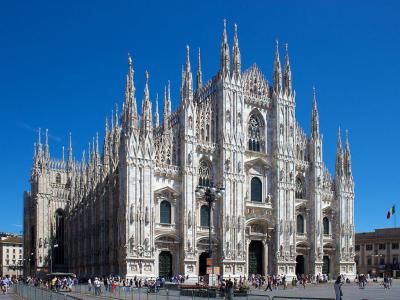
4) Duomo di Milano (Milan Cathedral) (must see)
Some cities have a landmark; Milan has a marble mountain. The Milan Cathedral - or simply the Duomo - is not just big. It’s enormous. This is the seat of the Archbishop of Milan, the largest church in Italy, the third largest in Europe, and the fourth in the world. It spreads across 12,000 square meters and weighs around 325,000 tons. In other words, subtle it is not...
Dedicated to Saint Mary Nascent, the Duomo has been at the heart of city life since 1386. Its foundation stone was laid by Gian Galeazzo Visconti, the first duke of Milan, who had grand ambitions - but unfortunately died in 1402 when only half the cathedral was done. Construction then politely paused for almost 80 years. The reason? - No money and a clear plan. Just a very large unfinished church...
Work finally resumed around 1500, and by 1510, the octagonal dome was complete, decorated with rows of statues straight out of the Bible - 60 figures watching over Milan from above.
Then came Napoleon. In 1805, he decided the façade needed to be finished - promptly. Seven years later, it was done. To thank him, a statue of Napoleon was placed on one of the spires. Not modest, but effective. The Duomo even hosted his coronation.
Still, the cathedral refused to rush history. It wasn’t until 1965, with the final gate completed, that this centuries-long building project could finally call itself finished.
Now, about visiting. The real adventure begins when you climb to the roof. 201 steps through a narrow spiral passage - unless you wisely choose the elevator. Up there, 70 meters above the piazza, you walk among spires, statues, gargoyles, and flying buttresses, with Milan stretching out below you. It feels less like a rooftop and more like a marble forest in the sky.
Below ground, the Paleo-Christian baptistery beneath the west side reveals even older layers of the city. So yes, the Duomo works both up and down.
If you do one thing in Milan, make it this. Book your ticket online, skip the queue, and stay until evening. When the white lights illuminate the façade, the cathedral stops being impressive - and becomes unforgettable!
Dedicated to Saint Mary Nascent, the Duomo has been at the heart of city life since 1386. Its foundation stone was laid by Gian Galeazzo Visconti, the first duke of Milan, who had grand ambitions - but unfortunately died in 1402 when only half the cathedral was done. Construction then politely paused for almost 80 years. The reason? - No money and a clear plan. Just a very large unfinished church...
Work finally resumed around 1500, and by 1510, the octagonal dome was complete, decorated with rows of statues straight out of the Bible - 60 figures watching over Milan from above.
Then came Napoleon. In 1805, he decided the façade needed to be finished - promptly. Seven years later, it was done. To thank him, a statue of Napoleon was placed on one of the spires. Not modest, but effective. The Duomo even hosted his coronation.
Still, the cathedral refused to rush history. It wasn’t until 1965, with the final gate completed, that this centuries-long building project could finally call itself finished.
Now, about visiting. The real adventure begins when you climb to the roof. 201 steps through a narrow spiral passage - unless you wisely choose the elevator. Up there, 70 meters above the piazza, you walk among spires, statues, gargoyles, and flying buttresses, with Milan stretching out below you. It feels less like a rooftop and more like a marble forest in the sky.
Below ground, the Paleo-Christian baptistery beneath the west side reveals even older layers of the city. So yes, the Duomo works both up and down.
If you do one thing in Milan, make it this. Book your ticket online, skip the queue, and stay until evening. When the white lights illuminate the façade, the cathedral stops being impressive - and becomes unforgettable!
5) Galleria Vittorio Emanuele II (Vittorio Emanuele II Gallery) (must see)
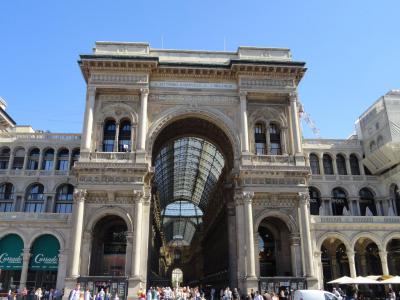
Walk into the Galleria Vittorio Emanuele II, and you’re not simply entering a mall - you’re stepping straight into Italy’s grand 19th-century statement piece. Five storeys high, wrapped in curved glass and iron, dressed up with patriotic mosaics and statues, it feels like a country saying, “We’re unified now - and we’re fabulous!”
Construction began in 1865 under architect Giuseppe Mengoni, the mastermind behind the grand plan connecting the Milan Cathedral to La Scala Opera House. The gallery was named after Vittorio Emanuele II, the first king of a united Italy, and officially opened in 1867.
But perfection takes time. Work continued for another decade. Then came the twist: in December 1877, just one day before completion, Mengoni fell from the top of the triumphal arch and died. A truly dramatic ending for a dramatic project...
Architecturally, it’s bold. The layout forms a Latin cross: two grand glass-vaulted passages - one 196 meters long, the other just over 105 - intersect beneath a soaring dome nearly 47 meters high. Iron and glass do the heavy lifting, pioneering the idea of the enclosed shopping arcade. Some even say this iron confidence later inspired the Eiffel Tower in Paris.
Now look down. The floor is a marble map of Italian pride, with mosaics representing major cities. And there it is - the famous bull. Tradition says that you should place your right heel on a certain anatomical detail, spin around, and make a wish. Centuries of enthusiastic spinning have worn an actual hole into the mosaic. A vivid example of Milanese optimism, carved in marble...
Indeed, visiting here feels like stepping into a perfectly preserved postcard of 19th-century Milan - light streaming through the dome, elegant shopfronts glowing, conversations echoing under glass. And yes, you can sit down at one of the cafés, order something indulgent, and watch the stylish parade drift by without emptying your wallet.
At the far end, opposite the statue of Leonardo da Vinci, you’ll even find a museum dedicated to the master himself.
For the best experience, come early in the morning or late at night, when the crowds thin out and the dome belongs almost entirely to you. And whatever you do - find the bull. Spin. Make the wish. Milan expects nothing less...
Construction began in 1865 under architect Giuseppe Mengoni, the mastermind behind the grand plan connecting the Milan Cathedral to La Scala Opera House. The gallery was named after Vittorio Emanuele II, the first king of a united Italy, and officially opened in 1867.
But perfection takes time. Work continued for another decade. Then came the twist: in December 1877, just one day before completion, Mengoni fell from the top of the triumphal arch and died. A truly dramatic ending for a dramatic project...
Architecturally, it’s bold. The layout forms a Latin cross: two grand glass-vaulted passages - one 196 meters long, the other just over 105 - intersect beneath a soaring dome nearly 47 meters high. Iron and glass do the heavy lifting, pioneering the idea of the enclosed shopping arcade. Some even say this iron confidence later inspired the Eiffel Tower in Paris.
Now look down. The floor is a marble map of Italian pride, with mosaics representing major cities. And there it is - the famous bull. Tradition says that you should place your right heel on a certain anatomical detail, spin around, and make a wish. Centuries of enthusiastic spinning have worn an actual hole into the mosaic. A vivid example of Milanese optimism, carved in marble...
Indeed, visiting here feels like stepping into a perfectly preserved postcard of 19th-century Milan - light streaming through the dome, elegant shopfronts glowing, conversations echoing under glass. And yes, you can sit down at one of the cafés, order something indulgent, and watch the stylish parade drift by without emptying your wallet.
At the far end, opposite the statue of Leonardo da Vinci, you’ll even find a museum dedicated to the master himself.
For the best experience, come early in the morning or late at night, when the crowds thin out and the dome belongs almost entirely to you. And whatever you do - find the bull. Spin. Make the wish. Milan expects nothing less...
6) La Scala (Opera House and Museum) (must see)
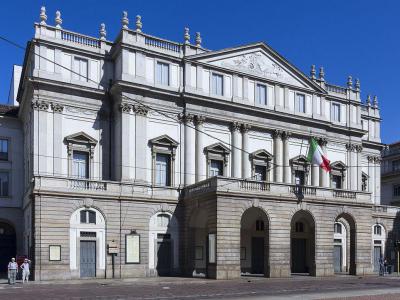
If Milan had a heartbeat, it might sound like an orchestra tuning up inside La Scala Opera House. Since 1778, this legendary theater has been setting the standard for opera worldwide. Its Chorus, Ballet, and Orchestra have helped make it one of the most respected musical institutions on the planet. The greatest Italian voices - and many international stars - have stepped onto this stage, knowing that a triumph at La Scala can define a career.
The theater rose from ashes, quite literally. After the Teatro Regio Ducale burned down in 1776, Milan decided it needed something even grander. The new opera house was built on the site of the former church of Santa Maria alla Scala, and that’s where the name comes from.
Construction was financed by selling lavishly decorated theater boxes to wealthy families. These boxes were not just seats; they were status symbols, mini living rooms for Milan’s elite. Even the French writer Stendhal was impressed.
Curious fact: in those early days, the main floor had no chairs, so audiences stood through performances. And believe it or not, there was no proper orchestra pit either. Indeed, opera was an endurance sport...
World War II left the building badly damaged, but Milan was not ready to lose its cultural soul. La Scala reopened in 1946 with a historic concert conducted by Arturo Toscanini, featuring a remarkable solo by Renata Tebaldi. It was not just a reopening; it was a statement!
A major renovation between 2002 and 2004 updated the theater for the modern age, while preserving its historic charm. From the outside, the façade looks surprisingly modest. Step inside, however, and you find red velvet, gold details, and an atmosphere that feels both grand and intimate - often said to rival, and even surpass, opera houses in New York and London.
The La Scala Orchestra, with its 135 musicians, is famous for its refined and unified sound. The theater is equally admired for its symphonic concerts. Next door, the museum displays an extraordinary collection of musical treasures. A visit even allows you to sit in one of the prestigious boxes - perfect for a photo and a moment of quiet admiration.
A practical note: second-row balcony seats are best avoided if you are not tall. And after 6 pm, same-day tickets are often available at a generous discount - because even legends can have last-minute offers...
The theater rose from ashes, quite literally. After the Teatro Regio Ducale burned down in 1776, Milan decided it needed something even grander. The new opera house was built on the site of the former church of Santa Maria alla Scala, and that’s where the name comes from.
Construction was financed by selling lavishly decorated theater boxes to wealthy families. These boxes were not just seats; they were status symbols, mini living rooms for Milan’s elite. Even the French writer Stendhal was impressed.
Curious fact: in those early days, the main floor had no chairs, so audiences stood through performances. And believe it or not, there was no proper orchestra pit either. Indeed, opera was an endurance sport...
World War II left the building badly damaged, but Milan was not ready to lose its cultural soul. La Scala reopened in 1946 with a historic concert conducted by Arturo Toscanini, featuring a remarkable solo by Renata Tebaldi. It was not just a reopening; it was a statement!
A major renovation between 2002 and 2004 updated the theater for the modern age, while preserving its historic charm. From the outside, the façade looks surprisingly modest. Step inside, however, and you find red velvet, gold details, and an atmosphere that feels both grand and intimate - often said to rival, and even surpass, opera houses in New York and London.
The La Scala Orchestra, with its 135 musicians, is famous for its refined and unified sound. The theater is equally admired for its symphonic concerts. Next door, the museum displays an extraordinary collection of musical treasures. A visit even allows you to sit in one of the prestigious boxes - perfect for a photo and a moment of quiet admiration.
A practical note: second-row balcony seats are best avoided if you are not tall. And after 6 pm, same-day tickets are often available at a generous discount - because even legends can have last-minute offers...
7) Museo Poldi Pezzoli (Poldi Pezzoli Museum) (must see)
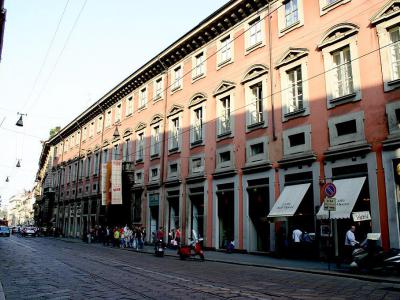
Along the elegant Via Manzoni, grand palaces line up as if they’re competing in a beauty contest. But one residence quietly steals the show here: the Poldi Pezzoli Museum.
To say that Gian Giacomo Poldi Pezzoli was wealthy would do him justice only partially. He had taste, ambition, and a collector’s obsession. With a generous inheritance and a team of talented craftsmen, artists, and restorers, he reshaped his palace into a theatrical journey through art history. Each room reflected a different period style. Think of it as a 19th-century passion project - only on an aristocratic scale.
And then the man made a remarkable gesture of generosity - decreed that after his death, both the palace and its treasures would belong to the public. The museum opened in 1881.
At first, arms and armor dominated the collection - Poldi Pezzoli clearly enjoyed a good suit of shining steel. Over time, paintings from the 15th to 18th centuries joined the display, along with sculpture, Persian carpets, porcelain, and delicate Murano glass.
World War II bombings damaged much of the palace, but four of the original “Artistic Rooms” survived and were carefully restored. Today, you can still step into the Rococo-style Stucco Room, the dramatic Black Room lined with mahogany and ivory, the Antique Murano Room that once served as the owner's bedroom, and the Dante Study with its Byzantine atmosphere and treasured objects.
And then there are the paintings. Renaissance masters hold court here. Mantegna's “Portrait of a Man” and “Madonna and Child”, Piero della Francesca's “Deposition” and “St Nicholas of Tolentino”, and Botticelli’s “Madonna and Child” - they’re all present inside the Golden Salon. But the true star, the face that follows you long after you leave, is Pollaiuolo’s 15th-century “Portrait of a Young Woman.” Elegant, mysterious, and now the museum’s symbol, she has quietly captured Milan’s heart.
As you move through the galleries, you’ll also find glittering jewelry, Venetian glass, and porcelain that seems almost too fragile to breathe near. Indeed, this is not just a museum but a home. A collector’s dream preserved in rooms that still feel personal.
And here’s a practical bonus: it’s one of the rare Milan museums open on Mondays. The ticket is reasonable - and the audio guide is absolutely worth it.
To say that Gian Giacomo Poldi Pezzoli was wealthy would do him justice only partially. He had taste, ambition, and a collector’s obsession. With a generous inheritance and a team of talented craftsmen, artists, and restorers, he reshaped his palace into a theatrical journey through art history. Each room reflected a different period style. Think of it as a 19th-century passion project - only on an aristocratic scale.
And then the man made a remarkable gesture of generosity - decreed that after his death, both the palace and its treasures would belong to the public. The museum opened in 1881.
At first, arms and armor dominated the collection - Poldi Pezzoli clearly enjoyed a good suit of shining steel. Over time, paintings from the 15th to 18th centuries joined the display, along with sculpture, Persian carpets, porcelain, and delicate Murano glass.
World War II bombings damaged much of the palace, but four of the original “Artistic Rooms” survived and were carefully restored. Today, you can still step into the Rococo-style Stucco Room, the dramatic Black Room lined with mahogany and ivory, the Antique Murano Room that once served as the owner's bedroom, and the Dante Study with its Byzantine atmosphere and treasured objects.
And then there are the paintings. Renaissance masters hold court here. Mantegna's “Portrait of a Man” and “Madonna and Child”, Piero della Francesca's “Deposition” and “St Nicholas of Tolentino”, and Botticelli’s “Madonna and Child” - they’re all present inside the Golden Salon. But the true star, the face that follows you long after you leave, is Pollaiuolo’s 15th-century “Portrait of a Young Woman.” Elegant, mysterious, and now the museum’s symbol, she has quietly captured Milan’s heart.
As you move through the galleries, you’ll also find glittering jewelry, Venetian glass, and porcelain that seems almost too fragile to breathe near. Indeed, this is not just a museum but a home. A collector’s dream preserved in rooms that still feel personal.
And here’s a practical bonus: it’s one of the rare Milan museums open on Mondays. The ticket is reasonable - and the audio guide is absolutely worth it.
8) Via Manzoni (Manzoni Street)
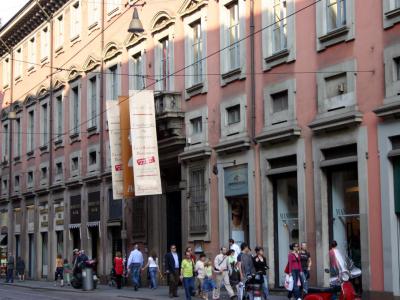
Rolling into Via Manzoni, you immediately feel the temperature change. Not the weather - the atmosphere. This is Milan in a tailored suit.
The street runs from Piazza della Scala toward Piazza Cavour, and every step feels polished. Aristocratic apartment buildings line the way. Churches stand with quiet confidence. Palaces appear one after another, as if competing in understated elegance.
Halfway along, you meet the refined façade of the Poldi Pezzoli Museum, hiding Renaissance treasures behind its dignified doors. A few steps further stands the Grand Hotel et de Milan, forever linked to composer Giuseppe Verdi, who spent his final days here in 1901. History does not shout on Via Manzoni. It clears its throat softly and adjusts its cuffs...
The street carries the name of Alessandro Manzoni, the celebrated writer, poet, and playwright. Fittingly, it received his name on the very day he died in 1873. Manzoni lived nearby, on Via Morone, in a house whose garden almost brushed this elegant boulevard. In the 19th century, this was considered the most luxurious street in Milan. Some things, it seems, never really change.
Today, Via Manzoni is firmly stitched into the fabric of the Quadrilatero della Moda, Milan’s high-end fashion district. The Armani Megastore anchors the scene with confident minimalism. Around it, boutiques display everything from silk scarves to statement shoes with the quiet certainty that someone important will walk in at any moment.
This is not a street you rush. You glide. You observe window displays like works of art. You imagine Verdi stepping into a carriage. You picture Manzoni strolling past, perhaps unaware that one day the street would bear his name.
Via Manzoni is Milan distilled: cultured, composed, and impeccably dressed...
The street runs from Piazza della Scala toward Piazza Cavour, and every step feels polished. Aristocratic apartment buildings line the way. Churches stand with quiet confidence. Palaces appear one after another, as if competing in understated elegance.
Halfway along, you meet the refined façade of the Poldi Pezzoli Museum, hiding Renaissance treasures behind its dignified doors. A few steps further stands the Grand Hotel et de Milan, forever linked to composer Giuseppe Verdi, who spent his final days here in 1901. History does not shout on Via Manzoni. It clears its throat softly and adjusts its cuffs...
The street carries the name of Alessandro Manzoni, the celebrated writer, poet, and playwright. Fittingly, it received his name on the very day he died in 1873. Manzoni lived nearby, on Via Morone, in a house whose garden almost brushed this elegant boulevard. In the 19th century, this was considered the most luxurious street in Milan. Some things, it seems, never really change.
Today, Via Manzoni is firmly stitched into the fabric of the Quadrilatero della Moda, Milan’s high-end fashion district. The Armani Megastore anchors the scene with confident minimalism. Around it, boutiques display everything from silk scarves to statement shoes with the quiet certainty that someone important will walk in at any moment.
This is not a street you rush. You glide. You observe window displays like works of art. You imagine Verdi stepping into a carriage. You picture Manzoni strolling past, perhaps unaware that one day the street would bear his name.
Via Manzoni is Milan distilled: cultured, composed, and impeccably dressed...
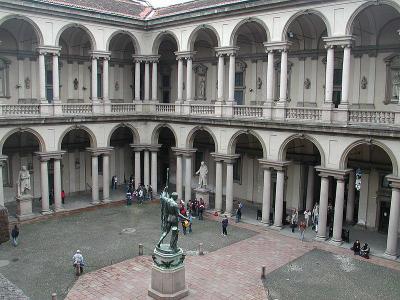
9) Pinacoteca di Brera (Brera Art Gallery) (must see)
The moment you step inside the Brera Gallery, you’re essentially walking through Napoleon’s carefully curated art collection. During his rule, churches and monasteries were closed, and their finest artworks were quietly relocated here. The result was one of Italy’s richest aggregations of paintings, gathered under one elegant roof on Via Brera, surrounded by cafés where locals argue about art, politics, and espresso strength.
Walking through the main gate, you’re greeted-as you naturally might expect-by a confident statue of Napoleon Bonaparte. The building itself multitasks: the first floor houses the Academy of Fine Arts, while the masterpieces wait upstairs on the second floor. Climb up, and suddenly you’re facing nearly 40 rooms of Italian brilliance.
Here’s Andrea Mantegna’s dramatically foreshortened Dead Christ, looking almost three-dimensional. There’s Raphael’s graceful Betrothal of the Virgin, and Piero della Francesca’s serene Madonna with Saints. Room after room unfolds in chronological order, so you can actually see how painting techniques evolve from the 14th to the 19th centuries-gold backgrounds fade, perspective sharpens, faces become more human. It’s like watching art grow up...
And just when you think you’ve settled comfortably into the Renaissance, the gallery shifts gears. A modern section brings in bold names like Modigliani and Picasso, reminding you that Italian art history doesn’t stop at halos and saints.
Behind the scenes, there’s even a working restoration lab, where experts carefully bring faded masterpieces back to life. Then step outside into the quiet garden. It’s small, aromatic, and unexpectedly peaceful. Herbs, flowers, climbing plants-and towering among them, some of Europe’s oldest ginkgo biloba trees, brought from China in the early 18th century. Yes, you can admire Renaissance genius and ancient botany in one visit.
And if you’re planning your route, grab the free map at the entrance. It helps. The collection is vast, and your feet will notice. Use the benches whenever you see them-this is not a sprint. An audio guide also adds useful context, especially when saints start looking suspiciously alike.
So, give yourself a full morning or afternoon here. Then step back into Brera’s streets for lunch or a drink. Art first, espresso second. That’s the proper order...
Walking through the main gate, you’re greeted-as you naturally might expect-by a confident statue of Napoleon Bonaparte. The building itself multitasks: the first floor houses the Academy of Fine Arts, while the masterpieces wait upstairs on the second floor. Climb up, and suddenly you’re facing nearly 40 rooms of Italian brilliance.
Here’s Andrea Mantegna’s dramatically foreshortened Dead Christ, looking almost three-dimensional. There’s Raphael’s graceful Betrothal of the Virgin, and Piero della Francesca’s serene Madonna with Saints. Room after room unfolds in chronological order, so you can actually see how painting techniques evolve from the 14th to the 19th centuries-gold backgrounds fade, perspective sharpens, faces become more human. It’s like watching art grow up...
And just when you think you’ve settled comfortably into the Renaissance, the gallery shifts gears. A modern section brings in bold names like Modigliani and Picasso, reminding you that Italian art history doesn’t stop at halos and saints.
Behind the scenes, there’s even a working restoration lab, where experts carefully bring faded masterpieces back to life. Then step outside into the quiet garden. It’s small, aromatic, and unexpectedly peaceful. Herbs, flowers, climbing plants-and towering among them, some of Europe’s oldest ginkgo biloba trees, brought from China in the early 18th century. Yes, you can admire Renaissance genius and ancient botany in one visit.
And if you’re planning your route, grab the free map at the entrance. It helps. The collection is vast, and your feet will notice. Use the benches whenever you see them-this is not a sprint. An audio guide also adds useful context, especially when saints start looking suspiciously alike.
So, give yourself a full morning or afternoon here. Then step back into Brera’s streets for lunch or a drink. Art first, espresso second. That’s the proper order...
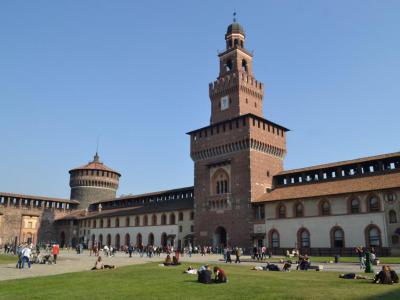
10) Castello Sforzesco (Sforzesco Castle) (must see)
Now let’s turn to the heavyweight of Milanese history: Sforzesco Castle. One of the largest fortresses in Europe, it began life in the 14th century as the power base of the Duchy of Milan. And power bases, as you might imagine, tend to attract trouble. Battles, invasions, looting, destruction - the castle has seen it all.
Take the Filarete Tower. In 1521, lightning struck the structure, which, at the time, was used to store ammunition. The result was a catastrophic explosion, heavy casualties, and major damage. Not exactly the kind of fireworks you plan for...
Slide into the Napoleonic era, and things didn’t calm down much either. The castle was damaged again and repurposed as military quarters. Its frescoed ducal rooms, apparently, were found perfect for stables. Horses where dukes once walked... Indeed, history has a sense of irony.
Then came the twist. After Italy’s Unification in the late 19th century, architect Luca Beltrami led a major restoration. By 1905, the castle was handed back to Milan - not as a fortress, but as a cultural landmark. Today, it houses seven museums and stands as one of the city’s main artistic centers.
Inside, the real showstopper waits in the Sala delle Asse. Look up. That extraordinary ceiling fresco was painted by Leonardo da Vinci, commissioned by the Sforza family. Sixteen mulberry trees rise overhead, their branches woven together with a golden rope, forming an illusion of a pergola. It feels less like a room and more like standing beneath a Renaissance garden canopy.
Sure thing, every room here offers two layers of art: what hangs on the walls - and what stretches above your head. Even the ceilings compete for attention.
If you're on a budget, there's good news. Entry to the castle grounds is free. You can wander the courtyards, admire the architecture, and soak in the scale without paying a cent. The full museum ticket is reasonably priced - and well worth it.
Planning tip: exploring everything, including the surrounding gardens, is not a quick stop. So, give it time. And if you happen to be here on the first or third Tuesday of the month around 2 pm, museum entry is free. Also, if you want access to the battlements, you’ll need to book a guided tour in advance.
Take the Filarete Tower. In 1521, lightning struck the structure, which, at the time, was used to store ammunition. The result was a catastrophic explosion, heavy casualties, and major damage. Not exactly the kind of fireworks you plan for...
Slide into the Napoleonic era, and things didn’t calm down much either. The castle was damaged again and repurposed as military quarters. Its frescoed ducal rooms, apparently, were found perfect for stables. Horses where dukes once walked... Indeed, history has a sense of irony.
Then came the twist. After Italy’s Unification in the late 19th century, architect Luca Beltrami led a major restoration. By 1905, the castle was handed back to Milan - not as a fortress, but as a cultural landmark. Today, it houses seven museums and stands as one of the city’s main artistic centers.
Inside, the real showstopper waits in the Sala delle Asse. Look up. That extraordinary ceiling fresco was painted by Leonardo da Vinci, commissioned by the Sforza family. Sixteen mulberry trees rise overhead, their branches woven together with a golden rope, forming an illusion of a pergola. It feels less like a room and more like standing beneath a Renaissance garden canopy.
Sure thing, every room here offers two layers of art: what hangs on the walls - and what stretches above your head. Even the ceilings compete for attention.
If you're on a budget, there's good news. Entry to the castle grounds is free. You can wander the courtyards, admire the architecture, and soak in the scale without paying a cent. The full museum ticket is reasonably priced - and well worth it.
Planning tip: exploring everything, including the surrounding gardens, is not a quick stop. So, give it time. And if you happen to be here on the first or third Tuesday of the month around 2 pm, museum entry is free. Also, if you want access to the battlements, you’ll need to book a guided tour in advance.
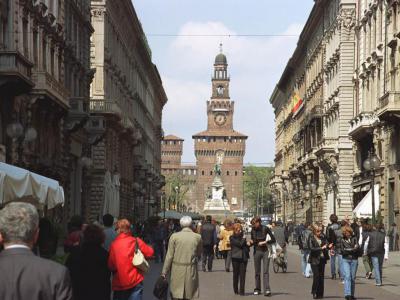
11) Via Dante (Dante Street)
Via Dante is Milan’s elegant runway for pedestrians - no cars, just footsteps and espresso breaks. It stretches from Piazzale Cordusio to Largo Cairoli, linking two metro stops and, more importantly, linking the city’s business pulse with the shadow of Sforzesco Castle. Named after the ever-serious Florentine poet Dante Alighieri, the street manages to feel far more relaxed than its literary namesake.
As you move along, you’re flanked by 18th- and 19th-century façades that seem to nod politely as you pass. Historic palaces line the route, and theaters add a cultural note - especially the well-known Piccolo Teatro, whose name means “small theater,” though its reputation is anything but small. Between architecture and applause, you’ll also find plenty of opportunities to pause - cafés, outdoor restaurants, gelato counters, and bars. Some are charmingly expensive, but consider it part of the Milan experience: style rarely comes cheap...
This street wasn’t always a calm promenade, though. Before 1958, trams rattled through here, and traffic competed for space. Then, in 1996, it was fully pedestrianized, trading engines for conversation and shopping bags.
By afternoon, much of Via Dante rests in gentle shade, offering relief from the summer sun. Street performers often claim a corner, adding music or magic to the atmosphere. So, slow your pace, look around, and let Via Dante do what it does best - guide you gracefully either toward or from the castle while tempting you at every step...
As you move along, you’re flanked by 18th- and 19th-century façades that seem to nod politely as you pass. Historic palaces line the route, and theaters add a cultural note - especially the well-known Piccolo Teatro, whose name means “small theater,” though its reputation is anything but small. Between architecture and applause, you’ll also find plenty of opportunities to pause - cafés, outdoor restaurants, gelato counters, and bars. Some are charmingly expensive, but consider it part of the Milan experience: style rarely comes cheap...
This street wasn’t always a calm promenade, though. Before 1958, trams rattled through here, and traffic competed for space. Then, in 1996, it was fully pedestrianized, trading engines for conversation and shopping bags.
By afternoon, much of Via Dante rests in gentle shade, offering relief from the summer sun. Street performers often claim a corner, adding music or magic to the atmosphere. So, slow your pace, look around, and let Via Dante do what it does best - guide you gracefully either toward or from the castle while tempting you at every step...
