


Walking Through Montpellier's Charming Old Town (Self Guided), Montpellier
One of the biggest problems with living in a pleasant seaside town during the Middle Ages was pirates. And the people of Maguelone, on the Mediterranean coast of southern France, knew this all too well. Repeated raids encouraged settlement farther inland. In 985, a local lord named Guilhem received land where Montpellier would develop. His family helped turn this modest settlement into a fortified town, complete with a castle and defensive walls.
The name Montpellier has an interesting, though disputed, origin. One theory traces it to the Latin for "hill of woad," a plant once used to produce blue dye. Another suggests a translation as a "locked hill," possibly referring to a fortified settlement. There's even a romantic legend interpreting the name as the "hill of young women."
By the 12th century, Montpellier had grown to an important Mediterranean trading center. But the 16th century brought religious conflict. During the Protestant Reformation, Montpellier became a Huguenot, or French Protestant, stronghold. In 1622, King Louis XIII captured the city and built a citadel to maintain royal control.
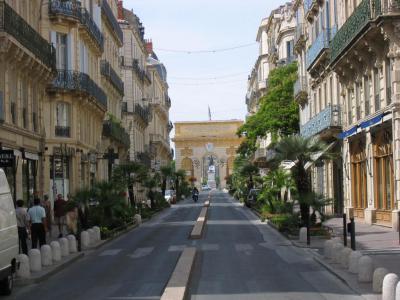
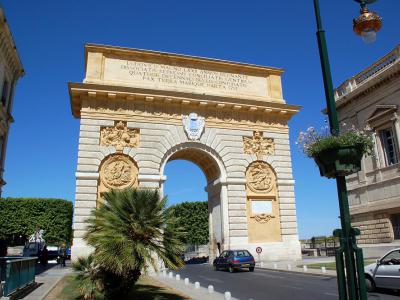
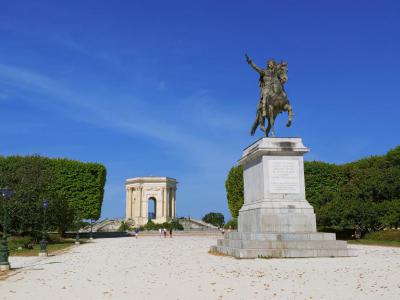
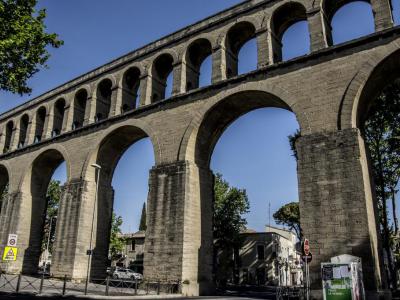
Under Louis XIV, the famous "Sun King," Montpellier was the administrative capital of Lower Languedoc. This marked a new period of construction and civic improvements. Among its finest landmarks are the Peyrou Promenade, with its grand Triumphal Arch, the elegant Water Castle, and the 18th-century Saint-Clément Aqueduct.
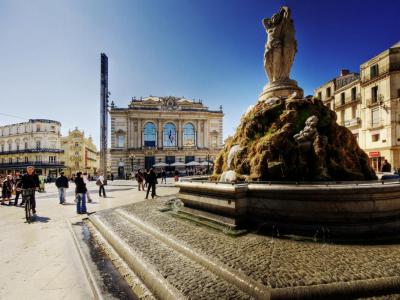
The city continued to develop in the 19th century, with elegant mansions and impressive public buildings. At the heart of this development is the lively Comedy Square, dominated by the magnificent Opéra Comédie, completed in 1888. Another cultural landmark is the modern Corum complex, home to the Opéra Berlioz.
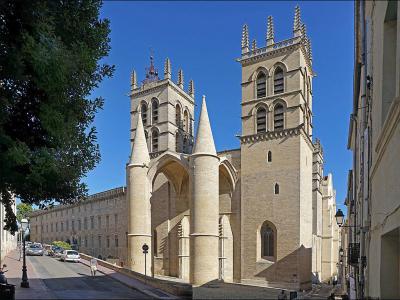
There's plenty more to discover. Saint-Pierre Cathedral, originally built in the 14th century, resembles a fortress, with massive towers and an unusual porch supported by two enormous pillars. Nature lovers can explore the Montpellier Botanical Garden (France's oldest botanical garden, founded in 1593), or visit the Amazonian Greenhouse.
Montpellier also has a long academic tradition. Its university was officially established in 1289, although teaching began much earlier. The famous French writer François Rabelais studied medicine here in the 16th century.
Today, with its sunshine, excellent food, historic neighborhoods, museums, and large student population, Montpellier feels remarkably youthful despite its thousand-year history. It's easy to see why so many travelers come here-and why some of them stay longer than planned...
How it works: Download the app "GPSmyCity: Walks in 1K+ Cities" from Apple App Store or Google Play Store to your mobile phone or tablet. The app turns your mobile device into a personal tour guide and its built-in GPS navigation functions guide you from one tour stop to next. The app works offline, so no data plan is needed when traveling abroad.
Download The GPSmyCity App



Walking Through Montpellier's Charming Old Town Map
Guide Name: Walking Through Montpellier's Charming Old Town
Guide Location: France » Montpellier (See other walking tours in Montpellier)
Guide Type: Self-guided Walking Tour (Sightseeing)
Tour Duration: 2 Hours
Travel Distance: 2.2 Km or 1.4 Miles
Tour Best Suited For: First-time visit
Guide Location: France » Montpellier (See other walking tours in Montpellier)
Guide Type: Self-guided Walking Tour (Sightseeing)
Tour Duration: 2 Hours
Travel Distance: 2.2 Km or 1.4 Miles
Tour Best Suited For: First-time visit
Sights Featured in This Walk



Walking Tours in Montpellier, France
Create Your Own Walk in Montpellier
Creating your own self-guided walk in Montpellier is easy and fun. Choose the city attractions that you want to see and a walk route map will be created just for you. You can even set your hotel as the start point of the walk.

A Walking Guide to Montpellier Murals and Street Art
Montpellier is famous for its sunny weather, Mediterranean atmosphere, and beautiful southern French architecture. But there's another side to the city that is just as interesting: its thriving street art scene. In fact, Montpellier is one of France's leading cities for urban art, with everything from large, colorful murals to tiny, easily overlooked creations tucked away along its... view more
Tour Duration: 1 Hour
Travel Distance: 0.8 Km or 0.5 Miles
Tour Duration: 1 Hour
Travel Distance: 0.8 Km or 0.5 Miles
City Walks Overview
