

Alexandria National Museum, Alexandria (must see)
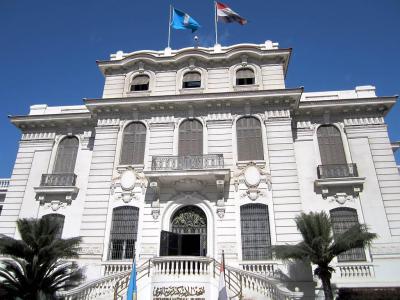
Alexandria National Museum offers a clear introduction to the region’s layered past, from ancient Egypt to the modern period. Opened in 2003, it occupies a restored palace built in 1926 for Al-Saad Bassili Pasha, a wealthy wood and timber merchant. In 1954, the Bassili family sold the palace to the United States government, and it later served as the American Consulate. Egypt’s Supreme Council of Antiquities eventually repurchased it and converted it into a museum.
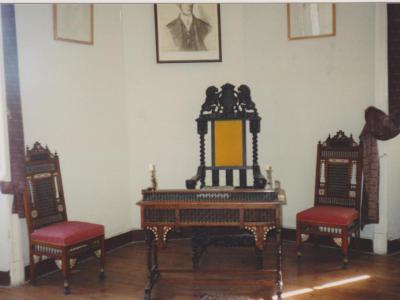
The palace setting remains an important part of the visit. Its Italianate character, painted ceilings, refined staircases, and elegant interior details give the museum a strong architectural identity. The exhibition design also works carefully with the historic rooms. Display cases are angled to keep the palace windows and wall details visible, allowing the architecture and artifacts to share the space naturally.
The galleries follow a chronological route, almost like a descent and return through layers of archaeology. The Pharaonic section is placed in the basement, where dark blue and black tones evoke ancient Egyptian ideas of the afterlife. Above it, the Greco-Roman galleries use brighter shades, reflecting a different cultural atmosphere, while the Coptic and Islamic sections are marked by green tones. This structure helps visitors move from the oldest material to later periods in a clear and memorable way.
Among the most interesting exhibits are statues, funerary objects, jewellery, manuscripts, icons, ceramics, metalwork, and household items from different eras. The Greco-Roman section features seabed finds from Abu Qir Bay, including granite statues of Isis and ancient priests. Later galleries display rare coins, Muhammad Ali family jewellery, gold-plated handbags, and personal objects linked to King Farouk.
The palace setting remains an important part of the visit. Its Italianate character, painted ceilings, refined staircases, and elegant interior details give the museum a strong architectural identity. The exhibition design also works carefully with the historic rooms. Display cases are angled to keep the palace windows and wall details visible, allowing the architecture and artifacts to share the space naturally.
The galleries follow a chronological route, almost like a descent and return through layers of archaeology. The Pharaonic section is placed in the basement, where dark blue and black tones evoke ancient Egyptian ideas of the afterlife. Above it, the Greco-Roman galleries use brighter shades, reflecting a different cultural atmosphere, while the Coptic and Islamic sections are marked by green tones. This structure helps visitors move from the oldest material to later periods in a clear and memorable way.
Among the most interesting exhibits are statues, funerary objects, jewellery, manuscripts, icons, ceramics, metalwork, and household items from different eras. The Greco-Roman section features seabed finds from Abu Qir Bay, including granite statues of Isis and ancient priests. Later galleries display rare coins, Muhammad Ali family jewellery, gold-plated handbags, and personal objects linked to King Farouk.
Want to visit this sight? Check out these Self-Guided Walking Tours in Alexandria. Alternatively, you can download the mobile app "GPSmyCity: Walks in 1K+ Cities" from Apple App Store or Google Play Store. The app turns your mobile device to a personal tour guide and it works offline, so no data plan is needed when traveling abroad.
Download The GPSmyCity App



Alexandria National Museum on Map
Sight Name: Alexandria National Museum
Sight Location: Alexandria, Egypt (See walking tours in Alexandria)
Sight Type: Museum/Gallery
Guide(s) Containing This Sight:
Sight Location: Alexandria, Egypt (See walking tours in Alexandria)
Sight Type: Museum/Gallery
Guide(s) Containing This Sight:
Nearby Sights

Walking Tours in Alexandria, Egypt

Create Your Own Walk in Alexandria
Creating your own self-guided walk in Alexandria is easy and fun. Choose the city attractions that you want to see and a walk route map will be created just for you. You can even set your hotel as the start point of the walk.
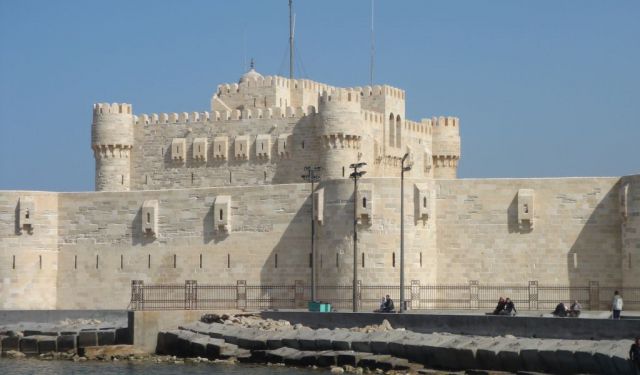
Alexandria Introduction Walking Tour I
The second largest city in Egypt, Alexandria used to be one of the most significant and famous cities in the world. Founded by Alexander the Great, Alexandria was Egypt's capital for about a thousand years. The city was well known because of its library, the biggest in the ancient world, the light house and many other outstanding buildings. Check out Alexandria's top attractions in the... view more
Tour Duration: 3 Hour(s)
Travel Distance: 5.9 Km or 3.7 Miles
Tour Duration: 3 Hour(s)
Travel Distance: 5.9 Km or 3.7 Miles
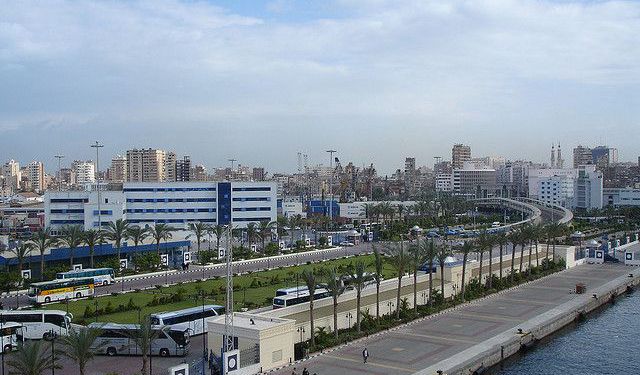
Alexandria Introduction Walking Tour III
Alexandria is a beautiful city, surrounded by marvelous monuments and buildings. It is considered to be one of the most historical cities of Egypt. The city of Alexandria features a large number of wonderful mosques, palaces and other buildings, which are mostly remains from Roman times. These amazing attractions are unique and worth seeing. Take the following self-guided tour to explore beautiful... view more
Tour Duration: 3 Hour(s)
Travel Distance: 8.0 Km or 5 Miles
Tour Duration: 3 Hour(s)
Travel Distance: 8.0 Km or 5 Miles
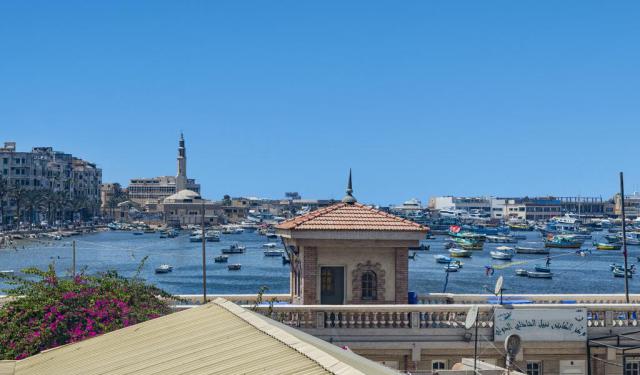
Alexandria Introduction Walking Tour II
Alexandria is a beautiful city, surrounded by marvelous monuments and buildings. It is considered to be one of the most historical cities of Egypt. The city of Alexandria features a large number of wonderful mosques, palaces and other buildings, which are mostly remains from Roman times. These amazing attractions are unique and worth seeing. Take the following self-guided tour to explore beautiful... view more
Tour Duration: 3 Hour(s)
Travel Distance: 6.4 Km or 4 Miles
Tour Duration: 3 Hour(s)
Travel Distance: 6.4 Km or 4 Miles