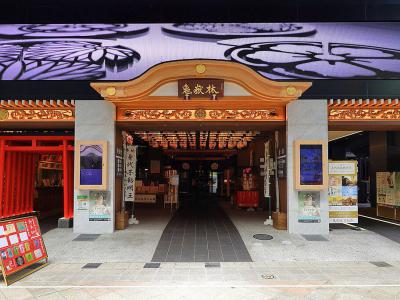


Bansho-ji Temple, Nagoya
Bansho-ji Temple is a historic Buddhist temple with deep connections to Japan’s feudal era. It was founded in 1540 by Oda Nobuhide, father of the celebrated warlord Oda Nobunaga, as the ancestral temple of the Oda family. Originally built near the former Nagoya Castle, the Sōtō Zen temple was placed under the leadership of its founding priest, Daiun.
Bansho-ji later served as a temporary residence for the samurai Katō Kiyomasa while Nagoya Castle was under construction. In 1610, the temple was relocated to its present site in Osu as part of the large-scale redevelopment surrounding the new castle. Lanterns and religious sculptures lend the temple a distinctive atmosphere, while its historical associations preserve the legacy of the Oda family, particularly Oda Nobunaga, who played a major role in the movement toward the unification of Japan during the late Sengoku period.
Among the temple’s most unusual attractions are its mechanical dolls, which reenact important episodes from Nobunaga’s life. One scene depicts his famously unconventional behavior at his father’s funeral, when he is said to have thrown incense at the altar rather than observing the expected ceremonial etiquette. Another mechanical display shows Nobunaga performing Kōwakamai, a traditional form of dance and recitation, before the decisive Battle of Okehazama in 1560.
Bansho-ji later served as a temporary residence for the samurai Katō Kiyomasa while Nagoya Castle was under construction. In 1610, the temple was relocated to its present site in Osu as part of the large-scale redevelopment surrounding the new castle. Lanterns and religious sculptures lend the temple a distinctive atmosphere, while its historical associations preserve the legacy of the Oda family, particularly Oda Nobunaga, who played a major role in the movement toward the unification of Japan during the late Sengoku period.
Among the temple’s most unusual attractions are its mechanical dolls, which reenact important episodes from Nobunaga’s life. One scene depicts his famously unconventional behavior at his father’s funeral, when he is said to have thrown incense at the altar rather than observing the expected ceremonial etiquette. Another mechanical display shows Nobunaga performing Kōwakamai, a traditional form of dance and recitation, before the decisive Battle of Okehazama in 1560.
Want to visit this sight? Check out these Self-Guided Walking Tours in Nagoya. Alternatively, you can download the mobile app "GPSmyCity: Walks in 1K+ Cities" from Apple App Store or Google Play Store. The app turns your mobile device to a personal tour guide and it works offline, so no data plan is needed when traveling abroad.
Download The GPSmyCity App



Bansho-ji Temple on Map
Sight Name: Bansho-ji Temple
Sight Location: Nagoya, Japan (See walking tours in Nagoya)
Sight Type: Religious
Guide(s) Containing This Sight:
Sight Location: Nagoya, Japan (See walking tours in Nagoya)
Sight Type: Religious
Guide(s) Containing This Sight:
Nearby Sights


Walking Tours in Nagoya, Japan

Create Your Own Walk in Nagoya
Creating your own self-guided walk in Nagoya is easy and fun. Choose the city attractions that you want to see and a walk route map will be created just for you. You can even set your hotel as the start point of the walk.
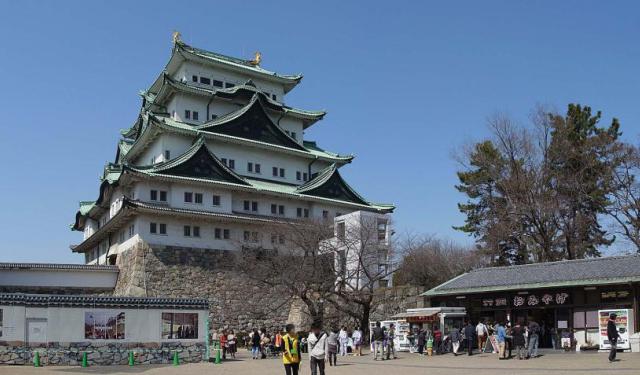
Nagoya Castle Walking Tour
Nagoya Castle, constructed in 1612, was the center of one of Japan's most important transportation hubs, located at the junction of two of the country's five major highways. The castle became a symbol of modern Nagoya in 1930 when it was designated a National Treasure. Partially destroyed by air raids during World War II in 1945, it has been under reconstruction since 1957.
The castle... view more
Tour Duration: 1 Hour
Travel Distance: 2.2 Km or 1.4 Miles
The castle... view more
Tour Duration: 1 Hour
Travel Distance: 2.2 Km or 1.4 Miles
Nagoya City Center Walking Tour
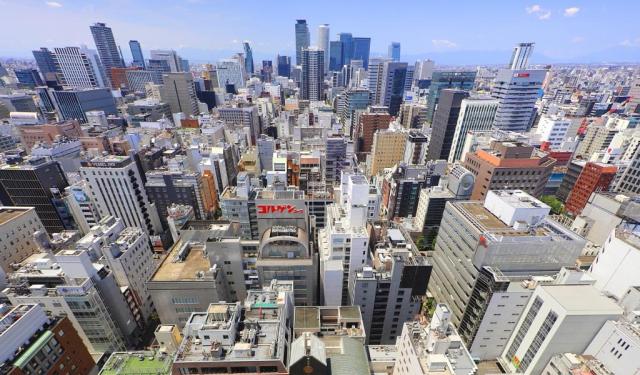
Nagoya, Japan’s fourth-largest city, is the industrial and cultural center of the Chūbu region. Situated on the Pacific coast of central Honshu, the city has a rich history shaped by its important roles in both feudal and modern Japan. The name “Nagoya” is sometimes associated with nagoyaka, a Japanese word conveying a sense of peace or tranquility.
The wider area has been inhabited... view more
Tour Duration: 2 Hours
Travel Distance: 3.5 Km or 2.2 Miles
The wider area has been inhabited... view more
Tour Duration: 2 Hours
Travel Distance: 3.5 Km or 2.2 Miles
Useful Travel Guides for Planning Your Trip
Nagoya Station Pub Crawl
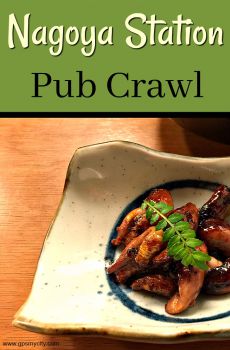
This crawl takes you through the centre of Nagoya, locally known as Mei Eki. This is a very cosmopolitan area where drunken salary-men rub shoulders with drunken gaijin. On this list is a selection of different British pubs and bars, just in case you’re hankering for a Guinness and a decent spot...

Fushimi - Sakae Pub Crawl of Nagoya
This crawl runs through Fushimi and Sakae, the down town area of Nagoya. It is a real mixed bag and every establishment has a different vibe and (more importantly) menu. All of the bars are gaijin friendly and each would be a decent place to have a...