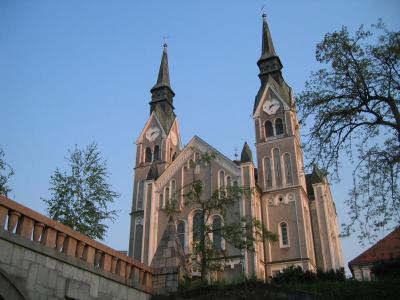


Cerkev sv. Janeza Krstnika (Church of St. John the Baptist), Ljubljana
Cerkev sv. Janeza Krstnika (Church of St. John the Baptist), often known as Trnovo Church, is an active Roman Catholic parish church closely connected with the history and cultural life of the Trnovo district. A Baroque church designed by Candido Zulliani was built here in 1753. Today, the parish remains active, hosting Masses, sacraments, and religious celebrations.
The church is recognised for its Neo-Romanesque façade with two symmetrical bell towers, added during a 19th-century renovation, while the interior preserves a blend of Baroque and later artistic elements. Inside are decorative altars, paintings by Pavel Künl, and furnishings designed by Jože Plečnik, who lived nearby. He also created the birch-lined Trnovo Bridge across the Gradaščica stream.
The church occupies a special place in Slovenian cultural history. In 1833, the national poet France Prešeren first saw Julija Primic here, an encounter that inspired many of his best-known love poems and became one of the country's most famous literary stories. Today, visitors can enjoy the peaceful atmosphere inside the church while also exploring the surrounding riverside area, where architecture, literature, and local history come together.
The church is recognised for its Neo-Romanesque façade with two symmetrical bell towers, added during a 19th-century renovation, while the interior preserves a blend of Baroque and later artistic elements. Inside are decorative altars, paintings by Pavel Künl, and furnishings designed by Jože Plečnik, who lived nearby. He also created the birch-lined Trnovo Bridge across the Gradaščica stream.
The church occupies a special place in Slovenian cultural history. In 1833, the national poet France Prešeren first saw Julija Primic here, an encounter that inspired many of his best-known love poems and became one of the country's most famous literary stories. Today, visitors can enjoy the peaceful atmosphere inside the church while also exploring the surrounding riverside area, where architecture, literature, and local history come together.
Want to visit this sight? Check out these Self-Guided Walking Tours in Ljubljana. Alternatively, you can download the mobile app "GPSmyCity: Walks in 1K+ Cities" from Apple App Store or Google Play Store. The app turns your mobile device to a personal tour guide and it works offline, so no data plan is needed when traveling abroad.
Download The GPSmyCity App



Cerkev sv. Janeza Krstnika (Church of St. John the Baptist) on Map
Sight Name: Cerkev sv. Janeza Krstnika (Church of St. John the Baptist)
Sight Location: Ljubljana, Slovenia (See walking tours in Ljubljana)
Sight Type: Religious
Sight Location: Ljubljana, Slovenia (See walking tours in Ljubljana)
Sight Type: Religious
Nearby Sights
Walking Tours in Ljubljana, Slovenia

Create Your Own Walk in Ljubljana
Creating your own self-guided walk in Ljubljana is easy and fun. Choose the city attractions that you want to see and a walk route map will be created just for you. You can even set your hotel as the start point of the walk.
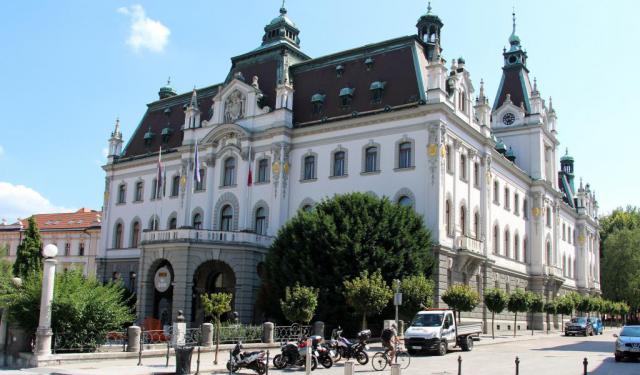
Historic Buildings Walking Tour
The Slovenian capital has no shortage of historical buildings. The architectural wealth of Ljubljana accumulated over the years received a significant boost in the early 20th century thanks to the famous Slovenian architect, Joze Plecnik, a classicist, who tried to model the city on ancient Athens.
Among the notable local landmarks is the Ljubljana Central Pharmacy, a testament to the... view more
Tour Duration: 2 Hour(s)
Travel Distance: 2.8 Km or 1.7 Miles
Among the notable local landmarks is the Ljubljana Central Pharmacy, a testament to the... view more
Tour Duration: 2 Hour(s)
Travel Distance: 2.8 Km or 1.7 Miles
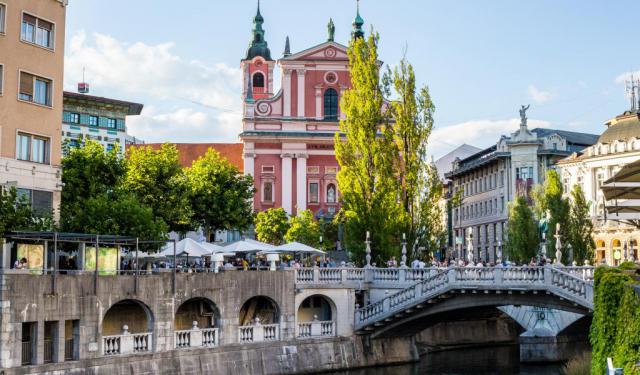
Explore Ljubljana Old Town on Foot
Ljubljana, Slovenia’s capital and largest city, developed at a natural crossroads between Central Europe, the Adriatic, and the Balkans, beside the navigable Ljubljanica River. People lived in the surrounding marshes in prehistoric times, leaving behind pile-dwelling settlements and a wooden wheel with an axle dating back about 5,200 years. By the early first century AD, the Romans had... view more
Tour Duration: 2 Hour(s)
Travel Distance: 2.0 Km or 1.2 Miles
Tour Duration: 2 Hour(s)
Travel Distance: 2.0 Km or 1.2 Miles