

Audio Guide: Explore Ljubljana Old Town on Foot (Self Guided), Ljubljana
Ljubljana, Slovenia’s capital and largest city, developed at a natural crossroads between Central Europe, the Adriatic, and the Balkans, beside the navigable Ljubljanica River. People lived in the surrounding marshes in prehistoric times, leaving behind pile-dwelling settlements and a wooden wheel with an axle dating back about 5,200 years. By the early first century AD, the Romans had established the fortified settlement of Emona, complete with paved streets, sewers, public buildings, and defensive walls.
Slavic settlers arrived around the late sixth century, while the medieval town gradually formed beneath Castle Hill. The German name Laibach appears in records from 1144, followed shortly afterward by a form resembling Ljubljana. The name’s precise origin remains debated. It is popularly associated with ljubljena, meaning “beloved.” By the 13th century, Ljubljana had become a walled market town divided among Old Square, Town Square, and New Square.
Ljubljana came under Habsburg rule in 1335, and the city later became the province’s political and administrative centre. During the 16th-century Reformation, Ljubljana became an important centre of Slovene-language publishing. The Counter-Reformation brought the expulsion of Protestant leaders and the arrival of the Jesuits, while Baroque churches, palaces, and façades transformed the city during the 17th century.
From 1809 to 1813, Ljubljana served as the capital of Napoleon’s Illyrian Provinces. Austrian rule subsequently returned, and the railway reached the city in 1849. Following the destructive earthquake of 1895, Mayor Ivan Hribar oversaw extensive modernisation, while architects such as Maks Fabiani introduced broad streets and Vienna Secession buildings.
After the First World War, Ljubljana became part of the Kingdom of Serbs, Croats and Slovenes, later renamed Yugoslavia. During the Second World War, it was occupied first by Fascist Italy and then by Nazi Germany, and the entire city was enclosed by barbed wire. Ljubljana became the capital of socialist Slovenia in 1945 and, following Slovenia’s independence in 1991, the capital of a sovereign state.
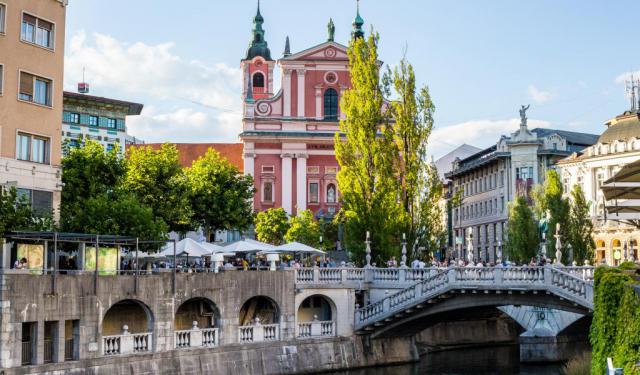
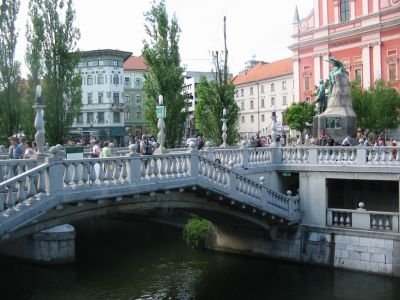
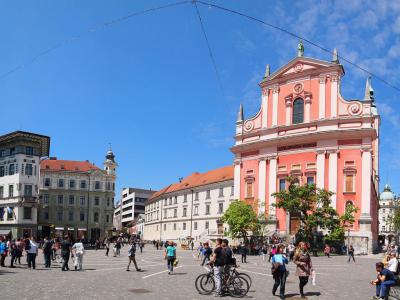
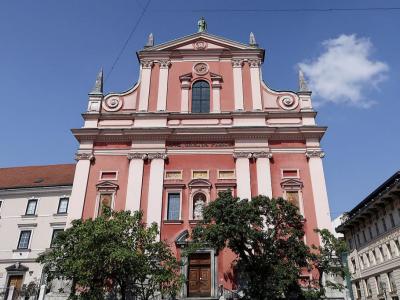
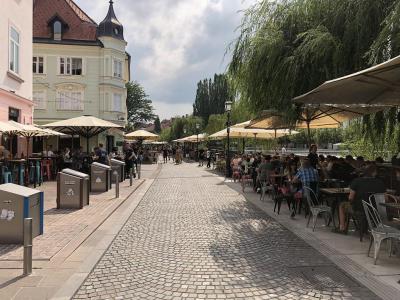
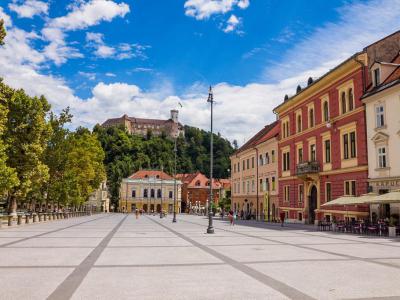
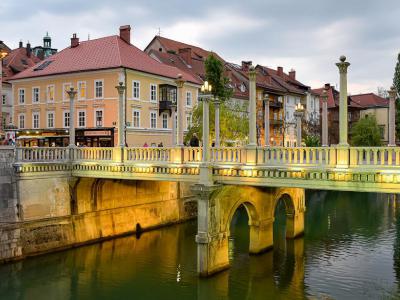
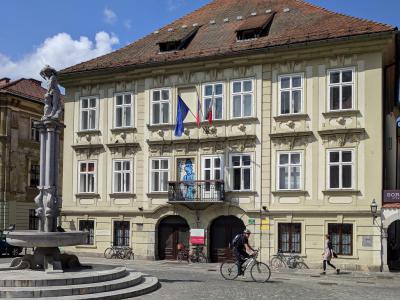
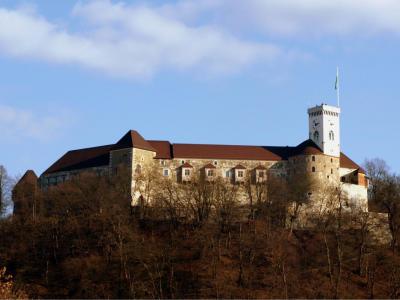
A walk through central Ljubljana follows the Ljubljanica River past café-lined embankments and Baroque façades. Cross Plečnik’s Triple Bridge into Preseren Square, admire the pink Franciscan Church, and continue toward Dragon Bridge. The route also passes through Congress Square, crosses the elegant Cobblers’ Bridge, and winds along atmospheric Old Square. Nearby, Ljubljana Cathedral and Town Hall reveal the city’s historic heart, while Ljubljana Castle rises above the red roofs from its wooded hill.
As you follow the river, cross its bridges, and explore the streets beneath the castle, you may discover why generations of visitors have found the popular meaning of Ljubljana’s name so fitting: this truly is a city to be “beloved.”
Slavic settlers arrived around the late sixth century, while the medieval town gradually formed beneath Castle Hill. The German name Laibach appears in records from 1144, followed shortly afterward by a form resembling Ljubljana. The name’s precise origin remains debated. It is popularly associated with ljubljena, meaning “beloved.” By the 13th century, Ljubljana had become a walled market town divided among Old Square, Town Square, and New Square.
Ljubljana came under Habsburg rule in 1335, and the city later became the province’s political and administrative centre. During the 16th-century Reformation, Ljubljana became an important centre of Slovene-language publishing. The Counter-Reformation brought the expulsion of Protestant leaders and the arrival of the Jesuits, while Baroque churches, palaces, and façades transformed the city during the 17th century.
From 1809 to 1813, Ljubljana served as the capital of Napoleon’s Illyrian Provinces. Austrian rule subsequently returned, and the railway reached the city in 1849. Following the destructive earthquake of 1895, Mayor Ivan Hribar oversaw extensive modernisation, while architects such as Maks Fabiani introduced broad streets and Vienna Secession buildings.
After the First World War, Ljubljana became part of the Kingdom of Serbs, Croats and Slovenes, later renamed Yugoslavia. During the Second World War, it was occupied first by Fascist Italy and then by Nazi Germany, and the entire city was enclosed by barbed wire. Ljubljana became the capital of socialist Slovenia in 1945 and, following Slovenia’s independence in 1991, the capital of a sovereign state.
A walk through central Ljubljana follows the Ljubljanica River past café-lined embankments and Baroque façades. Cross Plečnik’s Triple Bridge into Preseren Square, admire the pink Franciscan Church, and continue toward Dragon Bridge. The route also passes through Congress Square, crosses the elegant Cobblers’ Bridge, and winds along atmospheric Old Square. Nearby, Ljubljana Cathedral and Town Hall reveal the city’s historic heart, while Ljubljana Castle rises above the red roofs from its wooded hill.
As you follow the river, cross its bridges, and explore the streets beneath the castle, you may discover why generations of visitors have found the popular meaning of Ljubljana’s name so fitting: this truly is a city to be “beloved.”
How it works: Download the app "GPSmyCity: Walks in 1K+ Cities" from Apple App Store or Google Play Store to your mobile phone or tablet. The app turns your mobile device into a personal tour guide and its built-in GPS navigation functions guide you from one tour stop to next. The app works offline, so no data plan is needed when traveling abroad.
Download The GPSmyCity App



Explore Ljubljana Old Town on Foot Map
Guide Name: Explore Ljubljana Old Town on Foot
Guide Location: Slovenia » Ljubljana (See other walking tours in Ljubljana)
Guide Type: Self-guided Walking Tour (Sightseeing)
Tour Duration: 2 Hour(s)
Travel Distance: 2.0 Km or 1.2 Miles
Tour Best Suited For: First-time visit
Guide Location: Slovenia » Ljubljana (See other walking tours in Ljubljana)
Guide Type: Self-guided Walking Tour (Sightseeing)
Tour Duration: 2 Hour(s)
Travel Distance: 2.0 Km or 1.2 Miles
Tour Best Suited For: First-time visit
Sights Featured in This Walk
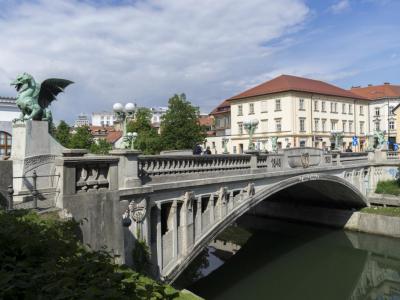
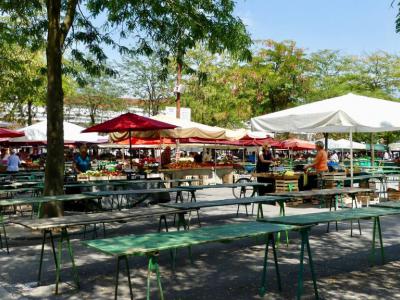
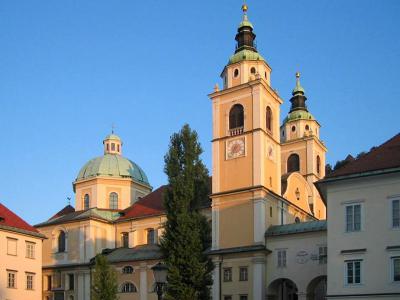
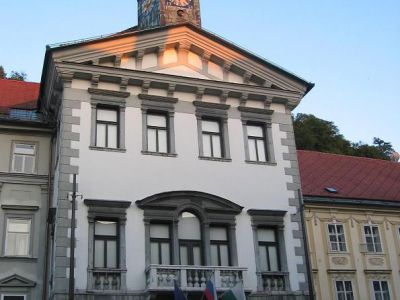
Walking Tours in Ljubljana, Slovenia

Create Your Own Walk in Ljubljana
Creating your own self-guided walk in Ljubljana is easy and fun. Choose the city attractions that you want to see and a walk route map will be created just for you. You can even set your hotel as the start point of the walk.
Historic Buildings Walking Tour
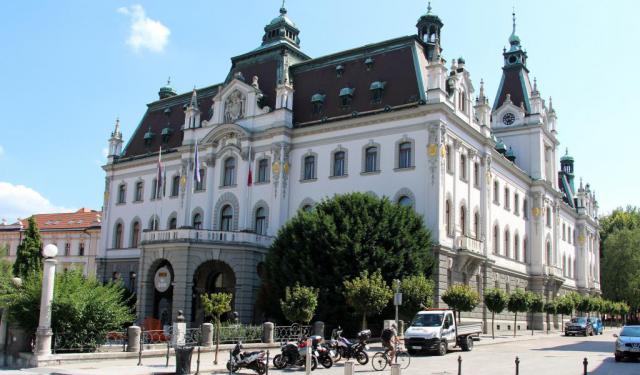
The Slovenian capital has no shortage of historical buildings. The architectural wealth of Ljubljana accumulated over the years received a significant boost in the early 20th century thanks to the famous Slovenian architect, Joze Plecnik, a classicist, who tried to model the city on ancient Athens.
Among the notable local landmarks is the Ljubljana Central Pharmacy, a testament to the... view more
Tour Duration: 2 Hour(s)
Travel Distance: 2.8 Km or 1.7 Miles
Among the notable local landmarks is the Ljubljana Central Pharmacy, a testament to the... view more
Tour Duration: 2 Hour(s)
Travel Distance: 2.8 Km or 1.7 Miles
The Most Popular Cities
/ view all