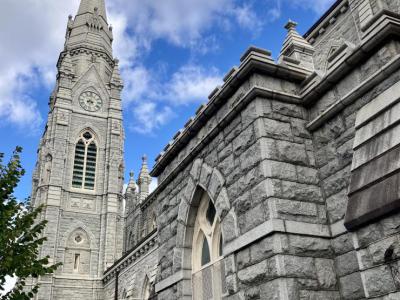


Corpus Christi Church, Baltimore
Corpus Christi Catholic Parish is a historic church located in Baltimore. The church was consecrated on January 1, 1891, after several years of construction. It was built for the wealthy community of Bolton Hill, then known as Bolton Depot, and was one of the most magnificent churches in Baltimore at the time. Its consecration was a major social and liturgical event, attended by Cardinal James Gibbons, six bishops from across the country, and all the clergy of Baltimore.
The parish was founded in 1880, with the congregation meeting on the top floor of a school building across the street. The rectory was built in 1894, and the church was placed on the National Register of Historic Places in 1978.
Corpus Christi was originally called the Jenkins Memorial Church, and it was one of very few “memorial” Catholic churches in the United States dedicated to an individual or family. The Jenkins family was one of Maryland’s oldest families, prominent in business, philanthropy, church affairs, and the arts.
The style of the church is decorated Gothic, a style dating back to the 13th century. The ornate decoration throughout the church is meant to both instruct and inspire. The recurring themes throughout the church are wheat and wine, which can be seen on the marble floor, the mosaics, the stained-glass windows, and the altars.
Many of the mosaics and stained glass windows at Corpus Christi are considered some of the gorgeous examples in the world. The Apse contains five Florentine mosaics on glass depicting the life of Christ, which are only found in a few other places in the world.
Visitors are welcome to tour the church and learn more about its rich history and fine works of art. The church remains an important landmark in Baltimore and a symbol of the city's religious heritage.
The parish was founded in 1880, with the congregation meeting on the top floor of a school building across the street. The rectory was built in 1894, and the church was placed on the National Register of Historic Places in 1978.
Corpus Christi was originally called the Jenkins Memorial Church, and it was one of very few “memorial” Catholic churches in the United States dedicated to an individual or family. The Jenkins family was one of Maryland’s oldest families, prominent in business, philanthropy, church affairs, and the arts.
The style of the church is decorated Gothic, a style dating back to the 13th century. The ornate decoration throughout the church is meant to both instruct and inspire. The recurring themes throughout the church are wheat and wine, which can be seen on the marble floor, the mosaics, the stained-glass windows, and the altars.
Many of the mosaics and stained glass windows at Corpus Christi are considered some of the gorgeous examples in the world. The Apse contains five Florentine mosaics on glass depicting the life of Christ, which are only found in a few other places in the world.
Visitors are welcome to tour the church and learn more about its rich history and fine works of art. The church remains an important landmark in Baltimore and a symbol of the city's religious heritage.
Want to visit this sight? Check out these Self-Guided Walking Tours in Baltimore. Alternatively, you can download the mobile app "GPSmyCity: Walks in 1K+ Cities" from Apple App Store or Google Play Store. The app turns your mobile device to a personal tour guide and it works offline, so no data plan is needed when traveling abroad.
Download The GPSmyCity App



Corpus Christi Church on Map
Sight Name: Corpus Christi Church
Sight Location: Baltimore, USA (See walking tours in Baltimore)
Sight Type: Religious
Sight Location: Baltimore, USA (See walking tours in Baltimore)
Sight Type: Religious
Nearby Sights
Walking Tours in Baltimore, Maryland

Create Your Own Walk in Baltimore
Creating your own self-guided walk in Baltimore is easy and fun. Choose the city attractions that you want to see and a walk route map will be created just for you. You can even set your hotel as the start point of the walk.
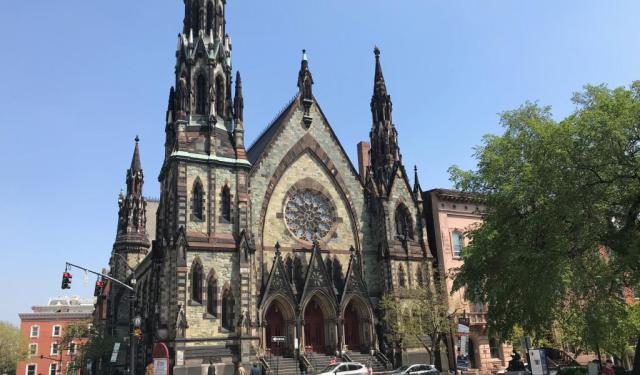
Baltimore's Architectural Jewels
Overall, Baltimore's architecture is a testament to the city's rich and varied history, showcasing a wide range of styles and cultural influences that have shaped the local built environment over the centuries. Outside Federal-style row houses and grand Beaux-Arts museums, Baltimore is also known for a multitude of Art Deco buildings and temples of various styles, constructed between the... view more
Tour Duration: 2 Hours
Travel Distance: 3.9 Km or 2.4 Miles
Tour Duration: 2 Hours
Travel Distance: 3.9 Km or 2.4 Miles
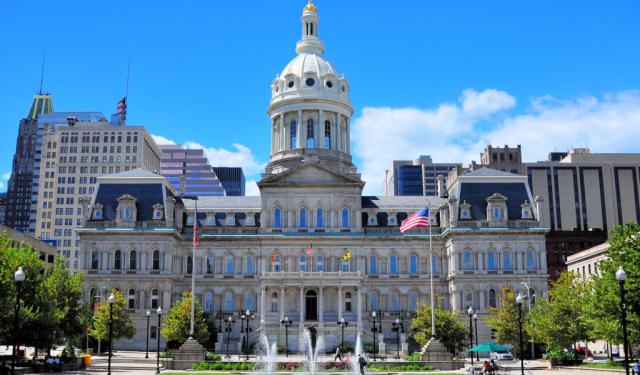
Baltimore Downtown Walking Tour
Before the city fully wakes, picture a harbor under fire, the night sky lit by explosions, and a single question hanging in the smoke: can the flag still be seen at dawn? In 1814, as the bombardment of Fort McHenry came to an end, Francis Scott Key, an American lawyer and poet, looked out and found his answer: “O say can you see, by the dawn’s early light…” From that moment, Baltimore... view more
Tour Duration: 2 Hours
Travel Distance: 3.6 Km or 2.2 Miles
Tour Duration: 2 Hours
Travel Distance: 3.6 Km or 2.2 Miles
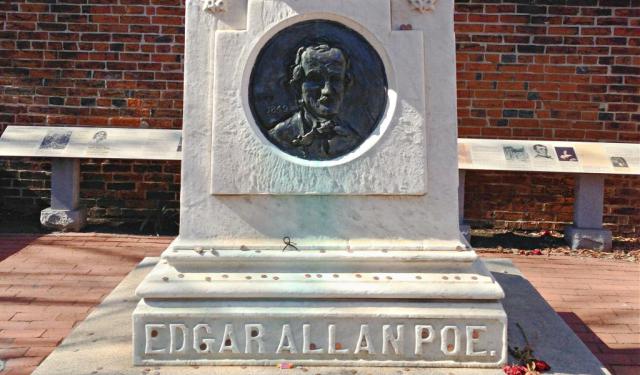
Edgar Allan Poe’s Baltimore
“Deep into that darkness peering, long I stood there wondering, fearing…” wrote Edgar Allan Poe, a line that could just as easily describe his final, mysterious days in Baltimore, the city most closely tied to his life and death.
Edgar Allan Poe was an American writer and poet best known for his tales of mystery, horror, and psychological depth. Although his family had roots in Baltimore,... view more
Tour Duration: 2 Hours
Travel Distance: 5.5 Km or 3.4 Miles
Edgar Allan Poe was an American writer and poet best known for his tales of mystery, horror, and psychological depth. Although his family had roots in Baltimore,... view more
Tour Duration: 2 Hours
Travel Distance: 5.5 Km or 3.4 Miles
City Walks Overview
