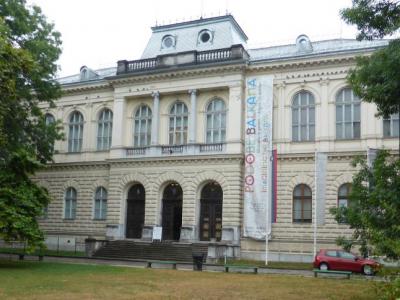


Prirodoslovni muzej Slovenije (Slovenian Museum of Natural History), Ljubljana
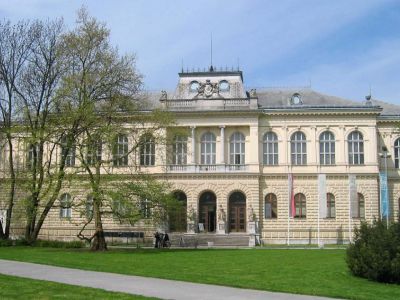
Prirodoslovni muzej Slovenije (Slovenian Museum of Natural History) traces its origins to the Provincial Museum of Carniola, founded in 1821. It is the country’s oldest scientific and cultural museum institution and shares a Neo-Renaissance building from the 1880s with the National Museum of Slovenia. Its collections cover zoology, botany, geology, and paleontology, presenting the natural history of Slovenia and other regions.
The museum’s best-known exhibit is the skeleton of a large male woolly mammoth, measuring about 3.61 metres tall and 5.74 metres long. It was discovered on 14 March 1938 during river regulation works in Nevlje, near Kamnik. Formed from the remains of a single animal, it is among the most complete mammoth skeletons displayed in Europe and provides a striking view of Ice Age wildlife.
Other important holdings include Baron Žiga Zois’ mineral and crystal collection and the Hohenwart collection of around 5,000 Indo-Pacific mollusc shells. Visitors can also see fossils, meteorites, insects, birds, mammals, and specimens representing different Slovenian habitats. Exhibitions explore evolution, biodiversity, geology, climate, and conservation, while temporary displays and educational activities introduce specialised scientific themes.
The museum’s best-known exhibit is the skeleton of a large male woolly mammoth, measuring about 3.61 metres tall and 5.74 metres long. It was discovered on 14 March 1938 during river regulation works in Nevlje, near Kamnik. Formed from the remains of a single animal, it is among the most complete mammoth skeletons displayed in Europe and provides a striking view of Ice Age wildlife.
Other important holdings include Baron Žiga Zois’ mineral and crystal collection and the Hohenwart collection of around 5,000 Indo-Pacific mollusc shells. Visitors can also see fossils, meteorites, insects, birds, mammals, and specimens representing different Slovenian habitats. Exhibitions explore evolution, biodiversity, geology, climate, and conservation, while temporary displays and educational activities introduce specialised scientific themes.
Want to visit this sight? Check out these Self-Guided Walking Tours in Ljubljana. Alternatively, you can download the mobile app "GPSmyCity: Walks in 1K+ Cities" from Apple App Store or Google Play Store. The app turns your mobile device to a personal tour guide and it works offline, so no data plan is needed when traveling abroad.
Download The GPSmyCity App



Prirodoslovni muzej Slovenije (Slovenian Museum of Natural History) on Map
Sight Name: Prirodoslovni muzej Slovenije (Slovenian Museum of Natural History)
Sight Location: Ljubljana, Slovenia (See walking tours in Ljubljana)
Sight Type: Museum/Gallery
Sight Location: Ljubljana, Slovenia (See walking tours in Ljubljana)
Sight Type: Museum/Gallery
Nearby Sights
Walking Tours in Ljubljana, Slovenia

Create Your Own Walk in Ljubljana
Creating your own self-guided walk in Ljubljana is easy and fun. Choose the city attractions that you want to see and a walk route map will be created just for you. You can even set your hotel as the start point of the walk.
Historic Buildings Walking Tour
The Slovenian capital has no shortage of historical buildings. The architectural wealth of Ljubljana accumulated over the years received a significant boost in the early 20th century thanks to the famous Slovenian architect, Joze Plecnik, a classicist, who tried to model the city on ancient Athens.
Among the notable local landmarks is the Ljubljana Central Pharmacy, a testament to the... view more
Tour Duration: 2 Hour(s)
Travel Distance: 2.8 Km or 1.7 Miles
Among the notable local landmarks is the Ljubljana Central Pharmacy, a testament to the... view more
Tour Duration: 2 Hour(s)
Travel Distance: 2.8 Km or 1.7 Miles
Explore Ljubljana Old Town on Foot
Ljubljana, Slovenia’s capital and largest city, developed at a natural crossroads between Central Europe, the Adriatic, and the Balkans, beside the navigable Ljubljanica River. People lived in the surrounding marshes in prehistoric times, leaving behind pile-dwelling settlements and a wooden wheel with an axle dating back about 5,200 years. By the early first century AD, the Romans had... view more
Tour Duration: 2 Hour(s)
Travel Distance: 2.0 Km or 1.2 Miles
Tour Duration: 2 Hour(s)
Travel Distance: 2.0 Km or 1.2 Miles