

St. Jakobskirche (Saint Jacob's Church), Nuremberg
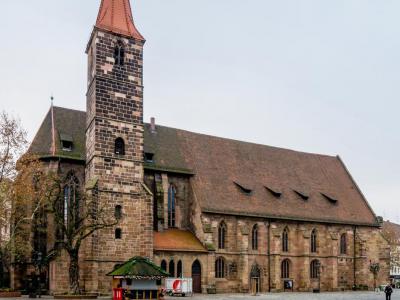
Saint Jacob’s Church in Nuremberg is a historic building with a rich and varied past. Dedicated to Saint James the Greater, the church’s origins date back to the medieval period. It was initially founded as a small Romanesque chapel on February 20, 1209, by Otto IV, Holy Roman Emperor, who placed it directly under the authority of the Teutonic Order. This original structure was replaced about 80 years later by a new Gothic building, which remained an important centre of the Teutonic Order and received numerous imperial privileges and properties.
The Reformation marked a significant shift for Saint Jacob’s Church, as it became Protestant in 1531 before later being returned to the Catholic Teutonic Order. During the turmoil of the Thirty Years’ War, the church was expropriated by King Gustav Adolf in 1632 and transferred to the city of Nuremberg.
The church became Nuremberg’s third Protestant parish church in 1810. Over the years, Saint Jacob’s Church served various community functions, including as a hospice for the elderly. It suffered significant damage during the Second World War but was subsequently restored.
Architecturally, Saint Jacob’s Church is a Gothic-style building known for its artistic and historical treasures. Notable features include the Twelve Messengers Altar, a late Gothic work with beautifully decorated reredos dating from around 1360–1370. Other significant works include the Mourning of Christ, a sculpture by an unknown 16th-century artist, and a three-manual pipe organ built in 1968 by Steinmeyer Orgelbau, continuing the church’s long musical tradition.
The Reformation marked a significant shift for Saint Jacob’s Church, as it became Protestant in 1531 before later being returned to the Catholic Teutonic Order. During the turmoil of the Thirty Years’ War, the church was expropriated by King Gustav Adolf in 1632 and transferred to the city of Nuremberg.
The church became Nuremberg’s third Protestant parish church in 1810. Over the years, Saint Jacob’s Church served various community functions, including as a hospice for the elderly. It suffered significant damage during the Second World War but was subsequently restored.
Architecturally, Saint Jacob’s Church is a Gothic-style building known for its artistic and historical treasures. Notable features include the Twelve Messengers Altar, a late Gothic work with beautifully decorated reredos dating from around 1360–1370. Other significant works include the Mourning of Christ, a sculpture by an unknown 16th-century artist, and a three-manual pipe organ built in 1968 by Steinmeyer Orgelbau, continuing the church’s long musical tradition.
Want to visit this sight? Check out these Self-Guided Walking Tours in Nuremberg. Alternatively, you can download the mobile app "GPSmyCity: Walks in 1K+ Cities" from Apple App Store or Google Play Store. The app turns your mobile device to a personal tour guide and it works offline, so no data plan is needed when traveling abroad.
Download The GPSmyCity App



St. Jakobskirche (Saint Jacob's Church) on Map
Sight Name: St. Jakobskirche (Saint Jacob's Church)
Sight Location: Nuremberg, Germany (See walking tours in Nuremberg)
Sight Type: Religious
Guide(s) Containing This Sight:
Sight Location: Nuremberg, Germany (See walking tours in Nuremberg)
Sight Type: Religious
Guide(s) Containing This Sight:
Nearby Sights

Walking Tours in Nuremberg, Germany

Create Your Own Walk in Nuremberg
Creating your own self-guided walk in Nuremberg is easy and fun. Choose the city attractions that you want to see and a walk route map will be created just for you. You can even set your hotel as the start point of the walk.
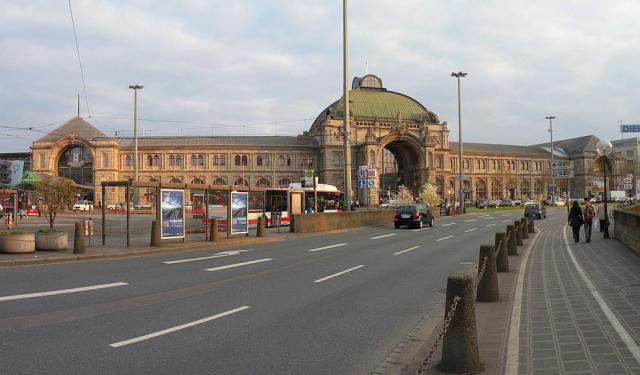
A Walk Through Nuremberg's Historical Old Town
American poet Henry Wadsworth Longfellow described Nuremberg as a “quaint old town of toil and traffic, quaint old town of art and song.”
Nuremberg has witnessed some of the most significant events in German history. For many people, the city is first associated with the rise of the Third Reich, the Nazi Party rallies, and the postwar trials of Nazi leaders. Indeed, Hitler regarded... view more
Tour Duration: 3 Hour(s)
Travel Distance: 3.8 Km or 2.4 Miles
Nuremberg has witnessed some of the most significant events in German history. For many people, the city is first associated with the rise of the Third Reich, the Nazi Party rallies, and the postwar trials of Nazi leaders. Indeed, Hitler regarded... view more
Tour Duration: 3 Hour(s)
Travel Distance: 3.8 Km or 2.4 Miles
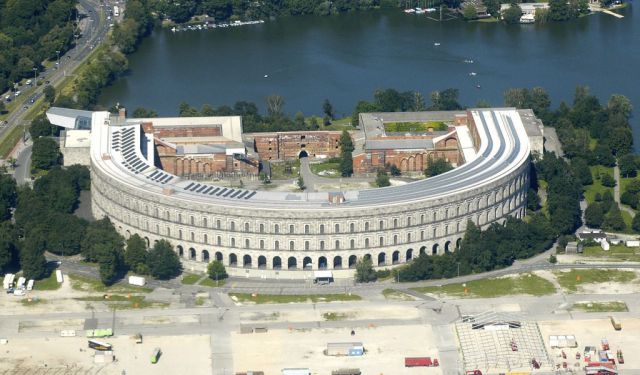
Hitler's Nuremberg Tour
Nuremberg’s association with Adolf Hitler and National Socialism is one of the darkest chapters in the city’s history. Although Nuremberg is known for its medieval architecture and storybook appearance, few German cities are as closely intertwined with the Nazi legacy. Hitler referred to it as the “City of the Party Rallies” and regarded it as a model for the ideal German city.
The... view more
Tour Duration: 2 Hour(s)
Travel Distance: 4.9 Km or 3 Miles
The... view more
Tour Duration: 2 Hour(s)
Travel Distance: 4.9 Km or 3 Miles