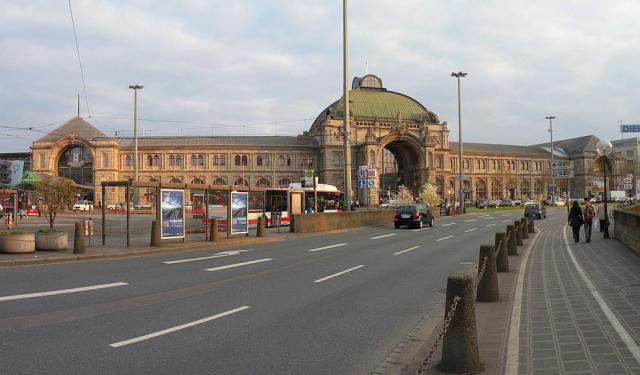


Audio Guide: A Walk Through Nuremberg's Historical Old Town (Self Guided), Nuremberg
American poet Henry Wadsworth Longfellow described Nuremberg as a “quaint old town of toil and traffic, quaint old town of art and song.”
Nuremberg has witnessed some of the most significant events in German history. For many people, the city is first associated with the rise of the Third Reich, the Nazi Party rallies, and the postwar trials of Nazi leaders. Indeed, Hitler regarded Nuremberg as an important city for the Nazi movement and planned a monumental complex here for the party rallies.
Yet Nuremberg’s story reaches far beyond the 20th century. Long before the Nazi era, the city was famous for its sausages and gingerbread and was celebrated as a major centre of trade, craftsmanship, art, and innovation. Its medieval merchants and artisans sent their products across Europe, while its artists and scholars helped make it one of the leading cultural centres of the German Renaissance.
The city’s name is traditionally connected with the rocky sandstone hill on which the Imperial Castle stands. The earliest documented form, “Norenberc,” appears in an imperial document from 1050 and is generally interpreted as meaning “rocky hill” or “rocky mountain.”
Nuremberg grew rapidly during the Middle Ages thanks to its strategic position on important trade routes. Imperial privileges granted in the 13th and 14th centuries helped it become a Free Imperial City of the Holy Roman Empire.
During the 15th and 16th centuries, Nuremberg experienced a remarkable cultural flowering. The city became a major centre of the German Renaissance and was home to figures such as the artist Albrecht Dürer and the poet and master singer Hans Sachs.
Nuremberg became part of the Kingdom of Bavaria in 1806 and developed into an important industrial centre during the 19th century. During the Second World War, large parts of Nuremberg were destroyed, including much of the historic Old Town. After 1945, however, the city undertook an extensive reconstruction that carefully restored many of its historic structures.
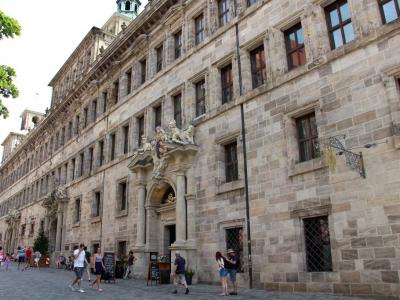
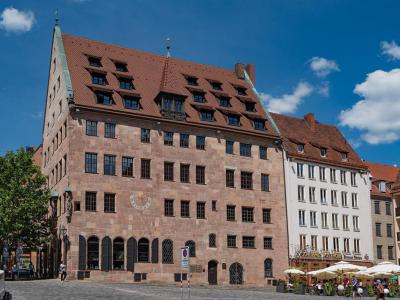
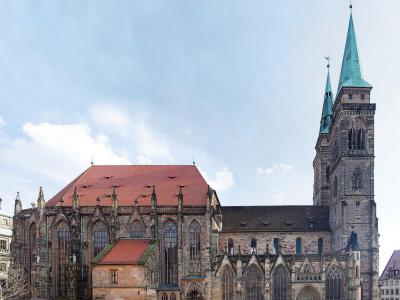
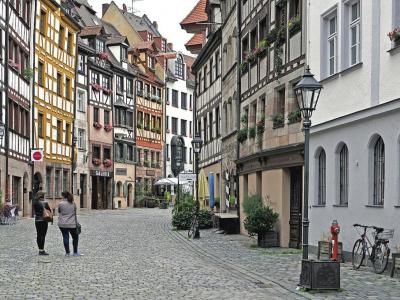
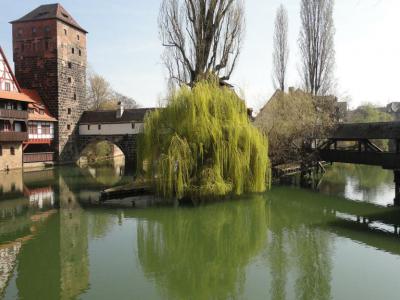
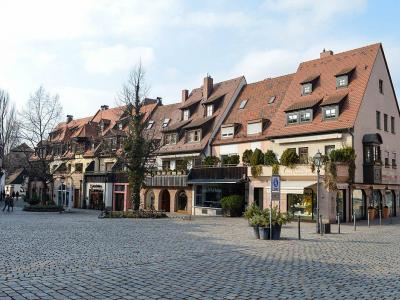
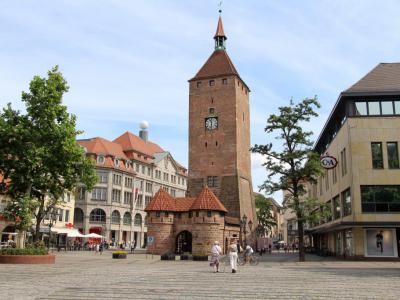
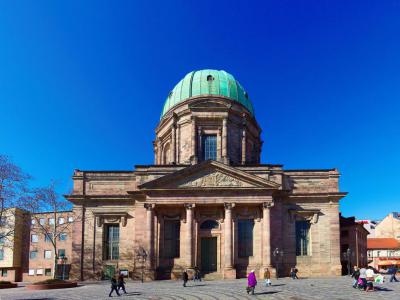
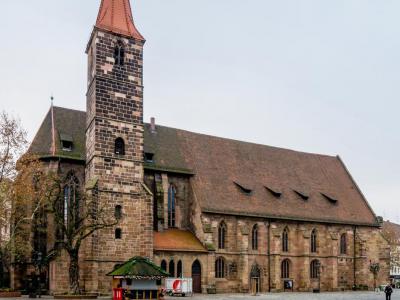
Today, a walk through Nuremberg’s Old Town reveals this layered history at every turn. You can explore Main Market Square, the Church of Our Lady, Beautiful Fountain, Saint Sebaldus Church, Old City Hall, and Nuremberg Castle with its Sinwell Tower. The route can continue through Weissgerber Street, Flea Market Island, Max Bridge, and Crafts Yard, where traditional half-timbered houses, historic bridges, riverside views, churches, fountains, medieval fortifications, shops, restaurants, and atmospheric lanes bring the city’s past to life.
So, as you begin this walking tour, keep Longfellow’s words in mind. Nuremberg is a place where trade, craftsmanship, art, music, triumph, destruction, and renewal have all left their mark. Walk its streets slowly, and you may discover exactly what Longfellow saw: a city where “toil and traffic” still meet “art and song.”
Nuremberg has witnessed some of the most significant events in German history. For many people, the city is first associated with the rise of the Third Reich, the Nazi Party rallies, and the postwar trials of Nazi leaders. Indeed, Hitler regarded Nuremberg as an important city for the Nazi movement and planned a monumental complex here for the party rallies.
Yet Nuremberg’s story reaches far beyond the 20th century. Long before the Nazi era, the city was famous for its sausages and gingerbread and was celebrated as a major centre of trade, craftsmanship, art, and innovation. Its medieval merchants and artisans sent their products across Europe, while its artists and scholars helped make it one of the leading cultural centres of the German Renaissance.
The city’s name is traditionally connected with the rocky sandstone hill on which the Imperial Castle stands. The earliest documented form, “Norenberc,” appears in an imperial document from 1050 and is generally interpreted as meaning “rocky hill” or “rocky mountain.”
Nuremberg grew rapidly during the Middle Ages thanks to its strategic position on important trade routes. Imperial privileges granted in the 13th and 14th centuries helped it become a Free Imperial City of the Holy Roman Empire.
During the 15th and 16th centuries, Nuremberg experienced a remarkable cultural flowering. The city became a major centre of the German Renaissance and was home to figures such as the artist Albrecht Dürer and the poet and master singer Hans Sachs.
Nuremberg became part of the Kingdom of Bavaria in 1806 and developed into an important industrial centre during the 19th century. During the Second World War, large parts of Nuremberg were destroyed, including much of the historic Old Town. After 1945, however, the city undertook an extensive reconstruction that carefully restored many of its historic structures.
Today, a walk through Nuremberg’s Old Town reveals this layered history at every turn. You can explore Main Market Square, the Church of Our Lady, Beautiful Fountain, Saint Sebaldus Church, Old City Hall, and Nuremberg Castle with its Sinwell Tower. The route can continue through Weissgerber Street, Flea Market Island, Max Bridge, and Crafts Yard, where traditional half-timbered houses, historic bridges, riverside views, churches, fountains, medieval fortifications, shops, restaurants, and atmospheric lanes bring the city’s past to life.
So, as you begin this walking tour, keep Longfellow’s words in mind. Nuremberg is a place where trade, craftsmanship, art, music, triumph, destruction, and renewal have all left their mark. Walk its streets slowly, and you may discover exactly what Longfellow saw: a city where “toil and traffic” still meet “art and song.”
How it works: Download the app "GPSmyCity: Walks in 1K+ Cities" from Apple App Store or Google Play Store to your mobile phone or tablet. The app turns your mobile device into a personal tour guide and its built-in GPS navigation functions guide you from one tour stop to next. The app works offline, so no data plan is needed when traveling abroad.
Download The GPSmyCity App



A Walk Through Nuremberg's Historical Old Town Map
Guide Name: A Walk Through Nuremberg's Historical Old Town
Guide Location: Germany » Nuremberg (See other walking tours in Nuremberg)
Guide Type: Self-guided Walking Tour (Sightseeing)
Tour Duration: 3 Hours
Travel Distance: 3.8 Km or 2.4 Miles
Tour Best Suited For: First-time visit
Guide Location: Germany » Nuremberg (See other walking tours in Nuremberg)
Guide Type: Self-guided Walking Tour (Sightseeing)
Tour Duration: 3 Hours
Travel Distance: 3.8 Km or 2.4 Miles
Tour Best Suited For: First-time visit
Sights Featured in This Walk
9
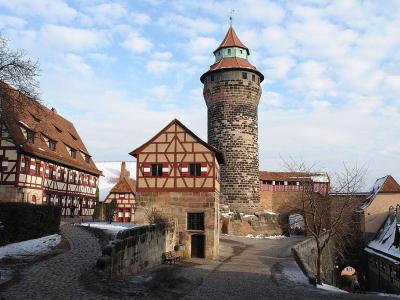
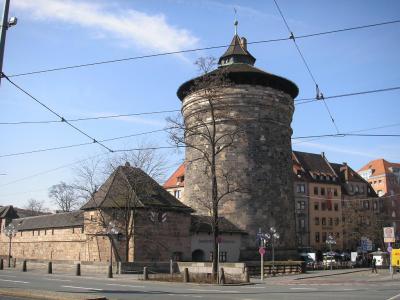
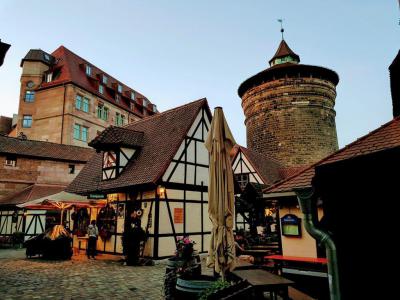
9) Nuremberg Castle (must see)

Walking Tours in Nuremberg, Germany

Create Your Own Walk in Nuremberg
Creating your own self-guided walk in Nuremberg is easy and fun. Choose the city attractions that you want to see and a walk route map will be created just for you. You can even set your hotel as the start point of the walk.
Hitler's Nuremberg Tour
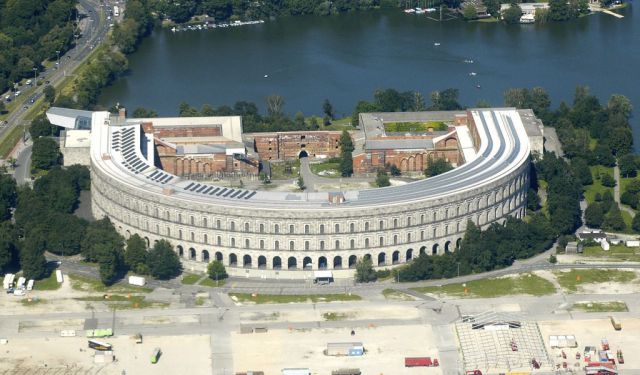
Nuremberg’s association with Adolf Hitler and National Socialism is one of the darkest chapters in the city’s history. Although Nuremberg is known for its medieval architecture and storybook appearance, few German cities are as closely intertwined with the Nazi legacy. Hitler referred to it as the “City of the Party Rallies” and regarded it as a model for the ideal German city.
The... view more
Tour Duration: 2 Hours
Travel Distance: 4.9 Km or 3 Miles
The... view more
Tour Duration: 2 Hours
Travel Distance: 4.9 Km or 3 Miles
The Most Popular Cities
/ view all