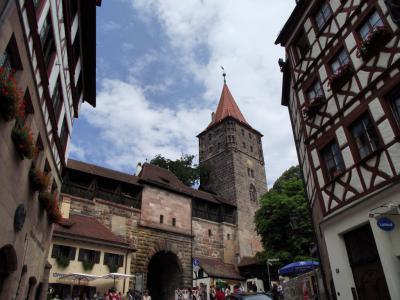


Tiergärtner Tower & Old Town Wall, Nuremberg
The Tiergärtner Tower and Old Town Wall of Nuremberg represent significant elements of medieval defensive architecture that have shaped the historical and cultural landscape of the city. Originating in the 12th century and completing in the 16th, the Nuremberg city walls spanned an impressive five kilometers, encircling the old town in a crooked parallelogram layout, with around four kilometers of this still standing today.
The construction of the present city wall was finished around 1400, featuring four gate towers strategically placed at each corner. A distinguishing feature of Nuremberg’s fortifications was the division into several layers: the high city wall itself, a 15-meter-wide ground-level area known as the kennel, a kennel wall rising from the moat, and a dry moat, constructed post the Hussite Wars around 1430, averaging 12 meters in depth and up to 20 meters in width.
The city wall system boasted approximately 130 towers as depicted in historical illustrations, showcasing its extensive defensive capabilities. Furthermore, the Nuremberg Castle, integrated into the northern stretch of the wall, forms part of one of Europe's most formidable medieval defensive systems.
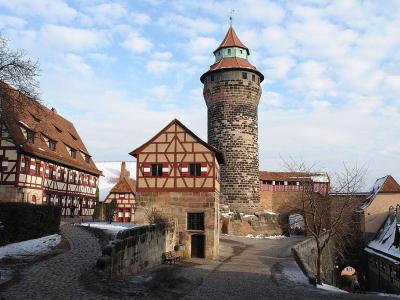
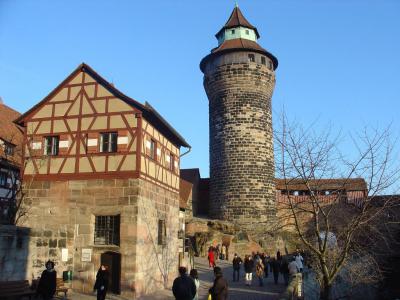
The Tiergärtner Tower (Tiergärtnertor), a part of this complex, stands as a gate tower with origins dating back to the late 13th century. Named after a nearby game reserve of the burgrave, the Tiergärtner Tower features a distinctive ogival structure with a square floor plan. It served as the main northwestern gate of Nuremberg, marking the commencement of pathways leading to Erlangen, Bamberg, Thuringia, and Saxony. Significant modifications were made in 1516 with the addition of two upper floors equipped with polygonal oriels. Later modifications in the 16th century and an expansion in 1894 adapted the gate to evolving urban needs.
Today, the Tiergärtner Tower is recognized not just for its historical and architectural significance but also as a cultural venue, having served as a depot for the Germanisches Museum's initial exhibits starting in 1852. It remains a pivotal stop on the Nuremberg Historic Mile, drawing visitors and historians alike to appreciate its storied past and preserved heritage.
The construction of the present city wall was finished around 1400, featuring four gate towers strategically placed at each corner. A distinguishing feature of Nuremberg’s fortifications was the division into several layers: the high city wall itself, a 15-meter-wide ground-level area known as the kennel, a kennel wall rising from the moat, and a dry moat, constructed post the Hussite Wars around 1430, averaging 12 meters in depth and up to 20 meters in width.
The city wall system boasted approximately 130 towers as depicted in historical illustrations, showcasing its extensive defensive capabilities. Furthermore, the Nuremberg Castle, integrated into the northern stretch of the wall, forms part of one of Europe's most formidable medieval defensive systems.
The Tiergärtner Tower (Tiergärtnertor), a part of this complex, stands as a gate tower with origins dating back to the late 13th century. Named after a nearby game reserve of the burgrave, the Tiergärtner Tower features a distinctive ogival structure with a square floor plan. It served as the main northwestern gate of Nuremberg, marking the commencement of pathways leading to Erlangen, Bamberg, Thuringia, and Saxony. Significant modifications were made in 1516 with the addition of two upper floors equipped with polygonal oriels. Later modifications in the 16th century and an expansion in 1894 adapted the gate to evolving urban needs.
Today, the Tiergärtner Tower is recognized not just for its historical and architectural significance but also as a cultural venue, having served as a depot for the Germanisches Museum's initial exhibits starting in 1852. It remains a pivotal stop on the Nuremberg Historic Mile, drawing visitors and historians alike to appreciate its storied past and preserved heritage.
Want to visit this sight? Check out these Self-Guided Walking Tours in Nuremberg. Alternatively, you can download the mobile app "GPSmyCity: Walks in 1K+ Cities" from Apple App Store or Google Play Store. The app turns your mobile device to a personal tour guide and it works offline, so no data plan is needed when traveling abroad.
Download The GPSmyCity App



Tiergärtner Tower & Old Town Wall on Map
Sight Name: Tiergärtner Tower & Old Town Wall
Sight Location: Nuremberg, Germany (See walking tours in Nuremberg)
Sight Type: Attraction/Landmark
Sight Location: Nuremberg, Germany (See walking tours in Nuremberg)
Sight Type: Attraction/Landmark
Nearby Sights
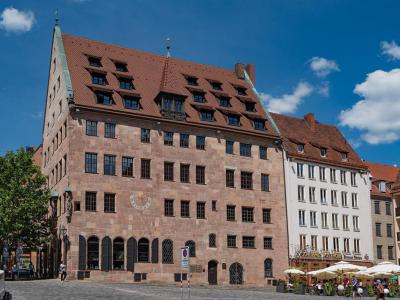
Walking Tours in Nuremberg, Germany

Create Your Own Walk in Nuremberg
Creating your own self-guided walk in Nuremberg is easy and fun. Choose the city attractions that you want to see and a walk route map will be created just for you. You can even set your hotel as the start point of the walk.
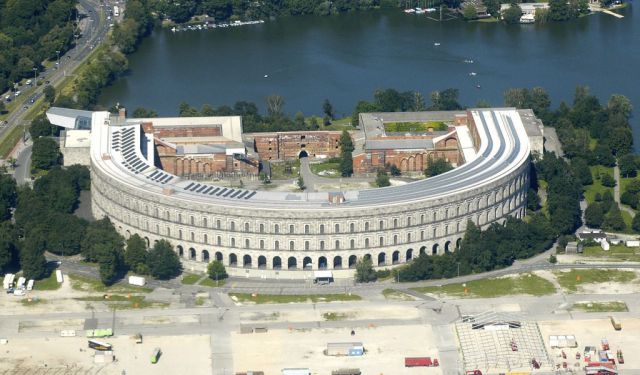
Hitler's Nuremberg Tour
Nuremberg’s association with Adolf Hitler and National Socialism is one of the darkest chapters in the city’s history. Although Nuremberg is known for its medieval architecture and storybook appearance, few German cities are as closely intertwined with the Nazi legacy. Hitler referred to it as the “City of the Party Rallies” and regarded it as a model for the ideal German city.
The... view more
Tour Duration: 2 Hour(s)
Travel Distance: 4.9 Km or 3 Miles
The... view more
Tour Duration: 2 Hour(s)
Travel Distance: 4.9 Km or 3 Miles
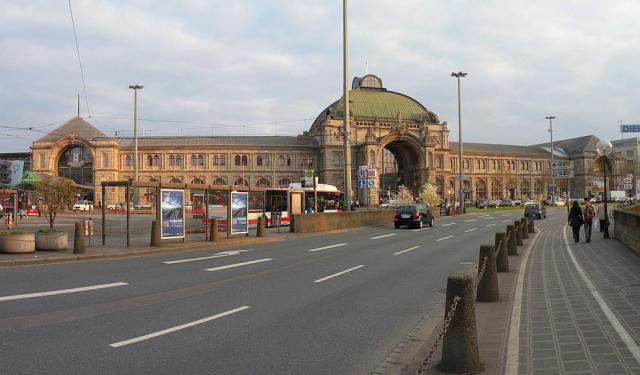
A Walk Through Nuremberg's Historical Old Town
American poet Henry Wadsworth Longfellow described Nuremberg as a “quaint old town of toil and traffic, quaint old town of art and song.”
Nuremberg has witnessed some of the most significant events in German history. For many people, the city is first associated with the rise of the Third Reich, the Nazi Party rallies, and the postwar trials of Nazi leaders. Indeed, Hitler regarded... view more
Tour Duration: 3 Hour(s)
Travel Distance: 3.8 Km or 2.4 Miles
Nuremberg has witnessed some of the most significant events in German history. For many people, the city is first associated with the rise of the Third Reich, the Nazi Party rallies, and the postwar trials of Nazi leaders. Indeed, Hitler regarded... view more
Tour Duration: 3 Hour(s)
Travel Distance: 3.8 Km or 2.4 Miles