


Weinstadel (Wine House), Nuremberg
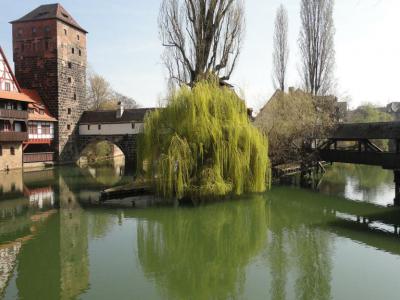
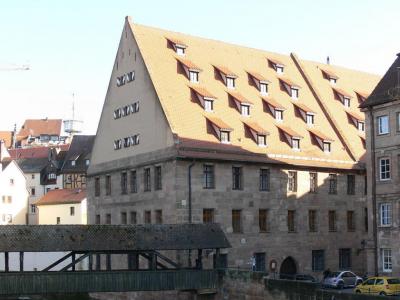
The Wine Store (Weinstadel) in Nuremberg is a stunning medieval building constructed between 1446 and 1448. Initially a leprosarium, it later served as a wine depot. Today, it's recognized as Germany's largest half-timbered structure, stretching 48 meters along the Pegnitz River. Its striking rust-brown and white timber frame, alongside the scenic Hangman's Bridge and golden weeping willows, makes it a remarkable architectural site.
In its early days, the Wine Store served a compassionate purpose as a hospice for lepers. During the Easter period, lepers were permitted into the city for three days, receiving food, clothing, and medical care within its walls. By the late 16th century, around 1571, the building transitioned into a wine warehouse, which is reflected in its name 'Weinstadel'-German for 'wine storage'. Over the centuries, it has also functioned as a workhouse, spinnery, and lodging for impoverished families.
Significantly damaged during World War II bombings, the Wine Store underwent a transformation in the 1950s when it was repurposed as a student residence for the University of Erlangen-Nuremberg. This conversion, while preserving the exterior's historic charm, significantly altered the building’s internal structure.
Today, the Wine Store remains one of Nuremberg’s most significant historical monuments and a highlight in the city's old town. It stands as a testament to the city’s rich history and resilience, providing a romantic and picturesque experience for visitors and locals. The area's historical significance is further highlighted by its proximity to the former “penultimate city wall” and a fortified bridge, which once connected the two halves of the city across the Pegnitz River. This blend of rich history, stunning architecture, and romantic ambiance makes the Wine Store a must-visit location in Nuremberg.
In its early days, the Wine Store served a compassionate purpose as a hospice for lepers. During the Easter period, lepers were permitted into the city for three days, receiving food, clothing, and medical care within its walls. By the late 16th century, around 1571, the building transitioned into a wine warehouse, which is reflected in its name 'Weinstadel'-German for 'wine storage'. Over the centuries, it has also functioned as a workhouse, spinnery, and lodging for impoverished families.
Significantly damaged during World War II bombings, the Wine Store underwent a transformation in the 1950s when it was repurposed as a student residence for the University of Erlangen-Nuremberg. This conversion, while preserving the exterior's historic charm, significantly altered the building’s internal structure.
Today, the Wine Store remains one of Nuremberg’s most significant historical monuments and a highlight in the city's old town. It stands as a testament to the city’s rich history and resilience, providing a romantic and picturesque experience for visitors and locals. The area's historical significance is further highlighted by its proximity to the former “penultimate city wall” and a fortified bridge, which once connected the two halves of the city across the Pegnitz River. This blend of rich history, stunning architecture, and romantic ambiance makes the Wine Store a must-visit location in Nuremberg.
Want to visit this sight? Check out these Self-Guided Walking Tours in Nuremberg. Alternatively, you can download the mobile app "GPSmyCity: Walks in 1K+ Cities" from Apple App Store or Google Play Store. The app turns your mobile device to a personal tour guide and it works offline, so no data plan is needed when traveling abroad.
Download The GPSmyCity App



Weinstadel (Wine House) on Map
Sight Name: Weinstadel (Wine House)
Sight Location: Nuremberg, Germany (See walking tours in Nuremberg)
Sight Type: Attraction/Landmark
Sight Location: Nuremberg, Germany (See walking tours in Nuremberg)
Sight Type: Attraction/Landmark
Nearby Sights
Walking Tours in Nuremberg, Germany

Create Your Own Walk in Nuremberg
Creating your own self-guided walk in Nuremberg is easy and fun. Choose the city attractions that you want to see and a walk route map will be created just for you. You can even set your hotel as the start point of the walk.
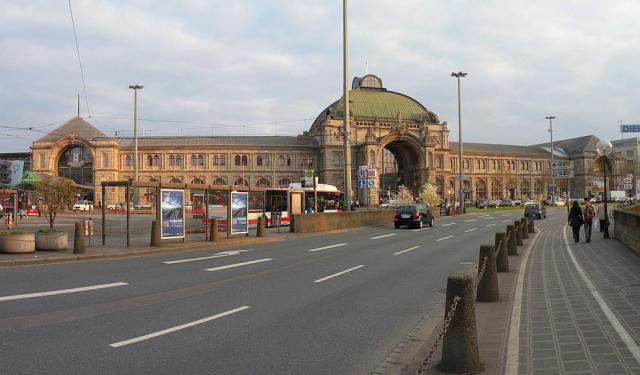
A Walk Through Nuremberg's Historical Old Town
American poet Henry Wadsworth Longfellow described Nuremberg as a “quaint old town of toil and traffic, quaint old town of art and song.”
Nuremberg has witnessed some of the most significant events in German history. For many people, the city is first associated with the rise of the Third Reich, the Nazi Party rallies, and the postwar trials of Nazi leaders. Indeed, Hitler regarded... view more
Tour Duration: 3 Hour(s)
Travel Distance: 3.8 Km or 2.4 Miles
Nuremberg has witnessed some of the most significant events in German history. For many people, the city is first associated with the rise of the Third Reich, the Nazi Party rallies, and the postwar trials of Nazi leaders. Indeed, Hitler regarded... view more
Tour Duration: 3 Hour(s)
Travel Distance: 3.8 Km or 2.4 Miles
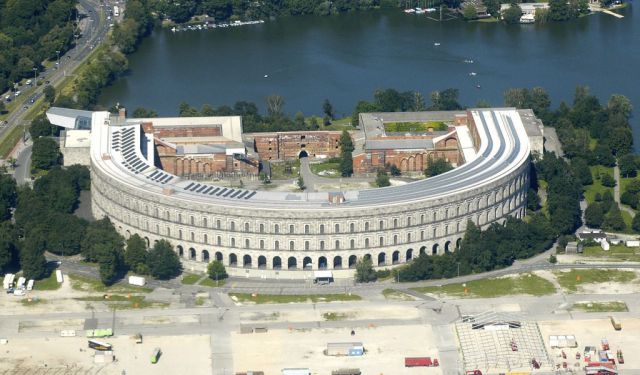
Hitler's Nuremberg Tour
Nuremberg’s association with Adolf Hitler and National Socialism is one of the darkest chapters in the city’s history. Although Nuremberg is known for its medieval architecture and storybook appearance, few German cities are as closely intertwined with the Nazi legacy. Hitler referred to it as the “City of the Party Rallies” and regarded it as a model for the ideal German city.
The... view more
Tour Duration: 2 Hour(s)
Travel Distance: 4.9 Km or 3 Miles
The... view more
Tour Duration: 2 Hour(s)
Travel Distance: 4.9 Km or 3 Miles