Custom Walk in Jerusalem, Israel by gsm11218584 created on 2019-11-07
Guide Location: Israel » Jerusalem
Guide Type: Custom Walk
# of Sights: 15
Tour Duration: 5 Hour(s)
Travel Distance: 12.6 Km or 7.8 Miles
Share Key: WGD6J
Guide Type: Custom Walk
# of Sights: 15
Tour Duration: 5 Hour(s)
Travel Distance: 12.6 Km or 7.8 Miles
Share Key: WGD6J
How It Works
Please retrieve this walk in the GPSmyCity app. Once done, the app will guide you from one tour stop to the next as if you had a personal tour guide. If you created the walk on this website or come to the page via a link, please follow the instructions below to retrieve the walk in the app.
Retrieve This Walk in App
Step 1. Download the app "GPSmyCity: Walks in 1K+ Cities" on Apple App Store or Google Play Store.



Step 2. In the GPSmyCity app, download(or launch) the guide "Jerusalem Map and Walking Tours".
Step 3. Tap the menu button located at upper right corner of the "Walks" screen and select "Retrieve custom walk". Enter the share key: WGD6J
1) Damascus Gate Market (must see)
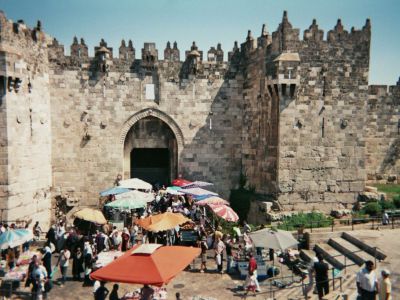
Many locals come to sell their products at the Damascus Gate. It is mainly a food market, but there are also other oriental things on sale. You can buy fresh products for your home. Both locals and tourists do their shopping here.
2) Shechem (Damascus) Gate
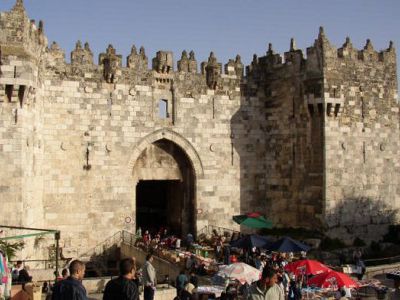
Easily spotted-and impossible to ignore-Damascus Gate announces itself long before you reach it. This is the busiest, loudest, and most theatrical entrance to the Old City’s eastern side, where daily life spills out in every direction. Architecturally, it’s also the most heavily fortified of Jerusalem’s original seven gates. Battlements line the top, loopholes puncture the walls, and sturdy turrets flank the entrance.
As for that ominous opening above the gateway-once upon a time, it wasn’t decorative but was used to drop boiling oil or other unwelcome surprises on attackers. And just in case anyone made it inside, the passageway forces a sharp double turn, designed to slow invaders down at exactly the wrong moment.
The gate takes its familiar name from Damascus, the Syrian capital roughly 220 kilometers to the north, marking the route this road once led toward. Built between 1537 and 1542 under the watchful eye of Ottoman Sultan Suleiman the Magnificent, it has changed remarkably little since. In Arabic, it’s known as Bab el-Amud, the “Gate of the Column,” likely referring to a towering column topped with a statue of Emperor Hadrian that once stood nearby, asserting Roman authority over the city.
At a closer look, the layers begin to pile up. The gate sits directly above the remains of a Roman predecessor, with Crusader, medieval, and Ottoman history stacked almost vertically. Just outside, steps lead down to archaeological excavations where fragments of a Crusader chapel, a medieval roadway, and traces of Rome’s Tenth Legion come into view.
Inside, a surviving Roman arch leads into the Roman Square Excavations, where the original plaza still preserves a carved stone gaming board-indeed, even imperial soldiers needed a break... This spot also marks the start of the Roman Cardo, the city’s ancient main street, while a hologram in the plaza recreates Hadrian’s long-lost column.
One last practical note: this is also where the Ramparts Walk begins, sending you along the city walls toward Lions’ Gate in one direction, or Jaffa Gate in the other-Jerusalem history, literally at your feet...
As for that ominous opening above the gateway-once upon a time, it wasn’t decorative but was used to drop boiling oil or other unwelcome surprises on attackers. And just in case anyone made it inside, the passageway forces a sharp double turn, designed to slow invaders down at exactly the wrong moment.
The gate takes its familiar name from Damascus, the Syrian capital roughly 220 kilometers to the north, marking the route this road once led toward. Built between 1537 and 1542 under the watchful eye of Ottoman Sultan Suleiman the Magnificent, it has changed remarkably little since. In Arabic, it’s known as Bab el-Amud, the “Gate of the Column,” likely referring to a towering column topped with a statue of Emperor Hadrian that once stood nearby, asserting Roman authority over the city.
At a closer look, the layers begin to pile up. The gate sits directly above the remains of a Roman predecessor, with Crusader, medieval, and Ottoman history stacked almost vertically. Just outside, steps lead down to archaeological excavations where fragments of a Crusader chapel, a medieval roadway, and traces of Rome’s Tenth Legion come into view.
Inside, a surviving Roman arch leads into the Roman Square Excavations, where the original plaza still preserves a carved stone gaming board-indeed, even imperial soldiers needed a break... This spot also marks the start of the Roman Cardo, the city’s ancient main street, while a hologram in the plaza recreates Hadrian’s long-lost column.
One last practical note: this is also where the Ramparts Walk begins, sending you along the city walls toward Lions’ Gate in one direction, or Jaffa Gate in the other-Jerusalem history, literally at your feet...
3) Garden Tomb (must see)
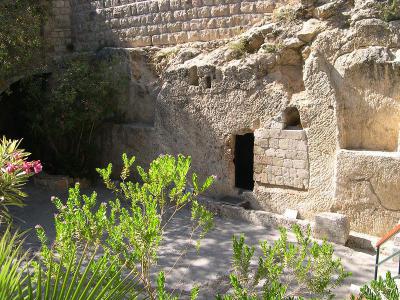
Set just beyond the bustle, with the city walls still in sight, the Garden Tomb offers a different kind of sacred experience. For many Protestant visitors, it feels closer to the Gospel picture than the more elaborate Church of the Holy Sepulchre.
The Anglican custodians managing the site are careful not to assert dogmatic claims that this is, indeed, the very tomb associated with Jesus’s resurrection. Instead, they offer something subtler: a place that looks right, feels right, and lines up well enough with the biblical accounts to let imagination and reflection do the rest. And, of course, it quietly delivers the line that matters most-“He is not here, for He is Risen!”
What strikes many visitors first is the calm. Jerusalem can be intense, noisy, and endlessly alive, but here, the pace drops almost instantly. The garden softens the city’s edges, and the rock-cut tomb sits quietly in the background, not demanding belief, just attention.
You leave having seen a burial chamber that closely resembles what a first-century tomb would have looked like, and that alone gives the story a new sense of scale and reality. Stay a little longer, and you may hear voices rising in song-groups from different countries, each singing in their own language, sharing the same space without a shared accent or hymnbook. For believers, this moment can be deeply moving. For skeptics, it can still be hard to ignore the atmosphere: something about an empty tomb, surrounded by silence and song, has a way of lingering longer than expected.
If you choose to listen to one of the short explanations offered on the site, you’ll find they leave plenty of room for personal thought. This is not a place that rushes you or overwhelms you with claims. Instead, it invites you to pause, reflect, and decide for yourself what an empty tomb means-then carry that question back with you into the city beyond the walls...
The Anglican custodians managing the site are careful not to assert dogmatic claims that this is, indeed, the very tomb associated with Jesus’s resurrection. Instead, they offer something subtler: a place that looks right, feels right, and lines up well enough with the biblical accounts to let imagination and reflection do the rest. And, of course, it quietly delivers the line that matters most-“He is not here, for He is Risen!”
What strikes many visitors first is the calm. Jerusalem can be intense, noisy, and endlessly alive, but here, the pace drops almost instantly. The garden softens the city’s edges, and the rock-cut tomb sits quietly in the background, not demanding belief, just attention.
You leave having seen a burial chamber that closely resembles what a first-century tomb would have looked like, and that alone gives the story a new sense of scale and reality. Stay a little longer, and you may hear voices rising in song-groups from different countries, each singing in their own language, sharing the same space without a shared accent or hymnbook. For believers, this moment can be deeply moving. For skeptics, it can still be hard to ignore the atmosphere: something about an empty tomb, surrounded by silence and song, has a way of lingering longer than expected.
If you choose to listen to one of the short explanations offered on the site, you’ll find they leave plenty of room for personal thought. This is not a place that rushes you or overwhelms you with claims. Instead, it invites you to pause, reflect, and decide for yourself what an empty tomb means-then carry that question back with you into the city beyond the walls...
4) Ecce Homo Arch
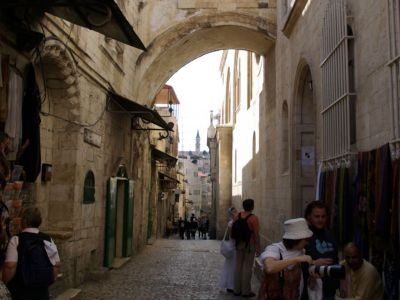
Stretching across the Via Dolorosa, this arch looks quietly theatrical-and it has earned the role. Its story begins in 70 AD, when the Romans threw it up as part of a military ramp aimed at the Antonia Fortress, where Jewish rebels were holding out. A few decades later, after crushing the Second Jewish War, the Romans rebuilt Jerusalem in 135 AD and gave the arch a victory makeover: one large central opening flanked by two smaller arches. The main bay still spans the street here, just west of the entrance to the Lithostratos, better known as the “Pavement of Justice.”
One of those side arches didn’t vanish-it simply changed address. Today, it survives indoors, folded neatly into the Convent of the Sisters of Zion, built in the 1860s. Beneath the convent lies the Struthion Pool, an ancient reservoir designed to catch rainwater from the surrounding rooftops. Christian tradition places a dramatic moment here: the stone pavement above the pool is said to be where Pontius Pilate presented Jesus to the crowd with the words “Ecce homo”-“Behold the man.” Archaeology, however, plays the spoiler. The pavement dates to the 2nd century AD, from the reign of Emperor Hadrian, making it a later Roman addition rather than a firsthand witness to the trial.
Looking closely at the stone within the railed section, you will spot etched markings-circles and lines that historians believe were scratched by bored Roman guards, possibly for games played while on duty. It’s a small, human detail amid the heavy symbolism.
Just nearby, beside the Third Station, a building belonging to the Greek Orthodox Patriarchate bears a plaque identifying it as the Prison of Jesus and Barabbas. That label only appeared in 1911, and scholars are unconvinced. More likely, this was once a stable tied to the Antonia Fortress-less drama, more logistics. Indeed, in Jerusalem, even the stones argue back...
One of those side arches didn’t vanish-it simply changed address. Today, it survives indoors, folded neatly into the Convent of the Sisters of Zion, built in the 1860s. Beneath the convent lies the Struthion Pool, an ancient reservoir designed to catch rainwater from the surrounding rooftops. Christian tradition places a dramatic moment here: the stone pavement above the pool is said to be where Pontius Pilate presented Jesus to the crowd with the words “Ecce homo”-“Behold the man.” Archaeology, however, plays the spoiler. The pavement dates to the 2nd century AD, from the reign of Emperor Hadrian, making it a later Roman addition rather than a firsthand witness to the trial.
Looking closely at the stone within the railed section, you will spot etched markings-circles and lines that historians believe were scratched by bored Roman guards, possibly for games played while on duty. It’s a small, human detail amid the heavy symbolism.
Just nearby, beside the Third Station, a building belonging to the Greek Orthodox Patriarchate bears a plaque identifying it as the Prison of Jesus and Barabbas. That label only appeared in 1911, and scholars are unconvinced. More likely, this was once a stable tied to the Antonia Fortress-less drama, more logistics. Indeed, in Jerusalem, even the stones argue back...
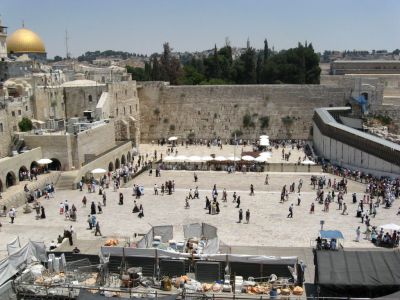
5) Western (Wailing) Wall (must see)
The Western Wall-also known as the Wailing Wall, the Place of Weeping, or the Buraq Wall-is not a standalone monument but a surviving fragment of the massive retaining wall that once supported the Temple Mount. It dates back to 19 BC, when Herod the Great decided that the sacred platform needed more space and a lot more engineering. The solution was to expand the mount artificially and build enormous stone walls to hold everything in place. What you’re looking at is structural support that quietly became one of the most charged religious sites on earth.
From its foundation, the wall rises about 100 feet, though only around 60 feet are visible today. Of the 45 stone layers stacked here, just 28 are exposed. The lowest seven courses come straight from Herod’s time. Four more were added under the Umayyad Caliphate around the 7th century, another 14 during Ottoman rule in the 1860s, and the final three layers were completed in the 1920s under the Mufti of Jerusalem.
Since the Six-Day War in 1967, nothing has been added. The wall, for once in Jerusalem’s history, has been left exactly as it is.
Then there’s the scale. Some of these limestone blocks weigh between two and eight tons, and one stone near Wilson’s Arch tips the scales at an almost unbelievable 570 tons. Even by ancient standards, this was an extraordinary feat of planning, labor, and sheer stubborn ambition.
The wall has been a place of Jewish prayer since at least the 4th century AD and is considered sacred because of its proximity to the Temple Mount. The term “wailing” comes from the tradition of mourning the destruction of the Temple.
Today, men and women pray in separate sections, especially during the Sabbath, from Friday evening to Saturday evening. You’ll also notice folded notes tucked into the stones-written prayers left by visitors. They’re collected regularly and buried respectfully on the Mount of Olives.
A practical note before you approach: bring valid ID, expect security checks, dress modestly, and remember that photography is not permitted during the Sabbath. Entry, however, is free-no ticket required to stand before two thousand years of layered history...
From its foundation, the wall rises about 100 feet, though only around 60 feet are visible today. Of the 45 stone layers stacked here, just 28 are exposed. The lowest seven courses come straight from Herod’s time. Four more were added under the Umayyad Caliphate around the 7th century, another 14 during Ottoman rule in the 1860s, and the final three layers were completed in the 1920s under the Mufti of Jerusalem.
Since the Six-Day War in 1967, nothing has been added. The wall, for once in Jerusalem’s history, has been left exactly as it is.
Then there’s the scale. Some of these limestone blocks weigh between two and eight tons, and one stone near Wilson’s Arch tips the scales at an almost unbelievable 570 tons. Even by ancient standards, this was an extraordinary feat of planning, labor, and sheer stubborn ambition.
The wall has been a place of Jewish prayer since at least the 4th century AD and is considered sacred because of its proximity to the Temple Mount. The term “wailing” comes from the tradition of mourning the destruction of the Temple.
Today, men and women pray in separate sections, especially during the Sabbath, from Friday evening to Saturday evening. You’ll also notice folded notes tucked into the stones-written prayers left by visitors. They’re collected regularly and buried respectfully on the Mount of Olives.
A practical note before you approach: bring valid ID, expect security checks, dress modestly, and remember that photography is not permitted during the Sabbath. Entry, however, is free-no ticket required to stand before two thousand years of layered history...
6) Hezekiah's Tunnel (must see)
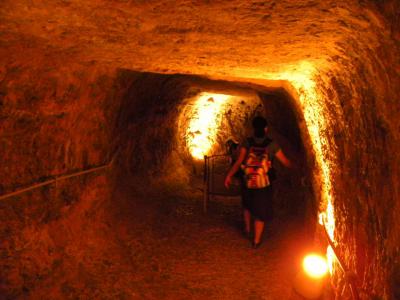
Exploring Hezekiah's Tunnel is an unforgettable experience, offering both historical insight and a refreshing escape from the heat. This ancient engineering marvel, discovered in 1838 by American biblical scholar Edward Robinson, provides a unique journey through a tiny underwater river.
Beginning at Gihon Spring, a major source of water for ancient Jerusalem for 1,000 years, the 2,700-year-old tunnel stretches 580 yards (530 meters) to the Pool of Siloam, the source for drawing water during biblical times. Built by King Hezekiah in preparation for the Assyrian siege in the 8th century BC, the tunnel was painstakingly chipped away by hand by two groups of workers who met in the middle to secure the city's water supply from impending invaders.
With proper preparation, exploring Hezekiah's Tunnel promises to be an unforgettable and enlightening experience.
Tip:
For almost the entirety of the tunnel, there is no light whatsoever. Even if there isn't a constant stream of water running underfoot, using something like your cell phone's flashlight setting for light won't be adequate. It is highly recommended that you use a strong headlamp, but a flashlight would work as well. It doesn't hurt to have a friend walk in front of or behind you as well, just in case your light dies and you're stuck walking in the dark.
You are advised to bring only a backpack, purse, or small bag that can be either hitched up high on your back or tucked under your arm well above the water level. Bulky packages would probably be very annoying to carry through the tunnel given its narrowness. Also, wear comfortable shoes that can get wet!
Beginning at Gihon Spring, a major source of water for ancient Jerusalem for 1,000 years, the 2,700-year-old tunnel stretches 580 yards (530 meters) to the Pool of Siloam, the source for drawing water during biblical times. Built by King Hezekiah in preparation for the Assyrian siege in the 8th century BC, the tunnel was painstakingly chipped away by hand by two groups of workers who met in the middle to secure the city's water supply from impending invaders.
With proper preparation, exploring Hezekiah's Tunnel promises to be an unforgettable and enlightening experience.
Tip:
For almost the entirety of the tunnel, there is no light whatsoever. Even if there isn't a constant stream of water running underfoot, using something like your cell phone's flashlight setting for light won't be adequate. It is highly recommended that you use a strong headlamp, but a flashlight would work as well. It doesn't hurt to have a friend walk in front of or behind you as well, just in case your light dies and you're stuck walking in the dark.
You are advised to bring only a backpack, purse, or small bag that can be either hitched up high on your back or tucked under your arm well above the water level. Bulky packages would probably be very annoying to carry through the tunnel given its narrowness. Also, wear comfortable shoes that can get wet!
7) Zion Gate
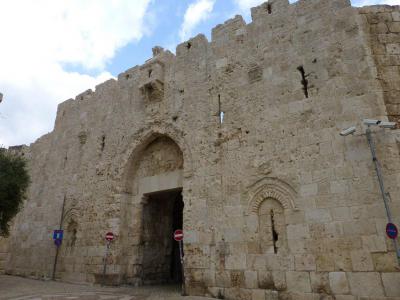
Lying among the eight gates embedded within the Old City's fortifications, the Zion Gate, also known as David's Gate, serves as a direct passage into the Armenian and Jewish Quarters. If the tales of the famous Jewish king's burial here hold true, the name couldn't be more fitting. With its angular features crafted to thwart invaders, one can now traverse it in the opposite direction and 'invade' the Old City at any hour of the day. Besides, the walls along here are especially nice, offering splendid photo opportunities under the afternoon sun.
Constructed by engineers of Suleiman the Magnificent around 1540, this gate facilitated direct access from the city to the sacred sites atop Mount Zion. In the 19th century, the nearby vicinity gained notoriety as a gathering point for lepers. The battleground was particularly intense here in 1948, as Israeli soldiers struggled to breach the walls to relieve the besieged Jewish Quarter held by the Jordanians. Today, the gate's exterior bears witness to the ferocious combat, marred by numerous bullet holes. A short distance to the west, conspicuous damage to the base of the wall remains from the soldiers' attempts to blast their way through with explosives.
Constructed by engineers of Suleiman the Magnificent around 1540, this gate facilitated direct access from the city to the sacred sites atop Mount Zion. In the 19th century, the nearby vicinity gained notoriety as a gathering point for lepers. The battleground was particularly intense here in 1948, as Israeli soldiers struggled to breach the walls to relieve the besieged Jewish Quarter held by the Jordanians. Today, the gate's exterior bears witness to the ferocious combat, marred by numerous bullet holes. A short distance to the west, conspicuous damage to the base of the wall remains from the soldiers' attempts to blast their way through with explosives.
8) King David's Tomb
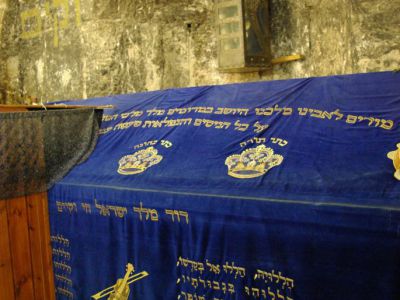
King David's Tomb holds significant cultural and religious importance for the Jewish community. Particularly during the period between 1948 and 1967 when access to the Old City and the Western Wall was restricted due to Jordanian control, it became an alternative site for Jewish pilgrimage. While some believe it to be the actual burial place of King David, this tradition only dates back to the 10th century AD, shortly after the Crusades. The building itself dates from the Crusader era and is partially open to the public for visitation.
Upon entering, take note of the exquisite tile work in the first antechamber, which was patched to match repairs made to the Dome of the Rock during the 1500s. The second antechamber houses a mihrab with equally impressive tile work dating from the 1400s when the area was under Muslim control. Today, the building serves as a synagogue, with separate entrances for men and women.
Next to the velvet-draped cenotaph and directly beneath the Cenacle is the empty room where Jesus supposedly washed his disciples’ feet after the last supper. Additionally, the building's rooftop features an observation point offering excellent views and a minaret, added by the Turks during the 16th century after the expulsion of Christians from Mount Zion.
Tips:
Modest attire is recommended regardless of gender (kippahs are provided for men).
Though pictures are often allowed, it's important to be respectful of those involved in prayer.
Upon entering, take note of the exquisite tile work in the first antechamber, which was patched to match repairs made to the Dome of the Rock during the 1500s. The second antechamber houses a mihrab with equally impressive tile work dating from the 1400s when the area was under Muslim control. Today, the building serves as a synagogue, with separate entrances for men and women.
Next to the velvet-draped cenotaph and directly beneath the Cenacle is the empty room where Jesus supposedly washed his disciples’ feet after the last supper. Additionally, the building's rooftop features an observation point offering excellent views and a minaret, added by the Turks during the 16th century after the expulsion of Christians from Mount Zion.
Tips:
Modest attire is recommended regardless of gender (kippahs are provided for men).
Though pictures are often allowed, it's important to be respectful of those involved in prayer.
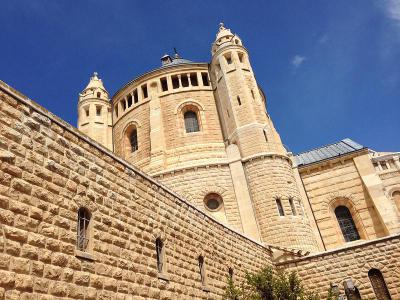
9) Dormition Abbey
This beautiful, ancient monastery on top of Mount Zion – said to be the place where the Virgin Mary was taken, body and soul, to heaven by angels – is attractive for its distinctive conical roof and rich interior decorations, in addition to its religious significance. After Christ's death, according to Christian tradition, his mother lived on Mount Zion until her eternal sleep; the name "dormition" meaning "falling asleep" or death and the resurrection to heaven.
The church has two levels – the main church and the crypt, both equally impressive, with fine mosaics and Byzantine-style artwork which cover almost every surface, including the floor. Chapels and alters have been donated from around the world and make the tour of the church simply breathtaking, culminating with the ivory sculpture of the resting Mary in the crypt below.
The little shop and quiet cafe are the frostings on the cake; a real haven in the maze complex of the Old City. The cade has comfortable chairs and tables and delicious coffee/cakes, while the shop sells high-quality souvenirs at very reasonable prices, including small hand-painted Russian icons and handcrafted crosses.
Tip:
Make sure to use their 3-shekel bathroom to see the ruins they have there with an explanation!
The church has two levels – the main church and the crypt, both equally impressive, with fine mosaics and Byzantine-style artwork which cover almost every surface, including the floor. Chapels and alters have been donated from around the world and make the tour of the church simply breathtaking, culminating with the ivory sculpture of the resting Mary in the crypt below.
The little shop and quiet cafe are the frostings on the cake; a real haven in the maze complex of the Old City. The cade has comfortable chairs and tables and delicious coffee/cakes, while the shop sells high-quality souvenirs at very reasonable prices, including small hand-painted Russian icons and handcrafted crosses.
Tip:
Make sure to use their 3-shekel bathroom to see the ruins they have there with an explanation!
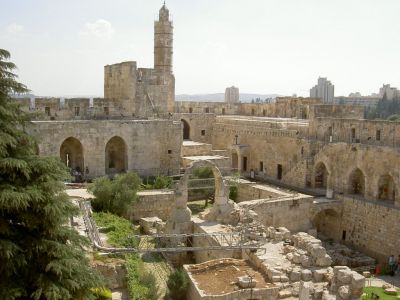
10) The Citadel (Tower of David) (must see)
Just inside Jaffa Gate rises the Citadel, better known today as the Tower of David-a place where Jerusalem’s history is stacked quite literally in stone. Careful excavation has peeled the site back layer by layer, so as you move through it, you’re also moving through time. The experience easily stretches over a couple of hours, especially if you follow the story indoors, where archaeology and narrative are woven together into a clear, chronological portrait of the city.
The Citadel occupies the western hill of the Old City, a strategic high point fortified repeatedly since the 2nd century BC. Early defenses were expanded dramatically by Herod the Great, who reinforced the Hasmonean walls with three massive towers. Only one of them-the Phasael Tower-still stands, but it does plenty of heavy lifting. Later, during the Byzantine period, a historical mix-up led locals to believe this was King David’s palace, giving the complex its enduring name.
Power changed hands, and so did the Citadel. Muslim rulers, Crusaders, and later the Mamluks reshaped it until its basic form was fixed in 1310 under Sultan Al-Nasir Muhammad. In the 16th century, Suleiman the Magnificent added a grand eastern gateway and an open square, while the minaret-built in the 17th century-rose to become one of Jerusalem’s most recognizable silhouettes.
Climb the Phasael Tower in the Citadel’s northeast corner, and the reward is perspective, in every sense. Below you lie the excavations; beyond them, the Old City; further still, the hills stretching south and west. Along the way, plaques help decode what you’re seeing-Hasmonean walls, Roman cisterns, and Umayyad fortifications that once held firm against Crusader forces in 1099.
And when night falls, stick around. A 45-minute sound-and-light show transforms the Citadel into a moving timeline of Jerusalem’s past-dramatic, immersive, and very popular. Book ahead, or risk watching history unfold from the outside.
The Citadel occupies the western hill of the Old City, a strategic high point fortified repeatedly since the 2nd century BC. Early defenses were expanded dramatically by Herod the Great, who reinforced the Hasmonean walls with three massive towers. Only one of them-the Phasael Tower-still stands, but it does plenty of heavy lifting. Later, during the Byzantine period, a historical mix-up led locals to believe this was King David’s palace, giving the complex its enduring name.
Power changed hands, and so did the Citadel. Muslim rulers, Crusaders, and later the Mamluks reshaped it until its basic form was fixed in 1310 under Sultan Al-Nasir Muhammad. In the 16th century, Suleiman the Magnificent added a grand eastern gateway and an open square, while the minaret-built in the 17th century-rose to become one of Jerusalem’s most recognizable silhouettes.
Climb the Phasael Tower in the Citadel’s northeast corner, and the reward is perspective, in every sense. Below you lie the excavations; beyond them, the Old City; further still, the hills stretching south and west. Along the way, plaques help decode what you’re seeing-Hasmonean walls, Roman cisterns, and Umayyad fortifications that once held firm against Crusader forces in 1099.
And when night falls, stick around. A 45-minute sound-and-light show transforms the Citadel into a moving timeline of Jerusalem’s past-dramatic, immersive, and very popular. Book ahead, or risk watching history unfold from the outside.
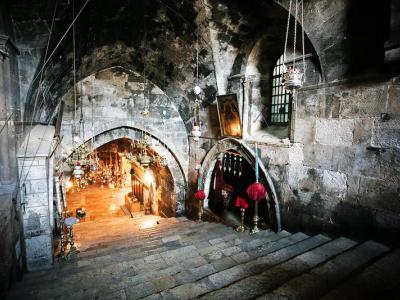
11) Tomb of the Virgin Mary
Just beside the olive-heavy slopes of Gethsemane, in the Valley of Jehoshaphat, you will find yourself facing one of Jerusalem’s oldest and most enduring pilgrimage sites: the Tomb of the Virgin Mary. There’s no grand façade here to announce what lies behind it. Instead of rising above ground, the sanctuary unfolds below it. The experience begins with a long descent-nearly 50 stone steps, rebuilt by the Crusaders-pulling you steadily downward, away from daylight and into a space shaped as much by belief as by rock.
Halfway down, the staircase pauses beside a series of side tombs once thought suitable for medieval royalty. One of them, on the right as you descend, carries special weight in Christian tradition: it is identified as the burial place of Mary's parents, Saints Anne and Joachim. The setting is modest, even restrained, but that understatement only sharpens the sense that this is a place meant to be entered slowly, with attention.
The origins of the sanctuary reach back to the first centuries of Christianity, though the structure you see today reflects later Byzantine design. The crypt itself is carved largely from solid stone and laid out in a cruciform plan. At its eastern end, softened by icons, lamps, and centuries of touch, stands the tomb traditionally linked to Mary. It remains a shared place of prayer for Armenian, Greek Orthodox, Coptic, and Syrian Christians-each adding their own visual language to the same small space.
The site’s pull extends beyond Christianity. In Islamic tradition, Mary is also deeply revered, and legend holds that during his Night Journey to Jerusalem, the Prophet Muhammad witnessed a radiant light emerging from this very tomb. Just outside, beside the entrance, is the Cave of Gethsemane-sometimes called the Cave of the Betrayal-where tradition places Judas’s final, infamous act preceding Jesus's arrest.
Indeed, this is not a site that overwhelms through size or ornament. Instead, it works quietly, forming a threshold between memory, devotion, and silence.
Halfway down, the staircase pauses beside a series of side tombs once thought suitable for medieval royalty. One of them, on the right as you descend, carries special weight in Christian tradition: it is identified as the burial place of Mary's parents, Saints Anne and Joachim. The setting is modest, even restrained, but that understatement only sharpens the sense that this is a place meant to be entered slowly, with attention.
The origins of the sanctuary reach back to the first centuries of Christianity, though the structure you see today reflects later Byzantine design. The crypt itself is carved largely from solid stone and laid out in a cruciform plan. At its eastern end, softened by icons, lamps, and centuries of touch, stands the tomb traditionally linked to Mary. It remains a shared place of prayer for Armenian, Greek Orthodox, Coptic, and Syrian Christians-each adding their own visual language to the same small space.
The site’s pull extends beyond Christianity. In Islamic tradition, Mary is also deeply revered, and legend holds that during his Night Journey to Jerusalem, the Prophet Muhammad witnessed a radiant light emerging from this very tomb. Just outside, beside the entrance, is the Cave of Gethsemane-sometimes called the Cave of the Betrayal-where tradition places Judas’s final, infamous act preceding Jesus's arrest.
Indeed, this is not a site that overwhelms through size or ornament. Instead, it works quietly, forming a threshold between memory, devotion, and silence.
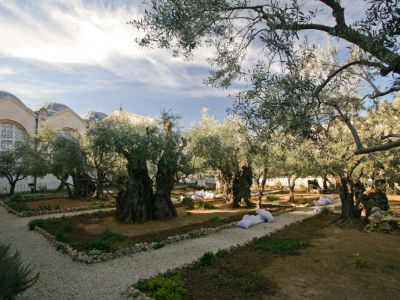
12) Garden of Gethsemane (must see)
The Garden of Gethsemane, lying at the foot of the Mount of Olives, is a place heavy with meaning and surprisingly calm for a site at the center of one of Christianity’s most dramatic moments. According to all four Gospels, this is where Jesus spent the night wrestling with the knowledge of what lay ahead-his arrest, trial, and death-before soldiers arrived to take him away.
The name Gethsemane comes from Aramaic and means “oil press,” a reminder that this was once a working olive grove long before it became sacred ground. Strip away the theology for a moment, and what you have here is an urban olive orchard-quiet, enclosed, and stubbornly timeless. Eight ancient olive trees dominate the garden, their twisted trunks looking as if they have seen absolutely everything and are still not impressed.
Scientific dating suggests they are over 900 years old, making them among the oldest living olive trees known. What's more, they all descend from the same parent tree, which may itself trace its roots back to the olive trees growing here in Jesus’s time. They still bear fruit, too-though they are carefully fenced off, so unless you plan to charm the gatekeeper with extraordinary elegance, you’ll be admiring them from a respectful distance.
Just beside the garden stands the Church of All Nations, also known as the Basilica of the Agony. Inside, the lighting is intentionally subdued, drawing attention to a section of exposed bedrock believed to mark the spot where Jesus prayed before his arrest.
The atmosphere is solemn, contemplative, and very serious about the dress code. Knees, shoulders, and upper arms must be covered-that is, properly covered, not just “technically hidden by a floating scarf.” Shorts, especially for women, are a firm no, in keeping with the long-standing custom of respect.
Taken together, the garden and the church offer a pause in Jerusalem’s relentless intensity-a moment to slow down, lower your voice, and stand where fear, faith, and history once intersected under the shade of ancient olive trees.
The name Gethsemane comes from Aramaic and means “oil press,” a reminder that this was once a working olive grove long before it became sacred ground. Strip away the theology for a moment, and what you have here is an urban olive orchard-quiet, enclosed, and stubbornly timeless. Eight ancient olive trees dominate the garden, their twisted trunks looking as if they have seen absolutely everything and are still not impressed.
Scientific dating suggests they are over 900 years old, making them among the oldest living olive trees known. What's more, they all descend from the same parent tree, which may itself trace its roots back to the olive trees growing here in Jesus’s time. They still bear fruit, too-though they are carefully fenced off, so unless you plan to charm the gatekeeper with extraordinary elegance, you’ll be admiring them from a respectful distance.
Just beside the garden stands the Church of All Nations, also known as the Basilica of the Agony. Inside, the lighting is intentionally subdued, drawing attention to a section of exposed bedrock believed to mark the spot where Jesus prayed before his arrest.
The atmosphere is solemn, contemplative, and very serious about the dress code. Knees, shoulders, and upper arms must be covered-that is, properly covered, not just “technically hidden by a floating scarf.” Shorts, especially for women, are a firm no, in keeping with the long-standing custom of respect.
Taken together, the garden and the church offer a pause in Jerusalem’s relentless intensity-a moment to slow down, lower your voice, and stand where fear, faith, and history once intersected under the shade of ancient olive trees.
13) Lions' Gate
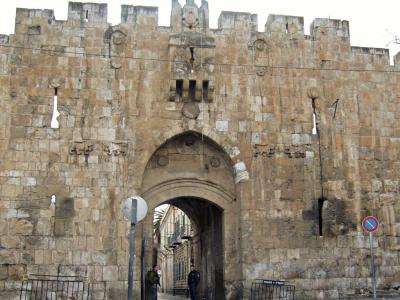
This entrance in Jerusalem’s eastern wall answers to several names, which already tells you it has lived a busy life. Most visitors know it as the Lions’ Gate, thanks to the pair of stone beasts guarding the doorway. Christians, meanwhile, often call it Saint Stephen’s Gate, after the first Christian martyr, who was stoned outside the city. His burial place originally lay near Damascus Gate, but was later shifted here, making life a little easier for generations of pilgrims.
Arabic names add more layers to the story. One is Bab al-Ghor, or “Jordan Valley Gate,” pointing east toward the land below. Another links the gate to the Virgin Mary, believed by tradition to have been born nearby. Then there’s Meshikuli, a term best translated as “wicket”-a reminder that gates were once part of a defensive system, not a photo opportunity. Through openings like this, watchful eyes scanned the horizon, ready to respond to anything approaching, sometimes with less-than-hospitable methods, involving boiling oil.
The animals themselves come with their own debate. Officially, they’re lions, though some insist they’re panthers. One tradition connects them to the Mamluk sultan Baybars I, whose emblem they resemble. According to legend, Sultan Suleiman the Magnificent ordered them placed here to celebrate driving the Crusaders from the region. Another story claims the decision followed a dream in which Suleiman was threatened by lions if he failed to rebuild Jerusalem’s walls-a reminder that urban planning has always had its anxieties...
What’s remarkable is how little the gate has changed. Unlike much of the Old City, it has never been restored. It still does its job quietly, funneling crowds in and out-especially on Fridays, when worshipers stream toward the nearby Al-Aqsa Mosque. Stand here for a moment, and you’ll see exactly what this gate has always done best: connect names, beliefs, and centuries of history in one narrow opening.
Arabic names add more layers to the story. One is Bab al-Ghor, or “Jordan Valley Gate,” pointing east toward the land below. Another links the gate to the Virgin Mary, believed by tradition to have been born nearby. Then there’s Meshikuli, a term best translated as “wicket”-a reminder that gates were once part of a defensive system, not a photo opportunity. Through openings like this, watchful eyes scanned the horizon, ready to respond to anything approaching, sometimes with less-than-hospitable methods, involving boiling oil.
The animals themselves come with their own debate. Officially, they’re lions, though some insist they’re panthers. One tradition connects them to the Mamluk sultan Baybars I, whose emblem they resemble. According to legend, Sultan Suleiman the Magnificent ordered them placed here to celebrate driving the Crusaders from the region. Another story claims the decision followed a dream in which Suleiman was threatened by lions if he failed to rebuild Jerusalem’s walls-a reminder that urban planning has always had its anxieties...
What’s remarkable is how little the gate has changed. Unlike much of the Old City, it has never been restored. It still does its job quietly, funneling crowds in and out-especially on Fridays, when worshipers stream toward the nearby Al-Aqsa Mosque. Stand here for a moment, and you’ll see exactly what this gate has always done best: connect names, beliefs, and centuries of history in one narrow opening.
14) Chapel of the Ascension
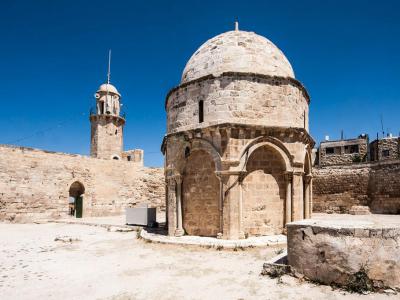
The Chapel of the Ascension marks the site whose history reflects Jerusalem’s long cycles of faith and change. Over the centuries, it has been a Christian church, a monastery, and later an Islamic mosque. According to Christian tradition, this is the place where Jesus was taken up into heaven 40 days after the Resurrection. Inside the small octagonal shrine, a footprint impressed in the rock-the last physical mark left at the moment of the Ascension-has been venerated ever since, drawing curious eyes and reverent glances.
Before Christianity received imperial support, early believers gathered nearby in a cave on the Mount of Olives to commemorate this event. Such sheltered spaces offered a degree of safety during periods of persecution and became early centers of worship. Around the year 390, a formal chapel was erected here by Poimenia, a wealthy Roman woman known for her patronage of Christian holy sites. The structure visible today, however, dates mainly to the Crusader period.
After Jerusalem was retaken by Muslims in 1187, the building was converted into a mosque under the Kurdish commander Salah ad-Din, and a mihrab indicating the direction of Mecca was added to the south wall. This shared use is less unusual than it may seem, as Islam also honors Jesus as a prophet.
Just next door, a tiny burial crypt adds another layer to the site’s reputation shared by followers of all three Abrahamic religions. Jews say it belongs to the prophetess Huldah from the 7th century BC. Christians link it to Saint Pelagia, a 5th-century figure known for a dramatic turn from worldly life to repentance. Muslims, meanwhile, associate it with Rabiʿa al-Adawiyya, an 8th-century Sufi mystic.
Different names, different centuries-but the same small space. What we do know is that the Christian tradition of Saint Pelagia is the oldest, quietly underscoring the deep and overlapping layers of devotion that define this place...
Before Christianity received imperial support, early believers gathered nearby in a cave on the Mount of Olives to commemorate this event. Such sheltered spaces offered a degree of safety during periods of persecution and became early centers of worship. Around the year 390, a formal chapel was erected here by Poimenia, a wealthy Roman woman known for her patronage of Christian holy sites. The structure visible today, however, dates mainly to the Crusader period.
After Jerusalem was retaken by Muslims in 1187, the building was converted into a mosque under the Kurdish commander Salah ad-Din, and a mihrab indicating the direction of Mecca was added to the south wall. This shared use is less unusual than it may seem, as Islam also honors Jesus as a prophet.
Just next door, a tiny burial crypt adds another layer to the site’s reputation shared by followers of all three Abrahamic religions. Jews say it belongs to the prophetess Huldah from the 7th century BC. Christians link it to Saint Pelagia, a 5th-century figure known for a dramatic turn from worldly life to repentance. Muslims, meanwhile, associate it with Rabiʿa al-Adawiyya, an 8th-century Sufi mystic.
Different names, different centuries-but the same small space. What we do know is that the Christian tradition of Saint Pelagia is the oldest, quietly underscoring the deep and overlapping layers of devotion that define this place...
15) Mahaneh Yehuda Market (must see)
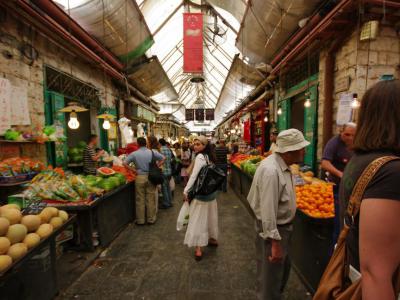
Mahane Yehuda Market, often referred to as "The Shuk" by locals, is a busy open market and the largest of its kind in Jerusalem. Whether you're a market enthusiast or just looking to soak up the atmosphere, it’s a must-visit destination. With over 250 vendors offering an array of fresh produce, baked goods, meats, cheeses, spices, wines, clothing, shoes, housewares, textiles, and Judaica, there's something here for everyone.
Recently redesigned, the market now features a roof that covers its open areas, providing both shelter and ambiance. Surrounding the market, you'll find juice bars, cafes, and coffee houses, as well as stalls offering authentic falafel and shawarma-a perfect opportunity to indulge in local cuisine.
Tips:
The market is especially lively on Thursdays and Fridays as locals prepare for Shabbat. For bargain hunters, sunset is the best time to visit as vendors often reduce prices on perishable items to clear their stock before the day ends. Additionally, consider visiting on a Saturday morning when the stalls are closed, allowing you to admire the stunning murals painted on the security gates-a hidden gem rarely seen by most visitors.
Recently redesigned, the market now features a roof that covers its open areas, providing both shelter and ambiance. Surrounding the market, you'll find juice bars, cafes, and coffee houses, as well as stalls offering authentic falafel and shawarma-a perfect opportunity to indulge in local cuisine.
Tips:
The market is especially lively on Thursdays and Fridays as locals prepare for Shabbat. For bargain hunters, sunset is the best time to visit as vendors often reduce prices on perishable items to clear their stock before the day ends. Additionally, consider visiting on a Saturday morning when the stalls are closed, allowing you to admire the stunning murals painted on the security gates-a hidden gem rarely seen by most visitors.
