Custom Walk in London, England by maria_duaso_7cba4 created on 2023-07-10
Guide Location: England » London
Guide Type: Custom Walk
# of Sights: 10
Tour Duration: 2 Hour(s)
Travel Distance: 3.5 Km or 2.2 Miles
Share Key: S2LM2
Guide Type: Custom Walk
# of Sights: 10
Tour Duration: 2 Hour(s)
Travel Distance: 3.5 Km or 2.2 Miles
Share Key: S2LM2
How It Works
Please retrieve this walk in the GPSmyCity app. Once done, the app will guide you from one tour stop to the next as if you had a personal tour guide. If you created the walk on this website or come to the page via a link, please follow the instructions below to retrieve the walk in the app.
Retrieve This Walk in App
Step 1. Download the app "GPSmyCity: Walks in 1K+ Cities" on Apple App Store or Google Play Store.



Step 2. In the GPSmyCity app, download(or launch) the guide "London Map and Walking Tours".
Step 3. Tap the menu button located at upper right corner of the "Walks" screen and select "Retrieve custom walk". Enter the share key: S2LM2
1) Somerset House
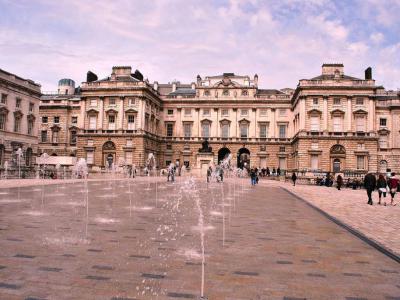
Somerset House, featuring four wings that encircle a spacious courtyard reminiscent of a Parisian hôtel, stands as the final remnant of the grand riverside mansions that once graced the Strand. While its appearance may suggest an ancient aristocratic palace, this edifice was actually purpose-built in 1776 by William Chambers to accommodate government offices, including the Navy Office.
Today, Somerset House's courtyard, paved with granite, offers a delightful retreat, thanks to a 55-jet fountain that gracefully spurts water from the cobblestones, performing a syncopated dance every half-hour (daily from 10am to 11pm). Throughout the year, the courtyard buzzes with activity, hosting open-air performances, concerts, installations, and during the winter season, an ice rink.
Inside, the building unfolds into a labyrinth of corridors, staircases, and exhibition spaces, housing several cafés and restaurants. The northern wing is home to the Courtauld Gallery, renowned for its exceptional collection of Impressionist and Post-Impressionist paintings. Meanwhile, the southern wing boasts a charming riverside terrace with a café-restaurant, and at riverbank level, you'll find the Embankment Galleries, showcasing innovative special exhibitions on contemporary art and design.
The east and west wings also contain galleries where temporary exhibitions spanning various visual arts, from sculpture to photography, are regularly presented throughout most of the year, often with free admission.
Today, Somerset House's courtyard, paved with granite, offers a delightful retreat, thanks to a 55-jet fountain that gracefully spurts water from the cobblestones, performing a syncopated dance every half-hour (daily from 10am to 11pm). Throughout the year, the courtyard buzzes with activity, hosting open-air performances, concerts, installations, and during the winter season, an ice rink.
Inside, the building unfolds into a labyrinth of corridors, staircases, and exhibition spaces, housing several cafés and restaurants. The northern wing is home to the Courtauld Gallery, renowned for its exceptional collection of Impressionist and Post-Impressionist paintings. Meanwhile, the southern wing boasts a charming riverside terrace with a café-restaurant, and at riverbank level, you'll find the Embankment Galleries, showcasing innovative special exhibitions on contemporary art and design.
The east and west wings also contain galleries where temporary exhibitions spanning various visual arts, from sculpture to photography, are regularly presented throughout most of the year, often with free admission.
2) Waterloo Bridge
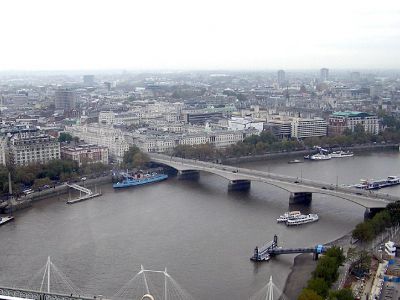
Waterloo Bridge, named in commemoration of the British triumph at the Battle of Waterloo in 1815, marks the eastern boundary of the Southbank Centre and is renowned for more than just its stunning sunsets. During the Second World War, it was predominantly constructed by women, and in 1978, it gained notoriety as the site of the assassination of Bulgarian dissident Georgi Markov, who fell victim to a ricin-loaded umbrella. On clear evenings, it's a common sight to encounter a lineup of both professional and amateur photographers along its length. This vantage point offers a 360-degree vista of the London skyline, providing fantastic photographic opportunities in both daylight and nighttime settings.
For a particularly romantic perspective of London, stand at the midpoint between the north and south banks of the Thames on the bridge. Facing east, you'll behold the magnificent Saint Paul's Cathedral and the graceful neoclassical facades of Somerset House, along with contemporary landmarks such as the distinctive "Gherkin" skyscraper on the north side and the towering Shard pyramid to the south. Gazing westward, you'll spot the iconic Victorian Gothic towers of the Palace of Westminster (Houses of Parliament) and Big Ben on the north bank, as well as the Edwardian elegance of The Savoy hotel and the National Liberal Club. You'll also catch a glimpse of Westminster Abbey. Turning your attention to the south bank, your eyes will be drawn to the London Eye's wheel and the striking Southbank Centre with its Brutalist architecture. If timed right, you may witness the sunset that inspired the Kinks' famous song.
Tip:
Should you find yourself in London during a full moonlit night, take the opportunity to spend an hour on this bridge after sunset and indulge in the awe-inspiring vistas!
For a particularly romantic perspective of London, stand at the midpoint between the north and south banks of the Thames on the bridge. Facing east, you'll behold the magnificent Saint Paul's Cathedral and the graceful neoclassical facades of Somerset House, along with contemporary landmarks such as the distinctive "Gherkin" skyscraper on the north side and the towering Shard pyramid to the south. Gazing westward, you'll spot the iconic Victorian Gothic towers of the Palace of Westminster (Houses of Parliament) and Big Ben on the north bank, as well as the Edwardian elegance of The Savoy hotel and the National Liberal Club. You'll also catch a glimpse of Westminster Abbey. Turning your attention to the south bank, your eyes will be drawn to the London Eye's wheel and the striking Southbank Centre with its Brutalist architecture. If timed right, you may witness the sunset that inspired the Kinks' famous song.
Tip:
Should you find yourself in London during a full moonlit night, take the opportunity to spend an hour on this bridge after sunset and indulge in the awe-inspiring vistas!
3) BFI Southbank (fka National Film Theatre)
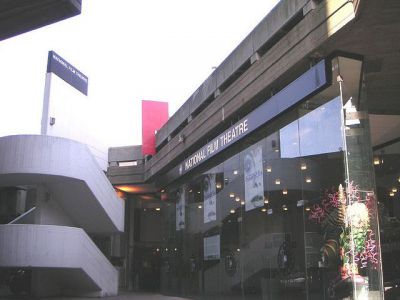
These four cinemas, managed by the British Film Institute, boast the finest selection of programming in London and effectively serve as a national film hub. They showcase over 1,000 films annually, featuring art-house and foreign-language premieres, restored classics and silent films, experimental and niche-interest works, as well as short films, all prioritized over recent Hollywood blockbusters.
Additionally, this center houses a gallery, a bookshop, hosts various events, and offers a "mediatheque" where visitors can freely access films and television content from the National Archive (closed on Mondays). For dining options, the Riverfront Bar and Kitchen provides a scenic setting, while the BFI Bar offers a casual and lively atmosphere.
Situated beneath the southern end of Waterloo Bridge, this establishment is an integral part of the cultural complex along the South Bank of the River Thames. It serves as one of the venues for the renowned BFI London Film Festival and hosts a variety of minifestivals, seminars, and guest speaker events throughout the year.
Additionally, this center houses a gallery, a bookshop, hosts various events, and offers a "mediatheque" where visitors can freely access films and television content from the National Archive (closed on Mondays). For dining options, the Riverfront Bar and Kitchen provides a scenic setting, while the BFI Bar offers a casual and lively atmosphere.
Situated beneath the southern end of Waterloo Bridge, this establishment is an integral part of the cultural complex along the South Bank of the River Thames. It serves as one of the venues for the renowned BFI London Film Festival and hosts a variety of minifestivals, seminars, and guest speaker events throughout the year.
4) London Eye (must see)
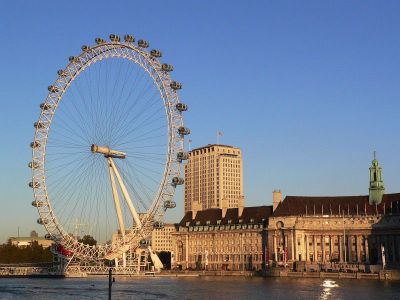
Say hello to the London Eye - or, if you’re feeling fancy, the Millennium Wheel. Built to welcome the year 2000 in style, it had its soft launch in late 1999 and officially opened in March 2000. Designed by architects David Marks and Julia Barfield, it was supposed to be temporary... but Londoners loved it so much, they basically said, “Nope, it’s staying.”
At 135 meters (that’s 443 feet if you’re still thinking imperial), the Eye was once the tallest observation wheel on the planet - and it still holds the crown in Europe. The ride - a slow, elegant spin takes about 30 minutes, offering jaw-dropping, 360-degree views stretching up to 40 kilometers on a clear day. From Big Ben to Buckingham Palace - and if you squint, even Windsor Castle - London is laid out before you like a pop-up storybook.
Each of the 32 sleek glass capsules (one for each London borough) can carry up to 28 people. Great for selfies, great for proposals, and perfect if you just want to stare out and feel dramatically reflective.
Want to dial up the experience? Your ticket comes with a 4D cinema show, or you can upgrade to private pods or champagne flights if you're feeling extra. Plus, the Eye sits right on the South Bank - a hop away from the SEA LIFE Aquarium, the London Dungeon, and the laid-back Jubilee Gardens.
Fun fact: The Eye’s giant bicycle-wheel design is a true European team effort - with British steel, Dutch engineering, and a smattering of German, French, Czech, and Italian parts.
Bottom line: Whether you're new in town or just want to fall in love with London all over again, the London Eye is a must-spin.
Tip:
Book online to save cash and skip the long lines. Your Instagram will thank you.
At 135 meters (that’s 443 feet if you’re still thinking imperial), the Eye was once the tallest observation wheel on the planet - and it still holds the crown in Europe. The ride - a slow, elegant spin takes about 30 minutes, offering jaw-dropping, 360-degree views stretching up to 40 kilometers on a clear day. From Big Ben to Buckingham Palace - and if you squint, even Windsor Castle - London is laid out before you like a pop-up storybook.
Each of the 32 sleek glass capsules (one for each London borough) can carry up to 28 people. Great for selfies, great for proposals, and perfect if you just want to stare out and feel dramatically reflective.
Want to dial up the experience? Your ticket comes with a 4D cinema show, or you can upgrade to private pods or champagne flights if you're feeling extra. Plus, the Eye sits right on the South Bank - a hop away from the SEA LIFE Aquarium, the London Dungeon, and the laid-back Jubilee Gardens.
Fun fact: The Eye’s giant bicycle-wheel design is a true European team effort - with British steel, Dutch engineering, and a smattering of German, French, Czech, and Italian parts.
Bottom line: Whether you're new in town or just want to fall in love with London all over again, the London Eye is a must-spin.
Tip:
Book online to save cash and skip the long lines. Your Instagram will thank you.
5) Westminster Bridge
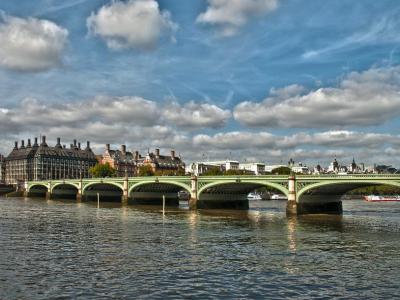
Westminster Bridge is the bridge that nobody initially wanted. Back in the day, the Church, the City, and especially the watermen (who were not too keen on losing their river taxi business) all threw shade at the idea. But once it was finally built-with 15 graceful semi-circular arches-it was hailed as the first proper stone bridge across the Thames in over 500 years. Suddenly, everybody loved it-especially artists like Samuel Scott, Canaletto, and Claude Monet, who all went watercolor-wild, capturing its curves.
But then came the drama. In 1831, the old, crumbling London Bridge was torn down, which-surprise!-changed the river’s flow and started eroding Westminster Bridge’s foundations like a soggy biscuit. Something had to be done, so Parliament passed an Act in 1853, handing over the bridge to the Commissioners of Public Works. It was at that point that Thomas Page, the engineer, came along with Sir Charles Barry, fresh off designing the new Houses of Parliament (after the great fire of 1834), who was brought in to make sure that the new bridge would match Parliament’s fancy new Gothic threads.
The result was a beauty unveiled on Queen Victoria’s 43rd birthday, May 24, 1862-complete with a 25-gun salute for her 25 years of ruling the realm. The bridge stretches 827 feet across the Thames and flaunts seven elliptical cast-iron arches, gray granite abutments, and more neo-Gothic flair than a Victorian novel. As for the green paint, that’s a cheeky nod to the House of Commons (which, conveniently, is the closest part of Parliament to the bridge). And if you look closely, the ornate ironwork is dripping with UK symbolism: portcullises, roses, thistles, shields, and St. George’s cross.
The view from the middle of the bridge is a postcard waiting to happen. You’ve got the Palace of Westminster on the one side, the London Eye on the other, and the Thames doing its timeless shimmer underneath. North, south, east-there’s not a bad angle in sight. So go on-strike a pose, soak in the skyline, and cross like a monarch.
But then came the drama. In 1831, the old, crumbling London Bridge was torn down, which-surprise!-changed the river’s flow and started eroding Westminster Bridge’s foundations like a soggy biscuit. Something had to be done, so Parliament passed an Act in 1853, handing over the bridge to the Commissioners of Public Works. It was at that point that Thomas Page, the engineer, came along with Sir Charles Barry, fresh off designing the new Houses of Parliament (after the great fire of 1834), who was brought in to make sure that the new bridge would match Parliament’s fancy new Gothic threads.
The result was a beauty unveiled on Queen Victoria’s 43rd birthday, May 24, 1862-complete with a 25-gun salute for her 25 years of ruling the realm. The bridge stretches 827 feet across the Thames and flaunts seven elliptical cast-iron arches, gray granite abutments, and more neo-Gothic flair than a Victorian novel. As for the green paint, that’s a cheeky nod to the House of Commons (which, conveniently, is the closest part of Parliament to the bridge). And if you look closely, the ornate ironwork is dripping with UK symbolism: portcullises, roses, thistles, shields, and St. George’s cross.
The view from the middle of the bridge is a postcard waiting to happen. You’ve got the Palace of Westminster on the one side, the London Eye on the other, and the Thames doing its timeless shimmer underneath. North, south, east-there’s not a bad angle in sight. So go on-strike a pose, soak in the skyline, and cross like a monarch.
6) Big Ben & Houses of Parliament (must see)
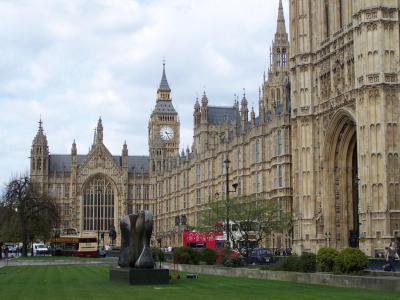
Ah yes, Big Ben-London’s most famous timekeeper! Often mistaken for the entire tower, technically, it's just the bell inside. The tower itself, once modestly named the Clock Tower, got a royal upgrade in 2012 and is now known as the Elizabeth Tower, in honor of Queen Elizabeth II’s Diamond Jubilee.
As for Big Ben-the bell-it weighs a jaw-dropping 15 tonnes. That’s about the weight of three adult elephants. It chimes every hour with a deep, resonant bong that echoes across the city, while four smaller bells handle the quarter-hour duties like loyal timekeeping sidekicks.
As for the name “Big Ben”, theories abound. Some say it was named after Benjamin Hall, the rather large man in charge of installing the bell. Others swear it honors Benjamin Caunt, a Victorian heavyweight boxer. Either way, it’s clear: you didn’t get to be “Big Ben” by being discreet.
Just next door, you'll find the Palace of Westminster, home of the Houses of Parliament-that’s the House of Commons and the House of Lords for those keeping score. After a fire in 1834 burned the old palace to a crisp, King William IV generously offered up Buckingham Palace as a backup. The MPs politely declined, presumably because having tea in the Throne Room seemed a bit too much.
These days, the House of Commons is often in the headlines, especially during the theatrical Wednesdays known as Prime Minister’s Questions. Yes, it’s as lively as it sounds. The public can watch the action live, either by scoring a free ticket through their MP or simply queuing up outside (bonus points if it’s raining-very British).
In terms of security, expect the full “airport-lite” treatment. Bags scanned, belts off, shoes inspected-but thankfully, no need to explain your carry-on liquids.
Now, if the idea of parliamentary debates doesn’t tickle your fancy and you’re more into aesthetic admiration, simply head over to Westminster Bridge-some 500 yards away. From there, you’ll get the postcard shot of Big Ben and the Parliament buildings, no queuing or shoe removal required. Just you, the view, and a thousand other camera-happy tourists. Smile for history!
As for Big Ben-the bell-it weighs a jaw-dropping 15 tonnes. That’s about the weight of three adult elephants. It chimes every hour with a deep, resonant bong that echoes across the city, while four smaller bells handle the quarter-hour duties like loyal timekeeping sidekicks.
As for the name “Big Ben”, theories abound. Some say it was named after Benjamin Hall, the rather large man in charge of installing the bell. Others swear it honors Benjamin Caunt, a Victorian heavyweight boxer. Either way, it’s clear: you didn’t get to be “Big Ben” by being discreet.
Just next door, you'll find the Palace of Westminster, home of the Houses of Parliament-that’s the House of Commons and the House of Lords for those keeping score. After a fire in 1834 burned the old palace to a crisp, King William IV generously offered up Buckingham Palace as a backup. The MPs politely declined, presumably because having tea in the Throne Room seemed a bit too much.
These days, the House of Commons is often in the headlines, especially during the theatrical Wednesdays known as Prime Minister’s Questions. Yes, it’s as lively as it sounds. The public can watch the action live, either by scoring a free ticket through their MP or simply queuing up outside (bonus points if it’s raining-very British).
In terms of security, expect the full “airport-lite” treatment. Bags scanned, belts off, shoes inspected-but thankfully, no need to explain your carry-on liquids.
Now, if the idea of parliamentary debates doesn’t tickle your fancy and you’re more into aesthetic admiration, simply head over to Westminster Bridge-some 500 yards away. From there, you’ll get the postcard shot of Big Ben and the Parliament buildings, no queuing or shoe removal required. Just you, the view, and a thousand other camera-happy tourists. Smile for history!
7) 10 Downing Street
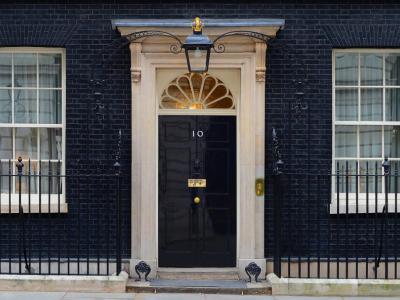
10 Downing Street-or as the British press affectionately calls it, Number 10-is the official residence and workplace of the UK’s Prime Minister. It has been the address for power players since the 18th century. Don’t be fooled by its modest black door-it’s basically the palace of spreadsheets and late-night policy debates-equal parts nerve center and nerve-wracking...
Originally cobbled together from three separate houses (because one apparently wasn't enough for 18th-century real estate ambitions), Number 10 now contains over 100 rooms. The PM’s family lives on the third floor, their kitchen’s tucked away in the basement, and the rest of the place is a maze of offices, reception rooms, and the odd spot for international awkward silences. There’s even a private garden-half an acre, no less-perfect for pondering global crises over a cup of Earl Grey.
Now, speaking of doors, that iconic black front door is not wood but reinforced steel. No keyhole, either-because obviously, in this house, you don’t knock, you get buzzed in. A doorman’s always on duty because the door only opens from the inside. (Some say this is where British stoicism is forged.)
And the phrase “in the hot seat”? Thank Number 10 for that. The hallway used to feature a rather dramatic black chair, complete with a coal-filled drawer underneath to warm the night watchman's backside. Forget ergonomics-that was 18th-century comfort.
The house has taken its share of hits. During WWII, a German bomb rudely messed with the kitchen. Then in 1991, the IRA launched a mortar attack-Downing Street survived, but a splinter still sticks defiantly in the upstairs plaster, like a war story the walls refuse to let go.
Inside, the Grand Staircase displays portraits of every British Prime Minister in order, a visual reminder that political haircuts have come a long way. Tony Blair added bees to the décor (yes, actual plaster bees in the window frames), while Margaret Thatcher insisted on a mini roof over one door-presumably for extra austerity.
Public tours-unfortunately, not happening. Entry is tighter than the King’s biscuit tin. But if you’re into wizardry, you’ll appreciate the Harry Potter trivia-Number 10 doubles as a magical portal, as revealed in The Half-Blood Prince. And yes, Kingsley wizard Shacklebolt worked here undercover, guarding the Prime Minister against the dark forces of Lord Voldemort. There's obviously more to this place than you'd expect...
Tip:
Pair your Downing Street sightseeing with a wider walk through Whitehall and Westminster. Politics, pomp, and a splash of Potter-it’s all just a few steps away.
Originally cobbled together from three separate houses (because one apparently wasn't enough for 18th-century real estate ambitions), Number 10 now contains over 100 rooms. The PM’s family lives on the third floor, their kitchen’s tucked away in the basement, and the rest of the place is a maze of offices, reception rooms, and the odd spot for international awkward silences. There’s even a private garden-half an acre, no less-perfect for pondering global crises over a cup of Earl Grey.
Now, speaking of doors, that iconic black front door is not wood but reinforced steel. No keyhole, either-because obviously, in this house, you don’t knock, you get buzzed in. A doorman’s always on duty because the door only opens from the inside. (Some say this is where British stoicism is forged.)
And the phrase “in the hot seat”? Thank Number 10 for that. The hallway used to feature a rather dramatic black chair, complete with a coal-filled drawer underneath to warm the night watchman's backside. Forget ergonomics-that was 18th-century comfort.
The house has taken its share of hits. During WWII, a German bomb rudely messed with the kitchen. Then in 1991, the IRA launched a mortar attack-Downing Street survived, but a splinter still sticks defiantly in the upstairs plaster, like a war story the walls refuse to let go.
Inside, the Grand Staircase displays portraits of every British Prime Minister in order, a visual reminder that political haircuts have come a long way. Tony Blair added bees to the décor (yes, actual plaster bees in the window frames), while Margaret Thatcher insisted on a mini roof over one door-presumably for extra austerity.
Public tours-unfortunately, not happening. Entry is tighter than the King’s biscuit tin. But if you’re into wizardry, you’ll appreciate the Harry Potter trivia-Number 10 doubles as a magical portal, as revealed in The Half-Blood Prince. And yes, Kingsley wizard Shacklebolt worked here undercover, guarding the Prime Minister against the dark forces of Lord Voldemort. There's obviously more to this place than you'd expect...
Tip:
Pair your Downing Street sightseeing with a wider walk through Whitehall and Westminster. Politics, pomp, and a splash of Potter-it’s all just a few steps away.
8) Great Scotland Yard
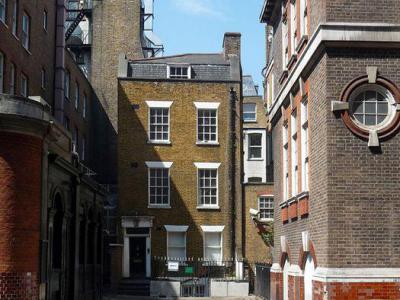
Great Scotland Yard. Sounds like it should be somewhere in Edinburgh, doesn’t it? Plot twist: being right in the middle of London, it has absolutely nothing to do with Scotland, kilts, or bagpipes. Instead, it's a street with a past so rich in mystery and mischief, it practically deserves its own detective novel.
Back in medieval times, Scottish royalty bunked here when visiting the English court. A few centuries later, the place became the original headquarters of the Metropolitan Police-a.k.a.. ground zero for modern British crime-solving. Picture stern Victorian detectives in stovepipe hats, jotting down clues and muttering, “Hmm… curious.”
And though the bobbies have since packed up and moved on, No. 3 Great Scotland Yard has been reborn as a five-star hotel, in which Edwardian elegance meets 21st-century glam, with just a sprinkle of Sherlock Holmes chic. Inside, you’ll find classy nods to its law-and-order legacy: vintage police badges, crime noir vibes, and just enough mystery to make you feel like someone might be watching from behind the wallpaper.
But there’s more! This spot also made its silver-screen debut in the Harry Potter films. Scotland Place (just around the corner) played the exterior of the Ministry of Magic. In Order of the Phoenix, Harry and Mr. Weasley slipped into a red phone booth and dialed “62442” to visit the wizarding world’s government headquarters. Sadly, that magical phone box was just a film prop. So, unless you're carrying an invisibility cloak and a production crew, no dice.
The location also reappeared in Deathly Hallows – Part 1 when our favorite trio infiltrated the Ministry in magical disguise. Apparently, even wizards have bureaucratic nightmares.
So, whether you're into true crime, fantasy fiction, or just fancy a cocktail where Victorian detectives once sipped their tea (probably), Great Scotland Yard is where London’s reality and make-believe cozy up for a stylish, storied stay.
Back in medieval times, Scottish royalty bunked here when visiting the English court. A few centuries later, the place became the original headquarters of the Metropolitan Police-a.k.a.. ground zero for modern British crime-solving. Picture stern Victorian detectives in stovepipe hats, jotting down clues and muttering, “Hmm… curious.”
And though the bobbies have since packed up and moved on, No. 3 Great Scotland Yard has been reborn as a five-star hotel, in which Edwardian elegance meets 21st-century glam, with just a sprinkle of Sherlock Holmes chic. Inside, you’ll find classy nods to its law-and-order legacy: vintage police badges, crime noir vibes, and just enough mystery to make you feel like someone might be watching from behind the wallpaper.
But there’s more! This spot also made its silver-screen debut in the Harry Potter films. Scotland Place (just around the corner) played the exterior of the Ministry of Magic. In Order of the Phoenix, Harry and Mr. Weasley slipped into a red phone booth and dialed “62442” to visit the wizarding world’s government headquarters. Sadly, that magical phone box was just a film prop. So, unless you're carrying an invisibility cloak and a production crew, no dice.
The location also reappeared in Deathly Hallows – Part 1 when our favorite trio infiltrated the Ministry in magical disguise. Apparently, even wizards have bureaucratic nightmares.
So, whether you're into true crime, fantasy fiction, or just fancy a cocktail where Victorian detectives once sipped their tea (probably), Great Scotland Yard is where London’s reality and make-believe cozy up for a stylish, storied stay.
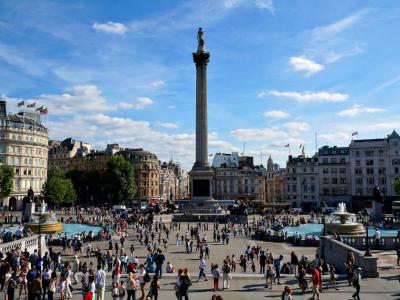
9) Trafalgar Square (must see)
Britain’s most self-important plaza, Trafalgar Square is arguably the closest thing to London’s beating heart (if London had ventricles paved in pigeons and protest signs). Want the official center of the city? That’s actually a tiny traffic island called Charing Cross, just south of the square. Yep, all distances to London are measured from there. Not Buckingham Palace. Not Big Ben. A glorified roundabout...
Now, if you're into obscure imperial measurements, Trafalgar’s got you covered. Nestled behind the café, you’ll find the Imperial Standard measures: inches, feet, yards, chains, perches, poles... basically, the greatest hits of Victorian measuring tape. Originally installed in 1876, they were moved in 2003 when the north terrace was pedestrianized-because who needs traffic when you’ve got trivia?
The square gets its name from the Battle of Trafalgar, a Napoleonic showdown where Admiral Lord Nelson heroically defeated the French and Spanish fleets in 1805... and promptly died doing so. 30 years later, the square got its now-famous name. Then, in 1843, they added Nelson’s Column, a towering tribute built from Devon granite, with bronze panels depicting his greatest hits: Saint Vincent, The Nile, Copenhagen, and Trafalgar-which, to be fair, did earn him the naming rights.
By 1868, the stone lions guarding the column were considered too puny for British pride, so the sculptor Edwin Landseer crafted bronze ones instead, with remarkable anatomical precision. Beautiful, grand, majestic-except, apparently, he got one detail hilariously wrong: he sculpted the back of the lions as if they had beanbag backs (real lions don’t sag like that).
Surrounded by fountains, tourists, and-until recently-a whole lot of feathered freeloaders, Trafalgar was once London’s top pigeon hangout. That is, until a mayor declared them public enemy number one and evicted the birdseed dealers. The pigeons, scandalized, have never quite forgiven the city.
Tip:
Plant yourself on the steps, let the sounds of the city wash over you, and watch the sun dip behind Nelson’s heroic silhouette. Or just use it as your springboard to the rest of London-you’re already at the center, after all.
Now, if you're into obscure imperial measurements, Trafalgar’s got you covered. Nestled behind the café, you’ll find the Imperial Standard measures: inches, feet, yards, chains, perches, poles... basically, the greatest hits of Victorian measuring tape. Originally installed in 1876, they were moved in 2003 when the north terrace was pedestrianized-because who needs traffic when you’ve got trivia?
The square gets its name from the Battle of Trafalgar, a Napoleonic showdown where Admiral Lord Nelson heroically defeated the French and Spanish fleets in 1805... and promptly died doing so. 30 years later, the square got its now-famous name. Then, in 1843, they added Nelson’s Column, a towering tribute built from Devon granite, with bronze panels depicting his greatest hits: Saint Vincent, The Nile, Copenhagen, and Trafalgar-which, to be fair, did earn him the naming rights.
By 1868, the stone lions guarding the column were considered too puny for British pride, so the sculptor Edwin Landseer crafted bronze ones instead, with remarkable anatomical precision. Beautiful, grand, majestic-except, apparently, he got one detail hilariously wrong: he sculpted the back of the lions as if they had beanbag backs (real lions don’t sag like that).
Surrounded by fountains, tourists, and-until recently-a whole lot of feathered freeloaders, Trafalgar was once London’s top pigeon hangout. That is, until a mayor declared them public enemy number one and evicted the birdseed dealers. The pigeons, scandalized, have never quite forgiven the city.
Tip:
Plant yourself on the steps, let the sounds of the city wash over you, and watch the sun dip behind Nelson’s heroic silhouette. Or just use it as your springboard to the rest of London-you’re already at the center, after all.
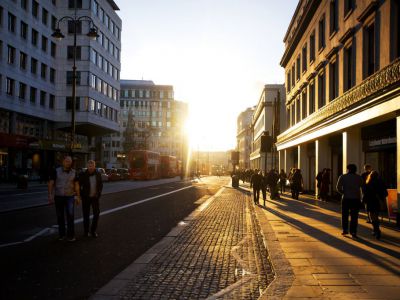
10) The Strand (street)
As its name implies, the Strand, originally constructed to connect Westminster to the City, once traced the riverside of the River Thames. Starting in the 12th century, it gained renown for its riverside residences, possessed by bishops, nobles, and courtiers, which lined the southern side of the street. Each of these grand homes had its own river gates that opened directly onto the Thames.
In the late 1860s, during the Victorian era, the Embankment was constructed. This project had several purposes, including easing traffic congestion along the Strand, severing the aristocratic mansions from direct river access, and providing extensions for the underground railway and a modern sewerage system. By the 1890s, the luxurious mansions on the Strand were increasingly outnumbered by theaters, giving rise to the famous music-hall song "Let's All Go Down the Strand (have a banana!)" and prompting Benjamin Disraeli to proclaim it "perhaps the finest street in Europe."
A century later, while several theaters from various eras still thrive, such as the sleek Art Deco Adelphi and the ornate Lyceum, the only surviving riverside palace along the Strand is Somerset House, which now houses galleries and exhibition spaces, a variety of restaurants and cafes, and boasts a delightful courtyard adorned with fountains.
In the late 1860s, during the Victorian era, the Embankment was constructed. This project had several purposes, including easing traffic congestion along the Strand, severing the aristocratic mansions from direct river access, and providing extensions for the underground railway and a modern sewerage system. By the 1890s, the luxurious mansions on the Strand were increasingly outnumbered by theaters, giving rise to the famous music-hall song "Let's All Go Down the Strand (have a banana!)" and prompting Benjamin Disraeli to proclaim it "perhaps the finest street in Europe."
A century later, while several theaters from various eras still thrive, such as the sleek Art Deco Adelphi and the ornate Lyceum, the only surviving riverside palace along the Strand is Somerset House, which now houses galleries and exhibition spaces, a variety of restaurants and cafes, and boasts a delightful courtyard adorned with fountains.
