Custom Walk in Jerusalem, Israel by onehotco_f4787 created on 2023-09-25
Guide Location: Israel » Jerusalem
Guide Type: Custom Walk
# of Sights: 12
Tour Duration: 3 Hour(s)
Travel Distance: 4.6 Km or 2.9 Miles
Share Key: JRVXU
Guide Type: Custom Walk
# of Sights: 12
Tour Duration: 3 Hour(s)
Travel Distance: 4.6 Km or 2.9 Miles
Share Key: JRVXU
How It Works
Please retrieve this walk in the GPSmyCity app. Once done, the app will guide you from one tour stop to the next as if you had a personal tour guide. If you created the walk on this website or come to the page via a link, please follow the instructions below to retrieve the walk in the app.
Retrieve This Walk in App
Step 1. Download the app "GPSmyCity: Walks in 1K+ Cities" on Apple App Store or Google Play Store.



Step 2. In the GPSmyCity app, download(or launch) the guide "Jerusalem Map and Walking Tours".
Step 3. Tap the menu button located at upper right corner of the "Walks" screen and select "Retrieve custom walk". Enter the share key: JRVXU
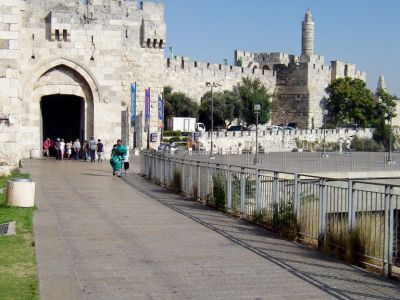
1) Jaffa Gate
The busiest among the seven gates of the Old City, this serves as the primary entrance for both traffic and pedestrians arriving from modern West Jerusalem via Mamilla. Despite its substantial size, the entrance tunnel is narrow and L-shaped, intentionally designed to impede the progress of attackers. Constructed during the reign of Suleyman the Magnificent, a dedication within the arch on the outside of the gate indicates the exact date of 1538.
Cars can access the Old City through this gate, a privilege attributed to Kaiser Wilhelm II's visit in 1898. Legend has it that the Ottoman authorities, mindful of the belief that every conqueror of the city must enter through here, created a breach in the wall between the gate and the Citadel. This allowed the Kaiser and his entourage to enter through the breach instead of the gate itself, which is on the north side of the breach. However, when General Edmund Allenby captured Jerusalem for the British in 1917, he famously declined to use the Kaiser's breach, opting instead to dismount along with his retinue and enter on foot through the gate, as a sign of respect to the city.
Known as Sha'ar Yafo in Hebrew and Bab al-Khalil in Arabic, the gate offers access to the ramparts, allowing visitors to walk along the city walls. Its various names reflect the diverse perspectives of Jerusalem's inhabitants: the English and Hebrew names allude to the ancient port city of Jaffa on the Mediterranean coast, known as an embarkation point for immigrants, pilgrims, and early tourists, while the Arabic name originates from the holy town of Hebron ("Al-Khalil"), signifying the old road leading to Hebron that commenced at this spot.
Cars can access the Old City through this gate, a privilege attributed to Kaiser Wilhelm II's visit in 1898. Legend has it that the Ottoman authorities, mindful of the belief that every conqueror of the city must enter through here, created a breach in the wall between the gate and the Citadel. This allowed the Kaiser and his entourage to enter through the breach instead of the gate itself, which is on the north side of the breach. However, when General Edmund Allenby captured Jerusalem for the British in 1917, he famously declined to use the Kaiser's breach, opting instead to dismount along with his retinue and enter on foot through the gate, as a sign of respect to the city.
Known as Sha'ar Yafo in Hebrew and Bab al-Khalil in Arabic, the gate offers access to the ramparts, allowing visitors to walk along the city walls. Its various names reflect the diverse perspectives of Jerusalem's inhabitants: the English and Hebrew names allude to the ancient port city of Jaffa on the Mediterranean coast, known as an embarkation point for immigrants, pilgrims, and early tourists, while the Arabic name originates from the holy town of Hebron ("Al-Khalil"), signifying the old road leading to Hebron that commenced at this spot.
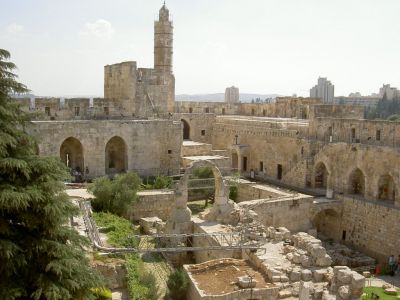
2) The Citadel (Tower of David) (must see)
The Citadel adjacent to the Jaffa Gate has been carefully excavated, with each period of its development clearly delineated. Exploring the site, which offers free guided tours in English from Sunday to Friday at 11 AM, may take a couple of hours, particularly if you choose to delve into the museum inside, which narrates the story of Jerusalem and incorporates the archaeological site.
Positioned on the western hill of the Old City, the Citadel has been fortified by rulers of Jerusalem since the 2nd century BC, initially located at the city's northwestern corner and highest point. Herod the Great reinforced the original Hasmonean walls by adding three new towers, one of which, the Phasael, remains standing today. During the Byzantine period, the tower and the Citadel were erroneously identified as the Tower of David, as the Byzantines mistook the hill for Mount Zion, believed to be the site of King David's Palace.
Throughout history, the Citadel underwent various transformations under Muslim and Crusader rule, culminating in its present shape by 1310 under the Mamluk sultan Al-Nasir Muhammad. Suleiman the Magnificent later constructed a square with a monumental gateway in the east, while the prominent minaret, added between 1635 and 1655, became a landmark of Jerusalem.
From the Phasael Tower in the in the Citadel's northeast corner, visitors can enjoy panoramic views of the excavations inside, the Old City outside, and the surrounding landscape to the south and west. Along the ascent, a terrace provides informative plaques identifying the different periods of the remains visible, including part of the Hasmonean city wall, a Roman cistern, and the ramparts of the Umayyad Citadel, which resisted the Crusaders in 1099.
Tip:
A spectacular 45-minute sound-and-light show takes place here every night, but make sure to book early, as it tends to sell out quickly.
Positioned on the western hill of the Old City, the Citadel has been fortified by rulers of Jerusalem since the 2nd century BC, initially located at the city's northwestern corner and highest point. Herod the Great reinforced the original Hasmonean walls by adding three new towers, one of which, the Phasael, remains standing today. During the Byzantine period, the tower and the Citadel were erroneously identified as the Tower of David, as the Byzantines mistook the hill for Mount Zion, believed to be the site of King David's Palace.
Throughout history, the Citadel underwent various transformations under Muslim and Crusader rule, culminating in its present shape by 1310 under the Mamluk sultan Al-Nasir Muhammad. Suleiman the Magnificent later constructed a square with a monumental gateway in the east, while the prominent minaret, added between 1635 and 1655, became a landmark of Jerusalem.
From the Phasael Tower in the in the Citadel's northeast corner, visitors can enjoy panoramic views of the excavations inside, the Old City outside, and the surrounding landscape to the south and west. Along the ascent, a terrace provides informative plaques identifying the different periods of the remains visible, including part of the Hasmonean city wall, a Roman cistern, and the ramparts of the Umayyad Citadel, which resisted the Crusaders in 1099.
Tip:
A spectacular 45-minute sound-and-light show takes place here every night, but make sure to book early, as it tends to sell out quickly.
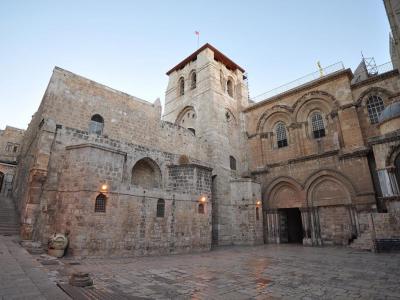
3) Church of the Holy Sepulchre / Christ's Tomb (must see)
One of the most revered destinations in the Old City, this site holds unparalleled significance for Christians worldwide. Commonly referred to as the Church of the Resurrection, its somber, cavernous interior encompasses four stations of the Via Dolorosa, drawing crowds of pilgrims year-round. (The terminus of the Via Dolorosa lies just beyond the expansive outdoor courtyard.)
Welcoming visitors at the entrance is the Chapel of the Franks, leading to the towering interior featuring a Greek Orthodox crucifixion altar, believed to mark the spot of Jesus' crucifixion. Adjacent to it, the prominent Stone of Unction serves as a reminder of the place where Jesus's body was prepared for burial. Further inside, past the Chapel of the Angel, lies a marble-encased tomb, purportedly the very place where Jesus was laid to rest. A majestic vaulted dome crowns the tomb, emanating a solemn stream of light from above.
Commissioned by Constantine the Great following his conversion to Christianity in AD 326, the church has weathered centuries of neglect, desecration, and damage amid shifting rulership in the city. A collaborative restoration effort in 1959, spearheaded by the Latin, Greek, and Armenian communities, preserved what could be salvaged. The resulting structure is a patchwork of Byzantine, Crusader, medieval, and modern architectural styles. Control of the church is scrupulously divided among various Christian denominations, with disputes over custodial responsibilities even extending to the cleaning of steps.
Tip:
It's advisable to arrive early and come prepared, as signage and guided tours are scarce. Proper attire is essential for entry.
Welcoming visitors at the entrance is the Chapel of the Franks, leading to the towering interior featuring a Greek Orthodox crucifixion altar, believed to mark the spot of Jesus' crucifixion. Adjacent to it, the prominent Stone of Unction serves as a reminder of the place where Jesus's body was prepared for burial. Further inside, past the Chapel of the Angel, lies a marble-encased tomb, purportedly the very place where Jesus was laid to rest. A majestic vaulted dome crowns the tomb, emanating a solemn stream of light from above.
Commissioned by Constantine the Great following his conversion to Christianity in AD 326, the church has weathered centuries of neglect, desecration, and damage amid shifting rulership in the city. A collaborative restoration effort in 1959, spearheaded by the Latin, Greek, and Armenian communities, preserved what could be salvaged. The resulting structure is a patchwork of Byzantine, Crusader, medieval, and modern architectural styles. Control of the church is scrupulously divided among various Christian denominations, with disputes over custodial responsibilities even extending to the cleaning of steps.
Tip:
It's advisable to arrive early and come prepared, as signage and guided tours are scarce. Proper attire is essential for entry.
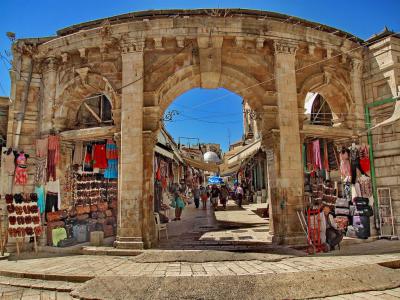
4) Muristan / Aftimos Market
Just south of the Holy Sepulchre lies the Muristan, a network of quaint streets encircling a square with several cafés and restaurants, and an elaborate fountain erected in 1903 to mark the silver jubilee of the Ottoman sultan Abd al-Hamid II. Once bustling with pilgrims and travelers, the area derived its name from the Persian word for "hospice", reflecting its historical role as a lodging hub for visitors.
Originally serving as the main forum of Hadrian's city, Aelia Capitolina, the Muristan has a rich history dating back to antiquity. Charlemagne established a pilgrims' enclave here in the early 9th century, although its structures suffered damage in 1009 when the Fatimid caliph Al-Hakim ordered the demolition of the Church of the Holy Sepulchre. Eventually, the spirit of restoration prevailed, with many buildings reconstructed in the 11th century by merchants from the Italian republic of Amalfi.
Today, the area hosts a variety of churches, religious institutions, and the lively Souq Aftimos, where shops overflow with leather goods and tourist souvenirs. On its western side, overlooking the fountain, Saint John's Hospice has been occupied since April 1990 by Jewish settlers affiliated with a group called Ateret Cohanim, recognizable by the Israeli flags hanging from its upper windows.
Originally serving as the main forum of Hadrian's city, Aelia Capitolina, the Muristan has a rich history dating back to antiquity. Charlemagne established a pilgrims' enclave here in the early 9th century, although its structures suffered damage in 1009 when the Fatimid caliph Al-Hakim ordered the demolition of the Church of the Holy Sepulchre. Eventually, the spirit of restoration prevailed, with many buildings reconstructed in the 11th century by merchants from the Italian republic of Amalfi.
Today, the area hosts a variety of churches, religious institutions, and the lively Souq Aftimos, where shops overflow with leather goods and tourist souvenirs. On its western side, overlooking the fountain, Saint John's Hospice has been occupied since April 1990 by Jewish settlers affiliated with a group called Ateret Cohanim, recognizable by the Israeli flags hanging from its upper windows.
5) Western (Wailing) Wall (must see)
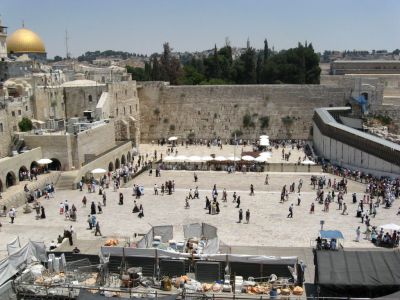
The Western Wall – otherwise known as the Wailing Wall, the Place of Weeping, or the Buraq Wall – is part of the last remaining wall of the Temple Mount in Old Jerusalem, and was built in 19 BCE by Herod the Great. The king expanded the Temple Mount area artificially and had the wall built to retain the soil and filler added during that period.
The wall stands about 100 feet high from its foundation, of which only approximately 60 feet are showing above ground. Out of total 45 stone courses laid, only 28 are visible. The first seven layers are dating from the time of Herod the Great, four more layers were added by the Umayyad Caliphate – around 600 CE, and another 14 during the Ottoman period in the 1860s. Finally, the last three layers were added by the Mufti of Jerusalem in the 1920s. No further additions have occurred since the Six-Day War of 1967.
The size of the stones used in the construction is enormous, some weighing between two and eight tons, and one huge stone near Wilson’s Arch weighing alone a staggering 570 tons!!! The amount of effort put into the project of such magnitude is hard to overestimate.
The Wailing Wall has been the site of Jewish pilgrimage and prayer since at least the 300s CE, and is considered to be one of the holiest places for Jews because of its proximity to the Temple Mount. The name “wailing” derives from the Jewish practice of mourning the loss of the Holy Temple on the Temple Mount. The plaza in front of the wall was built after the Six-Day War as a gathering place for worshipers.
Both men and women are allowed to pray at the wall, although they must use separate entrances. The wall is particularly busy at Sabbath which commences at sundown on Friday and lasts until sundown on Saturday. It has now become a tradition to bring to the wall a prayer request written on a small slip of paper to be stuck between the stones. These papers are removed once a month and taken to the Mount of Olives.
Tip:
When visiting, make sure to bring along a valid ID (passport); expect tight security, and dress modestly.
No pictures are allowed during the Sabbath. The entry is free.
The wall stands about 100 feet high from its foundation, of which only approximately 60 feet are showing above ground. Out of total 45 stone courses laid, only 28 are visible. The first seven layers are dating from the time of Herod the Great, four more layers were added by the Umayyad Caliphate – around 600 CE, and another 14 during the Ottoman period in the 1860s. Finally, the last three layers were added by the Mufti of Jerusalem in the 1920s. No further additions have occurred since the Six-Day War of 1967.
The size of the stones used in the construction is enormous, some weighing between two and eight tons, and one huge stone near Wilson’s Arch weighing alone a staggering 570 tons!!! The amount of effort put into the project of such magnitude is hard to overestimate.
The Wailing Wall has been the site of Jewish pilgrimage and prayer since at least the 300s CE, and is considered to be one of the holiest places for Jews because of its proximity to the Temple Mount. The name “wailing” derives from the Jewish practice of mourning the loss of the Holy Temple on the Temple Mount. The plaza in front of the wall was built after the Six-Day War as a gathering place for worshipers.
Both men and women are allowed to pray at the wall, although they must use separate entrances. The wall is particularly busy at Sabbath which commences at sundown on Friday and lasts until sundown on Saturday. It has now become a tradition to bring to the wall a prayer request written on a small slip of paper to be stuck between the stones. These papers are removed once a month and taken to the Mount of Olives.
Tip:
When visiting, make sure to bring along a valid ID (passport); expect tight security, and dress modestly.
No pictures are allowed during the Sabbath. The entry is free.
6) Western Wall Tunnel (Kotel) (must see)
Visitors to Jerusalem can catch a glimpse of the relatively small, 200-foot above-ground section of the Western Wall near the Al-Aqsa Mosque in the Old City; however, for a more extensive exploration of the wall and the structures beneath it, they can venture into the Western Wall Tunnel. Independent exploration of the tunnel is not permitted, but visitors can arrange to visit as part of a guided tour group. It's advisable to book well in advance, as tours have limited capacity and fill up quickly.
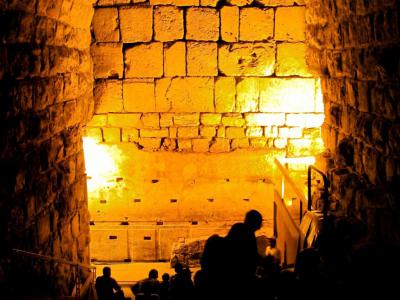
The journey begins beneath Wilson's Arch, unveiling 14th-century "secret passages" from the Mamluk period where provisions like food and water were stored inside the vault under the Herodian double-decker bridge. Adjacent to this area is an auditorium showcasing a detailed 3-D model depicting Jerusalem during the Second Temple era, complete with illuminated and movable elements. Descending two storeys further, visitors encounter remains dating back to the Hasmonean period, proceeding alongside the Western Wall. Noteworthy sights include a massive stone support, Warren's Gate, and a synagogue believed to date from Umayyad times.
In 1987, Israeli archaeologists attempted to breach Warren's Gate in pursuit of accessing the Holy of Holies, where the biblical Ark of the Covenant is believed to be buried; however, their project was halted when they discovered a massive cistern behind the gate, preventing further excavation. The tunnel continues through narrow passages until reaching bedrock, eventually leading to a Hasmonean water cistern. The culmination of the tour features a glass walkway traversing the narrow Hasmonean Aqueduct, bordered by towering algae-stained rock slabs, leading to a staircase descending to the Struthion Pool – utilized as a cistern during Roman times. Exiting near the First Station of the Cross on the Via Dolorosa in the Muslim Quarter, visitors experience an impressive journey through Jerusalem's historical layers.
Tip:
For those prone to claustrophobia, remain composed, as alcoves provide breathing space throughout the tunnel. Additionally, temperatures tend to be warm underground during winter, alleviating the need for excessive layering.
The journey begins beneath Wilson's Arch, unveiling 14th-century "secret passages" from the Mamluk period where provisions like food and water were stored inside the vault under the Herodian double-decker bridge. Adjacent to this area is an auditorium showcasing a detailed 3-D model depicting Jerusalem during the Second Temple era, complete with illuminated and movable elements. Descending two storeys further, visitors encounter remains dating back to the Hasmonean period, proceeding alongside the Western Wall. Noteworthy sights include a massive stone support, Warren's Gate, and a synagogue believed to date from Umayyad times.
In 1987, Israeli archaeologists attempted to breach Warren's Gate in pursuit of accessing the Holy of Holies, where the biblical Ark of the Covenant is believed to be buried; however, their project was halted when they discovered a massive cistern behind the gate, preventing further excavation. The tunnel continues through narrow passages until reaching bedrock, eventually leading to a Hasmonean water cistern. The culmination of the tour features a glass walkway traversing the narrow Hasmonean Aqueduct, bordered by towering algae-stained rock slabs, leading to a staircase descending to the Struthion Pool – utilized as a cistern during Roman times. Exiting near the First Station of the Cross on the Via Dolorosa in the Muslim Quarter, visitors experience an impressive journey through Jerusalem's historical layers.
Tip:
For those prone to claustrophobia, remain composed, as alcoves provide breathing space throughout the tunnel. Additionally, temperatures tend to be warm underground during winter, alleviating the need for excessive layering.
7) Dome of the Rock (Qubbat al-Sakhra)
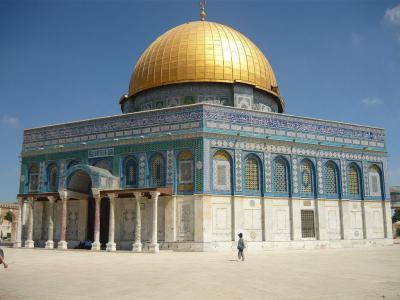
The Dome of the Rock stands as one of the most magnificent achievements of Islamic architecture, renowned for its golden dome, vibrant blue mosaics, and impeccable proportions. Commissioned by Caliph Abd al-Malik Ibn Marawan, the Dome was intended to assert Islam's significance alongside Judaism and Christianity, particularly in competition with the Church of the Holy Sepulchre.
Contrary to popular misconception, this structure is not a mosque but rather a shrine. It lacks features typical of mosques (such as a qibla wall and prayer hall); instead, it houses a sacred rock believed to be the site where Abraham intended to sacrifice his son. This rock protruded from the remains of Herod's Temple, and Abd al-Malik chose to commemorate it with the construction of the Dome.
The exterior is adorned with marble slabs and glazed green and blue tiles, featuring Koranic inscriptions, geometric patterns, and floral motifs. These designs, originally commissioned by Suleiman the Magnificent in the 1500s, have undergone various renovations over time.
In the 1960s, the dome was covered with anodized aluminum, replacing the original lead covering that had caused structural issues. This aluminum covering provided a lighter and more cost-effective solution compared to the gold that was once used but later melted down to settle the debts of a reckless caliph. Despite these changes, the Dome of the Rock remains an enduring symbol of Jerusalem.
Contrary to popular misconception, this structure is not a mosque but rather a shrine. It lacks features typical of mosques (such as a qibla wall and prayer hall); instead, it houses a sacred rock believed to be the site where Abraham intended to sacrifice his son. This rock protruded from the remains of Herod's Temple, and Abd al-Malik chose to commemorate it with the construction of the Dome.
The exterior is adorned with marble slabs and glazed green and blue tiles, featuring Koranic inscriptions, geometric patterns, and floral motifs. These designs, originally commissioned by Suleiman the Magnificent in the 1500s, have undergone various renovations over time.
In the 1960s, the dome was covered with anodized aluminum, replacing the original lead covering that had caused structural issues. This aluminum covering provided a lighter and more cost-effective solution compared to the gold that was once used but later melted down to settle the debts of a reckless caliph. Despite these changes, the Dome of the Rock remains an enduring symbol of Jerusalem.
8) Via Dolorosa (Way of Sorrow) (must see)
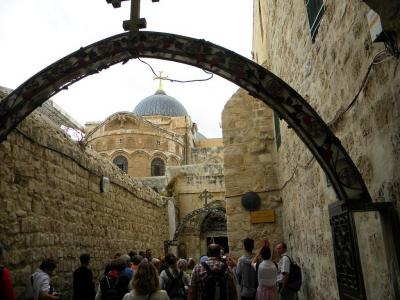
Via Dolorosa, or "the Way of Sorrow" in Christian tradition, is the path believed to have been taken by Jesus from Pilate's judgment hall to Golgotha, where he was crucified. This route, traversed by countless pilgrims, begins at the Madrasa al-Omariya, located 300 meters west of the Lions' Gate in the Muslim Quarter, and concludes at the Church of the Holy Sepulchre. Along its 500-meter length are the fourteen Stations of the Cross, each commemorating an event in the Gospel narrative. While these stations are a relatively recent addition, with some established only in the 19th century, they are marked by black iron plaques bearing Roman numerals.
One way to ensure finding all fourteen stations and experience the devotional atmosphere is to join the Franciscans' procession. Led by Franciscan friars, who have been appointed guardians of Jerusalem's holy sites since 1342, the procession typically begins at the Umariya School, the First Station of the Cross, on Fridays at 3 PM in winter or 4 PM during daylight saving time, aligning as closely as possible with the time and day of Jesus's original ordeal.
It's important to note that the cobbled stone path can be slippery, especially when wet, and certain sections may have steep inclines with stairs. The area can be crowded and bustling, so visitors should exercise caution and be prepared to move quickly. Consider joining a tour or bringing a comprehensive map or guidebook. Also, have your camera ready! Besides its spiritual significance, the area has impressive artwork and architecture worth exploring.
One way to ensure finding all fourteen stations and experience the devotional atmosphere is to join the Franciscans' procession. Led by Franciscan friars, who have been appointed guardians of Jerusalem's holy sites since 1342, the procession typically begins at the Umariya School, the First Station of the Cross, on Fridays at 3 PM in winter or 4 PM during daylight saving time, aligning as closely as possible with the time and day of Jesus's original ordeal.
It's important to note that the cobbled stone path can be slippery, especially when wet, and certain sections may have steep inclines with stairs. The area can be crowded and bustling, so visitors should exercise caution and be prepared to move quickly. Consider joining a tour or bringing a comprehensive map or guidebook. Also, have your camera ready! Besides its spiritual significance, the area has impressive artwork and architecture worth exploring.
9) Garden Tomb (must see)
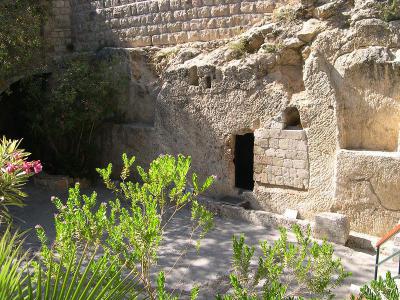
This archaeological site in a landscape setting, outside but within view of the city walls, holds a special appeal for Protestants seeking a more authentic sacred space than the traditional Church of the Holy Sepulchre. While the Anglican staff managing the site do not assert dogmatic claims regarding its authenticity as the tomb of Jesus' resurrection, its alignment with Gospel narratives makes it a compelling possibility for many and, more importantly, a visual reminder that "He is not here, for He is Risen!"
Regardless of religious affiliation, this spot is 'felt' by many as the most peaceful in Jerusalem, bringing a very welcome contrast to the noise of a very lively city. At the end of a visit, you will have seen a tomb that is at least similar to that of Jesus, and you will have heard a testimony of the saving power of the empty tomb. You will have experienced a communion of believers from so many different countries singing in their native languages. If you are a Christian, you will be truly moved; if you are a skeptic, you might be impressed, too.
Tip:
For those interested in a guided tour, emailing in advance is recommended. The tour typically lasts around 20 minutes, allowing ample time for personal reflection, reading, and photography amidst the tranquil surroundings.
Regardless of religious affiliation, this spot is 'felt' by many as the most peaceful in Jerusalem, bringing a very welcome contrast to the noise of a very lively city. At the end of a visit, you will have seen a tomb that is at least similar to that of Jesus, and you will have heard a testimony of the saving power of the empty tomb. You will have experienced a communion of believers from so many different countries singing in their native languages. If you are a Christian, you will be truly moved; if you are a skeptic, you might be impressed, too.
Tip:
For those interested in a guided tour, emailing in advance is recommended. The tour typically lasts around 20 minutes, allowing ample time for personal reflection, reading, and photography amidst the tranquil surroundings.
10) Pools of Bethesda
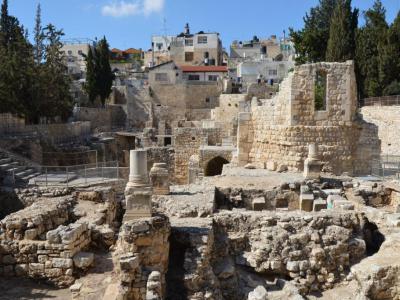
In the compound housing the Catholic Saint Anne's church, visitors can explore the ruins of the two historic Pools of Bethesda, constructed around 200 BC to supply water to the Temple. According to the Gospel of Saint John, these waters were believed to possess healing properties and were used by Jesus to cure a man who had been afflicted for thirty-eight years.
Excavations reveal the remains of the five porches mentioned in the Gospel, with nearby natural caves adapted as baths for the thousands of sufferers who sought healing during Roman times. Visitors can also observe the remnants of a 3rd-century temple to Serapis built by the Romans on the site, which was later replaced by a basilica during the Byzantine era.
As visitors follow the walkway around the pools, they can descend into the depths of a Roman cistern and explore the various archaeological features, with a detailed plan onsite providing guidance. Additionally, a small museum displays objects found during excavations, although it is typically open only by appointment.
Excavations reveal the remains of the five porches mentioned in the Gospel, with nearby natural caves adapted as baths for the thousands of sufferers who sought healing during Roman times. Visitors can also observe the remnants of a 3rd-century temple to Serapis built by the Romans on the site, which was later replaced by a basilica during the Byzantine era.
As visitors follow the walkway around the pools, they can descend into the depths of a Roman cistern and explore the various archaeological features, with a detailed plan onsite providing guidance. Additionally, a small museum displays objects found during excavations, although it is typically open only by appointment.
11) Temple Mount (must see)
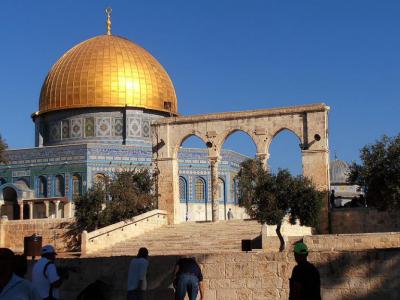
Known as Al-Haram ash-Sharif ("the Noble Sanctuary") to Muslims, this expansive rectangular esplanade in the southeastern Old City has been a central point of Jerusalem for millennia. According to both Jewish and Muslim traditions, it is the site where Abraham offered his son as a sacrifice to God. Additionally, it is traditionally believed to have housed the First Temple, constructed by Solomon in the 10th century BC and destroyed by the Babylonians in 587 BC. The site was later the location of the Second Temple that succeeded it.
Herod the Great significantly expanded the complex in the 1st century BC, enlarging the Inner Temple and creating the Temple platform by constructing four walls around a natural hill and filling them in. It was from the Second Temple that Jesus is said to have expelled the merchants and moneychangers; however, it was ultimately destroyed by the Romans following a protracted siege of Jerusalem in AD 70, marking the end of the Jewish Revolt. According to historian Josephus, the city was ravaged by murder, famine, and cannibalism.
Although the Dome of the Rock is the most prominent feature on the Temple Mount today, the site encompasses a wealth of other architectural marvels from the Omayyad, Ayyubid, Mameluke, and Ottoman eras, including the Grammar College and numerous madrasas. Visitors should note that certain areas are restricted, particularly the southern portion south of the Gate of the Tribes and the eastern section east of Al-Aqsa. Non-Muslims are only permitted to enter the Temple Mount through Moors' Gate and cannot access the Dome of the Rock and the El-Aqsa Mosque without a guide.
Herod the Great significantly expanded the complex in the 1st century BC, enlarging the Inner Temple and creating the Temple platform by constructing four walls around a natural hill and filling them in. It was from the Second Temple that Jesus is said to have expelled the merchants and moneychangers; however, it was ultimately destroyed by the Romans following a protracted siege of Jerusalem in AD 70, marking the end of the Jewish Revolt. According to historian Josephus, the city was ravaged by murder, famine, and cannibalism.
Although the Dome of the Rock is the most prominent feature on the Temple Mount today, the site encompasses a wealth of other architectural marvels from the Omayyad, Ayyubid, Mameluke, and Ottoman eras, including the Grammar College and numerous madrasas. Visitors should note that certain areas are restricted, particularly the southern portion south of the Gate of the Tribes and the eastern section east of Al-Aqsa. Non-Muslims are only permitted to enter the Temple Mount through Moors' Gate and cannot access the Dome of the Rock and the El-Aqsa Mosque without a guide.
12) Hezekiah's Tunnel (must see)
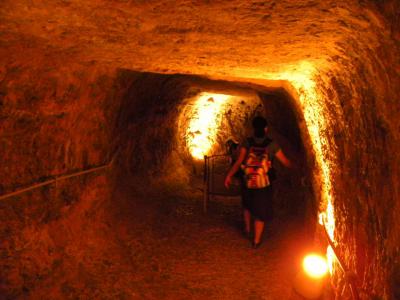
Exploring Hezekiah's Tunnel is an unforgettable experience, offering both historical insight and a refreshing escape from the heat. This ancient engineering marvel, discovered in 1838 by American biblical scholar Edward Robinson, provides a unique journey through a tiny underwater river.
Beginning at Gihon Spring, a major source of water for ancient Jerusalem for 1,000 years, the 2,700-year-old tunnel stretches 580 yards (530 meters) to the Pool of Siloam, the source for drawing water during biblical times. Built by King Hezekiah in preparation for the Assyrian siege in the 8th century BC, the tunnel was painstakingly chipped away by hand by two groups of workers who met in the middle to secure the city's water supply from impending invaders.
With proper preparation, exploring Hezekiah's Tunnel promises to be an unforgettable and enlightening experience.
Tip:
For almost the entirety of the tunnel, there is no light whatsoever. Even if there isn't a constant stream of water running underfoot, using something like your cell phone's flashlight setting for light won't be adequate. It is highly recommended that you use a strong headlamp, but a flashlight would work as well. It doesn't hurt to have a friend walk in front of or behind you as well, just in case your light dies and you're stuck walking in the dark.
You are advised to bring only a backpack, purse, or small bag that can be either hitched up high on your back or tucked under your arm well above the water level. Bulky packages would probably be very annoying to carry through the tunnel given its narrowness. Also, wear comfortable shoes that can get wet!
Beginning at Gihon Spring, a major source of water for ancient Jerusalem for 1,000 years, the 2,700-year-old tunnel stretches 580 yards (530 meters) to the Pool of Siloam, the source for drawing water during biblical times. Built by King Hezekiah in preparation for the Assyrian siege in the 8th century BC, the tunnel was painstakingly chipped away by hand by two groups of workers who met in the middle to secure the city's water supply from impending invaders.
With proper preparation, exploring Hezekiah's Tunnel promises to be an unforgettable and enlightening experience.
Tip:
For almost the entirety of the tunnel, there is no light whatsoever. Even if there isn't a constant stream of water running underfoot, using something like your cell phone's flashlight setting for light won't be adequate. It is highly recommended that you use a strong headlamp, but a flashlight would work as well. It doesn't hurt to have a friend walk in front of or behind you as well, just in case your light dies and you're stuck walking in the dark.
You are advised to bring only a backpack, purse, or small bag that can be either hitched up high on your back or tucked under your arm well above the water level. Bulky packages would probably be very annoying to carry through the tunnel given its narrowness. Also, wear comfortable shoes that can get wet!
