Custom Walk in Puebla, Mexico by rossinigj_e68d4 created on 2023-09-25
Guide Location: Mexico » Puebla
Guide Type: Custom Walk
# of Sights: 8
Tour Duration: 1 Hour(s)
Travel Distance: 2.3 Km or 1.4 Miles
Share Key: 6PMTZ
Guide Type: Custom Walk
# of Sights: 8
Tour Duration: 1 Hour(s)
Travel Distance: 2.3 Km or 1.4 Miles
Share Key: 6PMTZ
How It Works
Please retrieve this walk in the GPSmyCity app. Once done, the app will guide you from one tour stop to the next as if you had a personal tour guide. If you created the walk on this website or come to the page via a link, please follow the instructions below to retrieve the walk in the app.
Retrieve This Walk in App
Step 1. Download the app "GPSmyCity: Walks in 1K+ Cities" on Apple App Store or Google Play Store.



Step 2. In the GPSmyCity app, download(or launch) the guide "Puebla Map and Walking Tours".
Step 3. Tap the menu button located at upper right corner of the "Walks" screen and select "Retrieve custom walk". Enter the share key: 6PMTZ
1) Callejón de los Sapos (Alley of the Frogs) (must see)
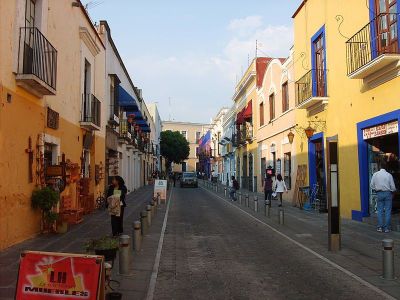
The Alley of the Frogs (Callejon de los Sapos) is a popular street and square in the historic center of Puebla city and an ideal place for collectors and art lovers. It is the location of many stores housed in historic buildings. Most of these stores sell antiques ranging from furniture to books.
Along with the antique shops, the street offers outdoor entertainment on weekends. Musicians play open-air on Saturdays and Sundays while vendors sell handicrafts from outdoor booths. There are also several restaurants and cantinas for those who prefer drinking and dining.
The name of the street is believed to have come from the colonial period of Puebla. The story is that the alley was often flooded with stagnant water. It attracted a large number of toads, which caused locals to refer to it as Toad Alley.
The buildings themselves offer a marvel for the walking tour. They are designed with traditional colonial architecture and painted in bright blues, pinks, and yellows. A beautiful fountain in the middle of the square, along with a toad sculpture is a constant reminder of old times.
The Alley of the Frogs was built in 1849. A bullring was held in the plaza until it was demolished in 1867. Bullfighting gave way to shops and a weekend flea market that still exists today. Shoppers will find paintings, statuettes, postcards, collectible coins, and old records among the treasures.
The stores at the Alley of the Frogs are open daily from 9 AM to 5 PM. However, the square is available for visitors to enjoy 24 hours a day.
Along with the antique shops, the street offers outdoor entertainment on weekends. Musicians play open-air on Saturdays and Sundays while vendors sell handicrafts from outdoor booths. There are also several restaurants and cantinas for those who prefer drinking and dining.
The name of the street is believed to have come from the colonial period of Puebla. The story is that the alley was often flooded with stagnant water. It attracted a large number of toads, which caused locals to refer to it as Toad Alley.
The buildings themselves offer a marvel for the walking tour. They are designed with traditional colonial architecture and painted in bright blues, pinks, and yellows. A beautiful fountain in the middle of the square, along with a toad sculpture is a constant reminder of old times.
The Alley of the Frogs was built in 1849. A bullring was held in the plaza until it was demolished in 1867. Bullfighting gave way to shops and a weekend flea market that still exists today. Shoppers will find paintings, statuettes, postcards, collectible coins, and old records among the treasures.
The stores at the Alley of the Frogs are open daily from 9 AM to 5 PM. However, the square is available for visitors to enjoy 24 hours a day.
2) Amparo Museum (must see)
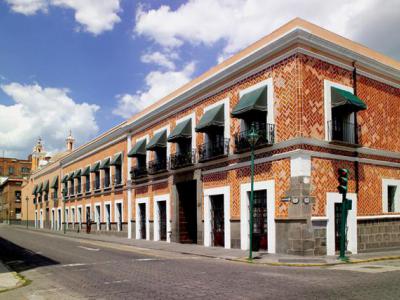
The Amparo Museum is one of the most important history museums in Mexico. It was founded and sponsored by the Amparo Foundation in 1991.
The museum is housed in two Colonial-style buildings. One of the buildings is the former Hospital of Our Lady and San Juan de Letran, built in the 17th century. It later became a college for women before it was used for the Amparo Museum. This building holds most of the exhibits from the historical collection.
The museum's collection follows the development of Mexico throughout its history. Pieces in the collection date from 2,500 BC to the present day. Items include figures, altars, sculptures, and monuments from civilizations like Maya, Olmec, Mixtec, Aztecs, and Huastec.
The second building, added in the 18th century, was used as part of the hospital but later became a private home. It has been remodeled to display how the houses would have looked throughout the colonization of Mexico.
The Amparo Museum also hosts temporary exhibits by national and international artists. It presents conferences, seminars, concerts, and workshops to support education, research, and the creative arts. There is no charge to enter the museum, which is open from 10 AM to 6 PM. Amparo Museum is closed on Tuesdays.
The museum is housed in two Colonial-style buildings. One of the buildings is the former Hospital of Our Lady and San Juan de Letran, built in the 17th century. It later became a college for women before it was used for the Amparo Museum. This building holds most of the exhibits from the historical collection.
The museum's collection follows the development of Mexico throughout its history. Pieces in the collection date from 2,500 BC to the present day. Items include figures, altars, sculptures, and monuments from civilizations like Maya, Olmec, Mixtec, Aztecs, and Huastec.
The second building, added in the 18th century, was used as part of the hospital but later became a private home. It has been remodeled to display how the houses would have looked throughout the colonization of Mexico.
The Amparo Museum also hosts temporary exhibits by national and international artists. It presents conferences, seminars, concerts, and workshops to support education, research, and the creative arts. There is no charge to enter the museum, which is open from 10 AM to 6 PM. Amparo Museum is closed on Tuesdays.
3) Biblioteca Palafoxiana (Palafoxiana Library) (must see)
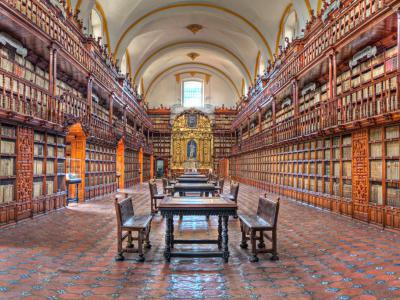
The Palafoxiana Library (Biblioteca Palafoxiana) is a historic library in Puebla City, Mexico. Established in 1646, it holds over 45,000 books and manuscripts, ranging from the 15th to the 20th century. It is the first and oldest public library in the Americas.
The library was named for Juan de Palafox y Mendoza, Bishop of Puebla. Palafox y Mendoza donated 5,000 volumes to the College of San Juan to create a library.
The building that holds the Library Palafoxiana was completed in 1773 at the behest of Francisco Fabian y Fuero, a Spanish Roman Catholic Bishop. In addition to Palafox y Mendoza's donation, Fabian y Fuero donated his books and those of bishops Manuel Fernandez de Santa Cruz and Francisco Pablo Vazquez. In addition, books confiscated from Jesuits and religious schools were placed in the library. The oldest text in the library is "The Nuremberg Chronicle," one of the best-documented early printed books written by Hartmann Schedel in 1493.
The Palafoxiana Library is listed on UNESCO's Memory of the World Register. The library is open Tuesday through Sunday from 10 AM to 6 PM.
The library was named for Juan de Palafox y Mendoza, Bishop of Puebla. Palafox y Mendoza donated 5,000 volumes to the College of San Juan to create a library.
The building that holds the Library Palafoxiana was completed in 1773 at the behest of Francisco Fabian y Fuero, a Spanish Roman Catholic Bishop. In addition to Palafox y Mendoza's donation, Fabian y Fuero donated his books and those of bishops Manuel Fernandez de Santa Cruz and Francisco Pablo Vazquez. In addition, books confiscated from Jesuits and religious schools were placed in the library. The oldest text in the library is "The Nuremberg Chronicle," one of the best-documented early printed books written by Hartmann Schedel in 1493.
The Palafoxiana Library is listed on UNESCO's Memory of the World Register. The library is open Tuesday through Sunday from 10 AM to 6 PM.
4) Catedral de Puebla (Puebla Cathedral) (must see)
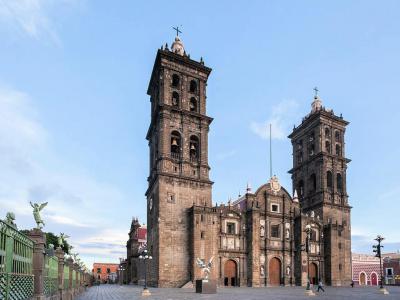
Puebla Cathedral (Catedral de Puebla) is the episcopal see of the Archdiocese of Puebla. The Cathedral was founded by King Philip II of Spain, and its construction began in 1575. It was consecrated in 1649 though it remained unfinished. The cathedral is also known as the Basilica Cathedral of Puebla or the Cathedral of Our Lady of the Immaculate Conception.
The Cathedral also functions as a museum. It holds multiple works of art, including paintings, sculptures, carpentry, and jewelry. Items on display include sacred vessels and crosses made with gold and encrusted with precious gems. Its historical archive has documents dating back to the founding of the city.
The first architect of Puebla Cathedral was Francisco Becerra. The indigenous Cholula and Tlaxcala participated in the construction of the Cathedral. In the mid-17th century, the architect Juan Gomez de Trasmonte took over the plans. Gómez de Trasmonte, who had served as Major Master of the Mexico City Metropolitan Cathedral, adapted the project, giving it a more classical appearance and a basilica plan.
Bishop Juan de Palafox y Mendoza joined the Cathedral around 1640 and ordered construction work to be finished. He used his own wealth and conducted fundraising in the form of tithes. The facade of the edifice was completed in 1664.
The north tower, also called Old Tower, was added in 1678. It is the only bell tower with ten bells in total. The most famous is the Bell Maria (Campana María,) weighing more than nine tons. The south tower was added in 1731. Both towers are about 230 feet high, being at the time, the highest in the American colonies.
Five daily masses are celebrated Monday through Saturday. The Cathedral celebrates 10 masses on Sundays. All guests are welcome.
Puebla Cathedral is declared a World Heritage Site by UNESCO.
The Cathedral also functions as a museum. It holds multiple works of art, including paintings, sculptures, carpentry, and jewelry. Items on display include sacred vessels and crosses made with gold and encrusted with precious gems. Its historical archive has documents dating back to the founding of the city.
The first architect of Puebla Cathedral was Francisco Becerra. The indigenous Cholula and Tlaxcala participated in the construction of the Cathedral. In the mid-17th century, the architect Juan Gomez de Trasmonte took over the plans. Gómez de Trasmonte, who had served as Major Master of the Mexico City Metropolitan Cathedral, adapted the project, giving it a more classical appearance and a basilica plan.
Bishop Juan de Palafox y Mendoza joined the Cathedral around 1640 and ordered construction work to be finished. He used his own wealth and conducted fundraising in the form of tithes. The facade of the edifice was completed in 1664.
The north tower, also called Old Tower, was added in 1678. It is the only bell tower with ten bells in total. The most famous is the Bell Maria (Campana María,) weighing more than nine tons. The south tower was added in 1731. Both towers are about 230 feet high, being at the time, the highest in the American colonies.
Five daily masses are celebrated Monday through Saturday. The Cathedral celebrates 10 masses on Sundays. All guests are welcome.
Puebla Cathedral is declared a World Heritage Site by UNESCO.
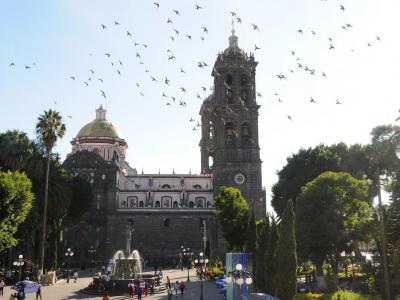
5) Zocalo Plaza and San Miguel Fountain (must see)
Zocalo Plaza is the main square in the center of Puebla. It is considered to be the cultural and political center of the city. It was also the source of drinking water through the mid-16th century. Zocalo, which means plinth or pedestal, was the first block created in Puebla. The remainder of the city was built out from Zocalo in a checkerboard pattern. The Zocalo and surrounding blocks have played a central role in the city's planning and geography for over 500 years.
Zocalo Plaza has long been a location for entertainment and celebrations. Bullfights were regular contests in the square until they ended in 1722. It was also the primary market of Puebla through the end of the 18th century.
Buildings around Zocalo Plaza include the Colorado House Museum, the Cathedral of Saint Mary of the Assumption, the City Hall, and numerous shopping venues. The square is known for its public art, including four statues of muses installed at each corner of the plaza, the Monument to the Siege of Puebla, the Kiosko sculpture by Jan Hendrix, and Puebla de los Angeles.
Zocalo Plaza is also known as the location of the San Miguel Fountain. San Miguel was the main patron of Puebla city. The composition of the fountain features waterfalls on a wide cup, supported by four life-size angels. The statue of the San Miguel stays on a stone column in the center of the structure.
The San Miguel Fountain is one of the historical monuments most seen by locals and tourists because it is located right in the center of Zocalo Plaza. Despite its popularity, few know the history of the fountain. It was the first fountain in the Zocalo and the center of the water supply in the city.
The San Miguel Fountain was designed by one of the most famous architects in the country during the 18th century, Antonio Santa Maria Inchaurregui, and carved by stone carving masters Anselmo Martínez and José Francisco Rabanillo. The fountain was inaugurated on June 23, 1777.
Zocalo Plaza has long been a location for entertainment and celebrations. Bullfights were regular contests in the square until they ended in 1722. It was also the primary market of Puebla through the end of the 18th century.
Buildings around Zocalo Plaza include the Colorado House Museum, the Cathedral of Saint Mary of the Assumption, the City Hall, and numerous shopping venues. The square is known for its public art, including four statues of muses installed at each corner of the plaza, the Monument to the Siege of Puebla, the Kiosko sculpture by Jan Hendrix, and Puebla de los Angeles.
Zocalo Plaza is also known as the location of the San Miguel Fountain. San Miguel was the main patron of Puebla city. The composition of the fountain features waterfalls on a wide cup, supported by four life-size angels. The statue of the San Miguel stays on a stone column in the center of the structure.
The San Miguel Fountain is one of the historical monuments most seen by locals and tourists because it is located right in the center of Zocalo Plaza. Despite its popularity, few know the history of the fountain. It was the first fountain in the Zocalo and the center of the water supply in the city.
The San Miguel Fountain was designed by one of the most famous architects in the country during the 18th century, Antonio Santa Maria Inchaurregui, and carved by stone carving masters Anselmo Martínez and José Francisco Rabanillo. The fountain was inaugurated on June 23, 1777.

6) Calle de los Dulce (Sweets Street)
Sweet Street (Calle de los Dulces) is a street in the center of Puebla, lined with stores selling sweets. Tourists will see candy shops, bakeries, cookie stores, and gift baskets. There are approximately 40 of these stores that sell items as varied as sweet potatoes (camotes) and crystallized peaches.
Sweets Street occupies about three blocks of 6 East Avenue near St. Domingo Convent, Victory Market, and the Main Theatre of Puebla. Along with sweets, shoppers will find boutiques that sell jewelry, handbags, sporting goods, and handicrafts. The street is an excellent place to find souvenirs, local foods, and a variety of delicious.
The sweets shops are primarily owned by families who have had the stores and the recipes passed down for generations. Many shop owners live above their stores just as their ancestors did before them. The oldest of the shops is the Great Fame (La Gran Fama), which opened in 1892.
Most of the stores on Sweet Street open around 10 AM. Closing hours vary from store to store.
Sweets Street occupies about three blocks of 6 East Avenue near St. Domingo Convent, Victory Market, and the Main Theatre of Puebla. Along with sweets, shoppers will find boutiques that sell jewelry, handbags, sporting goods, and handicrafts. The street is an excellent place to find souvenirs, local foods, and a variety of delicious.
The sweets shops are primarily owned by families who have had the stores and the recipes passed down for generations. Many shop owners live above their stores just as their ancestors did before them. The oldest of the shops is the Great Fame (La Gran Fama), which opened in 1892.
Most of the stores on Sweet Street open around 10 AM. Closing hours vary from store to store.
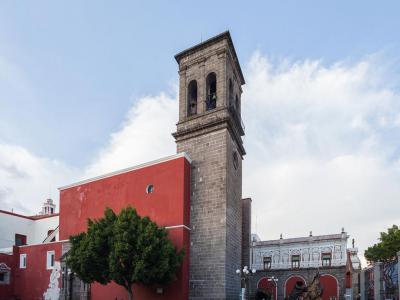
7) Convento de Santo Domingo (St. Domingo Convent and Rosario Chapel) (must see)
Saint Domingo Convent (Convento de Santo Domingo) is a Baroque-style church under the jurisdiction of the Roman Catholic Archdiocese of Puebla. The patron saint of Saint Domingo Convent is the Archangel Michael. Construction of the church began in 1531.
The convent is arguably best known for the Chapel of the Rosario, which was once considered the Eighth Wonder of the World. It is also known as one of the greatest religious art displays in Mexico. The Chapel was added to the church in 1650. It is full of symbolism, where each element represents something related to the Catholicism and Dominican Order beliefs.
The interior of the Chapel is fully covered in reliefs made of golden stucco. The Baroque decorations are covered in 24-carat gold leaves. The dome, which rises above the altar, shows 60 angels circling the main vault.
The dome is divided into sections, representing the Seven Gifts of the Holy Spirit: Divine Grace, Understanding, Fortitude, Piety, Fear of God, Knowledge, Counsel, and Wisdom. The dome also displays sixteen saints and the three theological virtues of Faith, Hope, and Charity.
Among many paintings in the chapel are those in the nave and the apse. The nave walls are adorned with canvases in the Chiaroscuro painting style, created by the artist Jose Rodriguez Carnero. The apse has a large painting that is dedicated to the Holy Rosary, a set of prayers used in the Catholic Church. The Virgin Mary appears in this painting, covered with roses.
Saint Domingo Convent was added to the UNESCO World Heritage List in 1987. Visitors are welcome to explore the church and chapel during open hours. Mass is held twice daily.
The convent is arguably best known for the Chapel of the Rosario, which was once considered the Eighth Wonder of the World. It is also known as one of the greatest religious art displays in Mexico. The Chapel was added to the church in 1650. It is full of symbolism, where each element represents something related to the Catholicism and Dominican Order beliefs.
The interior of the Chapel is fully covered in reliefs made of golden stucco. The Baroque decorations are covered in 24-carat gold leaves. The dome, which rises above the altar, shows 60 angels circling the main vault.
The dome is divided into sections, representing the Seven Gifts of the Holy Spirit: Divine Grace, Understanding, Fortitude, Piety, Fear of God, Knowledge, Counsel, and Wisdom. The dome also displays sixteen saints and the three theological virtues of Faith, Hope, and Charity.
Among many paintings in the chapel are those in the nave and the apse. The nave walls are adorned with canvases in the Chiaroscuro painting style, created by the artist Jose Rodriguez Carnero. The apse has a large painting that is dedicated to the Holy Rosary, a set of prayers used in the Catholic Church. The Virgin Mary appears in this painting, covered with roses.
Saint Domingo Convent was added to the UNESCO World Heritage List in 1987. Visitors are welcome to explore the church and chapel during open hours. Mass is held twice daily.
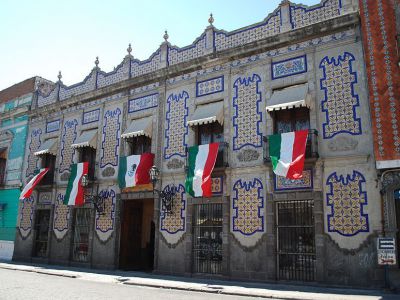
8) Uriarte Talavera Workshop
You just cannot leave Puebla without visiting Uriarte Talavera workshop, because it is the only place in the city where you can witness the elaborate process of making talaveras. At Uriarte there are exquisite decorative items for sale, such as astrays, urns, pots, platters and many other talaveras. Come, admire and pick your own talavera.
