Custom Walk in Zurich, Switzerland by mmaietta3563_ee3fe created on 2025-04-06
Guide Location: Switzerland » Zurich
Guide Type: Custom Walk
# of Sights: 14
Tour Duration: 3 Hour(s)
Travel Distance: 6.7 Km or 4.2 Miles
Share Key: A5MHB
Guide Type: Custom Walk
# of Sights: 14
Tour Duration: 3 Hour(s)
Travel Distance: 6.7 Km or 4.2 Miles
Share Key: A5MHB
How It Works
Please retrieve this walk in the GPSmyCity app. Once done, the app will guide you from one tour stop to the next as if you had a personal tour guide. If you created the walk on this website or come to the page via a link, please follow the instructions below to retrieve the walk in the app.
Retrieve This Walk in App
Step 1. Download the app "GPSmyCity: Walks in 1K+ Cities" on Apple App Store or Google Play Store.



Step 2. In the GPSmyCity app, download(or launch) the guide "Zurich Map and Walking Tours".
Step 3. Tap the menu button located at upper right corner of the "Walks" screen and select "Retrieve custom walk". Enter the share key: A5MHB
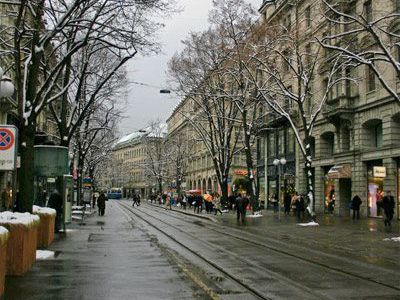
1) Bahnhofstrasse (Station Street) (must see)
Stepping out of Zurich HB, you can't miss Station Street-Zurich’s grand catwalk for wallets with stamina and shoes built for cobblestone. This is the city’s main shopping artery, mostly reserved for pedestrians and trams, which means you’ll be dodging Gucci bags, not taxis. Lined with luxury boutiques and upscale restaurants, this is where Swiss precision meets retail therapy.
The stroll kicks off right outside the station, on Station Square, because Zurich doesn’t believe in metaphors when it comes to names. From there, Station Street marches south all the way to Lake Zurich, finishing at the ever-charming Burkli Square.
Along the way, you’ll saunter past Parade Square, the golden triangle of Swiss finance where the banks are so rich that even the pigeons have portfolios... This real estate is notoriously expensive, which is why the air here smells vaguely of money and truffle oil.
Fun fact: Station Street was born in the 1870s when Zurich’s medieval moats were filled in to make room for the modern city. In short, they replaced water defenses with window shopping-and honestly, that feels like progress.
In essence, Station Street is old Zurich’s nerve center. From here, charming streets like Rennweg and Augustinergasse twist off into postcard-perfect scenes, packed with shops, cafés, and just enough historical flair to justify your souvenir splurge.
If you need a break from luxury price tags, dive into ShopVille, the underground mall beneath the train station. It's got food, gifts, and treats for mere mortals-plus it's open on Sundays, unlike most of Zurich.
So, whenever you're in Zurich and feel like buying, browsing, or just people-watching with a pastry in hand, Station Street-the most stylish stampede of trams and shoppers in Switzerland-can deliver all of this.
Pro tips:
Trams are your best friend-so, hop on, hop off, and explore with the grace of a local who knows not to jaywalk. In winter, treat yourself to rooftop mulled wine and steaming hot chocolate. In summer, trade the boutiques for a lakeside stroll and watch the world glide by...
The stroll kicks off right outside the station, on Station Square, because Zurich doesn’t believe in metaphors when it comes to names. From there, Station Street marches south all the way to Lake Zurich, finishing at the ever-charming Burkli Square.
Along the way, you’ll saunter past Parade Square, the golden triangle of Swiss finance where the banks are so rich that even the pigeons have portfolios... This real estate is notoriously expensive, which is why the air here smells vaguely of money and truffle oil.
Fun fact: Station Street was born in the 1870s when Zurich’s medieval moats were filled in to make room for the modern city. In short, they replaced water defenses with window shopping-and honestly, that feels like progress.
In essence, Station Street is old Zurich’s nerve center. From here, charming streets like Rennweg and Augustinergasse twist off into postcard-perfect scenes, packed with shops, cafés, and just enough historical flair to justify your souvenir splurge.
If you need a break from luxury price tags, dive into ShopVille, the underground mall beneath the train station. It's got food, gifts, and treats for mere mortals-plus it's open on Sundays, unlike most of Zurich.
So, whenever you're in Zurich and feel like buying, browsing, or just people-watching with a pastry in hand, Station Street-the most stylish stampede of trams and shoppers in Switzerland-can deliver all of this.
Pro tips:
Trams are your best friend-so, hop on, hop off, and explore with the grace of a local who knows not to jaywalk. In winter, treat yourself to rooftop mulled wine and steaming hot chocolate. In summer, trade the boutiques for a lakeside stroll and watch the world glide by...
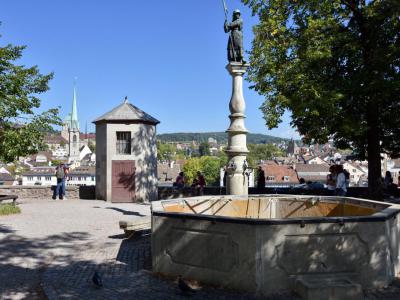
2) Lindenhofplatz (Lindenhof Square) (must see)
Perched above the Old Town of Zurich like a quiet, leafy crown, Lindenhof is both a park and a time machine with a view. And it's not just where the city began-it’s where the city still comes to breathe...
This peaceful hilltop was once the site of a Roman fortress, complete with ten towers and walls thick enough to make modern builders weep. The Romans got busy here in the 2nd century, but by the 9th, Louis the German decided the crumbling castle needed a royal facelift. Sadly, by the 13th century, the whole thing was abandoned, and locals did what locals do best-recycled the stones for new projects. Eco-friendly before it was cool...
And no, Zurich’s ancient swagger didn’t start with Roman togas and centurions. Long before Rome flexed its empire, Neolithic and Bronze Age folks had already claimed this hill as prime real estate. Back then, the Sihl River liked to flood the surrounding lands, and the elevated Lindenhof was the safe (and dry) bet.
Fast forward to the 1700s, and Lindenhof reinvented itself as a public park. The early crowd-pleaser, it was primarily about archery and crossbow contests that drew visitors in those days (indeed, nothing like a bit of target practice to go with your afternoon stroll...).
Nowadays, keep an eye out for the Hedwig Fountain, built in 1912 to honor one of Zurich’s boldest deceptions. During the 1292 siege by Duke Albert I, the city’s women donned full battle gear and manned the ramparts, while the men were off fighting elsewhere. The ruse worked, and Zurich lived to tell the tale. Today, Hedwig and her helmet still stand proudly in the park, thanks to sculptor Gustav Siber.
Apart from all the attractions inside, Lindenhof gives you panoramic eye-candy of Zurich’s rooftops, rivers, and lake-all in one relaxed snapshot. It’s the city’s breathing room, ideal for a pause between museum marathons and shopping sprees. Kids can run wild on the playgrounds, and for the tactically inclined, there’s an outdoor chessboard waiting to test your strategy.
Oh, and if you’re lucky, you might stumble onto a festival or event-just ask at the tourism office.
Insider tip:
Check out the replica of a Roman tombstone that first mentioned Turicum-Zurich’s name back when Latin was all the rage. The original is at the Swiss National Museum, but Lindenhof’s got its own copy for on-the-spot admiration...
This peaceful hilltop was once the site of a Roman fortress, complete with ten towers and walls thick enough to make modern builders weep. The Romans got busy here in the 2nd century, but by the 9th, Louis the German decided the crumbling castle needed a royal facelift. Sadly, by the 13th century, the whole thing was abandoned, and locals did what locals do best-recycled the stones for new projects. Eco-friendly before it was cool...
And no, Zurich’s ancient swagger didn’t start with Roman togas and centurions. Long before Rome flexed its empire, Neolithic and Bronze Age folks had already claimed this hill as prime real estate. Back then, the Sihl River liked to flood the surrounding lands, and the elevated Lindenhof was the safe (and dry) bet.
Fast forward to the 1700s, and Lindenhof reinvented itself as a public park. The early crowd-pleaser, it was primarily about archery and crossbow contests that drew visitors in those days (indeed, nothing like a bit of target practice to go with your afternoon stroll...).
Nowadays, keep an eye out for the Hedwig Fountain, built in 1912 to honor one of Zurich’s boldest deceptions. During the 1292 siege by Duke Albert I, the city’s women donned full battle gear and manned the ramparts, while the men were off fighting elsewhere. The ruse worked, and Zurich lived to tell the tale. Today, Hedwig and her helmet still stand proudly in the park, thanks to sculptor Gustav Siber.
Apart from all the attractions inside, Lindenhof gives you panoramic eye-candy of Zurich’s rooftops, rivers, and lake-all in one relaxed snapshot. It’s the city’s breathing room, ideal for a pause between museum marathons and shopping sprees. Kids can run wild on the playgrounds, and for the tactically inclined, there’s an outdoor chessboard waiting to test your strategy.
Oh, and if you’re lucky, you might stumble onto a festival or event-just ask at the tourism office.
Insider tip:
Check out the replica of a Roman tombstone that first mentioned Turicum-Zurich’s name back when Latin was all the rage. The original is at the Swiss National Museum, but Lindenhof’s got its own copy for on-the-spot admiration...
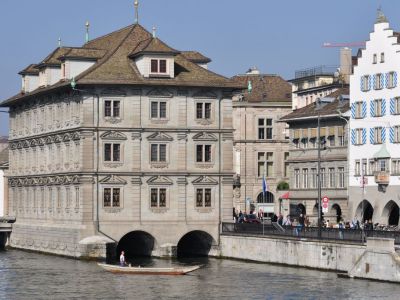
3) Rathaus (Town Hall)
Zurich’s power couple: the Town Hall and the City House-two buildings, one river, and several centuries of political drama.
The former of the two, the Town Hall, is a stately beauty dating back to the 1690s, sitting atop a historical layer cake. It's built on the bones of a 1397 city council hall, which itself rose from a 13th-century courthouse. Basically, if these walls could talk, they’d probably be exhausted. Once the seat of the Republic of Zurich until 1798, it is now the proud property of the Canton of Zurich and hosts both the cantonal and city parliaments. Talk about multitasking...
Just across the river (because Zurich doesn’t believe in overcrowding its government buildings), you’ll find the City House, the edifice in which the executive government gets down to business. It's on the Limmat’s west side, just south of the Town Hall Bridge. If you time it right, you can watch democracy in action from a second-floor terrace. It’s like political theater, but with less shouting.
Speaking of the Town Hall Bridge, this isn’t just any river crossing. It’s a plaza, a market, a pedestrian hangout, and a time machine all rolled into one. The locals used to call it the “vegetable bridge,” because medieval farmers once hawked their carrots and cabbages here. Today, you're more likely to find bratwurst and espresso.
This bridge has been around since the Middle Ages, originally made entirely of wood. Expanded in 1375 and again in 1420, it’s always been extra-wide enough for buildings to sit on top. By the 1600s, it had grown into its current footprint, and in the 1800s, it ditched the timber look for some serious stone-and-cast-iron swagger.
The bridge and surrounding square still buzz with life-festivals, markets, street performers, and all the postcard-perfect souvenir shops your heart desires. It’s pedestrian-only, so, put on your comfy footwear and let history meet you halfway across the Limmat.
The former of the two, the Town Hall, is a stately beauty dating back to the 1690s, sitting atop a historical layer cake. It's built on the bones of a 1397 city council hall, which itself rose from a 13th-century courthouse. Basically, if these walls could talk, they’d probably be exhausted. Once the seat of the Republic of Zurich until 1798, it is now the proud property of the Canton of Zurich and hosts both the cantonal and city parliaments. Talk about multitasking...
Just across the river (because Zurich doesn’t believe in overcrowding its government buildings), you’ll find the City House, the edifice in which the executive government gets down to business. It's on the Limmat’s west side, just south of the Town Hall Bridge. If you time it right, you can watch democracy in action from a second-floor terrace. It’s like political theater, but with less shouting.
Speaking of the Town Hall Bridge, this isn’t just any river crossing. It’s a plaza, a market, a pedestrian hangout, and a time machine all rolled into one. The locals used to call it the “vegetable bridge,” because medieval farmers once hawked their carrots and cabbages here. Today, you're more likely to find bratwurst and espresso.
This bridge has been around since the Middle Ages, originally made entirely of wood. Expanded in 1375 and again in 1420, it’s always been extra-wide enough for buildings to sit on top. By the 1600s, it had grown into its current footprint, and in the 1800s, it ditched the timber look for some serious stone-and-cast-iron swagger.
The bridge and surrounding square still buzz with life-festivals, markets, street performers, and all the postcard-perfect souvenir shops your heart desires. It’s pedestrian-only, so, put on your comfy footwear and let history meet you halfway across the Limmat.
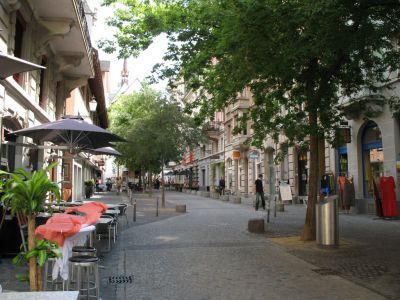
4) Niederdorfstrasse (Niederdorf street) (must see)
Niederdorf Street-known to locals simply as Niederdorf, or more affectionately as Dörfli (which means "little village")-is Zurich’s cobblestoned catwalk where medieval mischief meets modern-day people-watching. Tucked into the east side of the Old Town, just across the Limmat River, this pedestrian stretch is part time machine, part open-air stage, and full-time charmer.
Back in the day, this was the artisans’ turf. Imagine hammering, shouting, bargaining, and maybe the odd scandal whispered over a barrel of ale. Many of the buildings here date back to the 14th and 15th centuries, and if you squint, you might see a medieval merchant leaning out a timbered window-or maybe it’s just a tourist in vintage Instagram mode...
Fast forward to now, and Dörfli’s still buzzing, only the tools of the trade have changed. Out are the blacksmiths, and in are the chocolate-makers, bookshop keepers, and espresso artists. During the day, it’s the perfect place to grab a coffee, pick up a quirky souvenir, or get delightfully lost in a narrow alley that probably leads to a surprise fountain or a tiny wine bar. By night, the whole street slips into something more comfortable-live music, clinking glasses, laughter in at least five different languages, and bars that don’t mind if you stay a little longer.
The fun starts just opposite Zurich’s main train station and runs parallel to Limmatquai-the riverside promenade one block over, where the views are breezy and the vibes are park-like. Down at the southern end, you'll spot the Great Minster-Zurich’s twin-towered Romanesque giant, looking ever so stoic, while the rest of us have fondue.
Speaking of food: Dörfli delivers too. From bubbling Swiss cheese pots to globally inspired bites, there’s plenty to keep your fork busy. And if you're lucky, a street performer or accordionist might just soundtrack your evening.
Oh, and don’t miss the Dörfli Festival in late August-Zurich's answer to “what if a whole street threw a party?” Music, food, and good vibes guaranteed.
So, go ahead-make good use of your walking shoes, follow the sound of clinking glasses, and let Niederdorf work its old-world magic on you.
Back in the day, this was the artisans’ turf. Imagine hammering, shouting, bargaining, and maybe the odd scandal whispered over a barrel of ale. Many of the buildings here date back to the 14th and 15th centuries, and if you squint, you might see a medieval merchant leaning out a timbered window-or maybe it’s just a tourist in vintage Instagram mode...
Fast forward to now, and Dörfli’s still buzzing, only the tools of the trade have changed. Out are the blacksmiths, and in are the chocolate-makers, bookshop keepers, and espresso artists. During the day, it’s the perfect place to grab a coffee, pick up a quirky souvenir, or get delightfully lost in a narrow alley that probably leads to a surprise fountain or a tiny wine bar. By night, the whole street slips into something more comfortable-live music, clinking glasses, laughter in at least five different languages, and bars that don’t mind if you stay a little longer.
The fun starts just opposite Zurich’s main train station and runs parallel to Limmatquai-the riverside promenade one block over, where the views are breezy and the vibes are park-like. Down at the southern end, you'll spot the Great Minster-Zurich’s twin-towered Romanesque giant, looking ever so stoic, while the rest of us have fondue.
Speaking of food: Dörfli delivers too. From bubbling Swiss cheese pots to globally inspired bites, there’s plenty to keep your fork busy. And if you're lucky, a street performer or accordionist might just soundtrack your evening.
Oh, and don’t miss the Dörfli Festival in late August-Zurich's answer to “what if a whole street threw a party?” Music, food, and good vibes guaranteed.
So, go ahead-make good use of your walking shoes, follow the sound of clinking glasses, and let Niederdorf work its old-world magic on you.
5) ETH-Zurich - Swiss Federal Institute of Technology
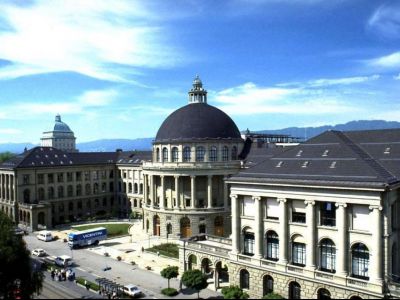
ETH Zurich - Federal Institute of Technology Zurich - is a prestigious public research university known for its significant contributions to science, technology, engineering, and mathematics (STEM). Established in 1854, it has played a pivotal role in educating numerous engineers and scientists, thus driving advancements in these domains. ETH Zurich enjoys a prominent position in the global academic landscape, consistently ranking among the top universities worldwide. It is widely regarded as the premier university in continental Europe and consistently features among the top 1–5 universities in Europe and the top 3–10 globally.
The university has made notable strides in chemistry, mathematics, and physics, solidifying its reputation. With 32 Nobel laureates associated with it, including luminaries like Richard F. Heck (recipient of the 2010 Nobel Prize in Chemistry) and the renowned Albert Einstein, ETH Zurich's legacy in pioneering research and innovation is undeniable.
Spanning across 16 departments, ETH Zurich offers a diverse range of subjects across various disciplines, emphasizing its comprehensive approach to education and research. Its main building, an architectural marvel, serves as a testament to its illustrious past and unwavering commitment to excellence. Erected between 1858 and 1864 under the supervision of Gustav Zeuner and designed by Gottfried Semper, a prominent figure in architecture and a professor at ETH Zurich, it embodies a distinctive Neoclassical style. Semper's design, marked by striking massings and influenced by Andrea Palladio and Donato Bramante, underscores the institution's fusion of tradition and innovation.
ETH Zurich transcends being merely an educational institution; it serves as a beacon of knowledge and progress in the STEM fields, attracting students and researchers from around the world to its historic yet forward-thinking campus.
The university has made notable strides in chemistry, mathematics, and physics, solidifying its reputation. With 32 Nobel laureates associated with it, including luminaries like Richard F. Heck (recipient of the 2010 Nobel Prize in Chemistry) and the renowned Albert Einstein, ETH Zurich's legacy in pioneering research and innovation is undeniable.
Spanning across 16 departments, ETH Zurich offers a diverse range of subjects across various disciplines, emphasizing its comprehensive approach to education and research. Its main building, an architectural marvel, serves as a testament to its illustrious past and unwavering commitment to excellence. Erected between 1858 and 1864 under the supervision of Gustav Zeuner and designed by Gottfried Semper, a prominent figure in architecture and a professor at ETH Zurich, it embodies a distinctive Neoclassical style. Semper's design, marked by striking massings and influenced by Andrea Palladio and Donato Bramante, underscores the institution's fusion of tradition and innovation.
ETH Zurich transcends being merely an educational institution; it serves as a beacon of knowledge and progress in the STEM fields, attracting students and researchers from around the world to its historic yet forward-thinking campus.
6) Gates of Hell
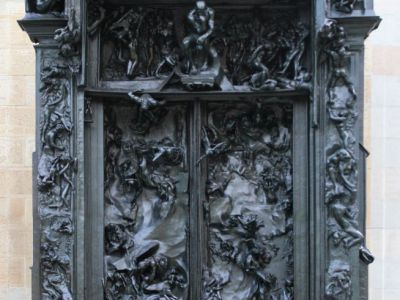
The Gates of Hell, located at the Kunsthaus Zurich, stands as a significant sculptural achievement by the renowned French artist Auguste Rodin. Inspired by Dante Alighieri's "The Inferno," this monumental work delves into a dark portrayal of the afterlife, depicting various damned souls in intricate detail. With dimensions reaching six meters in height, four meters in width, and extending one meter in depth, the sculpture showcases Rodin's expertise in form and emotion.
Commissioned in 1880 by the Directorate of Fine Arts, Rodin's Gates of Hell project was expected to take five years. However, Rodin surpassed expectations, spending 37 years perfecting the composition until his death, showcasing his dedication to his craft. The bronze cast housed in Zurich, acquired by the museum in 1947, features 186 figures adorning the gate, with variations in size ranging from 15 centimeters to over a meter, each contributing to the narrative complexity.
Beyond its sheer scale and emotional resonance, the Gates of Hell holds significance for its impact on Rodin's subsequent works. Several figures from the composition were later developed into standalone sculptures, solidifying Rodin's legacy in the art world. Examples include "The Thinker," "The Kiss," "Ugolino and His Children," and "The Three Shades," showcasing Rodin's innovative approach where elements of a larger work gain individual recognition.
Various casts of the Gates of Hell are displayed worldwide, including at Stanford University in California and the Rodin Gallery in Korea, while the original plaster resides at the Rodin Museum in Paris. Its presence at the Kunsthaus Zurich provides a unique opportunity to engage with Rodin's profound interpretation of Dante's narrative, making it a pivotal work in modern sculpture studies.
Tip:
Look around at the back to see how the castings were put together. Really quite amazing!
Commissioned in 1880 by the Directorate of Fine Arts, Rodin's Gates of Hell project was expected to take five years. However, Rodin surpassed expectations, spending 37 years perfecting the composition until his death, showcasing his dedication to his craft. The bronze cast housed in Zurich, acquired by the museum in 1947, features 186 figures adorning the gate, with variations in size ranging from 15 centimeters to over a meter, each contributing to the narrative complexity.
Beyond its sheer scale and emotional resonance, the Gates of Hell holds significance for its impact on Rodin's subsequent works. Several figures from the composition were later developed into standalone sculptures, solidifying Rodin's legacy in the art world. Examples include "The Thinker," "The Kiss," "Ugolino and His Children," and "The Three Shades," showcasing Rodin's innovative approach where elements of a larger work gain individual recognition.
Various casts of the Gates of Hell are displayed worldwide, including at Stanford University in California and the Rodin Gallery in Korea, while the original plaster resides at the Rodin Museum in Paris. Its presence at the Kunsthaus Zurich provides a unique opportunity to engage with Rodin's profound interpretation of Dante's narrative, making it a pivotal work in modern sculpture studies.
Tip:
Look around at the back to see how the castings were put together. Really quite amazing!
7) Schauspielhaus Zürich (Zürich Playhouse)
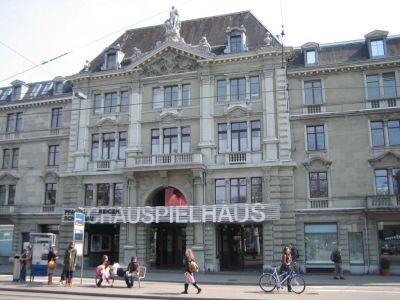
The Zürich Playhouse (Schauspielhaus) stands as a beacon of theatrical excellence in the German-speaking world. Founded in 1892 with the vision of being a "people's theater," it originally featured a performance space that mainly showcased vaudeville, along with a beer garden and bowling alley. The venue's journey through the arts took a significant turn in 1901 when it was rented by the Zurich Opera as an auxiliary performance space, marking the beginning of its deep-rooted connection with high-caliber theatrical productions.
However, it wasn't until the early 1930s that the Zürich Playhouse truly began to emerge as a powerhouse in the theatrical scene. The influx of renowned actors and directors from Germany and Austria in 1933, fleeing the repressive regimes in their home countries, infused the theater with unprecedented talent and creativity. This transformation allowed it to become the largest free stage in the German-speaking world, a status it achieved because of the strict regulations that stifled performance arts in Germany and Austria at the time.
Post-World War II, the theater solidified its reputation as a pivotal cultural institution within the German-speaking theatrical landscape, a status it has maintained and built upon to this day. The Zürich Playhouse has been lauded for its consistently outstanding performances, earning the title of Theater of the Year in both 2002 and 2003. Its programming spans classical to contemporary works, often including premieres, reflecting its commitment to both tradition and innovation in the arts.
Now with a seating capacity of 750, the theater continues to be a vibrant hub for cultural expression and artistic achievement. The Zürich Playhouse's enduring legacy and ongoing success exemplify its significant role in shaping and enriching the German-speaking world's theatrical heritage.
However, it wasn't until the early 1930s that the Zürich Playhouse truly began to emerge as a powerhouse in the theatrical scene. The influx of renowned actors and directors from Germany and Austria in 1933, fleeing the repressive regimes in their home countries, infused the theater with unprecedented talent and creativity. This transformation allowed it to become the largest free stage in the German-speaking world, a status it achieved because of the strict regulations that stifled performance arts in Germany and Austria at the time.
Post-World War II, the theater solidified its reputation as a pivotal cultural institution within the German-speaking theatrical landscape, a status it has maintained and built upon to this day. The Zürich Playhouse has been lauded for its consistently outstanding performances, earning the title of Theater of the Year in both 2002 and 2003. Its programming spans classical to contemporary works, often including premieres, reflecting its commitment to both tradition and innovation in the arts.
Now with a seating capacity of 750, the theater continues to be a vibrant hub for cultural expression and artistic achievement. The Zürich Playhouse's enduring legacy and ongoing success exemplify its significant role in shaping and enriching the German-speaking world's theatrical heritage.
8) Opernhaus (Zurich Opera House)
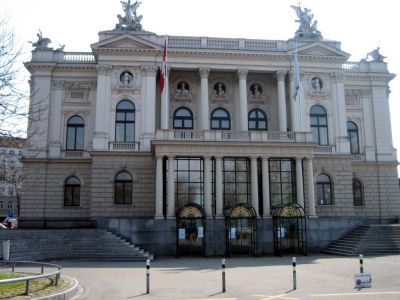
The Zürich Opera House (Opernhaus) is a hub for culture and art in Zürich. It has been home to the Zürich Opera since its establishment in 1891 and also hosts the Bernhard-Theater Zürich and the Zürich Ballet. Its excellence in opera was recognized with the "Opera Company of the Year" award at the 2014 International Opera Awards, highlighting its impact on the global opera scene.
The roots of the Zürich Opera House date back to the Aktientheater, Zürich's first permanent theater built in 1834. Richard Wagner found refuge and artistic inspiration here during his exile from Germany. After the Aktientheater was destroyed by fire in 1890, the Stadttheater Zürich was constructed in a remarkably short span of 16 months by esteemed Viennese architects Fellner & Helmer. It was Europe's first opera house with electric lighting and symbolized a revival in architecture and culture.
Until the Bernhard Theater was built in 1925 for plays, the Zürich Opera House was the main venue for drama, opera, and music performances. Its history includes a renaming of the Zürich Opera House in 1964 and a significant renovation from 1982 to 1984, which faced local opposition and led to street riots. Despite these challenges, the opera house was beautifully restored, featuring a Neoclassical façade and a Neorococo auditorium. The busts of Weber, Wagner, Mozart, Shiller, Shakespeare, and Goethe adorn the building. The auditorium space seats over 1,200 people.
Today, the Zürich Opera House offers a variety of events, including concerts by its Philharmonia orchestra, matinees, Lieder evenings, and children's shows. Despite past challenges, it remains a cultural gem in Zürich, captivating audiences with its dynamic performances and historical charm.
Why You Should Visit:
The building itself is beautiful and part of Zurich's landscape, while the setting by the lake is just delightful.
As the theatre is rather small, you are much closer to the stage, compared to other opera houses.
Most days have no dress code, and no one really cares about the attire – another huge plus compared to other opera houses.
The roots of the Zürich Opera House date back to the Aktientheater, Zürich's first permanent theater built in 1834. Richard Wagner found refuge and artistic inspiration here during his exile from Germany. After the Aktientheater was destroyed by fire in 1890, the Stadttheater Zürich was constructed in a remarkably short span of 16 months by esteemed Viennese architects Fellner & Helmer. It was Europe's first opera house with electric lighting and symbolized a revival in architecture and culture.
Until the Bernhard Theater was built in 1925 for plays, the Zürich Opera House was the main venue for drama, opera, and music performances. Its history includes a renaming of the Zürich Opera House in 1964 and a significant renovation from 1982 to 1984, which faced local opposition and led to street riots. Despite these challenges, the opera house was beautifully restored, featuring a Neoclassical façade and a Neorococo auditorium. The busts of Weber, Wagner, Mozart, Shiller, Shakespeare, and Goethe adorn the building. The auditorium space seats over 1,200 people.
Today, the Zürich Opera House offers a variety of events, including concerts by its Philharmonia orchestra, matinees, Lieder evenings, and children's shows. Despite past challenges, it remains a cultural gem in Zürich, captivating audiences with its dynamic performances and historical charm.
Why You Should Visit:
The building itself is beautiful and part of Zurich's landscape, while the setting by the lake is just delightful.
As the theatre is rather small, you are much closer to the stage, compared to other opera houses.
Most days have no dress code, and no one really cares about the attire – another huge plus compared to other opera houses.
9) Bürkliplatz (Burkli Square)
Burkli-Zurich’s unofficial front porch, main square, and tram central all rolled into one. If you're looking for a place where the city gently slips off its shoes and enjoys the lake breeze, this is it. With a steady hum of trams passing through, it's where urban bustle meets lakeside leisure, and somehow, they get along quite nicely.
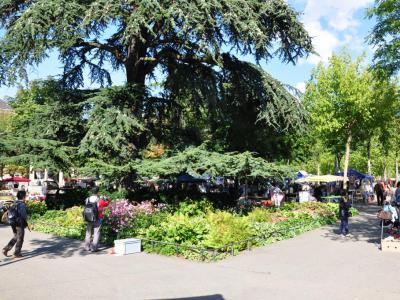
Just to the north, under the shade of well-behaved trees, is Stadthausanlage-a leafy square that hosts some of the city’s most delicious negotiations: veggies, cheese, flowers, and bread, all vying for your attention at the local market. In the middle, a classic music pavilion nods politely to passersby, often with a soundtrack to match.
From here, Station Street marches north like a well-dressed soldier, ready to lead you straight into Zurich’s high-end shopping world-credit cards beware...
But back to Burkli Square. It’s not just the transport hub or the snack stand heaven (though the bratwurst game is strong). It is also your launch pad for scenic lake cruises and water taxis-because, yes, Zurich knows how to do traffic with style.
To the east, the elegant Quay Bridge crosses the Limmat like a well-dressed Victorian gentleman. Nearby, the Seeuferanlage lakefront park stretches out invitingly, complete with an arboretum and aviary. Nature and relaxation? Yes, and yes.
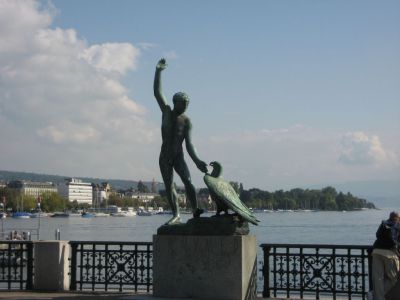
And don't miss the statue of Ganymede at the lake overlook-it’s a dramatic bronze moment of myth-meets-modernity, with the young man being whisked away by Zeus’s eagle, as you do on an average Zurich afternoon...
Just a short stroll east, you'll run into the Geiserbrunnen, a beefy 1911 sculpture by Jakob Brüllmann, where a man appears to be in intense negotiation-or maybe just wrestling-with a bull. Either way, it's got the energy of a protein bar ad.
Burkli Square is not just a place to pass through-it’s a place to pause, snack, stare at some art, and maybe catch a boat. So, linger a little. Zurich doesn’t mind...
Just to the north, under the shade of well-behaved trees, is Stadthausanlage-a leafy square that hosts some of the city’s most delicious negotiations: veggies, cheese, flowers, and bread, all vying for your attention at the local market. In the middle, a classic music pavilion nods politely to passersby, often with a soundtrack to match.
From here, Station Street marches north like a well-dressed soldier, ready to lead you straight into Zurich’s high-end shopping world-credit cards beware...
But back to Burkli Square. It’s not just the transport hub or the snack stand heaven (though the bratwurst game is strong). It is also your launch pad for scenic lake cruises and water taxis-because, yes, Zurich knows how to do traffic with style.
To the east, the elegant Quay Bridge crosses the Limmat like a well-dressed Victorian gentleman. Nearby, the Seeuferanlage lakefront park stretches out invitingly, complete with an arboretum and aviary. Nature and relaxation? Yes, and yes.
And don't miss the statue of Ganymede at the lake overlook-it’s a dramatic bronze moment of myth-meets-modernity, with the young man being whisked away by Zeus’s eagle, as you do on an average Zurich afternoon...
Just a short stroll east, you'll run into the Geiserbrunnen, a beefy 1911 sculpture by Jakob Brüllmann, where a man appears to be in intense negotiation-or maybe just wrestling-with a bull. Either way, it's got the energy of a protein bar ad.
Burkli Square is not just a place to pass through-it’s a place to pause, snack, stare at some art, and maybe catch a boat. So, linger a little. Zurich doesn’t mind...
10) Bürkliplatz Market
Nicknamed by the locals as “Bürklimäärt”, this cozy open-air market sits at the far end of Bahnhofstrasse, on Bürkliplatz, between the banking district and picturesque Lake Zurich. If you're keen on fresh herbs, seasonal and regional fruits and vegetables, this place is for you!
Here, under the canopy of horse chestnut trees you will find stalls laden with organic products, exotic foods from all over the globe, and many other savory delights. The market offers a large choice of fresh products, such as mushrooms and berries, different sorts of cheese, fish, fresh bread, bakery and confectionery, as well as numerous regional farm specialties.
A visit here can be easily combined with a leisurely stroll along the lake, the wonderful sight of which alone makes it well worth the while. In addition to the idyllic location, the market is also famous, not to a lesser degree, for its beautiful cut flowers and potted plants which are much popular with those eager to make a gift for their loved ones.
Here, under the canopy of horse chestnut trees you will find stalls laden with organic products, exotic foods from all over the globe, and many other savory delights. The market offers a large choice of fresh products, such as mushrooms and berries, different sorts of cheese, fish, fresh bread, bakery and confectionery, as well as numerous regional farm specialties.
A visit here can be easily combined with a leisurely stroll along the lake, the wonderful sight of which alone makes it well worth the while. In addition to the idyllic location, the market is also famous, not to a lesser degree, for its beautiful cut flowers and potted plants which are much popular with those eager to make a gift for their loved ones.
11) Paradeplatz (Parade Square)
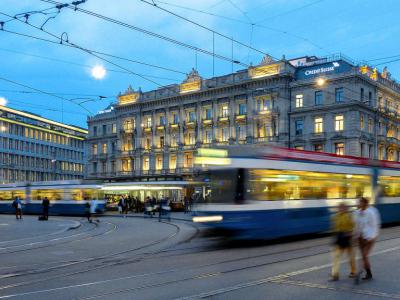
Parade Square - Zurich’s glittering crossroads of power, pastries, and jaw-dropping property prices. Nestled on Station Street and laced with tram tracks like a well-frosted cake, this square is the beating heart of Swiss finance. Here, the global giants Credit Suisse and UBS sit like heavyweight chess pieces, guarding a board where real estate is so pricey, it practically comes with its own bodyguard.
But don’t fall for this corporate shine - Parade Square wasn’t always a banker’s playground. Back in the 17th century, it was here that cows mooed and bleated at a lively livestock market just outside the city walls. All that changed in 1642, when Zurich decided to expand its waistline with extra fortifications. A couple of centuries later, in 1865, Station Street was drawn up, and Parade Square got its name - just in time to catch the next tram, which, by the way, used to be horse-drawn until they got an upgrade in 1896. Electricity turned out to be equally good for both light bulbs and public transport...
The square’s grand buildings mostly popped up during the mid-1800s. Take the Credit Suisse building, planted here in 1873 like a money tree. Or the regal Baur en Ville hotel, which first opened its polished doors in 1838. In true Swiss fashion, they demolished it entirely in the 1970s, only to rebuild it exactly the same - just with plumbing that actually works...
But the real crown jewel is Sprüngli Café. Open since 1859, and famous well before that thanks to Rudolf Sprüngli’s chocolate wizardry since 1836, this place is ground zero for anyone serious about truffles, tarts, and tingly taste buds. You haven’t really been to Zurich until you’ve dropped by Sprüngli - bonus points if you pronounce it correctly with your mouth full of Luxemburgerli.
So, go ahead, hop off the tram, stare at your bank balance, and soak in the Swiss elegance. Parade Square: here, fortunes are made, lost, and occasionally spent on chocolate...
But don’t fall for this corporate shine - Parade Square wasn’t always a banker’s playground. Back in the 17th century, it was here that cows mooed and bleated at a lively livestock market just outside the city walls. All that changed in 1642, when Zurich decided to expand its waistline with extra fortifications. A couple of centuries later, in 1865, Station Street was drawn up, and Parade Square got its name - just in time to catch the next tram, which, by the way, used to be horse-drawn until they got an upgrade in 1896. Electricity turned out to be equally good for both light bulbs and public transport...
The square’s grand buildings mostly popped up during the mid-1800s. Take the Credit Suisse building, planted here in 1873 like a money tree. Or the regal Baur en Ville hotel, which first opened its polished doors in 1838. In true Swiss fashion, they demolished it entirely in the 1970s, only to rebuild it exactly the same - just with plumbing that actually works...
But the real crown jewel is Sprüngli Café. Open since 1859, and famous well before that thanks to Rudolf Sprüngli’s chocolate wizardry since 1836, this place is ground zero for anyone serious about truffles, tarts, and tingly taste buds. You haven’t really been to Zurich until you’ve dropped by Sprüngli - bonus points if you pronounce it correctly with your mouth full of Luxemburgerli.
So, go ahead, hop off the tram, stare at your bank balance, and soak in the Swiss elegance. Parade Square: here, fortunes are made, lost, and occasionally spent on chocolate...
12) Augustinergasse (Augustinian Street)
Augustinian Street (Augustinergasse), located in the center of Zürich, represents the city's medieval past mixed with its modern energy. Originally named after the Augustinian Abbey, now the Augustinian Church (Augustinerkirche), this old street is a lively pedestrian area in the heart of Zürich's downtown. The church, once the hub of a convent that ended in 1525, is now used by the Christ Catholic community. Although it appears modest compared to the vibrant street, it holds historical significance.
In the past, Augustinian Street played a vital role in connecting various parts of the medieval city, like Münsterhof, Saint Peterhofstatt, and the Münzplatz, to the city gates and defenses. Its importance was further solidified when it became part of the southern extension of the Seeuferanlage promenades between 1881 and 1887. This made it not only an essential part of the city's layout but also a popular spot in Zürich's oldest neighborhood.
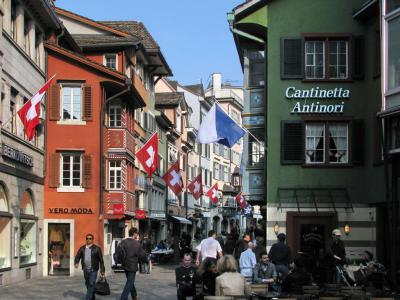
The street reflects Zürich's transition from a medieval craft center to a place of wealth and artistic expression. Starting from the 17th century, affluent factory owners moved in, leading to a competition to create the most impressive facades. This resulted in beautifully decorated wooden bay windows on the colorful houses that now line the street, making it one of the city's most charming areas. Nowadays, these buildings house shops, cafes, and restaurants catering to tourists, adding to the street's lively vibe.
The Augustinian Street illustrates Zürich's ability to retain its historical charm while embracing modern urban life. It offers visitors a glimpse into the city's past, showcasing the creativity of medieval artisans and the later inhabitants' wealth and architectural ambition. Therefore, it's not just a street but a cultural symbol, representing Zürich's spirit and evolution over time.
In the past, Augustinian Street played a vital role in connecting various parts of the medieval city, like Münsterhof, Saint Peterhofstatt, and the Münzplatz, to the city gates and defenses. Its importance was further solidified when it became part of the southern extension of the Seeuferanlage promenades between 1881 and 1887. This made it not only an essential part of the city's layout but also a popular spot in Zürich's oldest neighborhood.
The street reflects Zürich's transition from a medieval craft center to a place of wealth and artistic expression. Starting from the 17th century, affluent factory owners moved in, leading to a competition to create the most impressive facades. This resulted in beautifully decorated wooden bay windows on the colorful houses that now line the street, making it one of the city's most charming areas. Nowadays, these buildings house shops, cafes, and restaurants catering to tourists, adding to the street's lively vibe.
The Augustinian Street illustrates Zürich's ability to retain its historical charm while embracing modern urban life. It offers visitors a glimpse into the city's past, showcasing the creativity of medieval artisans and the later inhabitants' wealth and architectural ambition. Therefore, it's not just a street but a cultural symbol, representing Zürich's spirit and evolution over time.
13) Alter Botanischer Garten (Old Botanical Garden)
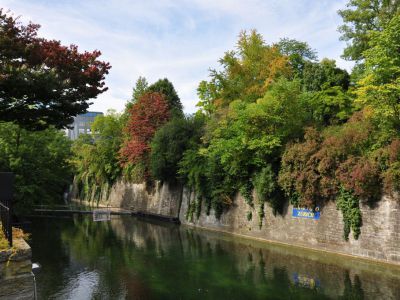
The Old Botanical Garden (Alter Botanischer Garten) in Zurich, holds significant historical and cultural importance as a botanical garden and arboretum. It is located within the remains of Zürich's Baroque fortifications, including the Schanzengraben moat and the Bauschänzli bastion, which were built starting in 1642.
The garden's origins can be traced back to the efforts of Conrad Gessner (1516–1565), a key figure whose personal herbarium laid the foundation for botanical studies in Zurich. In 1746, Johannes Gessner (1709–1790), a descendant of Conrad Gessner and a physician and naturalist, established Zurich's first botanical garden, with support from the Zurich Botanical Society (Naturforschende Gesellschaft Zürich).
After relocating to the Schimmelgut area in 1833 to make way for the newly established University of Zurich, the garden underwent significant developments, including the creation of the plant site at the Schanzengraben moat in 1837, designed by university gardener Leopold Karl Theodor Fröbel (1810–1907). The Palmhaus, a greenhouse made of glass and wood, was added in 1851, followed by an octagonal glass pavilion with an iron frame in 1877, primarily used for cultural events.
Due to limited space and deteriorating conditions, the garden administration decided to move to the spacious Bodmer-Abegg family park in the Weinegg quarter in 1971, opening the new botanical garden in 1976. The original site, now referred to as the Old Botanical Garden, serves as a recreational area, housing the Ethnological Museum (Völkerkundemuseum) of the University of Zurich, an arboretum, and the Gessner-Garten.
The arboretum, situated on the tranquil Schanzengraben moat, remains a notable attraction, offering a serene retreat in the heart of Zurich. The Gessner-Garten, established on May 27, 1997, atop the southern gun bastion of Zurich's fortifications, honors Conrad Gessner. It features 50 medicinal plants from the 16th century, along with quotes from period healers, providing insight into historical medicinal practices.
The garden's origins can be traced back to the efforts of Conrad Gessner (1516–1565), a key figure whose personal herbarium laid the foundation for botanical studies in Zurich. In 1746, Johannes Gessner (1709–1790), a descendant of Conrad Gessner and a physician and naturalist, established Zurich's first botanical garden, with support from the Zurich Botanical Society (Naturforschende Gesellschaft Zürich).
After relocating to the Schimmelgut area in 1833 to make way for the newly established University of Zurich, the garden underwent significant developments, including the creation of the plant site at the Schanzengraben moat in 1837, designed by university gardener Leopold Karl Theodor Fröbel (1810–1907). The Palmhaus, a greenhouse made of glass and wood, was added in 1851, followed by an octagonal glass pavilion with an iron frame in 1877, primarily used for cultural events.
Due to limited space and deteriorating conditions, the garden administration decided to move to the spacious Bodmer-Abegg family park in the Weinegg quarter in 1971, opening the new botanical garden in 1976. The original site, now referred to as the Old Botanical Garden, serves as a recreational area, housing the Ethnological Museum (Völkerkundemuseum) of the University of Zurich, an arboretum, and the Gessner-Garten.
The arboretum, situated on the tranquil Schanzengraben moat, remains a notable attraction, offering a serene retreat in the heart of Zurich. The Gessner-Garten, established on May 27, 1997, atop the southern gun bastion of Zurich's fortifications, honors Conrad Gessner. It features 50 medicinal plants from the 16th century, along with quotes from period healers, providing insight into historical medicinal practices.
14) Zurich Hauptbahnhof (Central Railway Station)
Known to locals and rail nerds alike as Zurich HB, this train station is Switzerland’s largest and possibly its busiest overachiever. Thanks to Zurich’s prime perch in the heart of Europe, HB has long been the continent’s commuter magnet, currently juggling over 2,000 trains a day like it’s just another Tuesday.
Nestled between the charming wrinkles of the Old Town and flanked by the Limmat and Sihl Rivers, this station even has a river running under it. Yes, the Sihl cruises through a tunnel beneath the platforms like it’s got a ticket too. And speaking of platforms, Zurich HB runs on two levels-one up top, one down below-with a fully functional shopping mall called ShopVille connecting the two.
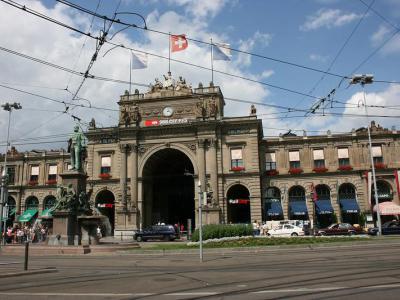
The station’s railway roots go back to 1847, when the very first Zurich terminal linked to Baden via the Swiss Northern Railway. But as train traffic multiplied like clockwork, the city had to go big. The grand 1871 upgrade produced a neo-Renaissance beauty with soaring arches, stylish lobbies, and even a statue out front of Alfred Escher, the man who made Swiss trains cool before it was cool.
Modern tweaks followed: electrified lines in the early 1900s, computer-controlled signals in the 60s-because even old souls need fresh software. Today, Zurich HB is more than a transit point; it’s a full-blown railway cathedral with shopping, history, and a river casually flowing underneath. All aboard!
Nestled between the charming wrinkles of the Old Town and flanked by the Limmat and Sihl Rivers, this station even has a river running under it. Yes, the Sihl cruises through a tunnel beneath the platforms like it’s got a ticket too. And speaking of platforms, Zurich HB runs on two levels-one up top, one down below-with a fully functional shopping mall called ShopVille connecting the two.
The station’s railway roots go back to 1847, when the very first Zurich terminal linked to Baden via the Swiss Northern Railway. But as train traffic multiplied like clockwork, the city had to go big. The grand 1871 upgrade produced a neo-Renaissance beauty with soaring arches, stylish lobbies, and even a statue out front of Alfred Escher, the man who made Swiss trains cool before it was cool.
Modern tweaks followed: electrified lines in the early 1900s, computer-controlled signals in the 60s-because even old souls need fresh software. Today, Zurich HB is more than a transit point; it’s a full-blown railway cathedral with shopping, history, and a river casually flowing underneath. All aboard!
