Custom Walk in Montreal, Canada by jbachynski_ce2ca created on 2025-05-10
Guide Location: Canada » Montreal
Guide Type: Custom Walk
# of Sights: 15
Tour Duration: 6 Hour(s)
Travel Distance: 12.9 Km or 8 Miles
Share Key: UT8KQ
Guide Type: Custom Walk
# of Sights: 15
Tour Duration: 6 Hour(s)
Travel Distance: 12.9 Km or 8 Miles
Share Key: UT8KQ
How It Works
Please retrieve this walk in the GPSmyCity app. Once done, the app will guide you from one tour stop to the next as if you had a personal tour guide. If you created the walk on this website or come to the page via a link, please follow the instructions below to retrieve the walk in the app.
Retrieve This Walk in App
Step 1. Download the app "GPSmyCity: Walks in 1K+ Cities" on Apple App Store or Google Play Store.



Step 2. In the GPSmyCity app, download(or launch) the guide "Montreal Map and Walking Tours".
Step 3. Tap the menu button located at upper right corner of the "Walks" screen and select "Retrieve custom walk". Enter the share key: UT8KQ
1) Chapel of Our Lady of Good Help (Chapelle Notre-Dame-de-Bon-Secours)
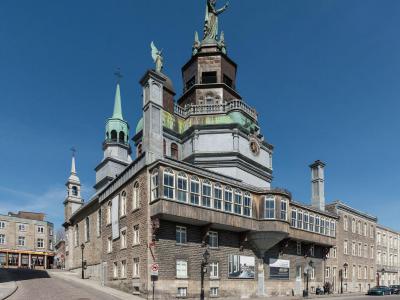
The Chapel of Our Lady of Good Help (Notre-Dame-de-Bon-Secours) was built in 1771 as the first pilgrimage site in the Old Port of Montreal for the arrived sailors who wished to make offerings to the Virgin in gratitude for her "good help" in a safe voyage across the Atlantic. It is also the oldest surviving chapel in the Old City.
The church sits directly on top of an older temple – of 1675 – that was destroyed by fire. The foundations of the first church, uncovered recently during excavations in the crypt underneath the chapel, provide insight into the times long gone. Among other things, this archaeological site contains artifacts from the First Nations and French colonial periods, including fragments of the colony's early fortifications. Those interested in history can take a guided audio tour of the underground crypt and learn more about the early days of Montreal and the chapel site.
Emphasizing its connection with the maritime theme, the chapel is also often referred to as the Sailors' Church. In line with its nautical flair, the interior décor – simple yet elegant – is definitely worth a peek, if only to observe the gorgeous ship replicas hanging from the ceiling.
Visitors to the church can also climb the wooden stairs and explore the building's prominent spire. From up there opens a spectacular view of the harbour, the Saint Lawrence River, the Old Port, the remnants of Expo 67, and Our Lady of the Harbour statue – immortalized in the Leonard Cohen song 'Suzanne' ("And the sun pours down like honey / On our lady of the harbour"). And, of course, you can see up close the angels on the chapel roof, too.
The church also houses the Marguerite Bourgeoys Museum, dedicated to the life of Saint Marguerite Bourgeoys, founder of the Notre-Dame congregation. In 2005, her mortal remains were brought back to the temple and interred in the sanctuary.
The church sits directly on top of an older temple – of 1675 – that was destroyed by fire. The foundations of the first church, uncovered recently during excavations in the crypt underneath the chapel, provide insight into the times long gone. Among other things, this archaeological site contains artifacts from the First Nations and French colonial periods, including fragments of the colony's early fortifications. Those interested in history can take a guided audio tour of the underground crypt and learn more about the early days of Montreal and the chapel site.
Emphasizing its connection with the maritime theme, the chapel is also often referred to as the Sailors' Church. In line with its nautical flair, the interior décor – simple yet elegant – is definitely worth a peek, if only to observe the gorgeous ship replicas hanging from the ceiling.
Visitors to the church can also climb the wooden stairs and explore the building's prominent spire. From up there opens a spectacular view of the harbour, the Saint Lawrence River, the Old Port, the remnants of Expo 67, and Our Lady of the Harbour statue – immortalized in the Leonard Cohen song 'Suzanne' ("And the sun pours down like honey / On our lady of the harbour"). And, of course, you can see up close the angels on the chapel roof, too.
The church also houses the Marguerite Bourgeoys Museum, dedicated to the life of Saint Marguerite Bourgeoys, founder of the Notre-Dame congregation. In 2005, her mortal remains were brought back to the temple and interred in the sanctuary.
2) Old Port (Vieux-Port) (must see)
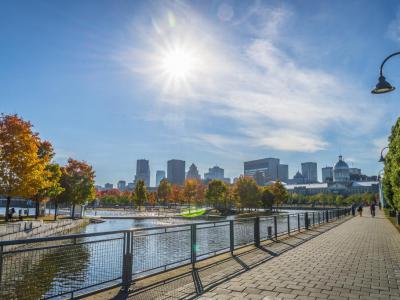
Located on the north bank of the Saint Lawrence River, the historic Old Port of Montreal (Vieux-Port de Montréal) stretches for over two kilometers (1.2 miles) south of Old Montreal, in a natural harbor that was once frequented by Amerindian canoes and then by barges and ships of French fur traders and others.
In service from as early as 1611, the port bore witness to the economic and cultural development of Montreal and remained in use until 1976, when the present Port of Montreal was launched further east. In the early 1990s, the territory was redeveloped and in 2005 changed its name to The Quays of the Old Port of Montreal. Today, it serves as a recreational and historical area, attracting annually over six million visitors.
A place for all seasons, there's always something happening here! Summer is great for all sorts of riverfront activities such as rollerblading, cycling, quadricycling, and pleasure boating. Taking a boat cruise on the Saint Lawrence river, or renting a pedal boat for a trip around Bonsecours Basin is also available. A thin park, running the entire length of the Old Port Promenade, offers tourists and locals an ideal spot to relax and catch a cool breeze off the water.
Winter is ideal for skating on the outdoor rink or just playing in the snow. At all times of the year, the Saint Lawrence river is awe-inspiring and powerful.
The on-site attractions include a "labyrinth" in Shed 16 (which is a maze of alleys and obstacles built inside an old waterfront warehouse), the Montreal Science Centre (complete with an IMAX Theatre) on King Edward Pier, and the Montreal Clock Tower.
One of the Port's gems is the Montreal-based Cirque du Soleil which approximately every two years, in spring, launches a new show from the Jacques Cartier Quay by setting up its signature blue-and-yellow-striped tents. In June 2012, an urban beach, called the Clock Tower Beach (Plage de l'Horloge), was opened adjacent to the Clock Tower.
Cultural events in the area include the Montreal High Lights Festival (Festival Montréal en lumière), Igloofest, and the Matsuri Japon festival.
If you have a couple of hours to kill in Montreal, wandering around the Old Port is worth considering.
In service from as early as 1611, the port bore witness to the economic and cultural development of Montreal and remained in use until 1976, when the present Port of Montreal was launched further east. In the early 1990s, the territory was redeveloped and in 2005 changed its name to The Quays of the Old Port of Montreal. Today, it serves as a recreational and historical area, attracting annually over six million visitors.
A place for all seasons, there's always something happening here! Summer is great for all sorts of riverfront activities such as rollerblading, cycling, quadricycling, and pleasure boating. Taking a boat cruise on the Saint Lawrence river, or renting a pedal boat for a trip around Bonsecours Basin is also available. A thin park, running the entire length of the Old Port Promenade, offers tourists and locals an ideal spot to relax and catch a cool breeze off the water.
Winter is ideal for skating on the outdoor rink or just playing in the snow. At all times of the year, the Saint Lawrence river is awe-inspiring and powerful.
The on-site attractions include a "labyrinth" in Shed 16 (which is a maze of alleys and obstacles built inside an old waterfront warehouse), the Montreal Science Centre (complete with an IMAX Theatre) on King Edward Pier, and the Montreal Clock Tower.
One of the Port's gems is the Montreal-based Cirque du Soleil which approximately every two years, in spring, launches a new show from the Jacques Cartier Quay by setting up its signature blue-and-yellow-striped tents. In June 2012, an urban beach, called the Clock Tower Beach (Plage de l'Horloge), was opened adjacent to the Clock Tower.
Cultural events in the area include the Montreal High Lights Festival (Festival Montréal en lumière), Igloofest, and the Matsuri Japon festival.
If you have a couple of hours to kill in Montreal, wandering around the Old Port is worth considering.
3) Saint-Paul Street (Rue St-Paul) (must see)
Saint-Paul (Rue Saint-Paul) is the oldest street in Montreal, laid out in 1673 according to a plan by François Dollier de Casson. It follows the path that once bordered the northern edge of the former Fort Ville-Marie and is named after Paul de Chomedey de Maisonneuve, founder of the fort and the first governor of Montreal, who built a home for himself in this area in 1650.
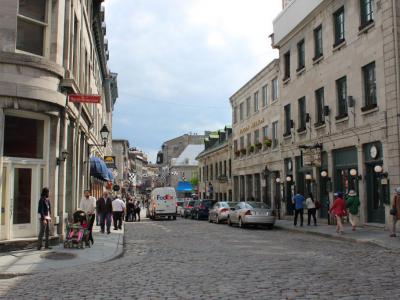
Unlike other – straight – streets drawn by Dollier de Casson, the cavernous cobblestone Saint-Paul is a bit winding. Centered on Royal Square (Place Royale), a major marketplace until 1803, it was destined to become, for many years, the city's main thoroughfare. In the 19th century, Old Montreal was the cradle of the local press, making Saint Paul home to a multitude of French- and English-language newspapers and journals. Busy day and night, the street was the first in the city to benefit from oil lighting.
There are several historic buildings lining Saint-Paul such as the Intendance Palace of 1698 and the Vaudreuil Castle (Château de Vaudreuil) of 1724. The street is also home to such prominent landmarks as the Bonsecours Market and the Chapel of Our Lady of Good Help (Notre-Dame-de-Bon-Secours). It also boasts perhaps the highest in the city concentration of tourist-themed souvenir shops, art galleries, boutique hotels, lively rooftop terraces, cafés, and eateries with international cuisine.
Tip:
In case you are budget-conscious, remember that the prices in this area are a bit higher than usual.
Unlike other – straight – streets drawn by Dollier de Casson, the cavernous cobblestone Saint-Paul is a bit winding. Centered on Royal Square (Place Royale), a major marketplace until 1803, it was destined to become, for many years, the city's main thoroughfare. In the 19th century, Old Montreal was the cradle of the local press, making Saint Paul home to a multitude of French- and English-language newspapers and journals. Busy day and night, the street was the first in the city to benefit from oil lighting.
There are several historic buildings lining Saint-Paul such as the Intendance Palace of 1698 and the Vaudreuil Castle (Château de Vaudreuil) of 1724. The street is also home to such prominent landmarks as the Bonsecours Market and the Chapel of Our Lady of Good Help (Notre-Dame-de-Bon-Secours). It also boasts perhaps the highest in the city concentration of tourist-themed souvenir shops, art galleries, boutique hotels, lively rooftop terraces, cafés, and eateries with international cuisine.
Tip:
In case you are budget-conscious, remember that the prices in this area are a bit higher than usual.
4) Pointe-a-Calliere Museum (must see)
Old Montreal is, indeed, old. Walking through it, you will pass along narrow streets lined with buildings that, in some cases, predate Canada as an independent nation. But stepping inside the Pointe-a-Calliere museum will make you see things that are even older – right from the Natives era.
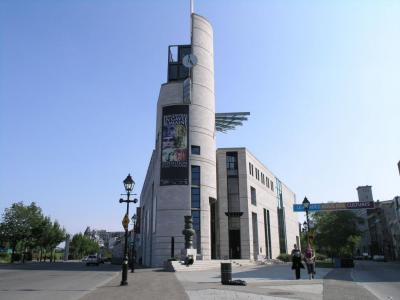
Dedicated to the history and archaeology of Montreal, this museum was founded in 1992, and named after the site of the original settlement of Fort Ville-Marie (precursor of Montreal) – Pointe-a-Calliere.
The museum complex consists of several locations, connected by underground passages, among which are the Mariners' House, the Youville Pumping Station, and the Éperon Building housing the main exhibition spaces.
The museum's exhibits cover a wide range of topics, such as the First Nations heritage, the French colonial period, the British colonial period, and the city's industrialization and modernization. There are also exhibits dedicated to specific topics, such as the history of the Montreal Canadiens hockey team, the archaeology of the city's sewers, and the role of Montreal in the Underground Railroad.
One of the highlights of the complex is the Archaeological Crypt, located beneath the Éperon Building. The crypt contains the ruins of some of Montreal's earliest buildings, including its first Catholic cemetery and the old city hall. Another notable exhibit is the Multimedia Show, which is held in the Mariners' House and uses a combination of sound, light, and video to tell the story of Montreal from its earliest days to the present.
The museum also houses a variety of permanent and temporary exhibitions that showcase different aspects of Montreal's history, such as the city's role in the fur trade, its importance as a port city, and its cultural diversity. One of the most popular exhibits is called "Building Montreal", exploring the city's architectural heritage through the centuries.
In addition to the exhibits, the Pointe-a-Calliere Museum has a restaurant and a gift shop, which sells souvenirs, books, and other items related to Montreal's history and culture.
Tip:
If you have kids, it's worth checking the museum website to see what's going on for the little ones.
Dedicated to the history and archaeology of Montreal, this museum was founded in 1992, and named after the site of the original settlement of Fort Ville-Marie (precursor of Montreal) – Pointe-a-Calliere.
The museum complex consists of several locations, connected by underground passages, among which are the Mariners' House, the Youville Pumping Station, and the Éperon Building housing the main exhibition spaces.
The museum's exhibits cover a wide range of topics, such as the First Nations heritage, the French colonial period, the British colonial period, and the city's industrialization and modernization. There are also exhibits dedicated to specific topics, such as the history of the Montreal Canadiens hockey team, the archaeology of the city's sewers, and the role of Montreal in the Underground Railroad.
One of the highlights of the complex is the Archaeological Crypt, located beneath the Éperon Building. The crypt contains the ruins of some of Montreal's earliest buildings, including its first Catholic cemetery and the old city hall. Another notable exhibit is the Multimedia Show, which is held in the Mariners' House and uses a combination of sound, light, and video to tell the story of Montreal from its earliest days to the present.
The museum also houses a variety of permanent and temporary exhibitions that showcase different aspects of Montreal's history, such as the city's role in the fur trade, its importance as a port city, and its cultural diversity. One of the most popular exhibits is called "Building Montreal", exploring the city's architectural heritage through the centuries.
In addition to the exhibits, the Pointe-a-Calliere Museum has a restaurant and a gift shop, which sells souvenirs, books, and other items related to Montreal's history and culture.
Tip:
If you have kids, it's worth checking the museum website to see what's going on for the little ones.
5) Grand Trunk Railway Building
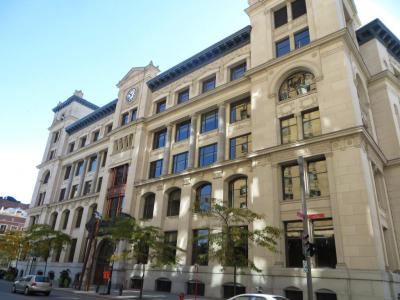
Erected in 1902 by the Grand Trunk Railway (GTR) company which managed a system in Quebec and Ontario prior to nationalization as the Canadian National Railway (CNR), this very well-preserved building on McGill Street is one of the most imposing in Old Montreal. Originally constructed by Titanic passenger Charles Hays, president of the GTR, as the company's corporate headquarters, it currently shelters offices of the government of Quebec and allows visitors to see a beautiful part of the interior which dates from its heyday in the early 20th century.
Charles Hays, whose office was in the building, boarded the Titanic with his family, his secretary and a maid. They were returning to Canada for the official opening in Ottawa of a brand new hotel Hays had built – the Château Laurier. The owner of the Titanic had personally invited him to take the celebrated new ship home, but the railwayman was not entirely impressed by ocean liners; in fact, he was reported to have made a prophetic remark on the evening of the disaster. Deploring the way the steamship lines were competing to win passengers with ever-faster vessels, he is said to have commented, "The time will come soon when this trend will be checked by some appalling disaster." Two hours later, Hays would be dead, before he could see the Grand Trunk Pacific Railway completed.
In 1919 the Grand Trunk company faced serious financial difficulties, and one year later the Government of Canada took possession of its assets and placed them under the control of the Canadian National Railway Company, a crown corporation. The inscription "Grand Trunk" and accompanying GT monogram clearly recall the origins of the building, however; also, the clock added to the top of the center section shows that the building was related to transport. Finally, on the upper part of the right tower one may recognize the two winged lions that symbolize the Grand Trunk's power.
Charles Hays, whose office was in the building, boarded the Titanic with his family, his secretary and a maid. They were returning to Canada for the official opening in Ottawa of a brand new hotel Hays had built – the Château Laurier. The owner of the Titanic had personally invited him to take the celebrated new ship home, but the railwayman was not entirely impressed by ocean liners; in fact, he was reported to have made a prophetic remark on the evening of the disaster. Deploring the way the steamship lines were competing to win passengers with ever-faster vessels, he is said to have commented, "The time will come soon when this trend will be checked by some appalling disaster." Two hours later, Hays would be dead, before he could see the Grand Trunk Pacific Railway completed.
In 1919 the Grand Trunk company faced serious financial difficulties, and one year later the Government of Canada took possession of its assets and placed them under the control of the Canadian National Railway Company, a crown corporation. The inscription "Grand Trunk" and accompanying GT monogram clearly recall the origins of the building, however; also, the clock added to the top of the center section shows that the building was related to transport. Finally, on the upper part of the right tower one may recognize the two winged lions that symbolize the Grand Trunk's power.
6) Mount Royal Park (must see)
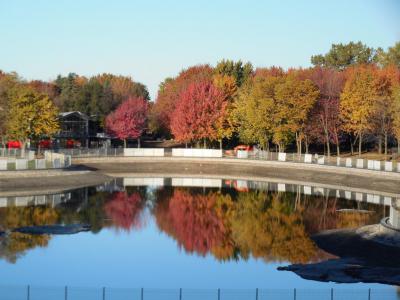
Mount Royal Park was opened in 1876. Fredrick Law Olmsted, a famous landscape architect designed this park. It is now one of the largest green spaces in Montreal that attracts more than 5 million visitors every year. If you are a passionate outdoor enthusiast, you will definitely enjoy the wide variety of plants and birds in this park. It also offers plenty of outdoor activities for all ages in all seasons.
Mount Royal Park offers some of the most mesmerizing skyline views of the city. Summit Park is a must-see spot in this park. You can see some rare wild plants here. The Georges Etienne Cartier monument is another important attraction that draws crowds. In recent times, the monument is the site for the popular TamTam’s festivities. The Beaver Lake in Mount Royal Park is an ideal picnic spot for locals and tourists.
Mount Royal Park also houses the Smith House, which is a major spot for those who want to obtain historical information about the park and the city. Mount Royal Cemetery is a pleasant place if you want to enjoy a relaxed walking or biking. It is a perfect place for picnicking too. The cemetery is more attractive in May when flowering trees bloom.
Why You Should Visit:
Great panoramic view of Montreal and the large area allows winter activities like cross-country skiing while summer and fall make a great place to hike, jog or walk.
Tip:
It takes about 20 to 30 minutes to get to the top of Mount Royal once you have reached the park. There is a gravel trail (mainly for bikes) and also a wooden staircase (for walkers) to the top. There is at least one lower vantage point that might make you think you're done, but keep going till you get to 'The Chalet'.
Mount Royal Park offers some of the most mesmerizing skyline views of the city. Summit Park is a must-see spot in this park. You can see some rare wild plants here. The Georges Etienne Cartier monument is another important attraction that draws crowds. In recent times, the monument is the site for the popular TamTam’s festivities. The Beaver Lake in Mount Royal Park is an ideal picnic spot for locals and tourists.
Mount Royal Park also houses the Smith House, which is a major spot for those who want to obtain historical information about the park and the city. Mount Royal Cemetery is a pleasant place if you want to enjoy a relaxed walking or biking. It is a perfect place for picnicking too. The cemetery is more attractive in May when flowering trees bloom.
Why You Should Visit:
Great panoramic view of Montreal and the large area allows winter activities like cross-country skiing while summer and fall make a great place to hike, jog or walk.
Tip:
It takes about 20 to 30 minutes to get to the top of Mount Royal once you have reached the park. There is a gravel trail (mainly for bikes) and also a wooden staircase (for walkers) to the top. There is at least one lower vantage point that might make you think you're done, but keep going till you get to 'The Chalet'.
7) McGill University
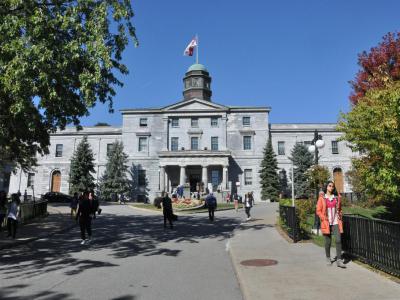
McGill University, situated in Montreal, is a renowned public research institution. It was established in 1821 through a royal charter granted by King George IV. The university bears the name of James McGill, a Scottish merchant whose generous bequest in 1813 laid the foundation for the precursor of the university known as McGill College. In 1885, the institution officially became McGill University.
McGill University stands as one of two non-American universities affiliated with the Association of American Universities, with the University of Toronto being the other. Additionally, it holds the distinction of being the sole Canadian member of the Global University Leaders Forum (GULF) within the World Economic Forum.
McGill University offers a wide range of degrees in over 300 fields of study. The majority of students are enrolled in the university's five largest faculties: Arts, Science, Medicine, Engineering, and Management. It has high admission requirements and is known for its diverse international student population. McGill consistently ranks among the top universities globally and in Canada, holding the top spot in the Maclean's Canadian University Rankings for medical-doctoral universities for 15 years.
McGill University's alumni community is impressive, including 12 Nobel laureates, 145 Rhodes Scholars (the most among Canadian universities), 10 billionaires, current and former Canadian prime ministers, the current Governor General of Canada, eight foreign leaders, 28 foreign ambassadors, and over 100 national legislators. Its graduates also consist of nine Academy Award winners, 11 Grammy Award winners, 16 Emmy Award winners, four Pulitzer Prize winners, and 121 Olympians with over 35 Olympic medals. Additionally, McGill is proud to have alumni who invented basketball, modern ice hockey, and gridiron football, as well as the founders of major universities and colleges.
McGill has a strong research history, with notable contributions like Ernest Rutherford's atomic nucleus discovery and Nobel Prize-winning work on radioactivity. The university is also associated with important inventions such as the first artificial cell and web search engine. With a large endowment per student, McGill has substantial financial resources, including a record-breaking $200 million donation in 2019 to establish the McCall MacBain Scholarships program.
McGill University stands as one of two non-American universities affiliated with the Association of American Universities, with the University of Toronto being the other. Additionally, it holds the distinction of being the sole Canadian member of the Global University Leaders Forum (GULF) within the World Economic Forum.
McGill University offers a wide range of degrees in over 300 fields of study. The majority of students are enrolled in the university's five largest faculties: Arts, Science, Medicine, Engineering, and Management. It has high admission requirements and is known for its diverse international student population. McGill consistently ranks among the top universities globally and in Canada, holding the top spot in the Maclean's Canadian University Rankings for medical-doctoral universities for 15 years.
McGill University's alumni community is impressive, including 12 Nobel laureates, 145 Rhodes Scholars (the most among Canadian universities), 10 billionaires, current and former Canadian prime ministers, the current Governor General of Canada, eight foreign leaders, 28 foreign ambassadors, and over 100 national legislators. Its graduates also consist of nine Academy Award winners, 11 Grammy Award winners, 16 Emmy Award winners, four Pulitzer Prize winners, and 121 Olympians with over 35 Olympic medals. Additionally, McGill is proud to have alumni who invented basketball, modern ice hockey, and gridiron football, as well as the founders of major universities and colleges.
McGill has a strong research history, with notable contributions like Ernest Rutherford's atomic nucleus discovery and Nobel Prize-winning work on radioactivity. The university is also associated with important inventions such as the first artificial cell and web search engine. With a large endowment per student, McGill has substantial financial resources, including a record-breaking $200 million donation in 2019 to establish the McCall MacBain Scholarships program.
8) Chinatown
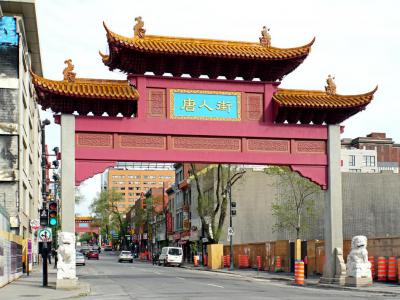
Dating back to the 1860s, Montreal's Chinatown with its actual perimeter defined by guardian lions is far smaller than many of those found in other parts of N America. If you only plan to stroll in order to enjoy the hustle and bustle, the architecture and the waft of the exotic (including traditional festivals and holidays), it is easily covered within about an hour. Otherwise, it's a place where to believe what you see, you must eat it.
If limited in time or budget, check the PÂTISSERIE HARMONIE for some savory buns or Vietnamese 'bánh mì' sandwich. Alternatively, for ultimate satisfaction in this realm one must try local noodles, dumplings, dim sum, and/or the Peking duck. The Vietnamese pho, Japanese ramen/sushi, and Korean bibimbap/kimchi are also all there for you to discover.
Here is a list of current favorites: NOUILLES DE LAN ZHOU for hand-pulled noodles; KIM FUNG for dim sum; MAI XIANG YUAN or BIEN MAISON for steamed dumplings; PHO BAC for Vietnamese; CHEZ BONG for Korean; ORANGE ROUGE for high-end fusion; SUMO RAMEN for ramen; LE MAL NÉCESSAIRE for cocktail bar; BEIJING or MON NAN for Peking duck; and LA CAPITAL TACOS for flavorful Mexican/Latin cuisine served in Chinese dinnerware. On another note, the Dragon's Beard candy from BONBONS À LA BARBE DE DRAGON and the crispy duck/pork/chicken from LAM KEE are good take-outs.
If limited in time or budget, check the PÂTISSERIE HARMONIE for some savory buns or Vietnamese 'bánh mì' sandwich. Alternatively, for ultimate satisfaction in this realm one must try local noodles, dumplings, dim sum, and/or the Peking duck. The Vietnamese pho, Japanese ramen/sushi, and Korean bibimbap/kimchi are also all there for you to discover.
Here is a list of current favorites: NOUILLES DE LAN ZHOU for hand-pulled noodles; KIM FUNG for dim sum; MAI XIANG YUAN or BIEN MAISON for steamed dumplings; PHO BAC for Vietnamese; CHEZ BONG for Korean; ORANGE ROUGE for high-end fusion; SUMO RAMEN for ramen; LE MAL NÉCESSAIRE for cocktail bar; BEIJING or MON NAN for Peking duck; and LA CAPITAL TACOS for flavorful Mexican/Latin cuisine served in Chinese dinnerware. On another note, the Dragon's Beard candy from BONBONS À LA BARBE DE DRAGON and the crispy duck/pork/chicken from LAM KEE are good take-outs.
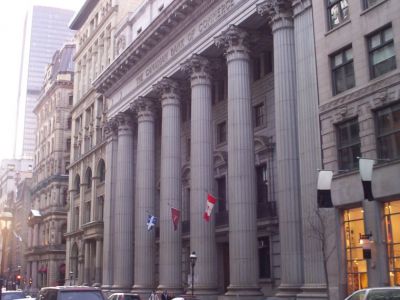
9) Canadian Imperial Bank of Commerce Building
The five-storey building was designed by Darling and Pearson in the Edwardian Baroque style and is fronted by a monumental hexastyle Corinthian portico carved from grey Stanstead granite from Stanstead in Quebec's Eastern Townships. The building was constructed as the main Montreal branch of the Canadian Bank of Commerce (which merged with the Imperial Bank of Canada in 1961 to form the Canadian Imperial Bank of Commerce). From 1909 to 1939, it also housed the Montreal offices of the White Star Line, which sold tickets to the maiden voyage of Titanic in 1912.
In 2012, the owners of the Montreal landmark, The Rialto Theatre, purchased the former bank and crowned it The Saint James Theatre. While staying true to the history of the building and highlighting its breathtaking architecture, the Saint James Theatre is one of Montreal newest high-end venues for private events.
In 2012, the owners of the Montreal landmark, The Rialto Theatre, purchased the former bank and crowned it The Saint James Theatre. While staying true to the history of the building and highlighting its breathtaking architecture, the Saint James Theatre is one of Montreal newest high-end venues for private events.
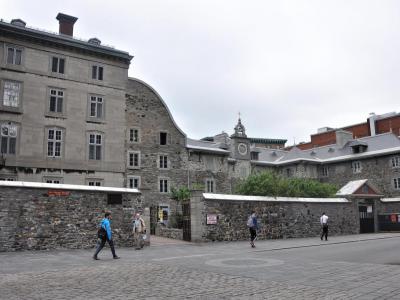
10) Old Saint-Sulpice Seminary
Montréal's second-oldest structure, the Sulpician Seminary located next to Notre-Dame Basilica was declared a National Historic Site of Canada in 1980, taking into consideration the quality of the architecture, which is a rare and remarkable example of 17th-century classical design built during the French Regime, but also the remarkable integrity of its convent garden, which once served as a means of subsistence, besides its use for meditation and leisure.
Since the 1680s, the seminary has served as the residence and administrative centre of the Messieurs of Saint-Sulpice who were the seigneurs of the Island of Montréal until the end of the seigneurial regime. The main building, which is the oldest part, is also the one that has been the least changed over the centuries. Its façade, of rough-cut limestone masonry, has a remarkable neoclassical-style entrance gate, built in 1740, through which you can peek at the clock – one of the oldest of its kind in North America. A real window on Montréal's past, and the oldest Seminary where priests still live today!
Since the 1680s, the seminary has served as the residence and administrative centre of the Messieurs of Saint-Sulpice who were the seigneurs of the Island of Montréal until the end of the seigneurial regime. The main building, which is the oldest part, is also the one that has been the least changed over the centuries. Its façade, of rough-cut limestone masonry, has a remarkable neoclassical-style entrance gate, built in 1740, through which you can peek at the clock – one of the oldest of its kind in North America. A real window on Montréal's past, and the oldest Seminary where priests still live today!
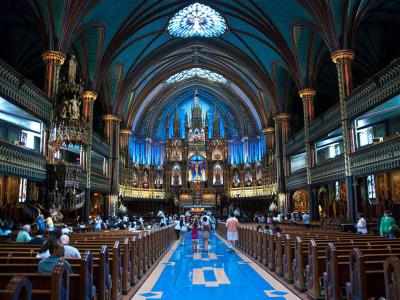
11) Notre-Dame Basilica (must see)
The Notre Dame Basilica of Montreal (Basilique Notre-Dame de Montréal) is a stunning piece of Gothic Revival architecture. Designed by the Irish-American architect James O'Donnell, it was completed, for the most part, in 1829.
The sanctuary was constructed a year later, while the first and second towers were added in 1841 and 1843, respectively. Both towers have bells: the West Tower (La Persévérance), has a bourdon bell nicknamed Jean-Baptiste. It was cast in John Dod Ward’s Eagle Foundry in 1848 and weighs 10,900 kg. Jean-Baptiste tolls only on special occasions, such as funerals, great religious festivals, and Christmas Eve. The East Tower (La Temperance), houses a ten-bell carillon from the same foundry, made in 1842.
The facade of the church was completed in 1865 and includes, among other features, three statues by the French sculptor Henri Bouriché, namely: the Virgin Mary (representing Montreal), Saint John the Baptist (representing Quebec), and Saint Joseph (representing Canada).
The interior – colorful and lavish – took much longer to complete and is quite impressive with its richly decorated columns, intricate wood carvings, statues, and elaborate stained glass windows. Quite unusual for a church, the stained glass windows here depict scenes from the history of Montreal rather than biblical scenes. Another spectacular highlight of the basilica is the Casavant Frères pipe organ, created in 1891, which is one of the largest organs in North America, comprising four keyboards and 7,000 individual pipes.
The Notre-Dame church was raised to the status of a minor basilica, by Pope John Paul II, in 1982 and was designated a National Historic Site of Canada in 1989.
Today, the Notre Dame of Montreal is a popular landmark, attracting yearly more than 11 million tourists from around the globe, making it one of the most visited sites in North America. Even the $10 admission fee doesn't turn visitors away.
Over the years, the basilica has hosted a number of important events, such as Céline Dion's wedding in 1994 and the funeral of the former Canadian Prime Minister, Pierre Trudeau, in 2000.
If you're interested in classical and religious music, the basilica offers musical programming of choral and organ performances, including Handel's Messiah every Christmas.
Tip:
The provided on-site brochure is very informative and can be used as a self-guide. Additionally, there's a free 20-minute English/French tour available at entry.
The 'AURA' light show (starting usually at 7 and 9 pm) is exceptional but often sold out, so plan your visit in advance: you can book a ticket online or come early to get a place. Try sitting somewhere in the middle to get the best music & light experience.
The sanctuary was constructed a year later, while the first and second towers were added in 1841 and 1843, respectively. Both towers have bells: the West Tower (La Persévérance), has a bourdon bell nicknamed Jean-Baptiste. It was cast in John Dod Ward’s Eagle Foundry in 1848 and weighs 10,900 kg. Jean-Baptiste tolls only on special occasions, such as funerals, great religious festivals, and Christmas Eve. The East Tower (La Temperance), houses a ten-bell carillon from the same foundry, made in 1842.
The facade of the church was completed in 1865 and includes, among other features, three statues by the French sculptor Henri Bouriché, namely: the Virgin Mary (representing Montreal), Saint John the Baptist (representing Quebec), and Saint Joseph (representing Canada).
The interior – colorful and lavish – took much longer to complete and is quite impressive with its richly decorated columns, intricate wood carvings, statues, and elaborate stained glass windows. Quite unusual for a church, the stained glass windows here depict scenes from the history of Montreal rather than biblical scenes. Another spectacular highlight of the basilica is the Casavant Frères pipe organ, created in 1891, which is one of the largest organs in North America, comprising four keyboards and 7,000 individual pipes.
The Notre-Dame church was raised to the status of a minor basilica, by Pope John Paul II, in 1982 and was designated a National Historic Site of Canada in 1989.
Today, the Notre Dame of Montreal is a popular landmark, attracting yearly more than 11 million tourists from around the globe, making it one of the most visited sites in North America. Even the $10 admission fee doesn't turn visitors away.
Over the years, the basilica has hosted a number of important events, such as Céline Dion's wedding in 1994 and the funeral of the former Canadian Prime Minister, Pierre Trudeau, in 2000.
If you're interested in classical and religious music, the basilica offers musical programming of choral and organ performances, including Handel's Messiah every Christmas.
Tip:
The provided on-site brochure is very informative and can be used as a self-guide. Additionally, there's a free 20-minute English/French tour available at entry.
The 'AURA' light show (starting usually at 7 and 9 pm) is exceptional but often sold out, so plan your visit in advance: you can book a ticket online or come early to get a place. Try sitting somewhere in the middle to get the best music & light experience.
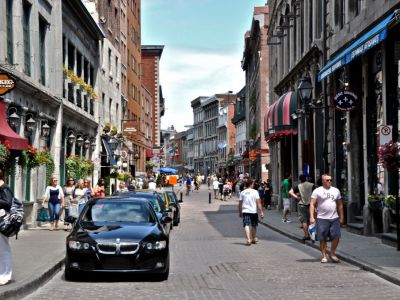
12) Old Montreal (must see)
Transporting you back to the era of New France, Old Montreal stands as one of the most ancient districts frequented by tourists. Positioned ideally within Ville-Marie's borough, this neighborhood is bordered by Ruelle des Fortifications to the north, McGill Street to the west, the majestic Saint Lawrence River to the south, and Berri Street to the east.
Ville-Marie borough remains vibrant and dynamic, fueled by its perpetually lively neighborhoods, including the bustling downtown core, McGill Ghetto, Latin Quarter, Chinatown, Gay Village, and Old Montreal. Visitors revel in exploring this area using public transportation, indulging in shopping, dining at exquisite restaurants, and exploring renowned museums within Ville-Marie.
Should you find yourself in Old Montreal between July and October, an enthralling experience awaits you-the renowned Montreal Ghost Walks. Led by a local storyteller, this captivating journey uncovers the darker aspects of the area's history, guiding you through haunted locations that will send chills down your spine. You have the option to embark on either the west or east side walking tour. Undoubtedly, Old Montreal offers an unparalleled visitor experience, leaving a lasting impression.
Why You Should Visit:
A stroll through Old Montreal will give you a feel of European charm in North America. The cobblestone streets, the architecture, the restaurants and art galleries – all make an irresistible combination.
Tip:
You can walk from one end to the other of what is Old Montreal in 15-20 minutes, but there is a lot packed into that small section so you can easily spend 2 to 3 days exploring it.
Ville-Marie borough remains vibrant and dynamic, fueled by its perpetually lively neighborhoods, including the bustling downtown core, McGill Ghetto, Latin Quarter, Chinatown, Gay Village, and Old Montreal. Visitors revel in exploring this area using public transportation, indulging in shopping, dining at exquisite restaurants, and exploring renowned museums within Ville-Marie.
Should you find yourself in Old Montreal between July and October, an enthralling experience awaits you-the renowned Montreal Ghost Walks. Led by a local storyteller, this captivating journey uncovers the darker aspects of the area's history, guiding you through haunted locations that will send chills down your spine. You have the option to embark on either the west or east side walking tour. Undoubtedly, Old Montreal offers an unparalleled visitor experience, leaving a lasting impression.
Why You Should Visit:
A stroll through Old Montreal will give you a feel of European charm in North America. The cobblestone streets, the architecture, the restaurants and art galleries – all make an irresistible combination.
Tip:
You can walk from one end to the other of what is Old Montreal in 15-20 minutes, but there is a lot packed into that small section so you can easily spend 2 to 3 days exploring it.
13) City Hall (Hotel de Ville)
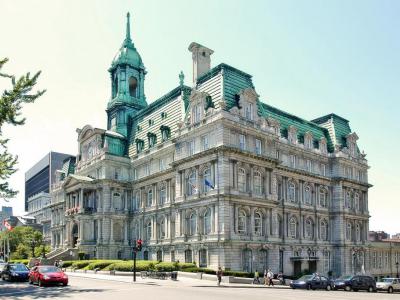
The Montreal City Hall (Hôtel de Ville de Montréal) is the very first seat of municipal administration purposely constructed in Canada. Presently, it houses the offices of the Mayor and the City Council, as well as several other administrative departments.
The five-story edifice was originally built between 1872 and 1878 to a design by architects Henri-Maurice Perrault and Alexander Cowper Hutchison and is considered one of the best examples of the Second Empire style of architecture in the country.
The building's facade is made of gray limestone and its front and sides are beautifully decorated with turrets, balconies, and mansard roofs. The grand clock tower, rising 45 meters above the ground, is topped by a statue of the city's founder, Paul Chomedey de Maisonneuve.
Sadly, the original building was gutted by fire in March 1922, leaving only the outer wall and destroying many of the city's historical records. The replacement building, featuring a self-supporting steel structure (inside the shell of the ruins), was modelled after the city hall of the French city of Tours. It opened in February 1926.
The building's interior is equally impressive. Inside, the Hall of Honour is an open space full of marble and gold embellishments that houses Art Deco lamps from Paris and a bronze-and-glass chandelier, also from France, weighing a metric ton. In the council room, the five stained-glass windows, installed in the 1920s, depict the fundamental aspects of the city, such as Religion, Agriculture, Sea Port, Commerce, and Finance. In 1984, the building was designated a National Historic Site of Canada.
Unlike many government sites with restricted public entry, the Montreal City Hall permits visitors to take a quick guided tour – in both, English and French – free of charge. The tour schedules are displayed at the entrance.
Behind the building is a pocket of green, known as the Field of Mars (Champ-de-Mars), which used to serve as a military parade ground and a parking lot before being converted into a park in the 1980s. During the conversion, workers unearthed the remains of the city's old fortifications; parts of the restored city walls were later incorporated into the site.
The five-story edifice was originally built between 1872 and 1878 to a design by architects Henri-Maurice Perrault and Alexander Cowper Hutchison and is considered one of the best examples of the Second Empire style of architecture in the country.
The building's facade is made of gray limestone and its front and sides are beautifully decorated with turrets, balconies, and mansard roofs. The grand clock tower, rising 45 meters above the ground, is topped by a statue of the city's founder, Paul Chomedey de Maisonneuve.
Sadly, the original building was gutted by fire in March 1922, leaving only the outer wall and destroying many of the city's historical records. The replacement building, featuring a self-supporting steel structure (inside the shell of the ruins), was modelled after the city hall of the French city of Tours. It opened in February 1926.
The building's interior is equally impressive. Inside, the Hall of Honour is an open space full of marble and gold embellishments that houses Art Deco lamps from Paris and a bronze-and-glass chandelier, also from France, weighing a metric ton. In the council room, the five stained-glass windows, installed in the 1920s, depict the fundamental aspects of the city, such as Religion, Agriculture, Sea Port, Commerce, and Finance. In 1984, the building was designated a National Historic Site of Canada.
Unlike many government sites with restricted public entry, the Montreal City Hall permits visitors to take a quick guided tour – in both, English and French – free of charge. The tour schedules are displayed at the entrance.
Behind the building is a pocket of green, known as the Field of Mars (Champ-de-Mars), which used to serve as a military parade ground and a parking lot before being converted into a park in the 1980s. During the conversion, workers unearthed the remains of the city's old fortifications; parts of the restored city walls were later incorporated into the site.
14) Chateau Ramezay Museum
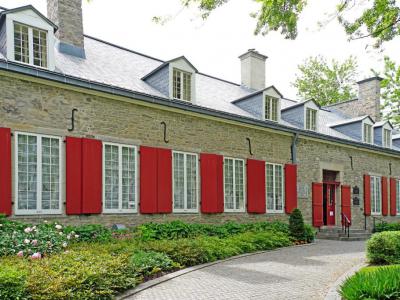
Overlooking the Montreal City Hall from across Notre-Dame Street is the Ramezay Castle (Château Ramezay). This historic "château" was built in 1705 as the residence of the then-governor of the city, Claude de Ramezay, who paid for its construction out of his own pocket. This was the first building proclaimed as a historical monument in Quebec and was designated a National Historic Site of Canada in 1949.
Over the course of its three-century-long history, the building went through many incarnations, changing several owners and serving different functions. These included head offices for the French West India Company (1745-64) and the Canadian headquarters for the Continental Army in 1775. Benjamin Franklin stayed here overnight in 1776 while trying to raise troops to fight for the Americans in the American Revolutionary War. After the British Conquest, the house once again served as a governor's residence, this time for the British governors. And in 1878, the building hosted the University of Montreal's (Université de Montréal) first Faculty of Medicine.
In 1894, the property was bought by the Numismatic and Antiquarian Society of Montreal and turned into a historical museum and portrait gallery. Today, its collection comprises some 30,000 objects, mainly gifts from private donators, including manuscripts, printed publications, numismatics, ethnological items, paintings, prints, and other works of art, as well as furniture.
Although multimedia displays take you through the building's evolution, the real focus is on the history and progression of the city, from the time of its foundation until Confederation. One of its highlights is the Salle de Nantes, a mahogany-paneled room from 1725, whose decoration was rightly or wrongly attributed to Germain Boffrand, chief architect to Louis XIV and Louis XV. The room was part of the French pavilion at the 1967 Expo and was donated to the museum shortly after. There are also kid-oriented exhibits, at the basement level.
Over the course of its three-century-long history, the building went through many incarnations, changing several owners and serving different functions. These included head offices for the French West India Company (1745-64) and the Canadian headquarters for the Continental Army in 1775. Benjamin Franklin stayed here overnight in 1776 while trying to raise troops to fight for the Americans in the American Revolutionary War. After the British Conquest, the house once again served as a governor's residence, this time for the British governors. And in 1878, the building hosted the University of Montreal's (Université de Montréal) first Faculty of Medicine.
In 1894, the property was bought by the Numismatic and Antiquarian Society of Montreal and turned into a historical museum and portrait gallery. Today, its collection comprises some 30,000 objects, mainly gifts from private donators, including manuscripts, printed publications, numismatics, ethnological items, paintings, prints, and other works of art, as well as furniture.
Although multimedia displays take you through the building's evolution, the real focus is on the history and progression of the city, from the time of its foundation until Confederation. One of its highlights is the Salle de Nantes, a mahogany-paneled room from 1725, whose decoration was rightly or wrongly attributed to Germain Boffrand, chief architect to Louis XIV and Louis XV. The room was part of the French pavilion at the 1967 Expo and was donated to the museum shortly after. There are also kid-oriented exhibits, at the basement level.
15) Bonsecours Market (Marche Bonsecours)
Bonsecours Market (Marché Bonsecours) owes its name to the adjacent Chapel of Our Lady of Good Help (Notre-Dame-de-Bon-Secours).
Inaugurated in 1847, for over a century this was the primary agricultural market for the Montreal area. Also, for a brief period – just one session, in 1849 – the building housed the Legislative Assembly (Parliament) of United Canada and, throughout 1852-1878, accommodated the Montreal City Hall.
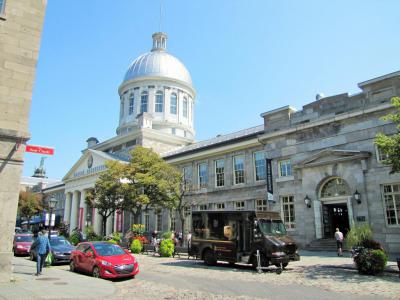
The elongated two-story Neoclassical edifice with a tin-plated dome and columns is considered one of the main achievements of Canadian architecture. In 1984, it was designated a National Historic Site of Canada. The design – by British architect William Footner – was influenced by Dublin's Customs House. Further additions, including a 900-square-meter concert and banquet hall, completed in 1860, were designed by Irish-born Montreal architect George Browne.
The building continued to serve as the farmer's central market, as well as a venue for banquets, exhibitions, and festivals until it was closed in 1963. After standing idle for a few years, it was slated for demolition.
Luckily, the property was later transformed into a multi-purpose facility with a mall incorporating outdoor cafés, restaurants, and exclusive boutiques selling authentic Canadian crafts such as jewelry, leather, and hand-blown glass – all made in Quebec. Those keen on maple tree products will be particularly delighted to find here a huge variety of relevant merchandise including beer, wine, butter, and even lollipops.
However, if shopping isn't your prime interest, you may just as well walk around the site and find some pretty angles to photograph the building's grand-looking exterior. Or, perhaps, grab yourself a seat in one of the cafés and restaurants lining the facade and have a good time.
Inaugurated in 1847, for over a century this was the primary agricultural market for the Montreal area. Also, for a brief period – just one session, in 1849 – the building housed the Legislative Assembly (Parliament) of United Canada and, throughout 1852-1878, accommodated the Montreal City Hall.
The elongated two-story Neoclassical edifice with a tin-plated dome and columns is considered one of the main achievements of Canadian architecture. In 1984, it was designated a National Historic Site of Canada. The design – by British architect William Footner – was influenced by Dublin's Customs House. Further additions, including a 900-square-meter concert and banquet hall, completed in 1860, were designed by Irish-born Montreal architect George Browne.
The building continued to serve as the farmer's central market, as well as a venue for banquets, exhibitions, and festivals until it was closed in 1963. After standing idle for a few years, it was slated for demolition.
Luckily, the property was later transformed into a multi-purpose facility with a mall incorporating outdoor cafés, restaurants, and exclusive boutiques selling authentic Canadian crafts such as jewelry, leather, and hand-blown glass – all made in Quebec. Those keen on maple tree products will be particularly delighted to find here a huge variety of relevant merchandise including beer, wine, butter, and even lollipops.
However, if shopping isn't your prime interest, you may just as well walk around the site and find some pretty angles to photograph the building's grand-looking exterior. Or, perhaps, grab yourself a seat in one of the cafés and restaurants lining the facade and have a good time.
