Custom Walk in Nashville, Tennessee by rick2334martin_277fb created on 2025-05-28
Guide Location: USA » Nashville
Guide Type: Custom Walk
# of Sights: 13
Tour Duration: 18 Hour(s)
Travel Distance: 49.5 Km or 30.8 Miles
Share Key: TD33S
Guide Type: Custom Walk
# of Sights: 13
Tour Duration: 18 Hour(s)
Travel Distance: 49.5 Km or 30.8 Miles
Share Key: TD33S
How It Works
Please retrieve this walk in the GPSmyCity app. Once done, the app will guide you from one tour stop to the next as if you had a personal tour guide. If you created the walk on this website or come to the page via a link, please follow the instructions below to retrieve the walk in the app.
Retrieve This Walk in App
Step 1. Download the app "GPSmyCity: Walks in 1K+ Cities" on Apple App Store or Google Play Store.



Step 2. In the GPSmyCity app, download(or launch) the guide "Nashville Map and Walking Tours".
Step 3. Tap the menu button located at upper right corner of the "Walks" screen and select "Retrieve custom walk". Enter the share key: TD33S
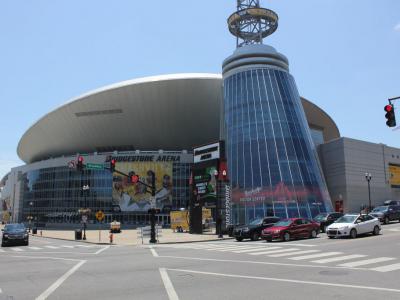
1) Bridgestone Arena
Although it features ice hockey and basketball sporting events, the massive Bridgestone Arena (originally Nashville Arena, and formerly Gaylord Entertainment Center and Sommet Center) was primarily designed for concerts. Extra care has been invested into acoustical systems, and the sound is of exceptional quality, with something of an electric vibe to it.
Conveniently located in the downtown core and containing more than one million square feet of total space, the venue seats as many as 20,000 for center-stage concerts and 18,500 using its proscenium stage. Since opening in 1996, it has hosted the likes of Faith Hill, the Rolling Stones, the Dixie Chicks, Jimmy Buffett, Eric Clapton, and Mary J. Blige – though it was Mumford & Sons who set the record on March 22, 2019, with 19,047 fans in attendance. Other than the seats being close together, it's an overall great experience, not the least because you can generally get through security very quickly.
Conveniently located in the downtown core and containing more than one million square feet of total space, the venue seats as many as 20,000 for center-stage concerts and 18,500 using its proscenium stage. Since opening in 1996, it has hosted the likes of Faith Hill, the Rolling Stones, the Dixie Chicks, Jimmy Buffett, Eric Clapton, and Mary J. Blige – though it was Mumford & Sons who set the record on March 22, 2019, with 19,047 fans in attendance. Other than the seats being close together, it's an overall great experience, not the least because you can generally get through security very quickly.
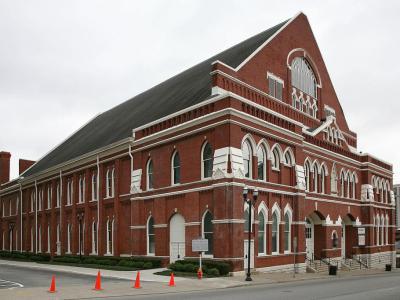
2) Ryman Auditorium (must see)
Ryman Auditorium, also known as the "Mother Church of Country Music," is a historic venue in downtown Nashville. Established by Thomas G. Ryman, it has become one of the most iconic landmarks in the country music industry.
Thomas Ryman was a businessman and riverboat captain who was converted to Christianity during a revival meeting led by evangelist Reverend Sam Jones. Inspired by his new faith, Ryman decided to build a tabernacle to host large revival meetings and to support Jones's ministry. Construction of the Union Gospel Tabernacle began in 1885 and was completed in 1892. After Ryman's death in 1904, the building was renamed the Ryman Auditorium in his honor.
Although initially built for religious purposes, Ryman Auditorium has been used for a variety of events over the years. In the early 20th century, it hosted political debates, community meetings, and various entertainment programs. It served as the home of the Grand Ole Opry, the world's longest-running live radio show, from 1943 to 1974, which marked the beginning of its reputation as the "Mother Church of Country Music."
Some of the biggest names in the music industry, including Johnny Cash, Elvis Presley, Hank Williams, Dolly Parton, and Patsy Cline, have performed on the Ryman stage. The venue is renowned for its exceptional acoustics, which contribute to the unique sound and atmosphere that attract musicians and audiences alike.
Despite the introduction of modern venues in Nashville, the Ryman Auditorium has held onto its charm and historical significance. It fell into disrepair when the Grand Ole Opry moved to a new location in 1974, but it was renovated and reopened in 1994. Since then, it has continued to host a variety of music performances, including country, rock, bluegrass, gospel, and pop.
Today Ryman Auditorium is a treasured symbol of Nashville's musical heritage and a must-visit destination for music lovers worldwide.
Tip:
There are two options on tours; self-guided and guided. With the former you can roam about the amphitheater and balcony levels, enjoying the many displays on the auditorium, its history, and the many diverse artists and orators who have visited the stage. If you're really into it, buy the (extra-cost) guided backstage tour tickets, and the guide will take you backstage through many of the dressing rooms, with history about the place and the artists included. Ending up at the side of the stage at the control area where you can grab a pic looking out into the bowl, you are then free to roam around the rest of the place with the other visitors. Pictures are allowed everywhere except in the dressing rooms on the backstage tour.
Thomas Ryman was a businessman and riverboat captain who was converted to Christianity during a revival meeting led by evangelist Reverend Sam Jones. Inspired by his new faith, Ryman decided to build a tabernacle to host large revival meetings and to support Jones's ministry. Construction of the Union Gospel Tabernacle began in 1885 and was completed in 1892. After Ryman's death in 1904, the building was renamed the Ryman Auditorium in his honor.
Although initially built for religious purposes, Ryman Auditorium has been used for a variety of events over the years. In the early 20th century, it hosted political debates, community meetings, and various entertainment programs. It served as the home of the Grand Ole Opry, the world's longest-running live radio show, from 1943 to 1974, which marked the beginning of its reputation as the "Mother Church of Country Music."
Some of the biggest names in the music industry, including Johnny Cash, Elvis Presley, Hank Williams, Dolly Parton, and Patsy Cline, have performed on the Ryman stage. The venue is renowned for its exceptional acoustics, which contribute to the unique sound and atmosphere that attract musicians and audiences alike.
Despite the introduction of modern venues in Nashville, the Ryman Auditorium has held onto its charm and historical significance. It fell into disrepair when the Grand Ole Opry moved to a new location in 1974, but it was renovated and reopened in 1994. Since then, it has continued to host a variety of music performances, including country, rock, bluegrass, gospel, and pop.
Today Ryman Auditorium is a treasured symbol of Nashville's musical heritage and a must-visit destination for music lovers worldwide.
Tip:
There are two options on tours; self-guided and guided. With the former you can roam about the amphitheater and balcony levels, enjoying the many displays on the auditorium, its history, and the many diverse artists and orators who have visited the stage. If you're really into it, buy the (extra-cost) guided backstage tour tickets, and the guide will take you backstage through many of the dressing rooms, with history about the place and the artists included. Ending up at the side of the stage at the control area where you can grab a pic looking out into the bowl, you are then free to roam around the rest of the place with the other visitors. Pictures are allowed everywhere except in the dressing rooms on the backstage tour.
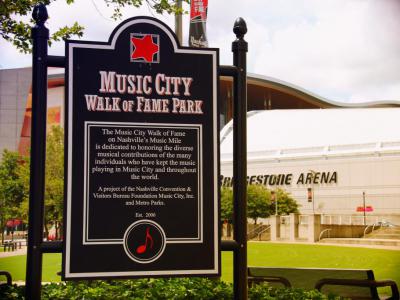
3) Music City Walk of Fame
Across the street from the Country Music Hall of Fame & Museum, you can experience another of the popular tourist attractions in Nashville, established in 2006 to honor significant contributors the city's musical heritage and significant achievements in the music industry. Each honoree is commemorated with a large stainless steel and terrazzo star embedded in the sidewalk in Walk of Fame Park, which is located between the Country Music Hall of Fame, Bridgestone Arena and Schermerhorn Symphony Center.
Honorees are inducted twice annually, in the spring and fall. The first inductees were Reba McEntire, Ronnie Milsap, Kenneth Schermerhorn, The Fisk Jubilee Singers, Boudleaux and Felice Bryant, and Roy Orbison. Look for your favorites, from Kris Kristofferson to Loretta Lynn to Johnny Cash to Elvis Presley to Hank Williams to Eddy Arnold to Little Jimmy Dickens to Ernest Tubb to Kenny Rogers. The walk is free and brings back a lot of memories.
Honorees are inducted twice annually, in the spring and fall. The first inductees were Reba McEntire, Ronnie Milsap, Kenneth Schermerhorn, The Fisk Jubilee Singers, Boudleaux and Felice Bryant, and Roy Orbison. Look for your favorites, from Kris Kristofferson to Loretta Lynn to Johnny Cash to Elvis Presley to Hank Williams to Eddy Arnold to Little Jimmy Dickens to Ernest Tubb to Kenny Rogers. The walk is free and brings back a lot of memories.
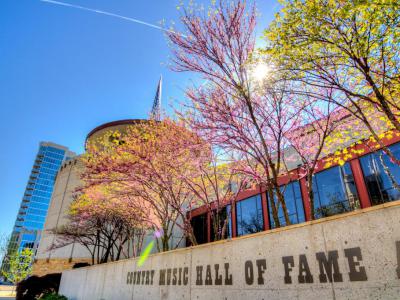
4) Country Music Hall of Fame and Museum (must see)
The Country Music Hall of Fame and Museum is one of the world's largest museums and research centers dedicated to the preservation and interpretation of American country music.
Founded in 1964, the museum's mission is to document the history of country music, an art form that has had a significant impact on the culture of the United States and beyond. It's often considered the definitive home for country music, given Nashville's storied connection to the genre.
The museum's architecture itself is a tribute to country music. The building's unique design features a piano keyboard merging into a car grille on one side and a Cadillac tailfin on the other, symbols that reflect country music's deep ties to southern culture. The museum's windows replicate the black diamond shapes found on a WSM radio tower, the station that broadcasts the Grand Ole Opry.
The Country Music Hall of Fame and Museum's expansive collection includes over 2.5 million artifacts. It features sound recordings, photographs, films, and a variety of musical instruments used by country music's most influential figures. Items such as Elvis Presley's "Solid Gold" Cadillac and Jimmie Rodgers' guitar can be found within the museum.
In addition to its vast collection, the museum also includes the 776-seat CMA Theater, the 213-seat Ford Theater, and the Taylor Swift Education Center. It hosts educational programs, live performances, public programs, exhibitions, and serves as a venue for artist interviews and panels.
The Hall of Fame Rotunda, part of the museum, is a sacred place where members of the Hall of Fame are commemorated with bronze plaques. The selection process is tightly controlled and being inducted into the Country Music Hall of Fame is considered one of the highest honors in the genre.
Tip:
Be sure to check the museum website for live music options. Also, consider getting the RCA Studio B tour combo ticket.
Founded in 1964, the museum's mission is to document the history of country music, an art form that has had a significant impact on the culture of the United States and beyond. It's often considered the definitive home for country music, given Nashville's storied connection to the genre.
The museum's architecture itself is a tribute to country music. The building's unique design features a piano keyboard merging into a car grille on one side and a Cadillac tailfin on the other, symbols that reflect country music's deep ties to southern culture. The museum's windows replicate the black diamond shapes found on a WSM radio tower, the station that broadcasts the Grand Ole Opry.
The Country Music Hall of Fame and Museum's expansive collection includes over 2.5 million artifacts. It features sound recordings, photographs, films, and a variety of musical instruments used by country music's most influential figures. Items such as Elvis Presley's "Solid Gold" Cadillac and Jimmie Rodgers' guitar can be found within the museum.
In addition to its vast collection, the museum also includes the 776-seat CMA Theater, the 213-seat Ford Theater, and the Taylor Swift Education Center. It hosts educational programs, live performances, public programs, exhibitions, and serves as a venue for artist interviews and panels.
The Hall of Fame Rotunda, part of the museum, is a sacred place where members of the Hall of Fame are commemorated with bronze plaques. The selection process is tightly controlled and being inducted into the Country Music Hall of Fame is considered one of the highest honors in the genre.
Tip:
Be sure to check the museum website for live music options. Also, consider getting the RCA Studio B tour combo ticket.
5) Music Row
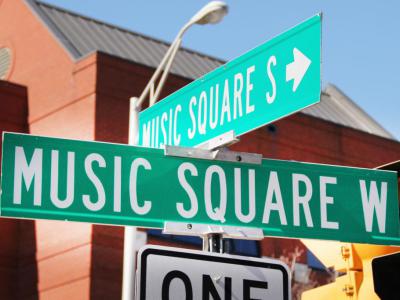
Quite the historic (and beautiful) neighborhood, Music Row is also, arguably, among the most famous places in Nashville, if not the entire state of Tennessee. There's not that much to do, per se, on a visit, but well worth a walk to see where the magic happens, as the mix of old restored homes and modern buildings house the majority of the entire country music industry. Many a brave soul tested their luck and abilities here in various forms; some have succeeded, but many have not. It's still one of the best areas in town for spotting those in the former category, so keep your eyes peeled.
Take a few pictures with the guitars and the big microphone, then proceed to check out the variety of entertainment industry ventures – from law firms to music publishers to record labels and studios to marketing and management firms, performing rights organizations, and even companies that press CDs. If it pertains to music, you'll probably find it here.
The apex of the two streets that compose Music Row funnels into Demonbreun, which is a popular spot to eat (and drink) for industry workers and those who want to party more like a local than a tourist.
Take a few pictures with the guitars and the big microphone, then proceed to check out the variety of entertainment industry ventures – from law firms to music publishers to record labels and studios to marketing and management firms, performing rights organizations, and even companies that press CDs. If it pertains to music, you'll probably find it here.
The apex of the two streets that compose Music Row funnels into Demonbreun, which is a popular spot to eat (and drink) for industry workers and those who want to party more like a local than a tourist.
6) RCA Studio B (must see)
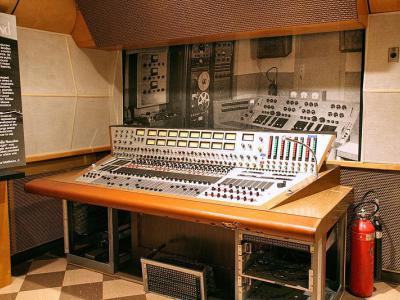
RCA Studio B is a landmark location steeped in musical history. Known as the birthplace of the "Nashville Sound," this recording studio significantly contributed to establishing the city's reputation as a hub for the music industry, particularly in the genre of country music.
Constructed in 1957, RCA Studio B became a creative sanctuary for many legendary artists, producing a significant number of iconic hits. The studio's roster boasts an impressive array of artists, including Elvis Presley, Dolly Parton, Roy Orbison, and the Everly Brothers, among others. These and many more artists recorded songs within its walls, making RCA Studio B instrumental in shaping the sound and direction of American popular music.
Recognized for its unique acoustic properties and characterized by its relatively small size, RCA Studio B introduced innovative production techniques that helped to soften the rough edges of the popular "honky-tonk" country sound of the 1950s. It popularized what came to be known as the "Nashville Sound," which incorporated smooth vocals, lush string sections, and background vocals.
Since its closing in 1977 as a commercial studio, RCA Studio B has been preserved as a museum. Today, it's operated by the Country Music Hall of Fame and Museum and offers guided tours that take visitors on a journey through the golden age of Nashville music production. A visit to the studio offers a glimpse into the creative process of some of the world's most celebrated musicians.
Tip:
Tours sell out quickly so make an online reservation early or go first thing in the morning to get a tour time.
Remember to use the facilities inside the Country Music Hall of Fame because you won't find a bathroom at the studio.
Tour Hours:
Daily: 10:30am–3:30pm
Tours depart hourly from the Country Music Hall of Fame
Constructed in 1957, RCA Studio B became a creative sanctuary for many legendary artists, producing a significant number of iconic hits. The studio's roster boasts an impressive array of artists, including Elvis Presley, Dolly Parton, Roy Orbison, and the Everly Brothers, among others. These and many more artists recorded songs within its walls, making RCA Studio B instrumental in shaping the sound and direction of American popular music.
Recognized for its unique acoustic properties and characterized by its relatively small size, RCA Studio B introduced innovative production techniques that helped to soften the rough edges of the popular "honky-tonk" country sound of the 1950s. It popularized what came to be known as the "Nashville Sound," which incorporated smooth vocals, lush string sections, and background vocals.
Since its closing in 1977 as a commercial studio, RCA Studio B has been preserved as a museum. Today, it's operated by the Country Music Hall of Fame and Museum and offers guided tours that take visitors on a journey through the golden age of Nashville music production. A visit to the studio offers a glimpse into the creative process of some of the world's most celebrated musicians.
Tip:
Tours sell out quickly so make an online reservation early or go first thing in the morning to get a tour time.
Remember to use the facilities inside the Country Music Hall of Fame because you won't find a bathroom at the studio.
Tour Hours:
Daily: 10:30am–3:30pm
Tours depart hourly from the Country Music Hall of Fame
7) The Bluebird Cafe
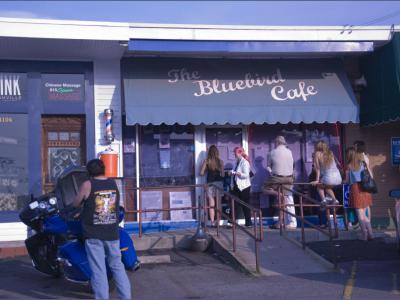
The Bluebird Café, nestled in the Green Hills neighborhood of Nashville, stands as a testament to the vibrant heart of acoustic music and storytelling. Opened in 1982 by Amy Kurland, this 90-seat music club, initially intended as a gourmet restaurant with occasional live music, soon became a cornerstone of Nashville's music scene.
The club's reputation soared in March 1983 when Kathy Mattea, a future country star, clinched a record deal after performing there for a few months, marking the Bluebird as a hotspot for budding musicians. Its fame further expanded beyond Nashville's borders through the "Live from the Bluebird Café" show on Turner South, which aired for five years until the network's acquisition by Fox.
The Bluebird Café's story and its impact are encapsulated in the "Bluebird Café Scrapbook," published in 2002, offering an intimate look into the club's history, events, and the people who made it iconic. That same year, it was honored with the Academy of Country Music Award for Night Club of the Year, underlining its significant role in the country music industry.
A pivotal moment in the café's history was the discovery of Taylor Swift at the age of 14 by music executive Scott Borchetta, showcasing the Bluebird's role in launching illustrious careers.
In a recent development, September 2023 saw the announcement of a musical inspired by the café, titled "Bluebird," set to be developed by Wayne Kirkpatrick and Don Chaffer. This new venture is a testament to the ongoing influence and inspiration the Bluebird Café provides to the world of music and beyond.
The club's reputation soared in March 1983 when Kathy Mattea, a future country star, clinched a record deal after performing there for a few months, marking the Bluebird as a hotspot for budding musicians. Its fame further expanded beyond Nashville's borders through the "Live from the Bluebird Café" show on Turner South, which aired for five years until the network's acquisition by Fox.
The Bluebird Café's story and its impact are encapsulated in the "Bluebird Café Scrapbook," published in 2002, offering an intimate look into the club's history, events, and the people who made it iconic. That same year, it was honored with the Academy of Country Music Award for Night Club of the Year, underlining its significant role in the country music industry.
A pivotal moment in the café's history was the discovery of Taylor Swift at the age of 14 by music executive Scott Borchetta, showcasing the Bluebird's role in launching illustrious careers.
In a recent development, September 2023 saw the announcement of a musical inspired by the café, titled "Bluebird," set to be developed by Wayne Kirkpatrick and Don Chaffer. This new venture is a testament to the ongoing influence and inspiration the Bluebird Café provides to the world of music and beyond.
8) The Parthenon (must see)
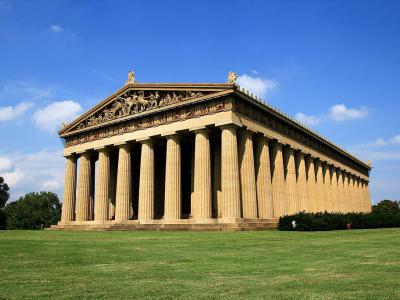
Nashville's Parthenon is an exact replica of the original Parthenon located in Athens. It was constructed in 1897 as part of the Tennessee Centennial Exposition. The decision to build this replica was influenced by Nashville's nickname, "the Athens of the South," which made it a fitting choice for the centerpiece of the 1897 fair. While several buildings at the Exposition were inspired by ancient architecture, the Parthenon was the only one that faithfully reproduced the original and has since been preserved by the city.
Today, the Parthenon serves as an art museum and occupies a central position in Centennial Park, a sizable public park just west of downtown Nashville. The highlight of the Parthenon is the 1990 recreation of the Athena Parthenos statue by Alan LeQuire, replicating its role in ancient Greece.
Functioning as an art museum, the Parthenon houses a permanent collection of 63 paintings created by American artists from the 19th and 20th centuries, generously donated by James M. Cowan. Additionally, the museum offers gallery spaces for hosting various temporary exhibitions and shows.
During the summer season, local theater productions often use the Parthenon as a backdrop for staging classic Greek plays like Euripides' "Medea" and Sophocles' "Antigone." These performances typically take place on the Parthenon's steps and are often offered to the public free of charge. Some productions, such as Mary Zimmerman's "Metamorphoses," have even been presented indoors, at the base of the Athena statue.
In 2002, the Parthenon underwent a comprehensive restoration, including cleaning and refurbishment of its exterior. Furthermore, the exterior lighting system was upgraded to allow for the illumination of the building's columns in various colors, creating a versatile display of visual effects for different events.
Why You Should Visit:
Almost like being at the original! You can go inside for a small price or just enjoy it from the outside. Fun to take pictures with.
This is also a perfect spot to stop for a picnic lunch. Nice tree coverage, lake and picnic area as well as walking trails.
Tip:
You can also buy tickets inside the gift shop to save time if the ticket line is a bit long.
Today, the Parthenon serves as an art museum and occupies a central position in Centennial Park, a sizable public park just west of downtown Nashville. The highlight of the Parthenon is the 1990 recreation of the Athena Parthenos statue by Alan LeQuire, replicating its role in ancient Greece.
Functioning as an art museum, the Parthenon houses a permanent collection of 63 paintings created by American artists from the 19th and 20th centuries, generously donated by James M. Cowan. Additionally, the museum offers gallery spaces for hosting various temporary exhibitions and shows.
During the summer season, local theater productions often use the Parthenon as a backdrop for staging classic Greek plays like Euripides' "Medea" and Sophocles' "Antigone." These performances typically take place on the Parthenon's steps and are often offered to the public free of charge. Some productions, such as Mary Zimmerman's "Metamorphoses," have even been presented indoors, at the base of the Athena statue.
In 2002, the Parthenon underwent a comprehensive restoration, including cleaning and refurbishment of its exterior. Furthermore, the exterior lighting system was upgraded to allow for the illumination of the building's columns in various colors, creating a versatile display of visual effects for different events.
Why You Should Visit:
Almost like being at the original! You can go inside for a small price or just enjoy it from the outside. Fun to take pictures with.
This is also a perfect spot to stop for a picnic lunch. Nice tree coverage, lake and picnic area as well as walking trails.
Tip:
You can also buy tickets inside the gift shop to save time if the ticket line is a bit long.
9) Musicians Hall of Fame and Museum
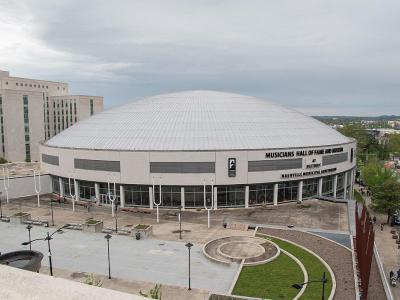
The Musicians Hall of Fame and Museum, located in Nashville, is a unique institution that celebrates musicians from various genres and instrumental backgrounds. This museum showcases the contributions of both well-known and lesser-known musicians, highlighting those who might be familiar to your ears but not to your eyes. It's a must-visit destination in Nashville, distinct for honoring musicians who have played a significant role in creating some of the most iconic recordings in history.
Inductees into the Hall of Fame are chosen with the involvement of the American Federation of Musicians and other professionals in the music industry. The timeline of the MHOF spans the entire history of recorded music.
An interesting aspect of the museum is its focus on musicians who have remained largely unrecognized, often working behind the scenes. Groups like the Nashville A-Team, the Wrecking Crew, The Tennessee Two, The Muscle Shoals Rhythm Section, the G-Men (associated with Garth Brooks), and the studio musicians from Sigma Sound Studio in Philadelphia, have all been acknowledged for their contributions.
The Musicians Hall of Fame opened its doors on June 6, 2006. It features exhibits that include instruments played by both famous artists and the lesser-known session musicians. These session musicians, often serving as house studio musicians in cities like Memphis, Los Angeles, Detroit, Nashville, Muscle Shoals, and New York City, were pivotal in creating the hits of many renowned artists, especially during the 1950s to the 1980s.
Inductees into the Hall of Fame are chosen with the involvement of the American Federation of Musicians and other professionals in the music industry. The timeline of the MHOF spans the entire history of recorded music.
An interesting aspect of the museum is its focus on musicians who have remained largely unrecognized, often working behind the scenes. Groups like the Nashville A-Team, the Wrecking Crew, The Tennessee Two, The Muscle Shoals Rhythm Section, the G-Men (associated with Garth Brooks), and the studio musicians from Sigma Sound Studio in Philadelphia, have all been acknowledged for their contributions.
The Musicians Hall of Fame opened its doors on June 6, 2006. It features exhibits that include instruments played by both famous artists and the lesser-known session musicians. These session musicians, often serving as house studio musicians in cities like Memphis, Los Angeles, Detroit, Nashville, Muscle Shoals, and New York City, were pivotal in creating the hits of many renowned artists, especially during the 1950s to the 1980s.
10) George Jones Museum
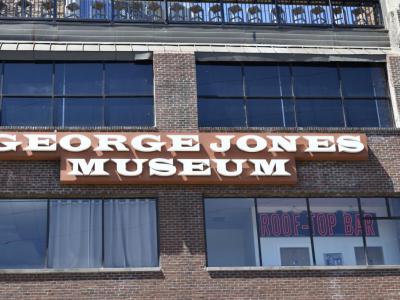
George Jones was a one-of-a-kind entertainer so it only makes sense that the museum bearing his name is a one-of-a-kind facility amid all others dedicated to country music stars. Located in downtown Nashville, it's a modern museum showcasing exhibits on the life and music of arguably the greatest voice in country music. Opened in 2015, on the second anniversary of Jones' death, the four-level facility is replete with a restaurant, gift shop and rooftop bar overlooking the Cumberland River.
Jones, like Hank Williams, Bill Monroe, Jimmie Rodgers, Johnny Cash, Patsy Cline, Roy Acuff, Loretta Lynn, Dolly Parton and Willie Nelson, is a Nashville icon who had more country songs on the Billboard chart and more top 40 songs than any country artist in history. Nicknamed "Possum" for his turned-up nose, he lived the honky tonk life – a hardscrabble childhood, prison time, drunken hijinks, multiple marriages, a failed theme park, hit songs about depressing subjects, a near fatal car crash and a final conversion to Jesus Christ. He boasted that he was free to be paranoid, drunk and crazy – and he did it all with style, with his adventures being cited in many of the museum's exhibits. In fact, one exhibit notes that Jones performed sober for the first time in 1984, when he was 53 years old. See it all – his career, one-of-a-kind suits, guitars, awards, friends, memorabilia, album artwork, piano and the iconic green and gold John Deere riding lawnmower that Jones once drove eight miles to the nearest liquor store. Another popular item is the Big Rocking Chair, a photo-op for fans who recall his hit song "I Don't Need Your Rockin' Chair," which he recorded in his 60s.
If you're thirsty, the museum sells 100-proof George Jones-brand "White Lightning" moonshine, a reference to his first hit song in 1959. Lunch is a treat at the restaurant, especially smokehouse chili, cornbread muffins, pulled pork potato skins, smoked wings, pulled pork and ribs. Old-timers love the Memphis sushi, Kielbasa with cheddar cheese, jalapeno sauerkraut, whole grain mustard and saltine crackers. Sounds like something Jones himself would eat after an all-night bender. One thing's for sure: he would enjoy strolling through this place. Everybody else does.
Jones, like Hank Williams, Bill Monroe, Jimmie Rodgers, Johnny Cash, Patsy Cline, Roy Acuff, Loretta Lynn, Dolly Parton and Willie Nelson, is a Nashville icon who had more country songs on the Billboard chart and more top 40 songs than any country artist in history. Nicknamed "Possum" for his turned-up nose, he lived the honky tonk life – a hardscrabble childhood, prison time, drunken hijinks, multiple marriages, a failed theme park, hit songs about depressing subjects, a near fatal car crash and a final conversion to Jesus Christ. He boasted that he was free to be paranoid, drunk and crazy – and he did it all with style, with his adventures being cited in many of the museum's exhibits. In fact, one exhibit notes that Jones performed sober for the first time in 1984, when he was 53 years old. See it all – his career, one-of-a-kind suits, guitars, awards, friends, memorabilia, album artwork, piano and the iconic green and gold John Deere riding lawnmower that Jones once drove eight miles to the nearest liquor store. Another popular item is the Big Rocking Chair, a photo-op for fans who recall his hit song "I Don't Need Your Rockin' Chair," which he recorded in his 60s.
If you're thirsty, the museum sells 100-proof George Jones-brand "White Lightning" moonshine, a reference to his first hit song in 1959. Lunch is a treat at the restaurant, especially smokehouse chili, cornbread muffins, pulled pork potato skins, smoked wings, pulled pork and ribs. Old-timers love the Memphis sushi, Kielbasa with cheddar cheese, jalapeno sauerkraut, whole grain mustard and saltine crackers. Sounds like something Jones himself would eat after an all-night bender. One thing's for sure: he would enjoy strolling through this place. Everybody else does.
11) Willie Nelson and Friends Museum and Nashville Souvenirs
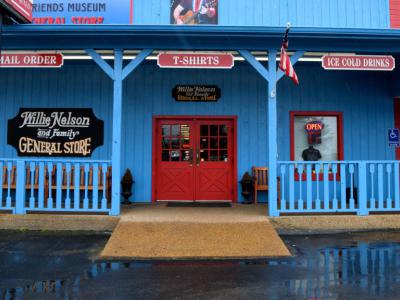
Located conveniently across the street from Opryland, the Willie Nelson and Friends Museum and Nashville Souvenirs stands as a prominent and captivating destination for visitors to Music City. Combining the allure of a souvenir store with the intrigue of a museum, this establishment pays homage to the iconic artist Willie Nelson while also celebrating the companions who played pivotal roles in shaping the modern form of country music.
As you step inside, you'll find yourself immersed in a world of music history and memorabilia. The museum section offers a captivating tour through the life and career of Willie Nelson, allowing visitors to gain a deeper understanding of his immense impact on the genre. Exhibits are carefully curated, showcasing a wide range of artifacts, including personal items, stage costumes, instruments, photographs, and awards. The museum doesn't limit itself to solely showcasing Willie Nelson's legacy; it also celebrates the artists and friends who influenced and collaborated with him throughout his career.
However, the experience doesn't end with the museum tour. Adjacent to the exhibition area, you'll discover the general store, which boasts an extensive selection of souvenirs and merchandise. Whether you're a die-hard Willie Nelson fan, a lover of country music, or simply seeking a unique keepsake from your time in Nashville, the store has something to offer everyone. From t-shirts and hats adorned with Willie Nelson's likeness to CDs, vinyl records, posters, and more, you'll find a treasure trove of memorabilia that embodies the spirit of Nashville and country music.
The Willie Nelson and Friends Museum and Nashville Souvenirs provides a one-of-a-kind experience that seamlessly blends education, entertainment, and the opportunity to bring home a piece of music history.
As you step inside, you'll find yourself immersed in a world of music history and memorabilia. The museum section offers a captivating tour through the life and career of Willie Nelson, allowing visitors to gain a deeper understanding of his immense impact on the genre. Exhibits are carefully curated, showcasing a wide range of artifacts, including personal items, stage costumes, instruments, photographs, and awards. The museum doesn't limit itself to solely showcasing Willie Nelson's legacy; it also celebrates the artists and friends who influenced and collaborated with him throughout his career.
However, the experience doesn't end with the museum tour. Adjacent to the exhibition area, you'll discover the general store, which boasts an extensive selection of souvenirs and merchandise. Whether you're a die-hard Willie Nelson fan, a lover of country music, or simply seeking a unique keepsake from your time in Nashville, the store has something to offer everyone. From t-shirts and hats adorned with Willie Nelson's likeness to CDs, vinyl records, posters, and more, you'll find a treasure trove of memorabilia that embodies the spirit of Nashville and country music.
The Willie Nelson and Friends Museum and Nashville Souvenirs provides a one-of-a-kind experience that seamlessly blends education, entertainment, and the opportunity to bring home a piece of music history.
12) Robert's Western World
Robert's Western World is an iconic honky-tonk bar located in the heart of Nashville's legendary Lower Broadway district. Renowned for its live country music, historical ambiance, and classic Nashville hospitality, Robert's Western World is a must-visit establishment for music enthusiasts and lovers of Americana.
This celebrated venue is housed in a building that once served as the warehouse for the city's famed shoemakers, Friedman's, before evolving into one of Music City's most beloved honky-tonks. Stepping inside Robert's is like stepping back in time, as the bar proudly preserves a retro atmosphere that pays homage to the golden era of country music.
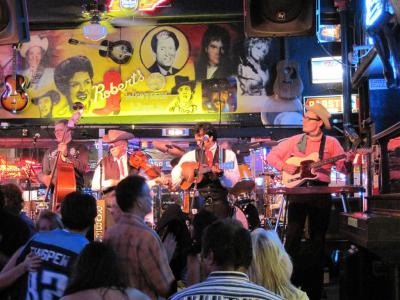
The wall decor features shelves of cowboy boots, neon beer signs, decorative markers of rural authenticity, and photos of country music's most iconic performers, such as Ernest Tubb, Jimmie Rodgers, Hank Williams, Patsy Cline, Minnie Pearl, Marty Robbins, and Roy Acuff.
Robert's Western World is revered for its authentic country and western swing music, with live performances happening every day of the week. Here, you'll find local legends and up-and-coming artists alike taking the stage, often playing classic tunes that span the rich history of country music.
Beyond the music, Robert's is known for its comfort food and wide selection of beers, but perhaps most famous is its "Recession Special," a fried bologna sandwich, chips, and a Pabst Blue Ribbon beer, all for a throwback price.
This celebrated venue is housed in a building that once served as the warehouse for the city's famed shoemakers, Friedman's, before evolving into one of Music City's most beloved honky-tonks. Stepping inside Robert's is like stepping back in time, as the bar proudly preserves a retro atmosphere that pays homage to the golden era of country music.
The wall decor features shelves of cowboy boots, neon beer signs, decorative markers of rural authenticity, and photos of country music's most iconic performers, such as Ernest Tubb, Jimmie Rodgers, Hank Williams, Patsy Cline, Minnie Pearl, Marty Robbins, and Roy Acuff.
Robert's Western World is revered for its authentic country and western swing music, with live performances happening every day of the week. Here, you'll find local legends and up-and-coming artists alike taking the stage, often playing classic tunes that span the rich history of country music.
Beyond the music, Robert's is known for its comfort food and wide selection of beers, but perhaps most famous is its "Recession Special," a fried bologna sandwich, chips, and a Pabst Blue Ribbon beer, all for a throwback price.
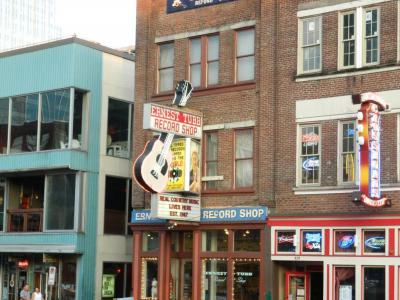
13) Ernest Tubb Record Shop
The Ernest Tubb Record Shop in Nashville is a remarkable piece of musical history, reflecting the determination and love for country music of its founder, Grand Ole Opry star Ernest Tubb, also known as the Texas Troubadour. Faced with the challenge of obtaining and distributing country music records, Tubb opened this iconic store in 1947. It has since become a beloved Nashville landmark, easily recognized by its legendary spinning sign.
More than just a record store, this place is a treasure trove for fans of country and bluegrass music, offering a wide selection of classic and contemporary recordings. Beyond music, the shop also features an assortment of DVDs, books, t-shirts, and various souvenirs, catering to a broad range of interests.
A unique feature of the Ernest Tubb Record Shop is the stage located at the back. This stage has witnessed performances by numerous legends, particularly following the Grand Ole Opry shows on Saturday nights. Additionally, it served as the recording venue for Tubb's radio program, "Midnite Jamboree," further cementing its place in country music history.
The shop's atmosphere is perfect for leisurely browsing, and its location on Lower Broadway makes it an ideal stop before or after enjoying the local dining and entertainment options. Its enduring presence offers a nostalgic glimpse into the "old country" era, making it an essential addition to any Nashville itinerary for those seeking to experience the rich heritage of country music.
More than just a record store, this place is a treasure trove for fans of country and bluegrass music, offering a wide selection of classic and contemporary recordings. Beyond music, the shop also features an assortment of DVDs, books, t-shirts, and various souvenirs, catering to a broad range of interests.
A unique feature of the Ernest Tubb Record Shop is the stage located at the back. This stage has witnessed performances by numerous legends, particularly following the Grand Ole Opry shows on Saturday nights. Additionally, it served as the recording venue for Tubb's radio program, "Midnite Jamboree," further cementing its place in country music history.
The shop's atmosphere is perfect for leisurely browsing, and its location on Lower Broadway makes it an ideal stop before or after enjoying the local dining and entertainment options. Its enduring presence offers a nostalgic glimpse into the "old country" era, making it an essential addition to any Nashville itinerary for those seeking to experience the rich heritage of country music.
