Custom Walk in Cairo, Egypt by billybobsully_e554b created on 2025-06-01
Guide Location: Egypt » Cairo
Guide Type: Custom Walk
# of Sights: 8
Tour Duration: 7 Hour(s)
Travel Distance: 17.9 Km or 11.1 Miles
Share Key: 7HL6R
Guide Type: Custom Walk
# of Sights: 8
Tour Duration: 7 Hour(s)
Travel Distance: 17.9 Km or 11.1 Miles
Share Key: 7HL6R
How It Works
Please retrieve this walk in the GPSmyCity app. Once done, the app will guide you from one tour stop to the next as if you had a personal tour guide. If you created the walk on this website or come to the page via a link, please follow the instructions below to retrieve the walk in the app.
Retrieve This Walk in App
Step 1. Download the app "GPSmyCity: Walks in 1K+ Cities" on Apple App Store or Google Play Store.



Step 2. In the GPSmyCity app, download(or launch) the guide "Cairo Map and Walking Tours".
Step 3. Tap the menu button located at upper right corner of the "Walks" screen and select "Retrieve custom walk". Enter the share key: 7HL6R
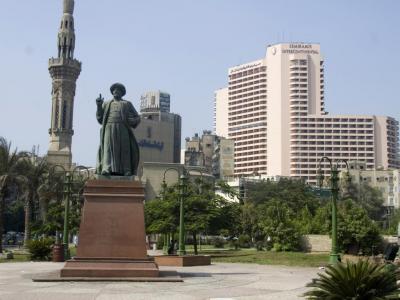
1) Liberation Square
The Liberation Square or Tahrir Square is the main gathering place for protests and events in Cairo. It was the scene of eight continuous days of protests where the people of Egypt forced President Hosni Mubarak to resign in 2011.
The Tahrir Square was once called the Midan Ismailia. After the revolution in 1952, that made Egypt a republic from a monarchy, it got its present name. The Square has been the venue of demonstrations in 1881 against the Khedive Tawfiq and in 1919 against the British. In 2003, it hosted demonstrations against the War in Iraq. It has always been a popular place for demonstrations because those who oppose policies and governments take control of the center of Cairo.
The Liberation Square is located at one of Cairo’s main traffic intersections. It consists of a central grassy area surrounded by busy boulevards. Important institutions like the Egyptian Museum, the offices of the Arab league, the Nile Hotel, the National Democratic Party headquarters Building and the American University in Cairo are found near the square. It also has many souvenir shops and is the starting point of walking tours around the city. Visitors use the underground viaducts to get across the busy streets around Tahrir Square.
Why You Should Visit:
One of Cairo's largest squares, where you can enjoy a nice view of the city and some of the fresh air coming from the Nile.
Tip:
Surrounded by crowded roads so beware while crossing it from a side to another.
The Tahrir Square was once called the Midan Ismailia. After the revolution in 1952, that made Egypt a republic from a monarchy, it got its present name. The Square has been the venue of demonstrations in 1881 against the Khedive Tawfiq and in 1919 against the British. In 2003, it hosted demonstrations against the War in Iraq. It has always been a popular place for demonstrations because those who oppose policies and governments take control of the center of Cairo.
The Liberation Square is located at one of Cairo’s main traffic intersections. It consists of a central grassy area surrounded by busy boulevards. Important institutions like the Egyptian Museum, the offices of the Arab league, the Nile Hotel, the National Democratic Party headquarters Building and the American University in Cairo are found near the square. It also has many souvenir shops and is the starting point of walking tours around the city. Visitors use the underground viaducts to get across the busy streets around Tahrir Square.
Why You Should Visit:
One of Cairo's largest squares, where you can enjoy a nice view of the city and some of the fresh air coming from the Nile.
Tip:
Surrounded by crowded roads so beware while crossing it from a side to another.
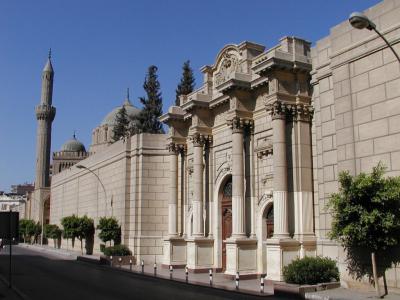
2) Abdeen Palace (must see)
The Abdeen Palace is a large ornate building that is one of the official residences and the main office of the President of Egypt. A portion of the palace is now a museum.
The Abdeen Palace was built on the ruins of an old house belonging to Abdeen Bay, a commander of Mohamed Ali Pasha the Wali of Egypt. In 1872, Khedive Ismail, the then ruler of Egypt moved to the palace from the citadel and made it his official residence. The present building was constructed between 1863 and 1874. It was designed by the French architect Rousseau and Egyptian, Turkish, French and Italian decorators worked on its ornate interiors. It was the scene of the Abdeen Palace incident of 1942 when King Farouk I was forced to abdicate by the British.
The Abdeen Palace has lavish interiors with sculpture, paintings and clocks decorated with pure gold in its parlors and wings. The first floor is now used for visiting foreign dignitaries and the lower floors have museums including the Arms Museum, the Royal Family Museum, the Historical Documents Museum that was recently inaugurated in 2005 and the Presidential Gifts Museum displaying gifts given to the former Egyptian President, Hosni Mubarak.
Why You Should Visit:
One of the few places in Cairo that are nicely maintained – fantastic for fans of historic and ornamental weapons.
The grounds of the compound are lovely. There are a few tables to relax with coffee/tea or a small snack.
Tip:
The ticket counter is not at the entrance to the museum but across the street.
There is an additional fee if you want to take photos inside.
The Abdeen Palace was built on the ruins of an old house belonging to Abdeen Bay, a commander of Mohamed Ali Pasha the Wali of Egypt. In 1872, Khedive Ismail, the then ruler of Egypt moved to the palace from the citadel and made it his official residence. The present building was constructed between 1863 and 1874. It was designed by the French architect Rousseau and Egyptian, Turkish, French and Italian decorators worked on its ornate interiors. It was the scene of the Abdeen Palace incident of 1942 when King Farouk I was forced to abdicate by the British.
The Abdeen Palace has lavish interiors with sculpture, paintings and clocks decorated with pure gold in its parlors and wings. The first floor is now used for visiting foreign dignitaries and the lower floors have museums including the Arms Museum, the Royal Family Museum, the Historical Documents Museum that was recently inaugurated in 2005 and the Presidential Gifts Museum displaying gifts given to the former Egyptian President, Hosni Mubarak.
Why You Should Visit:
One of the few places in Cairo that are nicely maintained – fantastic for fans of historic and ornamental weapons.
The grounds of the compound are lovely. There are a few tables to relax with coffee/tea or a small snack.
Tip:
The ticket counter is not at the entrance to the museum but across the street.
There is an additional fee if you want to take photos inside.
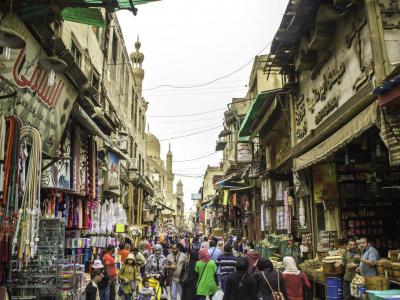
3) Muizz Street (must see)
Al-Muizz Street holds a significant place in the ancient walled city of historic Cairo, running from north to south. It's considered one of Cairo's oldest thoroughfares, dating back to the 10th century when the Fatimid dynasty established the city, under their fourth caliph, Al-Mu'izz li-Din Allah, after whom the street is named.
Throughout history, this street was the lifeline of the city and often referred to as the Qasaba. It served as the primary economic hub, hosting bustling markets. The street's importance led to the construction of numerous grand religious and charitable structures, commissioned by Egypt's rulers and elites. As a result, Al-Muizz Street has become a treasure trove of historic Islamic architecture in Cairo, particularly in the Bayn al-Qasrayn area, where you'll find some of Islamic Cairo's most significant monuments.
In 1997, the national government embarked on an extensive renovation project for the historical buildings, modern structures, pavement, and sewer system with the aim of transforming the street into an "open-air museum."
The renovations sought to restore the street's original appearance. Taller buildings that obscured the view of monuments were reduced in height and painted in suitable colors, while the street was repaved in its original style. Furthermore, the street's nighttime ambiance was updated through the installation of advanced exterior lighting systems on buildings.
Why You Should Visit:
There are more sites and attractions than you can count on Muizz Street. A UN study found that this one street has the most fantastic collection of medieval architectural treasures in the Islamic world. You'll find dozens of mosques, madrasas, and hamams, along with shops, restaurants, and markets.
Nearby Khan Al-Khalili Bazaar is a major souq (market) and is popular with locals and tourists. It's a great place to enjoy dinner or lunch and buy some souvenirs.
While all of the buildings along Muizz Street are architectural treasures, don't miss the Azhar Mosque, Cairo's first mosque built in 970. Also, visit Bab Zuweila, the medieval gate into the walled city, and one of Cairo's most important landmarks.
Tips:
Visit the street in the evening to see the buildings illuminated with special lighting. The vibe at night is entirely different, with lots of street food and people enjoying the cooler air.
Many attractions and monuments charge an extra fee for bringing your camera.
Remember that weekends here are Friday and Saturday, and that's when you'll find Muizz Street and all of its attractions the busiest.
Throughout history, this street was the lifeline of the city and often referred to as the Qasaba. It served as the primary economic hub, hosting bustling markets. The street's importance led to the construction of numerous grand religious and charitable structures, commissioned by Egypt's rulers and elites. As a result, Al-Muizz Street has become a treasure trove of historic Islamic architecture in Cairo, particularly in the Bayn al-Qasrayn area, where you'll find some of Islamic Cairo's most significant monuments.
In 1997, the national government embarked on an extensive renovation project for the historical buildings, modern structures, pavement, and sewer system with the aim of transforming the street into an "open-air museum."
The renovations sought to restore the street's original appearance. Taller buildings that obscured the view of monuments were reduced in height and painted in suitable colors, while the street was repaved in its original style. Furthermore, the street's nighttime ambiance was updated through the installation of advanced exterior lighting systems on buildings.
Why You Should Visit:
There are more sites and attractions than you can count on Muizz Street. A UN study found that this one street has the most fantastic collection of medieval architectural treasures in the Islamic world. You'll find dozens of mosques, madrasas, and hamams, along with shops, restaurants, and markets.
Nearby Khan Al-Khalili Bazaar is a major souq (market) and is popular with locals and tourists. It's a great place to enjoy dinner or lunch and buy some souvenirs.
While all of the buildings along Muizz Street are architectural treasures, don't miss the Azhar Mosque, Cairo's first mosque built in 970. Also, visit Bab Zuweila, the medieval gate into the walled city, and one of Cairo's most important landmarks.
Tips:
Visit the street in the evening to see the buildings illuminated with special lighting. The vibe at night is entirely different, with lots of street food and people enjoying the cooler air.
Many attractions and monuments charge an extra fee for bringing your camera.
Remember that weekends here are Friday and Saturday, and that's when you'll find Muizz Street and all of its attractions the busiest.
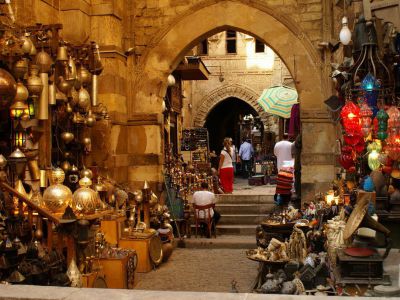
4) Khan El Khalili
Khan el-Khalili stands as a renowned marketplace situated in the historical heart of Cairo. It originated during the Mamluk era, serving as a hub for trade and derived its name from one of the numerous ancient caravanserais that dotted the area-these were essentially roadside inns. Over time, this bazaar district has evolved into a significant attraction, drawing both tourists and Egyptians alike. Moreover, it serves as the domicile for numerous Egyptian artisans and workshops, specializing in the creation of traditional crafts and souvenirs.
Presently, Khan el-Khalili predominantly houses local vendors and traders with a considerable emphasis on catering to tourists. Typical items found in its shops include souvenirs, antiques, and jewelry. The adjacent goldsmiths' souq still retains its significance among the local population. While not as prevalent as in the past, many craft workshops continue to operate within the bazaar, primarily located in courtyards or upper floors of buildings, contributing to the creation of products sold here or exported elsewhere.
Beyond shopping, the market features various coffeehouses, restaurants, and street food stalls scattered throughout its premises. These coffeehouses are often characterized by their modest size and adherence to traditional practices, offering Arabic coffee and frequently providing shisha (hookah). Among these establishments, El Fishawi's, founded in 1773, stands out as one of the oldest and most renowned coffeehouses in the area.
Presently, Khan el-Khalili predominantly houses local vendors and traders with a considerable emphasis on catering to tourists. Typical items found in its shops include souvenirs, antiques, and jewelry. The adjacent goldsmiths' souq still retains its significance among the local population. While not as prevalent as in the past, many craft workshops continue to operate within the bazaar, primarily located in courtyards or upper floors of buildings, contributing to the creation of products sold here or exported elsewhere.
Beyond shopping, the market features various coffeehouses, restaurants, and street food stalls scattered throughout its premises. These coffeehouses are often characterized by their modest size and adherence to traditional practices, offering Arabic coffee and frequently providing shisha (hookah). Among these establishments, El Fishawi's, founded in 1773, stands out as one of the oldest and most renowned coffeehouses in the area.
5) The Citadel (must see)
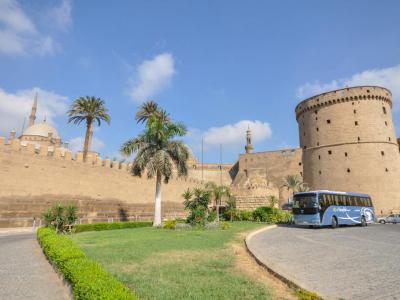
The Cairo Citadel on Mokattam Hill is a large Islamic fortification commanding spectacular views of the city. Many landmark Mosques and museums are located here today.
The Cairo Citadel served as a place where Sultans from the Mamluk Dynasties came for the cool air and to enjoy the spectacular views. It was the Ayyubid Ruler Salah-ad-Din who realized the strategic advantage of fortifying the citadel to protect the city from the crusaders. The wall around the citadel was constructed between 1176 and 1183. It served both as a fortress and a Royal City at the time. The Mamluk Sultan, Al Nasir Muhammad regained power in the 1330s and destroyed most of the Ayyubid structures. Later the Ottoman rulers, tore down most of the Mamluk buildings in the 1800s.
Today, only the walls of the Ayyubid fortress and the Bir Yusuf or Saint Josephs Well remain from the original structure. The green domed Mosque of Al Nasir Muhammad and a portion of his striped palace remain from the Mamluk era. All other structures are built by the Ottoman Rulers, in particular Muhammad Ali Pasha the founder of the last dynasty that ruled Egypt. The four museums that are now located within the Citadel are the Police Museum, the National Military Museum, the Carriage Museum and the Al-Gawhara Palace museum.
The Cairo Citadel served as a place where Sultans from the Mamluk Dynasties came for the cool air and to enjoy the spectacular views. It was the Ayyubid Ruler Salah-ad-Din who realized the strategic advantage of fortifying the citadel to protect the city from the crusaders. The wall around the citadel was constructed between 1176 and 1183. It served both as a fortress and a Royal City at the time. The Mamluk Sultan, Al Nasir Muhammad regained power in the 1330s and destroyed most of the Ayyubid structures. Later the Ottoman rulers, tore down most of the Mamluk buildings in the 1800s.
Today, only the walls of the Ayyubid fortress and the Bir Yusuf or Saint Josephs Well remain from the original structure. The green domed Mosque of Al Nasir Muhammad and a portion of his striped palace remain from the Mamluk era. All other structures are built by the Ottoman Rulers, in particular Muhammad Ali Pasha the founder of the last dynasty that ruled Egypt. The four museums that are now located within the Citadel are the Police Museum, the National Military Museum, the Carriage Museum and the Al-Gawhara Palace museum.
6) Mosque of Muhammad Ali (must see)
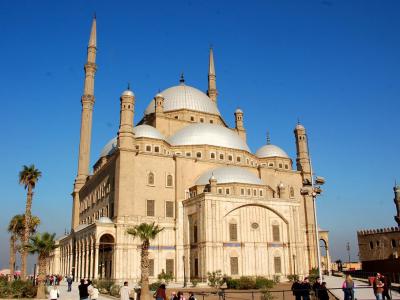
The Mosque of Muhammad Ali Pasha is located at the top of the Salah-ad-Din Citadel in Cairo. It is one of the most visited sites in Cairo.
The mosque was commissioned by the founder of modern Egypt and the last dynasty that ruled Egypt. It is also called the alabaster mosque because of the extensive use of the material in the structure. Unlike other mosques in Egypt that were built in the Mamluk architectural style, it had the style of Turkish Mosques especially the Yeni Mosque in Istanbul. It was designed by the Turkish architect, Yusuf Bushnak.
The Mosque of Muhammad Ali Pasha has a central dome surrounded by four small domes and four semicircular domes. The slender minarets have a Turkish architectural style and are 82 meters high. The tomb of Muhammad Ali Pasha is located at the center of the courtyard and is made of Carrara marble. The arcaded courtyard offers a spectacular view of the city across to the pyramids at Giza. The large prayer hall is covered by a large Turkish-style dome. The Southwestern parapet offers views of Cairo, the Sultan Hassan Mosque and the Ibn Tulun Mosque.
Why You Should Visit:
As part of the Citadel that you get to explore, this mosque stands out the most, especially at night with its beautiful illumination.
Add to this the design and intricacy of the mosaic inside, which truly makes it a great antiquity.
Because it sits on top of a mountain, you can also take in expansive views of the city and the pyramids.
Tip:
Try to go early in the morning or late afternoon to avoid the heat and go on a sunny day as well – makes a lot of difference when enjoying the view!
Be sure to ask the cost of the "tour guide" assistance before you agree to hear more about the mosque.
The mosque was commissioned by the founder of modern Egypt and the last dynasty that ruled Egypt. It is also called the alabaster mosque because of the extensive use of the material in the structure. Unlike other mosques in Egypt that were built in the Mamluk architectural style, it had the style of Turkish Mosques especially the Yeni Mosque in Istanbul. It was designed by the Turkish architect, Yusuf Bushnak.
The Mosque of Muhammad Ali Pasha has a central dome surrounded by four small domes and four semicircular domes. The slender minarets have a Turkish architectural style and are 82 meters high. The tomb of Muhammad Ali Pasha is located at the center of the courtyard and is made of Carrara marble. The arcaded courtyard offers a spectacular view of the city across to the pyramids at Giza. The large prayer hall is covered by a large Turkish-style dome. The Southwestern parapet offers views of Cairo, the Sultan Hassan Mosque and the Ibn Tulun Mosque.
Why You Should Visit:
As part of the Citadel that you get to explore, this mosque stands out the most, especially at night with its beautiful illumination.
Add to this the design and intricacy of the mosaic inside, which truly makes it a great antiquity.
Because it sits on top of a mountain, you can also take in expansive views of the city and the pyramids.
Tip:
Try to go early in the morning or late afternoon to avoid the heat and go on a sunny day as well – makes a lot of difference when enjoying the view!
Be sure to ask the cost of the "tour guide" assistance before you agree to hear more about the mosque.
7) Mosque of Ibn Tulun (must see)
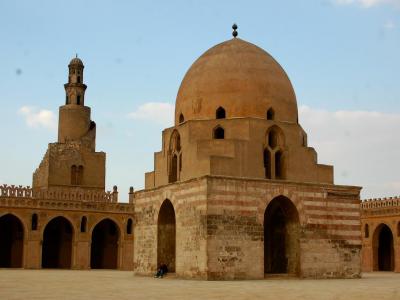
The Mosque of Ibn Tulun is one of the largest, oldest and best-preserved mosques in Egypt. Some scenes of the James Bond movie, 'The Spy Who Loved Me', were filmed here.
The mosque was built between 870 and 879 by the Abbasid Governor Ahmad Ibn Tulun. He was a slave who founded the Tulunid Dynasty that ruled Egypt between 868 and 905. After the fall of the dynasty, the mosque was neglected for many years. It was restored in 1296 by the Mamluk Sultan Lajin. A recent major restoration was carried out in 1999 and the courtyard was paved and the fountain was covered with black marble.
Ibn Tulun Mosque covers an area of 6 acres. It is the third largest Mosque in the world. The galleries have intricately carved stucco arches. It was the first time that stucco was used in Egypt. The unique feature of the building is the minaret. Unlike other minarets, it has a spiral structure. The model is from the minarets found in Samarra, Iraq. A spiral staircase is found on the outside. The minaret arches have a horseshoe shape resembling the type of arches found in Spain and showing the influence of Muslim refugees who fled here after the re-conquest of Spain from the Moors.
Why You Should Visit:
To see what many people agree is one of the most beautiful mosques in Cairo, besides being the oldest intact mosque in the whole of Egypt.
You can enter the mosque to soak in the atmosphere or you can ask the people working there if you could just climb the minaret (me'zana) to get an amazing view of the old city.
Tip:
Before climbing the stairs to the minaret, you can go to the top of the mosque (one set of stairs leads to both) and see the whole place from above.
If you do go inside, don't forget to tip the guy that's going to cover your shoes with pieces of cloth, so that you don't have to take your shoes off.
The mosque was built between 870 and 879 by the Abbasid Governor Ahmad Ibn Tulun. He was a slave who founded the Tulunid Dynasty that ruled Egypt between 868 and 905. After the fall of the dynasty, the mosque was neglected for many years. It was restored in 1296 by the Mamluk Sultan Lajin. A recent major restoration was carried out in 1999 and the courtyard was paved and the fountain was covered with black marble.
Ibn Tulun Mosque covers an area of 6 acres. It is the third largest Mosque in the world. The galleries have intricately carved stucco arches. It was the first time that stucco was used in Egypt. The unique feature of the building is the minaret. Unlike other minarets, it has a spiral structure. The model is from the minarets found in Samarra, Iraq. A spiral staircase is found on the outside. The minaret arches have a horseshoe shape resembling the type of arches found in Spain and showing the influence of Muslim refugees who fled here after the re-conquest of Spain from the Moors.
Why You Should Visit:
To see what many people agree is one of the most beautiful mosques in Cairo, besides being the oldest intact mosque in the whole of Egypt.
You can enter the mosque to soak in the atmosphere or you can ask the people working there if you could just climb the minaret (me'zana) to get an amazing view of the old city.
Tip:
Before climbing the stairs to the minaret, you can go to the top of the mosque (one set of stairs leads to both) and see the whole place from above.
If you do go inside, don't forget to tip the guy that's going to cover your shoes with pieces of cloth, so that you don't have to take your shoes off.
8) The Hanging Church (must see)
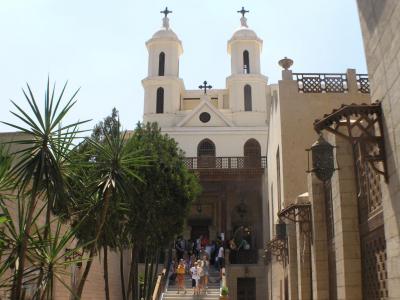
The Hanging Church gets its name from being located above an old Roman Gatehouse in Cairo. Its nave hangs over a passage. The real name of the Church is Sitt Mariam or Saint Mary’s Church.
The Hanging Church is the best-known Coptic Church in Cairo. The Coptic church is one of the early Eastern Orthodox Churches which once had its seat in Alexandria. Today, the Hanging Church is the official residence of the Coptic Pope. It was built in the 7th century and it is believed that there were churches on the site from the 3rd or 4th centuries. It has been rebuilt several times in particular in the 10th century by the Patriarch Abraham.
The Hanging Church has a beautiful courtyard flanked by religious mosaics. The marble pulpit has thirteen pillars representing Jesus and the 12 apostles. It is famous for its icons and the oldest one is from the 8th century. The eastern end has three sanctuaries dedicated to the Virgin Mary, Saint George and Saint John the Baptist. The sanctuary screen dates back to the 12th or 13th centuries and is made of ebony inlaid with ivory. It has a row of seven large icons. The left screen has 17 icons and the right screen has 7 small icons on the top. The church is a thriving place of worship and important celebrations like the enthronement of patriarchs take place here.
Tip:
Go through the door in the wall on the right to enter a half-round part of the church built directly over one of the Roman gate's defensive towers, and from which a window allows you to look down sideways at the gate itself (which is fairly impressive). You can also catch another outside glimpse of the gate and the church on top of it if you walk past the street entrance to the south-west corner of the compound.
The Hanging Church is the best-known Coptic Church in Cairo. The Coptic church is one of the early Eastern Orthodox Churches which once had its seat in Alexandria. Today, the Hanging Church is the official residence of the Coptic Pope. It was built in the 7th century and it is believed that there were churches on the site from the 3rd or 4th centuries. It has been rebuilt several times in particular in the 10th century by the Patriarch Abraham.
The Hanging Church has a beautiful courtyard flanked by religious mosaics. The marble pulpit has thirteen pillars representing Jesus and the 12 apostles. It is famous for its icons and the oldest one is from the 8th century. The eastern end has three sanctuaries dedicated to the Virgin Mary, Saint George and Saint John the Baptist. The sanctuary screen dates back to the 12th or 13th centuries and is made of ebony inlaid with ivory. It has a row of seven large icons. The left screen has 17 icons and the right screen has 7 small icons on the top. The church is a thriving place of worship and important celebrations like the enthronement of patriarchs take place here.
Tip:
Go through the door in the wall on the right to enter a half-round part of the church built directly over one of the Roman gate's defensive towers, and from which a window allows you to look down sideways at the gate itself (which is fairly impressive). You can also catch another outside glimpse of the gate and the church on top of it if you walk past the street entrance to the south-west corner of the compound.
