Custom Walk in Melbourne, Australia by joane_grimaldi_e4595 created on 2025-06-02
Guide Location: Australia » Melbourne
Guide Type: Custom Walk
# of Sights: 16
Tour Duration: 3 Hour(s)
Travel Distance: 4.1 Km or 2.5 Miles
Share Key: PU2A2
Guide Type: Custom Walk
# of Sights: 16
Tour Duration: 3 Hour(s)
Travel Distance: 4.1 Km or 2.5 Miles
Share Key: PU2A2
How It Works
Please retrieve this walk in the GPSmyCity app. Once done, the app will guide you from one tour stop to the next as if you had a personal tour guide. If you created the walk on this website or come to the page via a link, please follow the instructions below to retrieve the walk in the app.
Retrieve This Walk in App
Step 1. Download the app "GPSmyCity: Walks in 1K+ Cities" on Apple App Store or Google Play Store.



Step 2. In the GPSmyCity app, download(or launch) the guide "Melbourne Map and Walking Tours".
Step 3. Tap the menu button located at upper right corner of the "Walks" screen and select "Retrieve custom walk". Enter the share key: PU2A2
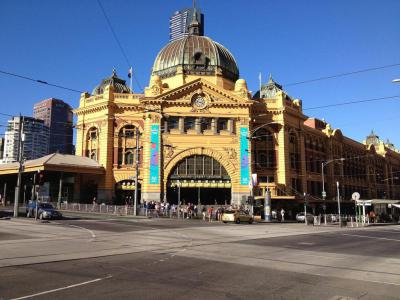
1) Flinders Street Station
If you’re standing at the corner of Flinders and Swanston Streets and wondering why everyone else is looking up—congrats, you’ve found Flinders Street Station! It opened in 1854 as the terminus of Australia’s very first railway, back when “catching a train” meant something closer to “braving an experiment.” Today, it’s still one of Melbourne’s busiest transport hubs, funneling commuters across the suburbs and deep into the city’s daily rhythm.
The building you see now arrived later, finished in 1909. It’s an Edwardian creation that doesn’t believe in subtlety—domes, arches, towers, and enough ornamentation to fuel a century of urban legends. The curious fact associated with this building is that its design was mistakenly swapped with plans for Victoria Terminus in Bombay. No proof, however, but the rumour is almost as iconic as the station itself. Heritage-listed and instantly recognisable, it remains one of Melbourne’s most photographed faces.
And then there are the clocks. If someone in Melbourne tells you to meet them “under the clocks,” they’re not being poetic—that’s the row of indicator clocks above the main entrance. Another classic rendezvous point here is “On the steps.” Basically, this station doubles as both a transit hub and the city’s unofficial meeting app...
Its location doesn’t hurt either. Step outside and you’re right beside Federation Square, the Yarra River, and the maze of laneways, cafés, and arcades that make up the Central Business District. A truly perfect launchpad for whatever you’re doing next...
Indeed, whenever you're in Melbourne, even if you’re not catching a train, this building is always a delight to look at. The food inside is tempting, and—bonus—the station turns into a glowing postcard at night. So, make sure to have a camera handy; it likes the attention...
The building you see now arrived later, finished in 1909. It’s an Edwardian creation that doesn’t believe in subtlety—domes, arches, towers, and enough ornamentation to fuel a century of urban legends. The curious fact associated with this building is that its design was mistakenly swapped with plans for Victoria Terminus in Bombay. No proof, however, but the rumour is almost as iconic as the station itself. Heritage-listed and instantly recognisable, it remains one of Melbourne’s most photographed faces.
And then there are the clocks. If someone in Melbourne tells you to meet them “under the clocks,” they’re not being poetic—that’s the row of indicator clocks above the main entrance. Another classic rendezvous point here is “On the steps.” Basically, this station doubles as both a transit hub and the city’s unofficial meeting app...
Its location doesn’t hurt either. Step outside and you’re right beside Federation Square, the Yarra River, and the maze of laneways, cafés, and arcades that make up the Central Business District. A truly perfect launchpad for whatever you’re doing next...
Indeed, whenever you're in Melbourne, even if you’re not catching a train, this building is always a delight to look at. The food inside is tempting, and—bonus—the station turns into a glowing postcard at night. So, make sure to have a camera handy; it likes the attention...
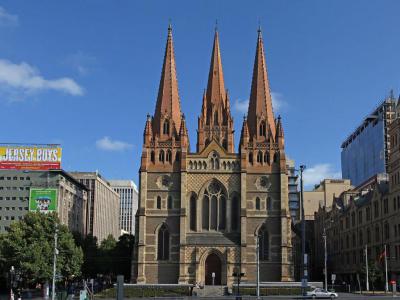
2) St. Paul's Cathedral
Sitting just across from the hustle of Flinders Street Station, Saint Paul’s Cathedral is a calm reminder to everyone that Melbourne’s skyline had a spiritual side long before espresso bars and laneway murals took over. This spot is more meaningful than it looks: it was here that the very first Christian service in the fledgling settlement was held in 1835, after which the site briefly served as a corn market. Indeed, only in Melbourne could a place go from a prayer to a produce before becoming a cathedral...
The building itself is the work of English architect William Butterfield, who designed it in the Gothic Revival style—characterized by soaring arches with a slightly rebellious streak. The foundation stone went in during 1880, the cathedral was consecrated in 1891, and the spires joined the complex in the 1920s, giving Saint Paul’s the silhouette that now anchors the Central Business District.
Inside, the soundscape is just as impressive. The T.C. Lewis organ, shipped from England, remains one of the finest surviving creations of the celebrated 19th-century organ maker. And if you happen to be nearby on a Wednesday or Friday evening—or on a Sunday morning—you’ll hear the bells, too. Cast in 1889 at London’s Whitechapel Bell Foundry, they offer something rare: true 13-bell change ringing, a tradition that usually stays on English soil.
Saint Paul’s keeps its doors open most of the week, so step inside whenever the mood strikes. Whether you’re drawn by the architecture, the music, or simply the peaceful break from the city’s pace, the cathedral delivers a moment of calm in the middle of Melbourne’s constant motion...
The building itself is the work of English architect William Butterfield, who designed it in the Gothic Revival style—characterized by soaring arches with a slightly rebellious streak. The foundation stone went in during 1880, the cathedral was consecrated in 1891, and the spires joined the complex in the 1920s, giving Saint Paul’s the silhouette that now anchors the Central Business District.
Inside, the soundscape is just as impressive. The T.C. Lewis organ, shipped from England, remains one of the finest surviving creations of the celebrated 19th-century organ maker. And if you happen to be nearby on a Wednesday or Friday evening—or on a Sunday morning—you’ll hear the bells, too. Cast in 1889 at London’s Whitechapel Bell Foundry, they offer something rare: true 13-bell change ringing, a tradition that usually stays on English soil.
Saint Paul’s keeps its doors open most of the week, so step inside whenever the mood strikes. Whether you’re drawn by the architecture, the music, or simply the peaceful break from the city’s pace, the cathedral delivers a moment of calm in the middle of Melbourne’s constant motion...
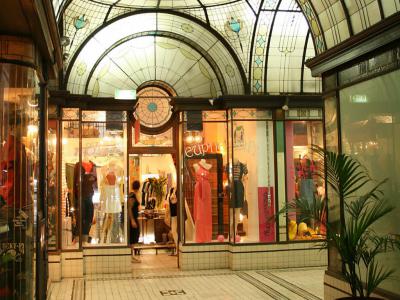
3) Cathedral Arcade
Swing around the corner of Flinders Lane and Swanston Street, and you’ll slip straight into Cathedral Arcade—the ground-floor gateway to the ever-intriguing Nicholas Building. A couple of cafés and boutique shops keep the space humming, but the real reason people pause here is the architecture itself. The leadlight archway and central domes, completed in 1925, glow like a preserved slice of Melbourne’s Art Deco dream, which is why the whole arcade proudly sits on the Victorian Heritage Register.
Above it rises the Nicholas Building, designed by Harry Norris and completed in 1926, right as Melbourne was embracing its Art Deco moment with enthusiasm. Its look is sometimes described as Commercial Palazzo, sometimes as Chicago School—either way, the terracotta façade and oversized Ionic and Doric columns certainly know how to strike a pose. For decades, this building has been something of a vertical village for creative types: fashion designers, illustrators, architects, and assorted makers who add a quiet dose of artistic electricity to every floor.
You can wander into the Nicholas Building directly through Cathedral Arcade, but if you’re lucky enough to visit on an Open Studio day, the experience gets even better. That’s when the artists throw open their doors and let you peek into their worlds—paint-splattered desks, half-finished projects, and all that... It’s one of the few chances in Melbourne where you can admire heritage architecture downstairs and creative chaos upstairs, all in a single stop.
Above it rises the Nicholas Building, designed by Harry Norris and completed in 1926, right as Melbourne was embracing its Art Deco moment with enthusiasm. Its look is sometimes described as Commercial Palazzo, sometimes as Chicago School—either way, the terracotta façade and oversized Ionic and Doric columns certainly know how to strike a pose. For decades, this building has been something of a vertical village for creative types: fashion designers, illustrators, architects, and assorted makers who add a quiet dose of artistic electricity to every floor.
You can wander into the Nicholas Building directly through Cathedral Arcade, but if you’re lucky enough to visit on an Open Studio day, the experience gets even better. That’s when the artists throw open their doors and let you peek into their worlds—paint-splattered desks, half-finished projects, and all that... It’s one of the few chances in Melbourne where you can admire heritage architecture downstairs and creative chaos upstairs, all in a single stop.
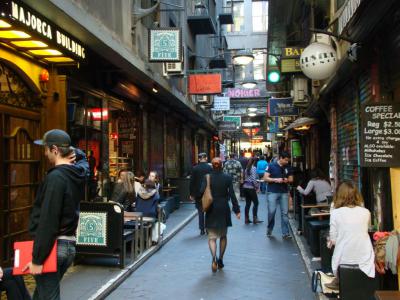
4) Centre Place
If your ideal afternoon involves good food, a little shopping, and a healthy splash of street art, Centre Place is ready to check every box. Picture a narrow, bustling laneway that feels like Melbourne’s own version of Harry Potter's Diagon Alley—minus the owls, plus a lot more caffeine... Its blue cobblestones are framed by tiny boutiques, hole-in-the-wall cafés, and bars that seem to squeeze into every available corner, all wrapped in layers of graffiti that change with the seasons—and sometimes overnight...
This little artery sits along the pedestrian path linking Flinders Street Station to the Collins Street shopping area. Anyone making that journey inevitably slips through a greatest-hits lineup of Melbourne laneways: Campbell Arcade, Degraves Street, Centre Place, and Centreway Arcade. It’s like a walking sampler of the city’s personality, and Centre Place tends to be the loudest voice in the chorus.
The laneway didn’t always have this magnetic pull, though. Back in the 1980s, it received a full makeover aimed at drawing in more restaurants and small businesses. The plan worked a little too well—today it’s one of the Central Business District’s most beloved pockets, buzzing from breakfast to late afternoon with locals, office workers, and camera-wielding visitors discovering just how much life can fit into one very tight alley.
This little artery sits along the pedestrian path linking Flinders Street Station to the Collins Street shopping area. Anyone making that journey inevitably slips through a greatest-hits lineup of Melbourne laneways: Campbell Arcade, Degraves Street, Centre Place, and Centreway Arcade. It’s like a walking sampler of the city’s personality, and Centre Place tends to be the loudest voice in the chorus.
The laneway didn’t always have this magnetic pull, though. Back in the 1980s, it received a full makeover aimed at drawing in more restaurants and small businesses. The plan worked a little too well—today it’s one of the Central Business District’s most beloved pockets, buzzing from breakfast to late afternoon with locals, office workers, and camera-wielding visitors discovering just how much life can fit into one very tight alley.
5) Degraves Street
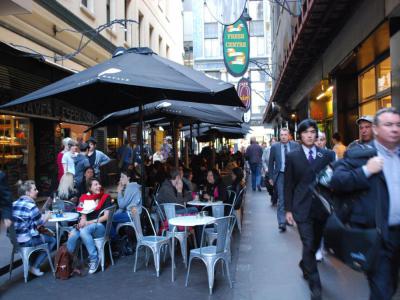
Slip off Flinders Street and onto Degraves, and suddenly Melbourne feels like it’s trying on a little Parisian flair. This narrow cobbled lane is strictly for pedestrians—no cars, just the steady hum of coffee machines, clinking glasses, and people debating which café has the best flat white. If you’re hunting for a sunny table to enjoy lunch outdoors, Degraves practically waves you over. Just don’t mix it up with Centre Place, its equally charming but often confused neighbour.
Look up, and you’ll spot the taller buildings that have been reborn as loft-style apartments, adding residents—and energy—to the laneway below. Down at street level, the soundtrack is classic Melbourne: buskers setting the mood, street art bursting from every corner, and the occasional splash of graffiti reminding you that creativity here comes in all forms.
The name “Degraves” goes back to Charles and William Degraves, merchants from Hobart who arrived here with flour-mill ambitions in 1849. William later dabbled in local politics, proving that even back then, Degraves attracted people who liked to stay busy...
Today, the lane acts as a lively connector between Flinders Street Station and the shopping streets to the north. If you need a shortcut underground, Campbell Arcade—better known to locals as the Degraves Underpass—whisks you beneath the traffic. Keep an eye out for the Platform Artists Group, who regularly turn the space into an ever-changing mini-gallery.
Step in, slow down, and enjoy the show—Degraves is Melbourne’s laneway culture at its most irresistible.
Look up, and you’ll spot the taller buildings that have been reborn as loft-style apartments, adding residents—and energy—to the laneway below. Down at street level, the soundtrack is classic Melbourne: buskers setting the mood, street art bursting from every corner, and the occasional splash of graffiti reminding you that creativity here comes in all forms.
The name “Degraves” goes back to Charles and William Degraves, merchants from Hobart who arrived here with flour-mill ambitions in 1849. William later dabbled in local politics, proving that even back then, Degraves attracted people who liked to stay busy...
Today, the lane acts as a lively connector between Flinders Street Station and the shopping streets to the north. If you need a shortcut underground, Campbell Arcade—better known to locals as the Degraves Underpass—whisks you beneath the traffic. Keep an eye out for the Platform Artists Group, who regularly turn the space into an ever-changing mini-gallery.
Step in, slow down, and enjoy the show—Degraves is Melbourne’s laneway culture at its most irresistible.
6) Block Arcade (must see)
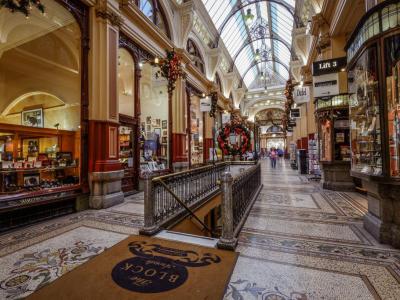
If Melbourne had a catwalk, the Block Arcade would be strutting right down the middle of it in full glamour mode. Opened in 1892, this lavish stretch of French Renaissance beauty is all towering arches, ornate cornices, and decorative tiles—basically the architectural equivalent of overdressing for every occasion, and loving it. Inside, boutiques and tea rooms line the walkways, echoing the days when this was the most fashionable shopping runway in town just off Collins Street.
Shaped like an elegant L and crowned at the bend with a domed rotunda that refuses to be ignored, the arcade links Elizabeth Street to Collins Street. And if you walk in from the Collins side, you’ll find yourself facing its slightly older sibling, the Royal Arcade, as if the two have been politely competing for attention since the Victorian era...
The name “Block Arcade” comes from the 19th-century pastime of “doing the block,” when Melbourne’s elite would dress to impress and glide along Collins Street and its arcades. This was the place to see—and be seen—long before Instagram tried to claim the job...
Nowadays, people keep stopping by because a walk through the Block Arcade feels like stepping straight into Victorian Melbourne, minus the horse-drawn traffic... Those soaring six-storey façades and meticulously restored interior are textbook Mannerist drama, and the whole place is proudly listed on the Victorian Heritage Register—because, frankly, how could it possibly not be?
And now for a tip worthy of your inner aristocrat: the Hopetoun Tea Rooms. First opened in 1894 and redecorated in 1976 in full Victorian splendour, it still delivers the kind of tea service that expects you to sit up straight and behave elegantly—well, at least until dessert arrives...
Since you're already here, glance across the street to the Royal Arcade for another dose of grandeur. Or take a quick detour into Block Court next door—its Art Deco interior no longer houses an arcade of shops, but it certainly still knows how to make an entrance.
Shaped like an elegant L and crowned at the bend with a domed rotunda that refuses to be ignored, the arcade links Elizabeth Street to Collins Street. And if you walk in from the Collins side, you’ll find yourself facing its slightly older sibling, the Royal Arcade, as if the two have been politely competing for attention since the Victorian era...
The name “Block Arcade” comes from the 19th-century pastime of “doing the block,” when Melbourne’s elite would dress to impress and glide along Collins Street and its arcades. This was the place to see—and be seen—long before Instagram tried to claim the job...
Nowadays, people keep stopping by because a walk through the Block Arcade feels like stepping straight into Victorian Melbourne, minus the horse-drawn traffic... Those soaring six-storey façades and meticulously restored interior are textbook Mannerist drama, and the whole place is proudly listed on the Victorian Heritage Register—because, frankly, how could it possibly not be?
And now for a tip worthy of your inner aristocrat: the Hopetoun Tea Rooms. First opened in 1894 and redecorated in 1976 in full Victorian splendour, it still delivers the kind of tea service that expects you to sit up straight and behave elegantly—well, at least until dessert arrives...
Since you're already here, glance across the street to the Royal Arcade for another dose of grandeur. Or take a quick detour into Block Court next door—its Art Deco interior no longer houses an arcade of shops, but it certainly still knows how to make an entrance.
7) Melbourne Town Hall
Melbourne Town Hall, commonly known as Town Hall, serves as the administrative hub for the local government of the City of Melbourne. It houses the primary offices of the Lord Mayor and city council members.
Melbourne was officially granted town status on December 13, 1842, with Henry Condell serving as its inaugural Mayor. However, the construction of its first Town Hall was not completed until 1854. The foundation stone for a new, more grandiose Town Hall was laid on November 29, 1867, by Prince Alfred, Duke of Edinburgh, during his visit to Melbourne. The current town hall was officially inaugurated on August 11, 1870, with a lavish ball personally funded by the Lord Mayor Samuel Amess.
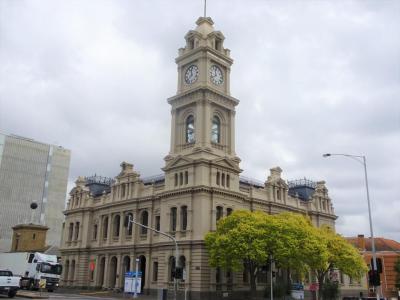
This architectural gem was designed by the renowned local architect Joseph Reed and Barnes, following the Second Empire architectural style. The building features Prince Alfred's Tower, named after the Duke. The tower includes a clock with a diameter of 2.44 meters, which was initiated on August 31, 1874, as a gift to the council from the Mayor's son, Vallange Condell. It was constructed by Smith and Sons of London. The longest of its copper clock hands measures 1.19 meters in length and weighs 8.85 kilograms.
The Town Hall building was officially recognized as a heritage site and added to the Victorian Heritage Register in 1974. This building is regularly utilized for various art and cultural activities, including concerts, festivals, theatrical performances, and exhibitions. Notably, in 1964, The Beatles were guests at a civic reception held at the Melbourne Town Hall. A massive crowd of around 20,000 teenagers had assembled outside in anticipation of catching a glimpse of these iconic pop stars.
Melbourne was officially granted town status on December 13, 1842, with Henry Condell serving as its inaugural Mayor. However, the construction of its first Town Hall was not completed until 1854. The foundation stone for a new, more grandiose Town Hall was laid on November 29, 1867, by Prince Alfred, Duke of Edinburgh, during his visit to Melbourne. The current town hall was officially inaugurated on August 11, 1870, with a lavish ball personally funded by the Lord Mayor Samuel Amess.
This architectural gem was designed by the renowned local architect Joseph Reed and Barnes, following the Second Empire architectural style. The building features Prince Alfred's Tower, named after the Duke. The tower includes a clock with a diameter of 2.44 meters, which was initiated on August 31, 1874, as a gift to the council from the Mayor's son, Vallange Condell. It was constructed by Smith and Sons of London. The longest of its copper clock hands measures 1.19 meters in length and weighs 8.85 kilograms.
The Town Hall building was officially recognized as a heritage site and added to the Victorian Heritage Register in 1974. This building is regularly utilized for various art and cultural activities, including concerts, festivals, theatrical performances, and exhibitions. Notably, in 1964, The Beatles were guests at a civic reception held at the Melbourne Town Hall. A massive crowd of around 20,000 teenagers had assembled outside in anticipation of catching a glimpse of these iconic pop stars.
8) Howey Place
If you ever wanted to slip into a quieter corner of Melbourne without actually leaving the Central Business District (or CBD), Howey Place is your shortcut—though it didn’t always look this polished. Back in the late nineteenth century, this narrow passage was part of Cole’s Walk, a no-frills thoroughfare lined with small shops and casual stalls.
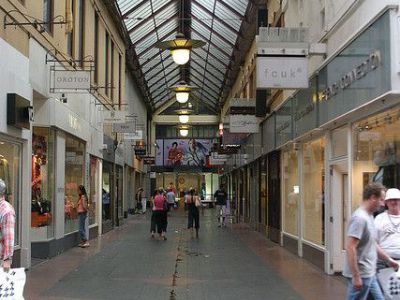
Its transformation into a proper arcade began in 1896, when Edward William Cole, the entrepreneurial showman behind Cole’s Book Arcade, decided the place deserved a little glamour. He installed a glass canopy, turned it into a sheltered retail strip, and suddenly Melbourne had a chic new pathway linking Bourke Street with Little Collins Street. Early residents—a bookstore, a print shop, a toy store—set the tone for the cosy, tucked-away vibe the lane still carries.
The name itself harks back to Henry Howey, who bought the land for the princely sum of £128 in 1837, long before anyone imagined fashion boutiques would one day claim it. The early twentieth century added even more character, with the Howey Court buildings and their Edwardian façades giving the lane the kind of architectural charm that makes passers-by slow down without quite knowing why...
Of course, the laneway hasn’t been immune to change. Howey House, a 1930s Art Deco number, once graced the site before it was replaced in the 1980s by what’s now the Sportsgirl Centre. But despite the comings and goings, Howey Place has held on to its identity. The tiled floors, preserved shopfronts, and signature glass canopy all whisper back to the early age of Melbourne’s arcade culture—a reminder that the city has always loved its hidden passages and compact commercial nooks...
Walking through it today feels a bit like stepping into a refined pocket of retail history, tucked neatly between the modern pulse of the CBD.
Its transformation into a proper arcade began in 1896, when Edward William Cole, the entrepreneurial showman behind Cole’s Book Arcade, decided the place deserved a little glamour. He installed a glass canopy, turned it into a sheltered retail strip, and suddenly Melbourne had a chic new pathway linking Bourke Street with Little Collins Street. Early residents—a bookstore, a print shop, a toy store—set the tone for the cosy, tucked-away vibe the lane still carries.
The name itself harks back to Henry Howey, who bought the land for the princely sum of £128 in 1837, long before anyone imagined fashion boutiques would one day claim it. The early twentieth century added even more character, with the Howey Court buildings and their Edwardian façades giving the lane the kind of architectural charm that makes passers-by slow down without quite knowing why...
Of course, the laneway hasn’t been immune to change. Howey House, a 1930s Art Deco number, once graced the site before it was replaced in the 1980s by what’s now the Sportsgirl Centre. But despite the comings and goings, Howey Place has held on to its identity. The tiled floors, preserved shopfronts, and signature glass canopy all whisper back to the early age of Melbourne’s arcade culture—a reminder that the city has always loved its hidden passages and compact commercial nooks...
Walking through it today feels a bit like stepping into a refined pocket of retail history, tucked neatly between the modern pulse of the CBD.
9) Royal Arcade
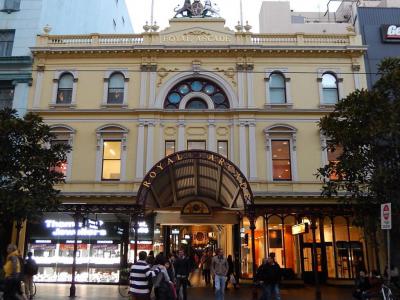
Built in 1870 and proudly sitting on the Victorian Heritage Register, the Royal Arcade radiates an easy kind of glamour, the sort that comes naturally to Melbourne’s oldest surviving arcade. You can slip inside from Bourke, Elizabeth, or Little Collins Streets, and no matter which door you choose, the place wastes no time announcing itself as a long-standing city favourite. Over the decades, shopfronts slowly drifted away from the original design, but a major early-2000s restoration coaxed everything back into its polished 1894 glory.
Inside, the Royal Arcade delivers the full package: boutiques for browsing, cafés for lingering, and vintage shops that tempt you into “just one more look.” But the true stars are waiting at the Little Collins Street entrance—Gog and Magog, the seven-foot giants who guard the Gaunt clock with the kind of enthusiasm only mythical porters can muster. They’ve been here since 1892, carved from pine and modeled after the figures in London’s Guildhall. Every hour, their arms rise to strike the chime, which is their way of reminding you that time is passing… and perhaps so is your chance to grab that pastry you’ve been eyeing.
Their backstory is delightfully dramatic. In legend, Gog and Magog represent the struggle between ancient Britons and Trojan settlers. Ultimately captured and made to serve as porters, they now hold that role for eternity—both in London and here, where clockmaker and jeweler Thomas Gaunt installed them two decades after the arcade opened. So, as you wander beneath the glass ceilings and mosaic floors, remember: even giants have day jobs, and these two have been keeping Melbourne on schedule for over a century...
Inside, the Royal Arcade delivers the full package: boutiques for browsing, cafés for lingering, and vintage shops that tempt you into “just one more look.” But the true stars are waiting at the Little Collins Street entrance—Gog and Magog, the seven-foot giants who guard the Gaunt clock with the kind of enthusiasm only mythical porters can muster. They’ve been here since 1892, carved from pine and modeled after the figures in London’s Guildhall. Every hour, their arms rise to strike the chime, which is their way of reminding you that time is passing… and perhaps so is your chance to grab that pastry you’ve been eyeing.
Their backstory is delightfully dramatic. In legend, Gog and Magog represent the struggle between ancient Britons and Trojan settlers. Ultimately captured and made to serve as porters, they now hold that role for eternity—both in London and here, where clockmaker and jeweler Thomas Gaunt installed them two decades after the arcade opened. So, as you wander beneath the glass ceilings and mosaic floors, remember: even giants have day jobs, and these two have been keeping Melbourne on schedule for over a century...
10) Hardware Lane
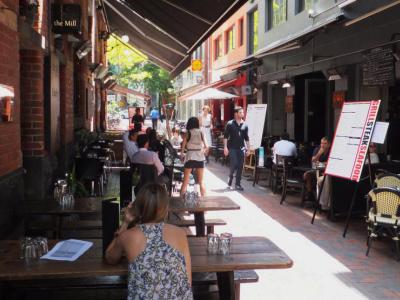
Hardware Lane is one of those Melbourne spots where you stroll in for a coffee and accidentally stay long enough to consider ordering dinner… and maybe dessert. Stretching north to south between Bourke and Little Lonsdale Streets, it even switches names halfway through—because in Melbourne, even the laneways like a costume change. North of Lonsdale, it becomes Hardware Street, as if preparing for its next act...
By daylight, the lane buzzes with cafés, restaurants, hairdressers, and the occasional fast-food joint for those feeling less “culinary adventure” and more “quick rescue mission.” Come evening, the red brick pavement glows under warm lights, the traffic barriers go up from 11 a.m. to 11 p.m., and you might even catch a live jazz set drifting through the tables like the soundtrack to a European holiday you forgot you booked.
Its past is just as colorful. Back in 1857, it was Wrights Lane, and even earlier, it played host to Kirk’s Horse Bazaar—a bustling 1840s marketplace where traders haggled over horses instead of brunch menus. It later became home to Melbourne’s Tattersall’s Club, where bookmakers and punters settled their bets, proving that lively negotiation has always been part of the lane’s DNA.
By the late 1800s, Wrights Lane was lined with hotels: Kirks Bazaar Hotel on one corner, the Governor Arthur Hotel on the other, and the Shamrock Hotel holding court at the Lonsdale end. Today, not a single hotel remains, but the lane has kept the flair for hospitality—just with better coffee and fewer horses...
Keep an eye out for Dynon’s Building at numbers 63–73. Designed by William Pitt—renowned for his work on some of the city's finest Gothic revival buildings, including the Princess Theatre—its four handsome warehouses give the lane a touch of historical swagger.
By daylight, the lane buzzes with cafés, restaurants, hairdressers, and the occasional fast-food joint for those feeling less “culinary adventure” and more “quick rescue mission.” Come evening, the red brick pavement glows under warm lights, the traffic barriers go up from 11 a.m. to 11 p.m., and you might even catch a live jazz set drifting through the tables like the soundtrack to a European holiday you forgot you booked.
Its past is just as colorful. Back in 1857, it was Wrights Lane, and even earlier, it played host to Kirk’s Horse Bazaar—a bustling 1840s marketplace where traders haggled over horses instead of brunch menus. It later became home to Melbourne’s Tattersall’s Club, where bookmakers and punters settled their bets, proving that lively negotiation has always been part of the lane’s DNA.
By the late 1800s, Wrights Lane was lined with hotels: Kirks Bazaar Hotel on one corner, the Governor Arthur Hotel on the other, and the Shamrock Hotel holding court at the Lonsdale end. Today, not a single hotel remains, but the lane has kept the flair for hospitality—just with better coffee and fewer horses...
Keep an eye out for Dynon’s Building at numbers 63–73. Designed by William Pitt—renowned for his work on some of the city's finest Gothic revival buildings, including the Princess Theatre—its four handsome warehouses give the lane a touch of historical swagger.
11) Tattersalls Lane
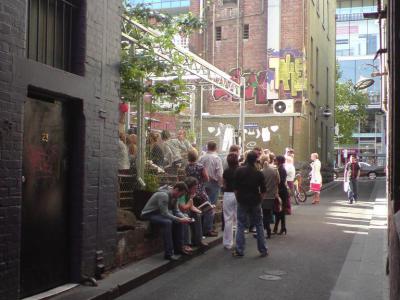
At a glance, Tattersalls Lane may look like a narrow cut-through, but give it a few steps and it turns into a full-blown mood—somewhere between Melbourne’s business core and the bright pull of Chinatown. The laneway takes its name from the old Tattersalls Hotel and Club, though its 19th-century life of brooms, barrels, and back-of-house chores is long gone. Today, it feels more like a compact festival ground that never officially ends. Its location beside Little Bourke Street keeps a steady flow of Chinatown energy drifting in, and that influence colours nearly everything: the food, the pace, and the unapologetically late hours.
The star, of course, is Section 8—a bar built from shipping containers that somehow became one of Melbourne’s most recognisable meeting spots. It sets the tone for the whole lane: open air, slightly chaotic, and effortlessly cool. From there, you’re surrounded by an easy jumble of dumpling joints, Thai and pan-Asian counters, quick-fire noodle kitchens, and snack stalls dishing out skewers, stir-fries, and bubble tea long after office lights go dark. Graffiti wraps the walls, neon hums overhead, and the seating looks like it was collected from five different garages—which is exactly why people love it.
A few venues stand out even in all that colour. The Shanghai Dumpling House remains a crowd magnet, Xiaolong Kan turns hot pots into theatre, and an all-you-can-eat Indian spot adds unexpected spice to the mix. Above the laneway, Ferdydurke serves cocktails with a wink and a view of the action below. Street art completes the backdrop, changing often enough that the lane feels like a rotating exhibition.
For visitors, Tattersalls Lane delivers a concentrated hit of Melbourne’s laneway spirit—informal, multicultural, lively, and best approached with curiosity. It’s a small stretch with a big personality, and it rewards anyone who lets the night unfold one bite, one beat, and one mural at a time...
The star, of course, is Section 8—a bar built from shipping containers that somehow became one of Melbourne’s most recognisable meeting spots. It sets the tone for the whole lane: open air, slightly chaotic, and effortlessly cool. From there, you’re surrounded by an easy jumble of dumpling joints, Thai and pan-Asian counters, quick-fire noodle kitchens, and snack stalls dishing out skewers, stir-fries, and bubble tea long after office lights go dark. Graffiti wraps the walls, neon hums overhead, and the seating looks like it was collected from five different garages—which is exactly why people love it.
A few venues stand out even in all that colour. The Shanghai Dumpling House remains a crowd magnet, Xiaolong Kan turns hot pots into theatre, and an all-you-can-eat Indian spot adds unexpected spice to the mix. Above the laneway, Ferdydurke serves cocktails with a wink and a view of the action below. Street art completes the backdrop, changing often enough that the lane feels like a rotating exhibition.
For visitors, Tattersalls Lane delivers a concentrated hit of Melbourne’s laneway spirit—informal, multicultural, lively, and best approached with curiosity. It’s a small stretch with a big personality, and it rewards anyone who lets the night unfold one bite, one beat, and one mural at a time...
12) MidCity Arcade
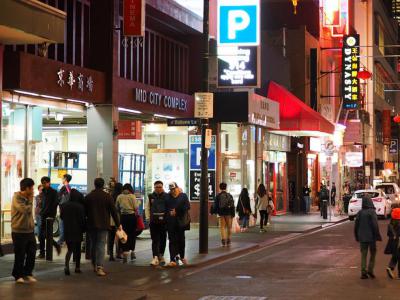
From the outside, MidCity Arcade may appear just like another slender corridor, threading between Bourke Street and Little Bourke Street—one you could easily breeze past without noticing. But doing so would mean missing one of the Central Business District’s most reliable shortcuts to a good meal. Sitting right on the edge of Chinatown and smack in the middle of Melbourne’s busiest shopping zone, it’s essentially the city’s culinary express lane: step in, and you’re already halfway to lunch.
Once inside, the arcade wastes no time announcing its loyalties. The place leans firmly toward Asian flavours, and proudly so. In the space of a short stroll, you’ll pass Japanese ramen bars, Korean barbecue grills, Chinese dumpling shops, bubble-tea counters, and Southeast Asian lunch spots all vying for your attention. It’s the kind of setup where your dinner plans change three times before you reach the escalator. Prices stay friendly, dishes arrive quickly, and portions are built with the hungry wanderer in mind—perfect for anyone darting between museums, retail therapy, or Melbourne’s addictive laneways.
Food may be the arcade’s heartbeat, but it doesn’t stop there. More than 30 retailers squeeze into the mix, including fashion boutiques, tech stores, beauty shops, travel services, and even a cinema for when you need a breather. Sit-down favourites like Kaneda and King’s No. 1 Café add a calmer option amid the bustle, though the overall feel remains brisk and canteen-like. There’s even a parking garage tucked beneath the complex, accessible from Chinatown, for those who prefer to roll straight in.
Most visitors pair MidCity Arcade with two obvious neighbours: Chinatown and the Bourke Street Mall. Together, they form Melbourne’s trifecta of eating, browsing, and people-watching. The arcade simply distills that spirit into one compact, easy-to-navigate slice of the city—no reservations required, no big budget needed, just an appetite and a willingness to follow your nose...
Once inside, the arcade wastes no time announcing its loyalties. The place leans firmly toward Asian flavours, and proudly so. In the space of a short stroll, you’ll pass Japanese ramen bars, Korean barbecue grills, Chinese dumpling shops, bubble-tea counters, and Southeast Asian lunch spots all vying for your attention. It’s the kind of setup where your dinner plans change three times before you reach the escalator. Prices stay friendly, dishes arrive quickly, and portions are built with the hungry wanderer in mind—perfect for anyone darting between museums, retail therapy, or Melbourne’s addictive laneways.
Food may be the arcade’s heartbeat, but it doesn’t stop there. More than 30 retailers squeeze into the mix, including fashion boutiques, tech stores, beauty shops, travel services, and even a cinema for when you need a breather. Sit-down favourites like Kaneda and King’s No. 1 Café add a calmer option amid the bustle, though the overall feel remains brisk and canteen-like. There’s even a parking garage tucked beneath the complex, accessible from Chinatown, for those who prefer to roll straight in.
Most visitors pair MidCity Arcade with two obvious neighbours: Chinatown and the Bourke Street Mall. Together, they form Melbourne’s trifecta of eating, browsing, and people-watching. The arcade simply distills that spirit into one compact, easy-to-navigate slice of the city—no reservations required, no big budget needed, just an appetite and a willingness to follow your nose...
13) Old Treasury Building
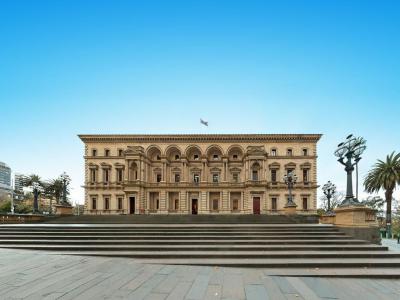
Located within one of Australia's most esteemed 19th-century Gothic Revival buildings, the City Museum of Old Treasury offers an excellent opportunity to delve into Melbourne's rich history. Constructed in 1862, this building served as a key government facility for 130 years and initially functioned as a secure repository for Melbourne's newfound wealth during the gold rush era. In 1992, following the conclusion of its governmental role, the building underwent restoration and was reborn as the City Museum of Old Treasury in 1994. Today, visitors can explore numerous permanent exhibitions along with temporary and visiting displays.
One notable permanent exhibition is "Victorian Archival Treasures," where you can gain insights into various aspects of Melbourne's history, such as Ned Kelly, gold miners from the 1850s, indigenous Victorians, renowned criminals, and the city's early settlement. "Built On Gold" delves into the gold rush period from 1852 to 1862, and this exhibition is situated within the building's former gold vaults. "Growing Up In Old Treasury" recounts the experiences of the Maynard family, who resided in the basement of the building during the 1920s when the father served as superintendent.
One notable permanent exhibition is "Victorian Archival Treasures," where you can gain insights into various aspects of Melbourne's history, such as Ned Kelly, gold miners from the 1850s, indigenous Victorians, renowned criminals, and the city's early settlement. "Built On Gold" delves into the gold rush period from 1852 to 1862, and this exhibition is situated within the building's former gold vaults. "Growing Up In Old Treasury" recounts the experiences of the Maynard family, who resided in the basement of the building during the 1920s when the father served as superintendent.
14) Scots' Church
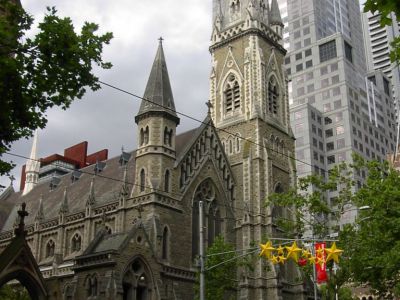
Scot’s Church, located in Collin’s Street in the CBD, was the first Presbyterian Church congregation in Victoria, with services starting in 1836 on the banks of the Yarra River. The congregation grew and applied for a land grant, which was promptly supplied and in 1841 a church to seat 500 was built on the site. But as numbers in the congregation continued to increase, it became apparent in 1869 that a grander building was needed. The foundation stone was laid in 1873 and the decorated Gothic style church was inaugurated on 29th November, 1874.
The church spire was originally 210 feet and was for a very long time the highest point in the city. In 1963 the spire was extensively damaged by lightning and it was lowered by 40 feet. The interior of the church is well known for its use of Tasmanian blackwood timber and stunning stained glass windows featuring the last supper. There is an impressive war memorial mosaic near the entrance to the church that was unveiled in 1961 in the presence of Sir Robert Menzies, former prime minister, and Queen Elizabeth II. World renowned opera singer, Dame Nellie Melba, is said to have begun and ended her singing career in the Scot’s Church choir.
The church spire was originally 210 feet and was for a very long time the highest point in the city. In 1963 the spire was extensively damaged by lightning and it was lowered by 40 feet. The interior of the church is well known for its use of Tasmanian blackwood timber and stunning stained glass windows featuring the last supper. There is an impressive war memorial mosaic near the entrance to the church that was unveiled in 1961 in the presence of Sir Robert Menzies, former prime minister, and Queen Elizabeth II. World renowned opera singer, Dame Nellie Melba, is said to have begun and ended her singing career in the Scot’s Church choir.
15) Forum Theatre
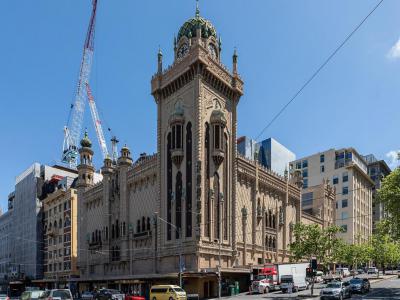
Melbourne has long been considered the cultural capital of Australia, and the Forum Theatre is one of the city’s best known cultural landmarks. Formerly known as the “State Theatre”, it was originally built as a movie palace. When the theatre opened in 1929, it had the largest seating capacity in the country with space for 3371 people. The building was designed by John Eberson, an American architect, who was well known around the world for his theatres. The exterior was in the Moorish revival style, with decadent minarets, cupola and an attention grabbing clock tower. The interior was done in an ornate Greco-Roman style and the ceiling was peppered with stars to emulate the twinkling night sky.
Today the theatre is no longer a cinema, but has for many years been used for a wide variety of theatrical, musical and cultural performances. Entertainers such as Oasis, Katy Perry and Ozzy Osborne have performed there and it is a regular venue for the Melbourne International Film Festival and Melbourne International Comedy Festival. The Forum Theatre has been on the Victorian Heritage Register since 1981.
Today the theatre is no longer a cinema, but has for many years been used for a wide variety of theatrical, musical and cultural performances. Entertainers such as Oasis, Katy Perry and Ozzy Osborne have performed there and it is a regular venue for the Melbourne International Film Festival and Melbourne International Comedy Festival. The Forum Theatre has been on the Victorian Heritage Register since 1981.
16) Young and Jackson
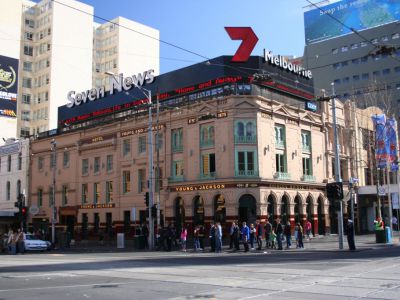
Young and Jackson is a renowned pub in Melbourne, situated across from the prominent Flinders Street Station steps. This establishment offers a captivating view of the bustling heart of Melbourne's Central Business District, overlooking Federation Square, the Melbourne Cricket Ground (MCG), and more.
This pub serves as a central hub for the local community, and it's affectionately known as the locals' go-to spot in Melbourne. It's a place where friends gather, families unwind, and everyone can have a good time. If you're in the mood for classic pub fare, you're in luck. Their skilled chefs have curated a delightful menu featuring a range of dishes, from high-quality steaks to fish and chips, with vegetarian options in between. Their talented bartenders are also known for crafting the finest refreshing beverages in Melbourne.
Young and Jackson, a building steeped in history since its establishment in 1861, has undergone meticulous restoration and refurbishment over the years. This effort has seamlessly merged the charm of a boutique bar with the traditional essence of a pub. Notably, the pub is home to the famous nude portrait, Chloe, a Melbourne icon and the mascot of the HMAS Melbourne. This exquisite work of art has graced the walls of the Young and Jackson Hotel since 1909, embodying grace and celebrity status.
This pub serves as a central hub for the local community, and it's affectionately known as the locals' go-to spot in Melbourne. It's a place where friends gather, families unwind, and everyone can have a good time. If you're in the mood for classic pub fare, you're in luck. Their skilled chefs have curated a delightful menu featuring a range of dishes, from high-quality steaks to fish and chips, with vegetarian options in between. Their talented bartenders are also known for crafting the finest refreshing beverages in Melbourne.
Young and Jackson, a building steeped in history since its establishment in 1861, has undergone meticulous restoration and refurbishment over the years. This effort has seamlessly merged the charm of a boutique bar with the traditional essence of a pub. Notably, the pub is home to the famous nude portrait, Chloe, a Melbourne icon and the mascot of the HMAS Melbourne. This exquisite work of art has graced the walls of the Young and Jackson Hotel since 1909, embodying grace and celebrity status.
