Custom Walk in Tallinn, Estonia by anndaveylondon_ddd55 created on 2025-06-05
Guide Location: Estonia » Tallinn
Guide Type: Custom Walk
# of Sights: 15
Tour Duration: 2 Hour(s)
Travel Distance: 3.6 Km or 2.2 Miles
Share Key: 8WPFS
Guide Type: Custom Walk
# of Sights: 15
Tour Duration: 2 Hour(s)
Travel Distance: 3.6 Km or 2.2 Miles
Share Key: 8WPFS
How It Works
Please retrieve this walk in the GPSmyCity app. Once done, the app will guide you from one tour stop to the next as if you had a personal tour guide. If you created the walk on this website or come to the page via a link, please follow the instructions below to retrieve the walk in the app.
Retrieve This Walk in App
Step 1. Download the app "GPSmyCity: Walks in 1K+ Cities" on Apple App Store or Google Play Store.



Step 2. In the GPSmyCity app, download(or launch) the guide "Tallinn Map and Walking Tours".
Step 3. Tap the menu button located at upper right corner of the "Walks" screen and select "Retrieve custom walk". Enter the share key: 8WPFS
1) Kohtuotsa Viewing Point (must see)
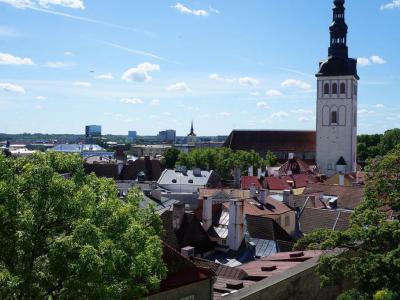
Kohtuotsa Viewing Point, located in Tallinn, is one of the city's most popular and picturesque viewpoints. Perched on Toompea Hill in the heart of Tallinn's historic Old Town, this viewing platform offers visitors breathtaking panoramic views of the city and its surroundings. It's easily accessible on foot from various parts of the Old Town and is a must-visit attraction for tourists exploring Tallinn's historic center.
The main attraction of Kohtuotsa Viewing Point is the stunning view it provides. From this vantage point, visitors can enjoy a sweeping vista of Tallinn's Old Town, the modern cityscape, and the picturesque Gulf of Finland. It's particularly beautiful at sunrise and sunset when the city is bathed in warm, golden light.
The viewpoint allows you to spot several iconic landmarks of Tallinn, including the medieval walls and towers of the Old Town, Alexander Nevsky Cathedral with its onion domes, and the spires of Saint Olaf's Church. You'll also have a clear view of the bustling city below and the harbor in the distance.
The viewing point features a raised platform with safety railings, which provides a safe and comfortable place to take in the scenery. It's a popular spot for photography, so be sure to bring your camera or smartphone to capture the stunning views.
Kohtuotsa Viewing Point is free to access and is open year-round. The walk to the viewpoint may involve some uphill terrain and steps, but it's generally easy to reach on foot from various parts of the Old Town. It's also conveniently located near other attractions like the Toompea Castle and the Danish King's Garden.
After taking in the views, you can explore the charming streets of Tallinn's Old Town or visit one of the nearby cafes for a coffee or meal. This area is well-known for its cozy and historic dining establishments.
The main attraction of Kohtuotsa Viewing Point is the stunning view it provides. From this vantage point, visitors can enjoy a sweeping vista of Tallinn's Old Town, the modern cityscape, and the picturesque Gulf of Finland. It's particularly beautiful at sunrise and sunset when the city is bathed in warm, golden light.
The viewpoint allows you to spot several iconic landmarks of Tallinn, including the medieval walls and towers of the Old Town, Alexander Nevsky Cathedral with its onion domes, and the spires of Saint Olaf's Church. You'll also have a clear view of the bustling city below and the harbor in the distance.
The viewing point features a raised platform with safety railings, which provides a safe and comfortable place to take in the scenery. It's a popular spot for photography, so be sure to bring your camera or smartphone to capture the stunning views.
Kohtuotsa Viewing Point is free to access and is open year-round. The walk to the viewpoint may involve some uphill terrain and steps, but it's generally easy to reach on foot from various parts of the Old Town. It's also conveniently located near other attractions like the Toompea Castle and the Danish King's Garden.
After taking in the views, you can explore the charming streets of Tallinn's Old Town or visit one of the nearby cafes for a coffee or meal. This area is well-known for its cozy and historic dining establishments.
2) Tallinn Old Town
Tallinn Old Town, known as "Tallinna vanalinn" in Estonian, is the historical heart of Tallinn. Renowned for its well-preserved medieval and Hanseatic architecture, this area is a living testimony to the city's rich history. Spanning 113 hectares with a buffer zone of 2,253 hectares, the Old Town is characterized by its 13th-century city plan, which remains remarkably intact.
The Old Town has a history of prosperity and turmoil. Most buildings date back to the 13th-16th centuries, reflecting its medieval importance. However, WWII caused significant damage. Between 1941-1944, Soviet air raids, during the German occupation of Estonia, destroyed about 10% of Old Town buildings, leaving 20,000 homeless and many casualties.
Despite this turbulent history, Tallinn Old Town stands today as Northern Europe's best-preserved medieval city. Its Gothic spires, winding cobblestone streets, and enchanting architecture attract visitors worldwide. The area was once a hub for wealthy merchants from Germany, Denmark, and other regions. Now, it is a vibrant center with restaurants, bars, museums, and galleries, offering a blend of historical ambiance and modern vitality.
The Old Town's unique charm lies in its ability to maintain its medieval and Hanseatic structure completely. Recognized for its historical value and well-preserved state, it was inscribed as a UNESCO World Heritage Site in 1997. The city's layout includes original cobblestone streets lined with medieval churches, grand merchant houses, barns, and warehouses, many dating back to the Middle Ages.
Visitors to Tallinn Old Town often describe it as mystical, mesmerizing, and addictive. Spending a day wandering through its streets offers an immersive experience in an authentic medieval milieu, revealing why it holds such a special place in the annals of world heritage sites.
The Old Town has a history of prosperity and turmoil. Most buildings date back to the 13th-16th centuries, reflecting its medieval importance. However, WWII caused significant damage. Between 1941-1944, Soviet air raids, during the German occupation of Estonia, destroyed about 10% of Old Town buildings, leaving 20,000 homeless and many casualties.
Despite this turbulent history, Tallinn Old Town stands today as Northern Europe's best-preserved medieval city. Its Gothic spires, winding cobblestone streets, and enchanting architecture attract visitors worldwide. The area was once a hub for wealthy merchants from Germany, Denmark, and other regions. Now, it is a vibrant center with restaurants, bars, museums, and galleries, offering a blend of historical ambiance and modern vitality.
The Old Town's unique charm lies in its ability to maintain its medieval and Hanseatic structure completely. Recognized for its historical value and well-preserved state, it was inscribed as a UNESCO World Heritage Site in 1997. The city's layout includes original cobblestone streets lined with medieval churches, grand merchant houses, barns, and warehouses, many dating back to the Middle Ages.
Visitors to Tallinn Old Town often describe it as mystical, mesmerizing, and addictive. Spending a day wandering through its streets offers an immersive experience in an authentic medieval milieu, revealing why it holds such a special place in the annals of world heritage sites.
3) Estonian History Museum - Great Guild Hall
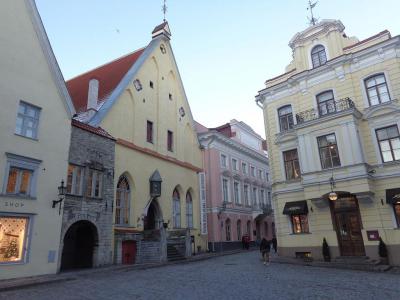
The Great Guild Hall is a wonderful old Gothic style structure that is located in the Old Town of Tallinn. It is not very far from Town Hall, and is just a couple of blocks south of Saint Olaf’s Church. You can find it directly across from the Holy Spirit Church.
It was built over a three year period that started in 1407. It was first used as a meeting place for Tallinn’s Merchant’s Union. During medieval times, local craft guilds controlled most aspects of business and commerce. The merchants of Tallinn banded together and became quite wealthy in their own right. Several old rooms in the building have been renovated and opened to the general public.
The hall now houses the Estonian History Museum, which brings to life over eleven thousand years of history of this part of the world. The displayed objects include archeological pieces, archived materials, ethnography, photography, glass and porcelain.
It was built over a three year period that started in 1407. It was first used as a meeting place for Tallinn’s Merchant’s Union. During medieval times, local craft guilds controlled most aspects of business and commerce. The merchants of Tallinn banded together and became quite wealthy in their own right. Several old rooms in the building have been renovated and opened to the general public.
The hall now houses the Estonian History Museum, which brings to life over eleven thousand years of history of this part of the world. The displayed objects include archeological pieces, archived materials, ethnography, photography, glass and porcelain.
4) House of the Brotherhood of Black Heads
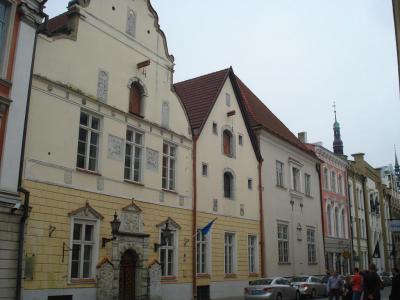
If you want to get a chance to see a piece of beautifully preserved Renaissance architecture in Tallinn, then you will want to visit the House of the Brotherhood of Black Heads. In fact, it is the only such surviving structure in downtown Tallinn.
From a historical perspective, the House was owned by an organization of young merchants from other countries, who worked throughout Estonia and Livonia during the late 14th Century. A house of some sort was on the property here for many years before the group purchased the land in the 16th Century. Major reconstruction took place in 1597.
From an architectural standpoint, the building reflects a Dutch interpretation of Renaissance artwork and styling. For instance, it is a two nave arched hall. The stunning painted doors are also quite Dutch in style, and are common among similar buildings located throughout the Low Countries. There is lots of ornamentation in the trim and doors of the building also.
From a historical perspective, the House was owned by an organization of young merchants from other countries, who worked throughout Estonia and Livonia during the late 14th Century. A house of some sort was on the property here for many years before the group purchased the land in the 16th Century. Major reconstruction took place in 1597.
From an architectural standpoint, the building reflects a Dutch interpretation of Renaissance artwork and styling. For instance, it is a two nave arched hall. The stunning painted doors are also quite Dutch in style, and are common among similar buildings located throughout the Low Countries. There is lots of ornamentation in the trim and doors of the building also.
5) Great Coastal Gate, Fat Margaret's Tower and Maritime Museum
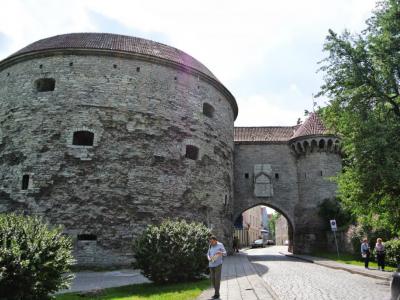
If you take a trip down to the sea along Pikk Street in Tallinn, you will find two of the remaining 26 defensive towers for the city. They are the Great Coastal Gate (Suur Rannavärav) and Fat Margaret Tower (Paks Margareeta). They were designed to protect the city from seafaring invaders, as well as impress visitors that would have arrived in the city by the sea. The message they portrayed was clear: don’t even think about attacking the city from the sea.
The Great Coastal Gate is one of six remaining gates that are still intact from the old city wall system. They controlled access to the city during medieval times. This particular gate was added during the 14th century. Fat Margaret Tower was added during the 16th century, while improvements were being made to the fortifications. It was built from 1511 until 1530, and rose 25 meters above the surrounding area. The Great Coastal Gate and tower have walls that are actually a little thicker than most of the surrounding structures. They measure up to 5 meters thick. (The average thickness of the city walls is 3 meters.)
The origins of Fat Margaret's name are not well known. The best conjecture is that the tower was named for one of its larger cannons, while others hint at a cook called Margaret who once cooked for the troops that stood guard. Visitors should take a moment and climb to the top of the tower to get one of the best views in town.
Today the Estonian Maritime Museum is located in the Fat Margaret Tower. The Museum is a very popular tourist attraction in Tallinn. The institution puts on display the history of the ships of Estonia, as well as related information on what sea life was like on the Baltic. There are old tools on display here, as well as other Maritime objects. Some of the old objects here were original bone tools made before the time of Christ. So, you will not want to miss them.
The Great Coastal Gate is one of six remaining gates that are still intact from the old city wall system. They controlled access to the city during medieval times. This particular gate was added during the 14th century. Fat Margaret Tower was added during the 16th century, while improvements were being made to the fortifications. It was built from 1511 until 1530, and rose 25 meters above the surrounding area. The Great Coastal Gate and tower have walls that are actually a little thicker than most of the surrounding structures. They measure up to 5 meters thick. (The average thickness of the city walls is 3 meters.)
The origins of Fat Margaret's name are not well known. The best conjecture is that the tower was named for one of its larger cannons, while others hint at a cook called Margaret who once cooked for the troops that stood guard. Visitors should take a moment and climb to the top of the tower to get one of the best views in town.
Today the Estonian Maritime Museum is located in the Fat Margaret Tower. The Museum is a very popular tourist attraction in Tallinn. The institution puts on display the history of the ships of Estonia, as well as related information on what sea life was like on the Baltic. There are old tools on display here, as well as other Maritime objects. Some of the old objects here were original bone tools made before the time of Christ. So, you will not want to miss them.
6) Shifara Art and Antiques Gallery
Shifara Art and Antiques Gallery, established in 1990, stands as the oldest and largest gallery of its kind in Estonia. Named after its founder, this esteemed gallery is nestled in the historic Old City of Tallinn, along the charming Aia Street. Renowned for its vast and diverse collection, Shifara Gallery specializes in a range of collectables and antique items. These include coins, orders, medals, an array of stamps and other philatelic treasures, paper money, signatures, maps, historical photographs, and postcards.
Apart from these collectables, Shifara Gallery is particularly acclaimed for its exceptional selection of original Russian, Estonian, and European art classics and antiquities. This includes an exquisite range of paintings, graphics, sculptures, and icons. The gallery also boasts a remarkable collection of porcelain items, notably from prestigious makers like Meissen and Sevres. Additionally, patrons can find a luxurious assortment of gold and silver items, including works from renowned creators like Faberge and Ovchinnikov, along with a variety of elegant jewelry.
One of the hallmarks of Shifara Gallery is its unwavering commitment to authenticity. The gallery guarantees the genuineness of all its items, ensuring that visitors and collectors alike can trust in the quality and historical value of their acquisitions. This dedication to authenticity, combined with its extensive and varied collection, makes Shifara Art and Antiques Gallery a treasured destination for art and antique enthusiasts in Tallinn.
Apart from these collectables, Shifara Gallery is particularly acclaimed for its exceptional selection of original Russian, Estonian, and European art classics and antiquities. This includes an exquisite range of paintings, graphics, sculptures, and icons. The gallery also boasts a remarkable collection of porcelain items, notably from prestigious makers like Meissen and Sevres. Additionally, patrons can find a luxurious assortment of gold and silver items, including works from renowned creators like Faberge and Ovchinnikov, along with a variety of elegant jewelry.
One of the hallmarks of Shifara Gallery is its unwavering commitment to authenticity. The gallery guarantees the genuineness of all its items, ensuring that visitors and collectors alike can trust in the quality and historical value of their acquisitions. This dedication to authenticity, combined with its extensive and varied collection, makes Shifara Art and Antiques Gallery a treasured destination for art and antique enthusiasts in Tallinn.
7) Viru Gate (Viru Värav)
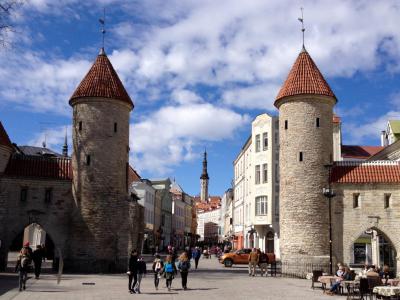
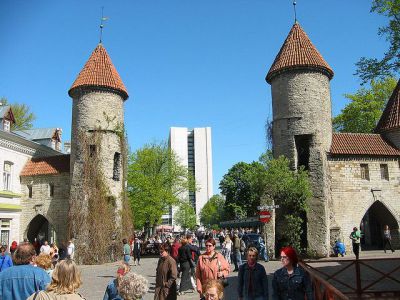
At one point in time, there were a total of 45 towers built into the walls that protected Tallinn. Twenty-six of those still remain. Two of the best preserved of the bunch are called Viru Gate. The gate dates from the 14th Century, as do most of the towers, and sits at the entrance way into the Old Town.
Today the two towers are quite lovely, having been covered in ivy over the years. It gives a gentle look to Viru Street. When you first enter the Old Town through the gate, it makes you feel as though you have stepped back in time.
The towers used to be the fore gates to the city, and a larger set was built a little further in, which were held up by a set of square towers. Most of the gate was pulled down in 1880, in order to make room for more street traffic. Since that time, though, the two towers have become a symbol for the Tallinn Old Town, which used to be the most fortified city in all of Europe back in the day.
Today the two towers are quite lovely, having been covered in ivy over the years. It gives a gentle look to Viru Street. When you first enter the Old Town through the gate, it makes you feel as though you have stepped back in time.
The towers used to be the fore gates to the city, and a larger set was built a little further in, which were held up by a set of square towers. Most of the gate was pulled down in 1880, in order to make room for more street traffic. Since that time, though, the two towers have become a symbol for the Tallinn Old Town, which used to be the most fortified city in all of Europe back in the day.
8) Hellemann Tower and City Wall
Parts of Tallinn's City Wall have stood since the 13th century. This wall was one of the strongest defense systems in Northern Europe. At its peak, the wall had 45 wall and gate towers and was over two and a quarter kilometers long. Today, 26 towers and less than two kilometers of the wall remain.
The Hellemann Tower was built in the early 15th century. It was named after a resident who owned land nearby and was built to protect Viru Gate. Helleman Tower has three levels and a three quarter circle layout. The 11 meters (33 feet) tall first floor was used as an ammunition room. The tower has also been used as a prison.
Today, Helleman Tower houses an art gallery and offers wonderful views of Town Hall and the rest of Tallinn.
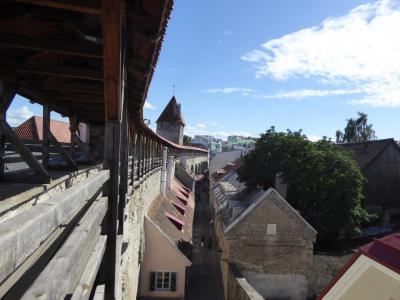
Visitors can also walk along a 200 meter (656 feet) section of the City Wall. This is the longest portion of the wall that is open to visitors. It's surprisingly high up; visitors can see the city streets below and be transported back through the centuries.
The Hellemann Tower was built in the early 15th century. It was named after a resident who owned land nearby and was built to protect Viru Gate. Helleman Tower has three levels and a three quarter circle layout. The 11 meters (33 feet) tall first floor was used as an ammunition room. The tower has also been used as a prison.
Today, Helleman Tower houses an art gallery and offers wonderful views of Town Hall and the rest of Tallinn.
Visitors can also walk along a 200 meter (656 feet) section of the City Wall. This is the longest portion of the wall that is open to visitors. It's surprisingly high up; visitors can see the city streets below and be transported back through the centuries.
9) St. Catherine’s Passage (Katariina Käik) (must see)
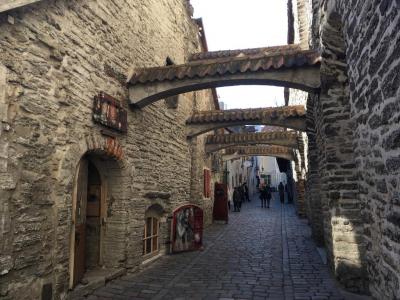
If you want to get a chance to really glimpse what life was like in the Old Town of Tallinn, you will want to visit Saint Catherine’s Passage. It is located just a short distance from the Town Hall.
The old passage connects Vene and Muurivahe Streets in town. On the northern end of the passage you will find the remnants of Saint Catherine’s Dominican Monastery Church, which is one of the oldest church in the city. In fact, the passage derives its name from the church. Many people like checking out the old tombstones that are an integral part of the sanctuary there. Many famous Estonians are buried at Saint Catherine’s cemetery.
The southern end of the passage will take you past some of the best artisan shops in Tallinn. You can watch the artists at work. It’s one of the best places to get a memento of your visit to Tallinn. The whole passage is a nice morning’s hike for the exercise alone. If you want to stop for a moment, you will want to get a cup of coffee at one of the quaint little cafes that are scattered down the passage.
The old passage connects Vene and Muurivahe Streets in town. On the northern end of the passage you will find the remnants of Saint Catherine’s Dominican Monastery Church, which is one of the oldest church in the city. In fact, the passage derives its name from the church. Many people like checking out the old tombstones that are an integral part of the sanctuary there. Many famous Estonians are buried at Saint Catherine’s cemetery.
The southern end of the passage will take you past some of the best artisan shops in Tallinn. You can watch the artists at work. It’s one of the best places to get a memento of your visit to Tallinn. The whole passage is a nice morning’s hike for the exercise alone. If you want to stop for a moment, you will want to get a cup of coffee at one of the quaint little cafes that are scattered down the passage.
10) Masters’ Courtyard
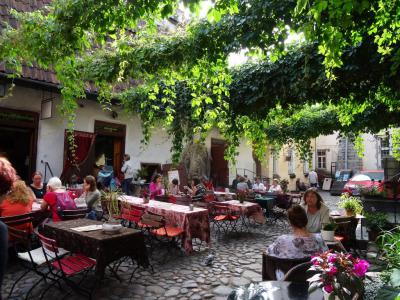
Masters' Courtyard in Tallinn stands out as a distinctive artisan quarter, featuring more than 10 diverse shops run by local craftsmen and artisans, along with a guesthouse and a chocolate shop.
Situated at the heart of Tallinn's historic old town, this property has a rich history dating back to 1371, having changed ownership and purposes numerous times over the past seven centuries. In 1993, the Master's Courtyard Non-profit Organization was established with the primary goal of restoring and revitalizing this property, which had suffered significant deterioration. Their vision was to transform it into an artisan hub comprising workshops, galleries, and exhibition spaces.
Today, Masters' Courtyard has gained recognition as a popular attraction for both residents and tourists alike. There are 11 distinct shops that exclusively offer products created by local artisans and artists. Some of these shops allow visitors to witness the crafting techniques and even place orders for customized items. On the courtyard's premises, you'll also find the cozy Guesthouse "Villa Hortensia," featuring six rooms equipped with kitchenettes and private bathrooms.
Additionally, there's a well-regarded chocolaterie named Chocolaterie Pierre, renowned for its handcrafted truffles, cakes, and an array of excellent coffee offerings. As you explore the various buildings within the courtyard, you'll soak in the historical ambiance, and during sunny summer evenings, you can enjoy live music in the garden.
Situated at the heart of Tallinn's historic old town, this property has a rich history dating back to 1371, having changed ownership and purposes numerous times over the past seven centuries. In 1993, the Master's Courtyard Non-profit Organization was established with the primary goal of restoring and revitalizing this property, which had suffered significant deterioration. Their vision was to transform it into an artisan hub comprising workshops, galleries, and exhibition spaces.
Today, Masters' Courtyard has gained recognition as a popular attraction for both residents and tourists alike. There are 11 distinct shops that exclusively offer products created by local artisans and artists. Some of these shops allow visitors to witness the crafting techniques and even place orders for customized items. On the courtyard's premises, you'll also find the cozy Guesthouse "Villa Hortensia," featuring six rooms equipped with kitchenettes and private bathrooms.
Additionally, there's a well-regarded chocolaterie named Chocolaterie Pierre, renowned for its handcrafted truffles, cakes, and an array of excellent coffee offerings. As you explore the various buildings within the courtyard, you'll soak in the historical ambiance, and during sunny summer evenings, you can enjoy live music in the garden.
11) Raekoja Plats (Town Hall Square) (must see)
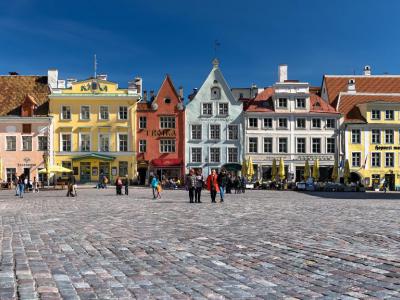
Town Hall Square is a fabulous location to soak up the long and storied history of Tallinn. It's in the center of the Old Town. Markets began opening on this site in the 11th century. Tallinn Town Hall is located in this square. Completed in 1404, it's the oldest Town Hall in Northern Europe.
Other historical buildings surround the square. There is the oldest pharmacy in Europe; it was established in approximately 1415. The pharmacy has a small museum with ancient medical instruments and medicines. The rest of the buildings are painted in attractive pastel colors and were built between the 15th and 17th centuries. Cobblestones throughout the square complete the old-world charm.
In the center of the square, visitors will find a circular stone with a compass rose. The L-shaped stone near the center of the square marks the site where a priest was executed. The priest killed a waitress who had served an overcooked omelet.
During the summer, the square is filled with open-air cafés. Enjoy alfresco dining and people-watching. There are regular outdoor markets held in Town Hall Square. Stalls feature souvenirs and traditional Estonian items.
You will find varied festivals and concerts throughout the year. Tallinn Old Town Days is a week-long festival that takes place at the beginning of summer. During this popular festival, visitors and locals are treated to exhibitions, theater plays, concerts, fairs, and non-stop entertainment.
In winter, the square becomes a winter wonderland with holiday decorations and a massive decorated fir tree. The Brotherhood of the Blackheads first erected a Christmas tree in the square in 1422. This is thought to be the world's first Christmas tree. Visitors can also enjoy a spirited Christmas market.
Why You Should Visit:
Town Hall Square is the oldest town square in Northern Europe and has been the center of Tallinn for eight centuries. Visit historic buildings and enjoy the old-world ambiance. There's no better place to get the feel of the town and nation than Town Hall Square.
Tips:
This square is incredibly festive over the winter holidays. Have a hot toddy, enjoy the holiday lights, shop for gifts, and admire the Christmas tree.
Other historical buildings surround the square. There is the oldest pharmacy in Europe; it was established in approximately 1415. The pharmacy has a small museum with ancient medical instruments and medicines. The rest of the buildings are painted in attractive pastel colors and were built between the 15th and 17th centuries. Cobblestones throughout the square complete the old-world charm.
In the center of the square, visitors will find a circular stone with a compass rose. The L-shaped stone near the center of the square marks the site where a priest was executed. The priest killed a waitress who had served an overcooked omelet.
During the summer, the square is filled with open-air cafés. Enjoy alfresco dining and people-watching. There are regular outdoor markets held in Town Hall Square. Stalls feature souvenirs and traditional Estonian items.
You will find varied festivals and concerts throughout the year. Tallinn Old Town Days is a week-long festival that takes place at the beginning of summer. During this popular festival, visitors and locals are treated to exhibitions, theater plays, concerts, fairs, and non-stop entertainment.
In winter, the square becomes a winter wonderland with holiday decorations and a massive decorated fir tree. The Brotherhood of the Blackheads first erected a Christmas tree in the square in 1422. This is thought to be the world's first Christmas tree. Visitors can also enjoy a spirited Christmas market.
Why You Should Visit:
Town Hall Square is the oldest town square in Northern Europe and has been the center of Tallinn for eight centuries. Visit historic buildings and enjoy the old-world ambiance. There's no better place to get the feel of the town and nation than Town Hall Square.
Tips:
This square is incredibly festive over the winter holidays. Have a hot toddy, enjoy the holiday lights, shop for gifts, and admire the Christmas tree.
12) Taani Kuninga ( Danish King's Garden)
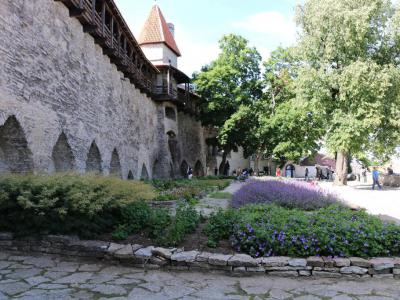
The Danish King's Garden, known as Taani Kuninga in Estonian, is a historically significant park located in the Old Town of Tallinn. This garden holds a special place in Estonian and Danish history, particularly for being the site where the Danish flag, Dannebrog, is traditionally believed to have originated.
Situated adjacent to Toompea and overlooking the Saint Nicholas Church, the garden is steeped in medieval history. It is famously associated with an old legend that dates back to the Danish invasion. According to this legend, during a critical battle, a flag mysteriously descended from the sky right at this location, leading to a pivotal victory for King Valdemar II of Denmark. This flag, which emerged under miraculous circumstances, later became the national flag of Denmark. The garden features a sculpture titled 'Tuli lipp' ('The Flag Descended') that commemorates this legendary event.
The Danish King's Garden's name is a nod to the Danish reign in Tallinn and northern Estonia, which lasted for over a hundred years, primarily during the 13th century. This period left a lasting impact on the region's history and culture, and the garden serves as a reminder of this significant era.
Another notable feature of the garden is the sculpture of three monks, accompanied by a light installation and an information board mounted on the city wall. These elements together create an intriguing and educational experience for visitors, offering insights into the garden's rich past and the broader historical context of Tallinn.
Moreover, the Danish King's Garden is the focal point of annual celebrations on the 15th of June, known as Dannebrog or the Day of the Danish Flag. This event commemorates the historical significance of the Dannebrog and its association with the garden, drawing visitors and locals alike to celebrate and remember the shared history between Denmark and Estonia.
Situated adjacent to Toompea and overlooking the Saint Nicholas Church, the garden is steeped in medieval history. It is famously associated with an old legend that dates back to the Danish invasion. According to this legend, during a critical battle, a flag mysteriously descended from the sky right at this location, leading to a pivotal victory for King Valdemar II of Denmark. This flag, which emerged under miraculous circumstances, later became the national flag of Denmark. The garden features a sculpture titled 'Tuli lipp' ('The Flag Descended') that commemorates this legendary event.
The Danish King's Garden's name is a nod to the Danish reign in Tallinn and northern Estonia, which lasted for over a hundred years, primarily during the 13th century. This period left a lasting impact on the region's history and culture, and the garden serves as a reminder of this significant era.
Another notable feature of the garden is the sculpture of three monks, accompanied by a light installation and an information board mounted on the city wall. These elements together create an intriguing and educational experience for visitors, offering insights into the garden's rich past and the broader historical context of Tallinn.
Moreover, the Danish King's Garden is the focal point of annual celebrations on the 15th of June, known as Dannebrog or the Day of the Danish Flag. This event commemorates the historical significance of the Dannebrog and its association with the garden, drawing visitors and locals alike to celebrate and remember the shared history between Denmark and Estonia.
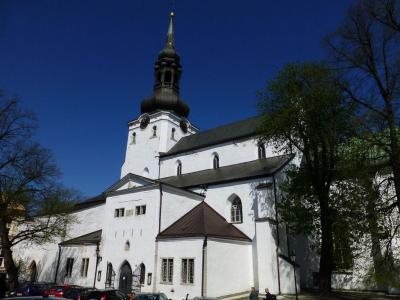
13) Saint Mary Cathedral
Saint Mary’s Cathedral is the oldest church in Tallinn. It dates all the way back to 1219, and was built during the time that the Danes conquered Tallinn. The original was built completely of wood. A group of Dominican Monks came in 1229 and started construction of a stone church to replace the old one. A letter sent to Rome in 1233 is the oldest documented note about the church. In 1240, the building was completed. In the same year, it was made into a cathedral and dedicated to the Virgin Mary. The size of the church was expanded in the 14th Century.
The grand old structure was badly damaged in the great fire of 1684. Most of the remaining wooden structure was lost, as well as some of the beautiful woodwork in the chancel. The church was restored and that is why today you see a Baroque style pulpit in the building. The pulpit and the altarpiece were done by the famous Estonian sculptor Christian Ackermann.
The exterior of the church dates from the 15th Century, and the large spire dates from the 1700s. Most of the current furnishings are Baroque in style and also go back to the 17th Century.
There are many famous Estonians buried in the church's cemetery. Among them are Jindrich Matyas Thurn, Samuel Greig and Adam Johann von Krusenstern.
The grand old structure was badly damaged in the great fire of 1684. Most of the remaining wooden structure was lost, as well as some of the beautiful woodwork in the chancel. The church was restored and that is why today you see a Baroque style pulpit in the building. The pulpit and the altarpiece were done by the famous Estonian sculptor Christian Ackermann.
The exterior of the church dates from the 15th Century, and the large spire dates from the 1700s. Most of the current furnishings are Baroque in style and also go back to the 17th Century.
There are many famous Estonians buried in the church's cemetery. Among them are Jindrich Matyas Thurn, Samuel Greig and Adam Johann von Krusenstern.
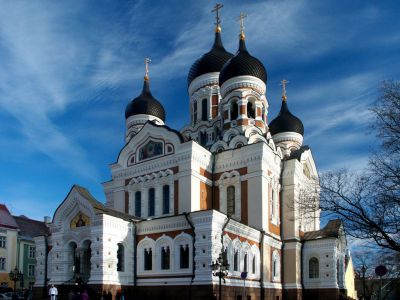
14) Alexander Nevsky Cathedral (must see)
The Alexander Nevsky Cathedral is an orthodox cathedral in the Tallinn Old Town. It was built to a design by Mikhail Preobrazhensky in a typical Russian Revival style between 1894 and 1900, during the period when the country was part of the Russian Empire. The Alexander Nevsky Cathedral is Tallinn's largest and grandest orthodox cupola cathedral. It is dedicated to Saint Alexander Nevsky who in 1242 won the Battle of the Ice on Lake Peipus, in the territorial waters of present-day Estonia. The late Russian patriarch, Alexis II, started his priestly ministry in the church.
The Alexander Nevsky Cathedral crowns the Toompea Hill, the political center of Estonia. The cathedral was built during the period of late 19th century Russification and was so disliked by many Estonians as a symbol of oppression that the Estonian authorities scheduled the cathedral for demolition in 1924, but the decision was never implemented due to lack of funds and the building's massive construction. As the USSR was officially non-religious, many churches including this cathedral were left to decline. The church has been meticulously restored since Estonia regained independence from the Soviet Union in 1991.
The Alexander Nevsky Cathedral crowns the Toompea Hill, the political center of Estonia. The cathedral was built during the period of late 19th century Russification and was so disliked by many Estonians as a symbol of oppression that the Estonian authorities scheduled the cathedral for demolition in 1924, but the decision was never implemented due to lack of funds and the building's massive construction. As the USSR was officially non-religious, many churches including this cathedral were left to decline. The church has been meticulously restored since Estonia regained independence from the Soviet Union in 1991.
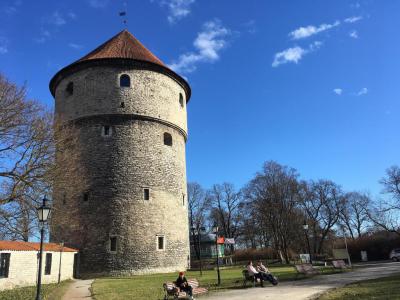
15) Kiek in de Kök Museum and Bastion Tunnels
The phrase “Kiek in de Kok” derives from German, meaning "Peep into the Kitchen". Kiek in de Kök was an old artillery tower. Occupants of the tower used to be able to peek down into the kitchens of nearby homes, hence the name.
The tower was built in 1475 as part of the impressive fortifications that used to surround the town. It stands an impressive 38 meters high, and is made with walls that are 4 meters thick, which were designed to stand up against canon fire. Today you can still see old cannon balls that are embedded into the walls of the tower that date all the way back to the 16th century.
The old tower has been modified many times during its lifetime. In the 17th Century new gun holes were made at the top of the tower. The structure fell out of use by 1760. For a while, it became a repository for archives and was used briefly as apartments.
Today, the tower is a museum for the town’s fortification system with displays showing how the city's system of walls and towers developed through the centuries as well as other facets of life in old Tallinn. From the museum, one can also enter the Bastion tunnels, dating back to the 17th to 18th centuries, are an integral part of the city’s defense system.
The tower was built in 1475 as part of the impressive fortifications that used to surround the town. It stands an impressive 38 meters high, and is made with walls that are 4 meters thick, which were designed to stand up against canon fire. Today you can still see old cannon balls that are embedded into the walls of the tower that date all the way back to the 16th century.
The old tower has been modified many times during its lifetime. In the 17th Century new gun holes were made at the top of the tower. The structure fell out of use by 1760. For a while, it became a repository for archives and was used briefly as apartments.
Today, the tower is a museum for the town’s fortification system with displays showing how the city's system of walls and towers developed through the centuries as well as other facets of life in old Tallinn. From the museum, one can also enter the Bastion tunnels, dating back to the 17th to 18th centuries, are an integral part of the city’s defense system.
