Custom Walk in Liverpool, England by ltpareja_5e8a2 created on 2025-06-27
Guide Location: England » Liverpool
Guide Type: Custom Walk
# of Sights: 9
Tour Duration: 4 Hour(s)
Travel Distance: 10.1 Km or 6.3 Miles
Share Key: H5UMB
Guide Type: Custom Walk
# of Sights: 9
Tour Duration: 4 Hour(s)
Travel Distance: 10.1 Km or 6.3 Miles
Share Key: H5UMB
How It Works
Please retrieve this walk in the GPSmyCity app. Once done, the app will guide you from one tour stop to the next as if you had a personal tour guide. If you created the walk on this website or come to the page via a link, please follow the instructions below to retrieve the walk in the app.
Retrieve This Walk in App
Step 1. Download the app "GPSmyCity: Walks in 1K+ Cities" on Apple App Store or Google Play Store.



Step 2. In the GPSmyCity app, download(or launch) the guide "Liverpool Map and Walking Tours".
Step 3. Tap the menu button located at upper right corner of the "Walks" screen and select "Retrieve custom walk". Enter the share key: H5UMB
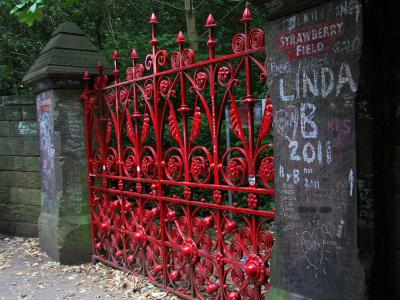
1) Strawberry Field
Strawberry Field is a former Salvation Army children’s home in the Liverpool suburb of Woolton, situated on Beaconsfield Road, a short walk from John Lennon’s childhood home. The building that existed during Lennon’s time in Liverpool opened in 1936, and was demolished in 1973 due to structural problems to be replaced with purpose-built units. The name of the children’s home was used by Lennon in the single ‘Strawberry Fields Forever’. Released in 1967, it was the first song to be recorded for “Sergeant Pepper’s Lonely Hearts Club Band”, considered by many to be the greatest album of all time. The song is regularly voted as one of the band’s five best.
The song does not directly reference the children’s home, but its hazy, summery melody is believed to be influenced by the afternoons spent by young Lennon in woodland behind the Strawberry Field grounds. Lennon also attended the home’s summer fête with his aunt each year; she claimed that he would listen to the Salvation Army marching band warming up from his bedroom window.
In time, the old red-painted entrance gates on Beaconsfield Road became a place of pilgrimage for Beatles fans. Strawberry Field is opened to the public. There is an exhibition on its history, plus a café and a shop. It is free to visit the Strawberry Field garden, care and shop. There is a small fee for viewing the exhibition.
The gates were stolen on 11 May 2000, allegedly by two men in a transit van, and were sold to an unsuspecting antiques dealer who never realized they were the actual gates from Strawberry Field. He returned them to the police upon request, and they now stand in the grounds of Strawberry Field.
Opening times:
Summer (1st April to 31st October)
Daily 09:00-19.00 (last admission 18:00)
Winter (1st November to 31st March)
Daily 09:30-17:00 (last admission 16:00)
Why You Should Visit:
This is one of the few places associated with the Beatles' childhood that you can visit for free. Do it as part of the whole Beatles experience.
Tip:
Strawberry Field operates a minibus to take people from Albert Dock in the city center to Strawberry Field and back. The minibus leaves Royal Albert Dock at the following times: 10:00, 11:15, 13:15, 14:15, 15:15. The last bus returning to Royal Albert Dock leaves Strawberry Field at 17:00.
The song does not directly reference the children’s home, but its hazy, summery melody is believed to be influenced by the afternoons spent by young Lennon in woodland behind the Strawberry Field grounds. Lennon also attended the home’s summer fête with his aunt each year; she claimed that he would listen to the Salvation Army marching band warming up from his bedroom window.
In time, the old red-painted entrance gates on Beaconsfield Road became a place of pilgrimage for Beatles fans. Strawberry Field is opened to the public. There is an exhibition on its history, plus a café and a shop. It is free to visit the Strawberry Field garden, care and shop. There is a small fee for viewing the exhibition.
The gates were stolen on 11 May 2000, allegedly by two men in a transit van, and were sold to an unsuspecting antiques dealer who never realized they were the actual gates from Strawberry Field. He returned them to the police upon request, and they now stand in the grounds of Strawberry Field.
Opening times:
Summer (1st April to 31st October)
Daily 09:00-19.00 (last admission 18:00)
Winter (1st November to 31st March)
Daily 09:30-17:00 (last admission 16:00)
Why You Should Visit:
This is one of the few places associated with the Beatles' childhood that you can visit for free. Do it as part of the whole Beatles experience.
Tip:
Strawberry Field operates a minibus to take people from Albert Dock in the city center to Strawberry Field and back. The minibus leaves Royal Albert Dock at the following times: 10:00, 11:15, 13:15, 14:15, 15:15. The last bus returning to Royal Albert Dock leaves Strawberry Field at 17:00.
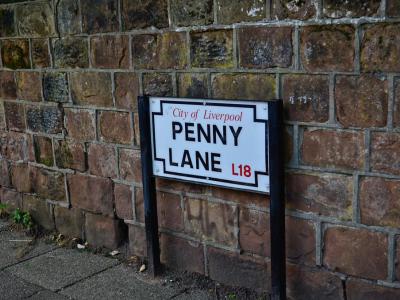
2) Penny Lane
Penny Lane, a fairly typical suburban shopping street in the eastern suburb of Mossley Hill, has become world famous thanks to the Beatles hit that bears its name. It was written by Paul McCartney, who attended Saint Barnabas Church on the street and often met here his childhood friend and fellow Beatle, John Lennon, before catching a bus to Liverpool’s city centre. The many sights referenced in the lyrics can still be found on Penny Lane, including a bus shelter, a barber shop and a fire station. Street signs bearing the famous name were stolen so regularly that the council began painting the street name onto buildings instead.
“Penny Lane” was released in 1967 as a double A-side single with “Strawberry Fields Forever”, another song which references a Liverpool landmark. Beatles producer, George Martin, believed that it was collectively their finest single. It went to No.1 in the US, but only reached No.2 in the UK charts. The street has grown in stature as the result of its Beatles connections, and has become an attraction for tourists and locals alike. It caused some embarrassment to the council officials at one point, when they proposed that all Liverpool streets named after slave traders be renamed, unaware that Penny Lane was indeed named after the local slave trader James Penny. The famous street thus kept its name, whilst the other street names in the city were changed.
“Penny Lane” was released in 1967 as a double A-side single with “Strawberry Fields Forever”, another song which references a Liverpool landmark. Beatles producer, George Martin, believed that it was collectively their finest single. It went to No.1 in the US, but only reached No.2 in the UK charts. The street has grown in stature as the result of its Beatles connections, and has become an attraction for tourists and locals alike. It caused some embarrassment to the council officials at one point, when they proposed that all Liverpool streets named after slave traders be renamed, unaware that Penny Lane was indeed named after the local slave trader James Penny. The famous street thus kept its name, whilst the other street names in the city were changed.

3) Saint Luke's Church
Saint Luke's Church, affectionately known by locals as the "Bombed-Out Church," is a striking and poignant landmark in Liverpool. Located at the corner of Berry Street and Leece Street, atop Bold Street, the church stands as a symbol of resilience and memory.
Designed by the father-and-son team of John Foster Sr. and John Foster Jr., surveyors for the Corporation of Liverpool, the church was constructed between 1811 and 1832. Originally envisioned as an Anglican parish church, it also served ceremonial purposes and hosted concerts. The site was donated in 1791 by Edward Smith-Stanley, the 12th Earl of Derby, with the stipulation that it must always remain a place of worship.
The church's construction progressed slowly, with the foundation stone laid in 1811. Subsequent design adjustments included the addition of a chancel in 1822, reflecting its dual purpose as a civic and musical venue. It was fondly referred to as "the doctor's church" due to its proximity to Rodney Street, a hub for Liverpool's medical professionals.
Tragedy struck during the Liverpool Blitz of May 1941, when incendiary bombs gutted the building, leaving it a roofless shell. Despite this devastation, the church has been preserved in its ruined state as a memorial to those who lost their lives during the war. Recognized for its architectural and historical significance, it was designated a Grade II* listed building in 1952.
Constructed in ashlar sandstone in the Perpendicular Gothic style, the church features a five-bay nave, a four-bay chancel with an apsidal end, and a west tower. The tower is notable for its battlemented parapet, polygonal buttresses, and clock face. Remarkably, it houses the world's first cast iron bell frame, created in 1828 by George Gilliband.
Today, Saint Luke's continues to serve Liverpool as a venue for exhibitions and events, standing as both a historical treasure and a somber reminder of the city's wartime endurance.
Designed by the father-and-son team of John Foster Sr. and John Foster Jr., surveyors for the Corporation of Liverpool, the church was constructed between 1811 and 1832. Originally envisioned as an Anglican parish church, it also served ceremonial purposes and hosted concerts. The site was donated in 1791 by Edward Smith-Stanley, the 12th Earl of Derby, with the stipulation that it must always remain a place of worship.
The church's construction progressed slowly, with the foundation stone laid in 1811. Subsequent design adjustments included the addition of a chancel in 1822, reflecting its dual purpose as a civic and musical venue. It was fondly referred to as "the doctor's church" due to its proximity to Rodney Street, a hub for Liverpool's medical professionals.
Tragedy struck during the Liverpool Blitz of May 1941, when incendiary bombs gutted the building, leaving it a roofless shell. Despite this devastation, the church has been preserved in its ruined state as a memorial to those who lost their lives during the war. Recognized for its architectural and historical significance, it was designated a Grade II* listed building in 1952.
Constructed in ashlar sandstone in the Perpendicular Gothic style, the church features a five-bay nave, a four-bay chancel with an apsidal end, and a west tower. The tower is notable for its battlemented parapet, polygonal buttresses, and clock face. Remarkably, it houses the world's first cast iron bell frame, created in 1828 by George Gilliband.
Today, Saint Luke's continues to serve Liverpool as a venue for exhibitions and events, standing as both a historical treasure and a somber reminder of the city's wartime endurance.
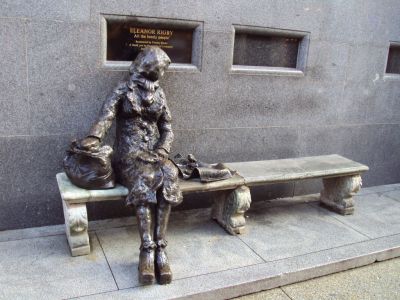
4) Statue of Eleanor Rigby
The Statue of Eleanor Rigby can be found on the pavement of Stanley Street, a couple of blocks from the Cavern Club on Mathew Street. A sculpture of an apparently middle aged woman, wearing a head scarf and holding a hand bag, it is placed on a bench with a space for visitors to sit next to it.
Dedicated to “all the lonely people” of Liverpool, it was crafted, remarkably enough, by English entertainer Tommy Steele, who had a lesser known talent for sculpture. London-based performer Steele donated the statue to Liverpool out of fondness for performing in the city. He claims to have placed a number of items inside the sculpture, including a four leafed clover, a football sock and a page of the Bible.
The statue is of course a tribute to the Beatles’ hit song ‘Eleanor Rigby’. Released in 1966, it was a No.1 hit in the UK. The title character is portrayed as a melancholy soul, reflected in her solitary, bedraggled appearance in Steele’s sculpture. Eleanor Rigby is a fictional character, though the name has been found on a gravestone in the Liverpool suburb of Woolton. The ‘real’ Eleanor Rigby died in 1939, and her tomb has become an attraction for many Beatles fans visiting the city.
Dedicated to “all the lonely people” of Liverpool, it was crafted, remarkably enough, by English entertainer Tommy Steele, who had a lesser known talent for sculpture. London-based performer Steele donated the statue to Liverpool out of fondness for performing in the city. He claims to have placed a number of items inside the sculpture, including a four leafed clover, a football sock and a page of the Bible.
The statue is of course a tribute to the Beatles’ hit song ‘Eleanor Rigby’. Released in 1966, it was a No.1 hit in the UK. The title character is portrayed as a melancholy soul, reflected in her solitary, bedraggled appearance in Steele’s sculpture. Eleanor Rigby is a fictional character, though the name has been found on a gravestone in the Liverpool suburb of Woolton. The ‘real’ Eleanor Rigby died in 1939, and her tomb has become an attraction for many Beatles fans visiting the city.
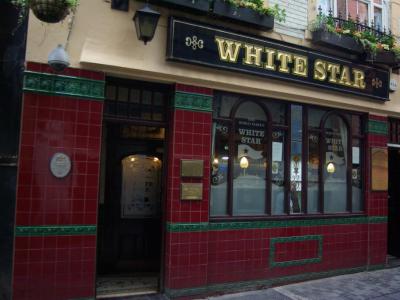
5) The White Star Pub
No trip to Liverpool is complete without a visit to the backroom of The White Star, one of Matthew Street's longest-running pubs, traced back as far back as 1880 and named after the shipping company of Titanic fame. A crowded locals pub on matchdays, otherwise a quiet boozer housed in a traditional Victorian building, it features lots of Liverpool memorabilia and a connection, obviously, to The Beatles.
The pub is known as the place where the Fab Four played their first gig, also where Alan Williams and Bob Wooler (the original deejay of Cavern Club across the road) would pay their artists. Every once a while, the Beatles would come here to receive their money after their Cavern performances, and in that backroom, there is a wall decorated with Beatles memorabilia, known as the "Beatles back wall".
For any overseas visitors looking for a proper English pub, The White Star is still the absolute real thing. The bar staff are friendly and the ales on sale are top class, all well kept and promptly served. Oftentimes, there are visitors to Liverpool drinking alongside locals who want to share their personal experiences and memories of the Fab Four. The only downside is that food is not available.
The pub is known as the place where the Fab Four played their first gig, also where Alan Williams and Bob Wooler (the original deejay of Cavern Club across the road) would pay their artists. Every once a while, the Beatles would come here to receive their money after their Cavern performances, and in that backroom, there is a wall decorated with Beatles memorabilia, known as the "Beatles back wall".
For any overseas visitors looking for a proper English pub, The White Star is still the absolute real thing. The bar staff are friendly and the ales on sale are top class, all well kept and promptly served. Oftentimes, there are visitors to Liverpool drinking alongside locals who want to share their personal experiences and memories of the Fab Four. The only downside is that food is not available.
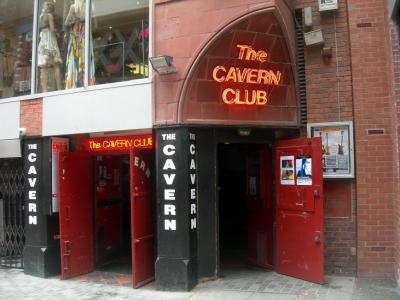
6) The Cavern Club (must see)
Opened on 16 January 1957 as a jazz club and later becoming a center of Liverpool's rock-and-roll scene in the early 1960s, the Cavern Club became closely associated with the Merseybeat music genre and, famously, regularly played host to The Beatles in their early years, initially as part of the weekday "beat sessions" at lunchtime.
The Beatles made their first appearance at the club after returning to Liverpool from Hamburg, Germany where they had been playing at the Indra and the Kaiserkeller clubs. There and then, on Tuesday, February 9, 1961, they were signed up as the club's resident lunchtime group, working in alternation with Gerry and the Pacemakers. Narrow, cobbled, uneventful Mathew Street thus began to lead an unexpected new life in daylight hours. At noon, Mondays to Fridays, a four-abreast line would begin to form at the Cavern's hatchlike entrance, growing by the minute until it stretched back past the warehouses and delivery trucks and piled-up fruit crates, eighty-odd yards to the junction with Whitechapel. Inside, there was no "security" whatsoever, and no alcohol was sold either at lunchtimes or at night, only coffee and soft drinks.
From 1961 to 1963, the Beatles made 292 appearances at The Cavern. By summer of 1963, "Beatlemania" was sprouting across England, and with girls demanding to see the Beatles and screaming just to get a glimpse of them, the group had to hide or sneak into concerts, and the small club could no longer satisfy audience demand. So on 3 August 1963, the Beatles made their final appearance at The Cavern.
In the decade that followed, a wide variety of popular acts appeared at the club, including The Rolling Stones, The Yardbirds, The Hollies, The Kinks, Elton John, Black Sabbath, Queen, The Who, and John Lee Hooker.
Even if you're not that bothered about the Beatles, The Cavern is a must-visit experience when in Liverpool. The live music is still brilliant, and the door charge of £2.50 per person after noon is not much to pay for such a historic place.
Why You Should Visit:
To check out the most legendary cellar club on the planet that has been the beating heart of Liverpool’s iconic music scene for over seven decades, visited by millions of people from all over the world passing down its famous stairway.
The Beatles made their first appearance at the club after returning to Liverpool from Hamburg, Germany where they had been playing at the Indra and the Kaiserkeller clubs. There and then, on Tuesday, February 9, 1961, they were signed up as the club's resident lunchtime group, working in alternation with Gerry and the Pacemakers. Narrow, cobbled, uneventful Mathew Street thus began to lead an unexpected new life in daylight hours. At noon, Mondays to Fridays, a four-abreast line would begin to form at the Cavern's hatchlike entrance, growing by the minute until it stretched back past the warehouses and delivery trucks and piled-up fruit crates, eighty-odd yards to the junction with Whitechapel. Inside, there was no "security" whatsoever, and no alcohol was sold either at lunchtimes or at night, only coffee and soft drinks.
From 1961 to 1963, the Beatles made 292 appearances at The Cavern. By summer of 1963, "Beatlemania" was sprouting across England, and with girls demanding to see the Beatles and screaming just to get a glimpse of them, the group had to hide or sneak into concerts, and the small club could no longer satisfy audience demand. So on 3 August 1963, the Beatles made their final appearance at The Cavern.
In the decade that followed, a wide variety of popular acts appeared at the club, including The Rolling Stones, The Yardbirds, The Hollies, The Kinks, Elton John, Black Sabbath, Queen, The Who, and John Lee Hooker.
Even if you're not that bothered about the Beatles, The Cavern is a must-visit experience when in Liverpool. The live music is still brilliant, and the door charge of £2.50 per person after noon is not much to pay for such a historic place.
Why You Should Visit:
To check out the most legendary cellar club on the planet that has been the beating heart of Liverpool’s iconic music scene for over seven decades, visited by millions of people from all over the world passing down its famous stairway.
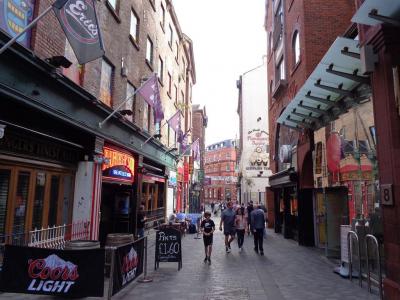
7) Mathew Street (must see)
Mathew Street is an unassuming side road in Liverpool city centre that houses a world famous musical attraction – the Cavern Club, the city’s most famous music venue and a place forever associated with the Beatles. The Liverpudlian four piece, considered by many to be the world’s greatest ever band, played at the venue several times in their early years. As a result, the street is visited by thousands of tourists each year, and is the centre of the Cavern Quarter, a bohemian area of arcades filled with must see attractions for Beatles fans.
In addition to the Cavern Club, which is still a hugely popular night-time venue, the street hosts a music festival each August. The largest free festival in Europe, the Mathew Street Festival plays host to dozens of tribute bands – with a Beatles act usually headlining. The street is also notable for the Grapes pub, often frequented by the Fab Four, and an unusual statue by Arthur Dooley, depicting the four band members in a religious pose. The statue, built into the wall on Mathew Street, bears the inscription ‘Four Lads who Shook the World’. The street was also believed to be visited by renowned philosopher Carl Jung; a plaster statue of the great Swiss thinker also stands on the street.
In addition to the Cavern Club, which is still a hugely popular night-time venue, the street hosts a music festival each August. The largest free festival in Europe, the Mathew Street Festival plays host to dozens of tribute bands – with a Beatles act usually headlining. The street is also notable for the Grapes pub, often frequented by the Fab Four, and an unusual statue by Arthur Dooley, depicting the four band members in a religious pose. The statue, built into the wall on Mathew Street, bears the inscription ‘Four Lads who Shook the World’. The street was also believed to be visited by renowned philosopher Carl Jung; a plaster statue of the great Swiss thinker also stands on the street.
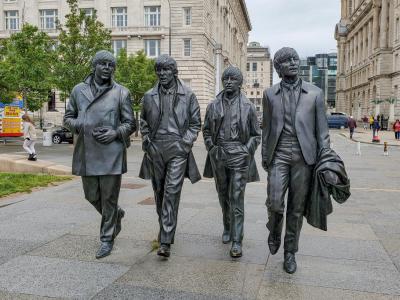
8) Beatles Statues (must see)
The Beatles Statue is an iconic monument located at Liverpool's Pier Head, near the intersection of Brunswick Street and Canada Boulevard. Designed by sculptor Andy Edwards, this striking bronze tribute to Paul McCartney, George Harrison, Ringo Starr, and John Lennon was unveiled on December 4, 2015. The ceremony, coinciding with the 50th anniversary of the Beatles' last Liverpool concert, was attended by Ann O'Byrne, the city’s deputy mayor, and Julia Baird, John Lennon's sister. The statue was generously donated to the city by The Cavern Club, the legendary music venue closely linked to the band’s early days.
The monument depicts the four Beatles walking together in a larger-than-life composition based on a 1963 photograph taken in Liverpool. Each figure features personal and symbolic details that celebrate the individuality of the band members. McCartney is seen holding a camera close to his chest, a nod to his late wife Linda McCartney, a photographer. Harrison's belt bears a Sanskrit inscription, symbolizing his spiritual interests. Starr’s right shoe has a card with the postal code "L8," referencing his childhood neighborhood in the Welsh Streets. He is positioned slightly behind the others, reflecting his placement as the drummer on stage. Lennon carries two acorns in his hand, referencing his and Yoko Ono’s 1968 acorn-planting gesture for world peace.
Standing prominently in front of the Liver Building, the statue has become a favorite photo stop for visitors and Beatles fans worldwide. Each small, thoughtful detail in the sculpture enriches the narrative of the Beatles' legacy, making it one of Liverpool’s most cherished attractions.
The monument depicts the four Beatles walking together in a larger-than-life composition based on a 1963 photograph taken in Liverpool. Each figure features personal and symbolic details that celebrate the individuality of the band members. McCartney is seen holding a camera close to his chest, a nod to his late wife Linda McCartney, a photographer. Harrison's belt bears a Sanskrit inscription, symbolizing his spiritual interests. Starr’s right shoe has a card with the postal code "L8," referencing his childhood neighborhood in the Welsh Streets. He is positioned slightly behind the others, reflecting his placement as the drummer on stage. Lennon carries two acorns in his hand, referencing his and Yoko Ono’s 1968 acorn-planting gesture for world peace.
Standing prominently in front of the Liver Building, the statue has become a favorite photo stop for visitors and Beatles fans worldwide. Each small, thoughtful detail in the sculpture enriches the narrative of the Beatles' legacy, making it one of Liverpool’s most cherished attractions.
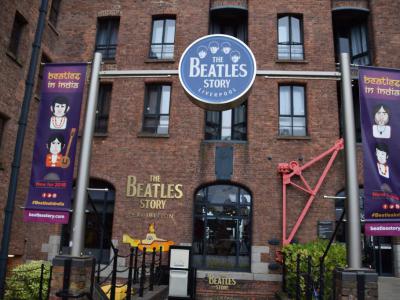
9) The Beatles Story (must see)
The Beatles Story is a world-renowned museum located at the historic Royal Albert Dock in Liverpool, the birthplace of the Fab Four. Opened on May 1, 1990, the museum was conceived by husband-and-wife team Mike and Bernadette Byrne, whose deep personal connections to The Beatles helped shape an attraction that has welcomed millions of visitors worldwide. Now owned by Mersey Ferries, part of Merseytravel, this award-winning museum celebrates the legacy of ‘the world’s greatest band’ through immersive experiences and rare memorabilia.
The Beatles Story invites visitors to embark on a journey through key moments of the band's history. Walk through meticulous recreations of iconic locations like The Casbah Coffee Club, The Cavern Club, and Abbey Road Studios. Highlights include personal artifacts like John Lennon’s iconic spectacles, George Harrison’s first guitar, and Ringo Starr’s drum kit. Exhibits also delve into the British Invasion, the band members’ solo careers, and their cultural impact.
Visitors can enjoy an audio guide, narrated by Julia Baird, John Lennon’s sister, available in 12 languages. This multimedia experience includes rare insights, video interviews with Paul McCartney and Ringo Starr, and interactive displays like the White Room and replica Cavern Club, making the journey unforgettable.
The Beatles Story offers more than just a nostalgic trip for music fans-it’s a vital part of Liverpool’s cultural and economic landscape, having contributed over £300 million to the local economy since its inception. The museum also boasts educational initiatives like the Discovery Zone, as well as Beatles-themed Fab4 Cafes and Fab4 Stores.
A must-see attraction, The Beatles Story continues to evolve, celebrating milestones such as Ringo Starr’s 80th birthday and adding exciting exhibits for its 30th anniversary in 2020. Whether you’re a lifelong fan or new to Beatlemania, this immersive experience promises to captivate visitors of all ages.
Why You Should Visit:
However expensive, the place is tastefully laid out and very well organized, and the admission fee does include a multi-lingual headset which adds quality to the visit.
Tip:
It can be difficult to get tickets on the day, so if you are planning to go then it would really be worthwhile booking online (that way, you also avoid queueing). Cheaper tickets are available if you search the web for discounts/vouchers.
The Beatles Story invites visitors to embark on a journey through key moments of the band's history. Walk through meticulous recreations of iconic locations like The Casbah Coffee Club, The Cavern Club, and Abbey Road Studios. Highlights include personal artifacts like John Lennon’s iconic spectacles, George Harrison’s first guitar, and Ringo Starr’s drum kit. Exhibits also delve into the British Invasion, the band members’ solo careers, and their cultural impact.
Visitors can enjoy an audio guide, narrated by Julia Baird, John Lennon’s sister, available in 12 languages. This multimedia experience includes rare insights, video interviews with Paul McCartney and Ringo Starr, and interactive displays like the White Room and replica Cavern Club, making the journey unforgettable.
The Beatles Story offers more than just a nostalgic trip for music fans-it’s a vital part of Liverpool’s cultural and economic landscape, having contributed over £300 million to the local economy since its inception. The museum also boasts educational initiatives like the Discovery Zone, as well as Beatles-themed Fab4 Cafes and Fab4 Stores.
A must-see attraction, The Beatles Story continues to evolve, celebrating milestones such as Ringo Starr’s 80th birthday and adding exciting exhibits for its 30th anniversary in 2020. Whether you’re a lifelong fan or new to Beatlemania, this immersive experience promises to captivate visitors of all ages.
Why You Should Visit:
However expensive, the place is tastefully laid out and very well organized, and the admission fee does include a multi-lingual headset which adds quality to the visit.
Tip:
It can be difficult to get tickets on the day, so if you are planning to go then it would really be worthwhile booking online (that way, you also avoid queueing). Cheaper tickets are available if you search the web for discounts/vouchers.
