Custom Walk in Manchester, England by tor_ledre_bada2 created on 2025-07-01
Guide Location: England » Manchester
Guide Type: Custom Walk
# of Sights: 12
Tour Duration: 2 Hour(s)
Travel Distance: 2.2 Km or 1.4 Miles
Share Key: RSHS8
Guide Type: Custom Walk
# of Sights: 12
Tour Duration: 2 Hour(s)
Travel Distance: 2.2 Km or 1.4 Miles
Share Key: RSHS8
How It Works
Please retrieve this walk in the GPSmyCity app. Once done, the app will guide you from one tour stop to the next as if you had a personal tour guide. If you created the walk on this website or come to the page via a link, please follow the instructions below to retrieve the walk in the app.
Retrieve This Walk in App
Step 1. Download the app "GPSmyCity: Walks in 1K+ Cities" on Apple App Store or Google Play Store.



Step 2. In the GPSmyCity app, download(or launch) the guide "Manchester Map and Walking Tours".
Step 3. Tap the menu button located at upper right corner of the "Walks" screen and select "Retrieve custom walk". Enter the share key: RSHS8
1) Hanover Building
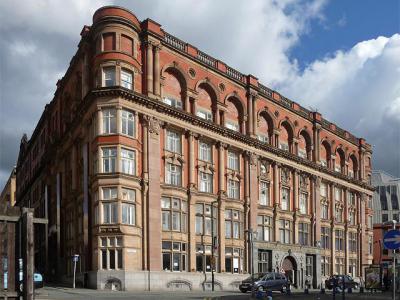
The Hanover Building in Manchester is a notable example of Edwardian Baroque architecture, strategically located in the NOMA district. Constructed initially in 1905 and opened officially in 1907, this Grade II listed building represents an important piece of the city’s architectural and commercial history.
The building integrates two distinct structures: the original E Block, a drapery warehouse built in 1904 by the Co-operative Wholesale Society (CWS), and an extension named Hanover, added in 1909. This expansion brought the total space to approximately 100,000 square feet, accommodating office and additional warehouse space.
Designed by F.E.L. Harris, a CWS architect, Hanover utilized cutting-edge construction techniques of its time, including the use of over 1.5 million bricks. The design emphasizes robust Edwardian Baroque features, constructed primarily from red brick complemented by polished granite and sandstone dressings. Materials were sourced locally as much as possible, including Baxenden bricks, Darley Dale stone from Derbyshire, and Aberdeen granite.
The building's aesthetic is marked by ornate pilasters, Corinthian order columns, and parapet walls that conceal the roof. An interesting historical note is the original top floor, which housed the Mitchell Memorial Hall but was lost during the Manchester Blitz of 1940-41 and never rebuilt. Another unique feature is the series of medallions encircling the building, each engraved with the names of places where the Cooperative Wholesale Society traded at the time, showcasing global connections. A notable error during construction was the misspelling of 'Sydney' as 'Sidney', a mistake still visible today.
The building integrates two distinct structures: the original E Block, a drapery warehouse built in 1904 by the Co-operative Wholesale Society (CWS), and an extension named Hanover, added in 1909. This expansion brought the total space to approximately 100,000 square feet, accommodating office and additional warehouse space.
Designed by F.E.L. Harris, a CWS architect, Hanover utilized cutting-edge construction techniques of its time, including the use of over 1.5 million bricks. The design emphasizes robust Edwardian Baroque features, constructed primarily from red brick complemented by polished granite and sandstone dressings. Materials were sourced locally as much as possible, including Baxenden bricks, Darley Dale stone from Derbyshire, and Aberdeen granite.
The building's aesthetic is marked by ornate pilasters, Corinthian order columns, and parapet walls that conceal the roof. An interesting historical note is the original top floor, which housed the Mitchell Memorial Hall but was lost during the Manchester Blitz of 1940-41 and never rebuilt. Another unique feature is the series of medallions encircling the building, each engraved with the names of places where the Cooperative Wholesale Society traded at the time, showcasing global connections. A notable error during construction was the misspelling of 'Sydney' as 'Sidney', a mistake still visible today.
2) National Football Museum (must see)
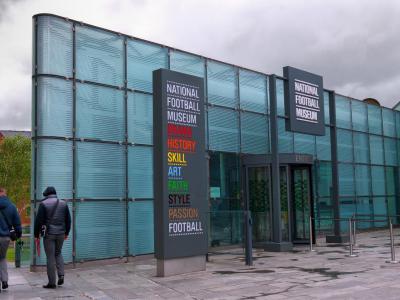
The National Football Museum is a museum at the Urbis building in Manchester city centre, founded to preserve, conserve and interpret important collections of football memorabilia. The museum was originally in Deepdale, Preston, Lancashire, but moved to Manchester in 2012. The National Football Museum holds a huge collection of football exhibits and memorabilia in a four-story building, and is the largest museum dedicated to the game of football in the world.
Here you will learn how football became the pass time of our lives. There are hundreds of fascinating photographs, memorable videos, and historic objects on display, including shirts worn by football greats such as Pele, Stanley Matthews, Diego Maradona and others.
The museum is very well-curated for visitors for learning the history of football as a game and the story behind the World Cup. For fun stuff, there is a penalty shootout zone for kids, so they can have hands-on, or more appropriately feet-on, experience of trying a penalty kick.
If you are football fan, the National Football Museum is a must-visit experience when in Manchester.
Here you will learn how football became the pass time of our lives. There are hundreds of fascinating photographs, memorable videos, and historic objects on display, including shirts worn by football greats such as Pele, Stanley Matthews, Diego Maradona and others.
The museum is very well-curated for visitors for learning the history of football as a game and the story behind the World Cup. For fun stuff, there is a penalty shootout zone for kids, so they can have hands-on, or more appropriately feet-on, experience of trying a penalty kick.
If you are football fan, the National Football Museum is a must-visit experience when in Manchester.
3) The Old Wellington Inn
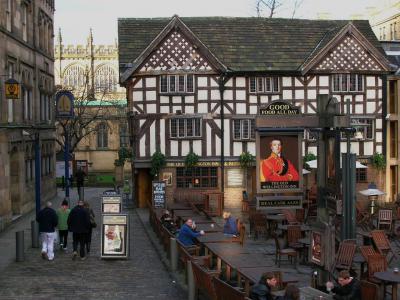
This unique half-timbered pub in Manchester city centre, steeped in history, has been around since 1552. Originally built next to the Market Square, on what is now Market Street, the building was moved 300 metres (980 feet) from its original site towards Manchester Cathedral, to form Shambles Square, as part of the redevelopment programme completed in 1999.
Nicknamed ‘The Old Welly’, this is the oldest building of its kind in Manchester and, in 1554, is was made part of the draper's shop, owned by the Byrom family. It was here that in 1692 the writer John Byrom, inventor of an early form of shorthand, was born. In 1830, the building became a licensed public house, first known as the Vintners Arms, and later the Kenyon Vaults. By 1865, the ground floor of the building was taken up by the Wellington Inn, while the upper floors were used by makers of mathematical and optical instruments. In 1897, the upper floors accommodated a fishing tackle shop, which was called very much so – "Ye Olde Fyshing Tackle Shoppe".
In the 1970s, along with the Old Shambles, the Inn was raised by 1.4 metres. In the aftermath of the 1996 Manchester bombing which left the building damaged and took nearly a year and £500,000 to repair, it was decided that it should be dismantled and rebuilt anew nearby. Today, The Old Wellington delights visitors with a rich choice of great pub food, real ales and exciting range of premium gins. If all this sounds like your kind of fun, make sure to pop in and check out this ancient monument of a pub, while in Manchester!
Nicknamed ‘The Old Welly’, this is the oldest building of its kind in Manchester and, in 1554, is was made part of the draper's shop, owned by the Byrom family. It was here that in 1692 the writer John Byrom, inventor of an early form of shorthand, was born. In 1830, the building became a licensed public house, first known as the Vintners Arms, and later the Kenyon Vaults. By 1865, the ground floor of the building was taken up by the Wellington Inn, while the upper floors were used by makers of mathematical and optical instruments. In 1897, the upper floors accommodated a fishing tackle shop, which was called very much so – "Ye Olde Fyshing Tackle Shoppe".
In the 1970s, along with the Old Shambles, the Inn was raised by 1.4 metres. In the aftermath of the 1996 Manchester bombing which left the building damaged and took nearly a year and £500,000 to repair, it was decided that it should be dismantled and rebuilt anew nearby. Today, The Old Wellington delights visitors with a rich choice of great pub food, real ales and exciting range of premium gins. If all this sounds like your kind of fun, make sure to pop in and check out this ancient monument of a pub, while in Manchester!
4) The Triangle
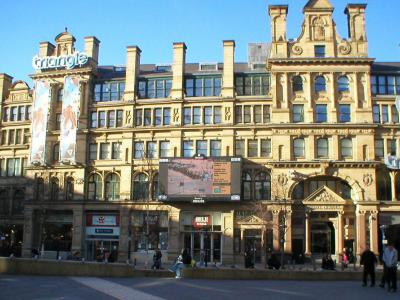
The Triangle Shopping Centre is housed in an Edwardian building on Exchange Square, in Manchester’s regenerated Millennium Quarter. There has been a commercial centre standing on this spot since 1837, when the first trading floor opened. The triangular building that contains the shopping centre was built in 1897, and opened its doors as a Corn Exchange in 1903. Like the nearby Royal Exchange, the building was a thriving centre for the trading of goods in Depression era England, and contributed to Manchester’s growth as the industrial and commercial centre of the region. After World War 2, the building fell into disuse, before becoming a bohemian flea market in the 1970s.
The building became well known for its alternative stores selling clothes and jewellery, as well as a range of cafes. Bomb damage from the IRA blast in 1996 led to extensive regeneration, and caused a great number of these shops and stalls to be relocated. Now refitted with a modern interior inside the listed Edwardian frontage, the building is home to a number of designer outlets. Famous brands like Adidas, Muji, O’Neill and Jigsaw have stores within the centre, and it is also home to local radio station Galaxy Manchester.
The building became well known for its alternative stores selling clothes and jewellery, as well as a range of cafes. Bomb damage from the IRA blast in 1996 led to extensive regeneration, and caused a great number of these shops and stalls to be relocated. Now refitted with a modern interior inside the listed Edwardian frontage, the building is home to a number of designer outlets. Famous brands like Adidas, Muji, O’Neill and Jigsaw have stores within the centre, and it is also home to local radio station Galaxy Manchester.
5) New Cathedral Street
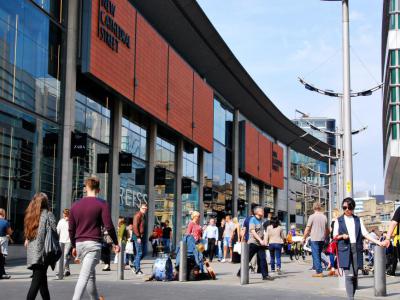
New Cathedral Street is a modern, pedestrianised shopping street in the heart of central Manchester, close to Deansgate and halfway between the city’s two main train stations, Victoria and Piccadilly. While the street is a relatively modern addition, it has been built around two of Manchester’s most famous landmarks – the Royal Exchange theatre and arcade in the centre of the street, and Saint Ann’s Church at the street’s southern end. As the name suggests, New Cathedral Street leads towards Manchester Cathedral, at the north end.
New Cathedral Street was built following major regeneration works in the downtown area, carried out after the infamous 1996 IRA bombing of Manchester’s city centre. New Cathedral Street is Manchester’s premier shopping destination, home to a number of boutique department stores, many of which are flagship stores for the North of England. The emergence of the street as a shopping hotspot has boosted Manchester’s reputation as a fashionable destination to visit. Established brands like Selfridge's and Marks & Spencer have their stores here alongside a host of designer names and outlets which have also taken up residence in New Cathedral Street. Among these are Harvey Nichols, Ted Baker, Hugo Boss, Burberry and Lacoste, to name but a few.
New Cathedral Street was built following major regeneration works in the downtown area, carried out after the infamous 1996 IRA bombing of Manchester’s city centre. New Cathedral Street is Manchester’s premier shopping destination, home to a number of boutique department stores, many of which are flagship stores for the North of England. The emergence of the street as a shopping hotspot has boosted Manchester’s reputation as a fashionable destination to visit. Established brands like Selfridge's and Marks & Spencer have their stores here alongside a host of designer names and outlets which have also taken up residence in New Cathedral Street. Among these are Harvey Nichols, Ted Baker, Hugo Boss, Burberry and Lacoste, to name but a few.
6) St. Ann's Church
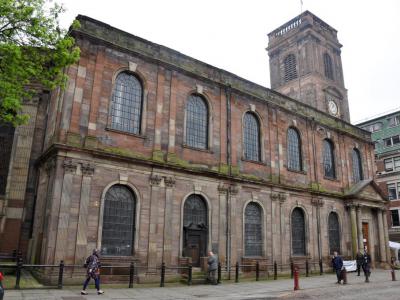
Saint Ann’s Church is a Grade I listed, 18th century temple located in front of Saint Ann’s Square, at the heart of Manchester’s shopping district, where the fashionable shopping avenues of New Cathedral Street and Barton Arcade converge. The church was consecrated at this spot in 1712, when Manchester was little more than a rural parish town. Named after Saint Anne, the church’s shortened name is a reference to Lady Ann Bland who was its first patron. The building was redeveloped during the Victorian era, with its red Collyhurst sandstone exterior replaced with harder wearing stone, and stained glass windows installed.
The completion of the church marked the rise of Manchester as an urban centre. Within ten years, Saint Ann’s Square had been laid out in front of the church, based on the fashionable squares found in Bath and London. The church thus became so central to the city’s development that its bell tower is still considered the centre of the city. The benchmark which surveyors used to measure distances to Manchester’s satellite towns can still be seen at the base of the tower. A Church of England place of worship, Saint Ann’s Church welcomes visitors and still holds regular Sunday services.
The completion of the church marked the rise of Manchester as an urban centre. Within ten years, Saint Ann’s Square had been laid out in front of the church, based on the fashionable squares found in Bath and London. The church thus became so central to the city’s development that its bell tower is still considered the centre of the city. The benchmark which surveyors used to measure distances to Manchester’s satellite towns can still be seen at the base of the tower. A Church of England place of worship, Saint Ann’s Church welcomes visitors and still holds regular Sunday services.
7) St. Mary’s Roman Catholic Church
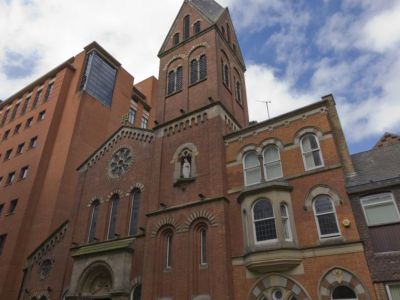
Saint Mary’s Roman Catholic Church can be found on Mulberry Street, a quiet cul-de-sac between Deansgate and Albert Square, in the middle of Manchester’s city centre. The church has earned the more familiar local nickname of The Hidden Gem. As you approach and enter the building, the reasons for the name become apparent. Fashioned from unremarkable Victorian red brick and wedged into a typical Mancunian terrace, the church could easily be mistaken for a Victorian factory or mission building. Once through the elaborate entrance door that punctuates the uniform frontage of the building, you are greeted by the exceptional interior of the church.
With its marble altar, Victorian era carvings and life size statues of several saintly figures, the Hidden Gem is one of Manchester's most remarkable religious buildings. The church is Manchester’s oldest surviving Catholic place of worship. Consecrated in 1794, the church has been restored multiple times, most notably in 1833 when the church roof collapsed shortly after a church service. The church is still active and holds mass each weekday at 12.30pm, and on Saturdays and Sundays at midday. Saint Mary’s is a welcoming city centre church that allows access for worship and prayer from 10am until 4pm each weekday.
With its marble altar, Victorian era carvings and life size statues of several saintly figures, the Hidden Gem is one of Manchester's most remarkable religious buildings. The church is Manchester’s oldest surviving Catholic place of worship. Consecrated in 1794, the church has been restored multiple times, most notably in 1833 when the church roof collapsed shortly after a church service. The church is still active and holds mass each weekday at 12.30pm, and on Saturdays and Sundays at midday. Saint Mary’s is a welcoming city centre church that allows access for worship and prayer from 10am until 4pm each weekday.
8) Manchester Town Hall (must see)
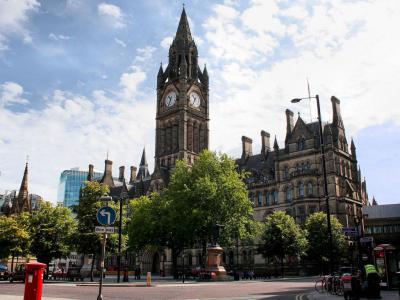
Manchester Town Hall was built in 1877, at the height of the city’s industrial expansion, and is one of the UK’s finest examples of neo-Gothic architecture, designed by architect Alfred Waterhouse.
The history of this industrial northern city is intrinsic to the design and creation of this building. Waterhouse used hard-wearing ‘Spinkwell stone’ to create a structure that could survive the heavy air pollution found in Victorian Manchester. In addition, Waterhouse’s design was chosen due to its clear contrast to the neoclassical architecture found in Liverpool, Manchester’s local rival during the industrial age. The frontage of the Town Hall and Bell Tower form one of Manchester’s most recognisable images, and is covered with ornate sculptures depicting the history of the city.
The extension building was completed in the 1930s to cater for Manchester’s growing need for a larger council office. Together, the Town Hall and its iconic Bell Tower have been described as resembling a miniature version of London’s Palace of Westminster, and even have been used as its substitute in film and TV, including recent productions “State of Play” and “The Iron Lady.”
The history of this industrial northern city is intrinsic to the design and creation of this building. Waterhouse used hard-wearing ‘Spinkwell stone’ to create a structure that could survive the heavy air pollution found in Victorian Manchester. In addition, Waterhouse’s design was chosen due to its clear contrast to the neoclassical architecture found in Liverpool, Manchester’s local rival during the industrial age. The frontage of the Town Hall and Bell Tower form one of Manchester’s most recognisable images, and is covered with ornate sculptures depicting the history of the city.
The extension building was completed in the 1930s to cater for Manchester’s growing need for a larger council office. Together, the Town Hall and its iconic Bell Tower have been described as resembling a miniature version of London’s Palace of Westminster, and even have been used as its substitute in film and TV, including recent productions “State of Play” and “The Iron Lady.”
9) Free Trade Hall
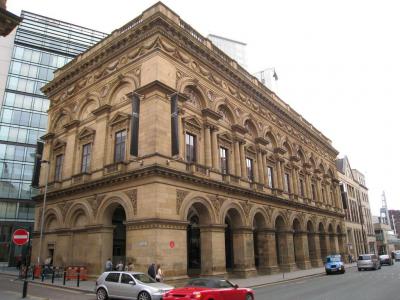
The Free Trade Hall is located on Peter Street, close to the Manchester Opera House in Manchester City Centre. It was built on Saint Peter’s Fields in 1856. The fields are famous in Mancunian folklore as the site of the Peterloo Massacre. In 1819, the fields were the site for a mass political demonstration, which was ended by brutal military invention, resulting in fifteen deaths. The massacre was a watershed for the city of Manchester, which grew into a more prosperous and democratic settlement in the following fifty years.
A large public concert hall, the Free Trade Hall was built to commemorate the repealing of the Corn Laws in 1846, which opened up the United Kingdom to free trade. Despite damage during the Blitz and declining audiences in recent years, the hall was Manchester’s premier classical concert venue until the opening of Bridgewater Hall in 1996. The hall has also hosted famous rock artists, including Bob Dylan and the Sex Pistols, whilst a young Winston Churchill gave a speech at the hall in 1904.
The Grade II listed building, designed in the Italian cinquecento style, now houses a hotel. The ground floor and stairwells still display artifacts from the hall’s heyday, including the coats of arms of Lancashire towns which fought the Corn Laws 150 years ago.
A large public concert hall, the Free Trade Hall was built to commemorate the repealing of the Corn Laws in 1846, which opened up the United Kingdom to free trade. Despite damage during the Blitz and declining audiences in recent years, the hall was Manchester’s premier classical concert venue until the opening of Bridgewater Hall in 1996. The hall has also hosted famous rock artists, including Bob Dylan and the Sex Pistols, whilst a young Winston Churchill gave a speech at the hall in 1904.
The Grade II listed building, designed in the Italian cinquecento style, now houses a hotel. The ground floor and stairwells still display artifacts from the hall’s heyday, including the coats of arms of Lancashire towns which fought the Corn Laws 150 years ago.
10) Manchester Central
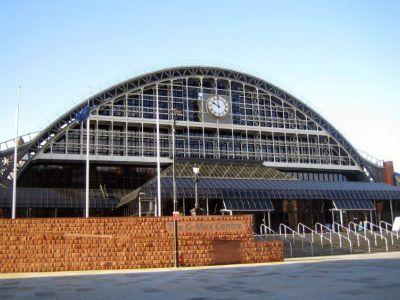
As its name suggests, Manchester Central Convention Complex is geographically and historically at the heart of the city. Situated off Deansgate in Manchester city centre, Manchester Central’s name harks back to its first incarnation, as a popular railway terminus in the city. Cross country trains ran from the station, which opened in 1880, to London Saint Pancras station. The station building has a similar design to Saint Pancras station, with a large, single span, wrought iron arched roof second only in size to its London based counterpart.
Manchester Central station closed in 1969, and was reinvented as a conference centre and concert venue. Known as the GMEX, or Greater Manchester Exhibition Centre, the building reopened in 1986, and has since played host to many members of Manchester’s rich musical history, including The Smiths, New Order and Oasis. The centre was rebranded as Manchester Central in 1997. Faced with competition from the larger Manchester Arena in a compact city centre, the venue has hosted fewer concerts in recent years.
The former station building has an extensive conference complex attached – built in 2001 and formerly known as the Manchester International Convention Centre. The building has played host to hundreds of conferences, most notably attracting political parties to hold their annual conferences there. The ruling Conservative Party held their autumn party conference at the venue in 2011.
Manchester Central station closed in 1969, and was reinvented as a conference centre and concert venue. Known as the GMEX, or Greater Manchester Exhibition Centre, the building reopened in 1986, and has since played host to many members of Manchester’s rich musical history, including The Smiths, New Order and Oasis. The centre was rebranded as Manchester Central in 1997. Faced with competition from the larger Manchester Arena in a compact city centre, the venue has hosted fewer concerts in recent years.
The former station building has an extensive conference complex attached – built in 2001 and formerly known as the Manchester International Convention Centre. The building has played host to hundreds of conferences, most notably attracting political parties to hold their annual conferences there. The ruling Conservative Party held their autumn party conference at the venue in 2011.
11) Bridgewater Hall
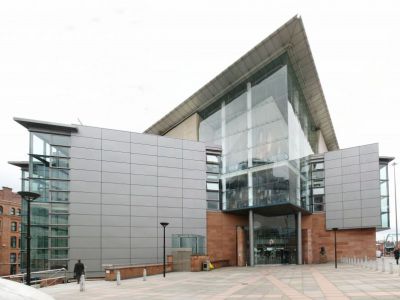
Bridgewater Hall is another of Manchester’s impressive array of esteemed modern concert halls. The venue opened in 1996 at the southern end of the city centre, directly opposite Manchester Central. Bridgewater Hall is the city’s premier venue for classical performances, and was constructed as a replacement for the Free Trade Hall, which was damaged by German bombs in World War 2 and never returned to its former glory.
Local architects Renton Howard Wood Levin designed the building, which aimed to create a perfect acoustic environment for classical recitals. The hall was built on noise reducing foundations, which cut out noise from nearby traffic and tram services. The architects also created a basin from the nearby Rochdale canal to give the hall a waterside location. Bridgewater Hall cost 42 million pounds to build, but has proved worthy of the expense, hosting up to 250 classical performances each year.
Bridgewater Hall is the home of Manchester’s renowned Halle orchestra, and Manchester Boys’ Choir. The BBC Philharmonic Orchestra also hold regular recitals at the hall. Bridgewater Hall is surrounded by bars, restaurants and galleries in an artistic corner of the city close to Deansgate railway station, and is one of the standout successes of the city’s recent regeneration plans.
Local architects Renton Howard Wood Levin designed the building, which aimed to create a perfect acoustic environment for classical recitals. The hall was built on noise reducing foundations, which cut out noise from nearby traffic and tram services. The architects also created a basin from the nearby Rochdale canal to give the hall a waterside location. Bridgewater Hall cost 42 million pounds to build, but has proved worthy of the expense, hosting up to 250 classical performances each year.
Bridgewater Hall is the home of Manchester’s renowned Halle orchestra, and Manchester Boys’ Choir. The BBC Philharmonic Orchestra also hold regular recitals at the hall. Bridgewater Hall is surrounded by bars, restaurants and galleries in an artistic corner of the city close to Deansgate railway station, and is one of the standout successes of the city’s recent regeneration plans.
12) HOME
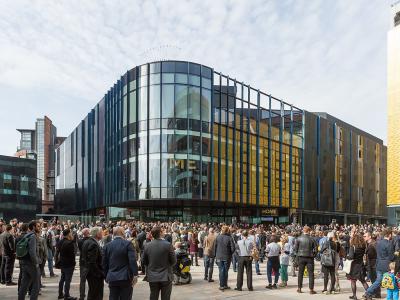
HOME in Manchester is a dynamic arts center that amalgamates cinema, theatre, and visual arts under one roof. This impressive complex includes five cinema screens, two theatres-a 500-seat theatre and a 150-seat flexible studio-and extensive gallery space spanning 500 square meters (5,400 square feet).
Strategically located on First Street, HOME contributes to the burgeoning creative quarter of the city. The center was designed by Mecanoo Architects from Delft, Netherlands, featuring a contemporary aesthetic that complements its innovative cultural offerings. This venue not only hosts a diverse range of performances and exhibitions but also includes amenities such as a café bar and restaurant, making it a central hub for arts and culture in Manchester.
The initiative for HOME was generously supported by funding from Manchester City Council, the Garfield Weston Foundation, and Arts Council England. Managed under a service contract with Manchester City Council, HOME aims to provide significant social benefits to the local community.
The Library Theatre, which became part of HOME, previously occupied the basement of Manchester Central Library and had a rich history of theatrical performances since 1952. The theatre company transitioned to performing at The Lowry in Salford in 2010 and finally moved to HOME in 2015.
Notable patrons of HOME include prominent figures such as filmmaker Danny Boyle, actress and comedian Meera Syal, director Nicholas Hytner, and novelist Jackie Kay, highlighting the center's esteemed reputation in the arts community.
Strategically located on First Street, HOME contributes to the burgeoning creative quarter of the city. The center was designed by Mecanoo Architects from Delft, Netherlands, featuring a contemporary aesthetic that complements its innovative cultural offerings. This venue not only hosts a diverse range of performances and exhibitions but also includes amenities such as a café bar and restaurant, making it a central hub for arts and culture in Manchester.
The initiative for HOME was generously supported by funding from Manchester City Council, the Garfield Weston Foundation, and Arts Council England. Managed under a service contract with Manchester City Council, HOME aims to provide significant social benefits to the local community.
The Library Theatre, which became part of HOME, previously occupied the basement of Manchester Central Library and had a rich history of theatrical performances since 1952. The theatre company transitioned to performing at The Lowry in Salford in 2010 and finally moved to HOME in 2015.
Notable patrons of HOME include prominent figures such as filmmaker Danny Boyle, actress and comedian Meera Syal, director Nicholas Hytner, and novelist Jackie Kay, highlighting the center's esteemed reputation in the arts community.
