Custom Walk in Sofia, Bulgaria by kxirou_b9936 created on 2025-07-10
Guide Location: Bulgaria » Sofia
Guide Type: Custom Walk
# of Sights: 14
Tour Duration: 6 Hour(s)
Travel Distance: 13.4 Km or 8.3 Miles
Share Key: YQB38
Guide Type: Custom Walk
# of Sights: 14
Tour Duration: 6 Hour(s)
Travel Distance: 13.4 Km or 8.3 Miles
Share Key: YQB38
How It Works
Please retrieve this walk in the GPSmyCity app. Once done, the app will guide you from one tour stop to the next as if you had a personal tour guide. If you created the walk on this website or come to the page via a link, please follow the instructions below to retrieve the walk in the app.
Retrieve This Walk in App
Step 1. Download the app "GPSmyCity: Walks in 1K+ Cities" on Apple App Store or Google Play Store.



Step 2. In the GPSmyCity app, download(or launch) the guide "Sofia Map and Walking Tours".
Step 3. Tap the menu button located at upper right corner of the "Walks" screen and select "Retrieve custom walk". Enter the share key: YQB38
1) Vitosha Boulevard (must see)
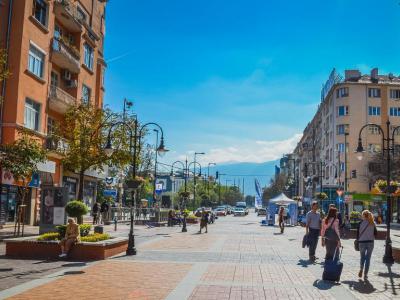
Have you seen Mount Vitosha while visiting the city? But did you know this is the mountain from which Vitosha Boulevard takes its name from? Today, it serves as the city’s main shopping and commercial artery, running from Saint Nedelya Square all the way to Southern Park. Along its length, visitors encounter a concentration of luxury boutiques, fashionable cafés, elegant restaurants, and lively bars-especially popular for open-air dining in summer and illuminated evening strolls.
Starting near Saint Nedelya Square and heading south toward Southern Park, you’ll come across names like Versace, D&G, La Perla, Lacoste, Armani, Tommy Hilfiger, Hugo Boss, among others. Most of these stores are set directly along the main pedestrian stretch, making them easy to explore as you walk the boulevard end to end. According to a recent 2024 report, Vitosha Boulevard now ranks among the top 60 most expensive shopping streets in the world.
Before Bulgaria’s liberation from Ottoman's rule in 1878, the street was lined with small one-story houses. Between the two World Wars, it transformed into a major commercial artery marked by larger-scale construction and European architectural influences. Near the northern end, close to Saint Nedelya Square, stands the imposing Palace of Justice.
Farther along the boulevard, as you head toward the park, you’ll pass the former home of Bulgarian Symbolist poet Peyo Yavorov, located at Georgi S. Rakovski 136-a three-story building with a light-yellow facade. Continue onward to the southern stretch where the National Palace of Culture dominates the skyline. Along this route, you’ll also come across the corner famously known as “The Pharmacy,” part of the Grand Hotel Sofia. Once a favored meeting place for writers and artists, the space within the hotel has since been renovated and repurposed over the years. The hotel building itself is a protected architectural landmark in Sofia.
In 2007, a renovation project was launched to restore the elegant look of 1930s Sofia. Historical street lamps, benches, and Art Nouveau-style kiosks were added, along with new green spaces, fountains, outdoor bars, and a clock tower near Saint Nedelya Cathedral-displaying the time in major world capitals.
One fascinating detail is that beneath Vitosha Boulevard lie underground remains of ancient Sofia, including Roman streets and fragments of early urban life. In some places, you can glimpse these ruins protected by glass panels from the surface.
Starting near Saint Nedelya Square and heading south toward Southern Park, you’ll come across names like Versace, D&G, La Perla, Lacoste, Armani, Tommy Hilfiger, Hugo Boss, among others. Most of these stores are set directly along the main pedestrian stretch, making them easy to explore as you walk the boulevard end to end. According to a recent 2024 report, Vitosha Boulevard now ranks among the top 60 most expensive shopping streets in the world.
Before Bulgaria’s liberation from Ottoman's rule in 1878, the street was lined with small one-story houses. Between the two World Wars, it transformed into a major commercial artery marked by larger-scale construction and European architectural influences. Near the northern end, close to Saint Nedelya Square, stands the imposing Palace of Justice.
Farther along the boulevard, as you head toward the park, you’ll pass the former home of Bulgarian Symbolist poet Peyo Yavorov, located at Georgi S. Rakovski 136-a three-story building with a light-yellow facade. Continue onward to the southern stretch where the National Palace of Culture dominates the skyline. Along this route, you’ll also come across the corner famously known as “The Pharmacy,” part of the Grand Hotel Sofia. Once a favored meeting place for writers and artists, the space within the hotel has since been renovated and repurposed over the years. The hotel building itself is a protected architectural landmark in Sofia.
In 2007, a renovation project was launched to restore the elegant look of 1930s Sofia. Historical street lamps, benches, and Art Nouveau-style kiosks were added, along with new green spaces, fountains, outdoor bars, and a clock tower near Saint Nedelya Cathedral-displaying the time in major world capitals.
One fascinating detail is that beneath Vitosha Boulevard lie underground remains of ancient Sofia, including Roman streets and fragments of early urban life. In some places, you can glimpse these ruins protected by glass panels from the surface.
2) Pirotska Street
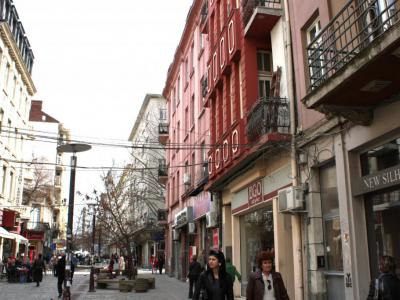
The first pedestrianized street in Sofia, Pirotska Street has a history rooted in Bulgaria’s early years of independence. It emerged in the late 19th century as Sofia rapidly expanded beyond its old Ottoman-era core. By the early 1900s, it had become a busy commercial street lined with small workshops, family stores, and bakeries-many of which were owned by local craftsmen and merchants from across the region.
Today, you can begin your stroll with a fresh banitsa-a flaky Bulgarian pastry filled with cheese- from a local bakery before heading toward Halite, the Central Market Hall, built in 1911 and still bustling with food stalls below and small shops above. Pirotska remains packed with places to explore-over 100 shops, cafés, restaurants, and market-style stands offering clothing, shoes, cosmetics, artisanal goods, and everyday necessities, often at prices lower than Sofia’s more upscale shopping avenues.
Unlike the big-brand shopping streets, most shops here feature Bulgarian-made goods or imports from nearby countries. You might find a traditional bakery next to a leather shop, a tiny bookstore, or a courtyard café hidden down a side passage. Historically, Pirotska also bordered Sofia’s old Jewish quarter, and traces of that heritage linger in nearby buildings and side streets.
Today, you can begin your stroll with a fresh banitsa-a flaky Bulgarian pastry filled with cheese- from a local bakery before heading toward Halite, the Central Market Hall, built in 1911 and still bustling with food stalls below and small shops above. Pirotska remains packed with places to explore-over 100 shops, cafés, restaurants, and market-style stands offering clothing, shoes, cosmetics, artisanal goods, and everyday necessities, often at prices lower than Sofia’s more upscale shopping avenues.
Unlike the big-brand shopping streets, most shops here feature Bulgarian-made goods or imports from nearby countries. You might find a traditional bakery next to a leather shop, a tiny bookstore, or a courtyard café hidden down a side passage. Historically, Pirotska also bordered Sofia’s old Jewish quarter, and traces of that heritage linger in nearby buildings and side streets.
3) Central Sofia Market Hall
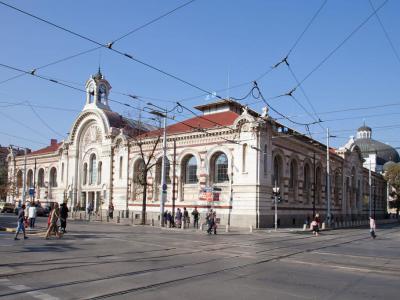
Even though its official English name is Central Sofia Hall, most people in the city simply call it The Market Hall. Designed by Bulgarian architect Naum Torbov, it first opened its doors in 1911 and quickly became one of Sofia’s busiest commercial hubs. When it first opened, this was one of the very few buildings in Sofia to combine commercial space with modern infrastructure, including refrigeration facilities.
For decades, the city rented out roughly 170 small shops inside the building-until 1950, when it shifted to full public use. The market continued to thrive until 1988, when it closed for long-planned renovations, reopening in 2000. Today, it employs over 1,000 people and stretches across three floors filled with food stalls, fast-food counters, clothing boutiques, jewelry stands, and everyday accessories. Torbov’s original design has been carefully preserved, and many still consider this building his masterpiece.
Architecturally, the Market Hall is a blend of Neo-Renaissance style, mixed with Neo-Byzantine and Neo-Baroque touches. Above the main entrance, you’ll spot Sofia’s coat of arms, created by artist Haralampi Tachev, while the clock tower-complete with three clock dials-keeps watch over the boulevard. The hall has four entrances, though only some are in use today.
For decades, the city rented out roughly 170 small shops inside the building-until 1950, when it shifted to full public use. The market continued to thrive until 1988, when it closed for long-planned renovations, reopening in 2000. Today, it employs over 1,000 people and stretches across three floors filled with food stalls, fast-food counters, clothing boutiques, jewelry stands, and everyday accessories. Torbov’s original design has been carefully preserved, and many still consider this building his masterpiece.
Architecturally, the Market Hall is a blend of Neo-Renaissance style, mixed with Neo-Byzantine and Neo-Baroque touches. Above the main entrance, you’ll spot Sofia’s coat of arms, created by artist Haralampi Tachev, while the clock tower-complete with three clock dials-keeps watch over the boulevard. The hall has four entrances, though only some are in use today.
4) The Women’s Market
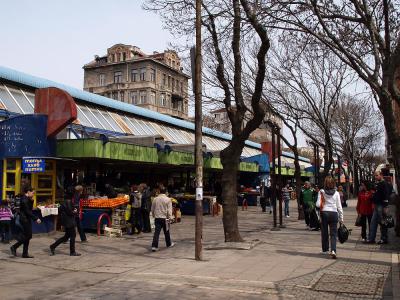
Situated in close proximity to Lion's Bridge, the Women's Market stands as the oldest operational marketplace within the boundaries of the Bulgarian capital. Its origins trace back to the year 1878, a period just preceding Bulgaria's attainment of independence. Over time, the Women's Market experienced remarkable growth, ultimately evolving into a pivotal hub for commerce, not only during its contemporary era but also in the years that followed. Throughout the 20th century, this marketplace held a position of utmost prestige and influence within the city of Sofia.
In recent times, particularly following a series of modernization efforts undertaken in 2014, the Women's Market has transformed into a confluence of the past and present, a place where various cultures converge. The striking new pavilions contrast elegantly with the historical architectural backdrop of the old city.
The Women's Market is a melting pot of cultures, drawing merchants not just from Bulgaria but also from the Middle East and Turkey. This unique blend results in a captivating assortment of flavors and products. The presence of Eastern merchants infuses the Women's Market with exotic foods, spices, and merchandise, harmoniously coexisting with traditional Bulgarian offerings, including food and clothing.
Throughout the year, the bustling marketplace offers a wide range of fresh produce, from vegetables to meats. To cap off a rewarding shopping experience, numerous Middle Eastern, Turkish, and Bulgarian restaurants, as well as coffee bars, can be found in the vicinity of the marketplace. Moreover, the "Serdika" Gallery, situated on the market grounds, provides a glimpse into the local cultural scene.
In recent times, particularly following a series of modernization efforts undertaken in 2014, the Women's Market has transformed into a confluence of the past and present, a place where various cultures converge. The striking new pavilions contrast elegantly with the historical architectural backdrop of the old city.
The Women's Market is a melting pot of cultures, drawing merchants not just from Bulgaria but also from the Middle East and Turkey. This unique blend results in a captivating assortment of flavors and products. The presence of Eastern merchants infuses the Women's Market with exotic foods, spices, and merchandise, harmoniously coexisting with traditional Bulgarian offerings, including food and clothing.
Throughout the year, the bustling marketplace offers a wide range of fresh produce, from vegetables to meats. To cap off a rewarding shopping experience, numerous Middle Eastern, Turkish, and Bulgarian restaurants, as well as coffee bars, can be found in the vicinity of the marketplace. Moreover, the "Serdika" Gallery, situated on the market grounds, provides a glimpse into the local cultural scene.
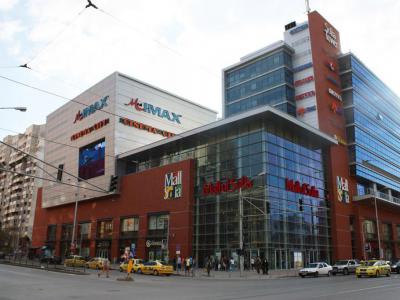
5) The Mall of Sofia
What to buy here: Bulgarian white cheese.
Popular in Bulgaria as “white brine sirene “cheese” it is very often confused by the foregners with the Greek feta. The truth is that the Bulgarian cheese is unbeatable by its taste and incomparable with any other type of cheeses. The taste of the cheese is given by the unique bacteria called “Bacillus Bulgaricus” dicovered in 1905 in Bulgaria and named after the name of the country, which is also the reason for its slightly acid taste. Thanks to the same bacteria the Bulgarian yougurt is world known for its wholesome effect on the health.
The cheese can be made of goat milk, cow’s milk or sheep milk. For best taste it has to be put in storage for 60 days. The cheese is one of the must ingredients of the most popular Bulgarian salad called “Shopska” as well as the famous stuffed pepper with cheese. If you drink red wine it is an indispensible product on the table dusted with finely ground red pepper and olive oil. It is also used in the preparation of the most common breakfast of the Bulgarians – salty pastry stuffed with wite cheese « banitsa ».
The white cheese is one of the products that remind the communist era in Bulgaria and today the people still remember the real taste of the home made white brine cheese produced with home made milk and yeast and strained in the dining room of the house. From 9$ for a kilogram.
Working time Every day 10:00 - 21:00
Popular in Bulgaria as “white brine sirene “cheese” it is very often confused by the foregners with the Greek feta. The truth is that the Bulgarian cheese is unbeatable by its taste and incomparable with any other type of cheeses. The taste of the cheese is given by the unique bacteria called “Bacillus Bulgaricus” dicovered in 1905 in Bulgaria and named after the name of the country, which is also the reason for its slightly acid taste. Thanks to the same bacteria the Bulgarian yougurt is world known for its wholesome effect on the health.
The cheese can be made of goat milk, cow’s milk or sheep milk. For best taste it has to be put in storage for 60 days. The cheese is one of the must ingredients of the most popular Bulgarian salad called “Shopska” as well as the famous stuffed pepper with cheese. If you drink red wine it is an indispensible product on the table dusted with finely ground red pepper and olive oil. It is also used in the preparation of the most common breakfast of the Bulgarians – salty pastry stuffed with wite cheese « banitsa ».
The white cheese is one of the products that remind the communist era in Bulgaria and today the people still remember the real taste of the home made white brine cheese produced with home made milk and yeast and strained in the dining room of the house. From 9$ for a kilogram.
Working time Every day 10:00 - 21:00
6) South Park
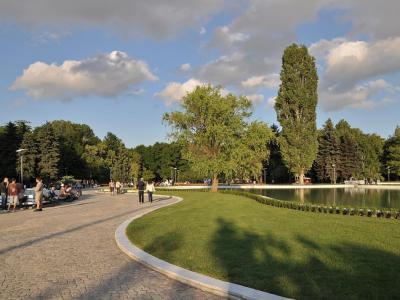
South Park, located in the heart of Bulgaria's capital city, is a lush green oasis surrounded by modern neighborhoods. Covering an expanse of 1.48 square kilometers, this park's development began in 1972 with the aim of seamlessly blending into the natural beauty of Vitosha Mountain. This vision is evident throughout the park, featuring diverse landscapes, pristine forests, panoramic viewpoints, man-made lakes, and a prominent entrance connecting to Vitosha Boulevard.
The park's infrastructure is designed to accommodate various outdoor activities, boasting well-lit pathways, multiple playgrounds, a concert stage, and numerous benches and gazebos. What sets South Park apart is its harmonious coexistence of the wild and cultivated elements. It is a favored destination for extreme biking enthusiasts due to its varied terrain with challenging tracks and jumps. Strolling through its winding paths and walkways, visitors will also encounter informative signage highlighting the diverse bird species inhabiting the park, while nearby ponds often host playful wild ducks.
South Park remains vibrant year-round, particularly during the spring and summer seasons when crowds gather to seek refuge from the sun among the park's trees, fountains, and ponds. A variety of small fast-food stands, ice cream vendors, restaurants, cafes, cotton candy stalls, and even toy shops cater to the needs of visitors. The park is also renowned for hosting the annual "Flower for Gosho" festival in early summer, a tribute concert dedicated to Georgi Minchev, one of Bulgaria's beloved rock musicians. Along one of the park's alleys neighboring the stage, inflatable slides, trampolines, bumper cars, and other attractions provide entertainment for all.
The park's infrastructure is designed to accommodate various outdoor activities, boasting well-lit pathways, multiple playgrounds, a concert stage, and numerous benches and gazebos. What sets South Park apart is its harmonious coexistence of the wild and cultivated elements. It is a favored destination for extreme biking enthusiasts due to its varied terrain with challenging tracks and jumps. Strolling through its winding paths and walkways, visitors will also encounter informative signage highlighting the diverse bird species inhabiting the park, while nearby ponds often host playful wild ducks.
South Park remains vibrant year-round, particularly during the spring and summer seasons when crowds gather to seek refuge from the sun among the park's trees, fountains, and ponds. A variety of small fast-food stands, ice cream vendors, restaurants, cafes, cotton candy stalls, and even toy shops cater to the needs of visitors. The park is also renowned for hosting the annual "Flower for Gosho" festival in early summer, a tribute concert dedicated to Georgi Minchev, one of Bulgaria's beloved rock musicians. Along one of the park's alleys neighboring the stage, inflatable slides, trampolines, bumper cars, and other attractions provide entertainment for all.
7) National Palace of Culture
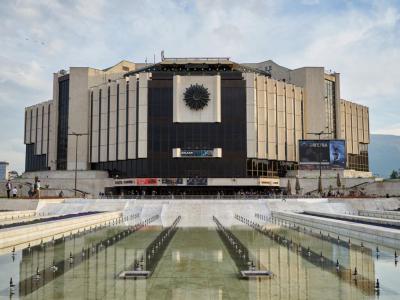
The National Palace of Culture, situated in Sofia, is the largest multifunctional facility for hosting congresses, conferences, conventions, and exhibitions in Southeastern Europe. This impressive structure was inaugurated in 1981.
The concept for building this modern architectural marvel was conceived by Lyudmila Zhivkova, the former first lady of Bulgaria. The project was developed by a team of Bulgarian and international architects, with Alexander Barov leading the way. The beautification of Bulgaria Square, located in front of the National Palace of Culture, was overseen by another group of architects and landscape engineers, under the leadership of Atanas Agura. In July 2005, the International Organization of Congress Centres honored the National Palace of Culture by naming it the world's premier congress center for that year.
This congress center boasts an extensive range of technical equipment, enabling it to host a diverse array of events including concerts, conferences, exhibitions, and shows. It occupies a vast area of 123,000 square meters across eight floors and three underground levels. The National Palace of Culture features 13 halls, 15,000 square meters of exhibition space, a commercial center, and a parking facility. Notably, the annual Sofia Film Fest, a film festival held in the capital of Bulgaria, Sofia, is held within the premises of NDK.
The concept for building this modern architectural marvel was conceived by Lyudmila Zhivkova, the former first lady of Bulgaria. The project was developed by a team of Bulgarian and international architects, with Alexander Barov leading the way. The beautification of Bulgaria Square, located in front of the National Palace of Culture, was overseen by another group of architects and landscape engineers, under the leadership of Atanas Agura. In July 2005, the International Organization of Congress Centres honored the National Palace of Culture by naming it the world's premier congress center for that year.
This congress center boasts an extensive range of technical equipment, enabling it to host a diverse array of events including concerts, conferences, exhibitions, and shows. It occupies a vast area of 123,000 square meters across eight floors and three underground levels. The National Palace of Culture features 13 halls, 15,000 square meters of exhibition space, a commercial center, and a parking facility. Notably, the annual Sofia Film Fest, a film festival held in the capital of Bulgaria, Sofia, is held within the premises of NDK.
8) Patriarch Evtimiy Square
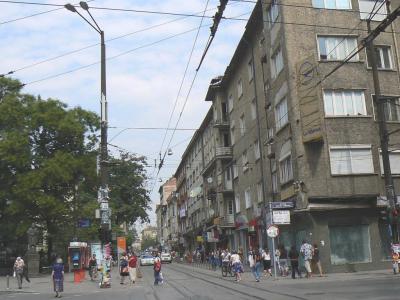
Patriarch Evtimiy Square, commonly referred to as "Popa," stands as a compact urban plaza situated at a bustling intersection in the heart of Sofia. The square derives its name from Evtimiy of Tarnovo, who served as the Patriarch of Bulgaria from 1375 to 1393, holding immense significance in medieval Bulgarian history. A monument dedicated to Evtimiy, crafted by sculptor Marko Markov, has graced the square since 1939.
Patriarch Evtimiy Square occupies the juncture of three key thoroughfares: the pedestrian-friendly Graf Ignatiev Street, Vasil Levski Boulevard, and Patriarch Evtimiy Boulevard, which branches off from Vasil Levski at this very square. Given its central positioning, nestled between Sofia University and Orlov Park to the east, and the National Palace of Culture to the west, the square has evolved into a popular rendezvous spot, especially favored by teenagers and young adults.
The western section of the square is home to the Odeon Cinema, while the Bulgartabac headquarters lie to the south. Nearby landmarks encompass Slaveykov Square, positioned to the north along Graf Ignatiev Street, and the Vasil Levski National Stadium, situated to the southeast. Patriarch Evtimiy Square boasts excellent connectivity to various parts of Sofia thanks to the nearby tramway, trolleybus, and bus stops.
Additionally, numerous taxicabs following the marshrutka network pass in close proximity to the square. Furthermore, the Saint Patriarch Evtimiy Metro Station of Sofia Metro is conveniently located beneath the square, enhancing its accessibility.
Patriarch Evtimiy Square occupies the juncture of three key thoroughfares: the pedestrian-friendly Graf Ignatiev Street, Vasil Levski Boulevard, and Patriarch Evtimiy Boulevard, which branches off from Vasil Levski at this very square. Given its central positioning, nestled between Sofia University and Orlov Park to the east, and the National Palace of Culture to the west, the square has evolved into a popular rendezvous spot, especially favored by teenagers and young adults.
The western section of the square is home to the Odeon Cinema, while the Bulgartabac headquarters lie to the south. Nearby landmarks encompass Slaveykov Square, positioned to the north along Graf Ignatiev Street, and the Vasil Levski National Stadium, situated to the southeast. Patriarch Evtimiy Square boasts excellent connectivity to various parts of Sofia thanks to the nearby tramway, trolleybus, and bus stops.
Additionally, numerous taxicabs following the marshrutka network pass in close proximity to the square. Furthermore, the Saint Patriarch Evtimiy Metro Station of Sofia Metro is conveniently located beneath the square, enhancing its accessibility.
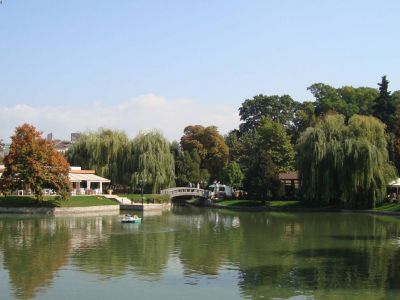
9) Lake Ariana
Ariana is a moderately sized man-made lake situated within Knyaz Boris's Garden in Sofia. It has a distinctive "B" shape, measuring 175 meters in length and 75 meters in width, with a small island located at its narrowest point. Positioned in the northernmost section of the park, right in the city center, it lies between the Eagles' Bridge and the national stadium.
This lake was originally constructed during the late 19th century and has since served as a popular spot for leisurely strolls among the residents of Sofia. Over the years, it has featured water wheels and rowing boats. During the winter months, it often froze over, allowing people to enjoy ice skating on its surface.
In the mid-20th century, an island casino was constructed on the lake. However, in the early 1990s, the municipal government stopped maintaining the lake, leading to its drying up and remaining unused for nearly two decades. Fortunately, in 2007, efforts were made to renovate the lake and its surroundings, restoring it once more as a recreational area.
Interestingly, the lake shares its name with a brewery that used to stand a short distance to the north until it was demolished in 2004.
This lake was originally constructed during the late 19th century and has since served as a popular spot for leisurely strolls among the residents of Sofia. Over the years, it has featured water wheels and rowing boats. During the winter months, it often froze over, allowing people to enjoy ice skating on its surface.
In the mid-20th century, an island casino was constructed on the lake. However, in the early 1990s, the municipal government stopped maintaining the lake, leading to its drying up and remaining unused for nearly two decades. Fortunately, in 2007, efforts were made to renovate the lake and its surroundings, restoring it once more as a recreational area.
Interestingly, the lake shares its name with a brewery that used to stand a short distance to the north until it was demolished in 2004.
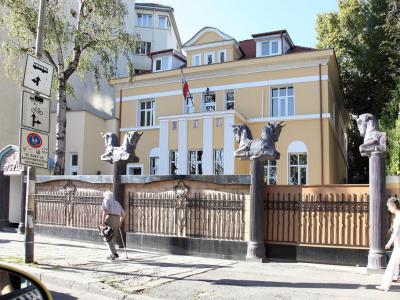
10) Eagles' Bridge (Orlov Most)
Eagles' Bridge (Orlov Most) is a prominent bridge spanning the Perlovska River in the heart of Sofia. Its name is derived from the four eagle statues adorning it, symbolically representing its protectors and patrons.
Eagles' Bridge, near Vasil Levski National Stadium and Sofia's key attractions, is a major intersection where Evlogi Georgiev Blvd and Tsarigradsko Shose intersect, with Tsar Ivan Asen II Street ending here. It's the gateway to Sofia's city center for travelers from the southeast via Tsarigradsko Shose.
This bridge was constructed in 1891 under the supervision of Czech architect Václav Prošek, in collaboration with his brother Jozef and cousins Bohdan and Jiří. They also jointly designed and erected the Lions' Bridge, located at the northern entry point to central Sofia, in 1889. The total cost of constructing Eagles' Bridge amounted to 80,000 golden leva. Remarkably, one of the bridge's columns and bronze eagle statues are featured on the reverse side of the Bulgarian 20 levs banknote, issued in both 1999 and 2007.
Eagles' Bridge has frequently served as a focal point for various protests. Notably, in 2012, it became the epicenter of ecological protests opposing construction projects on Vitosha mountain and the Dyuni nature spot on the Black Sea coast.
Since 2009, Eagles' Bridge has been connected to the Sofia University Metro Station on the Sofia Metro M1 line, offering convenient access to the public. Furthermore, in August 2020, the Orlov Most Metro Station on the M3 line was inaugurated, enhancing the transportation network in the area.
Eagles' Bridge, near Vasil Levski National Stadium and Sofia's key attractions, is a major intersection where Evlogi Georgiev Blvd and Tsarigradsko Shose intersect, with Tsar Ivan Asen II Street ending here. It's the gateway to Sofia's city center for travelers from the southeast via Tsarigradsko Shose.
This bridge was constructed in 1891 under the supervision of Czech architect Václav Prošek, in collaboration with his brother Jozef and cousins Bohdan and Jiří. They also jointly designed and erected the Lions' Bridge, located at the northern entry point to central Sofia, in 1889. The total cost of constructing Eagles' Bridge amounted to 80,000 golden leva. Remarkably, one of the bridge's columns and bronze eagle statues are featured on the reverse side of the Bulgarian 20 levs banknote, issued in both 1999 and 2007.
Eagles' Bridge has frequently served as a focal point for various protests. Notably, in 2012, it became the epicenter of ecological protests opposing construction projects on Vitosha mountain and the Dyuni nature spot on the Black Sea coast.
Since 2009, Eagles' Bridge has been connected to the Sofia University Metro Station on the Sofia Metro M1 line, offering convenient access to the public. Furthermore, in August 2020, the Orlov Most Metro Station on the M3 line was inaugurated, enhancing the transportation network in the area.
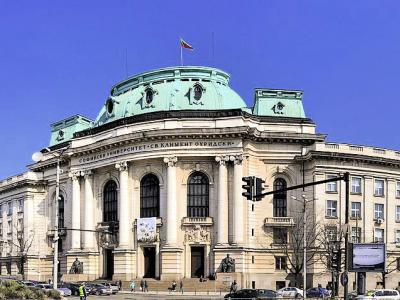
11) Sofia University
Sofia University "Saint Kliment Ohridski" is a well-established public research institution located in Sofia. This university holds the distinction of being the oldest higher education institution in the country. Its origins date back to October 1, 1888, and its impressive campus was built between 1924 and 1934 with generous financial backing from the brothers Evlogi Georgiev and Hristo Georgiev, whose sculptures now adorn its facade. The university spans an area of 18,624 square meters and boasts a total of 324 different premises.
When it was initially established, Bulgaria had only recently achieved independence. At that time, Sofia University began its journey as a higher pedagogical course, later evolving into a higher school within a few months, and finally obtaining university status in 1904. The university's first rector was the renowned Bulgarian linguist Aleksandar Teodorov-Balan.
Today, Sofia University comprises 16 faculties and three departments, serving as an educational institution for over 21,000 students. It consistently ranks as the top university in Bulgaria, earning recognition from both national and international rankings. Notably, it consistently ranks within the top four percent of world universities according to the QS World University Rankings.
In 2001, Sofia University achieved another milestone by becoming the first Bulgarian Athenaeum to establish a Theological Faculty, overseen by the national Orthodox Church, marking a significant development after the fall of communism.
When it was initially established, Bulgaria had only recently achieved independence. At that time, Sofia University began its journey as a higher pedagogical course, later evolving into a higher school within a few months, and finally obtaining university status in 1904. The university's first rector was the renowned Bulgarian linguist Aleksandar Teodorov-Balan.
Today, Sofia University comprises 16 faculties and three departments, serving as an educational institution for over 21,000 students. It consistently ranks as the top university in Bulgaria, earning recognition from both national and international rankings. Notably, it consistently ranks within the top four percent of world universities according to the QS World University Rankings.
In 2001, Sofia University achieved another milestone by becoming the first Bulgarian Athenaeum to establish a Theological Faculty, overseen by the national Orthodox Church, marking a significant development after the fall of communism.
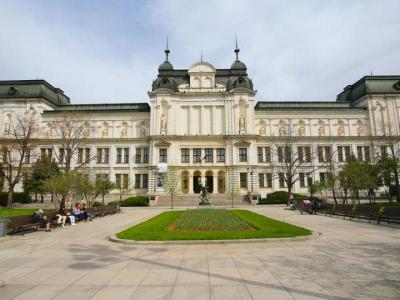
12) National Gallery Square 500
Square 500, situated adjacent to the Vassil Levski monument and behind Saint Alexander Nevsky Cathedral, serves as the newly christened Bulgarian National Gallery. This strategic location renders it a convenient destination for tourists.
Within the confines of the National Gallery Square 500, a vast collection of over 42,000 artworks is housed, encompassing contributions from both the National Art Gallery and the National Gallery for Foreign Art. The exhibition comprises approximately 2,000 artworks, with a fifty-fifty split between Bulgarian artists and those hailing from Europe, Asia, Africa, and the Americas.
Of particular note is the exceptional collection hosted by the National Gallery for Foreign Art, which showcases art from distant lands, exotic tribes and nations, spanning various historical periods. It seamlessly intertwines with contemporary European art trends, traditional, and religious artistic principles, spanning a millennium. The European graphic school predominantly features in the collection, with a somewhat limited representation of art from the USA, Latin America, and Asia. Notably, the collection includes two invaluable sets of traditional Japanese woodblock printing, Ukiyo-e, and Indian miniature paintings.
The architectural profile of the western Gallery building is a reconstruction of the old State Printing House, originally designed by architect Friedrich Schwanberg from Vienna, partially damaged during World War II bombings. Today, its appearance aligns with the requirements of a modern gallery, a result of the collaborative efforts of renowned Bulgarian architects, artists, art historians, and arrangers.
Square 500 boasts magnificent halls and modern amenities, including multimedia equipment, making it an ideal venue for hosting a wide range of cultural, social, and business events.
Within the confines of the National Gallery Square 500, a vast collection of over 42,000 artworks is housed, encompassing contributions from both the National Art Gallery and the National Gallery for Foreign Art. The exhibition comprises approximately 2,000 artworks, with a fifty-fifty split between Bulgarian artists and those hailing from Europe, Asia, Africa, and the Americas.
Of particular note is the exceptional collection hosted by the National Gallery for Foreign Art, which showcases art from distant lands, exotic tribes and nations, spanning various historical periods. It seamlessly intertwines with contemporary European art trends, traditional, and religious artistic principles, spanning a millennium. The European graphic school predominantly features in the collection, with a somewhat limited representation of art from the USA, Latin America, and Asia. Notably, the collection includes two invaluable sets of traditional Japanese woodblock printing, Ukiyo-e, and Indian miniature paintings.
The architectural profile of the western Gallery building is a reconstruction of the old State Printing House, originally designed by architect Friedrich Schwanberg from Vienna, partially damaged during World War II bombings. Today, its appearance aligns with the requirements of a modern gallery, a result of the collaborative efforts of renowned Bulgarian architects, artists, art historians, and arrangers.
Square 500 boasts magnificent halls and modern amenities, including multimedia equipment, making it an ideal venue for hosting a wide range of cultural, social, and business events.
13) Prince Alexander of Battenberg Square
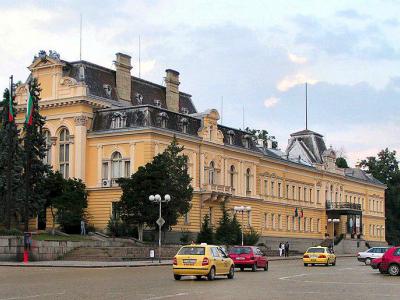
Alexander Battenberg Square has long been one of Sofia’s most prominent public spaces, evolving through several political eras and names. During the Communist period, it was known as September 9th Square, commemorating the 1944 government overthrow. Before that, it carried the name Tsar’s Square, thanks to the royal palace that stood beside it-today home to the National Art Gallery. The square also once housed the Georgi Dimitrov Mausoleum, one of the most recognizable symbols of Communist Bulgaria.
Georgi Dimitrov, the country’s first Communist leader, died in 1949 and was placed in the Mausoleum with full honours. His successor, Vasil Kolarov, who died the following year, received a niche in the east wall. From its earliest days, the Mausoleum faced repeated attempts to destroy it. After Bulgaria’s transition to democracy, the post-Communist UDF government finally demolished it, succeeding only after four separate explosive attempts.
The square’s name honours Alexander of Battenberg, the first Prince of the Principality of Bulgaria. He became prince in 1879, elected by the Bulgarian Grand National Assembly during a period when Bulgaria still held autonomous status within the waning Ottoman Empire. His refusal to conform to Russian interests eventually led to his forced abdication in 1886, but his name endures in one of Sofia’s most significant civic spaces.
Today, the square is Sofia’s premier setting for outdoor events and concerts. While military parades were common during the Communist era, the most notable modern parade held here is the Bulgarian Armed Forces Day Parade, celebrated on May 6th each year.
Georgi Dimitrov, the country’s first Communist leader, died in 1949 and was placed in the Mausoleum with full honours. His successor, Vasil Kolarov, who died the following year, received a niche in the east wall. From its earliest days, the Mausoleum faced repeated attempts to destroy it. After Bulgaria’s transition to democracy, the post-Communist UDF government finally demolished it, succeeding only after four separate explosive attempts.
The square’s name honours Alexander of Battenberg, the first Prince of the Principality of Bulgaria. He became prince in 1879, elected by the Bulgarian Grand National Assembly during a period when Bulgaria still held autonomous status within the waning Ottoman Empire. His refusal to conform to Russian interests eventually led to his forced abdication in 1886, but his name endures in one of Sofia’s most significant civic spaces.
Today, the square is Sofia’s premier setting for outdoor events and concerts. While military parades were common during the Communist era, the most notable modern parade held here is the Bulgarian Armed Forces Day Parade, celebrated on May 6th each year.
14) Former Communist Party House (The Largo)
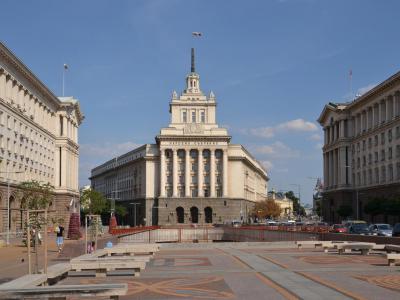
The Largo is the Former Communist Party House in Sofia, Bulgaria. The structure was built in 1955. It was designed by architect Petso Zlatev in the Socialist Classicism architectural style. It is known as one of the most significant landmarks in Sofia.
The Largo sits on Independence Square. The square consists of yellow cobblestone between the Knyaz Aleksandar Dondukov Boulevard and Tsar Osvoboditel Boulevard. The square includes a fountain, which was added in 1958, and a statue of Saint Sophia, added in 2000. There were previously a number of communist symbols, including a statue of Vladimir Lenin and a red star atop a pole, that were removed in 1989.
The Former Communist Party House is now used as the seat of the National Assembly. The edifices on each side are occupied by the TZUM department store, the Council of Ministers of Bulgaria, the Ministry of Education, the Sofia Hotel Balkan and the President's Office.
The Largo sits on Independence Square. The square consists of yellow cobblestone between the Knyaz Aleksandar Dondukov Boulevard and Tsar Osvoboditel Boulevard. The square includes a fountain, which was added in 1958, and a statue of Saint Sophia, added in 2000. There were previously a number of communist symbols, including a statue of Vladimir Lenin and a red star atop a pole, that were removed in 1989.
The Former Communist Party House is now used as the seat of the National Assembly. The edifices on each side are occupied by the TZUM department store, the Council of Ministers of Bulgaria, the Ministry of Education, the Sofia Hotel Balkan and the President's Office.
