Custom Walk in Atlanta, Georgia by jeewanrekha19_b9849 created on 2025-07-16
Guide Location: USA » Atlanta
Guide Type: Custom Walk
# of Sights: 14
Tour Duration: 2 Hour(s)
Travel Distance: 3.4 Km or 2.1 Miles
Share Key: MLUAJ
Guide Type: Custom Walk
# of Sights: 14
Tour Duration: 2 Hour(s)
Travel Distance: 3.4 Km or 2.1 Miles
Share Key: MLUAJ
How It Works
Please retrieve this walk in the GPSmyCity app. Once done, the app will guide you from one tour stop to the next as if you had a personal tour guide. If you created the walk on this website or come to the page via a link, please follow the instructions below to retrieve the walk in the app.
Retrieve This Walk in App
Step 1. Download the app "GPSmyCity: Walks in 1K+ Cities" on Apple App Store or Google Play Store.



Step 2. In the GPSmyCity app, download(or launch) the guide "Atlanta Map and Walking Tours".
Step 3. Tap the menu button located at upper right corner of the "Walks" screen and select "Retrieve custom walk". Enter the share key: MLUAJ
1) Centennial Olympic Park (must see)
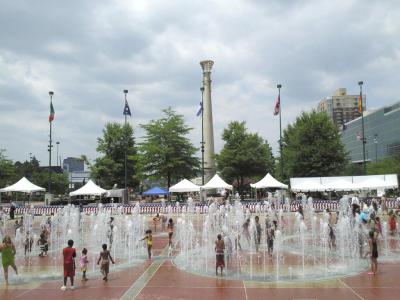
Built by the Atlanta Committee for the Olympic Games as part of the infrastructure for the 1996 Summer Olympics, Centennial Olympic Park welcomes millions of visitors each year and regularly hosts large events, including a popular summer concert series and an annual Independence Day concert and fireworks display. The park is organized into several distinct areas, including The Great Lawn, Centennial Plaza, and the Visitor Information Center.
As you enter through the northwestern entrance, begin walking eastward to reach the Centennial Plaza. Keep the broad lawn on your right side and follow the paved path, guiding you diagonally across the park. As you continue, look ahead and slightly to the east. From far away, you can observe the tall structure of SkyView Atlanta, serving as an orientation point.
There, you'll find the Fountain of Rings, the park’s most recognizable feature. Set flush into the ground, the fountain is easy to walk around and through. Its 251 computer-controlled water jets, arranged in the shape of the Olympic rings, rise and fall in choreographed patterns synchronized with music and lighting. Pause here for a few minutes-this is where scheduled shows take place several times a day, and on warm days visitors are welcome to wade through the jets.
Standing near the fountain, look up and around the plaza to notice the tall light towers, inspired by classical Greek marker columns, which reinforce the Olympic theme. As you slowly circle the fountain clockwise, you’ll see flags lining the plaza, representing the host nations of every Summer Olympic Games prior to 1996. Nearby, set slightly off the main walking paths, are several sculptures, including a statue of Pierre de Coubertin, the founder of the modern Olympic movement.
From the fountain, continue westward across the open lawn toward The Great Lawn, a broad green space often used for concerts and large public events, including summer music programs and Independence Day celebrations. This area offers a quieter contrast to the activity of the plaza and is a good place to pause, sit, or take in wider views of the park.
Tip:
On hot days, plan your route so you pass the Fountain of Rings twice-once to watch a show, and again to cool off in the water. For orientation and event updates, starting and ending your visit at the Visitor Information Center makes navigating the park much easier.
As you enter through the northwestern entrance, begin walking eastward to reach the Centennial Plaza. Keep the broad lawn on your right side and follow the paved path, guiding you diagonally across the park. As you continue, look ahead and slightly to the east. From far away, you can observe the tall structure of SkyView Atlanta, serving as an orientation point.
There, you'll find the Fountain of Rings, the park’s most recognizable feature. Set flush into the ground, the fountain is easy to walk around and through. Its 251 computer-controlled water jets, arranged in the shape of the Olympic rings, rise and fall in choreographed patterns synchronized with music and lighting. Pause here for a few minutes-this is where scheduled shows take place several times a day, and on warm days visitors are welcome to wade through the jets.
Standing near the fountain, look up and around the plaza to notice the tall light towers, inspired by classical Greek marker columns, which reinforce the Olympic theme. As you slowly circle the fountain clockwise, you’ll see flags lining the plaza, representing the host nations of every Summer Olympic Games prior to 1996. Nearby, set slightly off the main walking paths, are several sculptures, including a statue of Pierre de Coubertin, the founder of the modern Olympic movement.
From the fountain, continue westward across the open lawn toward The Great Lawn, a broad green space often used for concerts and large public events, including summer music programs and Independence Day celebrations. This area offers a quieter contrast to the activity of the plaza and is a good place to pause, sit, or take in wider views of the park.
Tip:
On hot days, plan your route so you pass the Fountain of Rings twice-once to watch a show, and again to cool off in the water. For orientation and event updates, starting and ending your visit at the Visitor Information Center makes navigating the park much easier.
2) Centennial Plaza
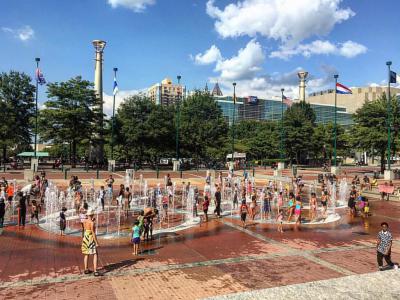
Centennial Plaza was created to commemorate the 100th anniversary of the modern Olympics. The plaza showcases 23 national flags that symbolize the past Olympic host cities. At its heart stands the official flag of the Olympic Games; however, the most significant attraction are the striking 'Hermes Towers' consisting of eight towers that rise to 25 feet high. Named after the Greek god Hermes, they each represent an Olympic sport and are adorned with images related to that sport. The towers are made of stainless steel and are illuminated at night, providing a spectacular sight for visitors to the plaza.
3) Fountain of Rings
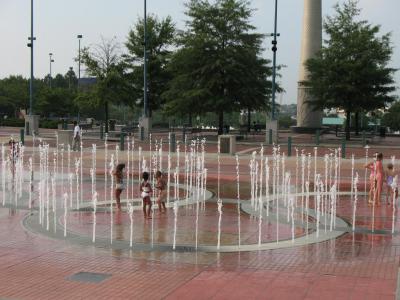
The Fountain of Rings is the primary attraction of Centennial Olympic Park in Atlanta, and is renowned worldwide. Originally designed for the Centennial Summer Olympics in 1996, it comprises computer-controlled lights and jets of water synchronized with music played from speakers in light towers surrounding the fountain. The fountain forms a splash pad for children to play in, as well as for concertgoers and joggers to cool off on hot Atlanta summer days.
The waterplay area comprises 251 jets that shoot water 12 to 35 feet (4 to 10 m) in the air, creating a stunning water sculpture that serves as the front yard of the nearby museum. The fountain area is surrounded by flags of previous host countries of the Summer Olympics, and eight 65-foot-tall light towers reminiscent of classical Greek marker columns. Additionally, there are various sculptures scattered throughout the park, including a statue of Pierre de Coubertin, the father of the modern Olympic movement, and a small amphitheater located at the southern end.
The fountain is an essential formal architectural landmark that is also a fun and playful space. The concept of a computer-controlled fountain has since been replicated in other urban designs such as Dundas Square in Toronto and in commercial uses such as the Bellagio Fountains at the Bellagio Hotel & Casino in Las Vegas, Nevada.
There are fountain shows held at Centennial Olympic Park all 365 days of the year, four times daily, playing at 12:30PM, 3:30PM, 6:30 PM, and 9:30PM.
Why You Should Visit:
Whether you want to take a break from sightseeing or enjoy some family-friendly entertainment, the Fountain of Rings is a must-see attraction in Atlanta.
The waterplay area comprises 251 jets that shoot water 12 to 35 feet (4 to 10 m) in the air, creating a stunning water sculpture that serves as the front yard of the nearby museum. The fountain area is surrounded by flags of previous host countries of the Summer Olympics, and eight 65-foot-tall light towers reminiscent of classical Greek marker columns. Additionally, there are various sculptures scattered throughout the park, including a statue of Pierre de Coubertin, the father of the modern Olympic movement, and a small amphitheater located at the southern end.
The fountain is an essential formal architectural landmark that is also a fun and playful space. The concept of a computer-controlled fountain has since been replicated in other urban designs such as Dundas Square in Toronto and in commercial uses such as the Bellagio Fountains at the Bellagio Hotel & Casino in Las Vegas, Nevada.
There are fountain shows held at Centennial Olympic Park all 365 days of the year, four times daily, playing at 12:30PM, 3:30PM, 6:30 PM, and 9:30PM.
Why You Should Visit:
Whether you want to take a break from sightseeing or enjoy some family-friendly entertainment, the Fountain of Rings is a must-see attraction in Atlanta.
4) Visitor Center (Centennial Olympic Park)
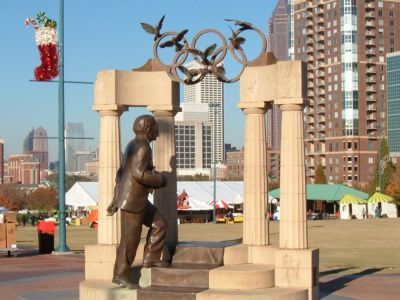
The Visitor Center in Atlanta's Centennial Olympic Park provides a wealth of information about the park's history, as well as the city's role in the 1996 Summer Olympic Games. The exhibit includes interactive displays and artifacts from the games, including the famous torch used to light the Olympic flame. Visitors can also take a self-guided tour of the park and learn about its architecture, landscaping, and public art installations. The Visitor Center is staffed with knowledgeable guides who are happy to answer questions and provide recommendations for other attractions in the area.
5) Georgia Aquarium (must see)
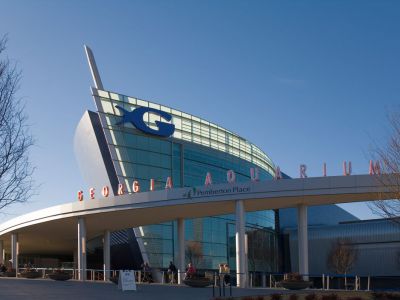
Long regarded as one of Atlanta’s signature attractions, the Georgia Aquarium remains one of the largest aquariums in the United States and a centerpiece of the city’s downtown visitor area. The aquarium is organized by habitat-based galleries, making it easy to move from one ecosystem to another. Its most famous feature is the Ocean Voyager gallery, home to whale sharks, manta rays, and thousands of other marine animals swimming within a single massive tank.
Beyond Ocean Voyager, the aquarium branches into a series of distinct environments. Cold-water habitats introduce beluga whales and sea lions, while the penguin gallery recreates icy coastal conditions, complete with underwater viewing where you can watch the birds “fly” through the water. Other sections focus on river systems and tropical reefs, displaying colorful reef fish, freshwater species, and detailed coral ecosystems. The jellyfish galleries, softly illuminated and quieter than the larger halls, are a common place for visitors to slow down and linger, watching the gentle, pulsing movement of multiple species.
The aquarium is designed to keep visitors visually immersed. Thick acrylic viewing panels allow close-up observation of animals large and small, while tunnel-like walkways and overhead windows place schools of fish directly above you in several areas. Near the entrance, a large wall of schooling fish-lit in shifting shades of blue-acts as an atmospheric introduction, immediately establishing the scale and tone of the experience.
Live animal presentations, including dolphin and sea lion programs, are offered daily and are included with general admission, though seating is limited and showtimes vary. These presentations focus on animal behavior and care rather than tricks, and many visitors plan their route through the aquarium around scheduled show times.
Tip:
Buying tickets online in advance is strongly recommended, as some discounts are not available on site and entry times can sell out during busy periods. Behind-the-scenes or specialty experiences are occasionally offered for an additional fee; availability varies, so it’s best to check current options when planning your visit.
Beyond Ocean Voyager, the aquarium branches into a series of distinct environments. Cold-water habitats introduce beluga whales and sea lions, while the penguin gallery recreates icy coastal conditions, complete with underwater viewing where you can watch the birds “fly” through the water. Other sections focus on river systems and tropical reefs, displaying colorful reef fish, freshwater species, and detailed coral ecosystems. The jellyfish galleries, softly illuminated and quieter than the larger halls, are a common place for visitors to slow down and linger, watching the gentle, pulsing movement of multiple species.
The aquarium is designed to keep visitors visually immersed. Thick acrylic viewing panels allow close-up observation of animals large and small, while tunnel-like walkways and overhead windows place schools of fish directly above you in several areas. Near the entrance, a large wall of schooling fish-lit in shifting shades of blue-acts as an atmospheric introduction, immediately establishing the scale and tone of the experience.
Live animal presentations, including dolphin and sea lion programs, are offered daily and are included with general admission, though seating is limited and showtimes vary. These presentations focus on animal behavior and care rather than tricks, and many visitors plan their route through the aquarium around scheduled show times.
Tip:
Buying tickets online in advance is strongly recommended, as some discounts are not available on site and entry times can sell out during busy periods. Behind-the-scenes or specialty experiences are occasionally offered for an additional fee; availability varies, so it’s best to check current options when planning your visit.
6) World of Coca-Cola (must see)
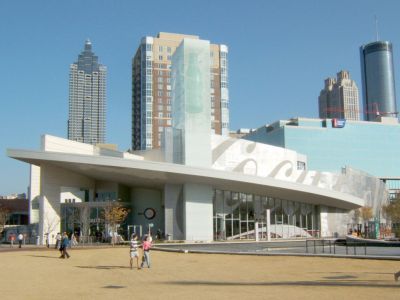
As you step into the World of Coca-Cola, you’re entering a museum-style attraction devoted to the history, advertising, and global reach of the Coca-Cola brand-and the visit usually starts immediately with a complimentary drink in the lobby. Staff then direct visitors into The Loft, where, in small groups, an ambassador highlights stories connected to a wide range of historical and international artifacts. After this, visitors are typically queued together and guided into the Coca-Cola Theater for a short, six-minute introductory film.
Once the theater doors open, the visit becomes primarily individual. The route funnels you into the first-floor galleries, but you can move at your own pace through Coca-Cola Stories, an immersive history experience built around artifacts and photo-style moments. Continue forward to the Vault of the Secret Formula, a theatrical stop that plays up the lore and mystery around the closely guarded recipe.
After the Vault, follow the posted exit path into Icons, where the brand’s cultural footprint takes center stage-and this is also where you can usually meet and take photos with the Coca-Cola Polar Bear. Before you head upstairs, watch for Beverage Lab: it’s designed around the “science and creativity” of drinks and includes tastings that feel more experimental than the main tasting hall.
Next, take the stairs or elevator up to the second floor for the more “hands-on” stretch of the visit. Look for The Studios, an interactive area focused on Coca-Cola’s influence on art, music, fashion, sports, and entertainment. Nearby, you can step into Scent Discovery, which explores how smell shapes taste. When you’re ready for the big finale, follow the crowd flow toward the 3D motion-effects theater, then continue onward to Taste It!, the large tasting hall where you can sample 100+ Coca-Cola beverages organized by world regions. Once you finish in Taste It!, follow the exit signage into the Coke Store, which is usually positioned as the last stop and is stocked with branded souvenirs and collectibles.
Tip:
Buying tickets online in advance or using CityPASS can help reduce wait times, especially during busy weekends and peak travel seasons
Once the theater doors open, the visit becomes primarily individual. The route funnels you into the first-floor galleries, but you can move at your own pace through Coca-Cola Stories, an immersive history experience built around artifacts and photo-style moments. Continue forward to the Vault of the Secret Formula, a theatrical stop that plays up the lore and mystery around the closely guarded recipe.
After the Vault, follow the posted exit path into Icons, where the brand’s cultural footprint takes center stage-and this is also where you can usually meet and take photos with the Coca-Cola Polar Bear. Before you head upstairs, watch for Beverage Lab: it’s designed around the “science and creativity” of drinks and includes tastings that feel more experimental than the main tasting hall.
Next, take the stairs or elevator up to the second floor for the more “hands-on” stretch of the visit. Look for The Studios, an interactive area focused on Coca-Cola’s influence on art, music, fashion, sports, and entertainment. Nearby, you can step into Scent Discovery, which explores how smell shapes taste. When you’re ready for the big finale, follow the crowd flow toward the 3D motion-effects theater, then continue onward to Taste It!, the large tasting hall where you can sample 100+ Coca-Cola beverages organized by world regions. Once you finish in Taste It!, follow the exit signage into the Coke Store, which is usually positioned as the last stop and is stocked with branded souvenirs and collectibles.
Tip:
Buying tickets online in advance or using CityPASS can help reduce wait times, especially during busy weekends and peak travel seasons
7) Paralympic Games Monument
The Paralympic Games Monument stands as a testament to the profound journey and impact of the Paralympic movement, which originated from a small yet transformative event in 1948 in England. This event was initially organized for World War II veterans with spinal cord injuries who sought an avenue for competition. By 1952, the scope of these games expanded when the Netherlands introduced its own competitors, setting a precedent for broader international participation. The first official Paralympic Games then took place in Rome in 1960, marking a pivotal moment in the recognition and inclusion of athletes with disabilities on a global sporting stage.
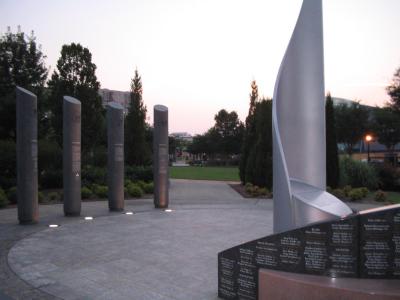
Fast forward to 1996, the Paralympiad X held in Atlanta was ambitiously dubbed as aiming to be the best Paralympic Games in history. The monument's pillars capture the essence and achievements of these games, highlighting the unprecedented success measured by various metrics. A record-setting 268 world records were broken during the games, underscoring the high level of competition and excellence among the athletes. Moreover, the participation of over 100 nations and an impressive attendance of nearly 400,000 people illustrated the growing importance and appeal of the Paralympic Games on the world stage.
One of the most significant milestones reached during the 1996 Games was the unprecedented level of worldwide corporate sponsorship, a testament to the increasing visibility and viability of the Paralympic movement. This support not only enhanced the games' operational success but also bolstered public engagement and awareness regarding the capabilities and achievements of people with disabilities. The pillars at the monument are inscribed with these facts, inviting visitors to reflect on the strides made towards inclusivity and recognition of athletes with disabilities.
Fast forward to 1996, the Paralympiad X held in Atlanta was ambitiously dubbed as aiming to be the best Paralympic Games in history. The monument's pillars capture the essence and achievements of these games, highlighting the unprecedented success measured by various metrics. A record-setting 268 world records were broken during the games, underscoring the high level of competition and excellence among the athletes. Moreover, the participation of over 100 nations and an impressive attendance of nearly 400,000 people illustrated the growing importance and appeal of the Paralympic Games on the world stage.
One of the most significant milestones reached during the 1996 Games was the unprecedented level of worldwide corporate sponsorship, a testament to the increasing visibility and viability of the Paralympic movement. This support not only enhanced the games' operational success but also bolstered public engagement and awareness regarding the capabilities and achievements of people with disabilities. The pillars at the monument are inscribed with these facts, inviting visitors to reflect on the strides made towards inclusivity and recognition of athletes with disabilities.
8) Quilt of Nations
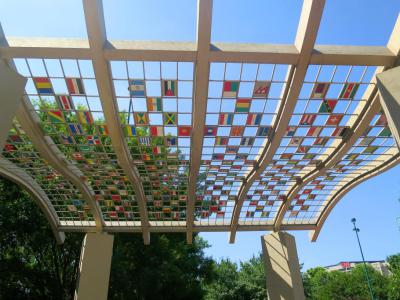
The Quilt of Nations in Atlanta, Georgia, serves as a vibrant tapestry of international unity and diversity, commemorating the unparalleled participation of 197 countries in the 1996 Olympic Games. This monumental event marked the highest number of competing nations in the history of the Olympics, surpassing the number of officially recognized sovereign states. The quilt, with its colorful and intricate designs, symbolizes the global spirit of the games and celebrates the variety of cultures that came together in Atlanta, reflecting not only the competition but also the camaraderie that defines the Olympic ethos.
The inclusion of more teams than the officially recognized countries stems from the Olympic tradition of recognizing "athletic geography," a concept articulated by Baron Pierre de Coubertin, the founder of the modern Olympics. This notion acknowledges that the realm of sports can extend beyond the strict definitions of political geography, allowing regions and groups to participate even if they are not independent nations. Throughout much of the 20th century, this meant that territories and regions could field teams in the Olympics, creating a more inclusive atmosphere at the games.
However, the International Olympic Committee (IOC) revised these rules in 1996, stipulating that only internationally recognized states could participate. This change, while streamlining the participation criteria, has not been without controversy. Notably, the IOC recognizes some entities, such as Palestine, Hong Kong, and Taiwan, that are not universally acknowledged as sovereign states by other international bodies like the United Nations. This discrepancy highlights ongoing debates within international sports about representation and inclusivity. For instance, Native American tribes such as the Iroquois, who have a rich heritage of lacrosse-a sport they originated-are precluded from competing under their own flag, raising questions about the fairness and scope of Olympic representation.
Looking forward, there are efforts underway to address these complex issues by the 2028 Los Angeles Olympics. The Quilt of Nations not only stands as a reminder of the broad inclusivity of the 1996 games but also as a symbol of the ongoing dialogue about how best to balance international sports, political realities, and cultural recognition.
The inclusion of more teams than the officially recognized countries stems from the Olympic tradition of recognizing "athletic geography," a concept articulated by Baron Pierre de Coubertin, the founder of the modern Olympics. This notion acknowledges that the realm of sports can extend beyond the strict definitions of political geography, allowing regions and groups to participate even if they are not independent nations. Throughout much of the 20th century, this meant that territories and regions could field teams in the Olympics, creating a more inclusive atmosphere at the games.
However, the International Olympic Committee (IOC) revised these rules in 1996, stipulating that only internationally recognized states could participate. This change, while streamlining the participation criteria, has not been without controversy. Notably, the IOC recognizes some entities, such as Palestine, Hong Kong, and Taiwan, that are not universally acknowledged as sovereign states by other international bodies like the United Nations. This discrepancy highlights ongoing debates within international sports about representation and inclusivity. For instance, Native American tribes such as the Iroquois, who have a rich heritage of lacrosse-a sport they originated-are precluded from competing under their own flag, raising questions about the fairness and scope of Olympic representation.
Looking forward, there are efforts underway to address these complex issues by the 2028 Los Angeles Olympics. The Quilt of Nations not only stands as a reminder of the broad inclusivity of the 1996 games but also as a symbol of the ongoing dialogue about how best to balance international sports, political realities, and cultural recognition.
9) Quilt of Olympic Spirit
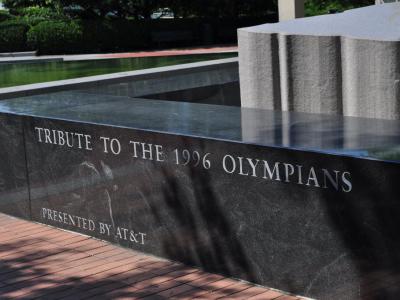
The Quilt of Olympic Spirit stands as a poignant tribute to the 10,000 athletes who graced the city during the 1996 Centennial Olympic Games. This unique and artistic installation not only celebrates the international gathering of athletes but also immortalizes their achievements in a distinctive manner. Adorned with signature leaf stones and monuments, the quilt intricately weaves the spirit of competition with the essence of legacy. Each athlete's name is carefully etched into the surrounding stones, ensuring their feats are remembered long after the games have concluded.
This quilt resonates deeply with the traditions of the ancient Olympics, where victors were crowned with laurel leaves as symbols of honor and victory. The leaves on the Quilt of Olympic Spirit metaphorically echo this age-old practice, linking past traditions with modern achievements. It is a visual representation of the athletes' days of glory and the medals they won, serving as a permanent reminder of their dedication and triumph. The site is more than a mere memorial; it is a celebration of champions from around the world, symbolizing their hard-earned victories and the Olympic spirit that guided them.
Among the competitors honored on this quilt were notable figures such as tennis icon Andre Agassi, soccer star Mia Hamm, and boxing sensation Floyd Mayweather. Each athlete brought their unique prowess to the games, with Mayweather's journey marked by a controversial bronze medal win that would pivot his career towards professional boxing, leading to an unprecedented 50-0 record.
This quilt resonates deeply with the traditions of the ancient Olympics, where victors were crowned with laurel leaves as symbols of honor and victory. The leaves on the Quilt of Olympic Spirit metaphorically echo this age-old practice, linking past traditions with modern achievements. It is a visual representation of the athletes' days of glory and the medals they won, serving as a permanent reminder of their dedication and triumph. The site is more than a mere memorial; it is a celebration of champions from around the world, symbolizing their hard-earned victories and the Olympic spirit that guided them.
Among the competitors honored on this quilt were notable figures such as tennis icon Andre Agassi, soccer star Mia Hamm, and boxing sensation Floyd Mayweather. Each athlete brought their unique prowess to the games, with Mayweather's journey marked by a controversial bronze medal win that would pivot his career towards professional boxing, leading to an unprecedented 50-0 record.
10) Quilt of Remembrance
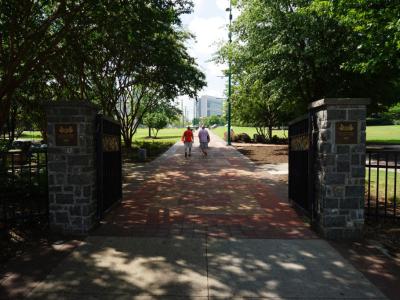
The Quilt of Remembrance Plaza is a place of reflection and remembrance. Visitors can pay their respects to the victims of the 1996 Olympic bombing and other acts of domestic terrorism by viewing the Quilt of Remembrance, which consists of 71 panels featuring the names and photographs of those who lost their lives.
The plaza also features a memorial fountain, surrounded by a mosaic depicting the Olympic rings and the names of the 1996 Olympic sponsors, and serving as a place for visitors to sit and contemplate.
In addition to the Quilt of Remembrance and the memorial fountain, the plaza features a number of benches and seating areas, as well as informational plaques detailing the history of the bombing and the efforts to create the memorial. It is a peaceful and solemn space that honors the memories of those who lost their lives and serves as a reminder of the need for peace and understanding in society.
The plaza also features a memorial fountain, surrounded by a mosaic depicting the Olympic rings and the names of the 1996 Olympic sponsors, and serving as a place for visitors to sit and contemplate.
In addition to the Quilt of Remembrance and the memorial fountain, the plaza features a number of benches and seating areas, as well as informational plaques detailing the history of the bombing and the efforts to create the memorial. It is a peaceful and solemn space that honors the memories of those who lost their lives and serves as a reminder of the need for peace and understanding in society.
11) Quilt of Dreams
The Quilt of Dreams is a symbolic landmark that captures the city's aspirational journey towards hosting the 1996 Olympic Games. This quilt is not made of fabric, but of memories and the collective ambition of a group of visionaries who believed in the potential of their city. The narrative begins as early as 1990 when a dedicated committee of local business leaders and influential figures, including Ivan Allen III, son of former Mayor Ivan Allen Jr., rallied to support the idea of bringing the Olympics to Atlanta. Their names and contributions are immortalized on a bench at the site, reminding visitors of the roots of this dream.
Central to the narrative of the Quilt of Dreams is the Atlanta 9, a volunteer group whose tireless efforts were pivotal in securing the Olympic bid. These individuals, from various walks of life, represent the community’s involvement and the grassroots support that fueled the bid. Their names proudly displayed on a plaque signify the democratic and collective effort that underpinned the city's campaign. This aspect of the quilt emphasizes that while influential leaders provided necessary support, the heart of the Olympic bid was powered by community spirit and volunteerism.
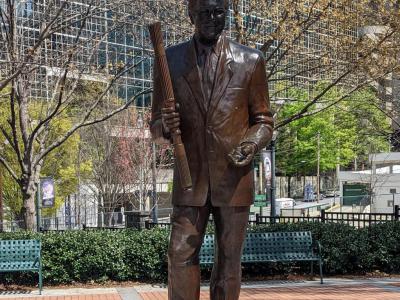
Dominating the center of the Quilt of Dreams is a statue of Billy Payne, whose role was crucial in transforming the Olympic dream into reality. As the visionary who first proposed Atlanta as an Olympic host in 1987, Payne mobilized support from key figures including Mayor Andrew Young. His leadership as president and CEO of the Atlanta Committee for the Olympic Games is commemorated with him holding an Olympic torch, symbolizing the light of aspiration and achievement that he brought to the city. Payne's idea and the collective effort it sparked led to a surprising victory when the International Olympic Committee awarded the bid to Atlanta in 1990, a testament to the power of conviction and collaboration.
Central to the narrative of the Quilt of Dreams is the Atlanta 9, a volunteer group whose tireless efforts were pivotal in securing the Olympic bid. These individuals, from various walks of life, represent the community’s involvement and the grassroots support that fueled the bid. Their names proudly displayed on a plaque signify the democratic and collective effort that underpinned the city's campaign. This aspect of the quilt emphasizes that while influential leaders provided necessary support, the heart of the Olympic bid was powered by community spirit and volunteerism.
Dominating the center of the Quilt of Dreams is a statue of Billy Payne, whose role was crucial in transforming the Olympic dream into reality. As the visionary who first proposed Atlanta as an Olympic host in 1987, Payne mobilized support from key figures including Mayor Andrew Young. His leadership as president and CEO of the Atlanta Committee for the Olympic Games is commemorated with him holding an Olympic torch, symbolizing the light of aspiration and achievement that he brought to the city. Payne's idea and the collective effort it sparked led to a surprising victory when the International Olympic Committee awarded the bid to Atlanta in 1990, a testament to the power of conviction and collaboration.
12) SkyView Atlanta
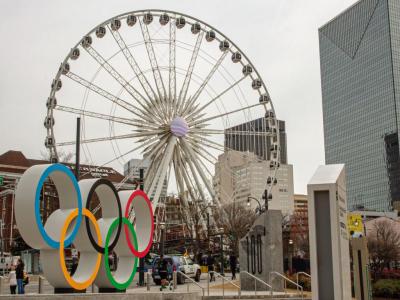
If you want a sweeping overview of Atlanta in a single experience, SkyView Atlanta offers a clear and memorable perspective. Rising 200 feet above the city, this observation wheel provides panoramic views across downtown and the surrounding metropolitan area-an especially appealing option if you don’t have access to Atlanta’s taller buildings or observation decks.
Located beside Centennial Olympic Park and within easy reach of major attractions such as the Georgia Aquarium, World of Coca-Cola, and the Tabernacle, SkyView Atlanta features 42 enclosed, climate-controlled gondolas, each accommodating up to six passengers. The ride is smooth and unhurried, giving you time to take in the skyline, parklands, and nearby venues. For visitors looking for something more exclusive, a VIP gondola can be reserved, offering upgraded seating, tinted windows, a glass floor, and an extended ride duration.
SkyView Atlanta is well suited to families, couples, and first-time visitors, with reasonable wait times and a relaxed pace that makes the experience approachable even for those only mildly cautious about heights. At night, the wheel itself becomes part of the spectacle, illuminated by changing light displays that add color and movement to the downtown skyline.
Located beside Centennial Olympic Park and within easy reach of major attractions such as the Georgia Aquarium, World of Coca-Cola, and the Tabernacle, SkyView Atlanta features 42 enclosed, climate-controlled gondolas, each accommodating up to six passengers. The ride is smooth and unhurried, giving you time to take in the skyline, parklands, and nearby venues. For visitors looking for something more exclusive, a VIP gondola can be reserved, offering upgraded seating, tinted windows, a glass floor, and an extended ride duration.
SkyView Atlanta is well suited to families, couples, and first-time visitors, with reasonable wait times and a relaxed pace that makes the experience approachable even for those only mildly cautious about heights. At night, the wheel itself becomes part of the spectacle, illuminated by changing light displays that add color and movement to the downtown skyline.
13) Woodruff Park
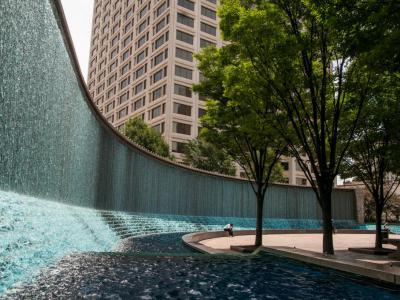
If you're out and about in Downtown, this is a nice place to relax, enjoy a cup of tea in the shade, and people watch for a minute. A famous lunchtime spot for locals as well as tourists, it includes several nice and well-kept features such as two fountains, a performance pavilion, several monuments, and a chess court. Bordering the park are beautiful planters with plants and umbrella tables to provide a place where you can sit and enjoy lunch or just chill in the cool breeze.
This is where many GSU students go to relive themselves of the stress of everyday life. Mr. Woodruff, the founder of the Coca-Cola Company, understood very well the central location's importance. City leadership does as well, and historians can view the park as a testimonial to how fervently Atlanta leaders have tried to preserve a vital Downtown.
Known as "Atlanta from the Ashes", the most famous sculpture within the premises depicts a woman releasing a Phoenix, a symbol of Atlanta's rise from the ashes after being burnt to the ground by William T. Sherman's Union armies during the Civil War. A gift of the private Rich Foundation, it was originally located on a viaduct adjacent to the first Rich's Department store on Martin Luther King Jr. Drive, but was restored and moved to its current location in 1995.
This is where many GSU students go to relive themselves of the stress of everyday life. Mr. Woodruff, the founder of the Coca-Cola Company, understood very well the central location's importance. City leadership does as well, and historians can view the park as a testimonial to how fervently Atlanta leaders have tried to preserve a vital Downtown.
Known as "Atlanta from the Ashes", the most famous sculpture within the premises depicts a woman releasing a Phoenix, a symbol of Atlanta's rise from the ashes after being burnt to the ground by William T. Sherman's Union armies during the Civil War. A gift of the private Rich Foundation, it was originally located on a viaduct adjacent to the first Rich's Department store on Martin Luther King Jr. Drive, but was restored and moved to its current location in 1995.
14) Freedom Hall
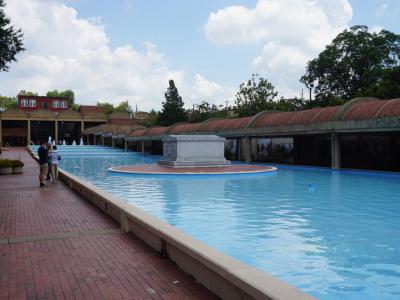
Freedom Hall is the main exhibition building of the King Center for Nonviolent Social Change and opened to the public in 1981. It functions as the primary indoor space for exhibitions related to the Civil Rights Movement and the life and work of Martin Luther King Jr.. The building was designed to support educational programming and public access to historical material connected to nonviolent social change.
Inside Freedom Hall, visitors encounter a series of permanent and rotating exhibitions composed of photographs, documents, audiovisual material, and historical artifacts. Exhibitions such as "Courage to Lead" focus on leadership within the Civil Rights Movement, while "The Montgomery Story" documents the Montgomery bus boycott from 1955 to 1956, outlining its causes, key figures, and outcomes. Displays are presented in a gallery-style format intended for self-guided viewing.
The building also contains additional visitor facilities, including interior gathering spaces used for educational programs and special events. Freedom Hall is fully integrated into the King Center campus and serves as one of its primary public-facing structures.
Inside Freedom Hall, visitors encounter a series of permanent and rotating exhibitions composed of photographs, documents, audiovisual material, and historical artifacts. Exhibitions such as "Courage to Lead" focus on leadership within the Civil Rights Movement, while "The Montgomery Story" documents the Montgomery bus boycott from 1955 to 1956, outlining its causes, key figures, and outcomes. Displays are presented in a gallery-style format intended for self-guided viewing.
The building also contains additional visitor facilities, including interior gathering spaces used for educational programs and special events. Freedom Hall is fully integrated into the King Center campus and serves as one of its primary public-facing structures.
