Custom Walk in Santiago, Chile by magda_zaremba_3c45f created on 2025-08-12
Guide Location: Chile » Santiago
Guide Type: Custom Walk
# of Sights: 14
Tour Duration: 7 Hour(s)
Travel Distance: 17.9 Km or 11.1 Miles
Share Key: W6TAR
Guide Type: Custom Walk
# of Sights: 14
Tour Duration: 7 Hour(s)
Travel Distance: 17.9 Km or 11.1 Miles
Share Key: W6TAR
How It Works
Please retrieve this walk in the GPSmyCity app. Once done, the app will guide you from one tour stop to the next as if you had a personal tour guide. If you created the walk on this website or come to the page via a link, please follow the instructions below to retrieve the walk in the app.
Retrieve This Walk in App
Step 1. Download the app "GPSmyCity: Walks in 1K+ Cities" on Apple App Store or Google Play Store.



Step 2. In the GPSmyCity app, download(or launch) the guide "Santiago Map and Walking Tours".
Step 3. Tap the menu button located at upper right corner of the "Walks" screen and select "Retrieve custom walk". Enter the share key: W6TAR
1) Plaza de Armas (Arms Square) (must see)
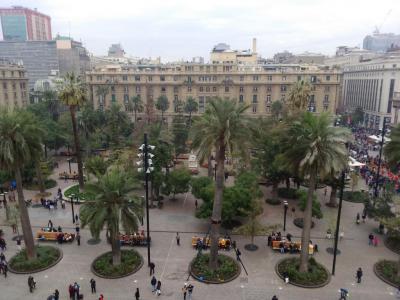
The Arms Square was founded along with Santiago in 1541. During the time of the Spanish colonization, it was customary to leave a city block empty and surround it with government buildings and a cathedral. If an attack happened, the city's residents could gather in the square and be defended.
Most of the buildings surrounding the Arms Square were completed in the 1800s. The beautiful Metropolitan Cathedral dominates the square. Other notable buildings in the square include the Royal Palace and the Central Post Office. A glorious fountain celebrating liberator Simón Bolívar stands in the center of the square. Over 100 palm trees shade the fountain.
There are several indoor malls with entrances from Arms Square. You'll find handcrafted goods, cafes, and fascinating corridors. The Chess Club of Santiago meets on the outdoor stage regularly. Just walk up and ask for a game.
On the weekends, you'll find musicians, painters, entertainers, and food vendors in the busy square. Dancers join together to dance the Cueca, a traditional Chilean dance.
Most of the buildings surrounding the Arms Square were completed in the 1800s. The beautiful Metropolitan Cathedral dominates the square. Other notable buildings in the square include the Royal Palace and the Central Post Office. A glorious fountain celebrating liberator Simón Bolívar stands in the center of the square. Over 100 palm trees shade the fountain.
There are several indoor malls with entrances from Arms Square. You'll find handcrafted goods, cafes, and fascinating corridors. The Chess Club of Santiago meets on the outdoor stage regularly. Just walk up and ask for a game.
On the weekends, you'll find musicians, painters, entertainers, and food vendors in the busy square. Dancers join together to dance the Cueca, a traditional Chilean dance.
2) Catedral Metropolitana (Metropolitan Cathedral) (must see)
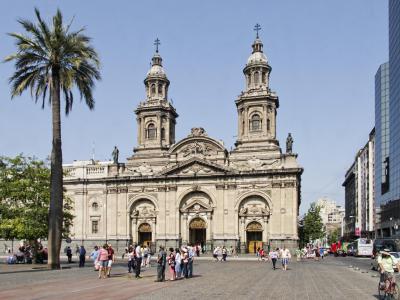
The Catedral Metropolitana was built between 1748 and 1800. This neoclassical cathedral has baroque features, including gilded columns and gorgeous, inspiring frescos. There has been a church standing on the site since the city was founded in the 1500s. The previous churches were all damaged by fire and earthquakes. Even the current cathedral has had structural damage and repairs made due to earthquakes.
Italian architect Joaquín Toesca was responsible for the gorgeous architecture of this important cathedral. The interior is stunning. The central nave is full of statues on the walls. The altar is magnificently ornate with marble and deep blue lapis lazuli. The stained glass is intricate and beautiful. Artist Ignazio Cremonesi painted the ceiling in 1906.
The seats and pulpits are meticulously carved from wood. The floor is decorated with thousands of tiny tiles in an intricate black and white pattern. The crypt houses the remains of Chilean archbishops. The lost tomb of Diego Portales, one of Chile's founding fathers, was discovered under the altar in 2005 and moved into the crypt.
Visitors will also find a museum adjoining the church. The Museum of Sacred Arts is home to many interesting religious artifacts. Silver craftsmanship by Jesuit priests includes a silver tabernacle and silver lectern. The museum also has a lovely courtyard.
Don't miss the Sacred Chapel, designed in 1846 by Eusebio Chelli.
Tips:
Arrive early in the day as the church gets quite busy. An information board at the entrance to the cathedral outlines important statues and interesting features.
Italian architect Joaquín Toesca was responsible for the gorgeous architecture of this important cathedral. The interior is stunning. The central nave is full of statues on the walls. The altar is magnificently ornate with marble and deep blue lapis lazuli. The stained glass is intricate and beautiful. Artist Ignazio Cremonesi painted the ceiling in 1906.
The seats and pulpits are meticulously carved from wood. The floor is decorated with thousands of tiny tiles in an intricate black and white pattern. The crypt houses the remains of Chilean archbishops. The lost tomb of Diego Portales, one of Chile's founding fathers, was discovered under the altar in 2005 and moved into the crypt.
Visitors will also find a museum adjoining the church. The Museum of Sacred Arts is home to many interesting religious artifacts. Silver craftsmanship by Jesuit priests includes a silver tabernacle and silver lectern. The museum also has a lovely courtyard.
Don't miss the Sacred Chapel, designed in 1846 by Eusebio Chelli.
Tips:
Arrive early in the day as the church gets quite busy. An information board at the entrance to the cathedral outlines important statues and interesting features.
3) Pre-Columbian Art Museum (must see)
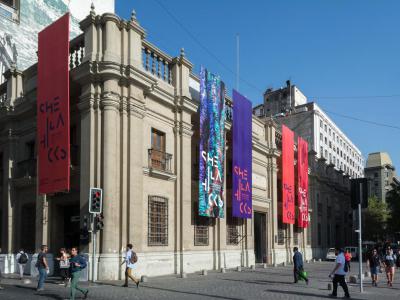
The Pre-Columbian Art Museum is one of the world's top museums and a highlight of Latin American museums. Visitors will gain an important historical look at the wonderful culture of the Pre-Columbian Americas. The museum is located in the Old Royal Customs House, built in 1807.
Inside, the museum’s permanent collection includes thousands of artifacts representing more than 100 indigenous cultures. Among the exhibits are finely crafted ceramics, intricate textiles, gold and silver ornaments, and stone carvings. Each piece reveals details about the daily life, beliefs, and artistic expression of societies such as the Maya, Aztec, Inca, and Mapuche.
One of the most remarkable sections is the Andean Hall, which explores the civilizations that flourished along the Andes Mountains. Visitors can see elaborately woven fabrics that have survived for centuries thanks to the region’s dry climate, as well as ceremonial masks and musical instruments.
The Chile Before Chile exhibit is fabulous and gives visitors a real insight into the lives of the original inhabitants of this land before colonization. The Chinchorro people mummified their dead before the more well-known Egyptian culture began mummifying their dead. The museum has a Chinchorro mummy on display, dating back to 1,900 BCE.
Visitors will also learn about the Anconcágua culture, which survived for 9,000 years hunting animals that are now extinct. Other unique pieces include Mapuche totem poles which were each carved from a single tree. Visitors will be impressed by the Rapa Nui wooden statues.
The displays are labeled in Spanish and English.
Tip:
Try to arrive before lunchtime, as it is usually packed.
Inside, the museum’s permanent collection includes thousands of artifacts representing more than 100 indigenous cultures. Among the exhibits are finely crafted ceramics, intricate textiles, gold and silver ornaments, and stone carvings. Each piece reveals details about the daily life, beliefs, and artistic expression of societies such as the Maya, Aztec, Inca, and Mapuche.
One of the most remarkable sections is the Andean Hall, which explores the civilizations that flourished along the Andes Mountains. Visitors can see elaborately woven fabrics that have survived for centuries thanks to the region’s dry climate, as well as ceremonial masks and musical instruments.
The Chile Before Chile exhibit is fabulous and gives visitors a real insight into the lives of the original inhabitants of this land before colonization. The Chinchorro people mummified their dead before the more well-known Egyptian culture began mummifying their dead. The museum has a Chinchorro mummy on display, dating back to 1,900 BCE.
Visitors will also learn about the Anconcágua culture, which survived for 9,000 years hunting animals that are now extinct. Other unique pieces include Mapuche totem poles which were each carved from a single tree. Visitors will be impressed by the Rapa Nui wooden statues.
The displays are labeled in Spanish and English.
Tip:
Try to arrive before lunchtime, as it is usually packed.
4) Plaza de la Constitución (Constitution Square)
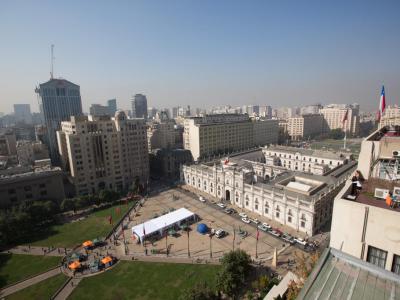
Constitution Square is named in recognition of Chile’s ten constitutions. The square is surrounded by key government buildings such as the Ministry of Foreign Affairs, the Ministry of Finance, the Ministry of Justice, the Municipality of Santiago, and the Chilean Central Bank. It was renovated in 1983, adding new paths, grassy areas, trees, and an underground parking lot.
In the southern part of Constitution Square, two elegant water fountains add charm and balance to Santiago’s grand civic space. Set against the backdrop of La Moneda Palace, these fountains mirror each other.
Throughout the square, visitors will also find five statues commemorating influential Chileans. Diego Portales is honored as the founder of the Chilean Republic, while the other statues depict former presidents: Pedro Aguirre Cerda, Jorge Alessandri, Eduardo Frei Montalva, and Salvador Allende.
The La Moneda Palace dominates the square and serves as the seat of government. In front of the palace, visitors can see flags representing Chile’s 12 regions. Don’t miss the Changing of the Guard, which takes place every other day at 10:00 a.m. in front of the flags — a colorful display of national tradition and ceremony.
In the southern part of Constitution Square, two elegant water fountains add charm and balance to Santiago’s grand civic space. Set against the backdrop of La Moneda Palace, these fountains mirror each other.
Throughout the square, visitors will also find five statues commemorating influential Chileans. Diego Portales is honored as the founder of the Chilean Republic, while the other statues depict former presidents: Pedro Aguirre Cerda, Jorge Alessandri, Eduardo Frei Montalva, and Salvador Allende.
The La Moneda Palace dominates the square and serves as the seat of government. In front of the palace, visitors can see flags representing Chile’s 12 regions. Don’t miss the Changing of the Guard, which takes place every other day at 10:00 a.m. in front of the flags — a colorful display of national tradition and ceremony.
5) Santa Lucía Hill (must see)
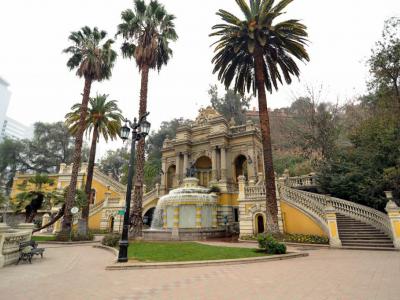
Santa Lucia Hill is 629 meters (or 2,064 feet) above sea level and 69 meters (or 226 feet) above the local area. This unique hill is the remainder of a 15 million-year-old volcano.
The hill was originally called Huelén in pre-colonial times. In 1541, Spanish conquierer Pedro de Valdivia claimed the hill for the Spanish and named the hill Santa Lucia. Pedro de Valdivia founded Santiago from Santa Lucia, making this hill an important historical site. During Santiago's early days, missionaries used the hill to pray and worship.
In the early 1800s, Manuel Olaguer Feliú, a Spanish military engineer, built two forts on the hill. Hidalgo Castle was built in 1820, and the fort is open to the public. Today, the site is home to an enormous park. A series of stone steps lead visitors to the top for an incredible view. The climb may be challenging, especially on a hot day.
The steep steps twist their way past terraces, trees, statues, fountains, and gardens that have been erected over the centuries. Each terrace allows visitors to rest before continuing. Don't miss the beautiful Neptune Fountain.
In 1849, United States Naval Officer James Melville Gilliss founded an American observatory on the hill. Gilliss sought to measure the solar parallax precisely. Chile purchased the equipment and formed Chile's first National Astronomical Observatory on the site.
Traditionally, an 1824 cannon is fired every day to mark the noon hour.
Tips:
Visit on a clear weekend day. On the weekends, there is less traffic, and the air is often clearer with less smog. The clearer the air, the better your view of the mountains.
The hill was originally called Huelén in pre-colonial times. In 1541, Spanish conquierer Pedro de Valdivia claimed the hill for the Spanish and named the hill Santa Lucia. Pedro de Valdivia founded Santiago from Santa Lucia, making this hill an important historical site. During Santiago's early days, missionaries used the hill to pray and worship.
In the early 1800s, Manuel Olaguer Feliú, a Spanish military engineer, built two forts on the hill. Hidalgo Castle was built in 1820, and the fort is open to the public. Today, the site is home to an enormous park. A series of stone steps lead visitors to the top for an incredible view. The climb may be challenging, especially on a hot day.
The steep steps twist their way past terraces, trees, statues, fountains, and gardens that have been erected over the centuries. Each terrace allows visitors to rest before continuing. Don't miss the beautiful Neptune Fountain.
In 1849, United States Naval Officer James Melville Gilliss founded an American observatory on the hill. Gilliss sought to measure the solar parallax precisely. Chile purchased the equipment and formed Chile's first National Astronomical Observatory on the site.
Traditionally, an 1824 cannon is fired every day to mark the noon hour.
Tips:
Visit on a clear weekend day. On the weekends, there is less traffic, and the air is often clearer with less smog. The clearer the air, the better your view of the mountains.
6) Santa Lucia Market
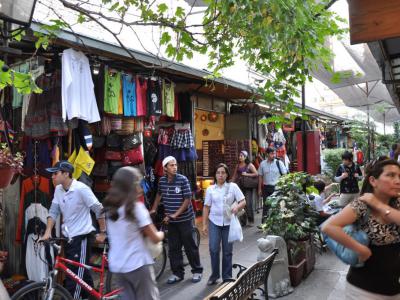
The Santa Lucia Market or Feria de Santa Lucía is a traditional arts and crafts market located in central Santiago. At this market you will find good value souvenirs and handicrafts, many of which are locally handmade. Typical items sold here are the famous alpaca wool, native instruments and all sorts of decorative figures. It is also interesting for those who do not have the chance to travel outside of Chile, as Peruvian and Bolivian goods are also sold at this market. Visiting the market is an excellent way to discover Chile’s folkloric culture.
Among the stalls you will find handcrafted shoes, boots, rugs, bags, woollen clothes and jewellery; there’s also lamps and lights, wooden instruments, plaques, souvenirs and leather goods. It’s an impressive array and worth a wander. Definitely head here to look for your trip memento and gift needs. Right across the road is Cerro Santa Lucia; park and art all in one.
Among the stalls you will find handcrafted shoes, boots, rugs, bags, woollen clothes and jewellery; there’s also lamps and lights, wooden instruments, plaques, souvenirs and leather goods. It’s an impressive array and worth a wander. Definitely head here to look for your trip memento and gift needs. Right across the road is Cerro Santa Lucia; park and art all in one.
7) Basílica de la Merced
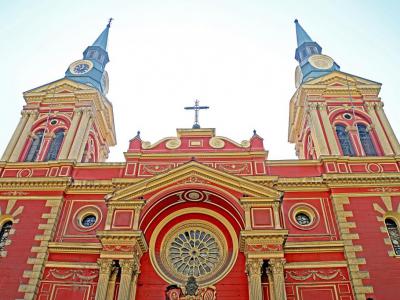
The Basilica de la Merced stands as a remarkable religious landmark in Santiago, offering evidence that not all relics associated with Jesus Christ are confined to the Vatican. Nestled within the basilica is a sliver of the cross upon which Jesus Christ was crucified, reportedly gifted to Chilean mercenaries by King Alfonso XIII of Spain. This sacred artifact has turned the basilica into a major pilgrimage site, drawing visitors with its splendid neo-Renaissance architecture and a captivating religious museum housed within.
Originally constructed in 1566 by the Mercedarians, the church fell victim to an earthquake, prompting its reconstruction in 1736. Stepping inside, one is greeted by a breathtaking interior adorned with a Bavarian Baroque pulpit and a revered sixteenth-century image of the Virgin Mary upon the altar.
The church museum offers a glimpse into the history of the Merced order, showcasing truly exceptional pieces from Easter Island, including a rare rongorongo tablet. Despite the presence of this captivating museum, the basilica remains a place of worship where daily masses are held, drawing devout believers and curious visitors alike.
Why You Should Visit:
The street presence is bold but the interior is balanced, much resembling the grand halls of some French renaissance palace.
Beautiful deus! Incredible timber floor! And, if you're lucky enough, you can hear the charming bell.
Originally constructed in 1566 by the Mercedarians, the church fell victim to an earthquake, prompting its reconstruction in 1736. Stepping inside, one is greeted by a breathtaking interior adorned with a Bavarian Baroque pulpit and a revered sixteenth-century image of the Virgin Mary upon the altar.
The church museum offers a glimpse into the history of the Merced order, showcasing truly exceptional pieces from Easter Island, including a rare rongorongo tablet. Despite the presence of this captivating museum, the basilica remains a place of worship where daily masses are held, drawing devout believers and curious visitors alike.
Why You Should Visit:
The street presence is bold but the interior is balanced, much resembling the grand halls of some French renaissance palace.
Beautiful deus! Incredible timber floor! And, if you're lucky enough, you can hear the charming bell.
8) Pasteleria Melinka
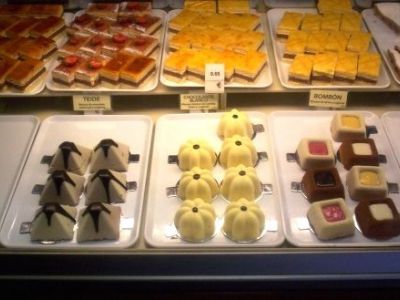
Nestled in the heart of Santiago, Chile, lies a pastry shop that has been enchanting locals and visitors alike for over 40 years – Pastelería Melinka. With a rich tradition of crafting delectable pastries, Kuchens, cakes, and serving exquisite coffee, this quaint establishment has become a beloved gem in the culinary landscape of the city.
Step through the charming entrance of Pastelería Melinka, and you'll be greeted by the sweet aroma of freshly baked treats wafting through the air. The cozy atmosphere invites patrons to settle into its warm embrace, making it an ideal spot to indulge in some delightful moments of pleasure.
When it comes to pastries, Melinka's offerings are unrivaled. Each delicacy is carefully handcrafted by skilled pastry chefs who have honed their craft over the decades, passing down traditional recipes and techniques from one generation to the next. Whether it's a flaky croissant filled with luscious cream, a buttery Danish pastry adorned with fruit, or a perfectly baked cinnamon roll, every bite is sure to transport you to a realm of blissful indulgence.
For those with a penchant for the finer things in life, Melinka's Kuchens are an absolute must-try. This classic Chilean treat, similar to a German cake, boasts a rich, fruity filling baked to perfection atop a tender crust. The variety of Kuchens available at Pastelería Melinka is truly impressive, and their impeccable balance of sweetness and tanginess has earned them a devoted following.
Step through the charming entrance of Pastelería Melinka, and you'll be greeted by the sweet aroma of freshly baked treats wafting through the air. The cozy atmosphere invites patrons to settle into its warm embrace, making it an ideal spot to indulge in some delightful moments of pleasure.
When it comes to pastries, Melinka's offerings are unrivaled. Each delicacy is carefully handcrafted by skilled pastry chefs who have honed their craft over the decades, passing down traditional recipes and techniques from one generation to the next. Whether it's a flaky croissant filled with luscious cream, a buttery Danish pastry adorned with fruit, or a perfectly baked cinnamon roll, every bite is sure to transport you to a realm of blissful indulgence.
For those with a penchant for the finer things in life, Melinka's Kuchens are an absolute must-try. This classic Chilean treat, similar to a German cake, boasts a rich, fruity filling baked to perfection atop a tender crust. The variety of Kuchens available at Pastelería Melinka is truly impressive, and their impeccable balance of sweetness and tanginess has earned them a devoted following.
9) Patio Bellavista (must see)
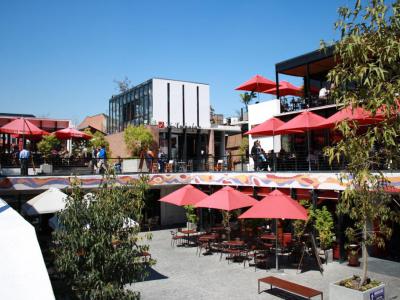
A traveler searching for a one-stop place where culture, art and cuisine combine should make their way to Patio Bellavista in the heart of Santiago. This beautiful patio is a meeting place with numerous delights: wine shops, restobars, restaurants, art, crafts, an ice cream parlor and art gallery. More than fifty shops, featuring the best quality of art souvenirs and handicrafts, can be found here, with jewelry, artwork, pottery, fine leather products, textiles and books all finding a home.
The place can be accessed from various major tourist destinations, including La Chascona, El Mercado Central and Cerro San Cristobal. This is a top destination for a nocturnal traveler who fancies some night entertainment, whereas those more active during the day could relax and enjoy this patio visiting its various shops and restaurants. There are usually several events on the go that are sure to catch the traveler's eye, including historical and cultural exhibitions, as well as traditional dances that will give you a better peek into the life and culture of the natives.
Why You Should Visit:
Despite being in the middle of a very busy and dynamic area, it has a bohemian atmosphere (especially in the afternoon or early evening), with a mixture of souvenir and craft shops, excellent restaurants (Asian, Italian, Spanish and Chilean cuisines – some have a 2nd floor with a view to the whole patio), bars, pizzerias, pubs, as well as plenty of dessert spots for crepes or the rolling ice cream that's all the craze at the moment. Great place for first-time visitors.
Tip:
Plan your trip to allow time to visit one of the open-air restaurants on the patio.
The place can be accessed from various major tourist destinations, including La Chascona, El Mercado Central and Cerro San Cristobal. This is a top destination for a nocturnal traveler who fancies some night entertainment, whereas those more active during the day could relax and enjoy this patio visiting its various shops and restaurants. There are usually several events on the go that are sure to catch the traveler's eye, including historical and cultural exhibitions, as well as traditional dances that will give you a better peek into the life and culture of the natives.
Why You Should Visit:
Despite being in the middle of a very busy and dynamic area, it has a bohemian atmosphere (especially in the afternoon or early evening), with a mixture of souvenir and craft shops, excellent restaurants (Asian, Italian, Spanish and Chilean cuisines – some have a 2nd floor with a view to the whole patio), bars, pizzerias, pubs, as well as plenty of dessert spots for crepes or the rolling ice cream that's all the craze at the moment. Great place for first-time visitors.
Tip:
Plan your trip to allow time to visit one of the open-air restaurants on the patio.
10) Metropolitan Park of Santiago
The Metropolitan Park of Santiago is a public park nestled within the city. It is more than 1,700 acres, making it more than twice the size of New York City's Central Park. It is the largest urban park in Chile and the second largest in South America.
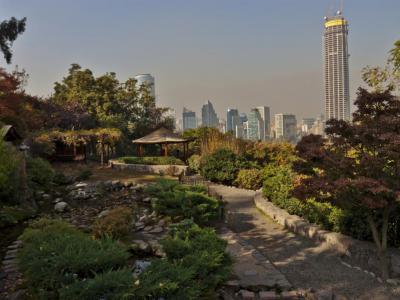
The park consists of San Cristobal Hill, the Chilean National Zoo, two open-air pools, a botanical garden, a children's park and a sanctuary. The Metropolitan Park of Santiago also has a cable car that takes visitors from the base of San Cristobal Hill to the sanctuary at its peak. From there, tourists can take the Funicular downhill.
Birdwatching is a popular activity at the park. It is easy to find more than 40 species of birds on any given day. Most birdwatching takes place at the summit of San Cristobal Hill. Visitors who aren't lucky with their birdwatching can easily find rhea birds, condors, emus and penguins at the zoo.
The Metropolitan Park of Santiago is open from 6 AM through 8:30 PM from Monday through Friday and from 6 AM through 9:30 PM on weekends and holidays.
The park consists of San Cristobal Hill, the Chilean National Zoo, two open-air pools, a botanical garden, a children's park and a sanctuary. The Metropolitan Park of Santiago also has a cable car that takes visitors from the base of San Cristobal Hill to the sanctuary at its peak. From there, tourists can take the Funicular downhill.
Birdwatching is a popular activity at the park. It is easy to find more than 40 species of birds on any given day. Most birdwatching takes place at the summit of San Cristobal Hill. Visitors who aren't lucky with their birdwatching can easily find rhea birds, condors, emus and penguins at the zoo.
The Metropolitan Park of Santiago is open from 6 AM through 8:30 PM from Monday through Friday and from 6 AM through 9:30 PM on weekends and holidays.

11) Sanctuary on San Cristóbal Hill
The Sanctuary of the Immaculate Conception atop San Cristóbal Hill holds great significance for the Catholic Church of Chile and stands as an iconic symbol of Santiago. Perched at an elevation of 863 meters above sea level, it is distinguished by a majestic statue of the Immaculate Conception situated at the hill's summit.
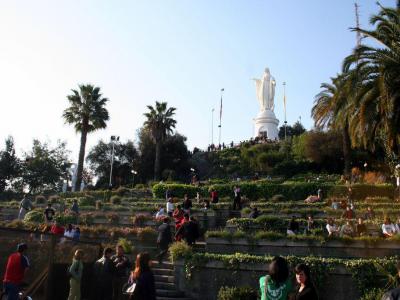
This impressive statue measures 14 meters in height, resting upon an 8.3-meter pedestal and weighing a staggering 36,610 kilograms. The statue's prominence is enhanced at night by strategically placed lights, making it visible from various vantage points across Santiago, day and night.
The pedestal itself houses a small chapel where John Paul II once prayed and blessed the city on April 1, 1987. Adjacent to the statue, an amphitheater serves as a venue for masses and other religious ceremonies. Furthermore, a nearby small chapel provides a serene space for prayer.
Access to the statue can be achieved via the road linking the Santiago Metropolitan Park or through the Funicular de Santiago and the Santiago Cable Car, with its final station conveniently located near the sanctuary.
Believed to be a replica of the "Virgin of Rome," the statue's design is credited to Luigi Poletti and Giuseppe Obici. The French foundry, Val D'Osne, was entrusted with the construction of the statue by the then Chilean ambassador to France, Enrique Salvador Sanfuentes.
To maintain its immaculate state, the statue underwent a thorough cleaning and repainting in early 2012, ensuring that it continues to stand as a symbol of faith and devotion for generations to come.
This impressive statue measures 14 meters in height, resting upon an 8.3-meter pedestal and weighing a staggering 36,610 kilograms. The statue's prominence is enhanced at night by strategically placed lights, making it visible from various vantage points across Santiago, day and night.
The pedestal itself houses a small chapel where John Paul II once prayed and blessed the city on April 1, 1987. Adjacent to the statue, an amphitheater serves as a venue for masses and other religious ceremonies. Furthermore, a nearby small chapel provides a serene space for prayer.
Access to the statue can be achieved via the road linking the Santiago Metropolitan Park or through the Funicular de Santiago and the Santiago Cable Car, with its final station conveniently located near the sanctuary.
Believed to be a replica of the "Virgin of Rome," the statue's design is credited to Luigi Poletti and Giuseppe Obici. The French foundry, Val D'Osne, was entrusted with the construction of the statue by the then Chilean ambassador to France, Enrique Salvador Sanfuentes.
To maintain its immaculate state, the statue underwent a thorough cleaning and repainting in early 2012, ensuring that it continues to stand as a symbol of faith and devotion for generations to come.
12) Cerro San Cristobal (San Cristóbal Hill) (must see)
Those who seek the best view of picturesque Santiago de Chile should make their way to the majestic San Cristóbal Hill in the northern part of the city. The hill rises to about 880 meters, which is approximately 300 meters higher than most of the sites in Santiago. It is the second highest spot in the city, and the view it affords is quite spectacular.
At the very top of the hill stands the statue of Virgin Mary, inaugurated in 1908. There is also a church which became well known after Pope John Paul II served a mass there in 1987. The largest park in Santiago, a vast urban expanse of green space with varied landscapes and roads for vehicles, is also found on the hill.
If you go there on a sunny summer day shortly after it is rained and the smog cleared off, you can see virtually everything from the high-rising towers of Santiago to the Andes mountains far beyond.
Why You Should Visit:
The "must-see" big hill in Santiago, hands down. Many things to do in the park, like hiking its many trails, cycling, going to the pool in the summer, riding the funicular and the recently renovated cable car, visiting different corners (Japanese Garden and/or different playgrounds), etc.
Tip:
Make sure you get Mote con Huesillo at the peak! Most refreshing (made with a dried peach, husked wheat and sugar syrup) traditional drink plus an 'empanada de pino'!
At the very top of the hill stands the statue of Virgin Mary, inaugurated in 1908. There is also a church which became well known after Pope John Paul II served a mass there in 1987. The largest park in Santiago, a vast urban expanse of green space with varied landscapes and roads for vehicles, is also found on the hill.
If you go there on a sunny summer day shortly after it is rained and the smog cleared off, you can see virtually everything from the high-rising towers of Santiago to the Andes mountains far beyond.
Why You Should Visit:
The "must-see" big hill in Santiago, hands down. Many things to do in the park, like hiking its many trails, cycling, going to the pool in the summer, riding the funicular and the recently renovated cable car, visiting different corners (Japanese Garden and/or different playgrounds), etc.
Tip:
Make sure you get Mote con Huesillo at the peak! Most refreshing (made with a dried peach, husked wheat and sugar syrup) traditional drink plus an 'empanada de pino'!
13) La Vega Central Market
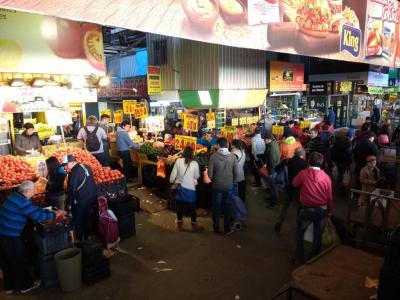
La Vega Central Market is a lively market with more than 500 stalls selling fresh fruit, meat, seafood and various merchandise. The structure was built in 1895, and then expanded in 1916.
Those who don't want to shop should still stop by the market to have an experience that is uniquely Chilean. Thousands of people pass through La Vega Central Market every day. Visitors will see tourists and locals alike loading up their bags with traditional food.
Shoppers should bring their own bag to the market. It is very crowded, so a cross-body bag that can be easily held in front of the body is recommended. Tourists can also stop at a small restaurant in the market where they can find Chilean and Peruvian food along with pizza, Thai cuisine, seafood and ice cream.
La Vega Central Market is located on Davila Baeza in the Recoleta region of Santiago.
Those who don't want to shop should still stop by the market to have an experience that is uniquely Chilean. Thousands of people pass through La Vega Central Market every day. Visitors will see tourists and locals alike loading up their bags with traditional food.
Shoppers should bring their own bag to the market. It is very crowded, so a cross-body bag that can be easily held in front of the body is recommended. Tourists can also stop at a small restaurant in the market where they can find Chilean and Peruvian food along with pizza, Thai cuisine, seafood and ice cream.
La Vega Central Market is located on Davila Baeza in the Recoleta region of Santiago.
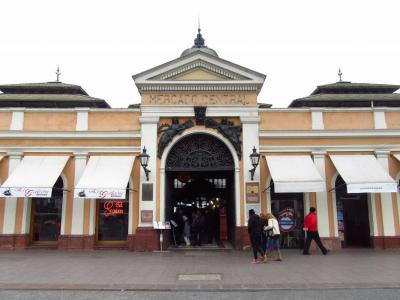
14) Mercado Central (Central Market) (must see)
The pulsating heart of Santiago is definitely the Central Market, which showcases the richness of Chile through its fresh food, vegetables, and fruits. Right in the middle of the market stands an iron statue, adding an artistic touch to the vibrant space.
The market is a testament to the country’s abundance, offering visitors a wide range of options, from local produce to handicrafts. Like any lively marketplace, it can be noisy and crowded, but for those who don’t mind, it promises an entertaining and memorable experience.
The best time to visit is around lunch hour, when the market is at its liveliest and visitors can sample some of its delicious offerings, such as fish marinades, ceviche, or stuffed zucchini. Mariachis perform in various corners, their sweet music cutting through the bustle and serenading both locals and tourists.
The market’s metal structure was originally made in England and moved to Chile in 1872, where it was assembled to host the National Exposition before being transformed into a market. Today, it stands as a symbol of art and life in Santiago and is open every day, except on election days.
Tips: Here you can grab a bite and shop for authentic Chilean souvenirs, such as textiles or alpaca scarves, often at very reasonable prices.
The market is a testament to the country’s abundance, offering visitors a wide range of options, from local produce to handicrafts. Like any lively marketplace, it can be noisy and crowded, but for those who don’t mind, it promises an entertaining and memorable experience.
The best time to visit is around lunch hour, when the market is at its liveliest and visitors can sample some of its delicious offerings, such as fish marinades, ceviche, or stuffed zucchini. Mariachis perform in various corners, their sweet music cutting through the bustle and serenading both locals and tourists.
The market’s metal structure was originally made in England and moved to Chile in 1872, where it was assembled to host the National Exposition before being transformed into a market. Today, it stands as a symbol of art and life in Santiago and is open every day, except on election days.
Tips: Here you can grab a bite and shop for authentic Chilean souvenirs, such as textiles or alpaca scarves, often at very reasonable prices.
