Custom Walk in Bucharest, Romania by helene1051_48eab created on 2025-09-07
Guide Location: Romania » Bucharest
Guide Type: Custom Walk
# of Sights: 12
Tour Duration: 4 Hour(s)
Travel Distance: 10 Km or 6.2 Miles
Share Key: XG4X3
Guide Type: Custom Walk
# of Sights: 12
Tour Duration: 4 Hour(s)
Travel Distance: 10 Km or 6.2 Miles
Share Key: XG4X3
How It Works
Please retrieve this walk in the GPSmyCity app. Once done, the app will guide you from one tour stop to the next as if you had a personal tour guide. If you created the walk on this website or come to the page via a link, please follow the instructions below to retrieve the walk in the app.
Retrieve This Walk in App
Step 1. Download the app "GPSmyCity: Walks in 1K+ Cities" on Apple App Store or Google Play Store.



Step 2. In the GPSmyCity app, download(or launch) the guide "Bucharest Map and Walking Tours".
Step 3. Tap the menu button located at upper right corner of the "Walks" screen and select "Retrieve custom walk". Enter the share key: XG4X3
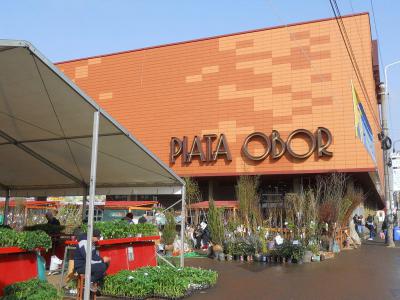
1) Obor Market
Obor Market (Piata Obor) is one of Bucharest’s oldest and most vibrant markets, stretching back to a 17th‑century fair known as Targul Mosilor, meaning "Fair of the Elders"-a twice‑weekly cultural and economic gathering for Wallachia’s rural communities. Originally located outside the city limits, the market was also the site of public executions in the 18th and 19th centuries-executions were banned in 1823, but the gallows remained until 1870, replaced by a “merchants’ cross” in 1877 as a symbol of reconciliation. Over time, Obor evolved from a sprawling informal market into Eastern Europe’s largest agri‑food marketplace-until its demolition in 2007 and rebirth as a modern complex.
Today’s Obor Market spans two main halls and a lively outdoor zone just northeast of Old Town in Sector 2. The older Halele Obor, built in the 1940s and completed in 1950, houses an eclectic mix of household goods, bakeries, and small shops-once fish and seafood were sold here during communist times. Adjacent stands and external stalls overflow with fresh‑pressed must, barrels of local grape juice, and all manner of everyday crafts. Beside this sits the newer produce hall: a three‐story orange building selling farm‑fresh fruits and vegetables downstairs, meats, cheeses, and preserves on the second floor, and services on the top level.
For food-loving tourists, Obor is a sensory delight. Bright stalls overflow with apples, garlic braids, walnuts, honey, artisan cheeses, sausages, and freshly baked goods. Don’t miss sampling mici (Romanian grilled meat rolls) at the outdoor "Obor Terrace" and sipping local drinks like unpasteurized milk, fresh‑pressed grape must, covrigi, or langos. It’s a delicious introduction to Romania’s culinary heritage and a place where locals shop, chat, and laugh-an essential stop for anyone seeking to glimpse Bucharest’s true flavor.
Obor Market offers tourists an authentic dive into local life-history, culture, cuisine, and community all wrapped in one vibrant, bustling experience.
Today’s Obor Market spans two main halls and a lively outdoor zone just northeast of Old Town in Sector 2. The older Halele Obor, built in the 1940s and completed in 1950, houses an eclectic mix of household goods, bakeries, and small shops-once fish and seafood were sold here during communist times. Adjacent stands and external stalls overflow with fresh‑pressed must, barrels of local grape juice, and all manner of everyday crafts. Beside this sits the newer produce hall: a three‐story orange building selling farm‑fresh fruits and vegetables downstairs, meats, cheeses, and preserves on the second floor, and services on the top level.
For food-loving tourists, Obor is a sensory delight. Bright stalls overflow with apples, garlic braids, walnuts, honey, artisan cheeses, sausages, and freshly baked goods. Don’t miss sampling mici (Romanian grilled meat rolls) at the outdoor "Obor Terrace" and sipping local drinks like unpasteurized milk, fresh‑pressed grape must, covrigi, or langos. It’s a delicious introduction to Romania’s culinary heritage and a place where locals shop, chat, and laugh-an essential stop for anyone seeking to glimpse Bucharest’s true flavor.
Obor Market offers tourists an authentic dive into local life-history, culture, cuisine, and community all wrapped in one vibrant, bustling experience.
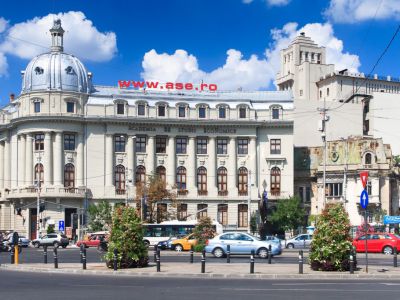
2) Piaţa Romană (Roman Square)
Roman Square (Piața Romană) is a bustling intersection at the heart of Bucharest, where major boulevards like Magheru, Dacia, and Lascar Catargiu converge. As one of the city’s most important transit points, the square embodies the energy of Romania’s capital, linking commercial, academic, and residential zones. Originally laid out in the 19th century as part of Bucharest’s urban expansion, it gained significance throughout the 20th century, particularly with the development of the metro and the surrounding avenues lined with modernist and neoclassical architecture.
At the center of the square stands the statue of Capitoline Wolf, a symbolic gift from Italy representing the Latin roots shared by both nations. This statue of the she-wolf suckling Romulus and Remus pays homage to the city’s Roman heritage, reinforcing the square’s name and cultural significance. Surrounding the square, visitors will notice an eclectic mix of architectural styles, with buildings ranging from elegant early 20th-century villas to communist-era blocks and contemporary glass facades.
Nearby attractions include the Academy of Economic Studies (ASE), a major university housed in an imposing interwar building that dominates one side of the square. The area is also dotted with cafes, bookstores, bakeries, and small shops, making it a lively place to stroll or pause while exploring the city. Its central location offers easy access to other parts of Bucharest, with the nearby Piața Romană metro station serving as a key node in the public transportation network.
Whether passing through or stopping for coffee, the Roman Square offers a snapshot of Bucharest’s evolving identity-where tradition, education, commerce, and movement all intersect.
At the center of the square stands the statue of Capitoline Wolf, a symbolic gift from Italy representing the Latin roots shared by both nations. This statue of the she-wolf suckling Romulus and Remus pays homage to the city’s Roman heritage, reinforcing the square’s name and cultural significance. Surrounding the square, visitors will notice an eclectic mix of architectural styles, with buildings ranging from elegant early 20th-century villas to communist-era blocks and contemporary glass facades.
Nearby attractions include the Academy of Economic Studies (ASE), a major university housed in an imposing interwar building that dominates one side of the square. The area is also dotted with cafes, bookstores, bakeries, and small shops, making it a lively place to stroll or pause while exploring the city. Its central location offers easy access to other parts of Bucharest, with the nearby Piața Romană metro station serving as a key node in the public transportation network.
Whether passing through or stopping for coffee, the Roman Square offers a snapshot of Bucharest’s evolving identity-where tradition, education, commerce, and movement all intersect.
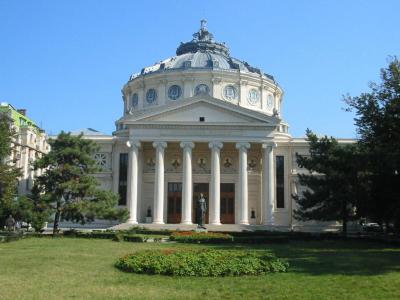
3) Romanian Athenaeum (must see)
Bucharest’s Romanian Athenaeum (Ateneul Roman) is an iconic masterpiece of neoclassical architecture, inaugurated in 1888. Designed by French architect Albert Galleron, this circular, domed concert hall was built to promote art and science, serving as the home of the “George Enescu” Philharmonic Orchestra. Situated majestically on Victory Avenue (Calea Victoriei), it stands across from the Royal Palace and has earned its reputation as the city’s most prestigious cultural venue and a European Heritage Label site since 2007.
The architecture evokes classical elegance: a grand façade of Doric columns leads into a sumptuous foyer crowned by a glorious rotunda. Inside, warm marble, decorative moldings, ornate chandeliers, and spiral staircases hint at luxury, but it’s the concert hall that steals the show. Here, visitors are treated to a sweeping 75-meter fresco depicting pivotal moments in Romanian history-from Dacia’s ancient roots to the unification of Greater Romania in 1919-as well as impeccable acoustics and almost 800 seats arranged amphitheatrically.
The Athenaeum remains the beating heart of Romanian classical music: the Philharmonic inaugurated the hall in 1889 and continues to perform here, while the annual George Enescu Festival-among the world’s most celebrated classical music events-draws international audiences. Its stage has resonated with premieres by Enescu himself and other notable composers, solidifying the venue’s cultural and historical significance.
For tourists, a visit is a must. Tours are available outside concert hours via the side entrance on Benjamin Franklin Street. Whether attending a performance or simply exploring its gilded domes and frescoes, the Athenaeum offers an intimate glimpse into Romania’s artistic soul and communal spirit.
The architecture evokes classical elegance: a grand façade of Doric columns leads into a sumptuous foyer crowned by a glorious rotunda. Inside, warm marble, decorative moldings, ornate chandeliers, and spiral staircases hint at luxury, but it’s the concert hall that steals the show. Here, visitors are treated to a sweeping 75-meter fresco depicting pivotal moments in Romanian history-from Dacia’s ancient roots to the unification of Greater Romania in 1919-as well as impeccable acoustics and almost 800 seats arranged amphitheatrically.
The Athenaeum remains the beating heart of Romanian classical music: the Philharmonic inaugurated the hall in 1889 and continues to perform here, while the annual George Enescu Festival-among the world’s most celebrated classical music events-draws international audiences. Its stage has resonated with premieres by Enescu himself and other notable composers, solidifying the venue’s cultural and historical significance.
For tourists, a visit is a must. Tours are available outside concert hours via the side entrance on Benjamin Franklin Street. Whether attending a performance or simply exploring its gilded domes and frescoes, the Athenaeum offers an intimate glimpse into Romania’s artistic soul and communal spirit.
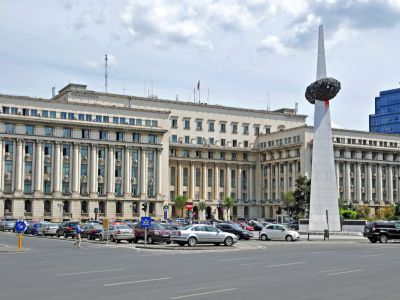
4) Revolution Square and Memorial of Rebirth
Revolution Square (Piața Revoluției) offers a compelling blend of history, culture, and drama, making it a must-visit stop for any traveler in Bucharest. Formerly known as Palace Square until 1989, the plaza was the backdrop for two of Communism’s most dramatic moments: Nicolae Ceaușescu’s celebratory speech in 1968 and his downfall during the 1989 revolution. Today, it’s framed by architectural marvels like the Romanian Athenaeum, the Royal Palace (home to the National Museum of Art), and the elegant Kretzulescu Church-all of which sit mere steps away, offering tourists a fascinating insight into Romania’s turbulent 20th-century narrative.
Anchoring this historic square is the Memorial of Rebirth (Memorialul Renasterii), a striking 25‑metre white marble obelisk topped by a dark metal “crown.” Commissioned in 2004 and unveiled on August 1, 2005, the memorial honors the courage and sacrifice of the Romanian people who overthrew Communism in December 1989. Its design-abstract and open to interpretation-sparked debate: many locals mockingly nicknamed it the “impaled potato” or “olive on a toothpick,” criticizing its symbolism, while others appreciate its stark, modern reminder of national rebirth.
Beyond artistic divides, the memorial’s base holds deeper meaning. Bronze figures, wood crosses representing victims of all ages, and inscribed plaques evoke the human stories behind the revolution’s toll-nearly 1,500 lives lost in December 1989. At night, it’s illuminated with subtle lighting, allowing visitors to reflect on its solemn message long after sunset. For a deeper dive, you’ll also notice bullet scars on nearby buildings-notably the former Central Committee headquarters-reminders of the ferocity of the uprising.
A stroll through Revolution Square, with its imposing monuments and historic facades, is both thought-provoking and inspiring. Stop by during daylight for context-many nearby museums, guided tours, and knowledgeable locals offer vivid descriptions of what unfolded here-and linger into the evening to feel the quiet resonance of a nation that dared to reclaim its freedom.
Anchoring this historic square is the Memorial of Rebirth (Memorialul Renasterii), a striking 25‑metre white marble obelisk topped by a dark metal “crown.” Commissioned in 2004 and unveiled on August 1, 2005, the memorial honors the courage and sacrifice of the Romanian people who overthrew Communism in December 1989. Its design-abstract and open to interpretation-sparked debate: many locals mockingly nicknamed it the “impaled potato” or “olive on a toothpick,” criticizing its symbolism, while others appreciate its stark, modern reminder of national rebirth.
Beyond artistic divides, the memorial’s base holds deeper meaning. Bronze figures, wood crosses representing victims of all ages, and inscribed plaques evoke the human stories behind the revolution’s toll-nearly 1,500 lives lost in December 1989. At night, it’s illuminated with subtle lighting, allowing visitors to reflect on its solemn message long after sunset. For a deeper dive, you’ll also notice bullet scars on nearby buildings-notably the former Central Committee headquarters-reminders of the ferocity of the uprising.
A stroll through Revolution Square, with its imposing monuments and historic facades, is both thought-provoking and inspiring. Stop by during daylight for context-many nearby museums, guided tours, and knowledgeable locals offer vivid descriptions of what unfolded here-and linger into the evening to feel the quiet resonance of a nation that dared to reclaim its freedom.
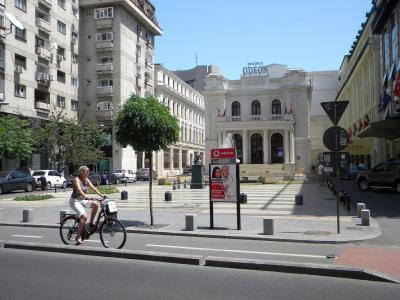
5) Odeon Theatre
Located on the elegant Victory Avenue (Calea Victoriei), the Odeon Theatre is one of Bucharest’s most prestigious cultural institutions, known for its strong artistic repertoire and historical significance. Established in 1911 as the Comedy Theatre, the venue underwent several transformations before being renamed the Odeon in 1990. It occupies part of the majestic Filipescu-Cesianu Palace complex and stands out with its neoclassical façade and elegant interiors, including a richly decorated auditorium that blends tradition with acoustic sophistication.
Throughout its history, the Odeon has been a hub for both Romanian and international theatrical innovation. Its repertoire spans classic plays, contemporary drama, experimental performances, and interdisciplinary productions, making it a favorite among theatergoers seeking both quality and variety. The theatre is also home to the Studio Hall-a smaller, flexible space used for more intimate performances, workshops, and cultural events.
A visit to the Odeon offers more than just a night at the theatre. Its central location places it within walking distance of key landmarks like Revolution Square and the National Museum of Art. The atmosphere is sophisticated but welcoming, attracting a diverse audience that includes students, artists, and international visitors.
For tourists interested in Romania’s performing arts scene, the Odeon provides a chance to witness one of the city’s most dynamic institutions in action. Whether attending a performance or simply admiring the building’s architectural charm, the Odeon Theatre reflects Bucharest’s evolving identity as a capital where history and contemporary culture continue to intersect.
Throughout its history, the Odeon has been a hub for both Romanian and international theatrical innovation. Its repertoire spans classic plays, contemporary drama, experimental performances, and interdisciplinary productions, making it a favorite among theatergoers seeking both quality and variety. The theatre is also home to the Studio Hall-a smaller, flexible space used for more intimate performances, workshops, and cultural events.
A visit to the Odeon offers more than just a night at the theatre. Its central location places it within walking distance of key landmarks like Revolution Square and the National Museum of Art. The atmosphere is sophisticated but welcoming, attracting a diverse audience that includes students, artists, and international visitors.
For tourists interested in Romania’s performing arts scene, the Odeon provides a chance to witness one of the city’s most dynamic institutions in action. Whether attending a performance or simply admiring the building’s architectural charm, the Odeon Theatre reflects Bucharest’s evolving identity as a capital where history and contemporary culture continue to intersect.
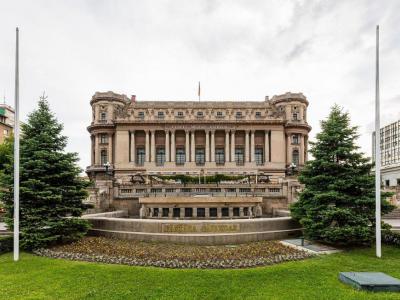
6) The National Military Circle
The National Military Circle (Cercul Militar Național) stands proudly near Victory Avenue (Calea Victoriei) in central Bucharest. Conceived as the cultural hub of the Romanian Army, its impressive French neoclassical façade was drawn up by architect Dimitrie Maimarolu, with contributions from Victor Stefanescu and Ernest Doneaud, and built between 1911 and 1923 on the former site of the Sarindar Monastery. Though construction was interrupted by World War I and the subsequent German occupation, the grand palace was restored and inaugurated in February 1923, thanks to donations from army officers and state funding.
Beyond its majestic exterior, the interior of the Circle is a showcase of opulent design. Visitors may glimpse sumptuous halls-such as the Marble, Moorish, Gothic, and Norwegian rooms-each meticulously decorated for ceremony and cultural occasions. A spectacular double marble staircase leads to the upper levels, opening into richly adorned salons and a historic restaurant, serving military and civilians alike since the early 20th century.
Throughout the interwar era, the Circle gained renown for hosting lavish military balls. It was here that young officers sought suitable partners amidst well-dressed debutantes, turning its grand entrance into a social stage and symbol of status in Bucharest society. Under communism, the building was renamed “Casa Centrală a Armatei,” only to reclaim its historic title after 1989.
Today, the Circle remains a living monument: a historic and architectural asset classified under Bucharest’s Grade A heritage listings. It's open to the public via its restaurant, cinema, library, and occasional cultural events-film screenings, book launches, and concerts all breathe new life into its century-old halls. For tourists, it offers a unique opportunity: step into a space where imperial elegance meets military tradition, right in the heart of modern Bucharest.
Beyond its majestic exterior, the interior of the Circle is a showcase of opulent design. Visitors may glimpse sumptuous halls-such as the Marble, Moorish, Gothic, and Norwegian rooms-each meticulously decorated for ceremony and cultural occasions. A spectacular double marble staircase leads to the upper levels, opening into richly adorned salons and a historic restaurant, serving military and civilians alike since the early 20th century.
Throughout the interwar era, the Circle gained renown for hosting lavish military balls. It was here that young officers sought suitable partners amidst well-dressed debutantes, turning its grand entrance into a social stage and symbol of status in Bucharest society. Under communism, the building was renamed “Casa Centrală a Armatei,” only to reclaim its historic title after 1989.
Today, the Circle remains a living monument: a historic and architectural asset classified under Bucharest’s Grade A heritage listings. It's open to the public via its restaurant, cinema, library, and occasional cultural events-film screenings, book launches, and concerts all breathe new life into its century-old halls. For tourists, it offers a unique opportunity: step into a space where imperial elegance meets military tradition, right in the heart of modern Bucharest.
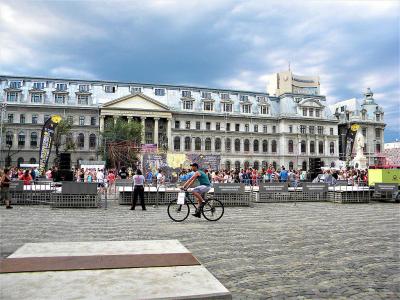
7) University Square
University Square (Piata Universitatii) is one of the city’s most vibrant and historically significant public spaces. Located at the heart of downtown Bucharest, this bustling square serves as both a major transportation hub-where two metro lines meet-and a central gathering spot. For tourists, it’s a perfect starting point to get a feel for the city's energy, architectural contrasts, and layered past. From here, you can explore surrounding landmarks on foot, including the National Theatre and the University of Bucharest.
Designed in a semi-circular shape, University Square is framed by wide, pedestrian-friendly boulevards and dotted with fountains and statues. It’s a lovely spot to relax and watch the flow of city life-whether locals heading to work, street artists performing, or vendors offering refreshments. By day, the square is bright and lively; by night, it becomes a glowing cultural crossroads, with nearby cafés and restaurants that spill onto the sidewalks, inviting you to linger over a coffee or a glass of wine.
Beyond its aesthetic charm, University Square is steeped in modern Romanian history. In the late 20th century, and again in 1990, it served as the epicenter for mass demonstrations that helped shape the course of Romania’s democratic transition. The space has since evolved into a place not only of daily urban life but also of civic memory, where plaques and public art commemorate important events and figures. Tourists interested in social history will appreciate the subtle reminders of Romania’s journey toward freedom.
For visitors, the convenience of transport, rich architectural backdrop, and palpable sense of history make University Square a must-see destination. Whether you’re here to map out your city itinerary or simply soak in the urban atmosphere, this square offers a perfect blend of convenience, culture, and storytelling.
Designed in a semi-circular shape, University Square is framed by wide, pedestrian-friendly boulevards and dotted with fountains and statues. It’s a lovely spot to relax and watch the flow of city life-whether locals heading to work, street artists performing, or vendors offering refreshments. By day, the square is bright and lively; by night, it becomes a glowing cultural crossroads, with nearby cafés and restaurants that spill onto the sidewalks, inviting you to linger over a coffee or a glass of wine.
Beyond its aesthetic charm, University Square is steeped in modern Romanian history. In the late 20th century, and again in 1990, it served as the epicenter for mass demonstrations that helped shape the course of Romania’s democratic transition. The space has since evolved into a place not only of daily urban life but also of civic memory, where plaques and public art commemorate important events and figures. Tourists interested in social history will appreciate the subtle reminders of Romania’s journey toward freedom.
For visitors, the convenience of transport, rich architectural backdrop, and palpable sense of history make University Square a must-see destination. Whether you’re here to map out your city itinerary or simply soak in the urban atmosphere, this square offers a perfect blend of convenience, culture, and storytelling.
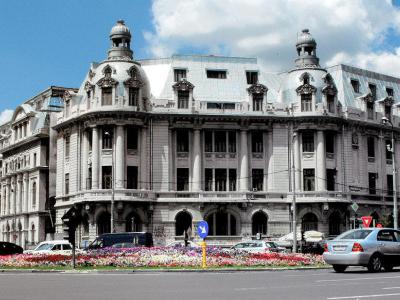
8) University of Bucharest
The University of Bucharest (Universitatea din București), nestled in the heart of Bucharest’s vibrant University Square, is one of Romania’s most distinguished academic landmarks. Tracing its roots to the Princely Academy of 1694 and formally established in its modern form by Prince Alexandru Ioan Cuza in 1864, the institution has been a cornerstone of Romanian education and culture for centuries. The neoclassical main building, designed by renowned architect Alexandru Orascu and completed in 1869, showcases impressive porticoes, stately columns, and a commanding façade that perfectly complement its urban surroundings.
As both a scholarly hub and a public space, the university square (Piata Universitatii) has witnessed pivotal moments in Romania’s modern history-including the 1989 Revolution, during which intense protests reshaped the nation’s future. Today, the square buzzes with student life and serves as a lively gathering spot, flanked by cafés, historic statues, and the nearby Library and National Theatre. Annual events like a charming Christmas market transform the square into a festive highlight during the winter season.
For visitors, the University of Bucharest offers more than architectural splendor. It represents centuries of intellectual pursuit, cultural exchange, and civic engagement. Nearby, travelers can also explore the National Theatre, Sutu Palace, and Coltea Hospital, making the university an excellent starting point for discovering the rich tapestry of central Bucharest. Be sure to pause for a guided tour or simply stroll through University Square to absorb the living legacy of ideas, revolution, and enlightenment shaped here over the ages.
As both a scholarly hub and a public space, the university square (Piata Universitatii) has witnessed pivotal moments in Romania’s modern history-including the 1989 Revolution, during which intense protests reshaped the nation’s future. Today, the square buzzes with student life and serves as a lively gathering spot, flanked by cafés, historic statues, and the nearby Library and National Theatre. Annual events like a charming Christmas market transform the square into a festive highlight during the winter season.
For visitors, the University of Bucharest offers more than architectural splendor. It represents centuries of intellectual pursuit, cultural exchange, and civic engagement. Nearby, travelers can also explore the National Theatre, Sutu Palace, and Coltea Hospital, making the university an excellent starting point for discovering the rich tapestry of central Bucharest. Be sure to pause for a guided tour or simply stroll through University Square to absorb the living legacy of ideas, revolution, and enlightenment shaped here over the ages.
9) Stavropoleos Convent (must see)
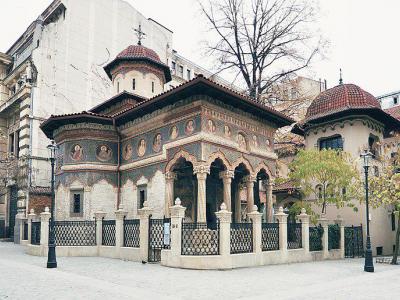
Stavropoleos Convent (Manastirea Stavropoleos) is a hidden treasure tucked away on a quiet lane in Bucharest’s bustling Old Town. Founded in 1724 by Greek archimandrite Ioanichie Stratonikeas under Prince Nicolae Mavrocordatos, the convent-with its cobblestone courtyard and peaceful atmosphere-offers a serene contrast to the energetic cafés and shops just steps away. The name Stavropoleos is derived from the Greek “Stauropolis,” meaning “City of the Cross,” a poetic reminder of the convent's spiritual focus.
Architecturally, the church and remaining convent buildings showcase the exquisite Brancovenesc style-an iconic synthesis of Byzantine, Ottoman, Italian Renaissance, and local influences. You’ll notice its intricately carved stone portico, trilobate arches, floral motifs, and framed religious medallions adorning the facade. Inside, the intimate space is rich with stunning frescoes, gilded icons, and an atmosphere heavy with incense and devotion. Its survival through earthquakes, secularization, and the Ceaușescu era makes visiting feel like stepping back into early 18th-century Bucharest.
Beyond its visual beauty, Stavropoleos is a living center for Orthodox spirituality and cultural heritage. The convent is active with nuns and priests who continue its mission through a renowned Byzantine choir, a library housing over 8,000 theological works and historical manuscripts, and diligent restoration of ancient books, icons, and liturgical garments. Its courtyard also displays fragments rescued from demolished churches, turning this urban nook into a small but poignant museum of Romanian religious art.
For travelers, a visit to Stavropoleos offers much more than architecture-it brings a spiritual and cultural immersion. Entry is free, and the convent welcomes visitors daily from morning to evening. A guided tour or simply lingering inside to absorb the hymns, scents, and sacred ambiance makes this a highlight of any stroll through Bucharest’s Old Town.
Architecturally, the church and remaining convent buildings showcase the exquisite Brancovenesc style-an iconic synthesis of Byzantine, Ottoman, Italian Renaissance, and local influences. You’ll notice its intricately carved stone portico, trilobate arches, floral motifs, and framed religious medallions adorning the facade. Inside, the intimate space is rich with stunning frescoes, gilded icons, and an atmosphere heavy with incense and devotion. Its survival through earthquakes, secularization, and the Ceaușescu era makes visiting feel like stepping back into early 18th-century Bucharest.
Beyond its visual beauty, Stavropoleos is a living center for Orthodox spirituality and cultural heritage. The convent is active with nuns and priests who continue its mission through a renowned Byzantine choir, a library housing over 8,000 theological works and historical manuscripts, and diligent restoration of ancient books, icons, and liturgical garments. Its courtyard also displays fragments rescued from demolished churches, turning this urban nook into a small but poignant museum of Romanian religious art.
For travelers, a visit to Stavropoleos offers much more than architecture-it brings a spiritual and cultural immersion. Entry is free, and the convent welcomes visitors daily from morning to evening. A guided tour or simply lingering inside to absorb the hymns, scents, and sacred ambiance makes this a highlight of any stroll through Bucharest’s Old Town.
10) Romanian National Opera
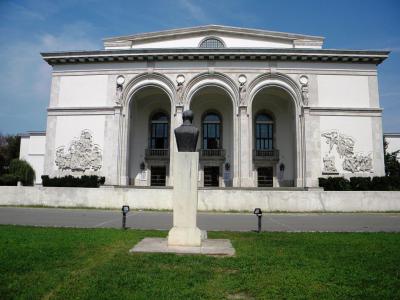
The Romanian National Opera in Bucharest (Opera Nationala București) stands as a cultural jewel in Romania’s capital, blending rich history, stunning architecture, and world-class performances. Established as an official state institution in 1921 with a striking debut featuring Wagner’s Lohengrin, conducted by the esteemed George Enescu, the Opera carries the legacy of one of Romania’s greatest musical figures. Its roots trace even further back to the 1885 foundation of the Romanian Opera Company under George Stephanescu, marking the beginning of a national operatic tradition.
The building that graces Mihail Kogalniceanu Boulevard today was designed by architects Octav Doicescu and Paraschiva Iubu and completed in 1953, officially opening its doors in January 1954 with a performance of Tchaikovsky’s Queen of Spades. With a seating capacity of approximately 950, the neoclassical edifice boasts elegant interiors, excellent acoustics, and rich decorative elements-including bas-reliefs symbolizing Music and Dance-creating a grand yet intimate atmosphere for patrons. The Opera underwent significant renovations from 2013 to 2015, ensuring modern comfort while preserving its historic charm.
Today, the Romanian National Opera is not only the oldest and largest of Romania’s four national opera and ballet companies but also a vibrant hub of the arts. Its diverse repertoire includes over 150 works spanning opera and ballet, with a strong commitment to showcasing Romanian composers alongside international masterworks. The Opera is also integral to Bucharest’s cultural calendar, hosting performances of world-renowned ballet companies, symphony concerts, and being a central venue for events like the International Opera Festival in late spring.
For tourists, visiting the Romanian National Opera is an immersive experience combining architectural beauty, national heritage, and artistic excellence. Whether attending a performance or simply admiring the building’s grand façade and interior, this landmark offers a memorable window into Romania’s cultural identity and operatic tradition. Be sure to check session times and aim to experience either a full-length opera or an enchanting ballet during your stay.
The building that graces Mihail Kogalniceanu Boulevard today was designed by architects Octav Doicescu and Paraschiva Iubu and completed in 1953, officially opening its doors in January 1954 with a performance of Tchaikovsky’s Queen of Spades. With a seating capacity of approximately 950, the neoclassical edifice boasts elegant interiors, excellent acoustics, and rich decorative elements-including bas-reliefs symbolizing Music and Dance-creating a grand yet intimate atmosphere for patrons. The Opera underwent significant renovations from 2013 to 2015, ensuring modern comfort while preserving its historic charm.
Today, the Romanian National Opera is not only the oldest and largest of Romania’s four national opera and ballet companies but also a vibrant hub of the arts. Its diverse repertoire includes over 150 works spanning opera and ballet, with a strong commitment to showcasing Romanian composers alongside international masterworks. The Opera is also integral to Bucharest’s cultural calendar, hosting performances of world-renowned ballet companies, symphony concerts, and being a central venue for events like the International Opera Festival in late spring.
For tourists, visiting the Romanian National Opera is an immersive experience combining architectural beauty, national heritage, and artistic excellence. Whether attending a performance or simply admiring the building’s grand façade and interior, this landmark offers a memorable window into Romania’s cultural identity and operatic tradition. Be sure to check session times and aim to experience either a full-length opera or an enchanting ballet during your stay.
11) Victory Square
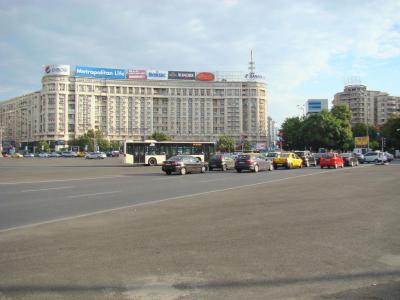
Victory Square (Piata Victoriei) sits at the crossroads of several of Bucharest’s grand avenues (Calea Victoriei, Kiseleff, Lascar Catargiu, Ion Mihalache, Iancu de Hunedoara, and Nicolae Titulescu). It has played a pivotal role in the city's evolution since the early 19th century, when it emerged during the development of the Kiseleff Road. Today, this sweeping plaza blends architectural opulence with bustling urban life, showcasing striking neoclassical façades, sleek modern towers, and an underlying sense of historical gravitas.
At the heart of the square stands Victoria Palace, an imposing, stripped‑classicism masterpiece clad in Carrara marble and completed in the mid‑20th century. It is the seat of the Romanian government and a symbol of political continuity, having risen anew after WWII damage and later serving as the Cabinet office post‑1989. Adjacent lies the Grigore Antipa Natural History Museum, appealing to families and science lovers with its engaging fossil displays and educational exhibits. Also nearby are the National Geological Museum and the charming Mavrogheni Church, adding depth to the square’s cultural tapestry.
Victory Square is not only rich in sights - it's a vibrant hub of community life. On weekends, traffic often gives way to Open Streets Bucharest, converting the surrounding boulevards into pedestrian promenades alive with street performers, pop-up food vendors, and lively café culture. From here, Calea Victoriei extends toward the Old Town, offering visitors an elegant two‑kilometre walk lined with historical landmarks, upscale shops, and atmospheric eateries.
For tourists, Victory Square is the perfect starting point. Easily accessible via Piata Victoriei metro station (serving lines M1 and M2), it offers seamless connections across the city. Whether you're drawn to grand architecture and cultural institutions or prefer to soak in the city’s rhythm through casual strolls and local festivals, Victory Square offers an unforgettable snapshot of Bucharest - dynamic, historic, and full of charm.
At the heart of the square stands Victoria Palace, an imposing, stripped‑classicism masterpiece clad in Carrara marble and completed in the mid‑20th century. It is the seat of the Romanian government and a symbol of political continuity, having risen anew after WWII damage and later serving as the Cabinet office post‑1989. Adjacent lies the Grigore Antipa Natural History Museum, appealing to families and science lovers with its engaging fossil displays and educational exhibits. Also nearby are the National Geological Museum and the charming Mavrogheni Church, adding depth to the square’s cultural tapestry.
Victory Square is not only rich in sights - it's a vibrant hub of community life. On weekends, traffic often gives way to Open Streets Bucharest, converting the surrounding boulevards into pedestrian promenades alive with street performers, pop-up food vendors, and lively café culture. From here, Calea Victoriei extends toward the Old Town, offering visitors an elegant two‑kilometre walk lined with historical landmarks, upscale shops, and atmospheric eateries.
For tourists, Victory Square is the perfect starting point. Easily accessible via Piata Victoriei metro station (serving lines M1 and M2), it offers seamless connections across the city. Whether you're drawn to grand architecture and cultural institutions or prefer to soak in the city’s rhythm through casual strolls and local festivals, Victory Square offers an unforgettable snapshot of Bucharest - dynamic, historic, and full of charm.
12) Victoria Palace
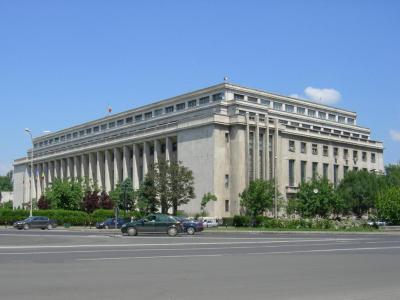
Nestled at the heart of Victory Square (Piata Victoriei), the Victoria Palace is the stately headquarters of Romania’s Prime Minister and government cabinet. Designed between 1937 and 1944 by renowned architect Duiliu Marcu, it originally housed the Foreign Ministry and stands today as a prime example of stripped‑classical interwar architecture. Its grand façade, once clad in luxurious Carrara marble with sculpted reliefs, now features travertine after wartime reconstruction.
The palace’s architectural vocabulary is bold and imposing, with an arcaded ground floor and a long colonnade of slender piers. Its upper stories are recessed, creating a dynamic silhouette against the Bucharest skyline. Though the original sculptural panels by Mac Constantinescu and fountains were lost during the 1944 bombings, the restored version-completed in 1952-retains a sense of majesty through its stately materials and commanding scale.
Beyond its architectural significance, the Victoria Palace is steeped in history. It was damaged in World War II, then rebuilt under the communist regime, first serving the Council of Ministers and Foreign Ministry. In 1990, it became the seat of Romania’s post‑communist government-a role it holds to this day. In 2004, it was officially declared a historic monument, acknowledging its place in Romania’s modern political and architectural legacy.
For tourists, a stroll through Victory Square offers more than a view of the palace. The lively square is a nexus of culture and commerce, lined with cafés, shops, and museums. Nearby attractions include the Grigore Antipa Museum of Natural History and Kiseleff Park-ideal stops after admiring the palace’s exterior grandeur. A daytime visit provides excellent light for photography and a peaceful moment in the surrounding gardens.
The palace’s architectural vocabulary is bold and imposing, with an arcaded ground floor and a long colonnade of slender piers. Its upper stories are recessed, creating a dynamic silhouette against the Bucharest skyline. Though the original sculptural panels by Mac Constantinescu and fountains were lost during the 1944 bombings, the restored version-completed in 1952-retains a sense of majesty through its stately materials and commanding scale.
Beyond its architectural significance, the Victoria Palace is steeped in history. It was damaged in World War II, then rebuilt under the communist regime, first serving the Council of Ministers and Foreign Ministry. In 1990, it became the seat of Romania’s post‑communist government-a role it holds to this day. In 2004, it was officially declared a historic monument, acknowledging its place in Romania’s modern political and architectural legacy.
For tourists, a stroll through Victory Square offers more than a view of the palace. The lively square is a nexus of culture and commerce, lined with cafés, shops, and museums. Nearby attractions include the Grigore Antipa Museum of Natural History and Kiseleff Park-ideal stops after admiring the palace’s exterior grandeur. A daytime visit provides excellent light for photography and a peaceful moment in the surrounding gardens.
