Custom Walk in Edinburgh, Scotland by grigorovm49_fa4c3 created on 2025-09-18
Guide Location: Scotland » Edinburgh
Guide Type: Custom Walk
# of Sights: 15
Tour Duration: 7 Hour(s)
Travel Distance: 17.3 Km or 10.8 Miles
Share Key: RKEYD
Guide Type: Custom Walk
# of Sights: 15
Tour Duration: 7 Hour(s)
Travel Distance: 17.3 Km or 10.8 Miles
Share Key: RKEYD
How It Works
Please retrieve this walk in the GPSmyCity app. Once done, the app will guide you from one tour stop to the next as if you had a personal tour guide. If you created the walk on this website or come to the page via a link, please follow the instructions below to retrieve the walk in the app.
Retrieve This Walk in App
Step 1. Download the app "GPSmyCity: Walks in 1K+ Cities" on Apple App Store or Google Play Store.



Step 2. In the GPSmyCity app, download(or launch) the guide "Edinburgh Map and Walking Tours".
Step 3. Tap the menu button located at upper right corner of the "Walks" screen and select "Retrieve custom walk". Enter the share key: RKEYD
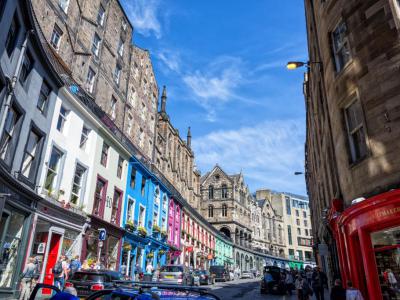
1) Victoria Street
Perhaps the most photographed location in all of Edinburgh, Victoria Street-with its gentle curve, candy-coloured shopfronts, and fairytale charm-is the Old Town icon that throughout the decades has graced everything from tourist postcards to glossy TV ads. Indeed, if streets had agents, this one would have been booked solid.
Built between 1829 and 1834, Victoria Street wasn’t always the whimsical rainbow we know today, though. Credit-or creative blame for it, rather-goes to Thomas Hamilton, a mastermind behind Edinburgh’s numerous architectural wonders, better known for his love affair with all things neoclassical. On this occasion, however, he deviated from his habitual neoclassical stamp, being told to create something mimicking the Old Flemish style. For this purpose, many of the area's old buildings were torn down. The result of such a dramatic medieval makeover was the appearance of arches, lining the new terrace, which now house some of the city’s most charming little shops.
And then came the magic. In recent years, Victoria Street-along with its downhill cousin, the West Bow-has gained notoriety as possible real-world prototypes for none other than Diagon Alley, featured in the Harry Potter books (you know, wizards, magic wands, and all that...).
Given that Edinburgh was home turf for JK Rowling while she penned her famous boy-wizard saga, it’s not a stretch to imagine Victoria Street as an inspiration for the ever-so fabulous wizard market after all. Packed with the cobbled stones, higgledy-piggledy medley of vibrant buildings, quirky boutiques, and a general air of eccentricity, it practically shouts Diagon Alley. So, whether you're here for the architecture, the shopping, or the spellcasting vibes, just know-this street has layers, arches, and more than a dash of enchantment...
Built between 1829 and 1834, Victoria Street wasn’t always the whimsical rainbow we know today, though. Credit-or creative blame for it, rather-goes to Thomas Hamilton, a mastermind behind Edinburgh’s numerous architectural wonders, better known for his love affair with all things neoclassical. On this occasion, however, he deviated from his habitual neoclassical stamp, being told to create something mimicking the Old Flemish style. For this purpose, many of the area's old buildings were torn down. The result of such a dramatic medieval makeover was the appearance of arches, lining the new terrace, which now house some of the city’s most charming little shops.
And then came the magic. In recent years, Victoria Street-along with its downhill cousin, the West Bow-has gained notoriety as possible real-world prototypes for none other than Diagon Alley, featured in the Harry Potter books (you know, wizards, magic wands, and all that...).
Given that Edinburgh was home turf for JK Rowling while she penned her famous boy-wizard saga, it’s not a stretch to imagine Victoria Street as an inspiration for the ever-so fabulous wizard market after all. Packed with the cobbled stones, higgledy-piggledy medley of vibrant buildings, quirky boutiques, and a general air of eccentricity, it practically shouts Diagon Alley. So, whether you're here for the architecture, the shopping, or the spellcasting vibes, just know-this street has layers, arches, and more than a dash of enchantment...
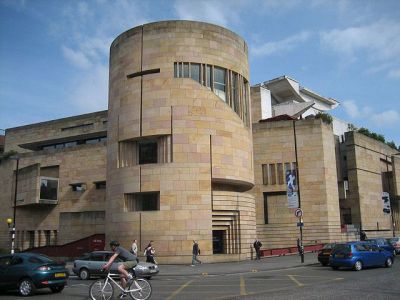
2) National Museum of Scotland (must see)
Right off Chambers Street and sidling up to George IV Bridge, the National Museum of Scotland seems like an entire universe cleverly disguised as one building. As the country’s crown jewel of curiosity, it houses everything from ancient artefacts, science and technology to Elton John’s finest feathered fashion. Indeed, sequins and sarcophagi under one roof...
The museum, in its current all-in-one glory, came to life in 2006 when the Royal Museum and the Museum of Scotland decided to merge (believing they’d work better as roommates). Having linked internally by utilizing some repurposed storage space, they created the stunning Grand Gallery-a light-drenched cathedral of wonder, stretching from basement to rooftop. The vaulted Entrance Hall alone is a whopping 1,400 square metres of pure “whoa.”
Wandering into the Grand Gallery, you’re bound to find some big stuff-literally! Oversized treasures too large for the regular exhibits-like the 20-metre-tall Window on the World, a vertical buffet of 800+ oddities-camp out here in joyful disarray. On its sides, Scotland shows off its brainpower in the form of “Discoveries” made by local inventors.
It’s a feast for all ages and attention spans. One moment you’re peering at ancient Egyptian mummies (CT scans included, like historical X-ray vision, revealing everything that is hidden under their wrappings), and the next you’re staring at something extravagant that once belonged to a glam rock legend. The Natural History floor, meanwhile, is a dino-lover’s paradise, complete with extinct beasts and bones the size of furniture.
In 2011, they added 16 shiny new galleries, just to keep things fresh-resulting in over 8,000 original objects awaiting your awe. Bonus points is that the entry is completely free. So, you can marvel at the mysteries of the universe and still afford a snack from the on-site café & bistro, if you are feeling peckish or just want to take a break from exploring.
By far not a typical museum-but rather an “everythingium”-it’s a real treat both inside and out, especially following its hefty £47-million refurbishment and extension. Definitely more than just a place to learn-but a place to linger...
Top Tips:
Get there early. Start on the top floor and descend like an archaeologist of modern wonder. There are some great 'hands-on' exhibits, so take your time if you are with kids. And if you're feeling fancy, book a private guided tour. Just check ahead for any exhibits that may cost extra-they’re rare, and usually a bargain.
The museum, in its current all-in-one glory, came to life in 2006 when the Royal Museum and the Museum of Scotland decided to merge (believing they’d work better as roommates). Having linked internally by utilizing some repurposed storage space, they created the stunning Grand Gallery-a light-drenched cathedral of wonder, stretching from basement to rooftop. The vaulted Entrance Hall alone is a whopping 1,400 square metres of pure “whoa.”
Wandering into the Grand Gallery, you’re bound to find some big stuff-literally! Oversized treasures too large for the regular exhibits-like the 20-metre-tall Window on the World, a vertical buffet of 800+ oddities-camp out here in joyful disarray. On its sides, Scotland shows off its brainpower in the form of “Discoveries” made by local inventors.
It’s a feast for all ages and attention spans. One moment you’re peering at ancient Egyptian mummies (CT scans included, like historical X-ray vision, revealing everything that is hidden under their wrappings), and the next you’re staring at something extravagant that once belonged to a glam rock legend. The Natural History floor, meanwhile, is a dino-lover’s paradise, complete with extinct beasts and bones the size of furniture.
In 2011, they added 16 shiny new galleries, just to keep things fresh-resulting in over 8,000 original objects awaiting your awe. Bonus points is that the entry is completely free. So, you can marvel at the mysteries of the universe and still afford a snack from the on-site café & bistro, if you are feeling peckish or just want to take a break from exploring.
By far not a typical museum-but rather an “everythingium”-it’s a real treat both inside and out, especially following its hefty £47-million refurbishment and extension. Definitely more than just a place to learn-but a place to linger...
Top Tips:
Get there early. Start on the top floor and descend like an archaeologist of modern wonder. There are some great 'hands-on' exhibits, so take your time if you are with kids. And if you're feeling fancy, book a private guided tour. Just check ahead for any exhibits that may cost extra-they’re rare, and usually a bargain.
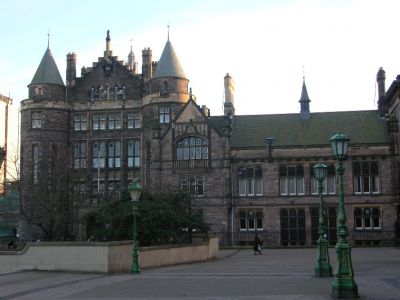
3) The University of Edinburgh
The University of Edinburgh was the fourth university to be established in Scotland and is one of the most important places of learning in the world.
It was originally founded by Royal Charter in 1583 after Bishop Robert Reid left funds for its building in his will. The construction was also funded by the Town Council, making it one of the 1st civic universities to be built.
The first building was designed by Robert Adam and is now called Old College. It was dedicated to anatomy and the budding science of surgery. It had an underground passage from the lecture hall to the anatomy room and Burke and Hare weren’t the first to smuggle bodies there. Today Old College is a prestigious law school.
By the 19th century, Old College was bursting at the seams and in 1845 Robert Rowand Anderson was commissioned to build a new medical school by expanding a Free Church building on the Mound donated by the newly established Free Church of Scotland. The Mc Ewan Hall was added in 1889. The New College as it was called merged with the Faculty of Divinity in 1935.
In 2002 the different faculties were rearranged into three colleges besides Divinity: The College of Science and Engineering, the College of Humanities and Social Sciences and the College of Medicine and Veterinary Medicine. The university owns several other buildings in the city. Both Charles Darwin and Alexander Graham Bell studied at the University of Edinburgh.
It was originally founded by Royal Charter in 1583 after Bishop Robert Reid left funds for its building in his will. The construction was also funded by the Town Council, making it one of the 1st civic universities to be built.
The first building was designed by Robert Adam and is now called Old College. It was dedicated to anatomy and the budding science of surgery. It had an underground passage from the lecture hall to the anatomy room and Burke and Hare weren’t the first to smuggle bodies there. Today Old College is a prestigious law school.
By the 19th century, Old College was bursting at the seams and in 1845 Robert Rowand Anderson was commissioned to build a new medical school by expanding a Free Church building on the Mound donated by the newly established Free Church of Scotland. The Mc Ewan Hall was added in 1889. The New College as it was called merged with the Faculty of Divinity in 1935.
In 2002 the different faculties were rearranged into three colleges besides Divinity: The College of Science and Engineering, the College of Humanities and Social Sciences and the College of Medicine and Veterinary Medicine. The university owns several other buildings in the city. Both Charles Darwin and Alexander Graham Bell studied at the University of Edinburgh.
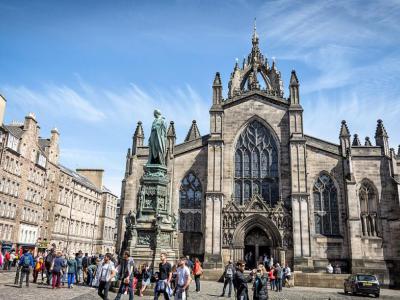
4) St. Giles' Cathedral (must see)
Smack in the middle of the Royal Mile, St Giles’ Cathedral-otherwise known as the High Kirk (or High Church) of Edinburgh-isn't one to be missed. The original building went up in the 12th century but didn’t survive a nasty fire-only the central pillars lived to tell the tale. The replacement was built in 1385. Over the years, it had numerous chapels added-known as aisles-resulting in a kind of charming architectural chaos. At one point, the church had over 50 side altars, like a medieval supermarket of holiness...
In 1466, St Giles’ became a collegiate church, which, in 1490, saw the now-iconic, crown-shaped lantern tower completed. During the Reformation, in 1560, things got a bit dramatic. Most of the church’s treasures vanished-stolen, sold, or just spirited away-including its star relic: Saint Giles’ withered arm and hand, complete with a diamond ring on one skeletal finger (macabre bling at its finest...). In addition to that, the church was partitioned by walls into multiple preaching zones-a kind of Protestant “feng shui,” if you will...
Despite being called a cathedral, it only technically wore that title twice, briefly, during the 17th-century Bishop Wars. The statute of “High Kirk” remains its real claim to fame. A 19th-century restoration gave the church a glow-up-partitions were removed and several chapels pulled down. Among the surviving chapels, perhaps the most beautiful is the Thistle Chapel from 1911: a jaw-dropping High Gothic gem dripping in wood and stone carvings, fluttering heraldic banners, and a breathtaking, delicately carved vaulted ceiling.
Once here, look out for a bronze plaque to Robert Louis Stevenson, author of Treasure Island, in the Moray Aisle, a marble tribute to the dashing but doomed 1st Marquis of Montrose, in the Chapman Aisle, and another to his bitter rival, Archibald Campbell, the 1st Marquis of Argyll, in the Saint Eloi Aisle. Fun fact: these two, once the main signatories of the National Covenant in 1638 (the document signed to oppose attempts to impose Anglican religious practices on the Church of Scotland), became sworn enemies towards the end of their lives. Edinburgh drama, anyone?
Aside from all that, the place is absolutely gorgeous, packed to the rim with stained glass beauty. You’ll walk out with neck cramp from all the ceiling admiration-and it’ll be worth it.
Pro tips:
Entry is free or by donation, but if you’re planning a photo shoot, prepare to fork over £2 for a "permit".
Best to get onto a tour, as there's much you could miss just wandering on your own. Also, if you're feeling adventurous, take the rooftop tour (worth £6).
And yes-don't miss a cozy café downstairs that serves tasty bites. Praise be!
In 1466, St Giles’ became a collegiate church, which, in 1490, saw the now-iconic, crown-shaped lantern tower completed. During the Reformation, in 1560, things got a bit dramatic. Most of the church’s treasures vanished-stolen, sold, or just spirited away-including its star relic: Saint Giles’ withered arm and hand, complete with a diamond ring on one skeletal finger (macabre bling at its finest...). In addition to that, the church was partitioned by walls into multiple preaching zones-a kind of Protestant “feng shui,” if you will...
Despite being called a cathedral, it only technically wore that title twice, briefly, during the 17th-century Bishop Wars. The statute of “High Kirk” remains its real claim to fame. A 19th-century restoration gave the church a glow-up-partitions were removed and several chapels pulled down. Among the surviving chapels, perhaps the most beautiful is the Thistle Chapel from 1911: a jaw-dropping High Gothic gem dripping in wood and stone carvings, fluttering heraldic banners, and a breathtaking, delicately carved vaulted ceiling.
Once here, look out for a bronze plaque to Robert Louis Stevenson, author of Treasure Island, in the Moray Aisle, a marble tribute to the dashing but doomed 1st Marquis of Montrose, in the Chapman Aisle, and another to his bitter rival, Archibald Campbell, the 1st Marquis of Argyll, in the Saint Eloi Aisle. Fun fact: these two, once the main signatories of the National Covenant in 1638 (the document signed to oppose attempts to impose Anglican religious practices on the Church of Scotland), became sworn enemies towards the end of their lives. Edinburgh drama, anyone?
Aside from all that, the place is absolutely gorgeous, packed to the rim with stained glass beauty. You’ll walk out with neck cramp from all the ceiling admiration-and it’ll be worth it.
Pro tips:
Entry is free or by donation, but if you’re planning a photo shoot, prepare to fork over £2 for a "permit".
Best to get onto a tour, as there's much you could miss just wandering on your own. Also, if you're feeling adventurous, take the rooftop tour (worth £6).
And yes-don't miss a cozy café downstairs that serves tasty bites. Praise be!
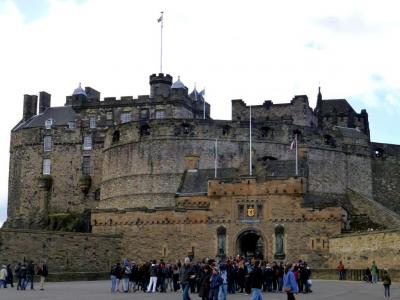
5) Edinburgh Castle (must see)
Edinburgh Castle, looming large over the Scottish capital, is the second most visited attraction in the UK (after the Tower of London, which is still number one). The history of Scotland is deeply etched into its ancient stones, making it a timeline in fortress form.
Perched atop Castle Rock (a hardened basaltic plug from an extinct volcano eroded by glaciers), this area has been drawing humans since the 9th millennium BC. The first castle on the site was built in the 12th century by King David I. It remained a royal residence until 1603, when the monarchy packed up and moved to London-presumably for better weather and indoor plumbing...
Indeed, as a fortress, it was virtually impregnable, except for one major-geological-drawback: the basalt rock on which it stands doesn’t hold water (literally). The 28-meter-deep well inside the fortress was about as useful as a chocolate teapot during a siege. So, when the well ran dry, surrender-or dehydration-was the only choice for those inside.
The original castle was mostly destroyed during the Lang Siege of 1573. The only remainder from its early days is St. Margaret’s Chapel. By the 17th century, it had shifted from royal digs to military barracks, housing troops up to the 1920s.
Presently, the castle hosts the Scottish National War Memorial, the National War Museum, and enough regimental museums to keep military buffs busy till closing time. Don't miss the One O’Clock Gun, which is fired daily (except Sundays) at 1 PM with Swiss-watch precision-yes, Edinburgh literally sets its clocks by it...
Also, in the Crown Room, you will see Scotland’s royal bling-crown, scepter, and sword-resting under heavy guard. Period-costumed actors occasionally swoop in to re-enact history with full flair. And if you’re visiting in August, the Military Tattoo takes over the esplanade with kilts, cannons, and bagpipes galore.
Oh, and in the north-east corner of the esplanade, don't miss that rather unassuming little iron fountain. Called Witches' Well, it marks the spot where, back in the day, many women accused of witchcraft were burned at the stake. Spooky, grim, and sadly true...
The panoramic views are postcard-worthy, the historical nooks are endlessly fascinating, and honestly, it just feels epic to stand where centuries of royals, rebels, and rock-solid drama unfolded.
Pro Tips:
The entry is cheaper, and more importantly, faster, if you book online.
Take a free guided tour – running every hour. Otherwise, consider grabbing the £3 audio guide if you like facts with flair.
Being at the mountain's top, it may get breezy, so definitely bring a windproof jacket if visiting in cold weather.
Perched atop Castle Rock (a hardened basaltic plug from an extinct volcano eroded by glaciers), this area has been drawing humans since the 9th millennium BC. The first castle on the site was built in the 12th century by King David I. It remained a royal residence until 1603, when the monarchy packed up and moved to London-presumably for better weather and indoor plumbing...
Indeed, as a fortress, it was virtually impregnable, except for one major-geological-drawback: the basalt rock on which it stands doesn’t hold water (literally). The 28-meter-deep well inside the fortress was about as useful as a chocolate teapot during a siege. So, when the well ran dry, surrender-or dehydration-was the only choice for those inside.
The original castle was mostly destroyed during the Lang Siege of 1573. The only remainder from its early days is St. Margaret’s Chapel. By the 17th century, it had shifted from royal digs to military barracks, housing troops up to the 1920s.
Presently, the castle hosts the Scottish National War Memorial, the National War Museum, and enough regimental museums to keep military buffs busy till closing time. Don't miss the One O’Clock Gun, which is fired daily (except Sundays) at 1 PM with Swiss-watch precision-yes, Edinburgh literally sets its clocks by it...
Also, in the Crown Room, you will see Scotland’s royal bling-crown, scepter, and sword-resting under heavy guard. Period-costumed actors occasionally swoop in to re-enact history with full flair. And if you’re visiting in August, the Military Tattoo takes over the esplanade with kilts, cannons, and bagpipes galore.
Oh, and in the north-east corner of the esplanade, don't miss that rather unassuming little iron fountain. Called Witches' Well, it marks the spot where, back in the day, many women accused of witchcraft were burned at the stake. Spooky, grim, and sadly true...
The panoramic views are postcard-worthy, the historical nooks are endlessly fascinating, and honestly, it just feels epic to stand where centuries of royals, rebels, and rock-solid drama unfolded.
Pro Tips:
The entry is cheaper, and more importantly, faster, if you book online.
Take a free guided tour – running every hour. Otherwise, consider grabbing the £3 audio guide if you like facts with flair.
Being at the mountain's top, it may get breezy, so definitely bring a windproof jacket if visiting in cold weather.
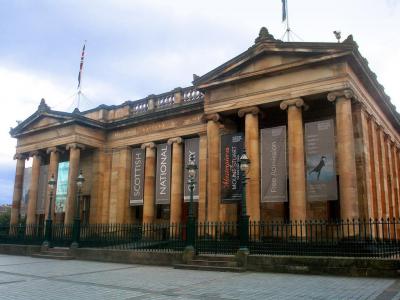
6) Scottish National Gallery (must see)
For all art lovers-yes, even the ones who can’t tell a Botticelli from a biscotti (an Italian almond biscuit for those unaware)-the Scottish National Gallery is a must-do cultural pitstop. Perched elegantly on the Mound right next to the Royal Scottish Academy, this temple of fine art has been dazzling eyeballs since 1859. Back then, it was a bit of a packed house: the gallery, the academy, and even the Portrait Gallery all cozied up under one neoclassical roof. Eventually, the Portrait Gallery moved to its new location, and by 1906, the academy shuffled next door too-because elbow room really matters when you’re hanging a Titian...
The gallery was entirely renovated in 1912. Today it boasts a collection of over 30,000 artworks, featuring both Scottish and European art-from Renaissance to Romanticism, with a few moody Impressionists thrown in for flair. Among them are Bassano, Botticelli, Bernini, Cézanne, Degas, da Vinci, and... deep breath... El Greco, Titian, and Tiepolo, too. Want something bolder? Don’t miss Gauguin’s “Vision of the Sermon.” And if you fancy some sculptural marble drama, Canova’s “Three Graces” has you covered.
The gallery also houses the Research Library-one of the world's finest reference libraries-which is a treasure trove of over 50,000 books, journals, and oddities spanning seven centuries from the 1300s. Meanwhile, the Western Link connects the gallery to the academy via a sleek underground space with a lecture theatre, a classy café, and a shop full of irresistible arty bits. Plus, there's an interactive IT Gallery, where, using touch-screens, you can swipe your way through the gallery’s entire collection like a very refined dating app.
So, whenever you feel like getting up close with a da Vinci sketch and still having time for tea, check out this place. It’s free to enter the permanent exhibits, and the cozy layout makes for a perfect rainy-day escape.
Insider tip:
Make sure you visit both the main Gallery and the Academy behind it.
Note the grand Turner watercolor exhibition that goes on show every January-some truly wonderful insights into his travels around Europe. It’s like Europe through the eyes of a genius-with less fog and more flair...
The gallery was entirely renovated in 1912. Today it boasts a collection of over 30,000 artworks, featuring both Scottish and European art-from Renaissance to Romanticism, with a few moody Impressionists thrown in for flair. Among them are Bassano, Botticelli, Bernini, Cézanne, Degas, da Vinci, and... deep breath... El Greco, Titian, and Tiepolo, too. Want something bolder? Don’t miss Gauguin’s “Vision of the Sermon.” And if you fancy some sculptural marble drama, Canova’s “Three Graces” has you covered.
The gallery also houses the Research Library-one of the world's finest reference libraries-which is a treasure trove of over 50,000 books, journals, and oddities spanning seven centuries from the 1300s. Meanwhile, the Western Link connects the gallery to the academy via a sleek underground space with a lecture theatre, a classy café, and a shop full of irresistible arty bits. Plus, there's an interactive IT Gallery, where, using touch-screens, you can swipe your way through the gallery’s entire collection like a very refined dating app.
So, whenever you feel like getting up close with a da Vinci sketch and still having time for tea, check out this place. It’s free to enter the permanent exhibits, and the cozy layout makes for a perfect rainy-day escape.
Insider tip:
Make sure you visit both the main Gallery and the Academy behind it.
Note the grand Turner watercolor exhibition that goes on show every January-some truly wonderful insights into his travels around Europe. It’s like Europe through the eyes of a genius-with less fog and more flair...
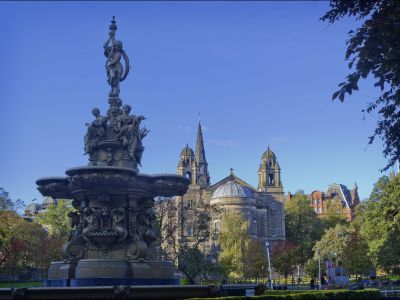
7) Princes Street Gardens (must see)
Between the volcanic drama of Edinburgh Castle and the shopping temptation of Princes Street, you'll stumble across a surprisingly serene stretch of green: Princes Street Gardens. Yes, in a city built on myth, mist, and medieval grit, here's your central patch of peace-complete with ducks, monuments, and the occasional bagpiper soundtrack.
Some 110,000 years ago, the area that is now the quiet garden was a glacial accident waiting to happen. As an ancient glacier oozed its way around the hulking basalt of Castle Rock, it carved out a natural dip-basically scooping out what would later become, and for thousands of years remained, a marshy, defensive moat at the foot of Castle Rock. Humans started settling here by the 9th century BC, presumably appreciating the defensive perks and the view.
Then, in 1460, King James III ordered the marsh to be flooded, turning it into Nor Loch-a grim, murky moat that made invading Edinburgh Castle even less appealing. Further ahead, in 1759, the loch was drained to make way for the New Town. Even today, this area still occasionally gets flooded.
When construction on the New Town kicked off, a handy solution for all that leftover dirt (some millions of tons of earth) was to dump it into the former loch. And thus the Mound, upon which many prestigious buildings stand today, was born. By 1820, the area was transformed into Princes Street Gardens: 8.5 acres to the east and 29 acres to the west, flanking The Mound like leafy bookends.
The gardens now come with a side of Scottish fame. The towering Scott Monument takes center stage, joined by statues of local legends like author John Wilson, Christian missionary David Livingstone, and poet Allan Ramsay. There’s a playground for kids, shade under grand trees, countless benches for people-watching, and even a café if you need caffeine with your contemplation.
In December, this peaceful patch gets seriously festive, with carnival rides, mulled wine, twinkling lights, Edinburgh’s main Christmas Market, and even an ice rink-because few things can contribute to a “holiday spirit” as greatly as skating under a Gothic spire!
Some 110,000 years ago, the area that is now the quiet garden was a glacial accident waiting to happen. As an ancient glacier oozed its way around the hulking basalt of Castle Rock, it carved out a natural dip-basically scooping out what would later become, and for thousands of years remained, a marshy, defensive moat at the foot of Castle Rock. Humans started settling here by the 9th century BC, presumably appreciating the defensive perks and the view.
Then, in 1460, King James III ordered the marsh to be flooded, turning it into Nor Loch-a grim, murky moat that made invading Edinburgh Castle even less appealing. Further ahead, in 1759, the loch was drained to make way for the New Town. Even today, this area still occasionally gets flooded.
When construction on the New Town kicked off, a handy solution for all that leftover dirt (some millions of tons of earth) was to dump it into the former loch. And thus the Mound, upon which many prestigious buildings stand today, was born. By 1820, the area was transformed into Princes Street Gardens: 8.5 acres to the east and 29 acres to the west, flanking The Mound like leafy bookends.
The gardens now come with a side of Scottish fame. The towering Scott Monument takes center stage, joined by statues of local legends like author John Wilson, Christian missionary David Livingstone, and poet Allan Ramsay. There’s a playground for kids, shade under grand trees, countless benches for people-watching, and even a café if you need caffeine with your contemplation.
In December, this peaceful patch gets seriously festive, with carnival rides, mulled wine, twinkling lights, Edinburgh’s main Christmas Market, and even an ice rink-because few things can contribute to a “holiday spirit” as greatly as skating under a Gothic spire!
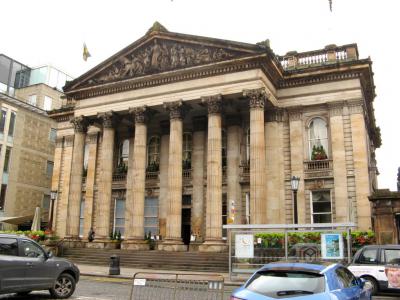
8) The Dome
The Dome is a historic building located on George Street in the New Town area. It is categorized as a Grade A listed building and currently serves as a combination of a bar, restaurant, and nightclub, managed by the Caledonian Heritable group. This structure was originally constructed in 1847 to serve as the headquarters for the Commercial Bank of Scotland, and it was designed by the architect David Rhind in a Graeco-Roman architectural style.
Interestingly, The Dome is situated on the site where the old Physicians' Hall used to stand. The Physicians' Hall was the offices of the Royal College of Physicians of Edinburgh and was built in the 18th century according to the design by architect James Craig, who was also the planner of the New Town. When The Dome was built, parts of the frontage of the Physicians' Hall were incorporated into the new structure, including the impressive Corinthian columns.
During the time of its construction, The Dome represented a significant architectural shift in Scotland, reflecting the emergence of capitalism. David Rhind, the architect, drew inspiration from ancient Greek society to capture the ideology of the era in his design for the Commercial Bank building. Rhind emphasized both societal values and aesthetics. In April 1847, The Scotsman newspaper praised the building for its "rich and massive architecture" and "gorgeous" interior decoration.
One notable architectural feature of The Dome is its use of natural light, thanks to the inclusion of a glass dome. The building also maximizes space with a spacious central lobby. While George Street boasts several Greek Revival-style buildings today, The Dome stands out due to its striking pediment and its long and storied history.
Interestingly, The Dome is situated on the site where the old Physicians' Hall used to stand. The Physicians' Hall was the offices of the Royal College of Physicians of Edinburgh and was built in the 18th century according to the design by architect James Craig, who was also the planner of the New Town. When The Dome was built, parts of the frontage of the Physicians' Hall were incorporated into the new structure, including the impressive Corinthian columns.
During the time of its construction, The Dome represented a significant architectural shift in Scotland, reflecting the emergence of capitalism. David Rhind, the architect, drew inspiration from ancient Greek society to capture the ideology of the era in his design for the Commercial Bank building. Rhind emphasized both societal values and aesthetics. In April 1847, The Scotsman newspaper praised the building for its "rich and massive architecture" and "gorgeous" interior decoration.
One notable architectural feature of The Dome is its use of natural light, thanks to the inclusion of a glass dome. The building also maximizes space with a spacious central lobby. While George Street boasts several Greek Revival-style buildings today, The Dome stands out due to its striking pediment and its long and storied history.
9) Scottish National Portrait Gallery (must see)
The Scottish National Portrait Gallery is a wonderful place to spend an afternoon. It holds the most important collection of portraits of Scottish personalities in the UK, and is also home to the Scottish National Photo Collection.
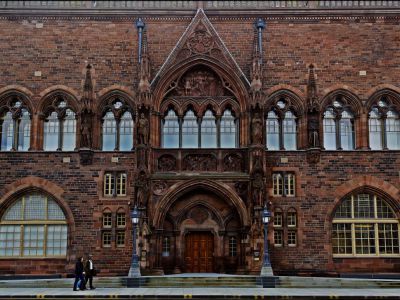
The gallery is housed in a Gothic Revival edifice, commissioned by the owner of The Scotsman newspaper, John Ritchie Findlay, and was built in 1890 from red sandstone, being the first building in the world constructed especially for the purpose of being a portrait gallery. It was renovated in 2009 and reopened in 2011.
Here, you will find over 3,000 paintings and sculptures, 25,000 drawings and prints, and over 38,000 photos. The collection begins in the Renaissance period and features the clergy, notable nobles and royalty. The oldest portrait on display is that of James IV of Scotland, painted in 1507.
There are two portraits of Mary, Queen of Scots, but they were painted from memory after her death in 1587. Several other paintings, representing scenes from her life, were executed in the 19th century.
The collection continues to the present day and contains portraits of Billy Connelly, the famous Scottish stand-up comedian, and Robbie Coltrane, the actor best known for his role of Hagrid in the Harry Potter films.
Why You Should Visit:
This baroque building's interior is just lovely and special.
Free admission, good café with a wide range of food, free wifi and toilets.
The well-curated portraits/photography collections give an excellent history of Scotland.
Tip:
Don't miss the lovely pebble mosaic in the charming adjacent courtyard (on the right when facing the gallery entrance).
The entrance hall is also very detailed – make sure you take a look at the ceiling.
The gallery is housed in a Gothic Revival edifice, commissioned by the owner of The Scotsman newspaper, John Ritchie Findlay, and was built in 1890 from red sandstone, being the first building in the world constructed especially for the purpose of being a portrait gallery. It was renovated in 2009 and reopened in 2011.
Here, you will find over 3,000 paintings and sculptures, 25,000 drawings and prints, and over 38,000 photos. The collection begins in the Renaissance period and features the clergy, notable nobles and royalty. The oldest portrait on display is that of James IV of Scotland, painted in 1507.
There are two portraits of Mary, Queen of Scots, but they were painted from memory after her death in 1587. Several other paintings, representing scenes from her life, were executed in the 19th century.
The collection continues to the present day and contains portraits of Billy Connelly, the famous Scottish stand-up comedian, and Robbie Coltrane, the actor best known for his role of Hagrid in the Harry Potter films.
Why You Should Visit:
This baroque building's interior is just lovely and special.
Free admission, good café with a wide range of food, free wifi and toilets.
The well-curated portraits/photography collections give an excellent history of Scotland.
Tip:
Don't miss the lovely pebble mosaic in the charming adjacent courtyard (on the right when facing the gallery entrance).
The entrance hall is also very detailed – make sure you take a look at the ceiling.
10) Scott Monument (must see)
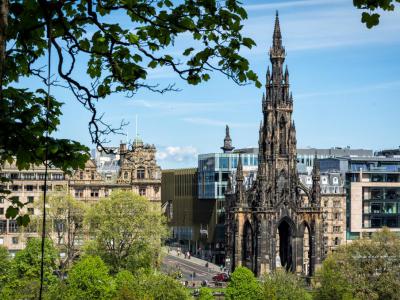
Sir Walter Scott-Scotland’s literary darling, national treasure, and master of the pen-was so loved by the country that they figured one statue for him wasn't enough. Instead, they built him a giant Gothic spire right in Princes Street Gardens-the Scott Monument. Because, indeed, what better way to honour a writer than with a stone rocket aimed at the heavens?
When Scott passed away in 1832, the city held a grand design competition for his monument. Out of the great many prestigious architects who entered, the winning design came from... a draughtsman with zero architectural credentials. George Meikle Kemp, feeling cheeky, submitted his entry under the pseudonym “John Morvo,” borrowing the name of a 15th-century stonemason to boost his street cred. And it worked.
Now, if you’re up for a challenge, you can tackle the 61-metre-tall monument that has several viewing platforms accessed by narrow winding stairways. The highest of them is only 287 steps away. Yes, 287. But rest assured-if your legs don’t give out en route to the top, you’ll be rewarded with sweeping city views and an actual certificate for surviving the climb. Bragging rights included.
The whole structure is made of Binny Sandstone, a material with a peculiar talent: it is so oily that it attracts dirt almost immediately. Just one year after its completion, the monument looked like it had been standing there for centuries. American writer Bill Bryson once lovingly described it as a “Gothic rocket-ship”-which, honestly, is spot-on.
Inside the base, you’ll find a marble statue of Sir Walter himself, complete with quill, paper, and his loyal dog Maida. Scattered across the monument are 64 statues of characters from his novels, plus a healthy dose of grotesques-those wonderfully creepy Gothic faces that the architect deliberately added to his design to make the monument look more “ancient” and moodier than it is.
For the ease of it, you can admire the monument casually from the safety of the grass. Otherwise, go full adventurer and climb for a 360-degree panoramic view-just don’t expect a lift-and note a fee attached to that.
Tip:
The staircase gets narrow and twisty, and yes, you’ll likely meet people coming down as you're going up. Not particularly recommended for the fainthearted... or the claustrophobic.
When Scott passed away in 1832, the city held a grand design competition for his monument. Out of the great many prestigious architects who entered, the winning design came from... a draughtsman with zero architectural credentials. George Meikle Kemp, feeling cheeky, submitted his entry under the pseudonym “John Morvo,” borrowing the name of a 15th-century stonemason to boost his street cred. And it worked.
Now, if you’re up for a challenge, you can tackle the 61-metre-tall monument that has several viewing platforms accessed by narrow winding stairways. The highest of them is only 287 steps away. Yes, 287. But rest assured-if your legs don’t give out en route to the top, you’ll be rewarded with sweeping city views and an actual certificate for surviving the climb. Bragging rights included.
The whole structure is made of Binny Sandstone, a material with a peculiar talent: it is so oily that it attracts dirt almost immediately. Just one year after its completion, the monument looked like it had been standing there for centuries. American writer Bill Bryson once lovingly described it as a “Gothic rocket-ship”-which, honestly, is spot-on.
Inside the base, you’ll find a marble statue of Sir Walter himself, complete with quill, paper, and his loyal dog Maida. Scattered across the monument are 64 statues of characters from his novels, plus a healthy dose of grotesques-those wonderfully creepy Gothic faces that the architect deliberately added to his design to make the monument look more “ancient” and moodier than it is.
For the ease of it, you can admire the monument casually from the safety of the grass. Otherwise, go full adventurer and climb for a 360-degree panoramic view-just don’t expect a lift-and note a fee attached to that.
Tip:
The staircase gets narrow and twisty, and yes, you’ll likely meet people coming down as you're going up. Not particularly recommended for the fainthearted... or the claustrophobic.
11) Calton Hill Observatory
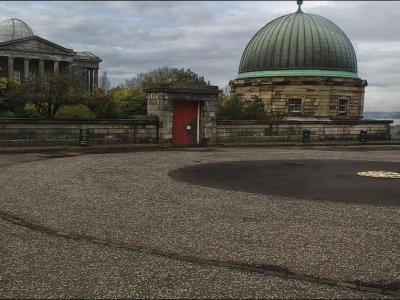
Sadly, closed to the public since 2009 for safety reasons, following vandalism and theft of the roofing materials, the Calton Hill Observatory is still worth the climb up the hill all the same, if only to see this remarkable building.
The idea of putting an observatory on top of the hill arose at the end of the 16th century when Thomas Short inherited a 12-foot reflecting telescope designed by his brother. The building was architected by James Craig and funded by the University of Edinburgh on the condition that the observatory would be used by its students. However, after the Gothic tower on the southwest corner of the site was completed, the money ran out and the land reverted to the city in 1807.
In 1812, the city council donated the land to the Edinburgh Astronomical Institute, and in 1818, the central building, which resembles a Greek temple, was erected, designed by William Henry Playfair. A 6-inch refractor telescope was installed in the central dome and a 6.4-inch transit telescope took its place in the eastern wing.
The building became the Royal Observatory in 1822, but due to the lack of funding, it was given back to the government in 1847. In 1888, the site of the Royal Observatory was moved to Blackford Hill and, for many years afterwards, the Calton Hill Observatory had been used by the Astronomical Society of Edinburgh before it was abandoned and left vacant.
During its lifetime, the site’s main purpose was to measure time. Astronomers used the transit of certain stars through the Meridian to keep the Observatory’s clock accurate for navigation purposes. For many decades, all the ships docking in the port of Edinburgh brought their chronometers here to be adjusted.
Why You Should Visit:
Offers excellent views of not only the bridge and the Kingdom of Fife, but also of Arthur's Seat.
There are oodles of grass for people to picnic, watch sunsets and to absorb the city from up high.
Right on top is the Collective Gallery, if you're interested in contemporary art.
Tip:
While a visit is free of charge and open to all, best bring some cash with you in case you want to pay a small fee to climb the lighthouse.
The idea of putting an observatory on top of the hill arose at the end of the 16th century when Thomas Short inherited a 12-foot reflecting telescope designed by his brother. The building was architected by James Craig and funded by the University of Edinburgh on the condition that the observatory would be used by its students. However, after the Gothic tower on the southwest corner of the site was completed, the money ran out and the land reverted to the city in 1807.
In 1812, the city council donated the land to the Edinburgh Astronomical Institute, and in 1818, the central building, which resembles a Greek temple, was erected, designed by William Henry Playfair. A 6-inch refractor telescope was installed in the central dome and a 6.4-inch transit telescope took its place in the eastern wing.
The building became the Royal Observatory in 1822, but due to the lack of funding, it was given back to the government in 1847. In 1888, the site of the Royal Observatory was moved to Blackford Hill and, for many years afterwards, the Calton Hill Observatory had been used by the Astronomical Society of Edinburgh before it was abandoned and left vacant.
During its lifetime, the site’s main purpose was to measure time. Astronomers used the transit of certain stars through the Meridian to keep the Observatory’s clock accurate for navigation purposes. For many decades, all the ships docking in the port of Edinburgh brought their chronometers here to be adjusted.
Why You Should Visit:
Offers excellent views of not only the bridge and the Kingdom of Fife, but also of Arthur's Seat.
There are oodles of grass for people to picnic, watch sunsets and to absorb the city from up high.
Right on top is the Collective Gallery, if you're interested in contemporary art.
Tip:
While a visit is free of charge and open to all, best bring some cash with you in case you want to pay a small fee to climb the lighthouse.
12) Calton Hill (must see)
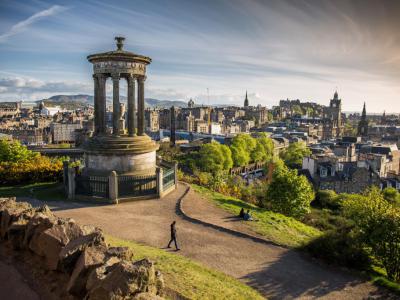
Calton Hill, located in the heart of Edinburgh, extends beyond the eastern terminus of Princes Street and is part of the city's UNESCO World Heritage Site. It is a popular subject for photography and art, both offering scenic vistas of the city and being featured in various depictions of it.
The Scottish Government has its headquarters on Calton Hill, specifically at Saint Andrew's House, situated on the steep southern slope of the hill. Nearby, at the base of the hill, you'll find significant landmarks like the Scottish Parliament Building and Holyrood Palace. Additionally, Calton Hill boasts several iconic monuments and structures, including the National Monument, the Nelson Monument, the Dugald Stewart Monument, the old Royal High School, the Robert Burns Monument, the Political Martyrs' Monument, and the City Observatory.
Calton Hill hosts various events throughout the year, with the most significant being the Beltane Fire Festival occurring annually on April 30th, drawing a crowd of over 12,000 attendees. Additionally, the Dussehra Hindu Festival is celebrated on Calton Hill at the beginning of October, and the Samhuinn Fire Festival takes place there at the end of October. Notably, Calton Hill has served as a filming location for movies like "Sunshine on Leith," where Davy and Yvonne perform "Misty Blue," "Death Defying Acts" featuring Houdini, and "Greyfriars Bobby," offering scenic views of the city.
The Scottish Government has its headquarters on Calton Hill, specifically at Saint Andrew's House, situated on the steep southern slope of the hill. Nearby, at the base of the hill, you'll find significant landmarks like the Scottish Parliament Building and Holyrood Palace. Additionally, Calton Hill boasts several iconic monuments and structures, including the National Monument, the Nelson Monument, the Dugald Stewart Monument, the old Royal High School, the Robert Burns Monument, the Political Martyrs' Monument, and the City Observatory.
Calton Hill hosts various events throughout the year, with the most significant being the Beltane Fire Festival occurring annually on April 30th, drawing a crowd of over 12,000 attendees. Additionally, the Dussehra Hindu Festival is celebrated on Calton Hill at the beginning of October, and the Samhuinn Fire Festival takes place there at the end of October. Notably, Calton Hill has served as a filming location for movies like "Sunshine on Leith," where Davy and Yvonne perform "Misty Blue," "Death Defying Acts" featuring Houdini, and "Greyfriars Bobby," offering scenic views of the city.
13) Royal Yacht Britannia (must see)
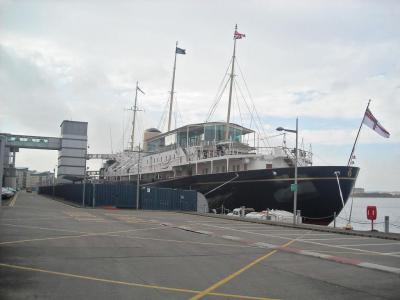
HMY Britannia, also known as Her Majesty's Yacht Britannia, served as the official royal yacht for the British monarchy. This majestic vessel was active in royal service from 1954 to 1997. It holds the distinction of being the 83rd yacht of its kind since King Charles II's reign in 1660 and is the second yacht with the same name, the first being a racing cutter constructed for the Prince of Wales back in 1893.
Over its impressive 43-year career, Britannia covered more than a million nautical miles, visiting over 600 ports in 135 different countries across the globe. Now retired from its royal duties, Britannia is permanently docked at Ocean Terminal in Leith, Edinburgh, Scotland, where it has become a popular tourist attraction, drawing in more than 300,000 visitors each year.
The construction of HMY Britannia took place at the shipyard of John Brown & Company in Clydebank, Dunbartonshire. Queen Elizabeth II performed the launch ceremony on April 16, 1953, and the yacht was officially commissioned on January 11, 1954. The yacht was specially designed with three masts: a 133-foot foremast, a 139-foot mainmast, and a 118-foot mizzenmast. Interestingly, the top aerial on the foremast and the top 20 feet of the mainmast were hinged, allowing the ship to pass under bridges when necessary.
One notable feature of Britannia's design was its adaptability for use as a hospital ship during wartime, although this capability was never put into action. In the event of a nuclear war, the vessel was intended to serve as a refuge for Queen Elizabeth II and Prince Philip, Duke of Edinburgh, off the north-west coast of Scotland.
The crew of Britannia included Royal Navy officers with appointments lasting up to two years. The remainder of the crew were volunteers from the Royal Navy's general service. After serving for 365 days, they had the option to join the Permanent Royal Yacht Service as Royal Yachtsmen, and they could continue to serve until they chose to leave or were discharged due to medical or disciplinary reasons. Consequently, some crew members dedicated more than 20 years to their service on the yacht.
Over its impressive 43-year career, Britannia covered more than a million nautical miles, visiting over 600 ports in 135 different countries across the globe. Now retired from its royal duties, Britannia is permanently docked at Ocean Terminal in Leith, Edinburgh, Scotland, where it has become a popular tourist attraction, drawing in more than 300,000 visitors each year.
The construction of HMY Britannia took place at the shipyard of John Brown & Company in Clydebank, Dunbartonshire. Queen Elizabeth II performed the launch ceremony on April 16, 1953, and the yacht was officially commissioned on January 11, 1954. The yacht was specially designed with three masts: a 133-foot foremast, a 139-foot mainmast, and a 118-foot mizzenmast. Interestingly, the top aerial on the foremast and the top 20 feet of the mainmast were hinged, allowing the ship to pass under bridges when necessary.
One notable feature of Britannia's design was its adaptability for use as a hospital ship during wartime, although this capability was never put into action. In the event of a nuclear war, the vessel was intended to serve as a refuge for Queen Elizabeth II and Prince Philip, Duke of Edinburgh, off the north-west coast of Scotland.
The crew of Britannia included Royal Navy officers with appointments lasting up to two years. The remainder of the crew were volunteers from the Royal Navy's general service. After serving for 365 days, they had the option to join the Permanent Royal Yacht Service as Royal Yachtsmen, and they could continue to serve until they chose to leave or were discharged due to medical or disciplinary reasons. Consequently, some crew members dedicated more than 20 years to their service on the yacht.
14) Royal Botanic Garden (must see)
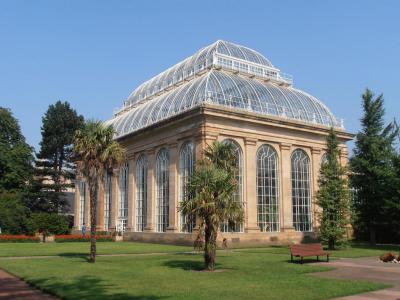
The Royal Botanic Garden Edinburgh (RBGE) has a dual role as a scientific hub and a popular tourist spot. Established in 1670 with the purpose of cultivating medicinal plants, it has expanded to encompass four locations in Scotland: Edinburgh, Dawyck, Logan, and Benmore, each specializing in its unique plant collection. RBGE boasts an impressive living collection comprising more than 13,302 plant species (equivalent to 34,422 individual plants), while its herbarium houses over 3 million preserved plant specimens.
Functioning as an executive non-departmental public entity under the Scottish Government, RBGE's primary site in Edinburgh serves as its main garden and administrative center, led by Regius Keeper Simon Milne.
The institution actively engages in and coordinates various conservation projects, both within the United Kingdom and internationally. The core scientific areas of focus at RBGE revolve around Scottish Biodiversity, Plants & Climate Change, and Conservation.
In addition to its scientific endeavors, RBGE remains a beloved destination for tourists and locals alike, affectionately known as "The Botanics" by locals. It's a popular spot for leisurely walks, especially among families with children. Admission to the botanic garden is generally free, though a small fee may be required to access the glasshouses. Throughout the year, the garden hosts numerous events, including live performances, guided tours, and exhibitions. Furthermore, RBGE plays a significant role in education, offering courses at various levels.
The Botanics in Edinburgh, along with its three smaller satellite gardens (referred to as Regional Gardens) in other parts of Scotland, collectively cultivate nearly 273,000 individual plants. This impressive collection represents approximately 13,300 plant species from various regions around the world, accounting for roughly 4% of all known plant species.
Functioning as an executive non-departmental public entity under the Scottish Government, RBGE's primary site in Edinburgh serves as its main garden and administrative center, led by Regius Keeper Simon Milne.
The institution actively engages in and coordinates various conservation projects, both within the United Kingdom and internationally. The core scientific areas of focus at RBGE revolve around Scottish Biodiversity, Plants & Climate Change, and Conservation.
In addition to its scientific endeavors, RBGE remains a beloved destination for tourists and locals alike, affectionately known as "The Botanics" by locals. It's a popular spot for leisurely walks, especially among families with children. Admission to the botanic garden is generally free, though a small fee may be required to access the glasshouses. Throughout the year, the garden hosts numerous events, including live performances, guided tours, and exhibitions. Furthermore, RBGE plays a significant role in education, offering courses at various levels.
The Botanics in Edinburgh, along with its three smaller satellite gardens (referred to as Regional Gardens) in other parts of Scotland, collectively cultivate nearly 273,000 individual plants. This impressive collection represents approximately 13,300 plant species from various regions around the world, accounting for roughly 4% of all known plant species.

15) Edinburgh Zoo (must see)
Edinburgh Zoo was formerly named the Scottish National Zoological Park. It is a non-profit zoological park located in the Corstorphine area of Edinburgh, covering an area of 82 acres (33 hectares). Situated on the south-facing slopes of Corstorphine Hill, the zoo offers extensive panoramic views of the city. Established back in 1913 and currently owned by the Royal Zoological Society of Scotland, it attracts more than 600,000 visitors annually, making it one of Scotland's most popular paid tourist attractions.
In addition to serving tourists and the local community, Edinburgh Zoo actively engages in various scientific endeavors. These include efforts such as breeding endangered animals in captivity, conducting research on animal behavior, and participating in conservation programs across the globe. Notably, Edinburgh Zoo holds the distinction of being the first zoo worldwide to successfully house and breed penguins. Moreover, it is the sole zoo in Britain to host Queensland koalas and giant pandas.
Edinburgh Zoo houses more than 1,000 rare and captivating animals from various corners of the globe. It is also the exclusive residence of giant pandas and koalas in the United Kingdom. Visitors can have an up-close experience with monkeys, lemurs, wallabies, and pelicans in immersive walkthrough habitats or during daily animal-handling sessions. Witness the awe-inspiring sight of a Sumatran tiger walking directly above you in Tiger Tracks, thanks to the remarkable glass viewing tunnel. If you have a preference for smaller creatures, you'll be delighted by Wee Beasties, where you can discover reptiles, amphibians, and insects.
In addition to serving tourists and the local community, Edinburgh Zoo actively engages in various scientific endeavors. These include efforts such as breeding endangered animals in captivity, conducting research on animal behavior, and participating in conservation programs across the globe. Notably, Edinburgh Zoo holds the distinction of being the first zoo worldwide to successfully house and breed penguins. Moreover, it is the sole zoo in Britain to host Queensland koalas and giant pandas.
Edinburgh Zoo houses more than 1,000 rare and captivating animals from various corners of the globe. It is also the exclusive residence of giant pandas and koalas in the United Kingdom. Visitors can have an up-close experience with monkeys, lemurs, wallabies, and pelicans in immersive walkthrough habitats or during daily animal-handling sessions. Witness the awe-inspiring sight of a Sumatran tiger walking directly above you in Tiger Tracks, thanks to the remarkable glass viewing tunnel. If you have a preference for smaller creatures, you'll be delighted by Wee Beasties, where you can discover reptiles, amphibians, and insects.
