Custom Walk in Tallinn, Estonia by carrollheather3_e3792 created on 2025-10-09
Guide Location: Estonia » Tallinn
Guide Type: Custom Walk
# of Sights: 14
Tour Duration: 3 Hour(s)
Travel Distance: 5.3 Km or 3.3 Miles
Share Key: 3J2FQ
Guide Type: Custom Walk
# of Sights: 14
Tour Duration: 3 Hour(s)
Travel Distance: 5.3 Km or 3.3 Miles
Share Key: 3J2FQ
How It Works
Please retrieve this walk in the GPSmyCity app. Once done, the app will guide you from one tour stop to the next as if you had a personal tour guide. If you created the walk on this website or come to the page via a link, please follow the instructions below to retrieve the walk in the app.
Retrieve This Walk in App
Step 1. Download the app "GPSmyCity: Walks in 1K+ Cities" on Apple App Store or Google Play Store.



Step 2. In the GPSmyCity app, download(or launch) the guide "Tallinn Map and Walking Tours".
Step 3. Tap the menu button located at upper right corner of the "Walks" screen and select "Retrieve custom walk". Enter the share key: 3J2FQ
1) St. Olav's Church (Oleviste Kirik) (must see)
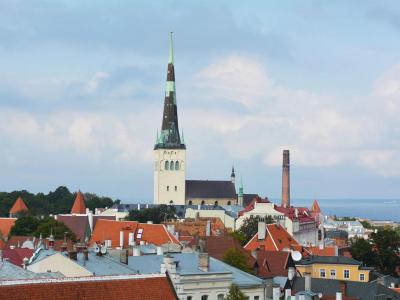
Saint Olav’s Church is one of the oldest churches in the city of Tallinn. It was built during the 1100s, and has been the center for religious life for the Scandinavian community of the city since then. Many people that attend here can trace their heritage back to when Denmark conquered Tallinn in 1219. The church is dedicated to King Olaf II of Norway though. The oldest surviving records that refer to the church are from 1267.
There is an old legend that the builder of the church, who was also named Olaf, fell to his death from the towers of the church. It adds mystery to this place. There is a painting depicting the event in the Chapel.
Sadly, the building was damaged during the 1300s, and had to be heavily rebuilt. In the 1500s, the tower of the chapel was raised to 159 meters in the air. It has been struck by lightning many times, but the tower really has a utilitarian function: it is a seaside landmark for naval vessels. From 1549 until 1625, before the tower was burned from a lightning strike, it was the tallest structure in the known world.
During the Soviet era, the KGB used the church’s spire as a radio tower and surveillance point. Today the building now houses a Baptist church.
The tower's viewing platform offers tourists one of the best views of Tallinn, and is open to the public from April through November of each year.
There is an old legend that the builder of the church, who was also named Olaf, fell to his death from the towers of the church. It adds mystery to this place. There is a painting depicting the event in the Chapel.
Sadly, the building was damaged during the 1300s, and had to be heavily rebuilt. In the 1500s, the tower of the chapel was raised to 159 meters in the air. It has been struck by lightning many times, but the tower really has a utilitarian function: it is a seaside landmark for naval vessels. From 1549 until 1625, before the tower was burned from a lightning strike, it was the tallest structure in the known world.
During the Soviet era, the KGB used the church’s spire as a radio tower and surveillance point. Today the building now houses a Baptist church.
The tower's viewing platform offers tourists one of the best views of Tallinn, and is open to the public from April through November of each year.
2) Nunna, Sauna and Kuldjala Towers (Town Wall) (must see)
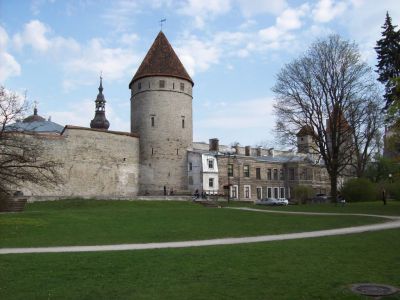
The Nunna, Sauna, and Kuldjala Towers are three of the remaining 26 towers that surround the Old Town of Tallinn. In the late 14th century, a massive project was started to build a fortified wall around the city to protect against invaders. By the 16th Century, the walls were raised to sixteen meters high with a thickness of 3 to 4 meters. This made it possible to defend against canon fire. During the 16th century, Tallinn was one of the most fortified cities in the entire world. The wall stretched 4 kilometers around old Tallinn.
These three towers are among the few that are still open to the general public. Visitors can come and walk through all three. In addition, there are some connection paths that are adjacent to the historic standing walls. It gives you a real sense of what the old town was like. Climbing the towers also gives you a great view of the city. You can imagine what it was like to be a guard on the towers. Admission is free.
These three towers are among the few that are still open to the general public. Visitors can come and walk through all three. In addition, there are some connection paths that are adjacent to the historic standing walls. It gives you a real sense of what the old town was like. Climbing the towers also gives you a great view of the city. You can imagine what it was like to be a guard on the towers. Admission is free.
3) Tallinn Old Town
Tallinn Old Town, known as "Tallinna vanalinn" in Estonian, is the historical heart of Tallinn. Renowned for its well-preserved medieval and Hanseatic architecture, this area is a living testimony to the city's rich history. Spanning 113 hectares with a buffer zone of 2,253 hectares, the Old Town is characterized by its 13th-century city plan, which remains remarkably intact.
The Old Town has a history of prosperity and turmoil. Most buildings date back to the 13th-16th centuries, reflecting its medieval importance. However, WWII caused significant damage. Between 1941-1944, Soviet air raids, during the German occupation of Estonia, destroyed about 10% of Old Town buildings, leaving 20,000 homeless and many casualties.
Despite this turbulent history, Tallinn Old Town stands today as Northern Europe's best-preserved medieval city. Its Gothic spires, winding cobblestone streets, and enchanting architecture attract visitors worldwide. The area was once a hub for wealthy merchants from Germany, Denmark, and other regions. Now, it is a vibrant center with restaurants, bars, museums, and galleries, offering a blend of historical ambiance and modern vitality.
The Old Town's unique charm lies in its ability to maintain its medieval and Hanseatic structure completely. Recognized for its historical value and well-preserved state, it was inscribed as a UNESCO World Heritage Site in 1997. The city's layout includes original cobblestone streets lined with medieval churches, grand merchant houses, barns, and warehouses, many dating back to the Middle Ages.
Visitors to Tallinn Old Town often describe it as mystical, mesmerizing, and addictive. Spending a day wandering through its streets offers an immersive experience in an authentic medieval milieu, revealing why it holds such a special place in the annals of world heritage sites.
The Old Town has a history of prosperity and turmoil. Most buildings date back to the 13th-16th centuries, reflecting its medieval importance. However, WWII caused significant damage. Between 1941-1944, Soviet air raids, during the German occupation of Estonia, destroyed about 10% of Old Town buildings, leaving 20,000 homeless and many casualties.
Despite this turbulent history, Tallinn Old Town stands today as Northern Europe's best-preserved medieval city. Its Gothic spires, winding cobblestone streets, and enchanting architecture attract visitors worldwide. The area was once a hub for wealthy merchants from Germany, Denmark, and other regions. Now, it is a vibrant center with restaurants, bars, museums, and galleries, offering a blend of historical ambiance and modern vitality.
The Old Town's unique charm lies in its ability to maintain its medieval and Hanseatic structure completely. Recognized for its historical value and well-preserved state, it was inscribed as a UNESCO World Heritage Site in 1997. The city's layout includes original cobblestone streets lined with medieval churches, grand merchant houses, barns, and warehouses, many dating back to the Middle Ages.
Visitors to Tallinn Old Town often describe it as mystical, mesmerizing, and addictive. Spending a day wandering through its streets offers an immersive experience in an authentic medieval milieu, revealing why it holds such a special place in the annals of world heritage sites.
4) Alexander Nevsky Cathedral (must see)
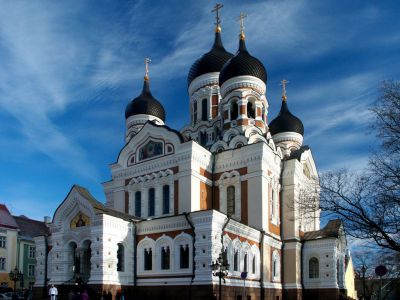
The Alexander Nevsky Cathedral is an orthodox cathedral in the Tallinn Old Town. It was built to a design by Mikhail Preobrazhensky in a typical Russian Revival style between 1894 and 1900, during the period when the country was part of the Russian Empire. The Alexander Nevsky Cathedral is Tallinn's largest and grandest orthodox cupola cathedral. It is dedicated to Saint Alexander Nevsky who in 1242 won the Battle of the Ice on Lake Peipus, in the territorial waters of present-day Estonia. The late Russian patriarch, Alexis II, started his priestly ministry in the church.
The Alexander Nevsky Cathedral crowns the Toompea Hill, the political center of Estonia. The cathedral was built during the period of late 19th century Russification and was so disliked by many Estonians as a symbol of oppression that the Estonian authorities scheduled the cathedral for demolition in 1924, but the decision was never implemented due to lack of funds and the building's massive construction. As the USSR was officially non-religious, many churches including this cathedral were left to decline. The church has been meticulously restored since Estonia regained independence from the Soviet Union in 1991.
The Alexander Nevsky Cathedral crowns the Toompea Hill, the political center of Estonia. The cathedral was built during the period of late 19th century Russification and was so disliked by many Estonians as a symbol of oppression that the Estonian authorities scheduled the cathedral for demolition in 1924, but the decision was never implemented due to lack of funds and the building's massive construction. As the USSR was officially non-religious, many churches including this cathedral were left to decline. The church has been meticulously restored since Estonia regained independence from the Soviet Union in 1991.
5) Danish King's Garden
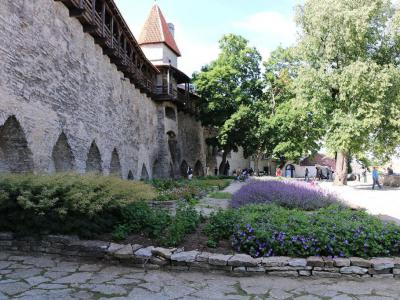
The Danish King's Garden, located in the heart of Tallinn's Old Town, is a historic and picturesque park with rich cultural and historical significance. This serene garden holds a special place in the hearts of both Danes and Estonians due to its association with the legendary origins of the Danish flag, Dannebrog.
Tradition holds that during a critical battle in the Danish invasion, a flag miraculously descended from the heavens, turning the tide in favor of Danish King Valdemar II. This miraculous event, believed to have occurred right in this garden, marked the birth of Dannebrog, which later became the national flag of Denmark. The garden's proximity to Toompea and its location on a slope overlooking Saint Nicholas Church adds to its historical ambiance.
The Danish King's Garden, named in honor of the Danish reign that lasted over a century in Tallinn and northern Estonia, primarily during the 13th century, is a testament to the deep historical connections between Denmark and Estonia. The sculpture "Tuli lipp" ('The Flag Descended') within the garden is a beautiful artistic representation of this legendary event.
Adding to the garden's charm is the sculpture of three monks, accompanied by a light installation and an informational board on the city wall. These elements not only enhance the garden's aesthetic appeal but also provide visitors with insights into the site's historical context.
Every year on June 15th, the garden becomes a center of celebration for Dannebrog Day, commemorating the Danish flag. This annual event is a vibrant reminder of the garden's historical significance and its role in the cultural heritage of both Denmark and Estonia.
Tradition holds that during a critical battle in the Danish invasion, a flag miraculously descended from the heavens, turning the tide in favor of Danish King Valdemar II. This miraculous event, believed to have occurred right in this garden, marked the birth of Dannebrog, which later became the national flag of Denmark. The garden's proximity to Toompea and its location on a slope overlooking Saint Nicholas Church adds to its historical ambiance.
The Danish King's Garden, named in honor of the Danish reign that lasted over a century in Tallinn and northern Estonia, primarily during the 13th century, is a testament to the deep historical connections between Denmark and Estonia. The sculpture "Tuli lipp" ('The Flag Descended') within the garden is a beautiful artistic representation of this legendary event.
Adding to the garden's charm is the sculpture of three monks, accompanied by a light installation and an informational board on the city wall. These elements not only enhance the garden's aesthetic appeal but also provide visitors with insights into the site's historical context.
Every year on June 15th, the garden becomes a center of celebration for Dannebrog Day, commemorating the Danish flag. This annual event is a vibrant reminder of the garden's historical significance and its role in the cultural heritage of both Denmark and Estonia.
6) Taani Kuninga ( Danish King's Garden)
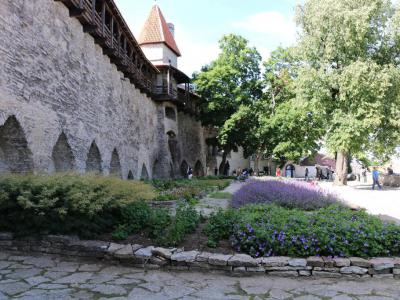
The Danish King's Garden, known as Taani Kuninga in Estonian, is a historically significant park located in the Old Town of Tallinn. This garden holds a special place in Estonian and Danish history, particularly for being the site where the Danish flag, Dannebrog, is traditionally believed to have originated.
Situated adjacent to Toompea and overlooking the Saint Nicholas Church, the garden is steeped in medieval history. It is famously associated with an old legend that dates back to the Danish invasion. According to this legend, during a critical battle, a flag mysteriously descended from the sky right at this location, leading to a pivotal victory for King Valdemar II of Denmark. This flag, which emerged under miraculous circumstances, later became the national flag of Denmark. The garden features a sculpture titled 'Tuli lipp' ('The Flag Descended') that commemorates this legendary event.
The Danish King's Garden's name is a nod to the Danish reign in Tallinn and northern Estonia, which lasted for over a hundred years, primarily during the 13th century. This period left a lasting impact on the region's history and culture, and the garden serves as a reminder of this significant era.
Another notable feature of the garden is the sculpture of three monks, accompanied by a light installation and an information board mounted on the city wall. These elements together create an intriguing and educational experience for visitors, offering insights into the garden's rich past and the broader historical context of Tallinn.
Moreover, the Danish King's Garden is the focal point of annual celebrations on the 15th of June, known as Dannebrog or the Day of the Danish Flag. This event commemorates the historical significance of the Dannebrog and its association with the garden, drawing visitors and locals alike to celebrate and remember the shared history between Denmark and Estonia.
Situated adjacent to Toompea and overlooking the Saint Nicholas Church, the garden is steeped in medieval history. It is famously associated with an old legend that dates back to the Danish invasion. According to this legend, during a critical battle, a flag mysteriously descended from the sky right at this location, leading to a pivotal victory for King Valdemar II of Denmark. This flag, which emerged under miraculous circumstances, later became the national flag of Denmark. The garden features a sculpture titled 'Tuli lipp' ('The Flag Descended') that commemorates this legendary event.
The Danish King's Garden's name is a nod to the Danish reign in Tallinn and northern Estonia, which lasted for over a hundred years, primarily during the 13th century. This period left a lasting impact on the region's history and culture, and the garden serves as a reminder of this significant era.
Another notable feature of the garden is the sculpture of three monks, accompanied by a light installation and an information board mounted on the city wall. These elements together create an intriguing and educational experience for visitors, offering insights into the garden's rich past and the broader historical context of Tallinn.
Moreover, the Danish King's Garden is the focal point of annual celebrations on the 15th of June, known as Dannebrog or the Day of the Danish Flag. This event commemorates the historical significance of the Dannebrog and its association with the garden, drawing visitors and locals alike to celebrate and remember the shared history between Denmark and Estonia.
7) Tallinna Raekoda (Tallinn Town Hall) (must see)
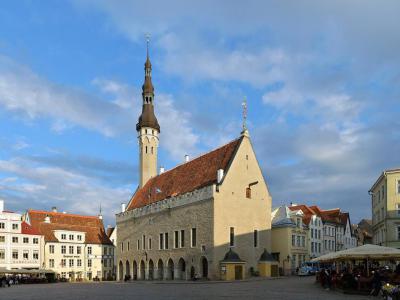
Tallinn Town Hall is the oldest and only preserved Gothic-style city hall in North Europe. In 2005, the Town Hall was awarded second prize for conservation of Architectural Heritage. Parts of the town hall date to the 13th century. The Town Hall was completed in 1404 and was the center of the town's government for almost 700 years, until 1970. Throughout the centuries, several additions, renovations, and architectural changes have been made.
Tallinn Town Hall was built with limestone. Traditional clay tiles adorn the exterior, which features a 64 meter (210 feet) tall spire that's visible from all over town. Gargoyles decorate the main facade. The Town Hall has an arcade formed with nine arcs and eight pillars. In inclement weather, merchants could gather under the shelter of the arcade. Criminals would be chained to one of the pillars so that townspeople could mock them.
The Town Hall's interior features attractive Gothic arches and works of art spanning the history of Tallinn. Benches were crafted in the 14th and 15th centuries. The largest hall in Town Hall is the Citizens Hall. It can hold up to 100 people and is often used for musical performances.
The Council Chamber features intricate wood carvings dating to 1375. Copies of 16th-century tapestries hang on interior walls. The original tapestries are on display in the Tallinn City Museum.
The Old Thomas weather vane is one of the town's most famous landmarks. The weather vane depicts a soldier who protects the city. Old Thomas was originally placed in 1530. Today, a copy stands on top of the town hall's spire, while the 1530 original is on display in the town hall's basement.
Tallinn regularly hosts concerts and receptions in this historic building. For a great view of the city, bring your camera and climb the tower.
Tallinn Town Hall was built with limestone. Traditional clay tiles adorn the exterior, which features a 64 meter (210 feet) tall spire that's visible from all over town. Gargoyles decorate the main facade. The Town Hall has an arcade formed with nine arcs and eight pillars. In inclement weather, merchants could gather under the shelter of the arcade. Criminals would be chained to one of the pillars so that townspeople could mock them.
The Town Hall's interior features attractive Gothic arches and works of art spanning the history of Tallinn. Benches were crafted in the 14th and 15th centuries. The largest hall in Town Hall is the Citizens Hall. It can hold up to 100 people and is often used for musical performances.
The Council Chamber features intricate wood carvings dating to 1375. Copies of 16th-century tapestries hang on interior walls. The original tapestries are on display in the Tallinn City Museum.
The Old Thomas weather vane is one of the town's most famous landmarks. The weather vane depicts a soldier who protects the city. Old Thomas was originally placed in 1530. Today, a copy stands on top of the town hall's spire, while the 1530 original is on display in the town hall's basement.
Tallinn regularly hosts concerts and receptions in this historic building. For a great view of the city, bring your camera and climb the tower.
8) Raekoja Plats (Town Hall Square) (must see)
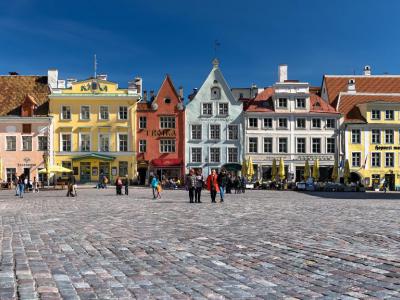
Town Hall Square is a fabulous location to soak up the long and storied history of Tallinn. It's in the center of the Old Town. Markets began opening on this site in the 11th century. Tallinn Town Hall is located in this square. Completed in 1404, it's the oldest Town Hall in Northern Europe.
Other historical buildings surround the square. There is the oldest pharmacy in Europe; it was established in approximately 1415. The pharmacy has a small museum with ancient medical instruments and medicines. The rest of the buildings are painted in attractive pastel colors and were built between the 15th and 17th centuries. Cobblestones throughout the square complete the old-world charm.
In the center of the square, visitors will find a circular stone with a compass rose. The L-shaped stone near the center of the square marks the site where a priest was executed. The priest killed a waitress who had served an overcooked omelet.
During the summer, the square is filled with open-air cafés. Enjoy alfresco dining and people-watching. There are regular outdoor markets held in Town Hall Square. Stalls feature souvenirs and traditional Estonian items.
You will find varied festivals and concerts throughout the year. Tallinn Old Town Days is a week-long festival that takes place at the beginning of summer. During this popular festival, visitors and locals are treated to exhibitions, theater plays, concerts, fairs, and non-stop entertainment.
In winter, the square becomes a winter wonderland with holiday decorations and a massive decorated fir tree. The Brotherhood of the Blackheads first erected a Christmas tree in the square in 1422. This is thought to be the world's first Christmas tree. Visitors can also enjoy a spirited Christmas market.
Why You Should Visit:
Town Hall Square is the oldest town square in Northern Europe and has been the center of Tallinn for eight centuries. Visit historic buildings and enjoy the old-world ambiance. There's no better place to get the feel of the town and nation than Town Hall Square.
Tips:
This square is incredibly festive over the winter holidays. Have a hot toddy, enjoy the holiday lights, shop for gifts, and admire the Christmas tree.
Other historical buildings surround the square. There is the oldest pharmacy in Europe; it was established in approximately 1415. The pharmacy has a small museum with ancient medical instruments and medicines. The rest of the buildings are painted in attractive pastel colors and were built between the 15th and 17th centuries. Cobblestones throughout the square complete the old-world charm.
In the center of the square, visitors will find a circular stone with a compass rose. The L-shaped stone near the center of the square marks the site where a priest was executed. The priest killed a waitress who had served an overcooked omelet.
During the summer, the square is filled with open-air cafés. Enjoy alfresco dining and people-watching. There are regular outdoor markets held in Town Hall Square. Stalls feature souvenirs and traditional Estonian items.
You will find varied festivals and concerts throughout the year. Tallinn Old Town Days is a week-long festival that takes place at the beginning of summer. During this popular festival, visitors and locals are treated to exhibitions, theater plays, concerts, fairs, and non-stop entertainment.
In winter, the square becomes a winter wonderland with holiday decorations and a massive decorated fir tree. The Brotherhood of the Blackheads first erected a Christmas tree in the square in 1422. This is thought to be the world's first Christmas tree. Visitors can also enjoy a spirited Christmas market.
Why You Should Visit:
Town Hall Square is the oldest town square in Northern Europe and has been the center of Tallinn for eight centuries. Visit historic buildings and enjoy the old-world ambiance. There's no better place to get the feel of the town and nation than Town Hall Square.
Tips:
This square is incredibly festive over the winter holidays. Have a hot toddy, enjoy the holiday lights, shop for gifts, and admire the Christmas tree.
9) Masters’ Courtyard
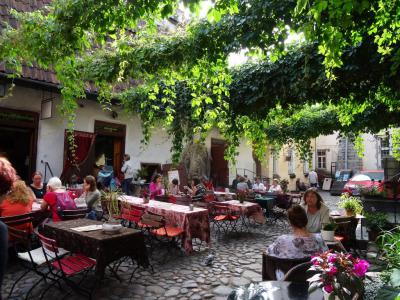
Masters' Courtyard in Tallinn stands out as a distinctive artisan quarter, featuring more than 10 diverse shops run by local craftsmen and artisans, along with a guesthouse and a chocolate shop.
Situated at the heart of Tallinn's historic old town, this property has a rich history dating back to 1371, having changed ownership and purposes numerous times over the past seven centuries. In 1993, the Master's Courtyard Non-profit Organization was established with the primary goal of restoring and revitalizing this property, which had suffered significant deterioration. Their vision was to transform it into an artisan hub comprising workshops, galleries, and exhibition spaces.
Today, Masters' Courtyard has gained recognition as a popular attraction for both residents and tourists alike. There are 11 distinct shops that exclusively offer products created by local artisans and artists. Some of these shops allow visitors to witness the crafting techniques and even place orders for customized items. On the courtyard's premises, you'll also find the cozy Guesthouse "Villa Hortensia," featuring six rooms equipped with kitchenettes and private bathrooms.
Additionally, there's a well-regarded chocolaterie named Chocolaterie Pierre, renowned for its handcrafted truffles, cakes, and an array of excellent coffee offerings. As you explore the various buildings within the courtyard, you'll soak in the historical ambiance, and during sunny summer evenings, you can enjoy live music in the garden.
Situated at the heart of Tallinn's historic old town, this property has a rich history dating back to 1371, having changed ownership and purposes numerous times over the past seven centuries. In 1993, the Master's Courtyard Non-profit Organization was established with the primary goal of restoring and revitalizing this property, which had suffered significant deterioration. Their vision was to transform it into an artisan hub comprising workshops, galleries, and exhibition spaces.
Today, Masters' Courtyard has gained recognition as a popular attraction for both residents and tourists alike. There are 11 distinct shops that exclusively offer products created by local artisans and artists. Some of these shops allow visitors to witness the crafting techniques and even place orders for customized items. On the courtyard's premises, you'll also find the cozy Guesthouse "Villa Hortensia," featuring six rooms equipped with kitchenettes and private bathrooms.
Additionally, there's a well-regarded chocolaterie named Chocolaterie Pierre, renowned for its handcrafted truffles, cakes, and an array of excellent coffee offerings. As you explore the various buildings within the courtyard, you'll soak in the historical ambiance, and during sunny summer evenings, you can enjoy live music in the garden.
10) St. Catherine’s Passage (Katariina Käik) (must see)
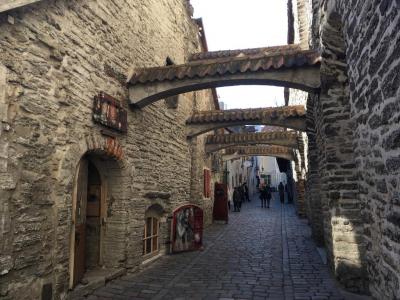
If you want to get a chance to really glimpse what life was like in the Old Town of Tallinn, you will want to visit Saint Catherine’s Passage. It is located just a short distance from the Town Hall.
The old passage connects Vene and Muurivahe Streets in town. On the northern end of the passage you will find the remnants of Saint Catherine’s Dominican Monastery Church, which is one of the oldest church in the city. In fact, the passage derives its name from the church. Many people like checking out the old tombstones that are an integral part of the sanctuary there. Many famous Estonians are buried at Saint Catherine’s cemetery.
The southern end of the passage will take you past some of the best artisan shops in Tallinn. You can watch the artists at work. It’s one of the best places to get a memento of your visit to Tallinn. The whole passage is a nice morning’s hike for the exercise alone. If you want to stop for a moment, you will want to get a cup of coffee at one of the quaint little cafes that are scattered down the passage.
The old passage connects Vene and Muurivahe Streets in town. On the northern end of the passage you will find the remnants of Saint Catherine’s Dominican Monastery Church, which is one of the oldest church in the city. In fact, the passage derives its name from the church. Many people like checking out the old tombstones that are an integral part of the sanctuary there. Many famous Estonians are buried at Saint Catherine’s cemetery.
The southern end of the passage will take you past some of the best artisan shops in Tallinn. You can watch the artists at work. It’s one of the best places to get a memento of your visit to Tallinn. The whole passage is a nice morning’s hike for the exercise alone. If you want to stop for a moment, you will want to get a cup of coffee at one of the quaint little cafes that are scattered down the passage.
11) St. Nicholas' Orthodox Church
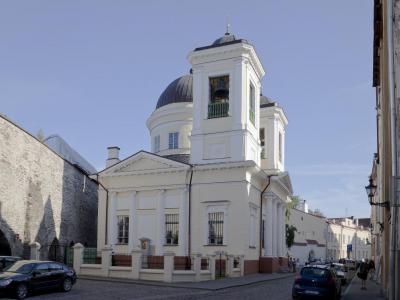
Saint Nicholas Church stands as a historic former church situated in Tallinn. It was originally devoted to Saint Nicholas, revered as the patron saint of fishermen and sailors. This architectural gem, dating back to the 13th century, endured partial destruction during the Soviet bombing of Tallinn in World War II. Subsequently, concerted efforts were made to restore it, and today, it serves as the home to the Niguliste Museum, a branch under the umbrella of the Art Museum of Estonia. The museum's primary focus is on ecclesiastical art spanning from the Middle Ages onwards.
The church's origins trace back to the years 1230 to 1275 when it was founded and constructed by Westphalian merchants who arrived from Gotland in the 13th century. At the time, Tallinn lacked fortifications, prompting the church to incorporate heavy bars to secure entrances, as well as openings and concealed areas for sheltering refugees. However, as Tallinn's fortifications were completed in the 14th century, with the town wall encompassing the church and settlement in 1310, Saint Nicholas Church relinquished its defensive role and transformed into a typical medieval parish church.
Between 1405 and 1420, the church underwent alterations, resulting in its present-day appearance. The central aisle was elevated to include a clerestory above the side aisles, adopting the architectural style known as a basilica. In 1515, the tower was extended in height and crowned with a late-Gothic spire. During the late 17th century, efforts were made to fortify and reinforce the tower. The original spire was replaced with a Baroque spire featuring airy galleries, which was gradually heightened over the course of several centuries. Presently, the tower stands at an impressive height of 105 meters (344.5 feet).
Remarkably, Saint Nicholas Church retained its original character amidst the iconoclastic fervor brought about by the Protestant Reformation in 1523. The church's congregation took measures to protect it by sealing its locks with molten lead, thwarting the efforts of those seeking to deface or damage it.
The church's origins trace back to the years 1230 to 1275 when it was founded and constructed by Westphalian merchants who arrived from Gotland in the 13th century. At the time, Tallinn lacked fortifications, prompting the church to incorporate heavy bars to secure entrances, as well as openings and concealed areas for sheltering refugees. However, as Tallinn's fortifications were completed in the 14th century, with the town wall encompassing the church and settlement in 1310, Saint Nicholas Church relinquished its defensive role and transformed into a typical medieval parish church.
Between 1405 and 1420, the church underwent alterations, resulting in its present-day appearance. The central aisle was elevated to include a clerestory above the side aisles, adopting the architectural style known as a basilica. In 1515, the tower was extended in height and crowned with a late-Gothic spire. During the late 17th century, efforts were made to fortify and reinforce the tower. The original spire was replaced with a Baroque spire featuring airy galleries, which was gradually heightened over the course of several centuries. Presently, the tower stands at an impressive height of 105 meters (344.5 feet).
Remarkably, Saint Nicholas Church retained its original character amidst the iconoclastic fervor brought about by the Protestant Reformation in 1523. The church's congregation took measures to protect it by sealing its locks with molten lead, thwarting the efforts of those seeking to deface or damage it.
12) Viru Gate (Viru Värav)
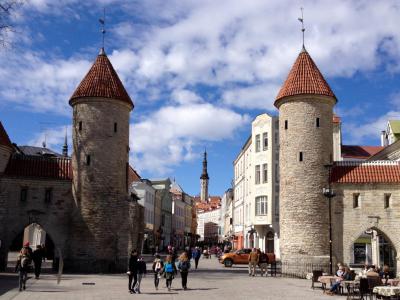
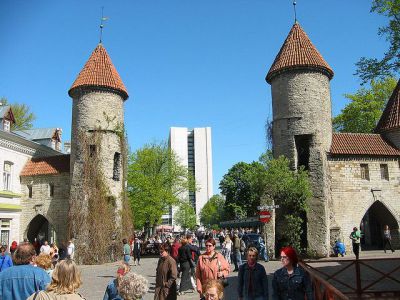
At one point in time, there were a total of 45 towers built into the walls that protected Tallinn. Twenty-six of those still remain. Two of the best preserved of the bunch are called Viru Gate. The gate dates from the 14th Century, as do most of the towers, and sits at the entrance way into the Old Town.
Today the two towers are quite lovely, having been covered in ivy over the years. It gives a gentle look to Viru Street. When you first enter the Old Town through the gate, it makes you feel as though you have stepped back in time.
The towers used to be the fore gates to the city, and a larger set was built a little further in, which were held up by a set of square towers. Most of the gate was pulled down in 1880, in order to make room for more street traffic. Since that time, though, the two towers have become a symbol for the Tallinn Old Town, which used to be the most fortified city in all of Europe back in the day.
Today the two towers are quite lovely, having been covered in ivy over the years. It gives a gentle look to Viru Street. When you first enter the Old Town through the gate, it makes you feel as though you have stepped back in time.
The towers used to be the fore gates to the city, and a larger set was built a little further in, which were held up by a set of square towers. Most of the gate was pulled down in 1880, in order to make room for more street traffic. Since that time, though, the two towers have become a symbol for the Tallinn Old Town, which used to be the most fortified city in all of Europe back in the day.
13) KGB Museum
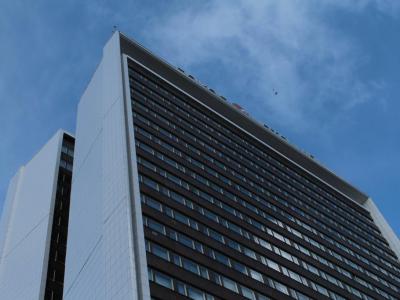
The KGB Museum in Tallinn offers a fascinating glimpse into the complex and often secretive history of the Soviet era, particularly focusing on the intriguing story of the Viru Hotel. Built in 1972, the luxurious Viru Hotel was a symbol of Soviet prestige, intended for foreign guests. It was also a hub of covert operations by the Soviet state security organs, the KGB.
A distinctive feature of the hotel was its top floor, which was off-limits to the public and shrouded in mystery. Soviet managers claimed this floor housed only technical rooms. However, with the collapse of the Soviet Union and the KGB's hasty departure in the early 1990s, the true nature of these rooms was revealed. They were found to contain sophisticated, almost cinematic, listening devices reminiscent of James Bond movies, used for surveillance and espionage.
The museum, located on the 23rd floor of the Hotel Viru, has been preserved exactly as the KGB left it. This includes the infamous "technical rooms," now ironically marked with signs saying “There’s nothing here” in English and Estonian, echoing the dismissive official responses of the Soviet era.
The guided tours at the KGB Museum are not just about showcasing the remnants of surveillance technology. They delve into the peculiarities of life under Soviet rule, covering aspects such as espionage, sex work, and even the culinary aspects of the occupation era. The museum serves as a treasury of stories contrasting the idealized Soviet propaganda – portraying a society of content citizens under wise leadership, free of accidents or disasters – with the harsher realities of everyday life in the Soviet Union.
A distinctive feature of the hotel was its top floor, which was off-limits to the public and shrouded in mystery. Soviet managers claimed this floor housed only technical rooms. However, with the collapse of the Soviet Union and the KGB's hasty departure in the early 1990s, the true nature of these rooms was revealed. They were found to contain sophisticated, almost cinematic, listening devices reminiscent of James Bond movies, used for surveillance and espionage.
The museum, located on the 23rd floor of the Hotel Viru, has been preserved exactly as the KGB left it. This includes the infamous "technical rooms," now ironically marked with signs saying “There’s nothing here” in English and Estonian, echoing the dismissive official responses of the Soviet era.
The guided tours at the KGB Museum are not just about showcasing the remnants of surveillance technology. They delve into the peculiarities of life under Soviet rule, covering aspects such as espionage, sex work, and even the culinary aspects of the occupation era. The museum serves as a treasury of stories contrasting the idealized Soviet propaganda – portraying a society of content citizens under wise leadership, free of accidents or disasters – with the harsher realities of everyday life in the Soviet Union.
14) Kadriorg Palace and Park (must see)
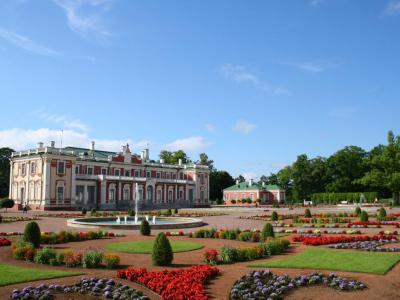
Kadriog Palace and Park has a long history in Tallinn. It was commissioned by Peter the Great after he successfully brought Estonia under his domain. The Palace was to be a sea-side home for himself and his wife, Catherine I of Russia. Building of the Palace was started in July of 1718. Niccolo Michetti, the Italian architect, designed this beautiful Baroque Palace.
Although only two stories tall, it is a very grand building. Unfortunately, Peter died before the building was completed. Catherine lost all interest in the palace after the death of her husband, and never visited it, even after the palace was completed. Parts of the palace were left to fall into disrepair; however, the great hall has been lovingly preserved and restored.
The Palace has had several tenants and uses over the centuries. Almost all of the Russian ruling class has been to the palace over the years. Estonia’s President, Konstantin Päts, undertook an extensive renovation in the 1930s. It was also home to the Art Museum of Estonia until just recently. In 2000, the palace was reopened after extensive renovations and it now houses a branch of the museum. Now that the building has been restored, work is ongoing in the gardens and surrounding structures on the property.
The gardens, that have been redone, are fabulous. Kadrioru Park is a beautiful open space with a picturesque natural landscape, as well as fields and forest groves. Visitors may traverse the park through a collection of twisting paths. Kadrioru Park is also home to the symmetrical Swan Lake, one of the most popular destinations inside the open space.
There is an admission fee for the museum portion of the palace and guided tours are available in several languages for the palace. Please call at least one week ahead to schedule a tour.
Although only two stories tall, it is a very grand building. Unfortunately, Peter died before the building was completed. Catherine lost all interest in the palace after the death of her husband, and never visited it, even after the palace was completed. Parts of the palace were left to fall into disrepair; however, the great hall has been lovingly preserved and restored.
The Palace has had several tenants and uses over the centuries. Almost all of the Russian ruling class has been to the palace over the years. Estonia’s President, Konstantin Päts, undertook an extensive renovation in the 1930s. It was also home to the Art Museum of Estonia until just recently. In 2000, the palace was reopened after extensive renovations and it now houses a branch of the museum. Now that the building has been restored, work is ongoing in the gardens and surrounding structures on the property.
The gardens, that have been redone, are fabulous. Kadrioru Park is a beautiful open space with a picturesque natural landscape, as well as fields and forest groves. Visitors may traverse the park through a collection of twisting paths. Kadrioru Park is also home to the symmetrical Swan Lake, one of the most popular destinations inside the open space.
There is an admission fee for the museum portion of the palace and guided tours are available in several languages for the palace. Please call at least one week ahead to schedule a tour.
