Custom Walk in New York, New York by pkeller_2e528 created on 2025-12-13
Guide Location: USA » New York
Guide Type: Custom Walk
# of Sights: 13
Tour Duration: 3 Hour(s)
Travel Distance: 7.2 Km or 4.5 Miles
Share Key: PEMRN
Guide Type: Custom Walk
# of Sights: 13
Tour Duration: 3 Hour(s)
Travel Distance: 7.2 Km or 4.5 Miles
Share Key: PEMRN
How It Works
Please retrieve this walk in the GPSmyCity app. Once done, the app will guide you from one tour stop to the next as if you had a personal tour guide. If you created the walk on this website or come to the page via a link, please follow the instructions below to retrieve the walk in the app.
Retrieve This Walk in App
Step 1. Download the app "GPSmyCity: Walks in 1K+ Cities" on Apple App Store or Google Play Store.



Step 2. In the GPSmyCity app, download(or launch) the guide "New York Map and Walking Tours".
Step 3. Tap the menu button located at upper right corner of the "Walks" screen and select "Retrieve custom walk". Enter the share key: PEMRN
1) Empire State Building (must see)
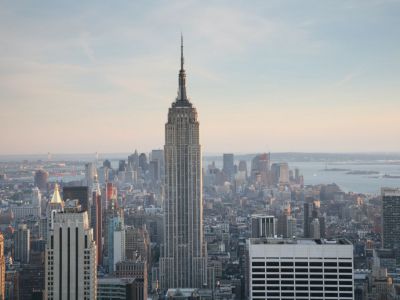
Meet the undisputed champion of New York’s Art Deco era: the Empire State Building, a 102-story giant that rises over 1,450 feet above Midtown’s daily hustle. It once ruled as the tallest building on Earth; today it’s still impressive enough to hold a lineup of titles—seventh-tallest in New York, ninth in the United States, and still one of the tallest freestanding structures anywhere in the Americas.
Its name comes straight from New York’s proud nickname, the “Empire State,” and its streamlined design was the work of the Shreve, Lamb & Harmon architectural firm. Construction began in 1930, wrapped up just a year later, and replaced the former Waldorf-Astoria Hotel that once stood on the same block. From the start, the goal was simple: to build the biggest, boldest skyscraper the world had ever seen.
You’ll find this landmark in Midtown South, planted along Fifth Avenue between 34th and 35th Streets. Three observatories—on the 80th, 86th, and 102nd floors—offer wraparound views that make the city look like an architectural toy box. And thanks to its starring role in more than 250 films and TV shows, beginning with King Kong in 1933, the building’s Hollywood résumé is nearly as tall as the tower itself.
The exterior keeps things classic: Indiana limestone, granite, and clean geometric ornamentation that embodies Art Deco style without telling a story in symbols. The main entrance features metal doors framed by sleek vertical piers topped with sculpted eagles, along with a gold-lettered transom that proudly spells out the building’s name.
In recognition of its cultural and architectural significance, the Empire State Building was declared a New York City Landmark in 1980 and added to the National Register of Historic Places in 1986. Today, it remains one of Manhattan’s most enduring icons—an unmistakable marker on the skyline and an essential stop for anyone wanting to feel the full vertical spirit of New York.
Its name comes straight from New York’s proud nickname, the “Empire State,” and its streamlined design was the work of the Shreve, Lamb & Harmon architectural firm. Construction began in 1930, wrapped up just a year later, and replaced the former Waldorf-Astoria Hotel that once stood on the same block. From the start, the goal was simple: to build the biggest, boldest skyscraper the world had ever seen.
You’ll find this landmark in Midtown South, planted along Fifth Avenue between 34th and 35th Streets. Three observatories—on the 80th, 86th, and 102nd floors—offer wraparound views that make the city look like an architectural toy box. And thanks to its starring role in more than 250 films and TV shows, beginning with King Kong in 1933, the building’s Hollywood résumé is nearly as tall as the tower itself.
The exterior keeps things classic: Indiana limestone, granite, and clean geometric ornamentation that embodies Art Deco style without telling a story in symbols. The main entrance features metal doors framed by sleek vertical piers topped with sculpted eagles, along with a gold-lettered transom that proudly spells out the building’s name.
In recognition of its cultural and architectural significance, the Empire State Building was declared a New York City Landmark in 1980 and added to the National Register of Historic Places in 1986. Today, it remains one of Manhattan’s most enduring icons—an unmistakable marker on the skyline and an essential stop for anyone wanting to feel the full vertical spirit of New York.
2) Bryant Park
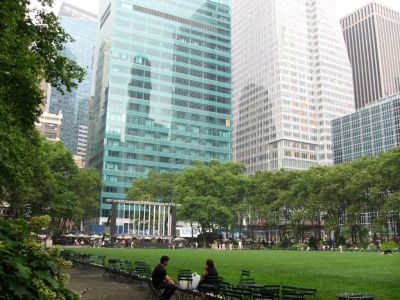
Bryant Park may only cover eight acres, but in Midtown terms, that’s practically a national park. It sits right in front of the New York Public Library—because even marble lions need a backyard—and it’s wrapped in a striking trio of skyscrapers: the sloping W.R. Grace Building, the glassy Bank of America Tower, and the stylish Bryant Park Hotel. For many New Yorkers, this is the unofficial lunchtime headquarters, power-nap zone, and outdoor living room all rolled into one.
Long before the café tables, fashion shows, and Instagram moments, this patch of land was pure wilderness. Back in 1686, Governor Thomas Dongan decided the city needed some public space and set this tract aside. Nearly a century later, George Washington’s troops marched right across it while retreating from the Battle of Long Island—proof that even in the 18th century, people were already cutting through Midtown to save time...
By the 19th century, the area had become Reservoir Square, named for the Croton distributing reservoir looming beside it. Over the years, the square witnessed its share of drama, too, including the New York Draft Riots of 1863. In 1884, it traded the utilitarian name for a poetic one—Bryant Park—in honor of the poet, editor, and abolitionist, William Cullen Bryant, whose statue now watches over the lawns, as if proofreading everyone’s behavior. The 1970s, however, were less glamorous, and the park slid into disrepair.
Things changed for the better in 1988 when the Bryant Park Restoration Corporation stepped in and gave the place the makeover it deserved. Out went the decay; in came movable chairs, chess tables, cafés, and a renewed sense of safety and openness. Today, Bryant Park hosts everything from summer movies to runway tents, and in winter, its ice-skating rink adds a flash of seasonal magic. It’s a compact, lively, endlessly entertaining pocket of green that proves—even in the midst of Manhattan, there’s always room for a breath of fresh air...
Long before the café tables, fashion shows, and Instagram moments, this patch of land was pure wilderness. Back in 1686, Governor Thomas Dongan decided the city needed some public space and set this tract aside. Nearly a century later, George Washington’s troops marched right across it while retreating from the Battle of Long Island—proof that even in the 18th century, people were already cutting through Midtown to save time...
By the 19th century, the area had become Reservoir Square, named for the Croton distributing reservoir looming beside it. Over the years, the square witnessed its share of drama, too, including the New York Draft Riots of 1863. In 1884, it traded the utilitarian name for a poetic one—Bryant Park—in honor of the poet, editor, and abolitionist, William Cullen Bryant, whose statue now watches over the lawns, as if proofreading everyone’s behavior. The 1970s, however, were less glamorous, and the park slid into disrepair.
Things changed for the better in 1988 when the Bryant Park Restoration Corporation stepped in and gave the place the makeover it deserved. Out went the decay; in came movable chairs, chess tables, cafés, and a renewed sense of safety and openness. Today, Bryant Park hosts everything from summer movies to runway tents, and in winter, its ice-skating rink adds a flash of seasonal magic. It’s a compact, lively, endlessly entertaining pocket of green that proves—even in the midst of Manhattan, there’s always room for a breath of fresh air...
3) Fifth Avenue
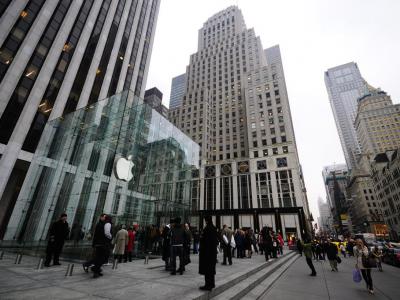
5th Avenue is a major thoroughfare in New York City's Manhattan, extending north from Washington Square Park in Greenwich Village to West 143rd Street in Harlem. It is considered one of the most expensive and luxurious stretches of retail in the U.S., if not the whole world, which has been drawing a steady stream of fashion addicts for over a century now.
Few things can be equally fun and indulgent as shopping (or even window-shopping) at 5th Avenue, as most of the high-end designer outposts here feature ornamental window displays and, on any given day, the street resembles a couture runway. However, the experience can also be just as daunting and overwhelming, particularly for first-time shoppers, so here are some of the top shops worth checking out primarily on 5th Avenue:
- Tiffany & Co. is the incredibly famous fine jewelry brand flagship store where the iconic “Breakfast at Tiffany's” movie was set.
- Known worldwide, despite this being their only location, Bergdorf Goodman is the premier shopping destination for all luxury items. Many celebrities have been quoted as saying "Scatter my ashes at Bergdorf's".
- If you look for high-quality cultured pearls as a memorable gift for a special lady in your life, then look no further than Mikimoto.
- If you're lusting after the new iPhone or are just a tech lover, a visit to The Apple Store is a must.
- The crème de la crème of leather handbags, the outpost of French Louis Vuitton will set you back a hefty sum for a purse, but, given the timeless style, you'll be able to wear it for years to come.
- The Italian brand Prada offers a wide variety of luxury items, from fashion to shoes and handbags, and everything in between.
- Well-made suits for the well-heeled set are found in abundance at Hugo Boss, notorious since the late 1990s, courtesy of “The Sopranos” series.
Why You Should Visit:
The main artery of New York City's shopping scene with mass brands, upscale department stores and multinational retailers offering something for everyone.
Few things can be equally fun and indulgent as shopping (or even window-shopping) at 5th Avenue, as most of the high-end designer outposts here feature ornamental window displays and, on any given day, the street resembles a couture runway. However, the experience can also be just as daunting and overwhelming, particularly for first-time shoppers, so here are some of the top shops worth checking out primarily on 5th Avenue:
- Tiffany & Co. is the incredibly famous fine jewelry brand flagship store where the iconic “Breakfast at Tiffany's” movie was set.
- Known worldwide, despite this being their only location, Bergdorf Goodman is the premier shopping destination for all luxury items. Many celebrities have been quoted as saying "Scatter my ashes at Bergdorf's".
- If you look for high-quality cultured pearls as a memorable gift for a special lady in your life, then look no further than Mikimoto.
- If you're lusting after the new iPhone or are just a tech lover, a visit to The Apple Store is a must.
- The crème de la crème of leather handbags, the outpost of French Louis Vuitton will set you back a hefty sum for a purse, but, given the timeless style, you'll be able to wear it for years to come.
- The Italian brand Prada offers a wide variety of luxury items, from fashion to shoes and handbags, and everything in between.
- Well-made suits for the well-heeled set are found in abundance at Hugo Boss, notorious since the late 1990s, courtesy of “The Sopranos” series.
Why You Should Visit:
The main artery of New York City's shopping scene with mass brands, upscale department stores and multinational retailers offering something for everyone.
4) Saint Thomas Church
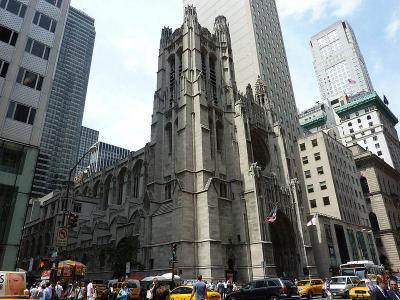
The Saint Thomas Church is an Episcopal parish church located in the heart of New York City. It is one of the few churches where the old Anglican choral tradition is still preserved.
Previously, the congregation of Saint Thomas's worshiped in three other locations before the present one was built. Designed by architects Ralph Adams Cram and Bertram Grosvenor Goodhue in High Gothic style, featuring plain limestone exterior and sandstone interior, the current church was built between 1911 and 1916 looking absolutely fantastic among the towering skyscrapers. The intricate stonework on the reredos – white carved screens behind the altar and interesting carvings on the choir stalls showing “modern” inventions like the radio and telephone – was done be sculptor Lee Laurie, while the fine stained glass windows were created by English artist, James Hunphries Hogan, of Powell and Sons (Whitefriars) Ltd. of London.
Music is an important part of worship and liturgy at Saint Thomas's, in large part thanks to the design offering excellent acoustics, as well as the three old and one new incredible Dobson pipe organ (worth $11 million) added in 2008. There are free organ recitals most Sundays, the sound of which is profoundly moving. The church's choir performs traditional Anglican Evensong, a 45 minute service of music by young boys aged between 8 and 13. This choir is supported by the Saint Thomas choir school that was founded by the parish in 1919 and is one of four remaining choir schools in the world.
While everyone goes to check out Saint Patrick's, and quite rightly so, you still might be cheating yourself if you don’t visit Saint Thomas's, which is just a few blocks away. Its beautiful altar area, stained glass and ceiling are absolutely worth a look, and will leave you in awe. Highly recommended!
Previously, the congregation of Saint Thomas's worshiped in three other locations before the present one was built. Designed by architects Ralph Adams Cram and Bertram Grosvenor Goodhue in High Gothic style, featuring plain limestone exterior and sandstone interior, the current church was built between 1911 and 1916 looking absolutely fantastic among the towering skyscrapers. The intricate stonework on the reredos – white carved screens behind the altar and interesting carvings on the choir stalls showing “modern” inventions like the radio and telephone – was done be sculptor Lee Laurie, while the fine stained glass windows were created by English artist, James Hunphries Hogan, of Powell and Sons (Whitefriars) Ltd. of London.
Music is an important part of worship and liturgy at Saint Thomas's, in large part thanks to the design offering excellent acoustics, as well as the three old and one new incredible Dobson pipe organ (worth $11 million) added in 2008. There are free organ recitals most Sundays, the sound of which is profoundly moving. The church's choir performs traditional Anglican Evensong, a 45 minute service of music by young boys aged between 8 and 13. This choir is supported by the Saint Thomas choir school that was founded by the parish in 1919 and is one of four remaining choir schools in the world.
While everyone goes to check out Saint Patrick's, and quite rightly so, you still might be cheating yourself if you don’t visit Saint Thomas's, which is just a few blocks away. Its beautiful altar area, stained glass and ceiling are absolutely worth a look, and will leave you in awe. Highly recommended!
Sight description based on Wikipedia.
5) St. Patrick's Cathedral (must see)
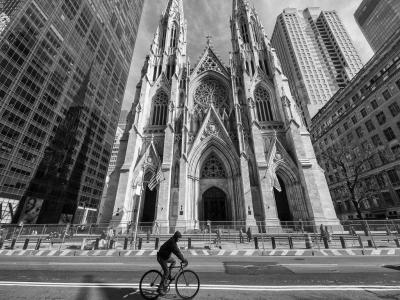
In case you wonder why New York has two Saint Patrick’s Cathedrals, it’s not because the city has twice as many saints—it’s because the first one simply couldn’t keep up. The Old Cathedral from 1815 did its best, but by the mid-1800s, the Archdiocese had outgrown it. So, in 1858, construction began on a new spiritual heavyweight: the towering Gothic Revival cathedral that now occupies the block between 50th and 51st Streets on Madison Avenue. Designed by James Renwick Jr. and formally opened in 1879, it rises directly across from Rockefeller Center, as if keeping an eye on the skating rink...
From the outside, the building is a full Gothic drama. Marble everywhere, pointed arches stacked like architectural exclamation marks, and stained-glass windows glowing in neat vertical ranks. The whole structure stretches 332 feet in length, with transepts spanning 174 feet. But the true attention-grabbers are the twin spires—330 feet of pure, sky-seeking ambition—framing the bronze entrance doors.
Step inside, and the scale refuses to let up. A broad central aisle is flanked by two narrower ones, separated by 32 marble columns that seem determined to out-pose each other. Look up, and you’ll see ribbed Gothic vaults meeting in elegant bosses overhead. Along the sides, twelve chapels create quieter pockets of devotion, while seating for 2,400 fills the nave with long lines of wooden pews.
Even the high altar has a story. The original version was shipped off to Fordham University Church in the Bronx, making room for the current altar carved from grey-white Italian marble and crowned by a bronze baldachin. It rises beneath a statue of Christ the King, complete with angels and decorative pinnacles.
Today, the “new” Saint Patrick’s Cathedral is firmly established as one of Manhattan’s defining landmarks, recognized both as a New York City designated landmark and listed on the National Register of Historic Places—a cathedral built to impress, and one that still succeeds brilliantly!
From the outside, the building is a full Gothic drama. Marble everywhere, pointed arches stacked like architectural exclamation marks, and stained-glass windows glowing in neat vertical ranks. The whole structure stretches 332 feet in length, with transepts spanning 174 feet. But the true attention-grabbers are the twin spires—330 feet of pure, sky-seeking ambition—framing the bronze entrance doors.
Step inside, and the scale refuses to let up. A broad central aisle is flanked by two narrower ones, separated by 32 marble columns that seem determined to out-pose each other. Look up, and you’ll see ribbed Gothic vaults meeting in elegant bosses overhead. Along the sides, twelve chapels create quieter pockets of devotion, while seating for 2,400 fills the nave with long lines of wooden pews.
Even the high altar has a story. The original version was shipped off to Fordham University Church in the Bronx, making room for the current altar carved from grey-white Italian marble and crowned by a bronze baldachin. It rises beneath a statue of Christ the King, complete with angels and decorative pinnacles.
Today, the “new” Saint Patrick’s Cathedral is firmly established as one of Manhattan’s defining landmarks, recognized both as a New York City designated landmark and listed on the National Register of Historic Places—a cathedral built to impress, and one that still succeeds brilliantly!
6) Rockefeller Center (must see)
Back in 1801, a New York physician named David Hosack bought 22 acres of empty land from the city with an aim to establish America’s first botanical garden. And for the next ten years, the Elgin Botanic Garden really did bloom—until funding wilted, the plants went wild, and Columbia University had to step in to take over the property in 1823.
Fast-forward a century to 1926, when the Metropolitan Opera went searching for a grand new home. Columbia leased the land to its generous patron, John D. Rockefeller, Jr., setting the stage for a glittering cultural palace. Then the stock market crashed in 1929, the opera backed out, and Rockefeller found himself with prime New York real estate and no tenant. So, he pivoted—and decided to build a mass-media powerhouse instead.
In 1930, after months of negotiations involving Radio Corporation of America, National Broadcasting Company, and Radio-Keith-Orpheum, the plan was set: an entertainment complex of unprecedented scale. To make room, 228 buildings were cleared and 4,000 tenants relocated. Early name ideas included “Radio City,” “Rockefeller City,” and the dramatic “Metropolitan Square,” before the now-famous title finally stuck.
Today, Rockefeller Center stretches across all of Doctor Hosack’s original 22 acres—though the botanicals have long been replaced with 14 Art Deco buildings, a standalone tower along 51st Street, and four more rising on the west side of Sixth Avenue. There are rooftop gardens, but you’ll have to crane your neck to see anything green.
On the west side sits Radio City Music Hall, still flashing its neon glamour. And at the heart of it all lies the sunken Lower Plaza, praised by Chinese-American architect Ieoh Ming Pei as “the most successful open space in the United States, perhaps in the world.” Most visitors simply know it as “the place with the ice rink,” which has been delighting skaters since 1936.
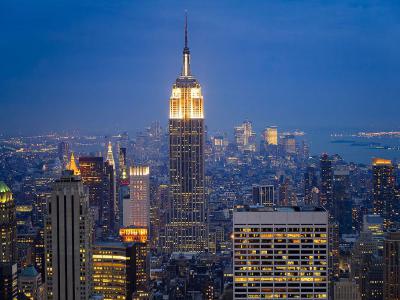
Then there’s the view. “Top of the Rock” offers three levels of indoor and outdoor decks with clear, cinematic vistas of the New York skyline. Back on the ground, the shops spread out in every direction—big names, small designers, and everything in between. It’s the kind of place where you realize: shopping isn’t just about what you buy; it’s about where you buy it...
Fast-forward a century to 1926, when the Metropolitan Opera went searching for a grand new home. Columbia leased the land to its generous patron, John D. Rockefeller, Jr., setting the stage for a glittering cultural palace. Then the stock market crashed in 1929, the opera backed out, and Rockefeller found himself with prime New York real estate and no tenant. So, he pivoted—and decided to build a mass-media powerhouse instead.
In 1930, after months of negotiations involving Radio Corporation of America, National Broadcasting Company, and Radio-Keith-Orpheum, the plan was set: an entertainment complex of unprecedented scale. To make room, 228 buildings were cleared and 4,000 tenants relocated. Early name ideas included “Radio City,” “Rockefeller City,” and the dramatic “Metropolitan Square,” before the now-famous title finally stuck.
Today, Rockefeller Center stretches across all of Doctor Hosack’s original 22 acres—though the botanicals have long been replaced with 14 Art Deco buildings, a standalone tower along 51st Street, and four more rising on the west side of Sixth Avenue. There are rooftop gardens, but you’ll have to crane your neck to see anything green.
On the west side sits Radio City Music Hall, still flashing its neon glamour. And at the heart of it all lies the sunken Lower Plaza, praised by Chinese-American architect Ieoh Ming Pei as “the most successful open space in the United States, perhaps in the world.” Most visitors simply know it as “the place with the ice rink,” which has been delighting skaters since 1936.
Then there’s the view. “Top of the Rock” offers three levels of indoor and outdoor decks with clear, cinematic vistas of the New York skyline. Back on the ground, the shops spread out in every direction—big names, small designers, and everything in between. It’s the kind of place where you realize: shopping isn’t just about what you buy; it’s about where you buy it...
7) Times Square (must see)
Long before Manhattan’s tidy street plan straightened everything out, Broadway, unlike other streets in New York, followed an older native pathway, wandering freely up the island. This is why it slices across Seventh Avenue and 42nd Street, forming two triangular pockets, like a bow tie. The southern one is called Times Square, while the northern, Duffy Square, is named for World War I chaplain Father Francis P. Duffy, whose statue now watches over the crowds with admirable patience.
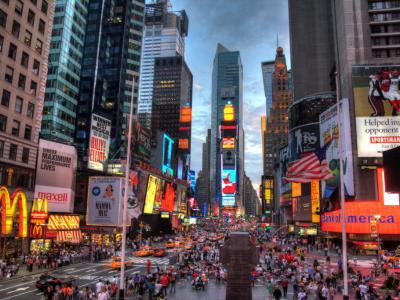
The stretch of Broadway from 41st to 53rd Streets goes by a different name: the Great White Way. That nickname wasn’t poetic exaggeration—those glowing billboards, marquees, and oversized posters once made the area one of the brightest electrified spots on Earth. Today, it’s still blazing away with advertisements for Broadway’s latest musicals and plays, pulling in nearly 50 million visitors a year. That’s roughly 330,000 people a day, all weaving through the lights, noise, and spectacle in search of something unforgettable.
Before it was Times Square, this chaotic crossroads answered to the far calmer name of Longacre Square. Everything changed in 1904, when New York Times publisher Adolph S. Ochs moved his newspaper into the brand-new Times Building—now known as One Times Square—and happily lent his name to the neighborhood. The Times moved out within a decade, but not before launching a little tradition in 1907: the New Year’s Eve Ball Drop. A century later, the glittering descent still draws over a million people every year, along with countless viewers around the world.
Today, Times Square is a fluorescent buffet of attractions—ABC’s Times Square Studios, Planet Hollywood, Bubba Gump Shrimp Company, and whichever character impersonator is bravest that day. The towering illuminated signs, nicknamed “spectaculars” or “jumbotrons,” compete with the neon bravado of Las Vegas and often win.
Amid all that glow, shoppers duck into stores like Gap, Old Navy, Forever 21, Levi’s, the Disney Store, Hershey’s Chocolate World, and M&M’s World—each one flashing its own brand of temptation. Whether you’re hunting for a souvenir, a show, or just a moment to stand still and stare, this Midtown crossroads remains New York at its most unfiltered and unmistakable.
The stretch of Broadway from 41st to 53rd Streets goes by a different name: the Great White Way. That nickname wasn’t poetic exaggeration—those glowing billboards, marquees, and oversized posters once made the area one of the brightest electrified spots on Earth. Today, it’s still blazing away with advertisements for Broadway’s latest musicals and plays, pulling in nearly 50 million visitors a year. That’s roughly 330,000 people a day, all weaving through the lights, noise, and spectacle in search of something unforgettable.
Before it was Times Square, this chaotic crossroads answered to the far calmer name of Longacre Square. Everything changed in 1904, when New York Times publisher Adolph S. Ochs moved his newspaper into the brand-new Times Building—now known as One Times Square—and happily lent his name to the neighborhood. The Times moved out within a decade, but not before launching a little tradition in 1907: the New Year’s Eve Ball Drop. A century later, the glittering descent still draws over a million people every year, along with countless viewers around the world.
Today, Times Square is a fluorescent buffet of attractions—ABC’s Times Square Studios, Planet Hollywood, Bubba Gump Shrimp Company, and whichever character impersonator is bravest that day. The towering illuminated signs, nicknamed “spectaculars” or “jumbotrons,” compete with the neon bravado of Las Vegas and often win.
Amid all that glow, shoppers duck into stores like Gap, Old Navy, Forever 21, Levi’s, the Disney Store, Hershey’s Chocolate World, and M&M’s World—each one flashing its own brand of temptation. Whether you’re hunting for a souvenir, a show, or just a moment to stand still and stare, this Midtown crossroads remains New York at its most unfiltered and unmistakable.
8) Broadway (must see)
Trying to follow Broadway back to its beginnings, you’d find yourself tracing a much older path: the Wickquasgeck Trail, a route carved into Manhattan in the times of New Amsterdam, long before New York dreamed of skyscrapers or neon marquees... That trail stretched up the island like a wandering spine, and when the Dutch arrived, they simply widened it and gave it a new name: Heeren (or “Gentlemen’s”) Way. The British, who arrived later, noticing how wide the street really was, promptly declared it Broadway—a name that clearly stuck.
Today’s Broadway runs a lot farther than its original ancestor. It launches from Bowling Green at Manhattan’s southern tip, slips through the boroughs, wanders into Westchester County, and keeps going until it reaches Sleepy Hollow. If you’re searching for New York’s oldest continuous street, this is the one.
Jump to 1907, when part of Broadway—stretching from Times Square to Sherman Square—earned a new identity as Automobile Row. Car dealerships, repair shops, and glittering showrooms lined both sides, turning the street into a motor-age catwalk. Over time, the traffic patterns tightened, and Broadway became mainly a one-way river of cars.
In recent decades, though, the city has rewritten Broadway’s script. Cars have gradually ceded space to people, and sections of the street have transformed into pedestrian plazas, pocket parks, and bike lanes. Times Square, Duffy Square, and Herald Square traded honking horns for café tables and performers in painted outfits. Even Madison and Union Square saw Broadway narrow to make room for walkers instead of windshields.
At the southern end, near Bowling Green and City Hall Park, Lower Broadway still plays host to the city’s legendary ticker-tape parades—snowstorms of paper drifting from office towers as heroes of every kind roll past. These days, it’s more shredded confetti and fewer actual tickers, but the “Canyon of Heroes” effect remains.
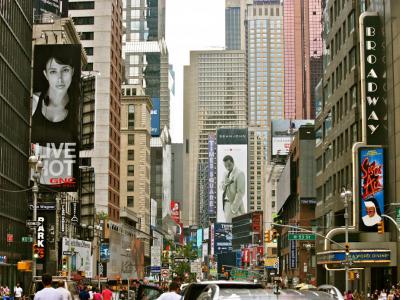
And then there’s the stretch that needs no introduction: The Great White Way, a phrase coined in 1901 to describe Broadway’s theater district. Between 42nd and 53rd Streets, the lights burn bright, the marquees compete for your attention, and the plays and musicals rewrite themselves nightly through applause.
From colonial trail to cultural artery, Broadway carries centuries of stories—and somehow still finds room for more...
Today’s Broadway runs a lot farther than its original ancestor. It launches from Bowling Green at Manhattan’s southern tip, slips through the boroughs, wanders into Westchester County, and keeps going until it reaches Sleepy Hollow. If you’re searching for New York’s oldest continuous street, this is the one.
Jump to 1907, when part of Broadway—stretching from Times Square to Sherman Square—earned a new identity as Automobile Row. Car dealerships, repair shops, and glittering showrooms lined both sides, turning the street into a motor-age catwalk. Over time, the traffic patterns tightened, and Broadway became mainly a one-way river of cars.
In recent decades, though, the city has rewritten Broadway’s script. Cars have gradually ceded space to people, and sections of the street have transformed into pedestrian plazas, pocket parks, and bike lanes. Times Square, Duffy Square, and Herald Square traded honking horns for café tables and performers in painted outfits. Even Madison and Union Square saw Broadway narrow to make room for walkers instead of windshields.
At the southern end, near Bowling Green and City Hall Park, Lower Broadway still plays host to the city’s legendary ticker-tape parades—snowstorms of paper drifting from office towers as heroes of every kind roll past. These days, it’s more shredded confetti and fewer actual tickers, but the “Canyon of Heroes” effect remains.
And then there’s the stretch that needs no introduction: The Great White Way, a phrase coined in 1901 to describe Broadway’s theater district. Between 42nd and 53rd Streets, the lights burn bright, the marquees compete for your attention, and the plays and musicals rewrite themselves nightly through applause.
From colonial trail to cultural artery, Broadway carries centuries of stories—and somehow still finds room for more...
9) Time Warner Center
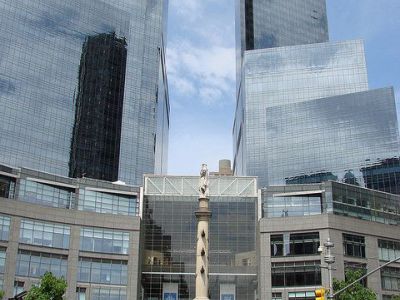
Following the destruction of the World Trade Center in 2001, Time Warner Center emerged as New York City's first skyscraper to grace the skyline. This prestigious residential complex is home to some of the city's wealthiest residents and most expensive restaurants, boasting an impressive 55 floors and reaching a height of 750 feet.
The center comprises two towers and a magnificent multistory atrium that hosts a collection of upscale retail stores. Descending into the basement, visitors will discover the expansive Whole Foods Market grocery store, offering an array of culinary delights.
Also nestled within the complex are the three performance venues of Jazz at Lincoln Center, an extraordinary facility whose centerpiece is the Rose Hall, renowned for its unique design. With its remarkable acoustics and dynamic lighting effects, the concert hall showcases a be-bop aesthetic, featuring large boxes of light that change color throughout the evening, creating a resplendent crown around the performance space. Some seats even provide an exclusive view of the musicians' finger movements, delighting true aficionados. Under the direction of Wynton Marsalis, the center's director, the Lincoln Center Jazz orchestra takes the stage, captivating audiences with swinging and New Orleans-style jazz. While the grandeur of the hall may initially seem imposing, Marsalis fosters an informal jazz atmosphere, encouraging the audience to clap along and participate. By the end of the evening, patrons find themselves fully engaged in the energy of the performance.
The Appel Room, the center's second-largest space, offers a versatile configuration that can be transformed to accommodate various settings, from a dance floor to a seven-tier amphitheater or intimate cocktail-table seating. Irrespective of the arrangement, the room's breathtaking feature is a towering glass wall that serves as a backdrop, providing a stunning view of Central Park and infusing the music with the essence of the park's natural beauty.
Lastly, there is Dizzy's Club Coca-Cola, a smaller cocktail and dinner jazz club. This intimate venue offers guests a transcendent view of Columbus Circle and the park, creating an unparalleled ambiance. Operating year-round, Dizzy's Club Coca-Cola serves as a platform for showcasing emerging talent in jazz, presenting the next generation of gifted musicians.
The center comprises two towers and a magnificent multistory atrium that hosts a collection of upscale retail stores. Descending into the basement, visitors will discover the expansive Whole Foods Market grocery store, offering an array of culinary delights.
Also nestled within the complex are the three performance venues of Jazz at Lincoln Center, an extraordinary facility whose centerpiece is the Rose Hall, renowned for its unique design. With its remarkable acoustics and dynamic lighting effects, the concert hall showcases a be-bop aesthetic, featuring large boxes of light that change color throughout the evening, creating a resplendent crown around the performance space. Some seats even provide an exclusive view of the musicians' finger movements, delighting true aficionados. Under the direction of Wynton Marsalis, the center's director, the Lincoln Center Jazz orchestra takes the stage, captivating audiences with swinging and New Orleans-style jazz. While the grandeur of the hall may initially seem imposing, Marsalis fosters an informal jazz atmosphere, encouraging the audience to clap along and participate. By the end of the evening, patrons find themselves fully engaged in the energy of the performance.
The Appel Room, the center's second-largest space, offers a versatile configuration that can be transformed to accommodate various settings, from a dance floor to a seven-tier amphitheater or intimate cocktail-table seating. Irrespective of the arrangement, the room's breathtaking feature is a towering glass wall that serves as a backdrop, providing a stunning view of Central Park and infusing the music with the essence of the park's natural beauty.
Lastly, there is Dizzy's Club Coca-Cola, a smaller cocktail and dinner jazz club. This intimate venue offers guests a transcendent view of Columbus Circle and the park, creating an unparalleled ambiance. Operating year-round, Dizzy's Club Coca-Cola serves as a platform for showcasing emerging talent in jazz, presenting the next generation of gifted musicians.
10) Gapstow Bridge and The Pond
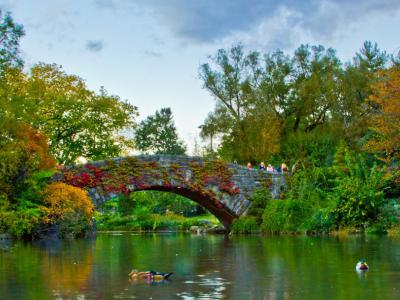
One of the first landmarks to discover after entering Central Park's southeast corner, the robust Gapstow Bridge just so happens to be among the best spots for photography within the Park as well, along with Bethesda Fountain and the Belvedere Castle. Although not far off from several similar bridges, this one wins for the commanding and breathtaking views it offers, with natural scenery on one side and Manhattan's skyline on the other.
Originally wooden and cast-iron, though for the last hundred-plus years made of stone, the bridge itself may not be an architectural marvel but has a beautiful aesthetic presence to it. It's apparently also quite popular with locals, who come to watch the ducks in the pond and relax after work.
Originally wooden and cast-iron, though for the last hundred-plus years made of stone, the bridge itself may not be an architectural marvel but has a beautiful aesthetic presence to it. It's apparently also quite popular with locals, who come to watch the ducks in the pond and relax after work.
11) Bethesda Terrace
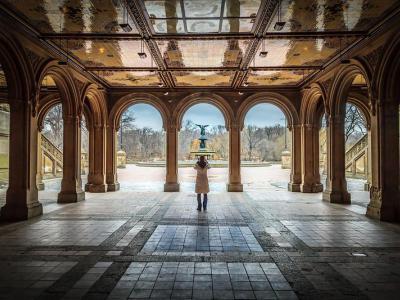
Featured in many Hollywood movies and TV shows, the Bethesda Terrace is one of the most easily recognizable landmarks of Central Park. It is a perfect place to unwind, watch street performers, enjoy music, or simply hang out and pass the time.
With its beautiful arcaded structure and carved limestone decorations, it stands as a fine example of 19th-century architecture, treating visitors to a lower and upper terrace surrounded by three staircases. This is all further highlighted by an attractive, large-scale fountain with the famous "Angel of the Water" statue on top and a beautifully tiled underpass, both of which are worth many pictures.
The "Angel of the Water" statue refers to "Healing the Paralytic", a story from the Gospel of John about an angel blessing the Pool of Bethesda, giving it healing powers.
In the end, it's a neat area to spend some time during visits to Central Park, particularly when the fountains are turned on and the trees in the area are in bloom or heavy with foliage. More often than not, you'll find people sitting on stone benches in the lower level to watch boats on the lake and get a glimpse of the high-rise buildings beyond.
With its beautiful arcaded structure and carved limestone decorations, it stands as a fine example of 19th-century architecture, treating visitors to a lower and upper terrace surrounded by three staircases. This is all further highlighted by an attractive, large-scale fountain with the famous "Angel of the Water" statue on top and a beautifully tiled underpass, both of which are worth many pictures.
The "Angel of the Water" statue refers to "Healing the Paralytic", a story from the Gospel of John about an angel blessing the Pool of Bethesda, giving it healing powers.
In the end, it's a neat area to spend some time during visits to Central Park, particularly when the fountains are turned on and the trees in the area are in bloom or heavy with foliage. More often than not, you'll find people sitting on stone benches in the lower level to watch boats on the lake and get a glimpse of the high-rise buildings beyond.
12) Strawberry Fields – John Lennon Monument
A place of pilgrimage for Beatles fans the world over, Strawberry Fields – named after the famous song – is a deliberately informal and often crowded section of Central Park. It is located right opposite the Dakota apartment building where John Lennon lived and where he was murdered in 1980.
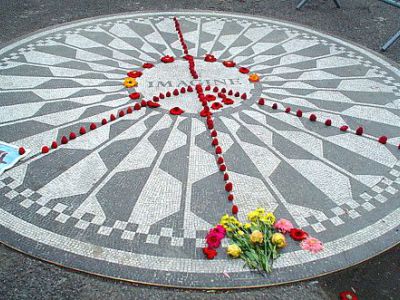
Dedicated in 1985 on the 45th birth anniversary of John Lennon, it provides a bit of solace to all who visit. On a normal day, you will see people placing flowers and candles, guitarists singing Beatles tracks, with most everyone singing and joining in, or simply taking a moment to reflect.
The site's prominent feature is an intricately designed – though rather subtle/unassuming – black and white mosaic given as a gift by the city of Naples, that bears the word of Lennon's song: "Imagine". The memorial is shaded by stately American elms and lined with benches. Go early if you want good pictures.
In warmer months, flowers bloom all around the area, turning it into a favorite spot for picnickers. Along a path, there's also a plaque listing all countries that endorse Strawberry Fields as a "Garden of Peace".
On Lennon's birthday, October 9th, and on the anniversary of his death, December 8th, expect to find a huge crowd of Beatles fans who gather to sing songs in his memory late into the night.
Tip:
The Dakota Building where John Lennon lived and was later murdered is just outside the park entrance nearest the memorial (at 72nd Street), so you can pass there, too.
Dedicated in 1985 on the 45th birth anniversary of John Lennon, it provides a bit of solace to all who visit. On a normal day, you will see people placing flowers and candles, guitarists singing Beatles tracks, with most everyone singing and joining in, or simply taking a moment to reflect.
The site's prominent feature is an intricately designed – though rather subtle/unassuming – black and white mosaic given as a gift by the city of Naples, that bears the word of Lennon's song: "Imagine". The memorial is shaded by stately American elms and lined with benches. Go early if you want good pictures.
In warmer months, flowers bloom all around the area, turning it into a favorite spot for picnickers. Along a path, there's also a plaque listing all countries that endorse Strawberry Fields as a "Garden of Peace".
On Lennon's birthday, October 9th, and on the anniversary of his death, December 8th, expect to find a huge crowd of Beatles fans who gather to sing songs in his memory late into the night.
Tip:
The Dakota Building where John Lennon lived and was later murdered is just outside the park entrance nearest the memorial (at 72nd Street), so you can pass there, too.
13) Shakespeare Garden
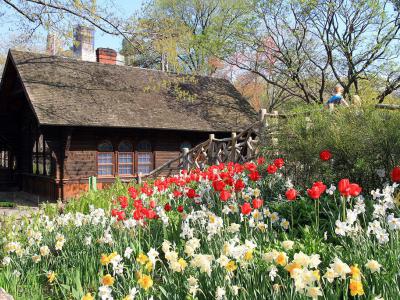
Not many tourists find this place! Roughly four acres of slightly hilly land, well landscaped with winding footpaths, sculptures, and plenty of blooms to enjoy, it's a pleasant environment for an afternoon stroll. Each of the garden's sections has flowers, plants, and trees that Shakespeare alluded to or named (mulberry, columbine, primrose, wormwood, and more). Hidden amongst these are brass plaques with corresponding quotes from Bard's plays.
You can tell the garden's value by the meticulous care Central Park employees take in making sure it is – and stays – gorgeous.
Partly on a slope, the site is adjacent to steps that in one direction lead to the unique pseudo-medieval Belvedere Castle and a fine view uptown over Turtle Pond. In a slightly different route is Delacorte Theater, famous for its outdoor stage and amphitheater that has hosted many plays by – you may have guessed – William Shakespeare. Nearby, you can also enjoy the cute Swedish Cottage which is used as a Marionette Theatre.
There are plenty of benches that blend with the natural scenery, so this is a great spot to take a break and mellow out if you've been walking through Central Park and need a sweet-smelling and quiet respite!
You can tell the garden's value by the meticulous care Central Park employees take in making sure it is – and stays – gorgeous.
Partly on a slope, the site is adjacent to steps that in one direction lead to the unique pseudo-medieval Belvedere Castle and a fine view uptown over Turtle Pond. In a slightly different route is Delacorte Theater, famous for its outdoor stage and amphitheater that has hosted many plays by – you may have guessed – William Shakespeare. Nearby, you can also enjoy the cute Swedish Cottage which is used as a Marionette Theatre.
There are plenty of benches that blend with the natural scenery, so this is a great spot to take a break and mellow out if you've been walking through Central Park and need a sweet-smelling and quiet respite!
